
Italy is a country that practically vibrates with history, art, and faith. And if you really want to understand the Italian soul, you have to step inside its churches. These aren’t just places of Sunday worship; they’re the community’s living room, the artist’s canvas, and the architect’s grandest statement all rolled into one.
Over the years, my wife and I have wandered through hundreds of them, from dusty village chapels to soaring urban cathedrals. Some left us cold, but others stopped us dead in our tracks. This list is about those special ones—the eleven churches that, in our opinion, represent the very best of what Italy has to offer.
Now, before we start, a quick word about church vocabulary. You’ll hear Duomo, which is the main cathedral of a city. Basilica is a special designation given by the Pope to churches of historical and spiritual importance. And Chiesa is simply your everyday church. Knowing the difference makes you sound like you know what you’re talking about, which is always a bonus when you’re trying to impress the locals or, in my case, my wife.
St. Peter’s Basilica, Vatican City
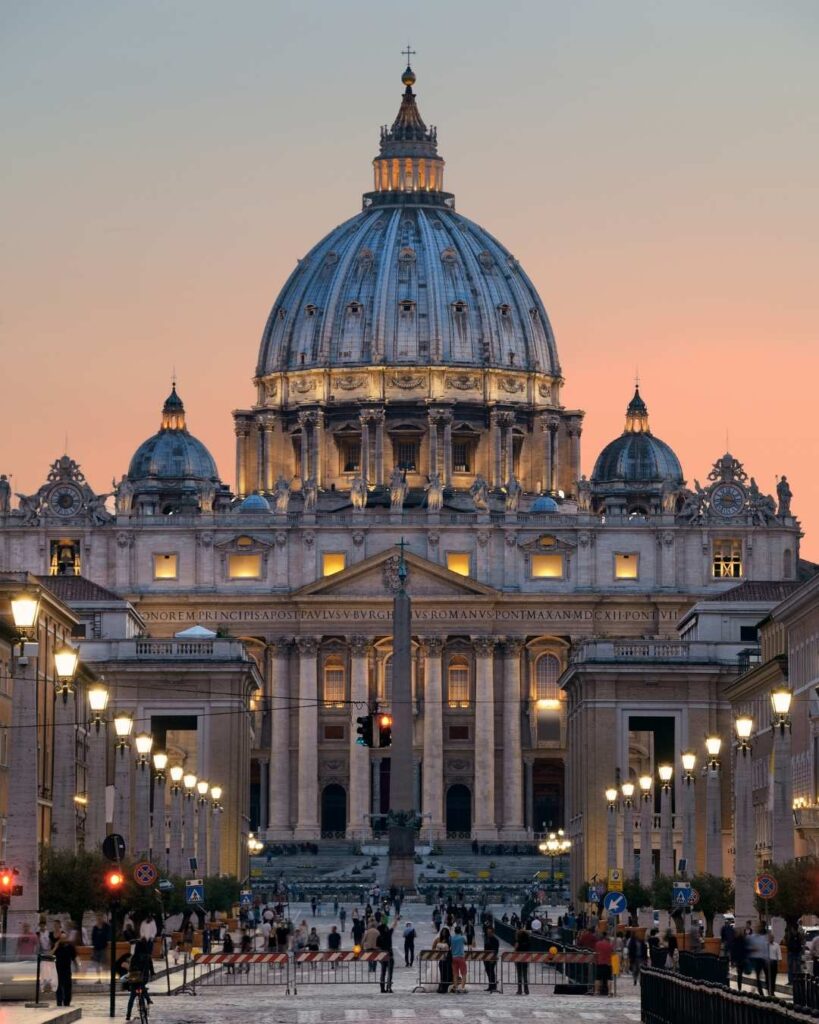
Let’s get the big one out of the way first. St. Peter’s is not just a church; it’s the church. It’s the heart of Catholicism, the largest church in the world, and a building so grand it almost defies belief. When you first step inside, the sheer scale is disorienting. You look at a cherub at the base of a pillar and realize it’s the size of a full-grown man. It’s that kind of place.
The artistic highlights are almost too many to count, but three things stop every visitor in their tracks. First is Michelangelo’s Pietà, a sculpture of Mary holding the dead Jesus that is so heartbreakingly tender it made my wife tear up the first time we saw it. It’s the only piece Michelangelo ever signed.
Then there’s Bernini’s towering bronze canopy, the Baldacchino, which marks the spot where St. Peter himself is buried. And finally, if you’ve got the legs for it, climb to the top of the dome designed by Michelangelo. The view over Rome and the Vatican gardens is worth every single one of those 551 steps.
A word of warning: the security lines can be brutal, so get there early. And please, for the love of all that is holy, cover your shoulders and knees. We’ve seen tourists turned away at the door, and it’s not a fun way to start your visit. Read this post for more information
Florence Duomo, Florence
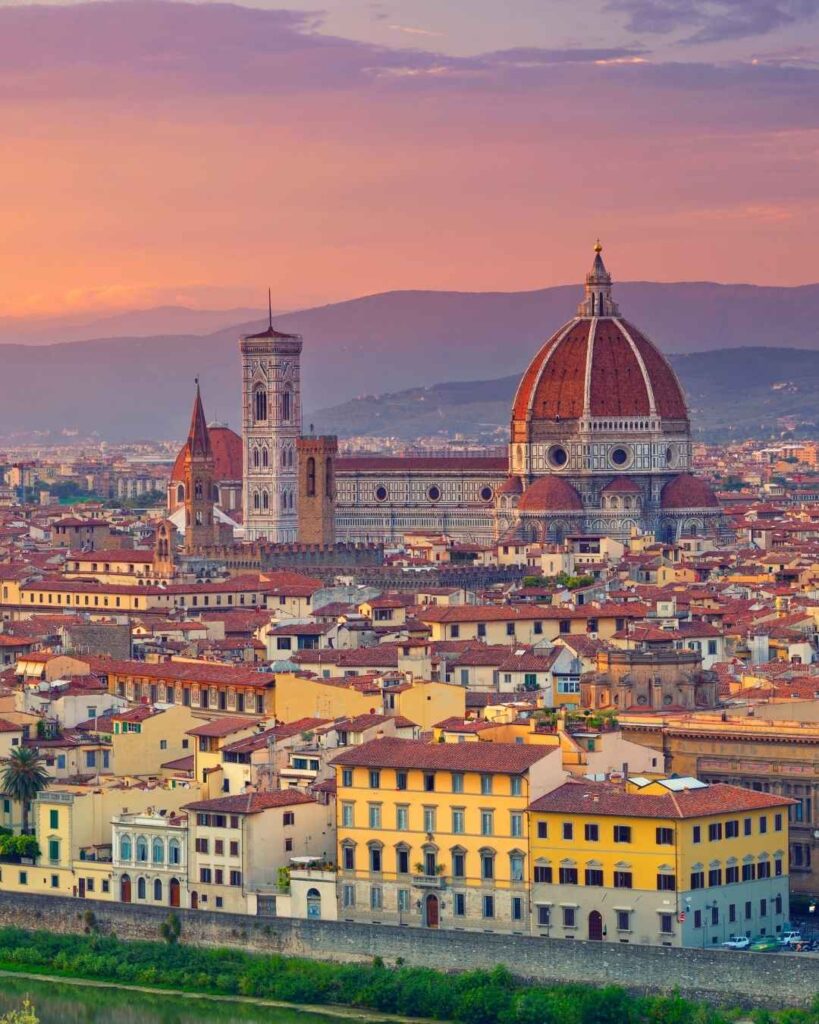
The Duomo of Florence (Santa Maria Del Fiore) is less a building and more a landmark, a symbol that defines the entire city. Its pink, green, and white marble exterior is almost cartoonishly beautiful, like a giant wedding cake dropped into the middle of the city square.
But it’s the dome that steals the show. It’s the largest masonry dome ever built, and Filippo Brunelleschi figured out how to build it without scaffolding, a feat so brilliant it’s still studied by architects today.
Inside, the cathedral is surprisingly sparse compared to its flashy exterior, but don’t miss Giorgio Vasari’s massive Last Judgment frescoes painted on the interior of the dome. To be honest, they’re a bit dark and imposing, a stark contrast to the sunny facade outside.
The real highlight, though, is the climb. Yes, another climb. But standing on top of that dome, looking out over the red-tiled rooftops of Florence, is one of those travel moments you’ll never forget. My wife, who is not a huge fan of tight spiral staircases, did it for the view and admitted it was worth the anxiety.
St. Mark’s Basilica, Venice
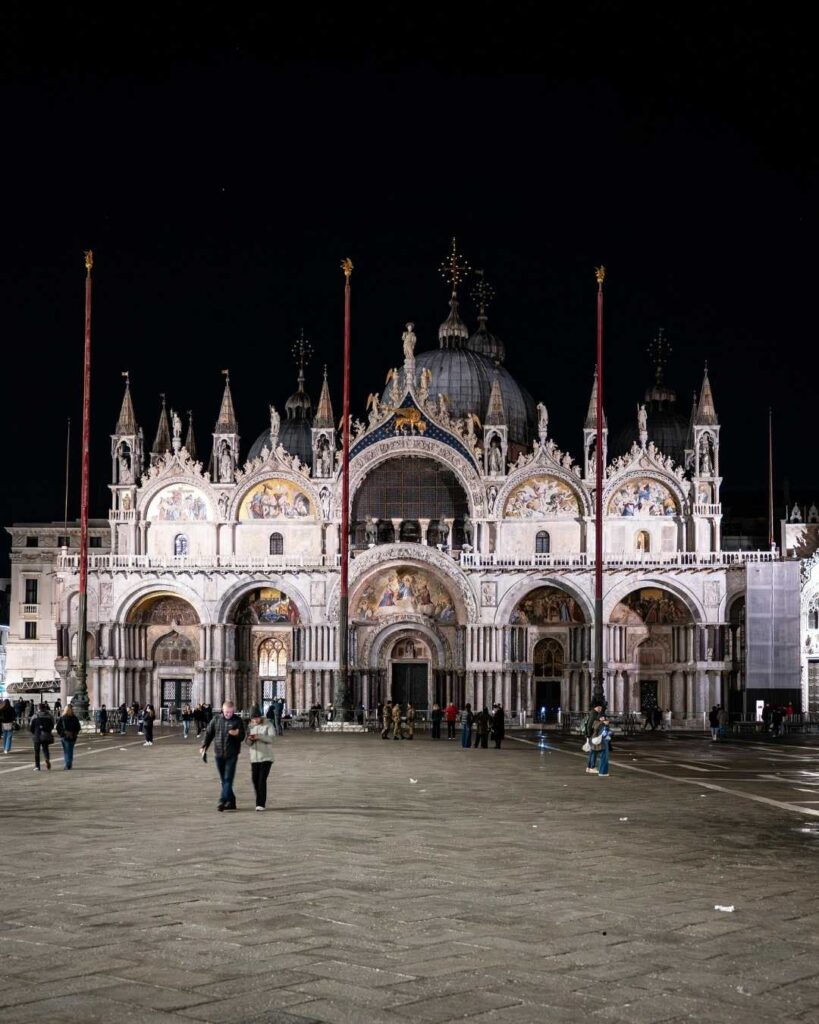
Venice is a city like no other, and St. Mark’s Basilica is its perfect architectural expression. It feels exotic, almost Eastern, with its five domes and glittering golden mosaics. This is what happens when Venetian traders bring back influences from Constantinople. It’s not just a church; it’s a trophy case for the Republic of Venice’s power and wealth.
The moment you step inside, you’re enveloped in a warm, golden glow. The mosaics that cover every inch of the walls and ceilings tell biblical stories in pictures, a way to teach the faith to a largely illiterate population.
The late afternoon light catches these mosaics in a way that makes the entire interior seem to shimmer. And then there’s the Pala d’Oro, an altarpiece made of gold and studded with over 1,900 precious gems. It’s obscenely, breathtakingly rich.
The story goes that St. Mark’s was built to house the body of Saint Mark, which had been stolen from Alexandria by two Venetian merchants and smuggled back in a barrel of pork to avoid Muslim customs inspectors. It’s a perfectly Venetian story: pragmatic, opportunistic, and completely brilliant.
Milan Cathedral, Milan
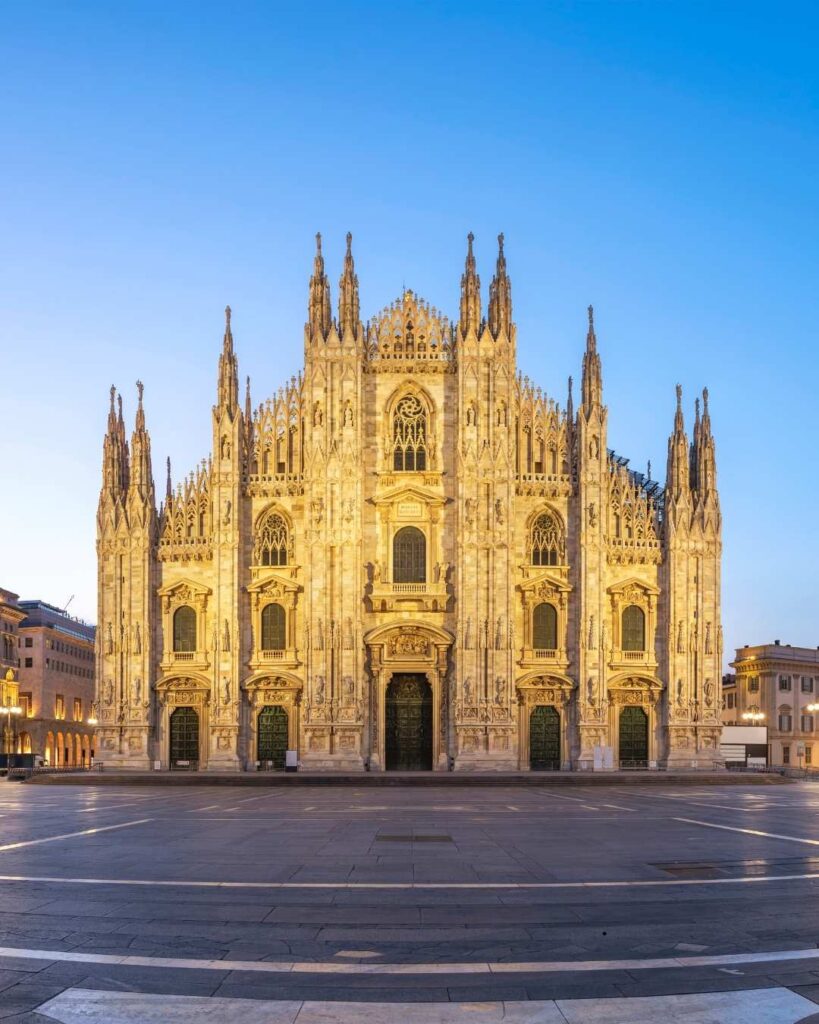
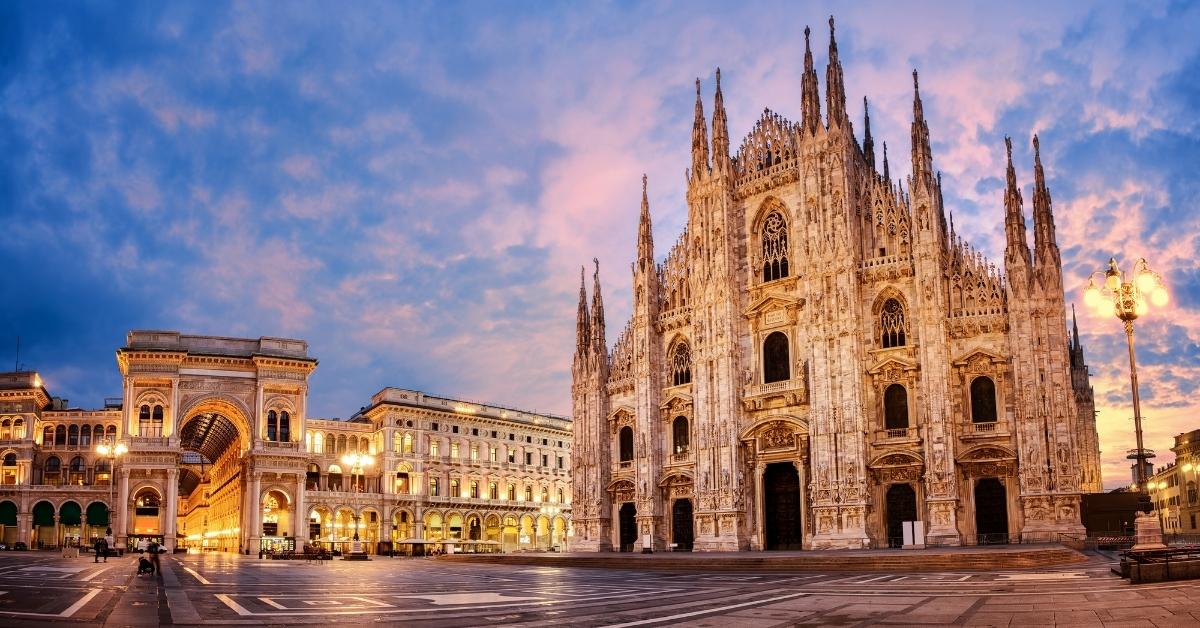
If St. Peter’s is the grandest church, Milan’s Duomo might just be the most spectacular. It’s a masterpiece of Gothic architecture, and it took over six centuries to finish. Six hundred years! Imagine starting a project that your great-great-great-grandchildren will see completed. That’s patience.
The exterior is a forest of spires and statues. There are 135 spires pointing toward heaven and more than 3,400 statues adorning the facade and the rooftop. The most famous of them is the golden Madonnina, a statue of the Virgin Mary that sits atop the highest spire. The Milanese have a deep affection for her, and she’s the unofficial protector of the city.
The interior is massive and atmospheric, with towering pillars and some of the largest stained-glass windows in the world. But the highlight for us was the rooftop. You can walk out among the spires, getting an up-close look at the stonework and statues, and enjoy a panoramic view of the city. On a clear day, you can even see the snow-capped Alps. It’s a completely different perspective from the dark, solemn interior below.
Siena Cathedral, Siena
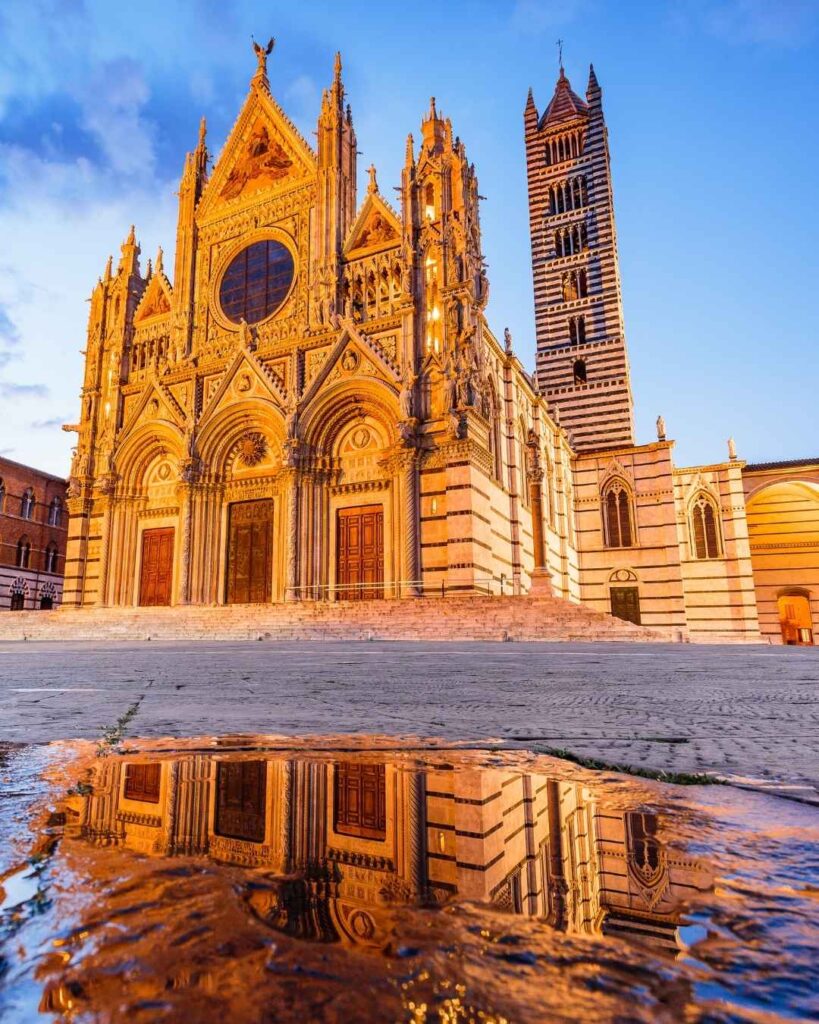
Siena’s Duomo is a love letter to the city itself. It’s built of black and white striped marble, the colors of Siena’s coat of arms, and the effect is visually stunning, like a gigantic mint candy. The interior is just as striking as the exterior, but the real showstopper is the floor.
The pavement of the cathedral is one of the most intricate and beautiful mosaic floors anywhere in the world. It’s made of inlaid marble, depicting scenes from the Old Testament and allegories of Fortune and Wisdom. The detail is so fine that it looks like it’s been painted.
The floor is usually covered by a protective layer, but for a few months each year, typically in late summer and early autumn, it’s fully uncovered, and it’s a sight you shouldn’t miss.
The Piccolomini Library, off the left aisle, is another hidden gem. It’s a small room filled with frescoes and illuminated choir books, a quiet and beautiful space that feels like a secret treasure.
Basilica of San Francesco, Assisi
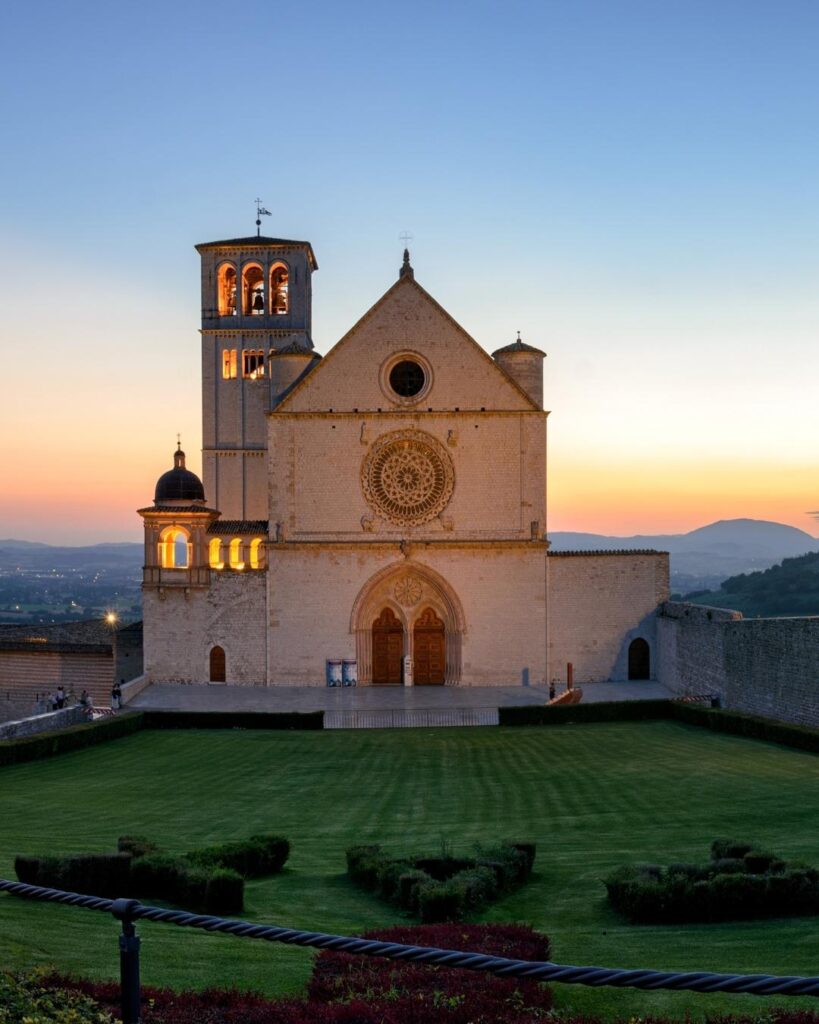
Assisi is a town that sits on a hill, and the Basilica of San Francesco sits at its foot. It’s a special place, the spiritual home of the Franciscan order, and it’s a UNESCO World Heritage site for good reason. The church is actually two churches, one stacked on top of the other.
The upper church is all light and Gothic elegance. It’s famous for its cycle of frescoes by Giotto, which tell the story of Saint Francis’s life. These frescoes were revolutionary for their time. For the first time, biblical figures looked like real people with real emotions. It’s a pivotal moment in the history of Western art, and standing in that space, you can feel the shift in artistic thinking.
The lower church is darker, more intimate, and more spiritual. It’s where the crypt containing the tomb of Saint Francis is located. Pilgrims from all over the world come here to pray, and the quiet atmosphere is profoundly moving. The basilica was badly damaged in a 1997 earthquake, but it was lovingly restored, a testament to the devotion people have for this place.
Basilica of San Vitale, Ravenna
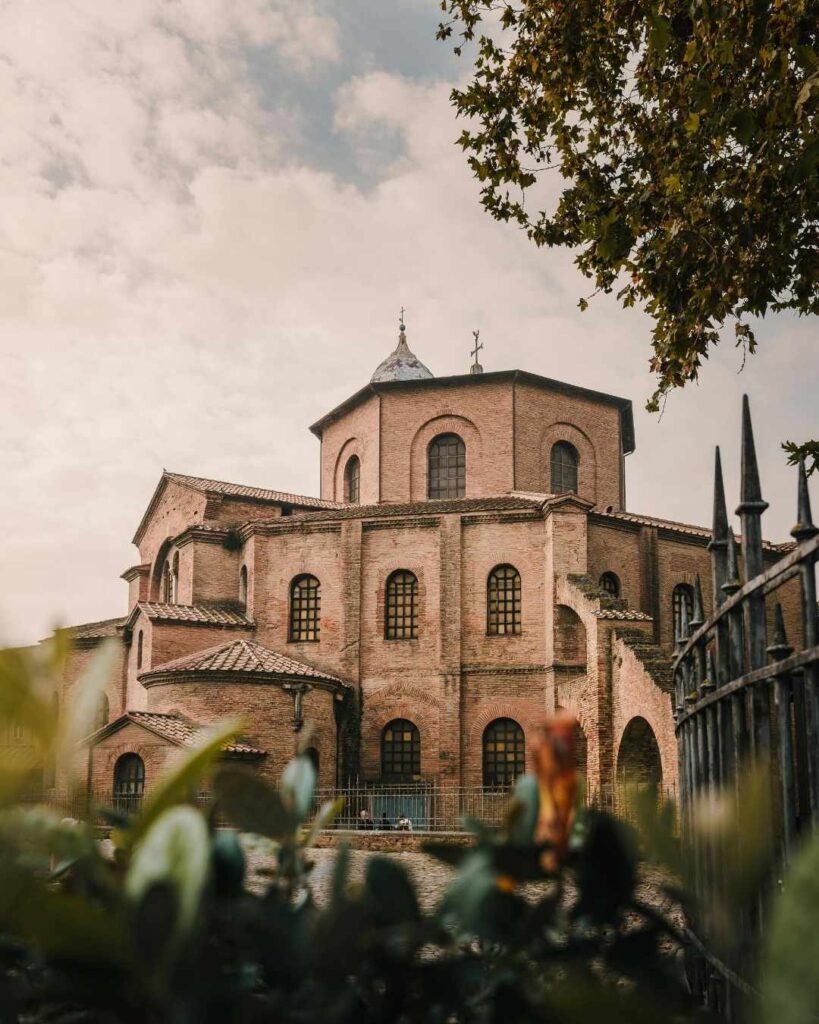
Ravenna is a city that often gets overlooked by tourists rushing between Venice and Florence, and that’s a shame. It was once the capital of the Western Roman Empire and later a center of Byzantine power in Italy. That history is reflected in its incredible mosaics, and San Vitale is the crowning jewel.
This is an early Christian church, dating back to the 6th century, and its architecture is completely different from the Gothic cathedrals we’ve been looking at. It’s octagonal, with a domed ceiling, and it feels almost like a royal chamber. The mosaics are what make it truly special. They are a perfect blend of Roman and Eastern styles, and they’re in remarkable condition.
The most famous panels show the Emperor Justinian and his Empress Theodora surrounded by their attendants. They’re not just religious images; they’re political statements, showcasing the power and authority of the Byzantine Empire. The colors are so vibrant, the gold so rich, that it’s hard to believe they’ve survived for nearly 1,500 years.
Cathedral of Orvieto, Orvieto
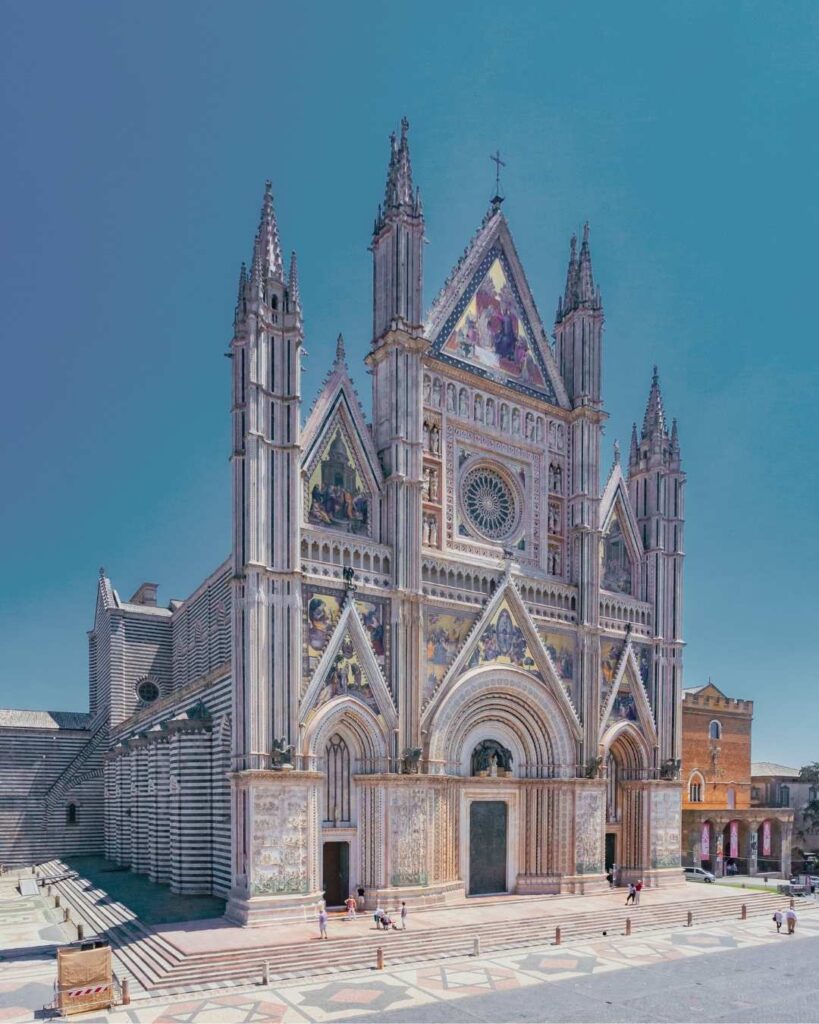
Orvieto is a dramatic hilltop town in Umbria, and its cathedral is just as dramatic. It was built to celebrate a miracle that happened nearby, the Miracle of Bolsena, where a bleeding host was said to have appeared on a linen cloth during Mass. The cathedral was a statement of faith, and its facade is a work of art.
The facade is a riot of color and decoration, covered in intricate mosaics that gleam in the sunlight. They depict scenes from the life of Christ and the Virgin, and they’re a stunning example of Italian Gothic art. It’s the kind of facade that makes you stop and stare for a long time, trying to take in every detail.
Inside, the highlight is the Chapel of the Corporal, which contains the linen cloth from the miracle. It’s a beautiful, jewel-box space, and the story behind it adds a layer of spiritual significance to the visit. The views from the cathedral’s terrace across the Umbrian countryside are also spectacular.
Basilica of San Zeno Maggiore, Verona
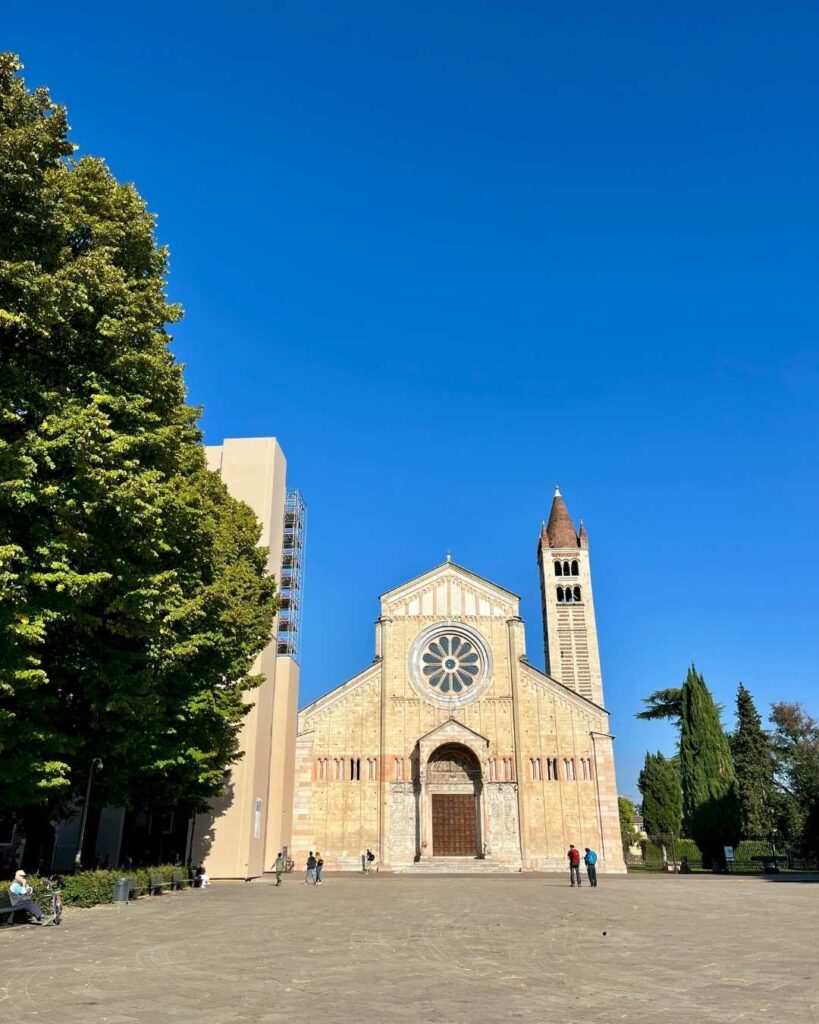
Verona is famous for Romeo and Juliet, but for my money, its most impressive sight is the Basilica of San Zeno Maggiore. It’s considered one of the finest Romanesque churches in Northern Italy, and it has a quiet, sturdy beauty that I love.
The facade is simple and elegant, dominated by a magnificent rose window that represents the Wheel of Fortune. The real treasure, though, is the bronze doors. They date from the 11th and 12th centuries and are a rare surviving example of medieval bronze work. The 48 panels depict scenes from the Bible, and they have a raw, powerful quality to them.
Inside, the church is just as impressive. It’s a three-aisled basilica with a raised choir and a beautiful crypt containing the remains of Saint Zeno. There’s also a lovely altarpiece by the Renaissance painter Andrea Mantegna, which is worth a close look.
San Maurizio al Monastero Maggiore, Milan
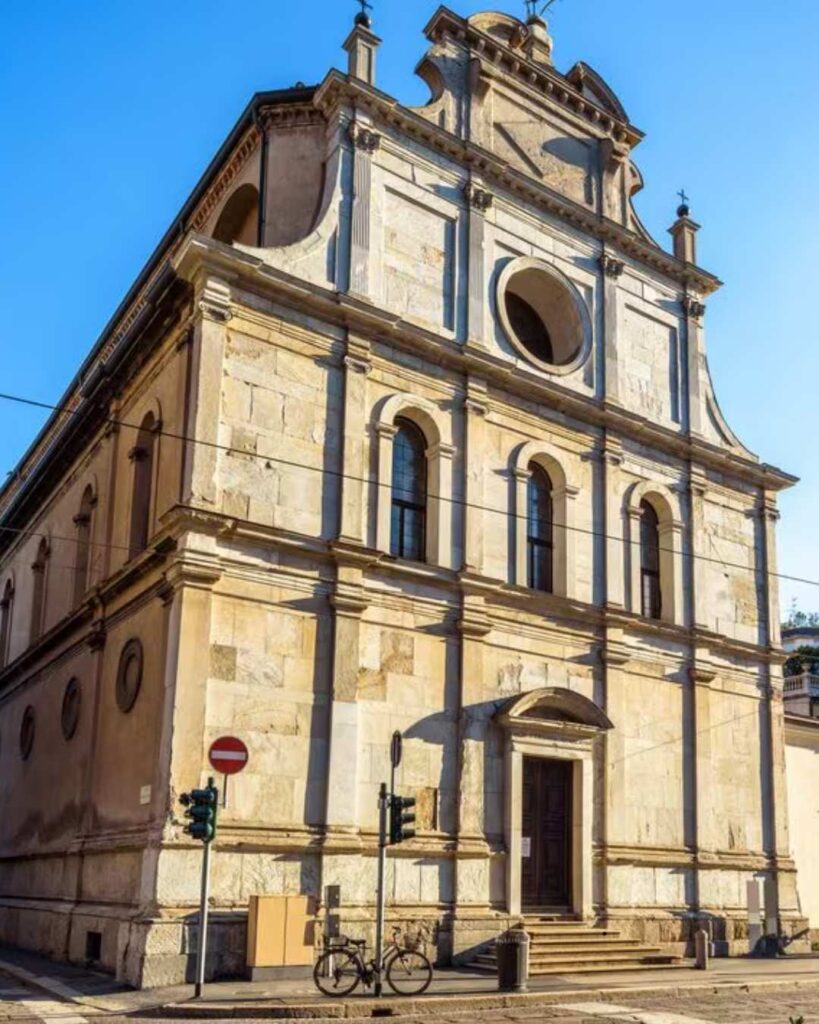
This church in Milan is a bit of a hidden gem. It’s known as the “Sistine Chapel of Milan” because of its incredible cycle of 16th-century frescoes that cover almost every inch of the interior. And the name is apt. The frescoes are by Bernardino Luini and other Lombard Renaissance artists, and they are absolutely glorious.
The church was originally split into two parts: one for the public and one for the nuns who lived in the adjoining monastery. The nuns’ section has a beautiful wooden choir and is just as frescoed as the main part. It’s a fascinating glimpse into the religious life of the time.
The frescoes are filled with vibrant colors and graceful figures, and they depict various scenes from the life of Christ and the saints. It’s not as overwhelming as the Sistine Chapel in Rome, which makes it a much more peaceful and enjoyable experience. When my wife and I visited, we had the place almost to ourselves, which is a rarity in Italy
Santa Maria della Vittoria, Rome
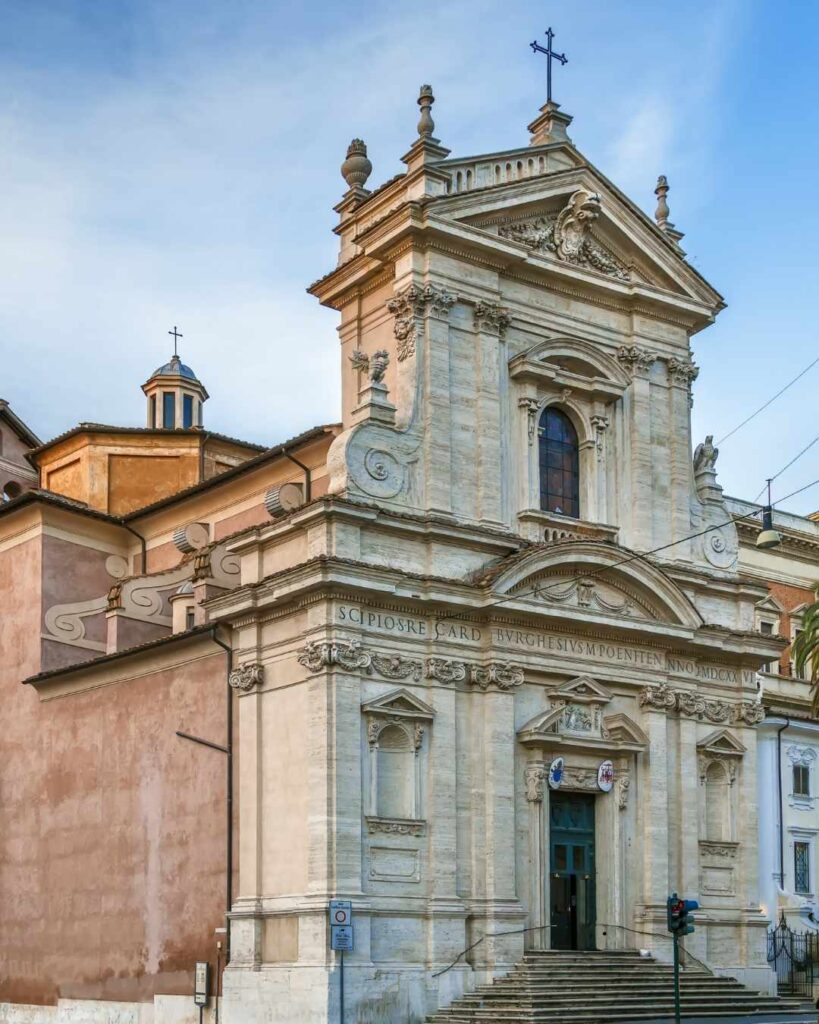
This is a small church in Rome, tucked away on a side street near the Via Veneto. If it weren’t for one piece of art, it would probably be just a footnote in guidebooks. But that one piece of art is Gian Lorenzo Bernini’s “Ecstasy of Saint Teresa,” and it’s one of the greatest sculptures ever created.
The sculpture depicts Saint Teresa of Avila in a state of spiritual rapture, being pierced by an angel’s arrow. It’s a deeply emotional and theatrical work, the very definition of Baroque art. Bernini captured the moment of transcendent ecstasy with such realism and drama that it’s impossible to look away. He used marble, gilt bronze, and even hidden lighting to create a completely immersive experience. It’s like a stage set in a church.
My wife and I spent a long time just staring at it, trying to understand how anyone could carve marble to look like flowing fabric or an angel’s soft skin. It’s a masterpiece that reminds you why art is worth traveling across the world to see.
Conclusion
Eleven churches, eleven different experiences. From the monumental grandeur of St. Peter’s to the intimate beauty of Santa Maria della Vittoria, each one tells a different story about Italy’s incredible past. They’re not just buildings; they’re the physical embodiment of centuries of faith, hope, creativity, and human ambition.
When you visit them, try to look beyond the tourists and the ticket booths. Take a moment to sit in the silence, to look up at the vaulted ceilings, and to feel the weight of history around you. It’s a feeling you won’t find anywhere else.
And remember, treat these places with respect. They’re not just tourist attractions; they’re active places of worship. Cover your shoulders and knees, keep your voice down, and put away your camera during Mass. Do that, and you’ll find that these churches will open their arms to you, offering you a glimpse of something truly extraordinary.
Again, feel free to go through the list below of my Italy recommendations that I have crafted after years of travel to this beautiful country:
- Packing List: Things Not to Go to Italy Without
- Must-Do Things: Unforgettable Experiences
- Where to Stay: Best Hotels in Italy.
- Where to Stay in Rome: Rome’s Best Neighborhoods
- Where to Stay in Florence: Picking the Best Area
- Where to Stay in Venice: Venice’s Best Districts
- Italy’s Cobblestone Streets: Best Shoes For the Job
- Backpack or Suitcase?: Italy Luggage Guide
- Travel Insurance: Always Be Covered
- E-Sim: Be Connected At All Times