
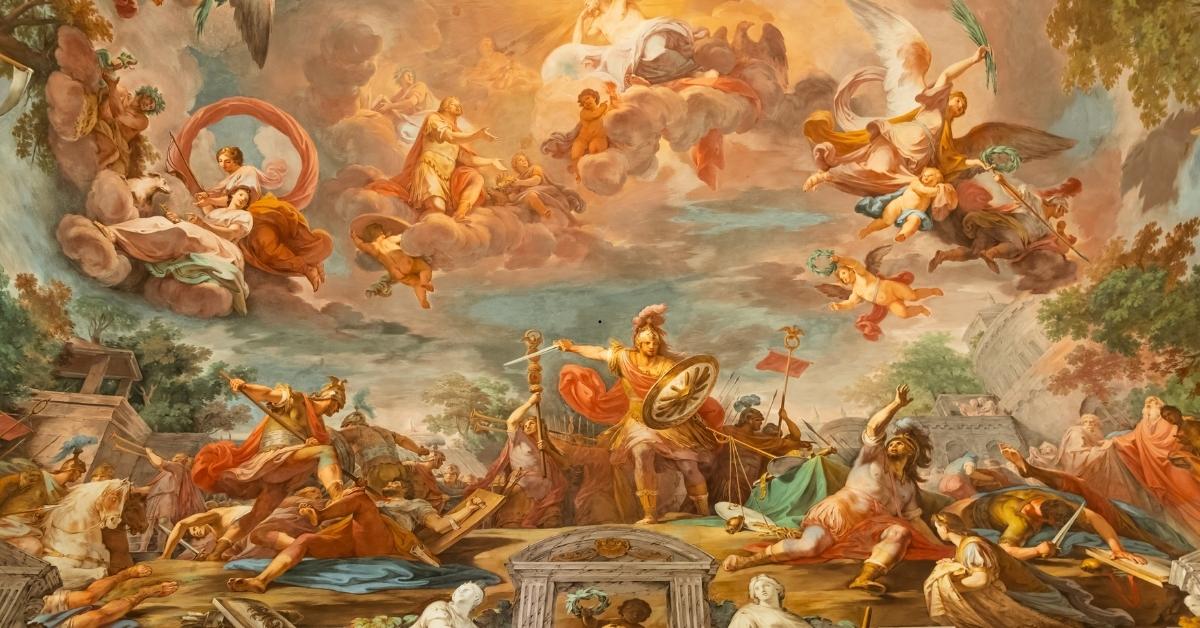
Italy is one giant open-air museum. You can’t walk down a street in Rome without tripping over an ancient ruin, and you can’t turn a corner in Florence without bumping into a Renaissance masterpiece. The art here isn’t locked away in some dusty vault—it’s woven into the very fabric of the cities. For a traveler, this is both a blessing and a challenge. Where do you even begin?
My wife and I have spent years crisscrossing this beautiful country, and I’ve learned that the key to appreciating Italian art is to approach it not as a homework assignment, but as a conversation with history. You don’t need an art history degree to be moved by a Caravaggio or a Botticelli. You just need a bit of context and a willingness to be amazed.
So, let’s do this together. Here’s my curated list of the 15 most beautiful paintings in Italy, along with some hard-won advice on how to actually see them without losing your mind in the process.
1. The Birth of Venus by Sandro Botticelli
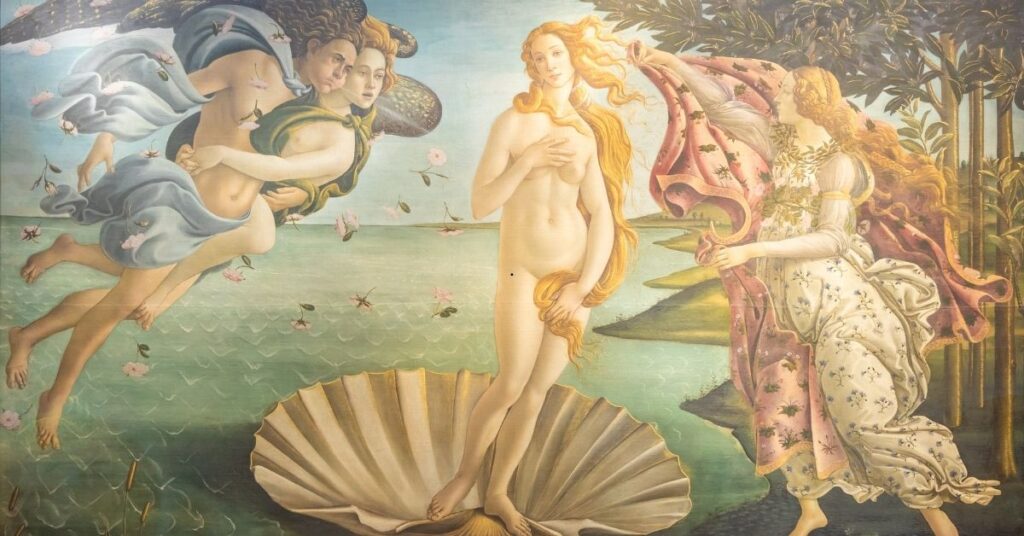
Start your journey in Florence at the Uffizi Gallery. This is ground zero for the Italian Renaissance, and the crowds prove it. But they’re here for good reason.
The Birth of Venus shows the goddess standing on a giant scallop shell, and the moment you see her in person, you realize why she’s so iconic. She’s not just beautiful; she’s an idealized vision of beauty from a time when artists were rediscovering the myths of ancient Greece and Rome. It was revolutionary for its time—a large-scale painting with a non-religious subject.
Practical tip for the Uffizi: Book your tickets online, weeks in advance if possible. The line for the ticket office can stretch for hours. Also, remember you can’t bring in large backpacks, and no flash photography.
2. Primavera by Sandro Botticelli
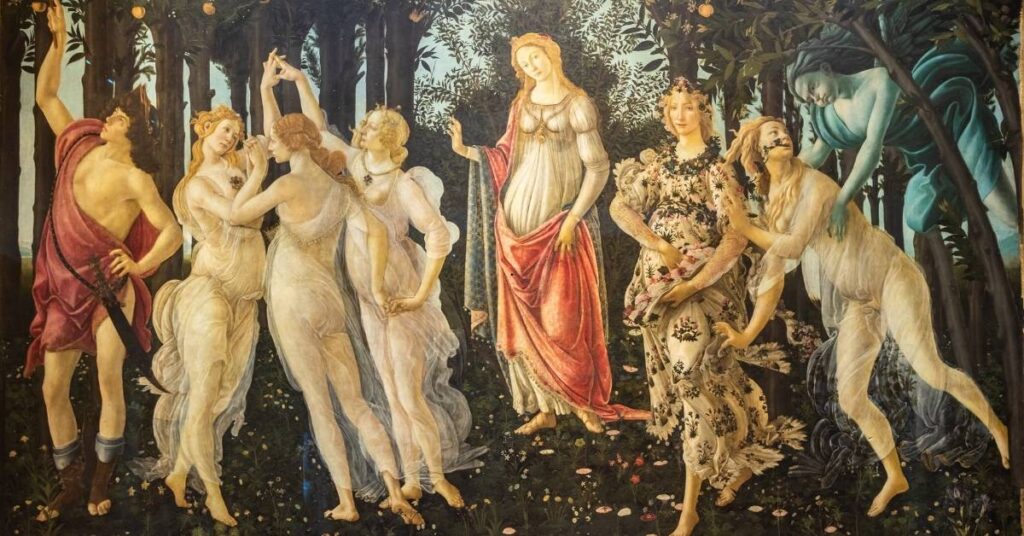
Right nearby in the Uffizi is Primavera, or the Allegory of Spring. It’s more complex, more crowded with figures, and frankly, more mysterious. It’s a celebration of spring, love, and humanistic philosophy, all wrapped up in a dreamlike garden. My wife spent a good ten minutes just staring at the Three Graces, trying to figure out their story. You’ll do the same.
3. The School of Athens by Raphael
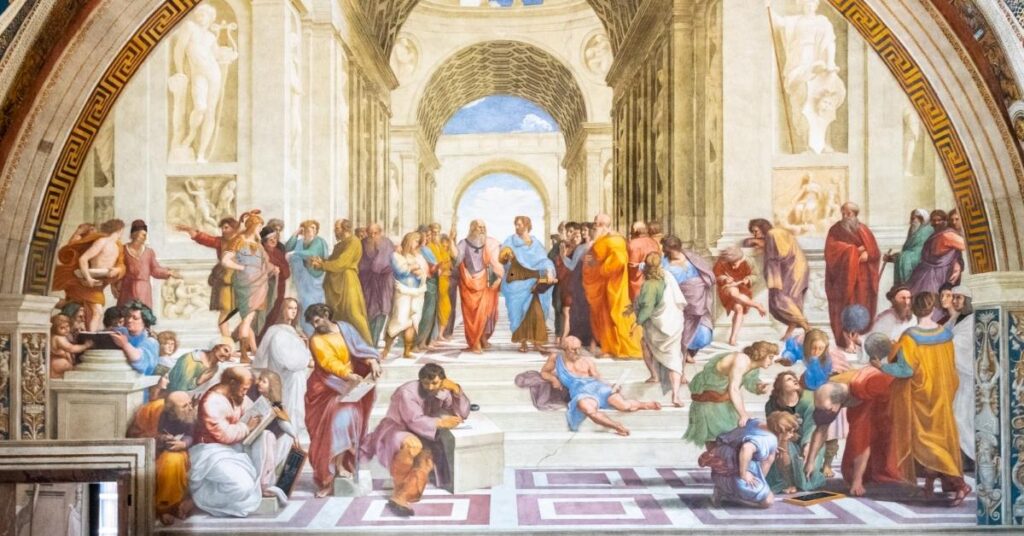
Head to Rome and the Vatican Museums. It’s a sprawling complex, and it can be overwhelming. But you’re here for one of the greatest frescoes ever painted: Raphael’s The School of Athens.
Imagine all the greatest thinkers of the ancient world hanging out in one grand hall. Plato and Aristotle are in the center, but you’ll also spot Socrates, Euclid, and even a self-portrait of Raphael himself. The perspective is mind-boggling, and the way he captures the personalities of these philosophers makes you feel like you could walk right in and join the debate.
4. Sistine Chapel Ceiling by Michelangelo
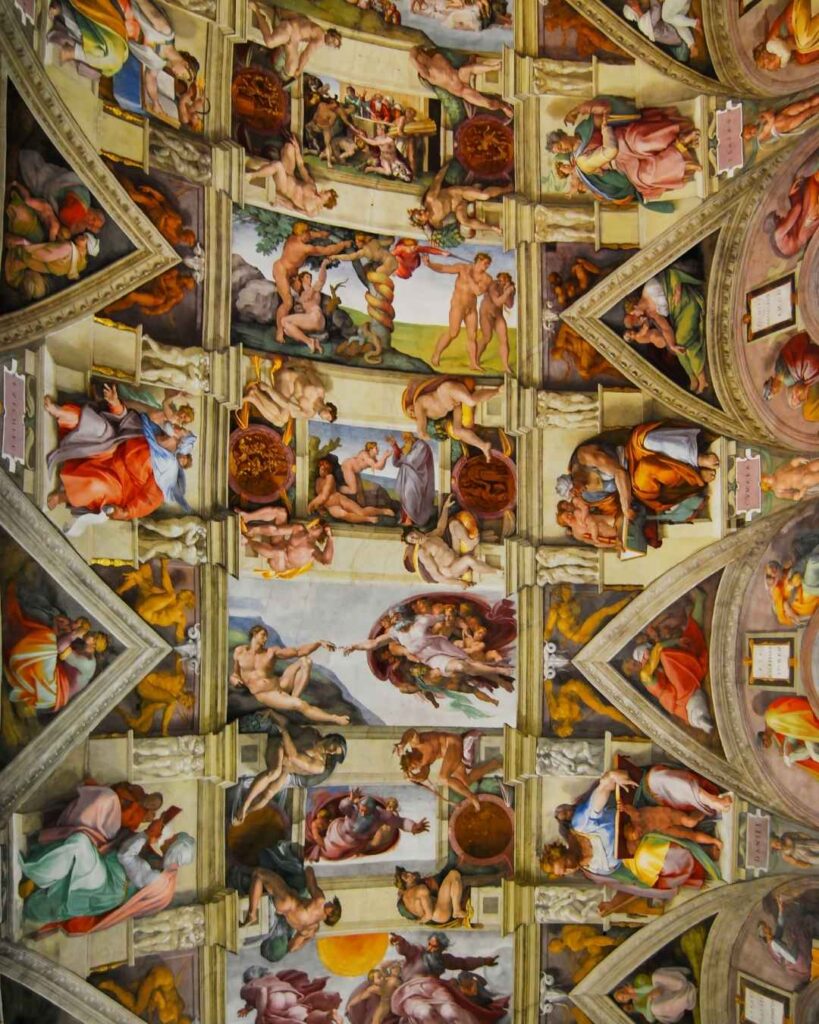
Just down the hall, you’ll find the Sistine Chapel. It’s the crown jewel of the Vatican, and frankly, the crown jewel of Western art. Michelangelo’s ceiling is a monumental achievement. The scale alone is staggering—it took him four years of lying on his back on scaffolding to paint it.
When you walk in, you’ll feel small. And that’s the point. The entire chapel is designed to make you contemplate the divine. The most famous panel, The Creation of Adam, is just a tiny part of this epic story, but it’s the one that captures the imagination. The moment God’s finger reaches out to touch Adam’s is a symbol of humanity’s connection to the divine that has resonated for centuries.
Practical tip for the Vatican: The Museums are a zoo. Book a skip-the-line tour or an early morning entry. And remember, no photos are allowed in the Sistine Chapel. Just soak it in.
5. The Last Supper by Leonardo da Vinci
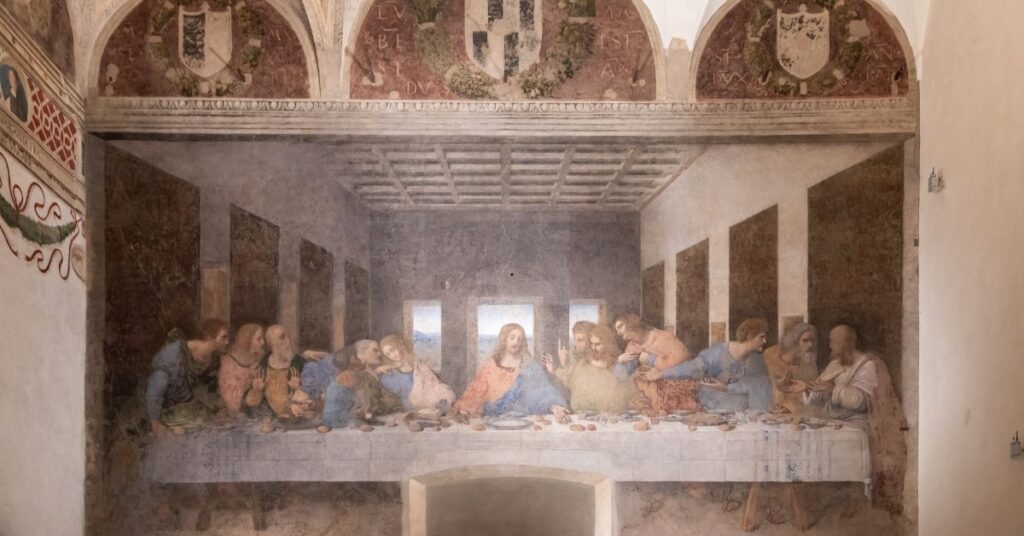
Milan is a bustling modern city, but it holds one of the most fragile and famous paintings in the world: Leonardo da Vinci’s The Last Supper.
This isn’t a painting you can just wander into. It’s in a small refectory attached to the church of Santa Maria delle Grazie. You have to book a timed ticket, often months in advance, and you only get about 15 minutes inside. It’s a bit of a production, but it’s worth it.
What makes it so special? Da Vinci didn’t paint it in traditional fresco. He used an experimental technique with oil and tempera, which is why it has deteriorated so much. But even faded, the power of the scene is undeniable. He captures the moment Jesus announces one of his apostles will betray him. You see the shock, the horror, and the denial ripple through the group. It’s a masterclass in human psychology.
Practical tip for The Last Supper: Seriously, book your tickets as soon as you know your travel dates. They sell out weeks or even months in advance.
6. The Kiss by Francesco Hayez
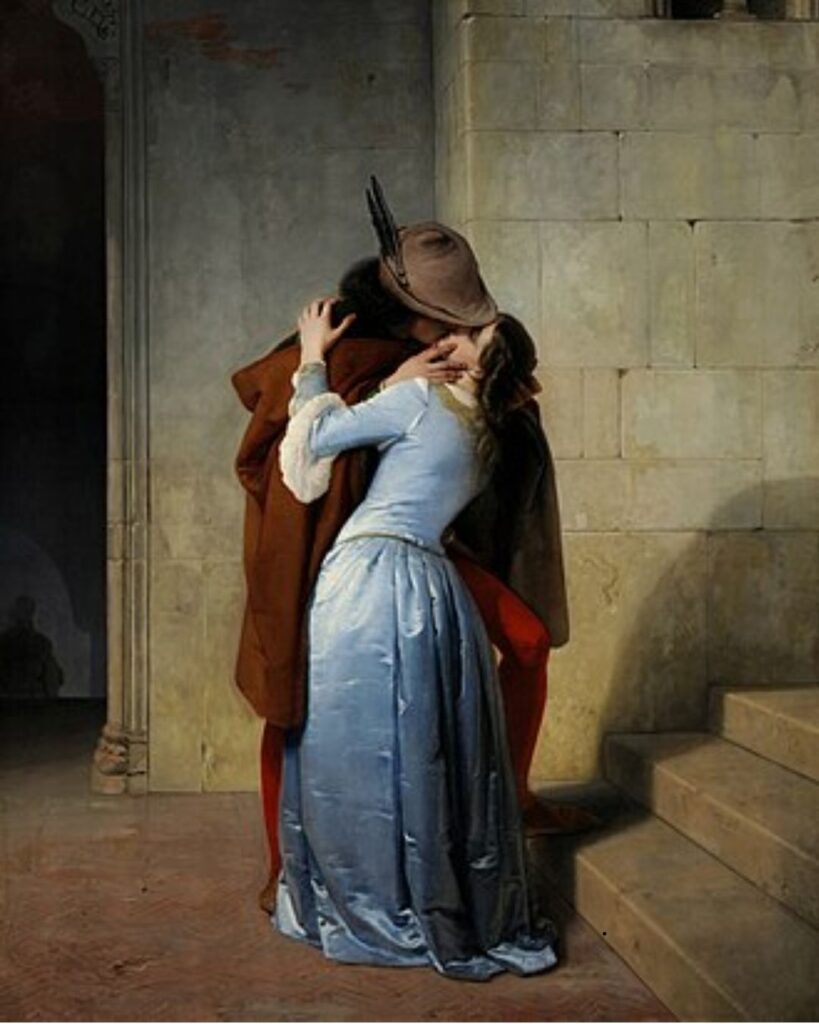
After the intensity of The Last Supper, head to the Brera Art Gallery in Milan for something that feels entirely different but is equally Italian: Francesco Hayez’s The Kiss.
This painting is pure romance. It depicts a passionate kiss between a medieval knight and a woman, and it’s stunning. But there’s more to it than just a beautiful moment. It’s a political statement from the 19th century, painted during the Italian unification movement. The colors in their clothes—the man’s red tights, the woman’s blue dress, and the white of her outfit—are a subtle nod to the colors of the Italian flag. It’s a love letter to Italy itself.
7. The Marriage of the Virgin by Raphael
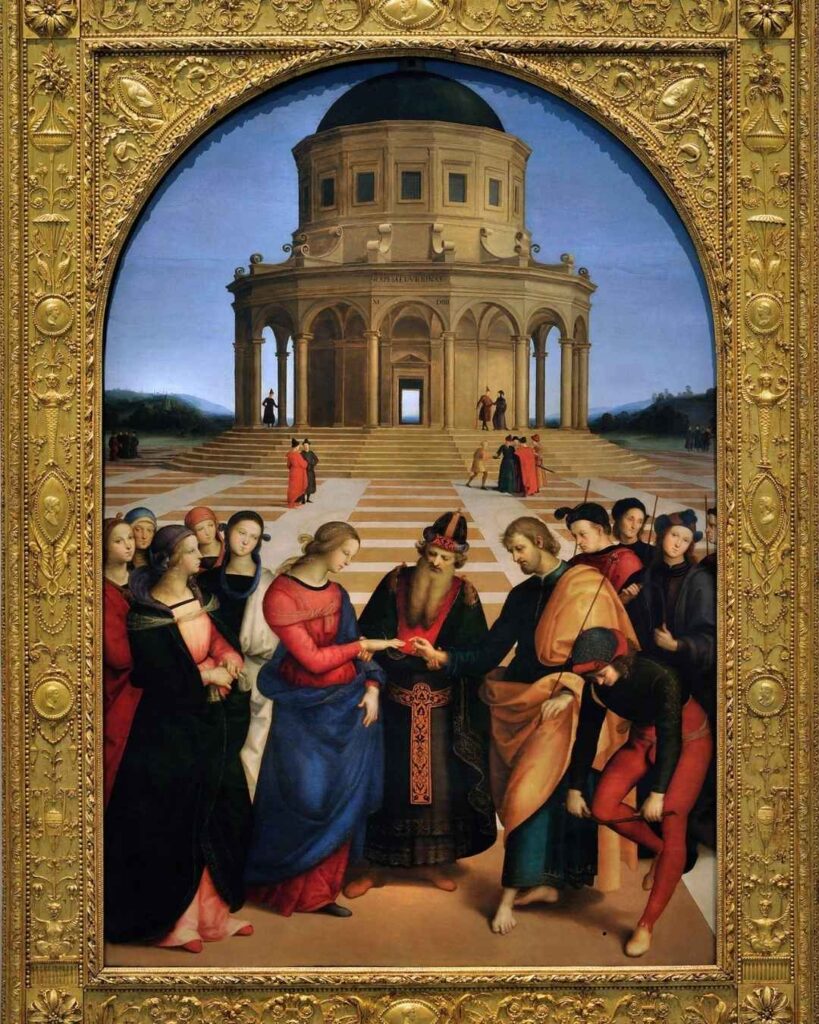
Still in the Brera, you’ll find another masterpiece, this time by a young Raphael. His The Marriage of the Virgin is a perfect example of the High Renaissance style.
Painted when he was just 21, it shows the marriage ceremony of Mary and Joseph. The composition is flawless, with a beautiful temple in the background that draws your eye into the distance. It’s serene, balanced, and incredibly elegant. It’s a glimpse into the talent that would make Raphael one of the most famous artists in history.
8. The Tempest by Giorgione
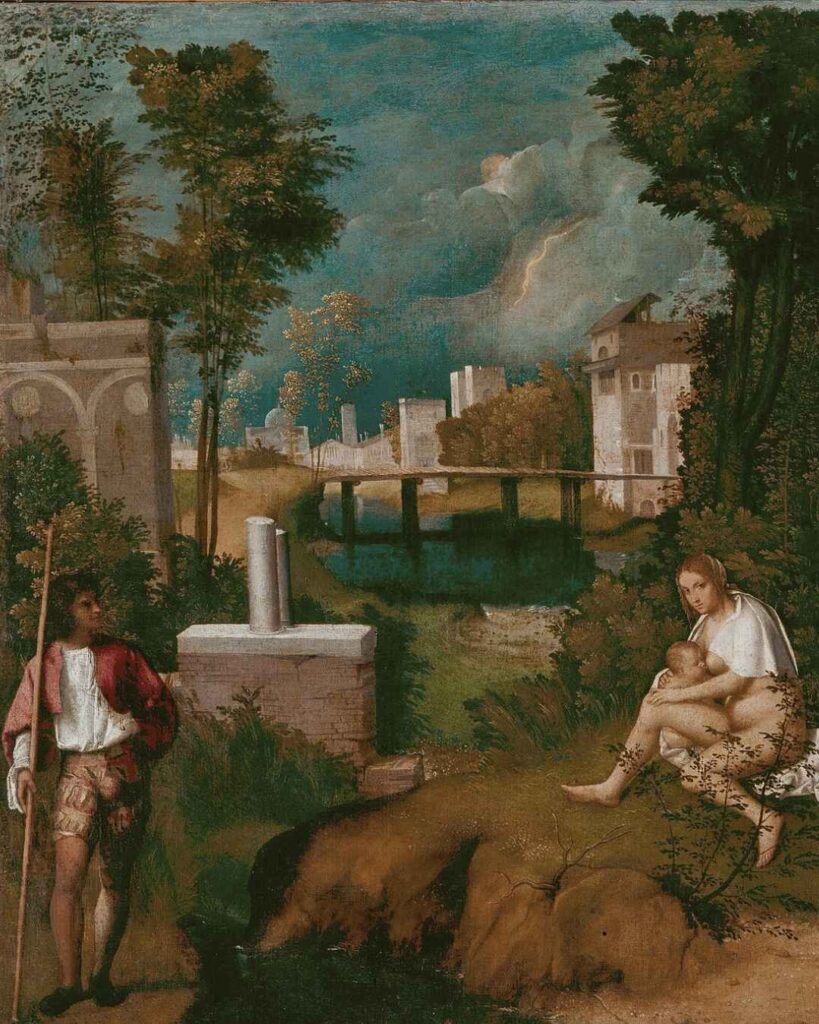
Now, let’s head to the canals. The Gallerie dell’Accademia in Venice is home to Giorgione’s The Tempest, one of the most enigmatic paintings in the history of art.
It’s a stormy landscape with a gypsy woman nursing a baby and a soldier standing nearby. And that’s it. Nobody knows what it means. That’s the beauty of it. It’s one of the first paintings where the landscape itself is the star, not just a backdrop. It uses rich, Venetian color to create a moody, atmospheric, and poetic scene that you can get lost in for hours.
9. Rest on the Flight into Egypt by Caravaggio
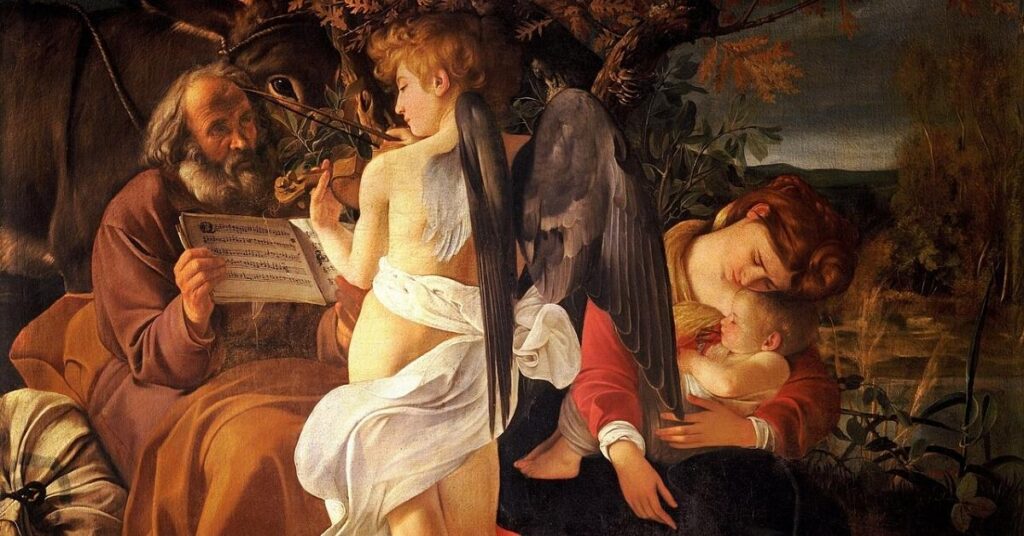
In Rome, the Doria Pamphilj Gallery is a hidden gem, a private palace that still feels like a home. And it holds a masterpiece by Caravaggio: Rest on the Flight into Egypt.
Caravaggio was the master of light and shadow, and this early work is a perfect example. It shows the Holy Family resting during their flight, with an angel playing music. The light seems to radiate from the angel itself, creating a dramatic contrast that highlights the intimate, human moment. It’s a rare moment of tenderness and peace from an artist more famous for his later, more violent works.
10. Sacred and Profane Love by Titian
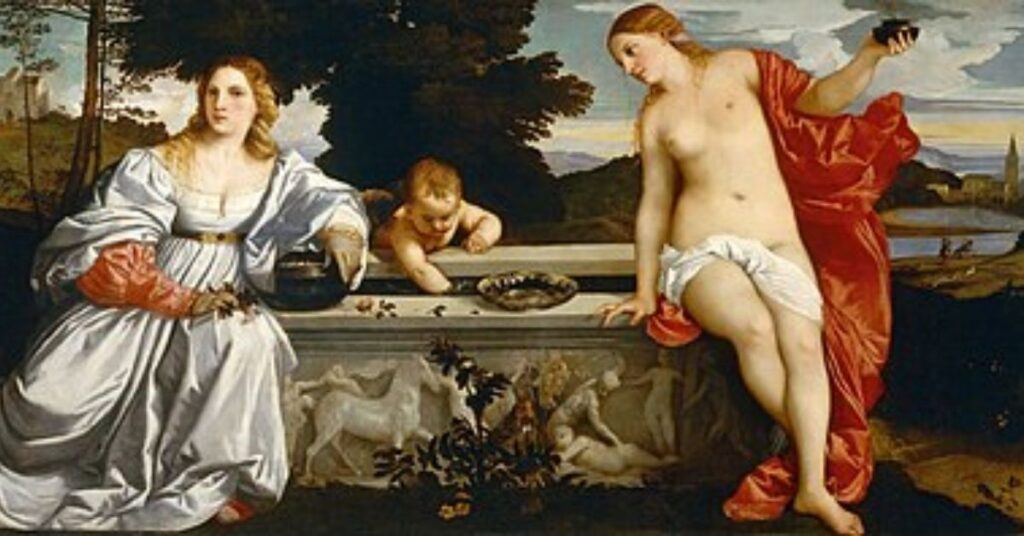
The Borghese Gallery in Rome is another must-visit. It’s a beautiful villa surrounded by gardens, and inside, you’ll find Titian’s Sacred and Profane Love.
This is a masterpiece of the Venetian Renaissance, bursting with color and texture. It’s an allegorical painting featuring two women, one richly dressed, the other nude, representing earthly and heavenly love. The exact meaning is still debated, but the beauty is undeniable. It’s a celebration of love, both sensual and divine.
Practical tip for the Borghese: Like the Vatican, you absolutely must book in advance. They limit the number of visitors, and tickets sell out quickly.
11. The Entombment of Christ by Caravaggio
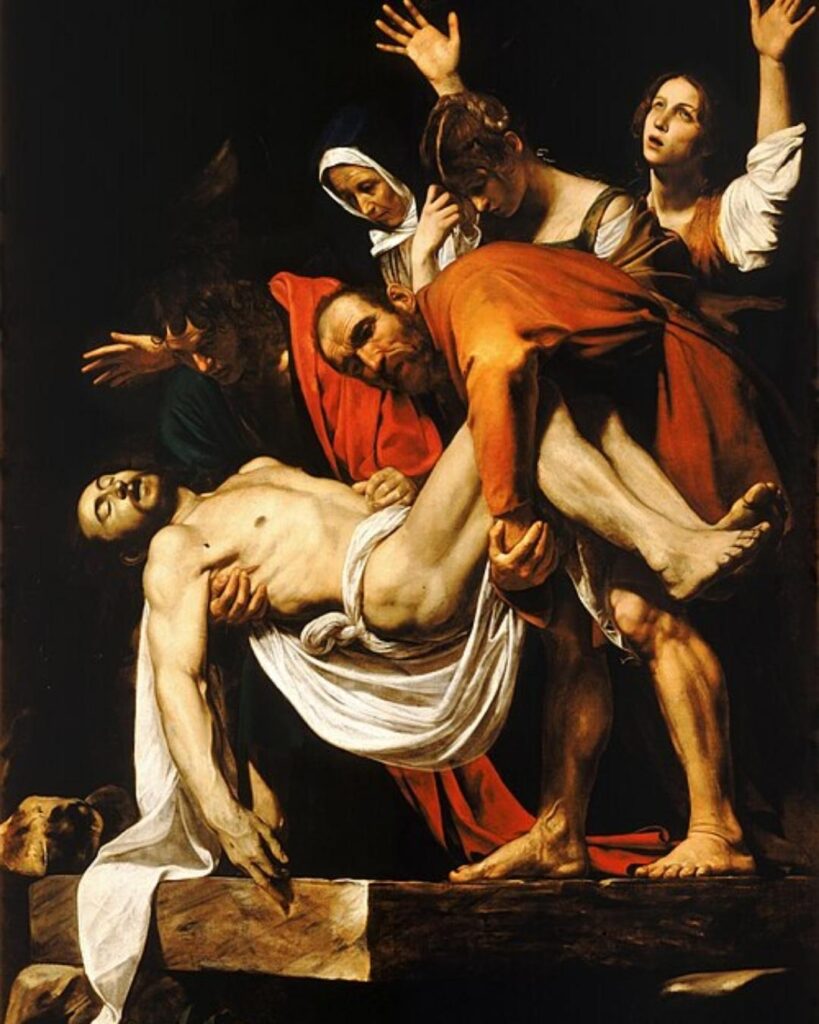
Back in the Vatican Pinacoteca, you’ll find another masterpiece by Caravaggio: The Entombment of Christ.
This is a powerful depiction of Christ’s body being placed in the tomb. It’s a quintessential Caravaggio, using extreme chiaroscuro to create a sense of palpable grief and weight. The figures seem to spill out of the canvas, pulling you into the tragedy of the scene. It’s a deeply moving and influential work.
12. Doni Tondo by Michelangelo
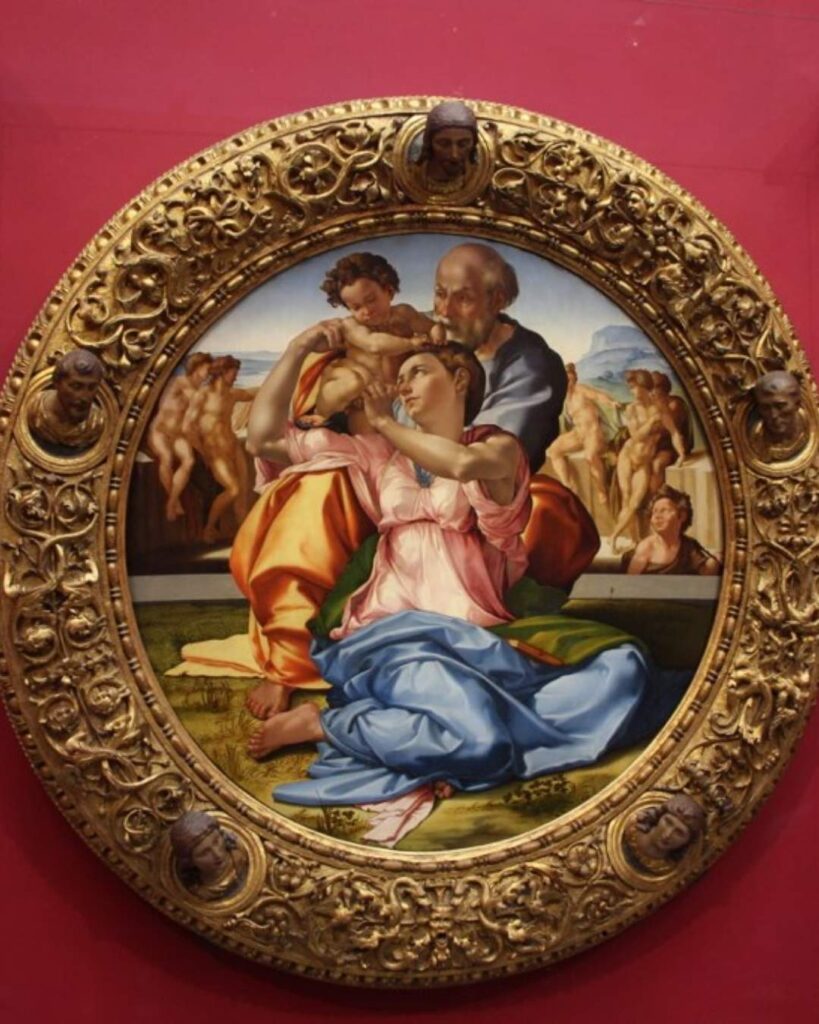
Back in Florence, the Uffizi is also home to Michelangelo’s Doni Tondo. It’s a rare panel painting from an artist who was primarily a sculptor.
It’s a circular painting of the Holy Family, and you can see Michelangelo’s sculptural approach in the figures. They seem to be carved from marble, with dynamic, twisting poses. It’s vibrant, colorful, and full of movement.
13. Medusa by Caravaggio
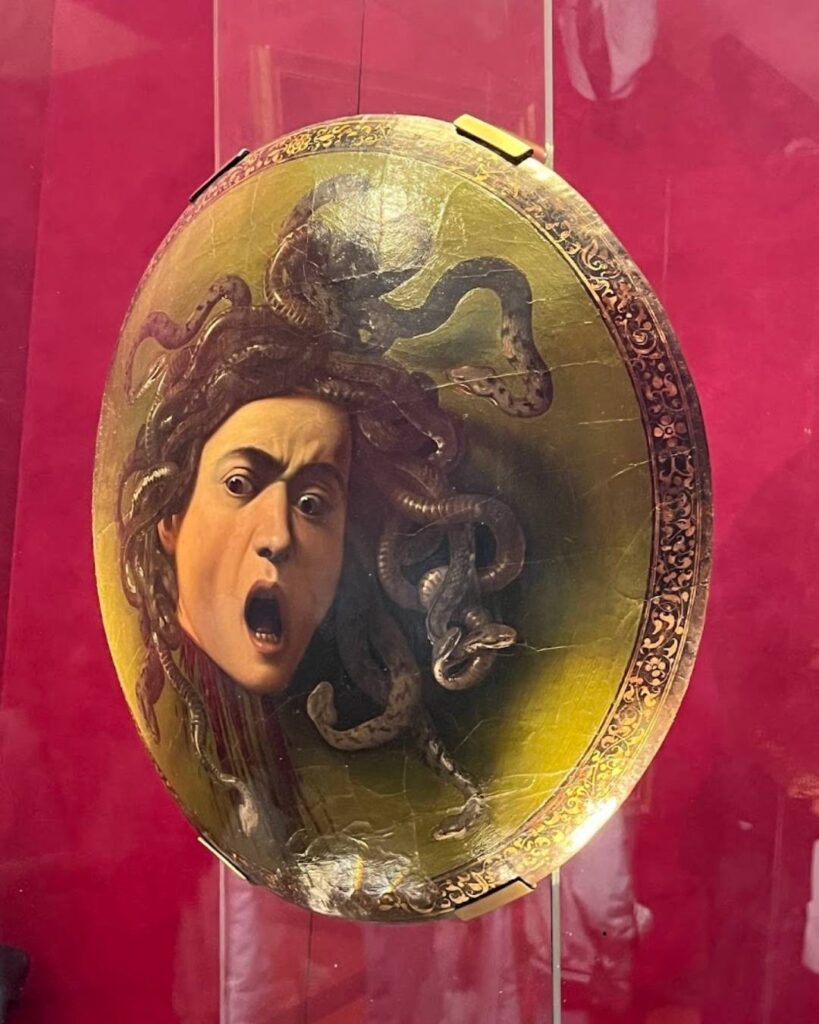
Still in the Uffizi, get ready for a shock. Caravaggio’s Medusa is a visceral experience.
It’s a horrific, realistic depiction of the severed head of the gorgon Medusa, frozen in a scream of terror. Painted on a ceremonial shield, it’s a testament to Caravaggio’s virtuosity. It’s shocking and powerful, a masterclass in psychological horror.
14. The Fourth Estate by Giuseppe Pellizza da Volpedo
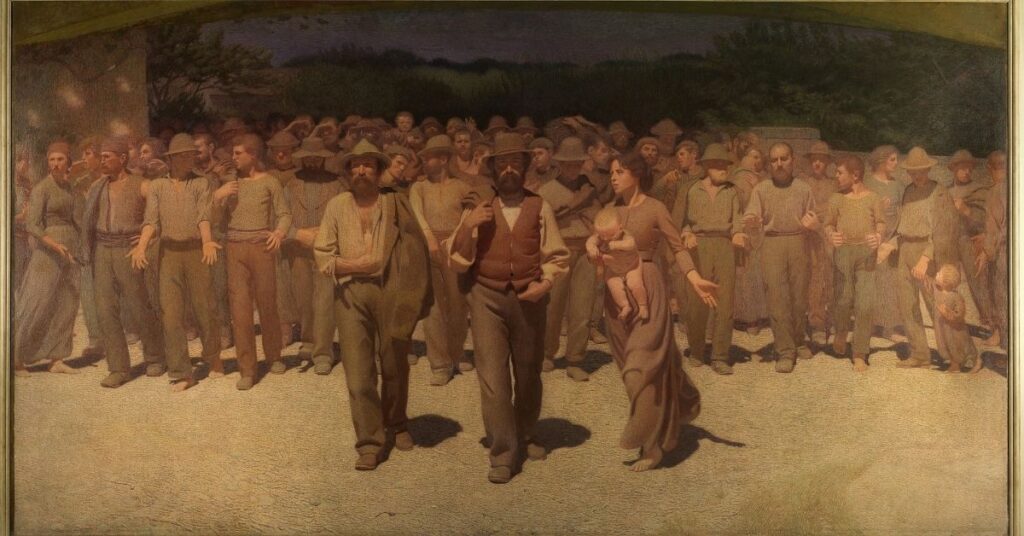
In the Galleria d’Arte Moderna in Milan, you’ll find a painting that feels different from all the others on this list: The Fourth Estate by Giuseppe Pellizza da Volpedo.
It’s a monumental painting of a group of striking workers marching forward. Painted at the turn of the 20th century, it’s a powerful symbol of the socialist movement and class consciousness. It’s a masterpiece of Italian Divisionism, using small strokes of pure color to create a shimmering, powerful effect. It’s a moving portrait of collective human dignity and strength.
15. The Transfiguration by Raphael
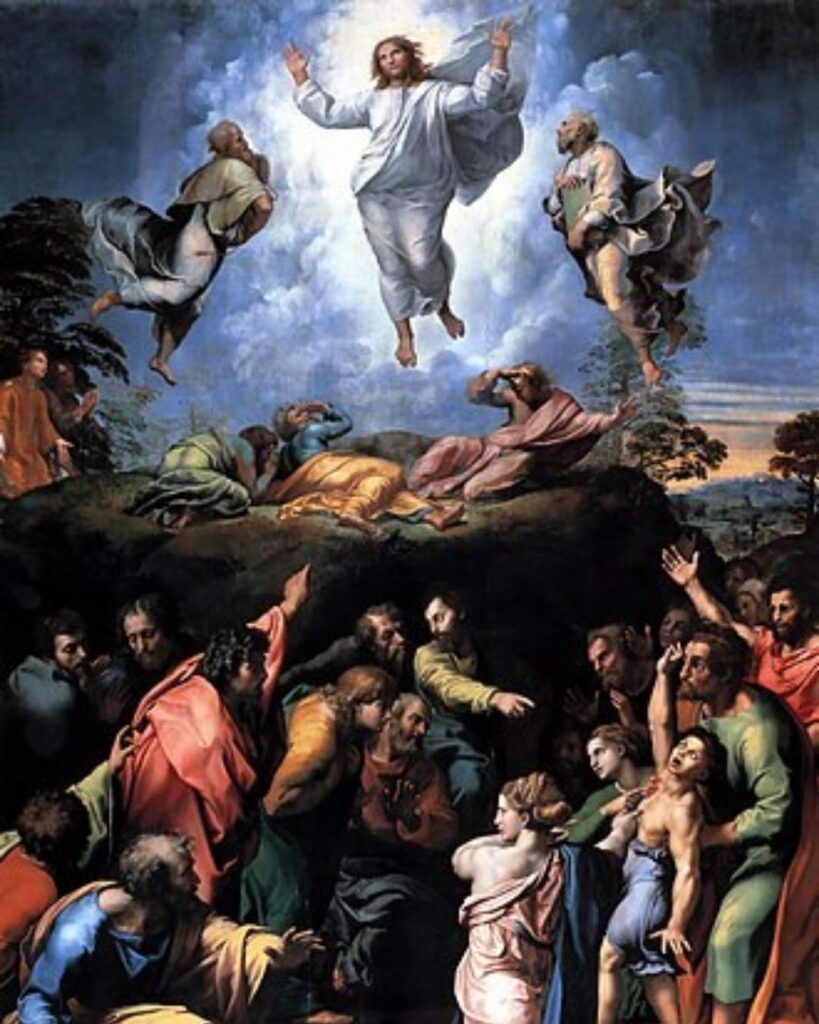
Finally, we return to the Vatican Pinacoteca for Raphael’s The Transfiguration. This is his final and most complex painting, left unfinished at his death.
The composition is split into two registers: the serene, divine transfiguration of Christ above, and the dramatic, chaotic scene of the apostles trying to heal a possessed boy below. It’s a blend of High Renaissance ideals and early Mannerist experimentation, and it’s considered a work that bridges artistic periods. It’s a perfect note on which to end this journey—a masterpiece that looks to the future.
How to See Them All Like a Pro
Here’s the thing about seeing all these paintings. It’s not just about checking boxes. It’s about the experience. And to have a good experience in Italy’s museums, you need a strategy.
Book Everything. I can’t emphasize this enough. For the Uffizi, the Vatican Museums, and The Last Supper, booking tickets online in advance is non-negotiable. You can easily spend a half-day waiting in line if you don’t. It’s worth the small booking fee to save your sanity.
Go Early or Late. The crowds are thickest in the middle of the day. If you can, book an early morning slot or a late afternoon one. You’ll have a more peaceful experience. Museums like the Uffizi also offer evening openings on certain days.
Consider a Guide. My wife and I usually prefer to explore on our own, but in the case of the Vatican Museums, a good guide can make all the difference. They can navigate the crowds, get you to the highlights, and provide the context that makes the art come alive.
Pack Light. Most museums have a cloakroom, but it’s a hassle. Carry a small bag, wear comfortable shoes, and leave the big backpacks at the hotel.
Be Present. It’s easy to get caught up in taking photos. But remember, you can find high-quality images of all these paintings online. The real treasure is standing in front of them, taking in the scale, the texture, and the presence of the artist’s hand. Put your phone away and just look.
Italy’s art is not a relic of the past. It’s a living, breathing part of the country. It’s in the churches, the museums, and the piazzas. And it’s waiting for you to discover it.
Again, feel free to go through the list below of my Italy recommendations that I have crafted after years of travel to this beautiful country:
- Packing List: Things Not to Go to Italy Without
- Must-Do Things: Unforgettable Experiences
- Where to Stay: Best Hotels in Italy.
- Where to Stay in Rome: Rome’s Best Neighborhoods
- Where to Stay in Florence: Picking the Best Area
- Where to Stay in Venice: Venice’s Best Districts
- Italy’s Cobblestone Streets: Best Shoes For the Job
- Backpack or Suitcase?: Italy Luggage Guide
- Travel Insurance: Always Be Covered
- E-Sim: Be Connected At All Times
Thanks