
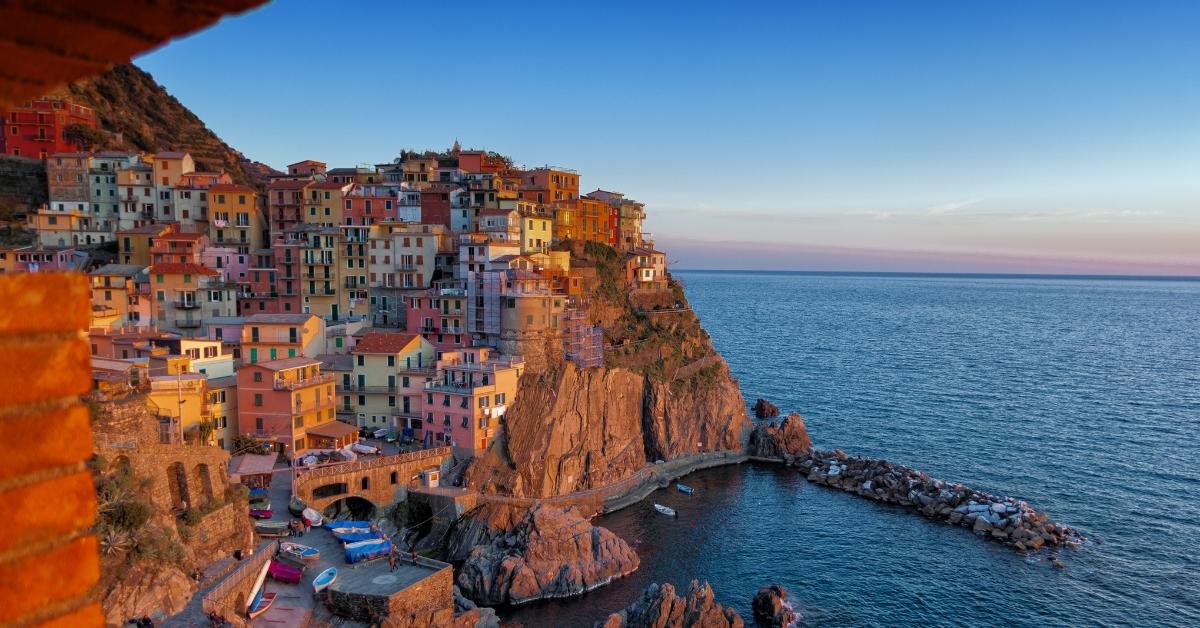
The first time I saw a photograph of Cinque Terre, I assumed it couldn’t possibly be real. Those candy-coloured houses stacked impossibly against cliffs that plunge straight into impossibly blue water? Surely someone had cranked up the saturation dial to eleven. But then I went there, and I discovered that the photographs don’t actually do it justice. The real thing is better.
That was the good news.
The less encouraging news is that Cinque Terre is also one of the most mismanaged tourist destinations in Europe. I’ve watched sunburned travelers weeping on train platforms, couples having full-blown arguments over missed connections, and families dragging enormous suitcases up staircases that would challenge a mountain goat. All of it entirely preventable.
Here’s what I wish someone had told me before I went, and what you absolutely need to know before you book a single thing.
Stop experiencing Italy like everyone else. Your trip is different because you are different. Tell me when you’re going, who you’re traveling with, where you want to go, what you absolutely want to see and do, your budget, and anything else that matters to you. I’ll put it all together into a tailor-made Italy itinerary that tells you where to go, where to stay, what to eat, and how to make the most of your time. Use this form
The Planning Stage
Let’s start before you’ve even packed a bag. This is where most people get it wrong, and it’s the hardest to fix once you’re already there.
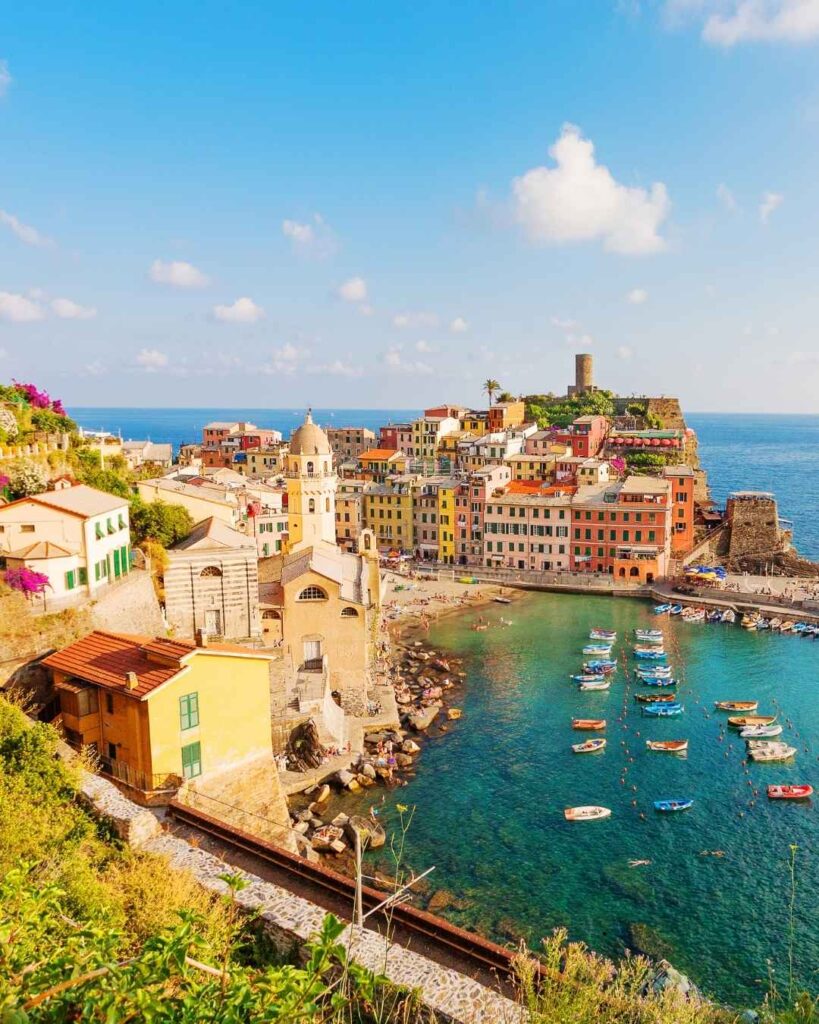
The biggest misconception about Cinque Terre is that it’s a place you can “do” in a day. I’ve seen itineraries that promise to conquer all five villages between breakfast and dinner, and every single one of those itineraries is a lie. The trains get crowded, the trails get hot, and somewhere around village number three, you stop seeing beauty and start seeing obstacles.
The magic of this place isn’t in ticking boxes. It’s in the quiet moments you find when you’re not rushing. It’s the unexpected conversation with a shopkeeper, the glass of wine you linger over because you don’t have a train to catch, the discovery of a viewpoint that isn’t on any map. You don’t get those moments when you’re sprinting from Monterosso to Riomaggiore with a schedule in your hand.
Plan for at least two full days. Three is better. One per village is a comfortable rhythm that lets you actually experience the place rather than just photograph it.
And while we’re on the subject of planning, pay attention to when you’re going. July and August in Cinque Terre are what I can only describe as a beautiful nightmare. The temperatures climb into the uncomfortable range, the crowds become almost impenetrable, and the prices reflect the desperation of everyone trying to escape the heat.
The sweet spot is May or September. The weather is still glorious, but the crowds have thinned to something manageable. The light is softer for photographs, the trails are less congested, and you can actually hear the waves rather than the chatter of a thousand tour groups.
There is one more thing you should check before you commit to dates. Cruise ships dock in nearby La Spezia, and on those days, everything changes. The villages become overwhelmed with day-trippers who descend en masse and leave just as quickly. Check the cruise schedule before you book. It takes thirty seconds and it could save you from a day that feels less like a holiday and more like an evacuation.
Where to Stay and How to Get Around
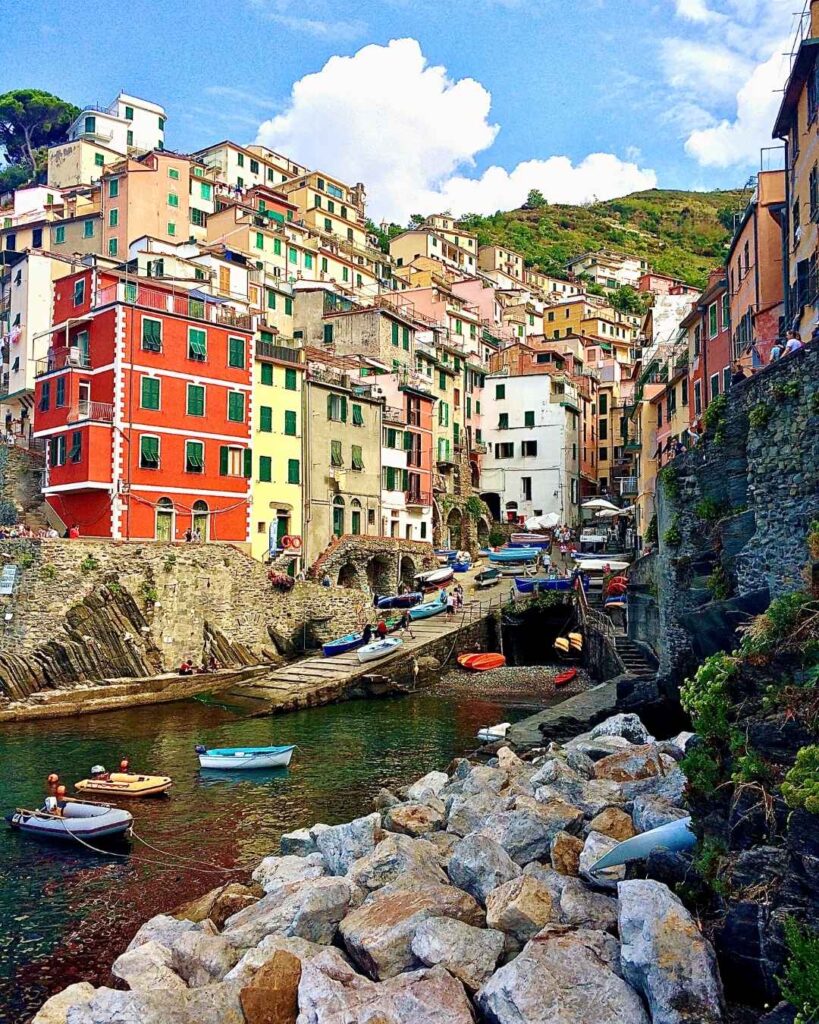
Here is a truth that surprises almost everyone who visits Cinque Terre for the first time: the accommodation photographs online are often misleading. They show you a beautiful room with a view of the sea, but they don’t show you the eighty-seven steps you have to climb to reach it, or the fact that you’ll need to carry your own luggage up those steps because there’s no lift.
I made this mistake. I booked a charming little room in Vernazza based on a photograph of the view, and I spent the first fifteen minutes of my holiday in a state of mild cardiac distress, hauling a bag that suddenly felt like it was filled with bricks. Learn from my wheezing. Pack light, and ask your accommodation about access before you commit.
If you want to avoid the stair-climbing entirely, consider staying in Levanto or La Spezia. These are the gateway towns to Cinque Terre, and they’re far more forgiving. Levanto is a charming seaside town in its own right, with a proper beach and flat streets.
La Spezia is a functioning city with all the amenities you could want and frequent trains that whisk you into the villages in minutes. Both options are cheaper and more practical, and you can still enjoy Cinque Terre during the day without wrestling with your suitcase at the end of it.
Speaking of trains, let’s talk about the car situation. Do not, under any circumstances, rent a car for Cinque Terre. The villages are car-free, which sounds charming until you realise it means you have to park outside and find your way in on foot.
Parking is scarce, expensive, and located at the top of hills that will test your resolve. The roads between villages wind through mountains and take almost an hour, while the train does the same journey in about twenty minutes.
The Cinque Terre Express is your friend. It runs frequently between all five villages, and it’s the most efficient way to get around. The Cinque Terre Card is worth getting if you plan to move between villages more than twice in a day, and it also gives you access to the hiking trails and free Wi-Fi in the park. Just buy it at the train station when you arrive.
I have written a separate guide about the best places to base yourself in while exploring Cinque Terre. Read it here.
The Trails and the Shoes
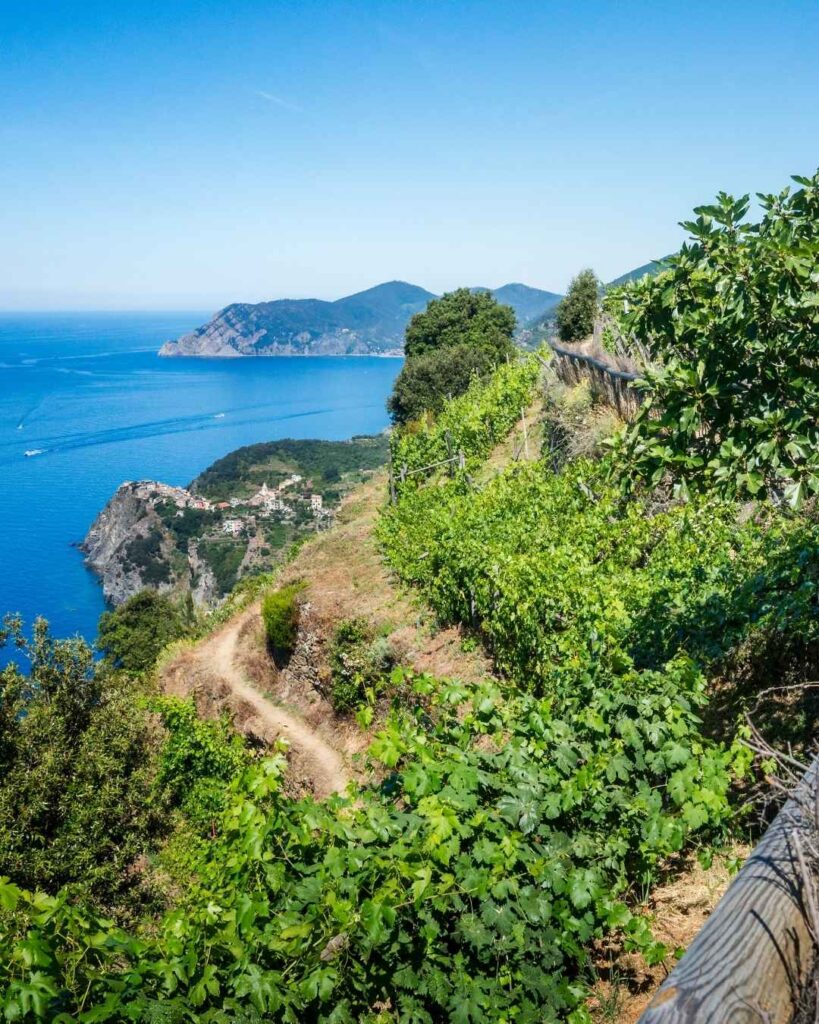
Everyone wants to hike the famous Blue Trail between the villages. It’s one of the great coastal walks of the world, and the photographs make it look like an effortless amble through paradise.
The reality is a bit different.
The trail is not a casual stroll. Sections of it are steep, rocky, and physically demanding. Parts are frequently closed for maintenance or weather, and you can’t always predict which sections will be available. The famous Via dell’Amore between Riomaggiore and Manarola was closed for nearly twelve years before recently reopening with a fee structure.
Check the current trail conditions before you set out, or you might find yourself at a locked gate with no backup plan.
The direction you hike matters too. Most people start from Monterosso and work their way south, but the climbs are significantly harder that way. Start from Riomaggiore instead and tackle the difficult sections early when you’re fresh. You’ll thank yourself when you’re descending into Monterosso at the end of the day rather than dragging your exhausted legs up yet another incline.
And please, for the love of all that is holy, wear proper shoes. I have seen people attempt the trails in flip-flops. I have seen them in wedges. I have seen them in brand-new white sneakers that they clearly regretted within the first five minutes. The trails are uneven, the steps are ancient, and the rocks are slippery. Comfortable walking shoes with good grip, like these ones are not optional. They are essential.
Also, bring water. There are no facilities between the villages on the trails. No toilets, no cafes, no water fountains. The train stations have everything you need, but once you’re on the path, you’re on your own. Pack accordingly.
The Daily Rhythm
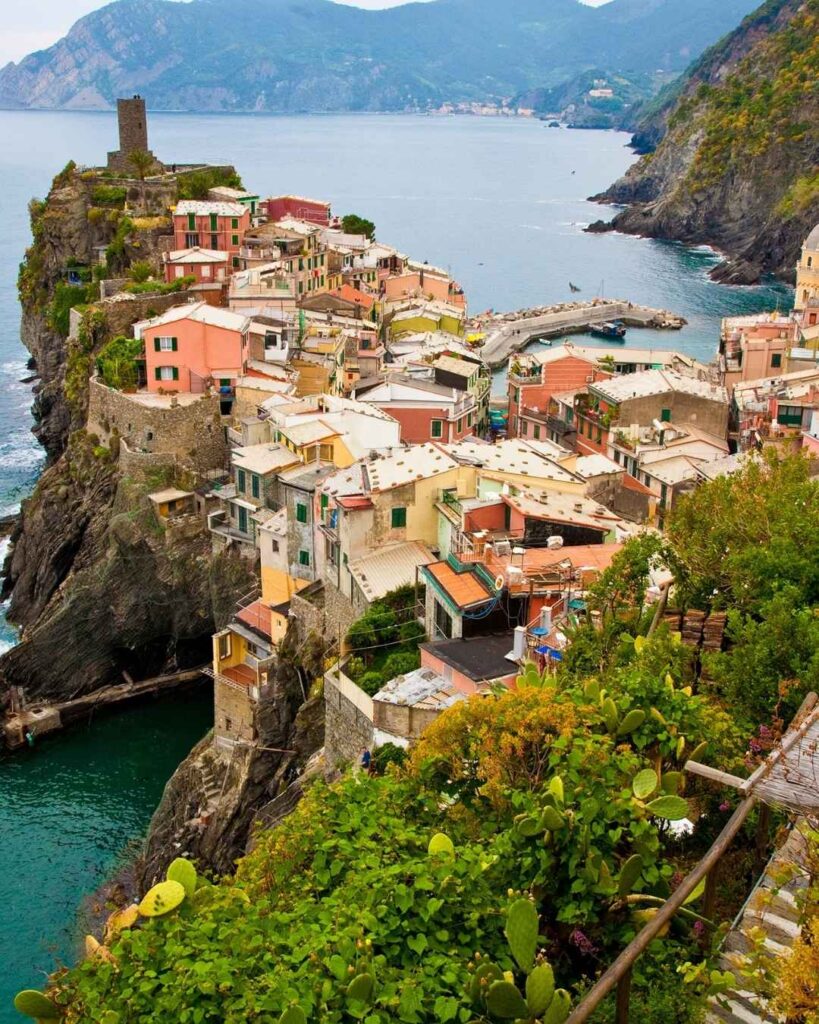
The middle of the day in Cinque Terre is when the crowds descend and the heat becomes oppressive. The cruise ship passengers arrive, the trains fill to bursting, and the narrow streets become almost impossible to navigate.
The solution is simple. Wake up early.
The villages are at their most beautiful in the early morning light. The streets are empty, the air is cool, and the only sounds are the birds and the waves. This is when you’ll have the best viewpoints to yourself, when you can photograph the houses without strangers in your frame, when the whole place feels like it belongs just to you.
And then, when the crowds arrive around midday, you can retreat. Take a nap. Sit in a cafe and watch the chaos from a safe distance. Have a long, leisurely lunch. The afternoon is for resting, not for exploring.
When evening comes, the magic returns. The day-trippers leave, the light softens, and the villages take on a golden glow that makes everything look like a painting. This is the time for wandering without purpose, for discovering hidden corners, for lingering over dinner with a bottle of local wine.
If you want to eat well in Cinque Terre, you need to plan ahead. The restaurants are small and the demand is high, especially for tables with sunset views. In summer, turning up without a reservation is a gamble you will almost certainly lose. Ask your hotel to book for you, or call ahead yourself. The language barrier isn’t as daunting as you might think, and the staff will appreciate the effort.
Where you eat matters too. The restaurants right on the harbour have the best views and the worst value. Walk a few streets inland and you’ll find places that are cheaper, more authentic, and often better. The food in Cinque Terre is not what you might expect from Italian restaurants at home. You won’t find spaghetti and meatballs here, and you shouldn’t look for it.
What you will find is pesto, made with basil grown in nearby Genoa and served with local pasta shapes like trofie. You’ll find fresh seafood fried in paper cones, anchovies prepared in ways you never imagined, and wines that barely make it out of the region because they’re so beloved locally. Embrace what’s here rather than chasing what you recognise. You’ll eat better for it.
The villages have very few swimming pools because the vertical terrain simply doesn’t allow for them. If you’re expecting to cool off with a dip in a hotel pool, you’ll be disappointed. Monterosso has sandy beaches where you can swim, and there are ladders into the water at various points along the coast, but it’s not the poolside holiday you might imagine.
The Hidden Things
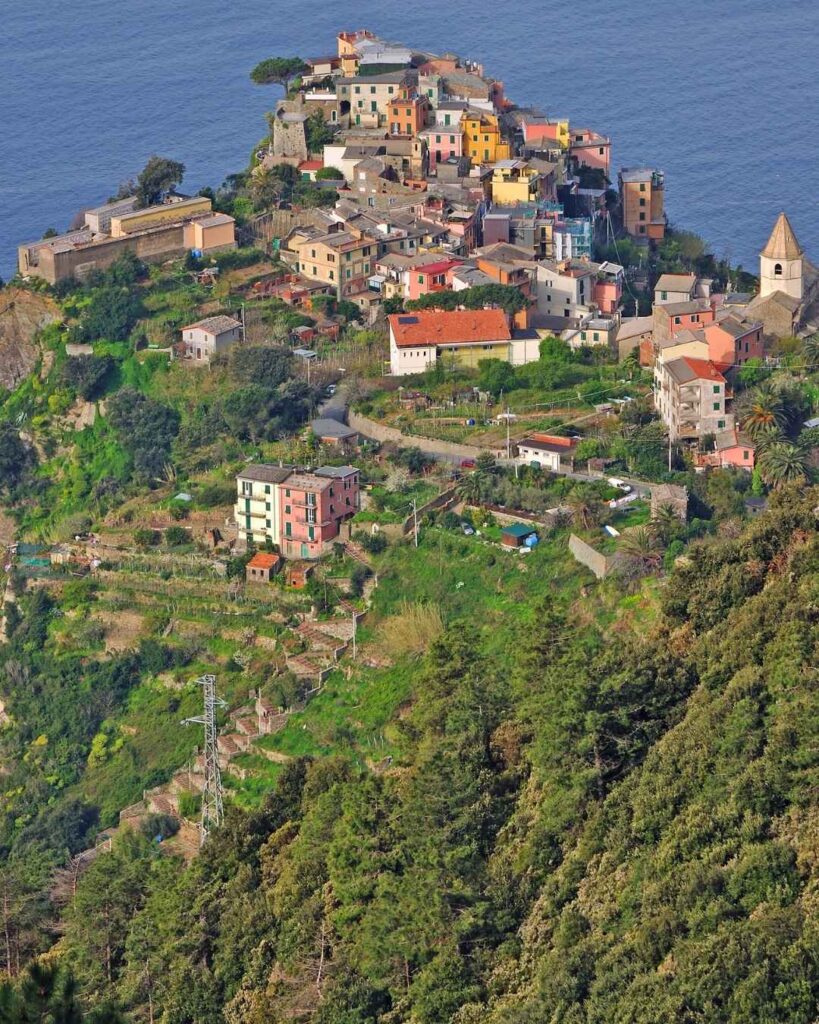
There are five villages in Cinque Terre, but most visitors never really see the fifth one.
Corniglia sits perched on top of a cliff a hundred metres above the sea, and it requires a climb of three hundred and seventy-seven steps to reach it. There is a shuttle bus, but many people don’t know about it, and even those who do often decide the effort isn’t worth it.
They are wrong. Corniglia is the quietest village, the most peaceful, and it has some of the best sunset views in the whole region. The climb is worth every single step, and if you take the shuttle bus, it’s barely an effort at all. Don’t skip it.
Monterosso al Mare is the largest village and the only one with an extensive sandy beach. It’s easy to overlook it as just the starting point for the other villages, but it deserves more than a passing glance. Spend a morning here. Rent a chair. Swim in the sea. It’s a different pace from the other villages, more relaxed, more expansive, and it’s the perfect counterbalance to the intimacy of places like Vernazza and Manarola.
Don’t come to Cinque Terre expecting high-end shopping. You won’t find designer boutiques or luxury brands. What you will find are shops selling locally made soaps, cutting boards, dried pastas, preserved fruits, and other food-related treasures. These are the souvenirs worth bringing home, the things that taste like the place itself.
Managing Expectations
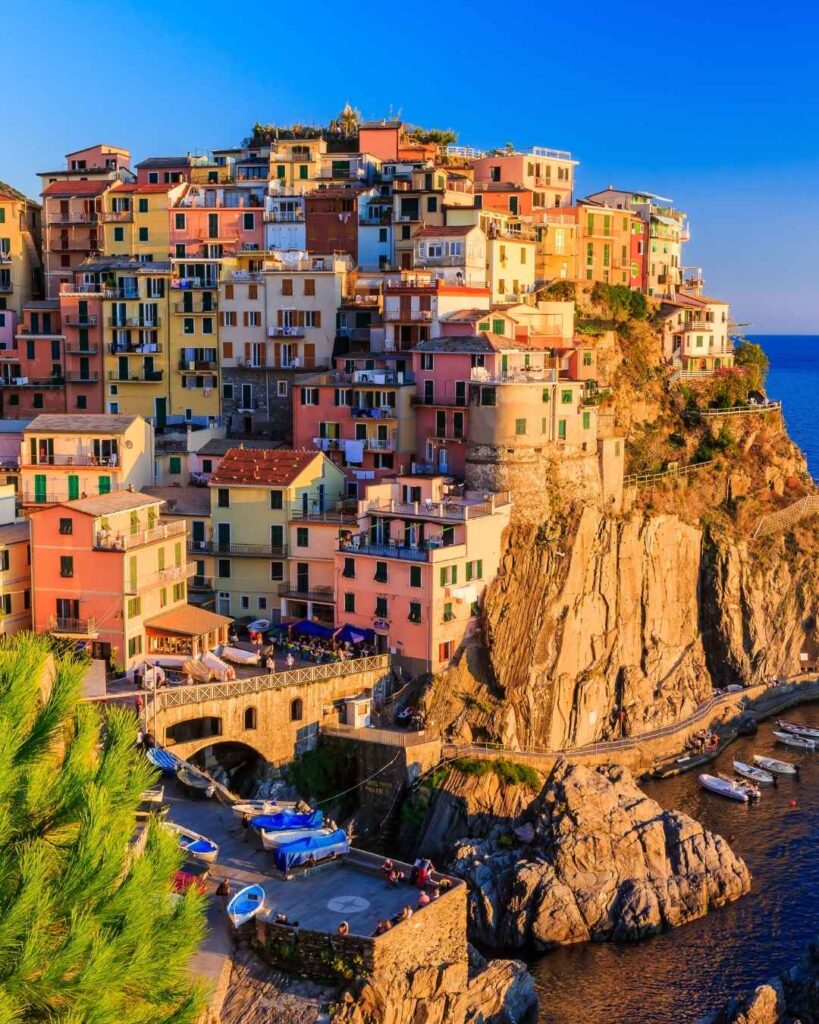
There is something you should accept before you arrive. Cinque Terre is one of the most photographed places on earth, and it gets the crowds to match. You will not have the place to yourself. You will share the viewpoints, the trains, and the narrow streets with thousands of other people who also saw the photographs and decided they had to come.
This doesn’t have to ruin your experience. It just means you need to be smart about how you approach it. Early mornings and late evenings are your sanctuary. The middle of the day is when you lean into the chaos rather than fighting it. Sit at a cafe with a drink. Watch the spectacle. Recognise that you’re part of it too, and that’s not necessarily a bad thing.
One final note on a small but persistent annoyance. The name is Cinque Terre, not Cinque Terra. The pronunciation is “CHEEN-kweh TEHR-reh.” Getting it right shows respect and it helps when you’re asking for directions or buying tickets. It’s a tiny detail, but it matters.
The Bottom Line
Cinque Terre is not a complicated destination, but it requires a certain mindset. You can’t conquer it. You can’t check it off a list. You have to let it wash over you, to move at its pace rather than yours.
When I visited with my wife, we made some of the mistakes I’ve described here. We carried too much luggage up too many steps. We tried to do too much in too little time. We found ourselves stressed and frustrated in the middle of paradise, which is a deeply stupid position to be in.
We learned, though. We slowed down. We stopped chasing the perfect photograph and started chasing the perfect moment. We woke up early and walked empty streets. We ate pasta that made us close our eyes with pleasure. We sat on a terrace in Corniglia as the sun went down and watched the sky turn colours that seemed impossible.
That’s the real Cinque Terre. Not the checklist. Not the crowds. Not the frantic rush from one village to another. It’s the quiet, the flavour, the light, the salt air, the feeling that you’ve stumbled into somewhere that exists outside of time.
NOTE BEFORE YOU GO: Italy rewards travelers who go prepared. And it is easy to ruin your trip. I have a checklist for you of things you should never go to Italy without. CHECK IT OUT HERE. I have also curated a list of some of the best hotels in Italy. I would highly recommend checking them out before booking. THESE ARE THE BEST HOTELS IN ITALY. And for unique experiences, attractions, and tours, don’t book before CHECKING THIS OUT. Thank me later!