
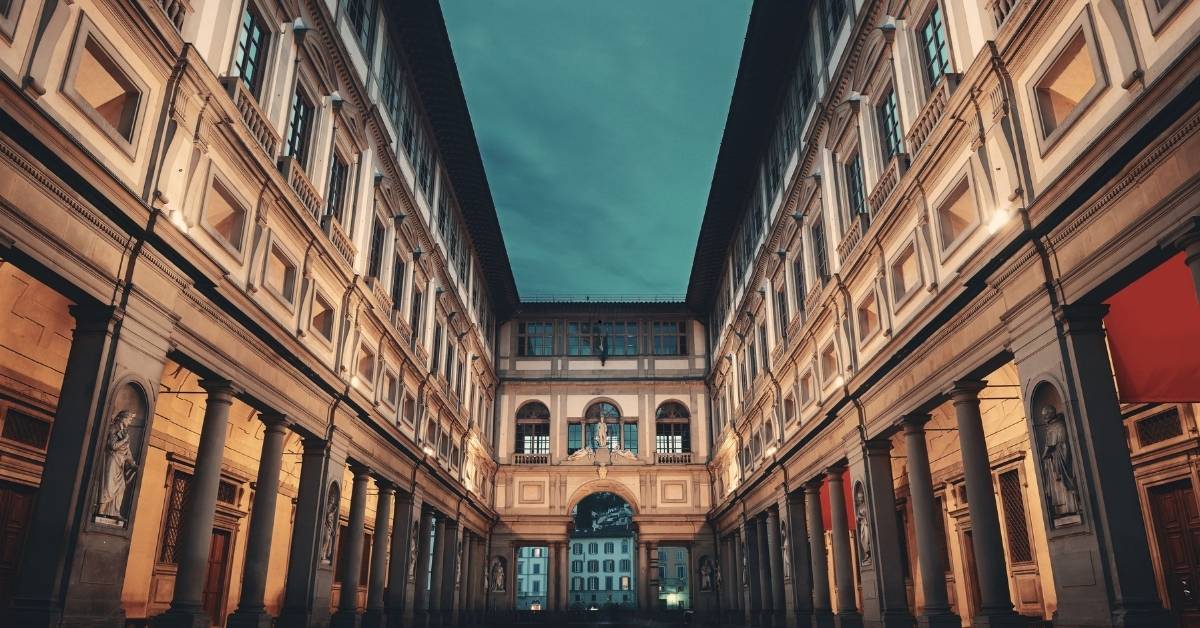
Florence can feel like one giant art museum. You turn a corner, and there’s another perfect Renaissance façade. You cross a bridge, and goldsmiths are still hammering away like it’s 1550. But for all the city’s open-air beauty, the real treasure is locked inside a long, U-shaped building overlooking the Arno River: the Uffizi Gallery.
My wife and I have spent many happy hours wandering its halls, and I’ve learned that you can’t see everything. The Uffizi holds over two thousand works. Trying to see them all is like trying to eat an entire Italian feast in one sitting—you’ll just end up with a headache.
So I’ve narrowed it down to fifteen paintings that stopped us in our tracks. These are the ones you whisper about afterward over a glass of Chianti. Let me walk you through them.
Before we start, a quick practical note. Go early, book your tickets online, and head straight to the second floor. That’s where the Renaissance heavyweights live. And don’t rush. Each of these paintings deserves a slow look, the kind where you forget other tourists are shuffling behind you.
Cimabue – Maestà (Santa Trinita Madonna), Room 2
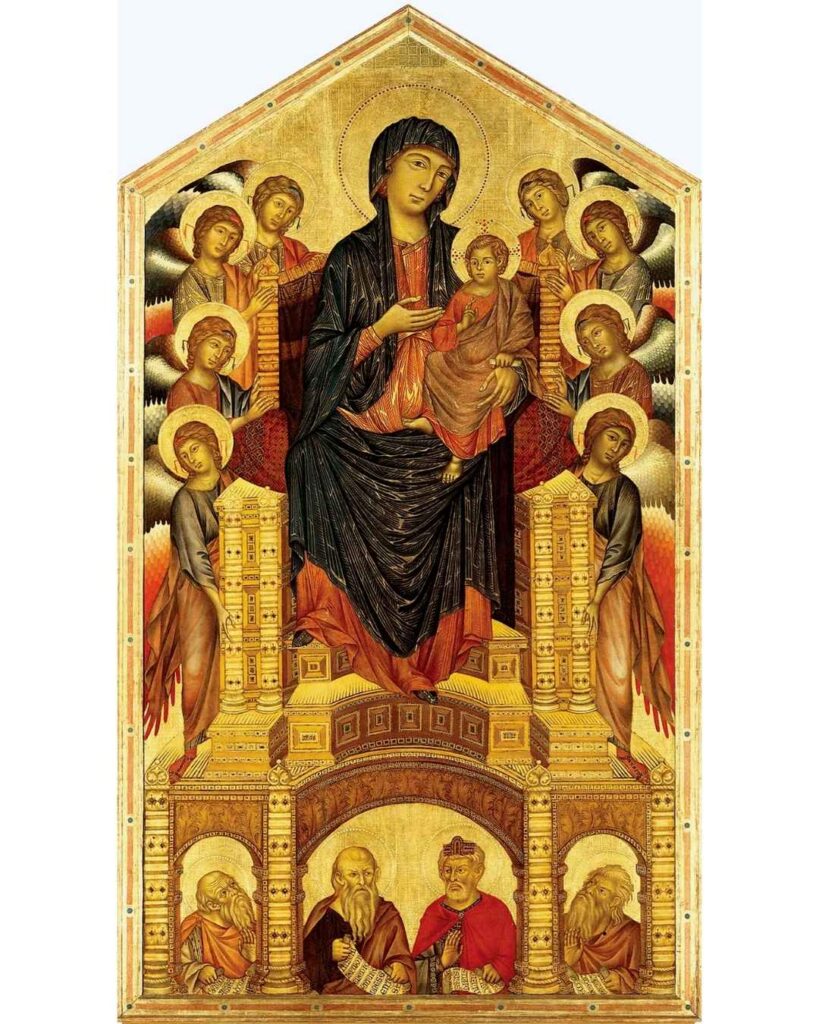
You walk into Room 2 and immediately feel like you’ve stepped back into the Middle Ages. The gold leaf is everywhere. Cimabue’s Madonna from around 1280 is tall, flat, and formal. The angels stack up on either side like perfectly arranged chess pieces. At first glance, it seems stiff.
But look closer. The Virgin’s throne tries to curve inward. Her face isn’t just a symbol anymore—there’s a flicker of sadness around her eyes. Cimabue was one of the first painters to push against the old Byzantine rules. He didn’t break them, but he tested the walls. Stand here for a moment before you move to the next painting. You’re watching art take its first awkward steps toward the Renaissance.
Giotto – Ognissanti Madonna, Room 2
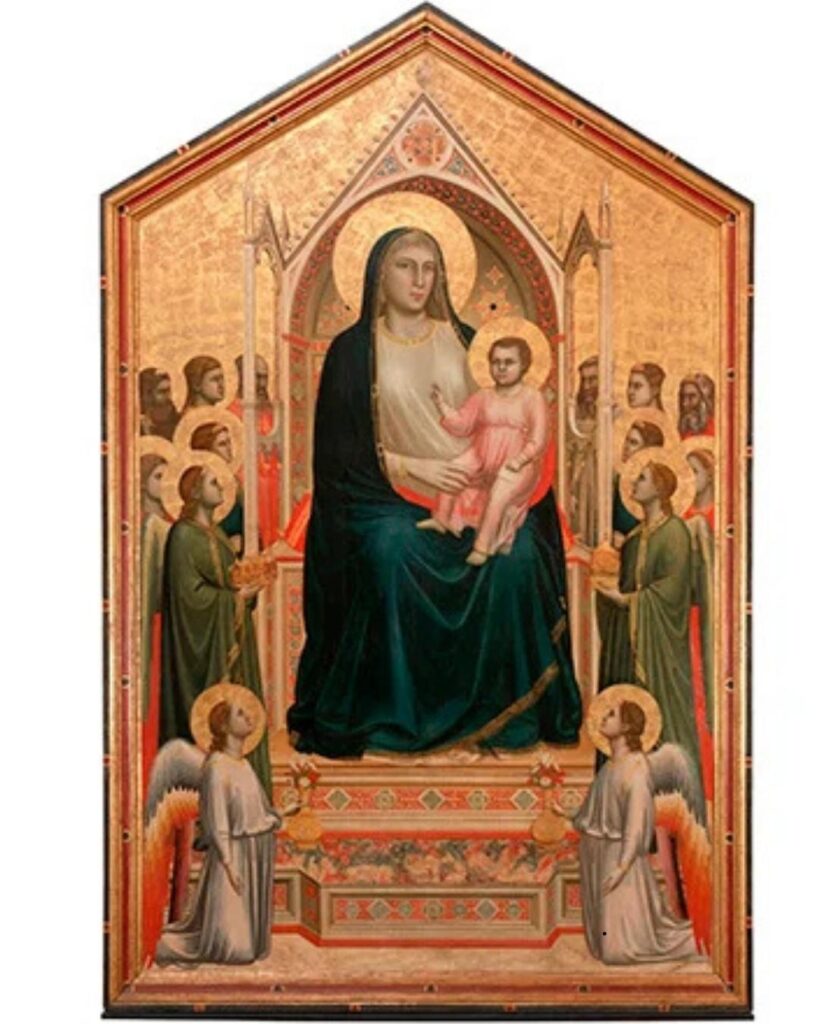
And then comes Giotto, hanging right nearby. Same subject, same gold background, but completely different. His Madonna from around 1310 actually sits in a real throne with depth. The angels in front overlap the ones behind. The Virgin’s chest points toward you while her knees turn sideways. That’s called foreshortening, and Giotto figured it out more than a hundred years before anyone else.
My wife pointed out the baby Jesus here. He’s not some distant little king. He reaches for his mother’s dress like any toddler would. That small human moment—a child clinging to his mama—is what makes Giotto feel so alive. If Cimabue knocked on the door, Giotto kicked it open.
Simone Martini & Lippi Memmi – Annunciation, Room 3
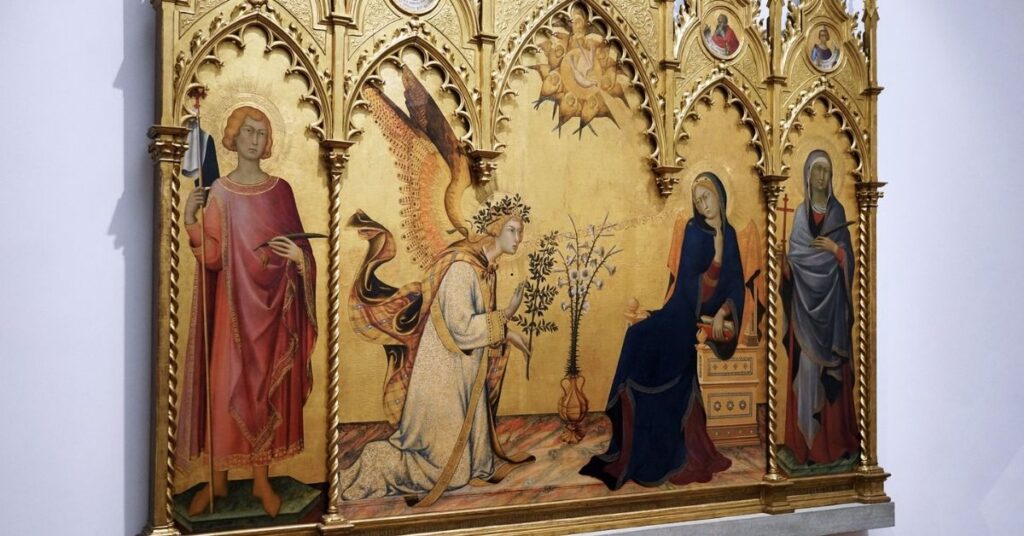
Now you’ve arrived at elegance. This Annunciation from 1333 is the fanciest painting you’ll see all day. The angel Gabriel has just landed, his golden wings still catching the breeze. Mary recoils slightly, pulling her blue robe tight. Between them, a vase of lilies sits in perfect stillness.
The details are exquisite. Look at Gabriel’s cloak—the artist painted words into the hem. Look at Mary’s book, still open to the prophecy she was reading when the angel interrupted her. This is International Gothic at its peak: delicate, courtly, and shimmering. Some people breeze past it toward Botticelli. Don’t you dare. Let yourself get lost in the fabric folds for a minute.
Paolo Uccello – Battle of San Romano, Room 7
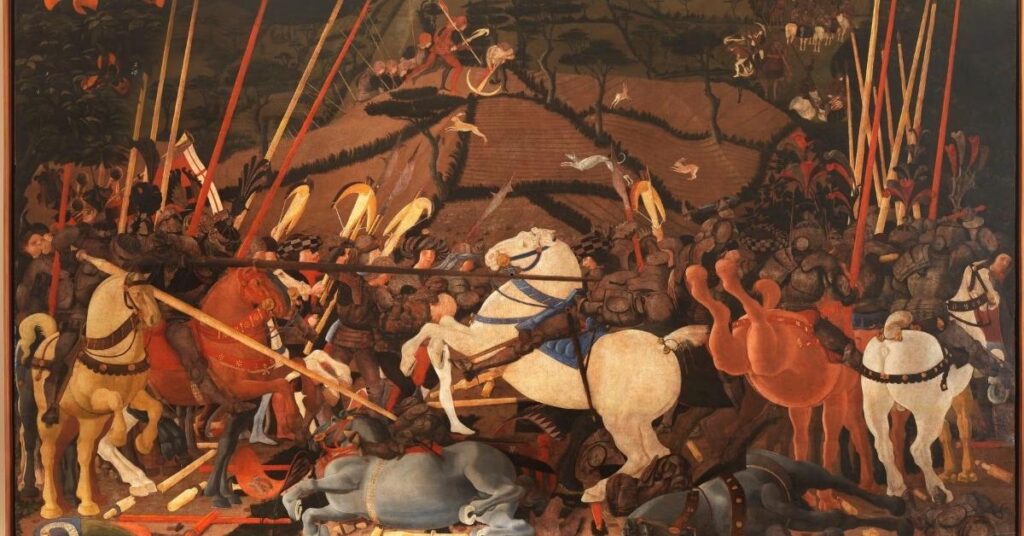
Everything changes when you hit Uccello. This is a battle scene from around 1438, but it feels like a geometry problem solved in paint. Fallen lances create perfect diagonals across the canvas. A wounded soldier lies in rigid perspective. The black knight on the white horse sits exactly at the vanishing point.
Uccello was obsessed with perspective the way some people are obsessed with crossword puzzles. His wife reportedly called him to bed at night, and he’d say, “Oh, what a lovely thing perspective is.” You can feel that love here. The battle is almost secondary to the math. But that’s what makes it thrilling—he turned a messy fight into a clean, beautiful diagram.
Fra Filippo Lippi – Madonna and Child with Two Angels, Room 8
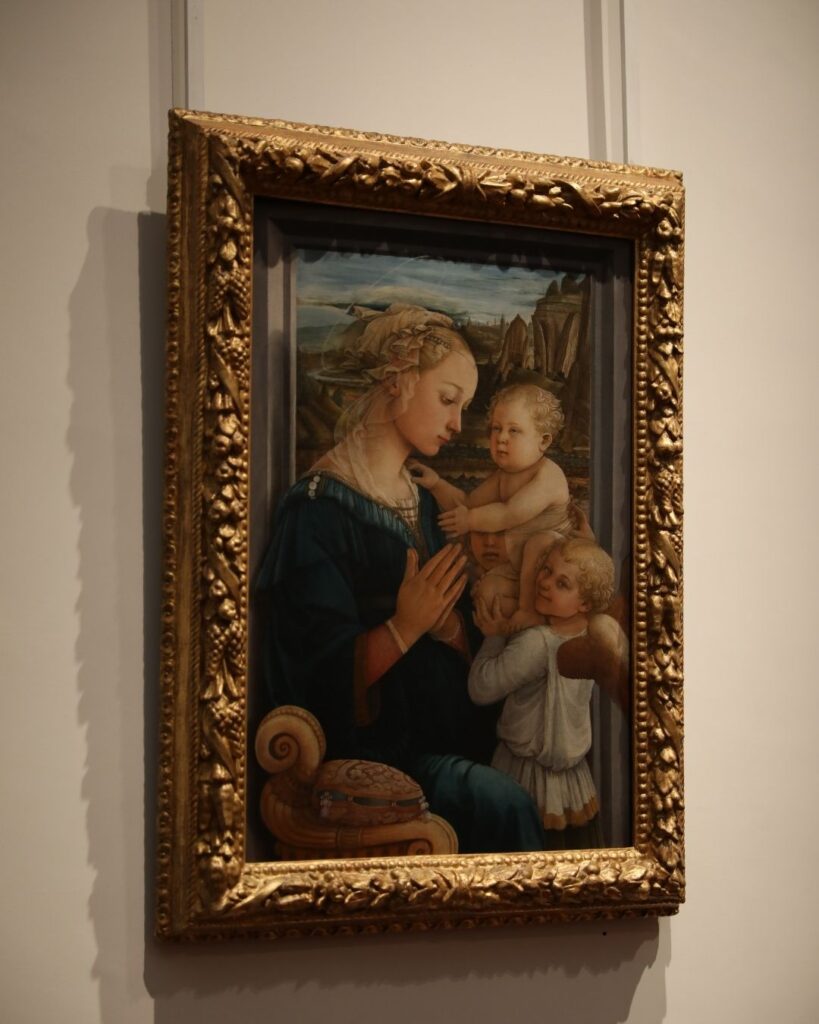
Now we’re in the heart of the gallery, Room 8, and this painting stops everyone. Fra Filippo Lippi was a Carmelite monk who fell in love with a nun. They ran away together and had a son who also became a famous painter. That backstory matters because you can feel it here.
The Madonna is young, tender, and utterly human. One angel stares out at you with a mischievous half-smile, as if sharing a secret. The baby Jesus is held up by his mother and an angel, and he reaches for her chin with a chubby hand. The background shows a river landscape that feels like the Tuscan countryside on a soft afternoon. Lippi painted real people, not icons. No wonder his patrons were scandalized. No wonder we still love it today.
Sandro Botticelli – Primavera (Allegory of Spring), Room 10
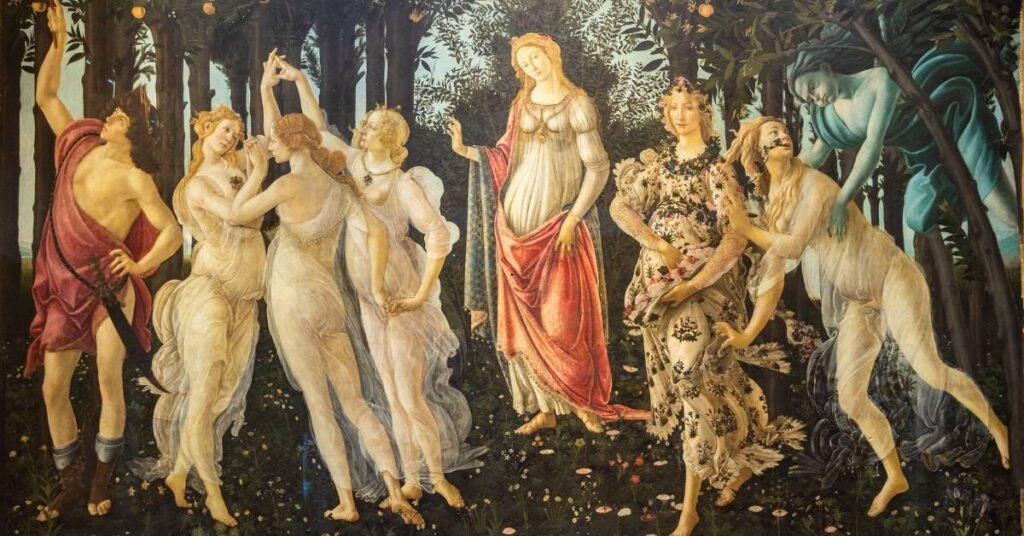
You’ve heard of this one. You’ve seen it on coffee mugs and tote bags. But seeing Primavera in person is different. It’s enormous—over six feet tall—and the colors are far more delicate than any reproduction captures. Venus stands in the center, not quite looking at us. To her right, Zephyrus the wind god grabs a nymph who turns into Spring. To her left, the Three Graces dance in see-through robes.
What is this painting about? Scholars argue endlessly. Some say it’s a philosophical poem about love. Others call it a Medici wedding gift full of inside jokes. I like to think Botticelli just wanted to paint something beautiful. And he succeeded. Let your eye wander from orange blossoms to flower petals to the pregnant figure of Spring scattering roses. It’s a garden that never wilts.
Sandro Botticelli – The Birth of Venus, Room 10
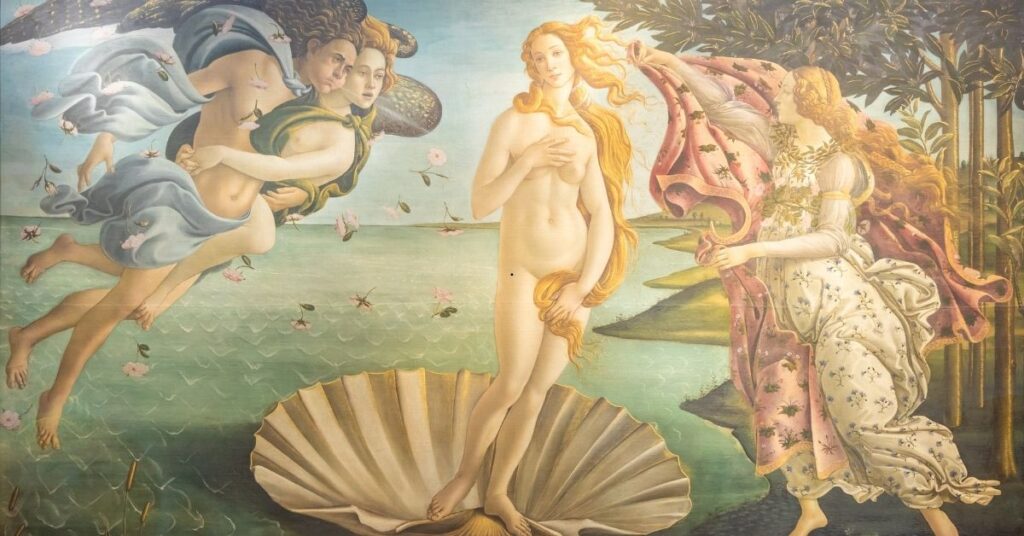
Two steps away hangs the most famous nude in art history. Venus arrives on a giant scallop shell, pushed ashore by wind gods while a handmaiden rushes out with a cloak. She stands in that impossible, off-balance pose—weight on one leg, shoulder dropped, hair blowing across her neck.
What strikes you in person is how small she feels. Not the painting—the canvas is huge—but Venus herself. She seems shy, almost vulnerable, covering her body with her hands and hair. Botticelli painted her at a time when nudity in art was still scandalous unless you were Adam or Eve.
He got away with it because he called her a goddess. But really, he just wanted to celebrate the human form. My wife leaned over and said, “She looks like she’s cold.” And you know what? She’s right. That’s the genius of it.
Leonardo da Vinci – Annunciation, Room 15
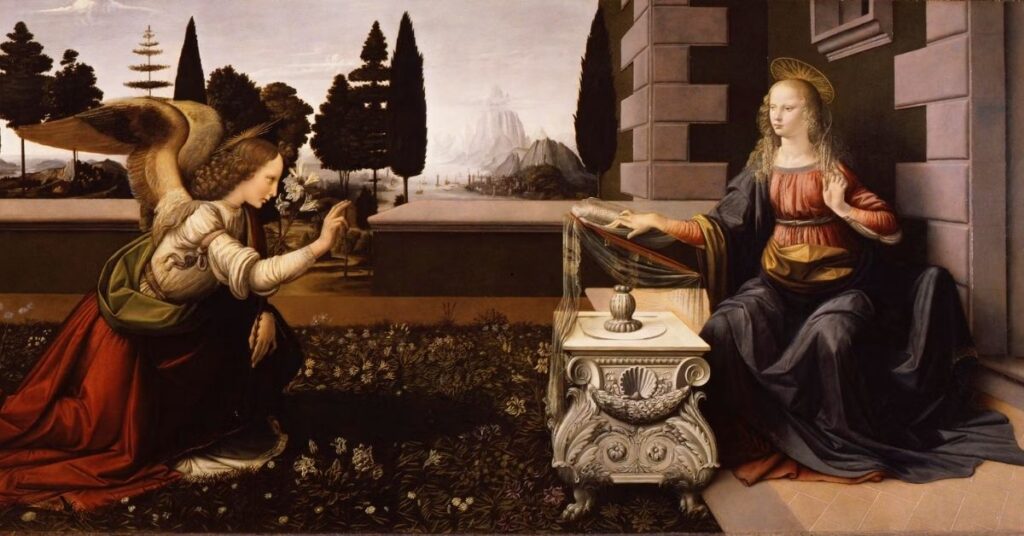
Leonardo’s early work hangs here, and you can already see the scientist peeking through the artist. The angel kneels on actual grass. Every blade is individual. The Virgin’s book rests on a marble lectern with believable shadows. And then there’s the angel’s wing—Leonardo studied bird flight to get those feathers right.
But here’s the fun part. Art historians noticed a mistake. The angel’s right arm is too long. If he stood up straight, his knuckles would drag on the floor. Leonardo was barely twenty when he painted this, still learning. Even geniuses have off days. That imperfection makes the painting more charming, not less.
Leonardo da Vinci – Adoration of the Magi, Room 15
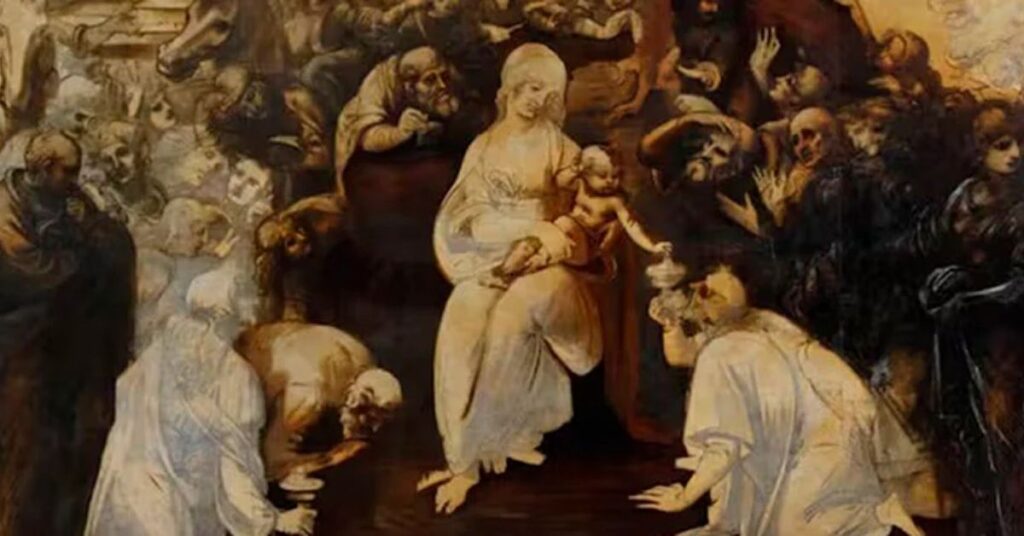
This one is unfinished, and that’s what makes it fascinating. Leonardo left it in 1481 when he moved to Milan. You can see his underdrawing bleeding through the paint. The background is a chaotic sketch of ruins and horsemen. The foreground is a mad swirl of worshippers surrounding Mary and baby Jesus.
Stand here and imagine being Leonardo. He had so many ideas—perspective, emotion, architecture, action—that he couldn’t contain them all. The painting bursts at the seams. Some visitors call it messy. I call it honest. You’re watching a restless mind at work, and that’s more intimate than any finished masterpiece.
Piero della Francesca – Diptych of Federico da Montefeltro and Battista Sforza, Room 16
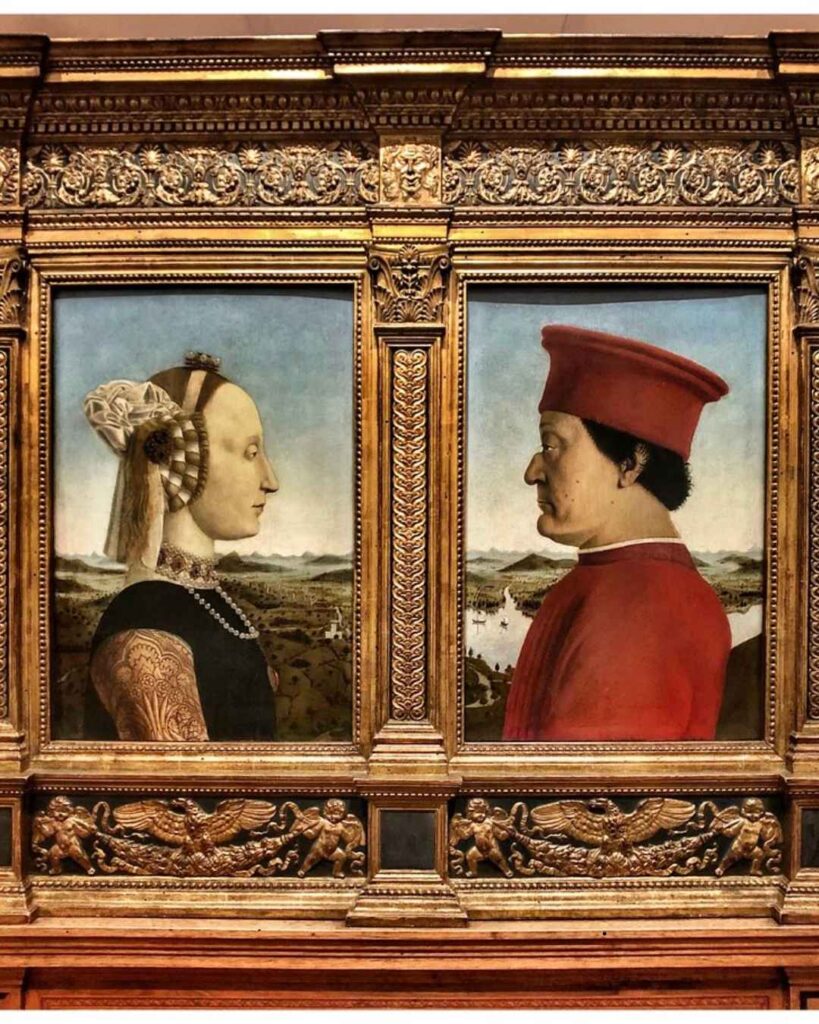
These two small portraits face each other like a married couple. Federico looks stern, with his broken nose (lost in a tournament) and severe haircut. Battista looks pale and composed, her forehead shaved to appear fashionable. Both stare out in profile, never making eye contact.
But the magic is on the back. Each painting’s reverse shows a landscape: Federico in a chariot of victory, Battista on a chariot of virtue, rolling through the hills of Urbino. Piero painted light like nobody else. The sky fades from pale blue to cream. The castles sit hard and clear in the distance. Turn these paintings around in your mind, and you realize the real subject isn’t the people—it’s the world they ruled.
Hugo van der Goes – Portinari Triptych, Room 19
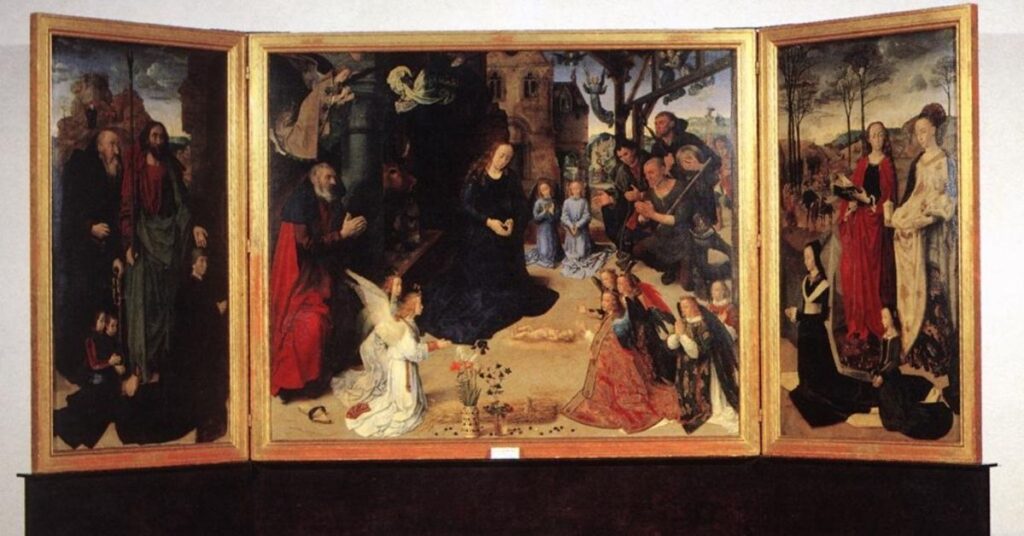
This huge altarpiece came from Bruges, and it feels completely different from the Italian paintings around it. Northern artists loved details. Look at the shepherds crowding around baby Jesus. Their faces are ugly, tired, and real. One man’s mouth hangs open in awe. Another stares with plain confusion.
And the flowers. Van der Goes painted irises, lilies, and violets in a glass vase, each one a botanical study. Some hold Christian symbolism. Some are just pretty. When this triptych arrived in Florence in the 1480s, it blew local painters’ minds. They had never seen such raw emotion or obsessive detail. It’s a reminder that Renaissance art wasn’t just Italian.
Michelangelo – Doni Tondo (Holy Family), Room 20
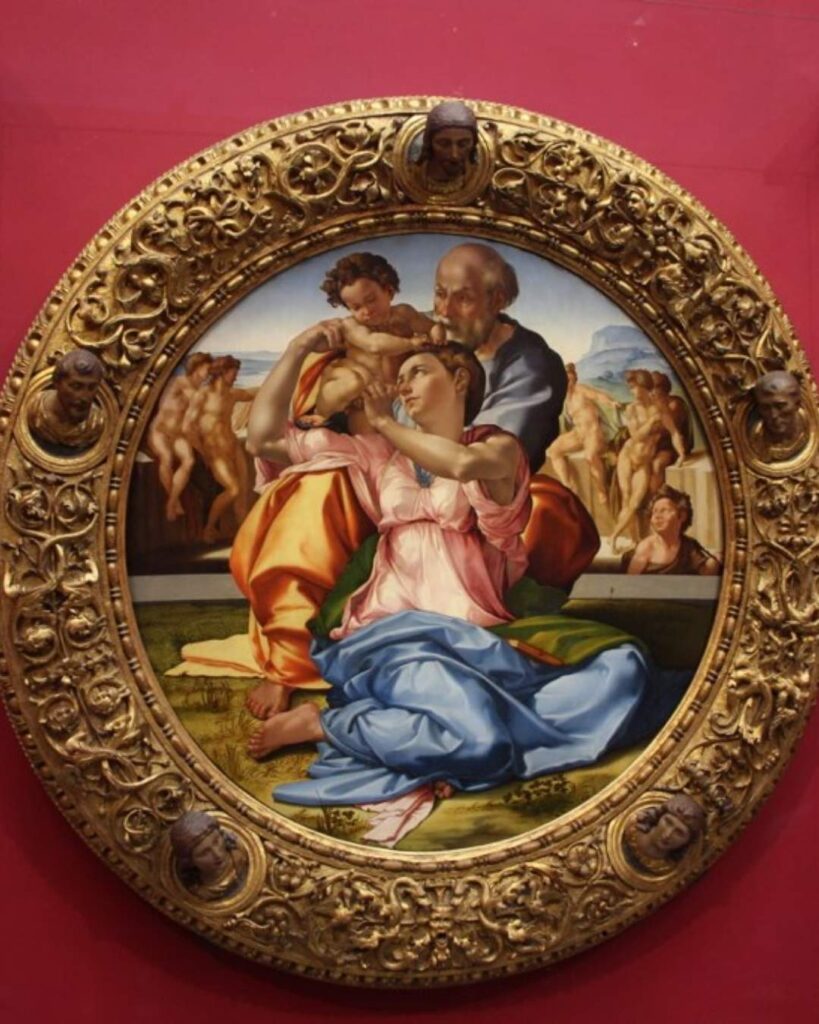
Michelangelo didn’t paint much on panel. He preferred chiseling marble. So this circular painting of the Holy Family is rare—the only finished one we have. And it looks like a sculpture pretending to be a painting.
Mary twists around to lift Jesus over her shoulder. Joseph sits in the background, solid and protective. Their bodies bulge with muscle. Behind them, a row of naked young men leans against a wall. Scholars still argue who those nudes are, but I think Michelangelo just wanted to show off. He painted the human form the way he carved it: powerful, coiled, alive. If you’ve seen his David at the Accademia, you’ll recognize the same energy here.
Raphael – Madonna of the Goldfinch, Room 26
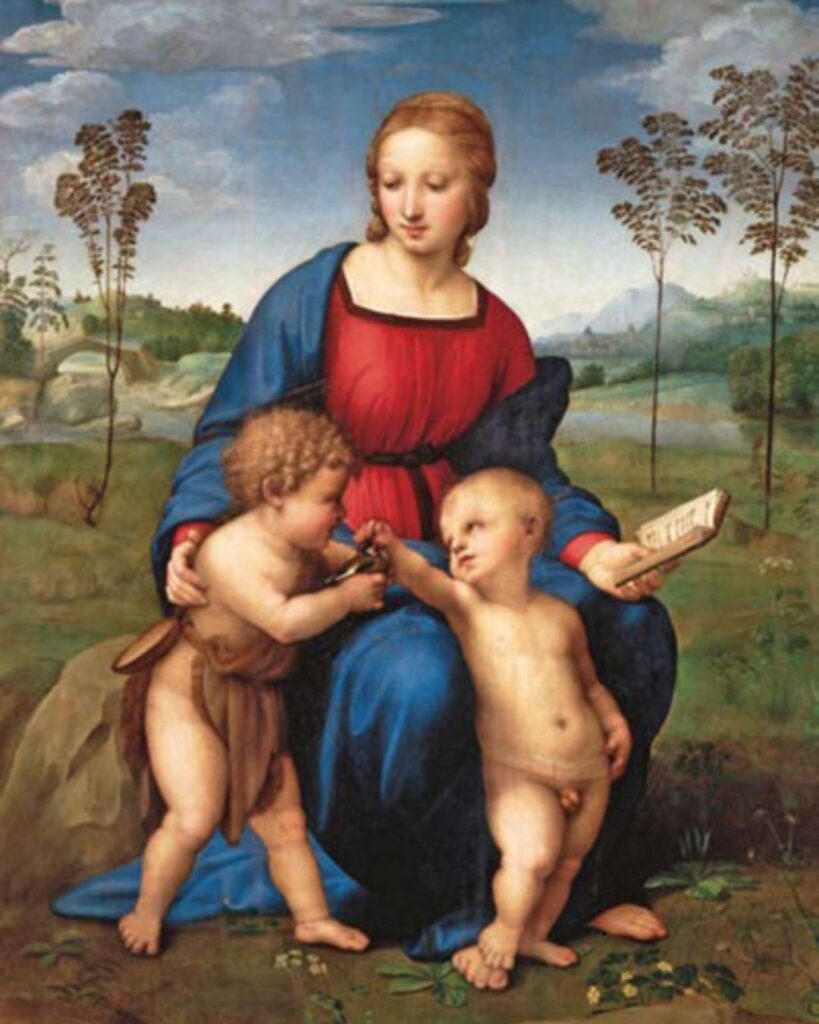
After Michelangelo’s intensity, Raphael feels like a deep breath. This Madonna sits in a calm pyramid shape. Mary holds a book. Little Jesus leans into John the Baptist, who offers a goldfinch—a symbol of Christ’s future passion. The Tuscan landscape rolls out behind them, soft and hazy.
Raphael painted this when he was just twenty-three. He learned from both Leonardo (the smoky sfumato) and Michelangelo (the solid figures), but he blended them into something sweeter. This painting won’t shock you or challenge you. It will just make you feel peaceful. Sometimes that’s exactly what you need.
Titian – Venus of Urbino, Room 28
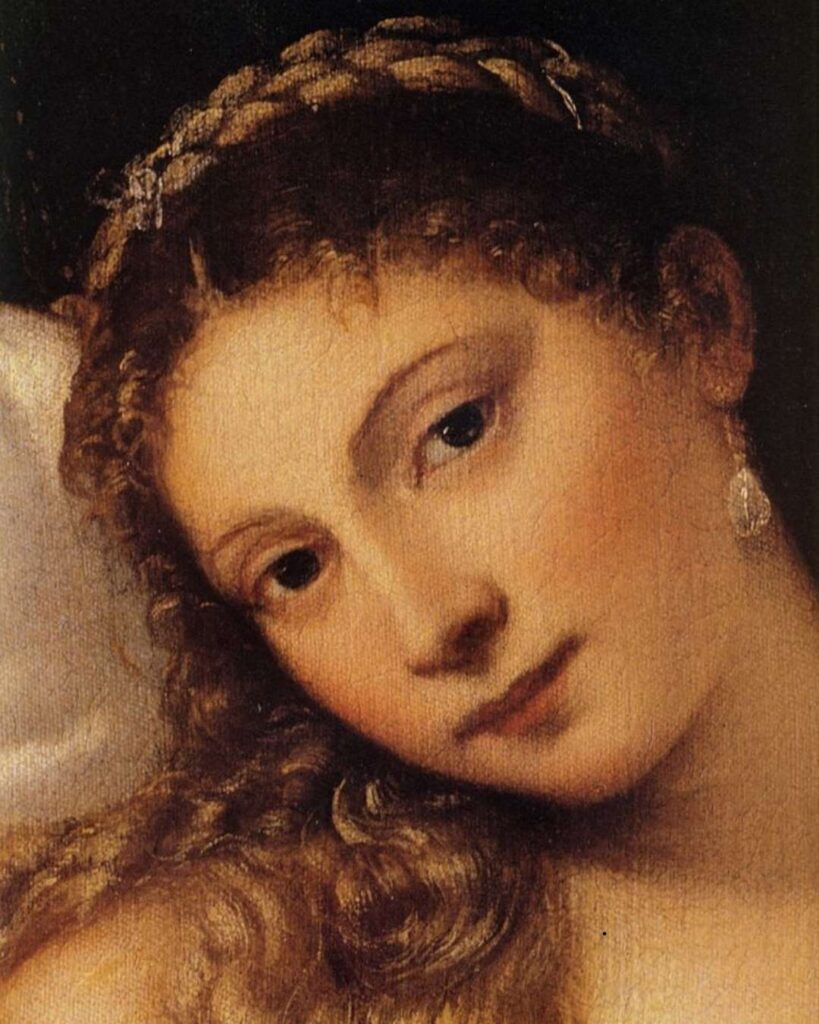
And now for something completely different. Titian’s Venus lies on a rumpled bed, looking right at you. One hand covers her lap. The other holds a small bunch of roses. Behind her, a servant rummages through a wedding chest.
This painting is frankly sensual. It wasn’t meant for a church or a public hall. It hung in a young duke’s bedroom. Titian took Botticelli’s goddess and brought her indoors, gave her a dog, and told her to make eye contact. The result is magnetic and a little unsettling. You feel like you’ve walked into someone’s private room. Love it or feel uncomfortable by it, you won’t forget it.
Caravaggio – Medusa and Bacchus, Room 41
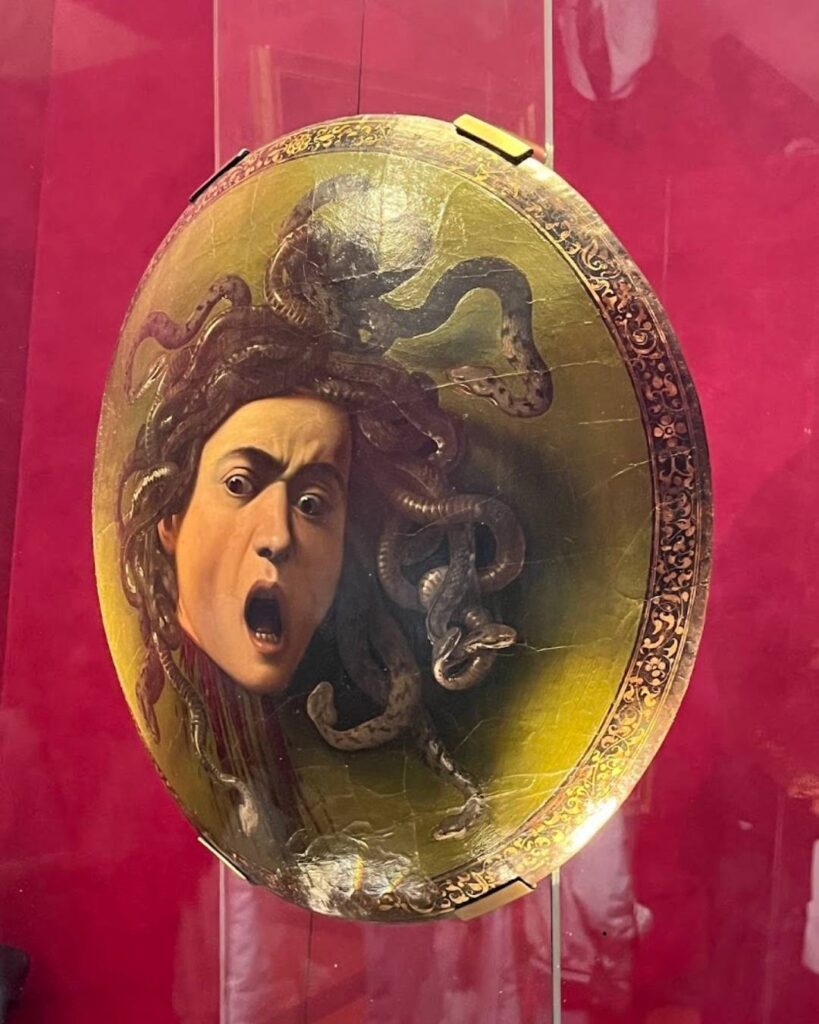
I’m cheating slightly and giving you two from Caravaggio because they’re in the same room and neither takes long. First, Medusa. Caravaggio painted her severed head on a convex wooden shield. Her mouth screams. Her eyes widen in horror. Snakes writhe from her hair. Stand to the side, and the face seems to follow you.
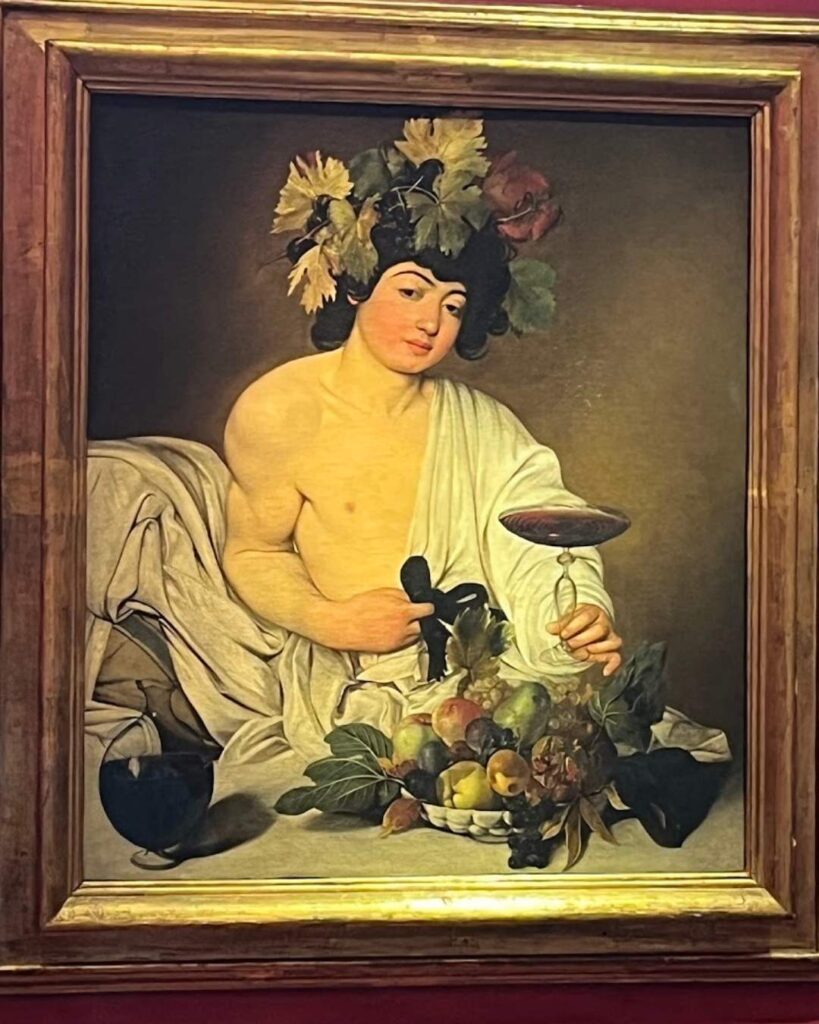
Then Bacchus. The god of wine looks sick. His skin is greenish. His fingernails are dirty. He holds a glass of wine like a hungover college student. Caravaggio painted real people from the streets—prostitutes, beggars, street musicians—and put them in mythological scenes. The church hated it. The public couldn’t look away. He died young and wild, but his influence never faded. These two paintings together sum him up: terror and pleasure, sacred and profane, all in dramatic, spotlighted darkness.
You’ll exit the Uffizi feeling full. My wife and I always sit on the terrace overlooking the Duomo afterward, nursing a cappuccino and comparing notes. You won’t remember every painting. But you will remember the angel’s smile in Lippi’s Madonna. You will remember Venus looking cold on her shell. You will remember Caravaggio’s screaming Medusa.
That’s enough. Go see your fifteen. Then go have some pasta. Florence will still be here tomorrow, and so will the art. But right now, you’ve earned a meal.
Again, feel free to go through the list below of my Italy recommendations that I have crafted after years of travel to this beautiful country:
- Packing List: Things Not to Go to Italy Without
- Must-Do Things: Unforgettable Experiences
- Where to Stay: Best Hotels in Italy.
- Where to Stay in Rome: Rome’s Best Neighborhoods
- Where to Stay in Florence: Picking the Best Area
- Where to Stay in Venice: Venice’s Best Districts
- Italy’s Cobblestone Streets: Best Shoes For the Job
- Backpack or Suitcase?: Italy Luggage Guide
- Travel Insurance: Always Be Covered
- E-Sim: Be Connected At All Times
That brought back lots of memories, even the cappuccino on the terrace afterwards.