
There is perhaps no figure in the history of art more painted, more studied, or more deeply loved than the Virgin Mary. In Italy, she is everywhere—gazing down from the altars of grand cathedrals, appearing in the quiet corners of museums, and gracing the walls of palaces with her serene presence.
What makes the Italian Madonna so endlessly fascinating is her remarkable range. She can be a Byzantine queen, a tender mother, a fashionable Florentine noblewoman, or a figure of profound theological complexity.
Here are 9 of the most stunning depictions of the Madonna that you can see in Italy, each one a masterpiece that tells a different story.
Raphael’s Madonna of the Goldfinch
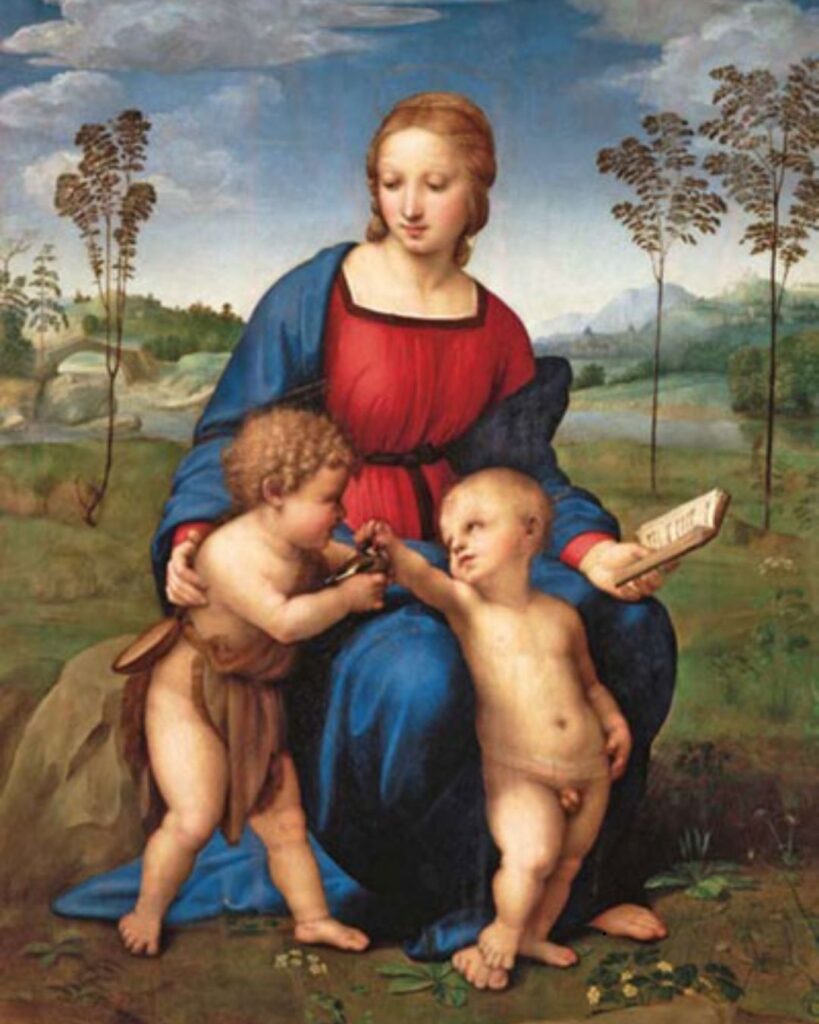
In the Uffizi Gallery in Florence hangs one of Raphael’s most beloved works, the Madonna of the Goldfinch, painted during his early Florentine period. This painting captures a moment of exquisite tenderness between the Virgin, the Christ Child, and the young John the Baptist.
The composition forms a perfect pyramid, a structure that reflects Raphael’s deep study of Leonardo da Vinci’s work during this fruitful period of his career. The figures are linked by a graceful exchange of glances and gestures, brought to life by Raphael’s masterful use of soft, atmospheric shading that dissolves the background into a luminous landscape.
The painting has a remarkable and dramatic history. It was commissioned by Raphael’s friend Lorenzo Nasi to celebrate his marriage. Years later, the Nasi house collapsed in a landslide, and the painting was shattered into seventeen pieces.
It was painstakingly restored and eventually found its way to the Uffizi, where it remains today. The goldfinch held by the young John the Baptist is not merely a charming detail; it is a poignant symbol of Christ’s future Passion, its innocent appearance a foreshadowing of the sacrifice to come.
Raphael’s Madonna del Granduca
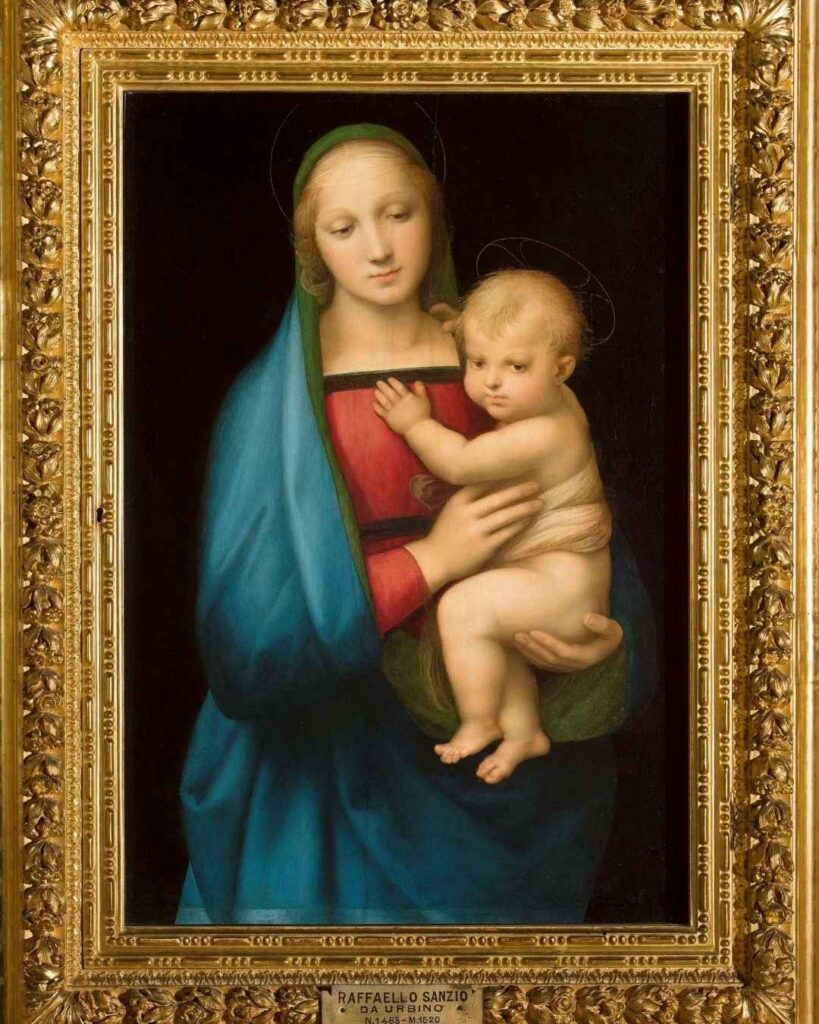
Another Raphael masterpiece in Florence, the Madonna del Granduca, resides in the Palazzo Pitti. Painted around the same time as the Goldfinch, this work takes a strikingly different approach. It is an image of profound simplicity and intimacy, depicting only the Virgin Mary and the Christ Child in a close embrace. The figures emerge from a deep, dark background, their faces illuminated with a soft, almost ethereal light.
This direct, unadorned focus on the bond between mother and child gives the painting its immense emotional power. It is a testament to Raphael’s genius that he could create such monumental beauty from such simple means. The painting acquired its name from its owner, Grand Duke Ferdinando de’ Medici, who cherished it so deeply that he kept it in his private chambers, unwilling to part with it even for display.
Fra Filippo Lippi’s Madonna and Child with Two Angels
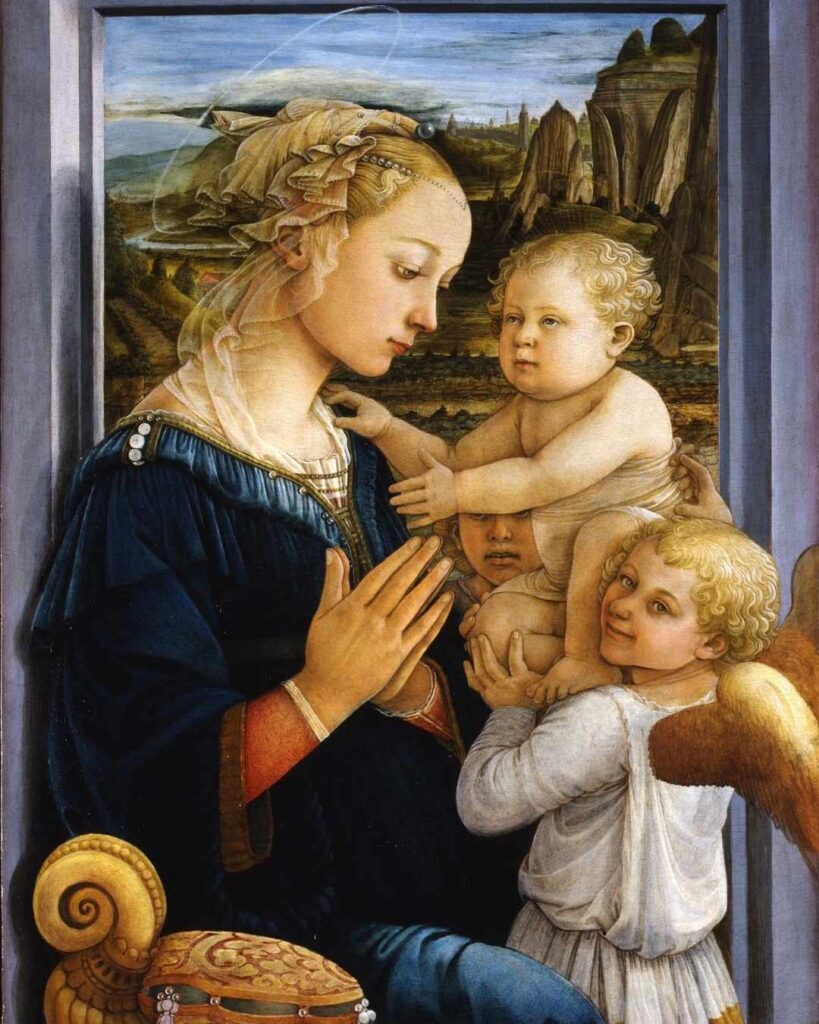
At the Uffizi, the Madonna and Child with Two Angels by Fra Filippo Lippi offers a vision of the Madonna that is remarkably human and accessible. The scene is one of domestic intimacy. The Virgin, depicted with the fashionable hairstyle and elegant features of a Florentine noblewoman, kneels in prayer before the Christ Child, who is supported by two angels who gaze out at us with knowing expressions.
The naturalness and spontaneity of this composition were revolutionary for its time and had a profound influence on the young Sandro Botticelli, who was apprenticed to Lippi.
The painting is alive with detail and character. The Christ Child appears almost weightless as he is supported by the angels, and the figures seem to exist in a real, palpable space rather than a remote heavenly realm. There is something deeply tender about the way the Virgin looks upon her son, and the angels add a sense of playfulness that softens the sacred scene. This is a Madonna who feels like someone you might encounter, a woman of grace and dignity who is also unmistakably human.
Botticelli’s Madonna of the Magnificat
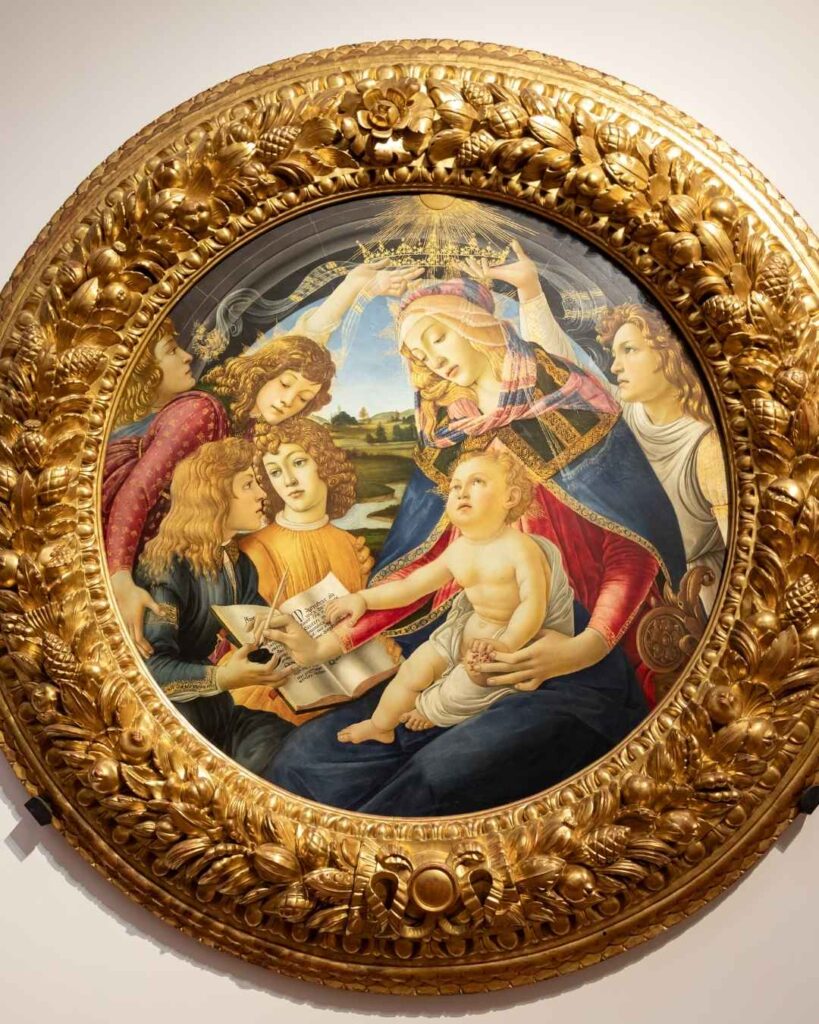
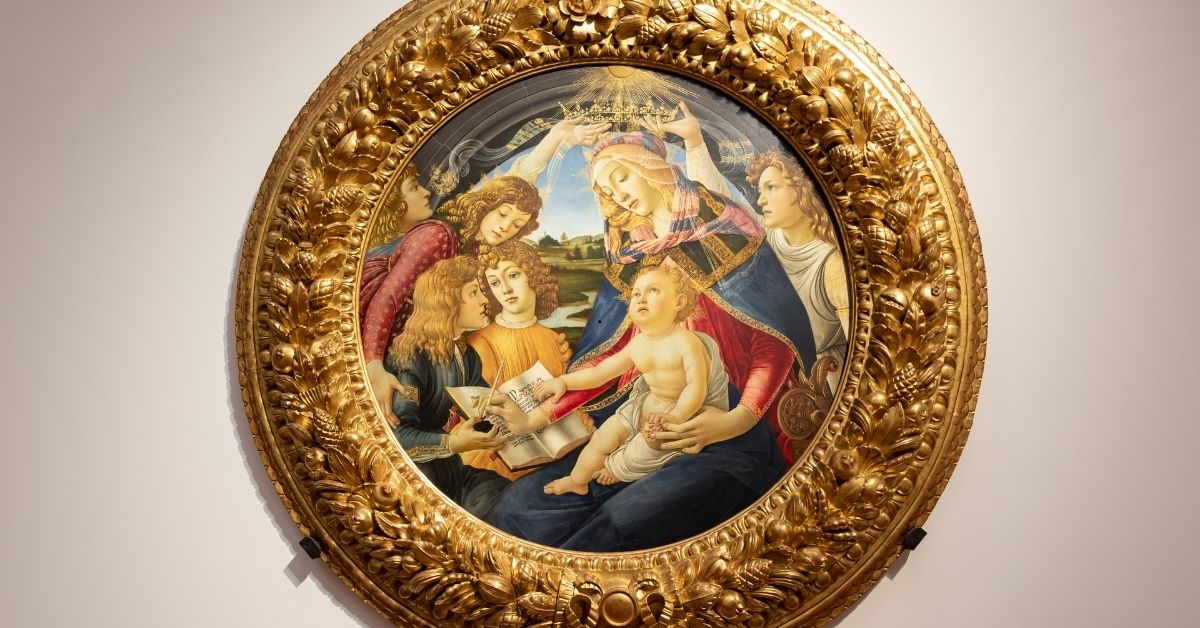
Also in the Uffizi, Sandro Botticelli’s Madonna of the Magnificat is a stunning circular composition that shows the Virgin at a desk, writing the Magnificat, her famous hymn of praise, while the Christ Child guides her hand. The scene is surrounded by angels who crowd around the Virgin, some holding crowns and others gazing in adoration. It is a work of exquisite grace and elegance, typical of Botticelli’s style with its flowing lines and delicate beauty.
The circular format, known as a tondo, was particularly popular in Florence during the Renaissance, and Botticelli was one of its greatest exponents. The composition is masterfully balanced, with the figures arranged in a harmonious circle that draws the eye inward toward the central act of writing. The painting is rich with symbolism, including an open pomegranate that hints at the Passion of Christ. But beyond its religious significance, this is a painting of pure aesthetic delight, a vision of heavenly grace rendered with the lightness of a dancer’s step.
Botticelli’s Madonna of the Book
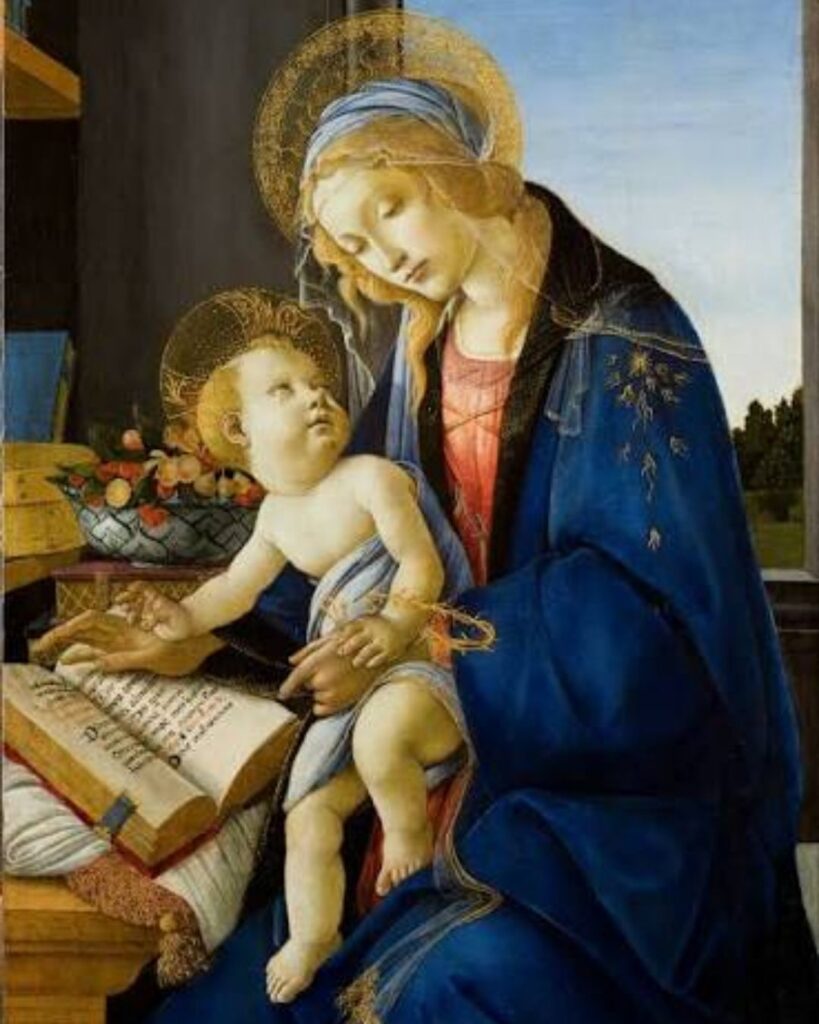
Another Botticelli treasure in the Uffizi is the Madonna of the Book, a small and intimate painting that shows the Virgin reading from a book with the Christ Child beside her. The scene is quiet and domestic, a private moment between mother and son. The open book likely refers to the prophetic texts of the Old Testament, and the Christ Child’s gesture suggests his engagement with the sacred words.
The painting is notable for its jewel-like colors and the exquisite detail of the textiles and surroundings. A window in the background opens onto a landscape, a common device that connects the sacred scene to the wider world. There is a stillness to this painting, a sense of contemplation that invites the viewer to pause and reflect. Botticelli’s Virgin is thoughtful and serene, a woman of learning and devotion, and the Christ Child is both a playful infant and a wise participant in the divine plan.
Duccio’s Madonna and Child
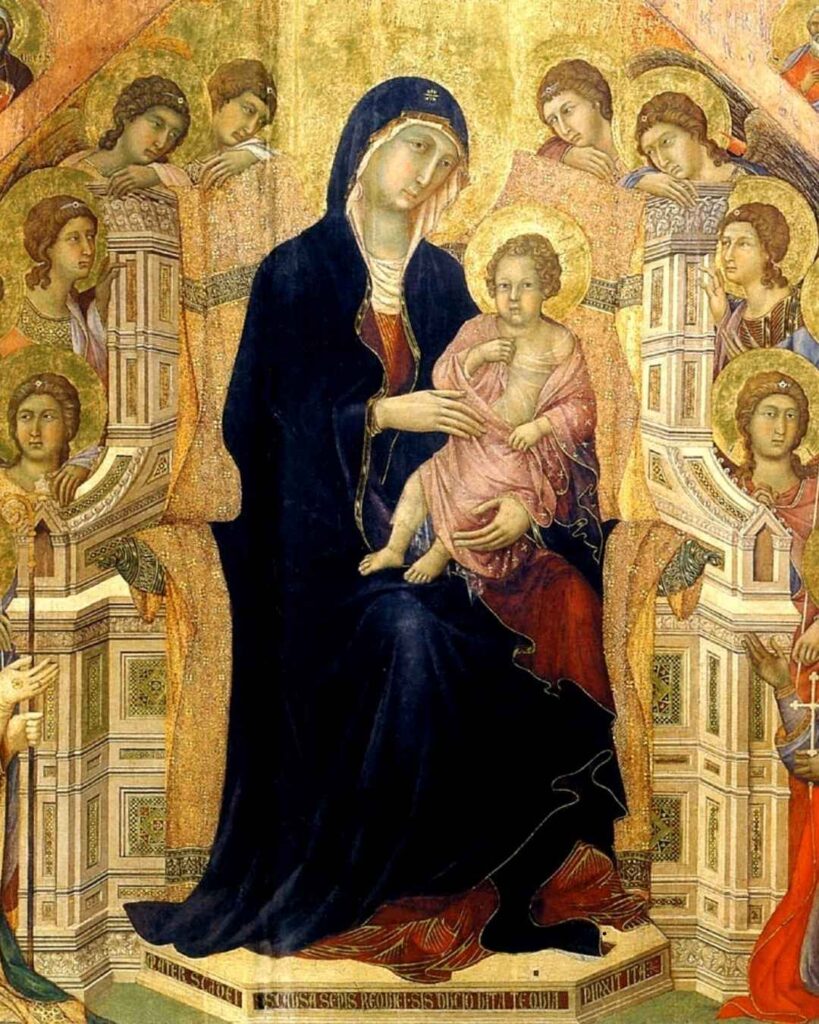
One of the most iconic works in all of Italian art, Duccio di Buoninsegna’s Madonna and Child, once the centerpiece of his famous Maestà altarpiece for Siena Cathedral, is now housed in the Museo dell’Opera del Duomo in Siena. Painted in the early fourteenth century, this work represents a pivotal moment in the history of Western art, a bridge between the Byzantine tradition and the naturalism that would come to define the Renaissance.
The Virgin is depicted as a majestic queen, enthroned and surrounded by angels. Yet there is a tenderness in the way she holds the Christ Child, who touches her face with a gesture of pure affection. The gold background and the stylized drapery recall the Byzantine icons that had dominated Italian painting for centuries, but the humanity of the figures reveals Duccio’s innovative spirit. This was an artist who was learning to paint feeling, to convey emotion through posture and expression, and his work would inspire generations of painters to come.
Giotto’s Madonna and Child Enthroned
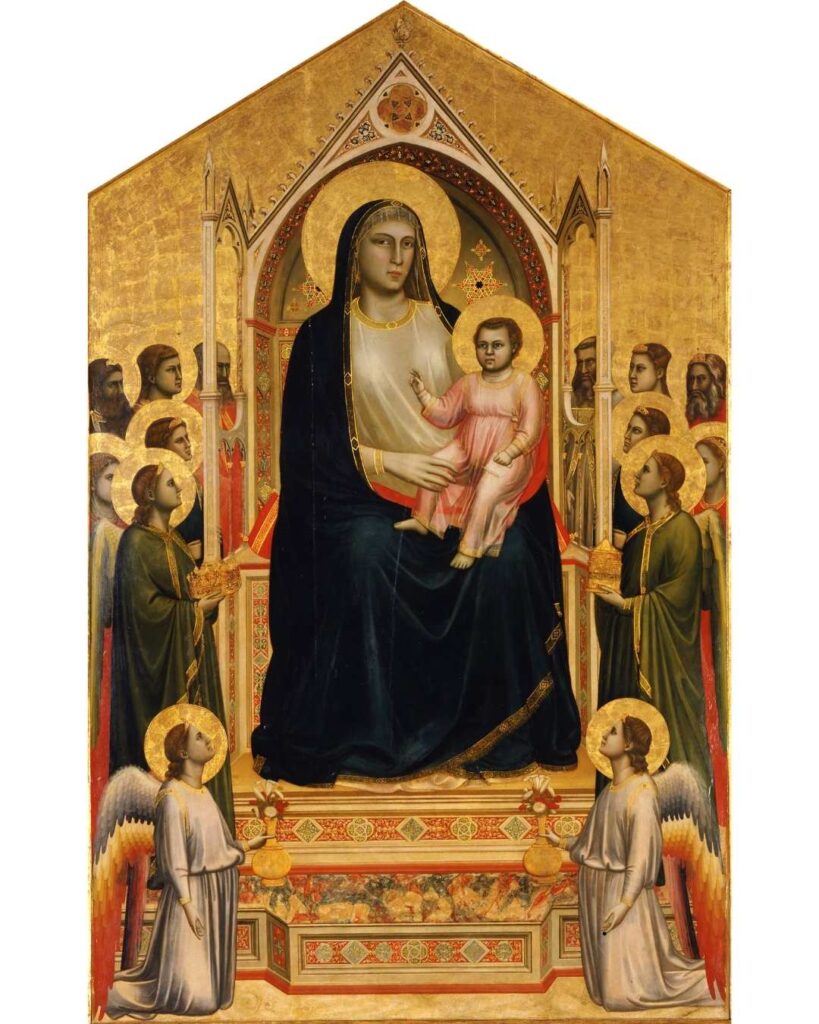
In the Uffizi, Giotto di Bondone’s Madonna and Child Enthroned is another monument of early Italian art. Painted for the Church of Ognissanti in Florence, this work is often seen as the beginning of the Renaissance in painting. Giotto was among the first artists to break away from the flat, stylized figures of the Byzantine tradition and give his characters weight, depth, and volume.
The Virgin sits on an elaborate throne, surrounded by angels, but she is no longer a remote icon. There is a tangible sense of her presence, a physicality that was new to Italian painting. The Christ Child, seated on her lap, blesses the viewer with a gesture that is both solemn and childlike. The painting is monumental in scale and ambition, a statement of artistic intent that would reverberate through the centuries. Giotto’s work changed the course of art history, and this Madonna is his most famous achievement.
Caravaggio’s Madonna of the Pilgrims
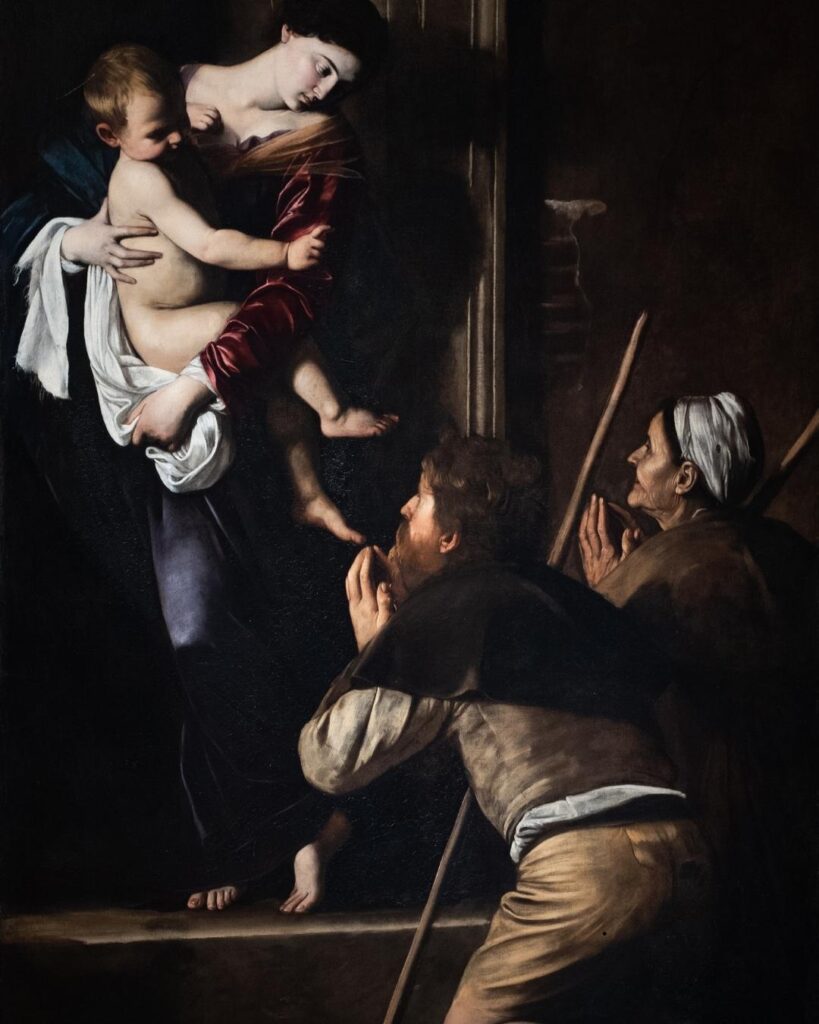
In the Basilica of Sant’Agostino in Rome, Caravaggio’s Madonna of the Pilgrims stands as one of the most revolutionary and controversial depictions of the Virgin ever created. Painted in 1604 for the Cavalletti Chapel, this work shocked contemporary viewers with its radical realism and its rejection of idealized beauty. The scene shows the Virgin and Child appearing on the doorstep of a humble Roman dwelling, greeting two kneeling pilgrims whose dirty, bare feet speak to the hardship of their journey.
What makes this painting so extraordinary is its utter lack of grandeur. There is no heavenly throne, no golden light, no adoring angels. Instead, Caravaggio places the Madonna in a dark, gritty alleyway, her figure emerging from shadow with an almost startling physical presence.
She is not a remote queen but a woman of flesh and blood, standing on the threshold of a common house as if she might welcome any traveler who knocks. The pilgrims themselves are depicted with unflinching honesty—their faces weathered, their clothes worn, their feet calloused and soiled from the road.
A Timeless Legacy
The Madonna in Italy is not a single story but a thousand stories. She can be a Byzantine queen, a fashionable Florentine, a tender mother, or a figure of profound theological mystery. She can sit in a palace gallery or a small museum, in a grand Venetian basilica or a quiet Tuscan chapel. What unites these works is their power to move us, to challenge our assumptions about art and faith, and to remind us that the greatest paintings are never just about what they depict—they are about the moment they were created, the artist who made them, and the story they tell.
On our own journey through Italy, my wife and I discovered that seeking out these Madonnas transformed the way we saw the country. Each painting became a destination, a reason to explore a new city or a hidden chapel. And each one rewarded us with something different—beauty, intimacy, grandeur, or mystery.
If you find yourself in Italy, seek out these paintings. Stand before Raphael’s tender embraces, Botticelli’s graceful compositions, Duccio’s majestic queen, Giotto’s monumental vision, or Titian’s radiant color. You will find that the Madonna is not one woman but many—and each of them has something unforgettable to say.
NOTE BEFORE YOU GO: Italy rewards travelers who go prepared. And it is easy to ruin your trip. I have a checklist for you of things you should never go to Italy without. CHECK IT OUT HERE. I have also curated a list of some of the best hotels in Italy. I would highly recommend checking them out before booking. THESE ARE THE BEST HOTELS IN ITALY. And for unique experiences, attractions, and tours, don’t book before CHECKING THIS OUT. Thank me later!