
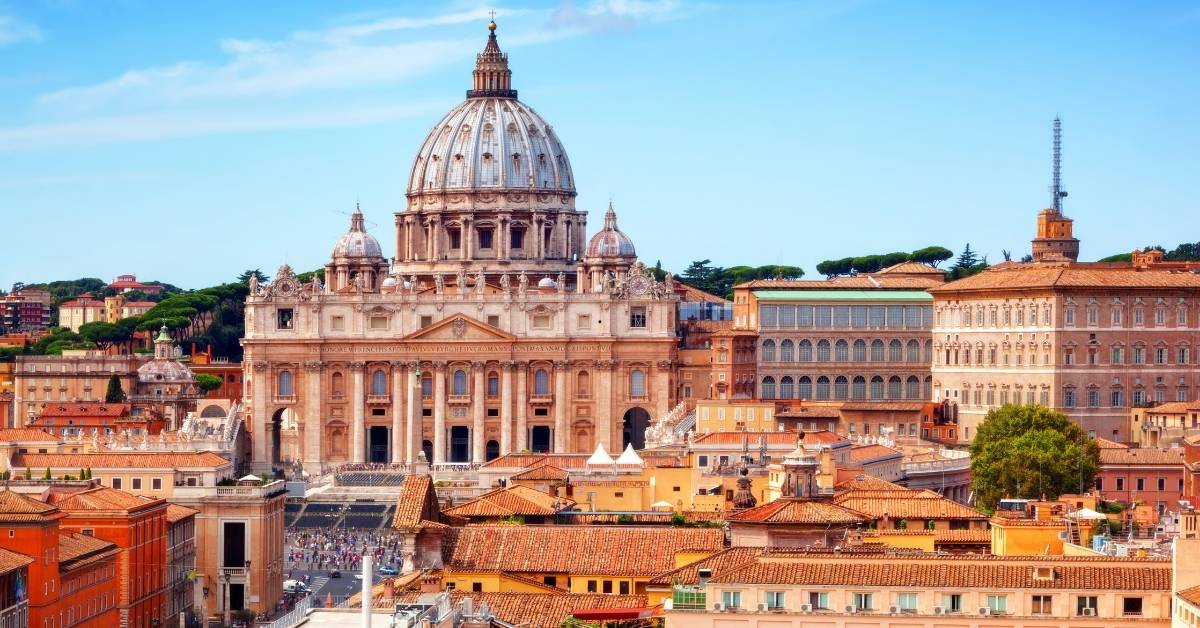
There is nowhere on earth quite like Vatican City. The smallest country in the world, barely an eighth the size of Central Park, contains within its walls a concentration of art, history, and spiritual significance that is simply unparalleled. It is a place where the divine and the human meet, where the greatest artists of the Renaissance poured their genius into spaces designed to inspire awe and devotion.
On our own visit, my wife and I found ourselves overwhelmed not by the crowds, but by the sheer density of masterpieces that seemed to await us around every corner. If you are planning a visit, here are seven works you absolutely must not miss.
Michelangelo’s Sistine Chapel Ceiling
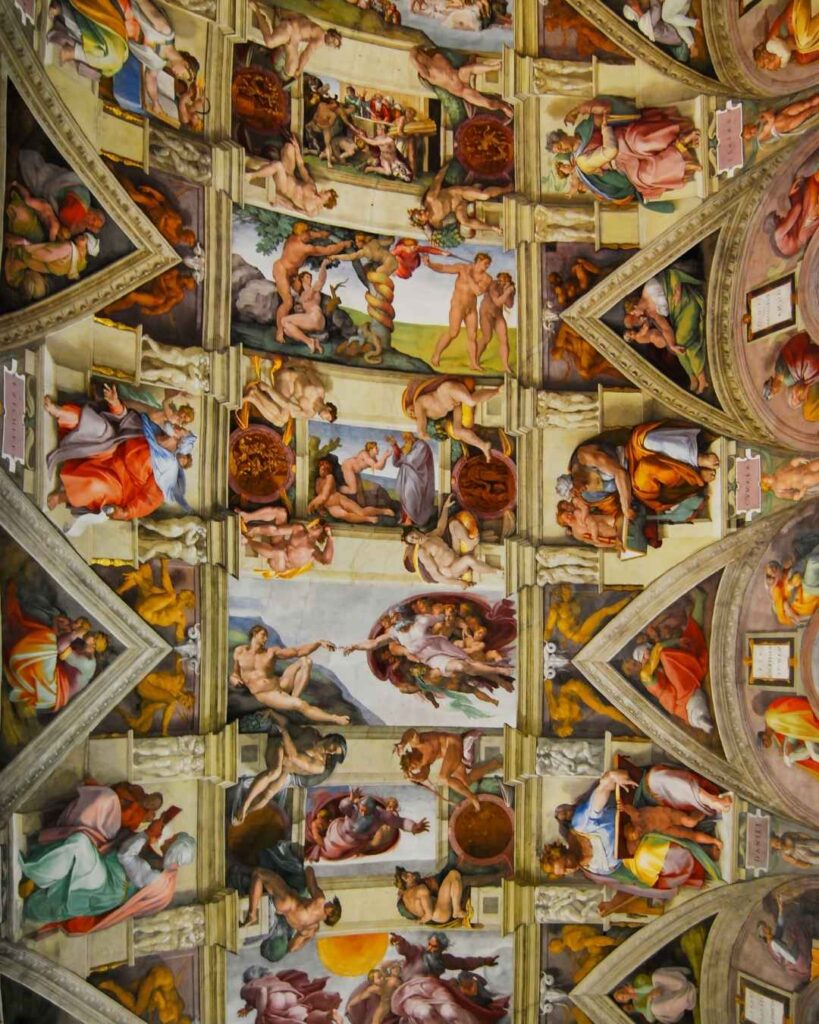
The single most famous sight in Vatican City is, of course, the ceiling of the Sistine Chapel. Painted by Michelangelo between 1508 and 1512, this is a work that defies adequate description. Rendered in pigments that seem to glow with an inner light, the frescoes are the work of an artist primarily known for his sculpture, yet they reveal a mastery of painting that has never been surpassed.
What strikes you first is the sheer scale of the undertaking. The ceiling features over three hundred figures, from the heroic prophets and sibyls who foretold the coming of a messiah to the nine scenes from the Book of Genesis that unfold along the central spine. The most famous panel, of course, is the Creation of Adam, with its iconic image of God reaching out to give life to the first man. But do not neglect the portraits of the sibyls, ancient soothsayers whose powerful, muscular forms reveal Michelangelo’s deep understanding of human anatomy.
The chapel itself is a working church, and visitors are required to maintain silence within its walls. There is a strange and wonderful fellowship that forms between you and the other visitors, all standing quietly with necks craned, gazing upward at one of the greatest achievements in the history of art. Photography is strictly forbidden, so you will simply have to trust your memory to hold onto this experience. Do not rush through it. Allow yourself at least fifteen minutes to absorb the beauty above you.
Michelangelo’s The Last Judgment
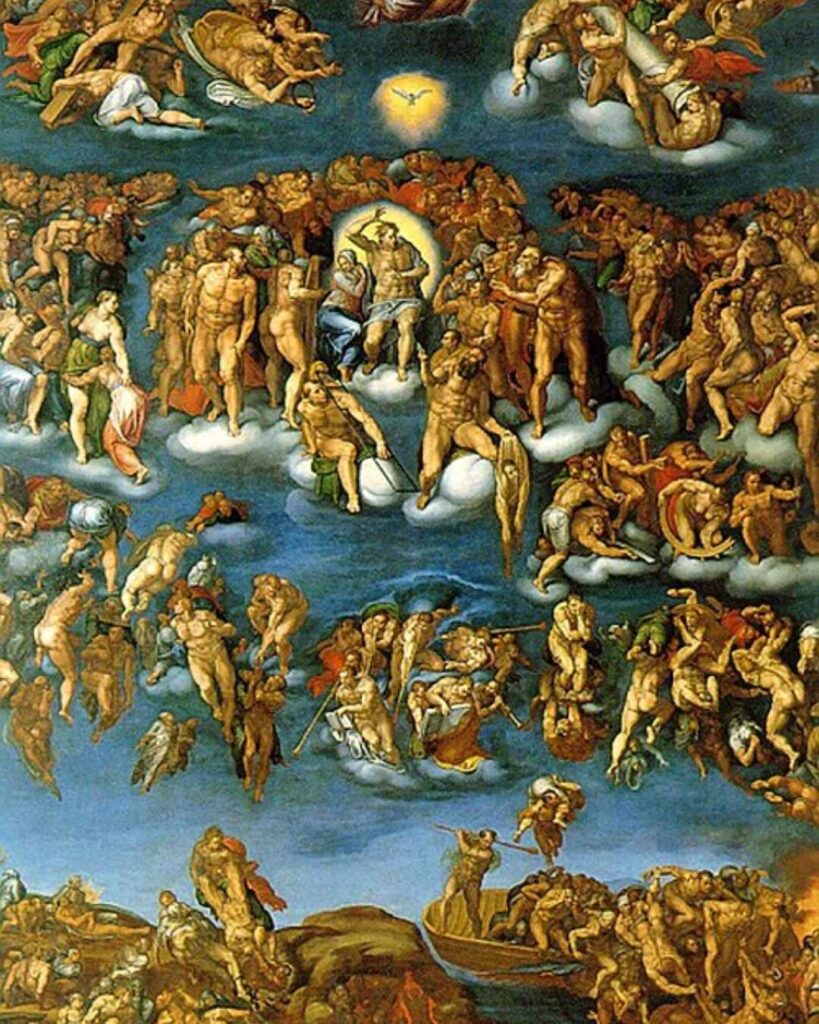
On the altar wall of the Sistine Chapel, you will find another of Michelangelo’s monumental works, The Last Judgment. Painted between 1537 and 1541, this was a later commission, completed decades after the ceiling, and it reveals a very different artist. Where the ceiling is a celebration of divine creation and human potential, The Last Judgment is a terrifying vision of divine wrath and human judgment.
The fresco depicts Christ as a powerful, almost angry figure at the center of the composition, surrounded by saints and martyrs who plead for the souls of the damned. Below, the dead rise from their graves, some ascending to heaven, others dragged down to hell by demons. The bodies are depicted with brutal realism, the muscles straining, the faces contorted with fear or hope. It is a work of immense emotional power, one that has influenced countless artists over the centuries.
There is a fascinating story behind this painting. Michelangelo was accused of obscenity for his depiction of nude figures, and after his death, another artist was commissioned to paint loincloths over the most explicit parts. If you look closely, you can still see the evidence of this censorship. Despite this, The Last Judgment remains one of the most influential masterpieces in art history, a testament to Michelangelo’s ability to convey the most profound human emotions through paint.
Raphael’s The School of Athens
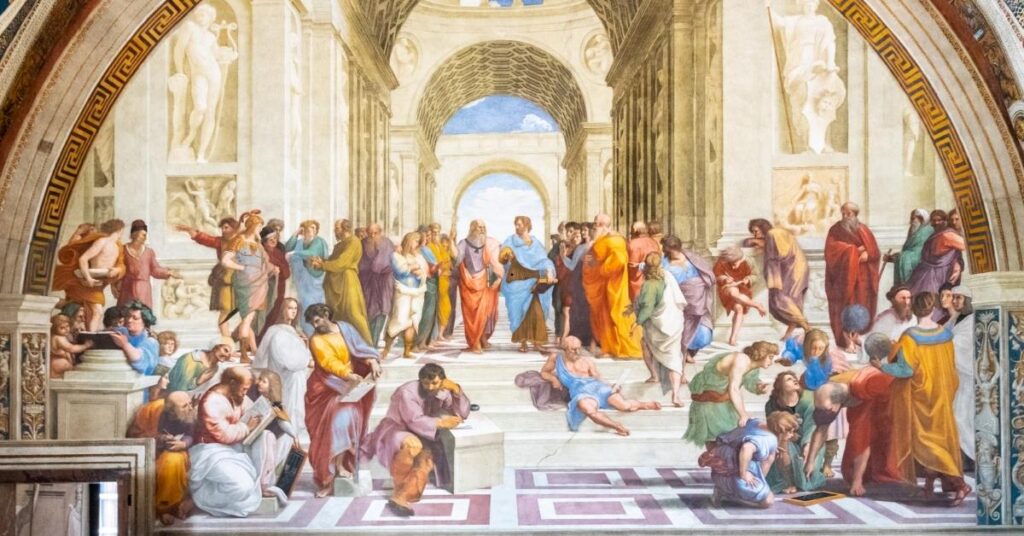
Second only to the Sistine Chapel in fame are the Raphael Rooms, a series of small chambers that were painted by Raphael under the patronage of Pope Julius II. The most famous of these rooms is the Room of the Segnatura, which contains The School of Athens, one of the most celebrated frescoes in the world.
This painting is a tribute to classical philosophy, depicting a gathering of the greatest thinkers of the ancient world in a magnificent architectural setting. At the center are Plato and Aristotle, portrayed with the faces of Leonardo da Vinci and the philosopher Aristotle. Other figures include Socrates, Pythagoras, and Euclid, all rendered with a grace and intellectual energy that is breathtaking to behold. The composition is a masterpiece of Renaissance perspective, with the figures arranged in a careful balance that draws the eye toward the central vanishing point.
Raphael worked on these rooms while Michelangelo was painting the Sistine Chapel just a few doors away, and it is fascinating to see the influence that Michelangelo’s powerful figures had on Raphael’s style. Yet the genius of the composition is purely Raphael’s own. The luminous, translucent shades of his palette remain as vibrant today as they were five centuries ago. These rooms can become quite crowded, as they were originally intended as private chambers for the pope rather than public viewing galleries. Consider visiting very early in the morning or during the off-season to enjoy them in relative peace.
Raphael’s Other Frescoes in the Stanze
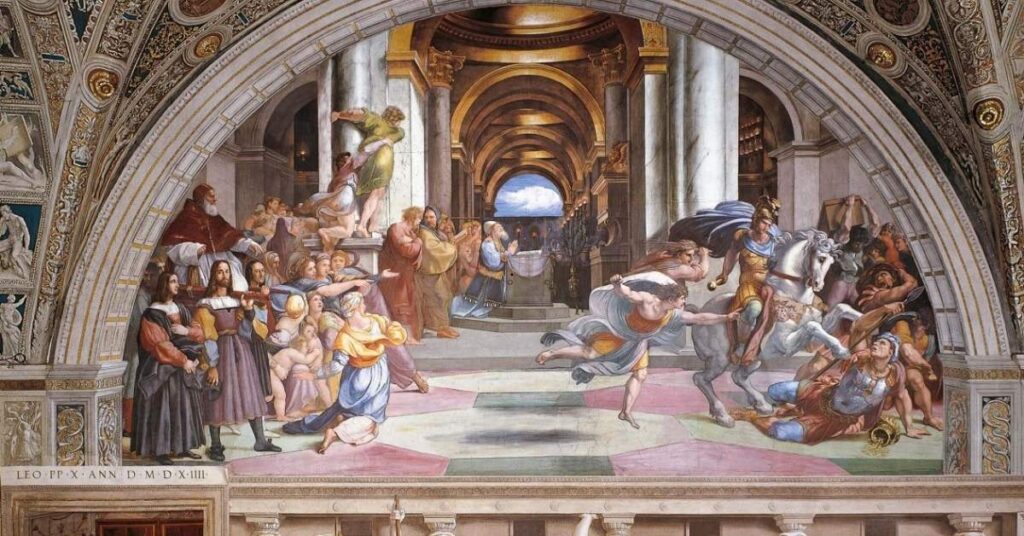
While The School of Athens is the undisputed highlight, the other three rooms of the papal apartments are equally worth your time. The Stanza di Eliodoro contains frescoes that celebrate the power of the Church, including the dramatic Expulsion of Heliodorus from the Temple, a scene of divine intervention that is filled with movement and tension. The Stanza dell’Incendio del Borgo depicts a fire that was miraculously extinguished by the pope, and the Stanza di Costantino celebrates the victory of Christianity over paganism.
Each of these rooms reveals a different aspect of Raphael’s genius. He was not simply a painter of beautiful figures; he was a storyteller of the highest order, capable of conveying complex theological and political ideas through his art. The sheer ambition of the project, and the speed with which Raphael and his workshop completed it, is a testament to his extraordinary talent. Even after his death, his assistants continued his vision, ensuring that the rooms would stand as one of the great achievements of the Renaissance.
Michelangelo’s Pietà
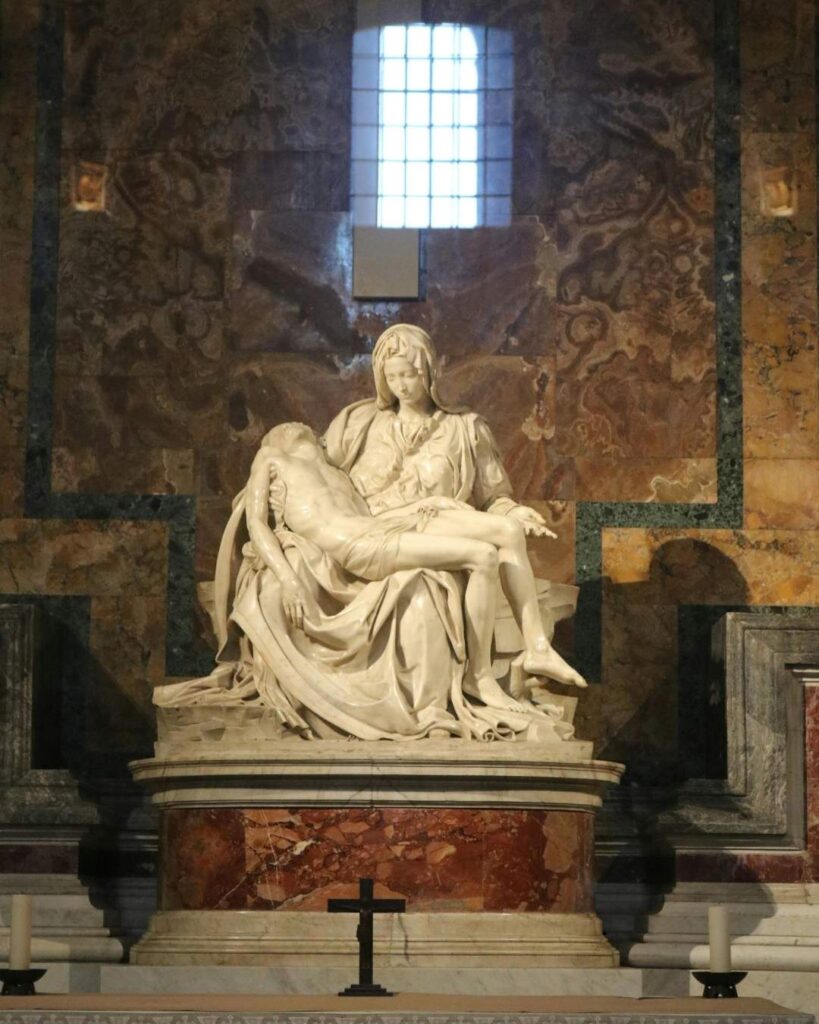
Tucked into a niche in St. Peter’s Basilica, the Pietà is perhaps the most moving sculpture ever created. Michelangelo carved this marble group between 1498 and 1499, when he was just in his early twenties, and it is a work of such technical brilliance and emotional depth that it seems almost impossible that such a young artist could have produced it.
The sculpture depicts the Virgin Mary holding the body of her son, Jesus, after his crucifixion. The grief on Mary’s face is rendered with exquisite restraint, a quiet sorrow that is more powerful than any dramatic outpouring of emotion. The bodies are carved with a perfection that seems almost superhuman; the folds of the drapery, the subtle tension of the muscles, the softness of the flesh—all of it is rendered with a virtuosity that has never been surpassed.
There is a famous story associated with this sculpture. According to legend, Michelangelo overheard a visitor attributing the work to another artist, and he was so mortified by his own pride that he carved his signature across the sash of Mary’s robe. He never signed another work. Today, the Pietà is protected behind bulletproof glass, a necessity after it was damaged by a vandal in 1972. But even through the glass, its power is undiminished. Stand before it for a few moments. Let its quiet beauty wash over you.
Bernini’s Baldacchino
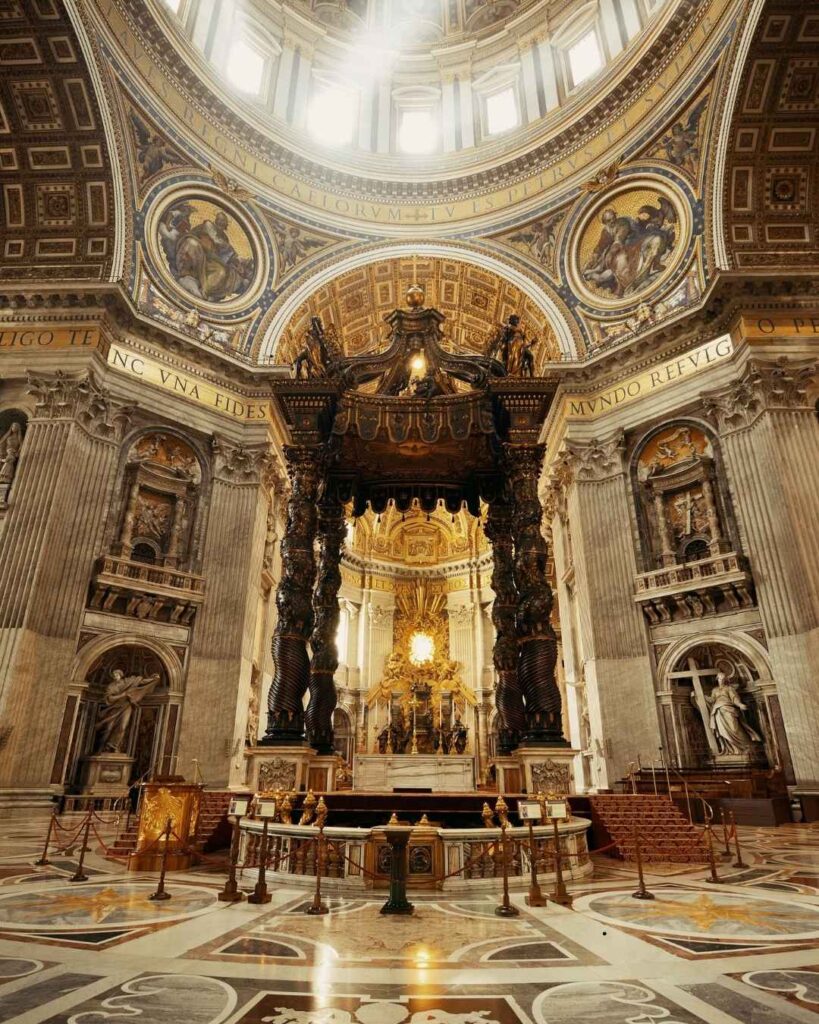
The artwork in St. Peter’s Basilica is dazzling, but the main event is the building itself. This is the largest church in the world, a space of such vastness and ornate beauty that it was deliberately designed to evoke awe and wonder. The crown jewel of all this glory is the baldacchino, or canopy, that sits over the papal altar.
Designed by Gian Lorenzo Bernini between 1623 and 1634, this is a Baroque masterpiece of bronze and gilt. Its exuberant spiral columns, known as Solomonic columns, are inspired by the columns of the ancient Temple of Jerusalem. The dynamic figures that adorn the canopy seem to writhe and twist with a sense of movement that is entirely characteristic of the Baroque style. The baldacchino stands over the tomb of St. Peter himself, making it one of the most sacred sites in all of Christendom.
Bernini’s genius was not limited to sculpture; he was also a master architect and urban planner. He also designed St. Peter’s Square, the vast elliptical space outside the basilica that has spent five hundred years welcoming huge crowds to papal audiences. The square is a masterpiece of urban design, its colonnades symbolizing the welcoming embrace of the Church.
The Gallery of Maps
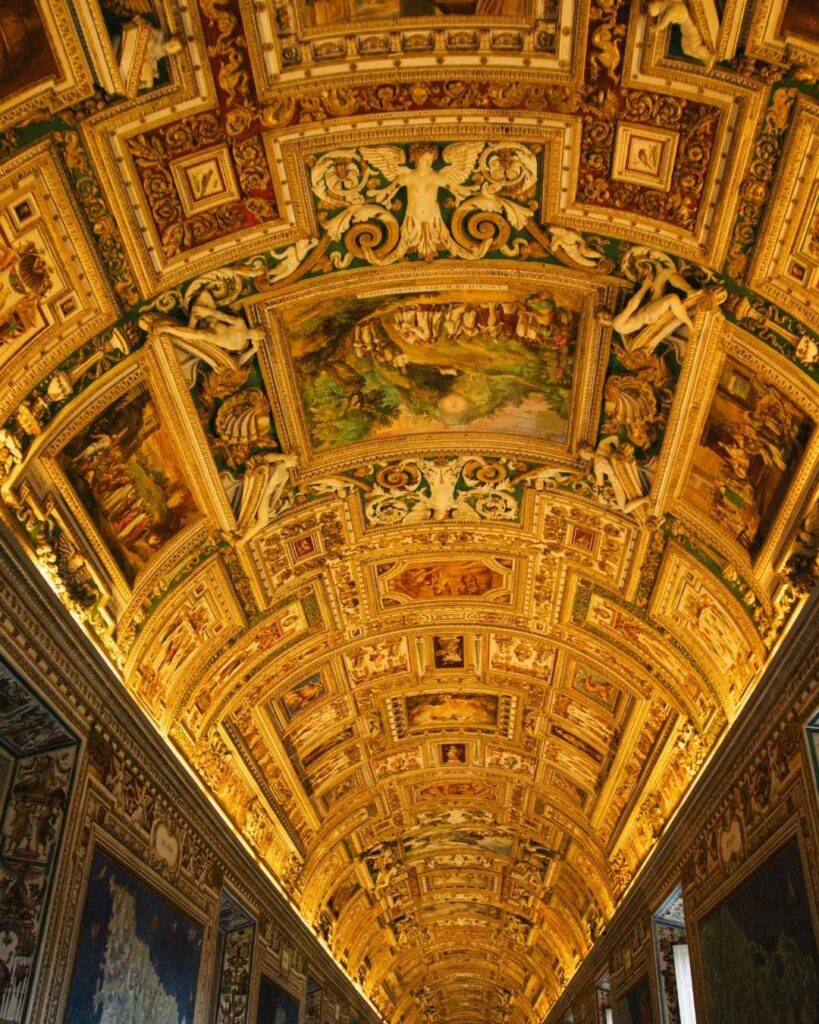
Often overlooked by visitors rushing toward the more famous masterpieces, the Gallery of Maps is one of the Vatican Museums’ hidden treasures. Commissioned by Pope Gregory XIII in the late sixteenth century, the gallery features a series of frescoed maps depicting the Italian peninsula with astonishing accuracy.
The maps were created using the most cutting-edge cartography of the time, and they remain shockingly accurate even today. As you walk along the gallery, you are essentially walking through Italy, from north to south, with each region depicted in exquisite detail. But do not forget to look up, as well. The heavily gilded ceiling contains painted works that directly relate to the corresponding map beneath it, creating a harmonious integration of art and geography.
The gallery is a fascinating window into the worldview of the Renaissance, a time when art and science were still deeply intertwined. And if you glance out the window about halfway down the gallery, you can see the tower for the Vatican’s radio station, which broadcasts in more than forty languages and is maintained by the Jesuit order.
Wrapping Up
The Vatican is a place that rewards careful planning and patient exploration. The museums display more than twenty thousand pieces of art and antiquity spanning millennia, and the complex itself is a maze of twenty-six different museums, galleries, rooms, and chapels. It is simply impossible to see everything in a single visit, so it is worth prioritizing the works that most interest you.
A guided tour can be invaluable, providing context and helping you navigate the sometimes thick crowds that gather here. But even without a guide, you can have a profound experience simply by allowing yourself to be moved by the beauty and history that surrounds you.
The Vatican is a testament to the power of art to inspire devotion, to convey complex ideas, and to connect us to something larger than ourselves. Whether you are a believer or a skeptic, you cannot fail to be moved by the masterpieces that are gathered within its walls. They are, quite simply, among the greatest achievements of human civilization.
NOTE BEFORE YOU GO: Italy rewards travelers who go prepared. And it is easy to ruin your trip. I have a checklist for you, of things you should never go to Italy without. CHECK IT OUT HERE. Also, if you enjoy my work and wouldn’t mind supporting me, you can book your accommodation through my link: BOOKING.COM. This are affiliate links. I may earn a commission on qualifying sales or bookings, at no extra cost to you. Thank You!