
Italy’s blockbuster trio—Rome, Florence, Venice—deserve every bit of their fame. But if you’ve walked the same crowded bridges and waited in the same long lines, you know that Italy’s soul isn’t only in its marquee names. It’s also in the quieter piazzas where old men play cards, in the steam rising from a pot of ragù that’s been simmering since dawn, and in the echo of footsteps through a medieval alleyway at golden hour.
Let me introduce you to five stunning Italian towns that don’t try to be Rome, Florence, or Venice. They are simply themselves: gorgeous, unpretentious, and unforgettable. Pack light, wear comfortable shoes like these ones, and bring an appetite.
1. Bologna: The Fat, the Red, and the Learned
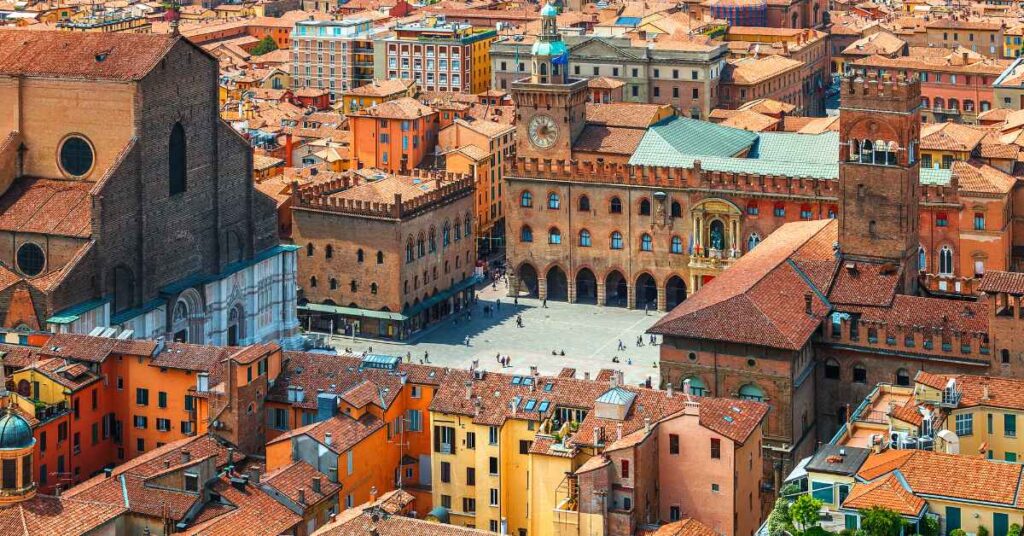
They call Bologna la grassa (the fat one) for its food, la rossa (the red one) for its terracotta rooftops and leftist politics, and la dotta (the learned one) for its ancient university—the oldest in the Western world, founded in 1088. Put it all together, and you have a city that feels like a living, breathing Italian kitchen and library under a glorious canopy of porticoes.
What stops you in your tracks: Walk under Bologna’s 40 kilometers of porticoes—a Unesco-listed marvel. They shelter you from sun and rain as you make your way to the Due Torri, the two leaning towers that tilt like drunk friends. Climb the 498 steps of the Asinelli tower, and you’ll see a sea of red rooftops stretching to the hills.
The taste of Bologna: This is the home of ragù, which Americans call “Bolognese sauce.” But here, it’s served with fresh egg pasta (tagliatelle), not spaghetti. Find a tiny trattoria near the Mercato di Mezzo and order tortellini in brodo—little parcels of pork and prosciutto swimming in rich broth. Finish with a glass of Lambrusco, the local fizzy red that cuts through the richness like a sharp friend.
Local secret: Skip the tourist menus near Piazza Maggiore. Instead, join the students at Osteria dell’Orsa for honest, cheap pasta. Or better yet, take a cooking class in the countryside just outside the city.
How to get there: Bologna’s train station is a high-speed hub—under an hour from Florence, just over an hour from Milan. You’ll arrive without a single crowded museum line waiting for you.
Nearby day trip: Take a 20-minute train to Modena, home of balsamic vinegar and Ferrari.
Read more on Bologna in this post
2. Verona: More Than Just Romeo & Juliet
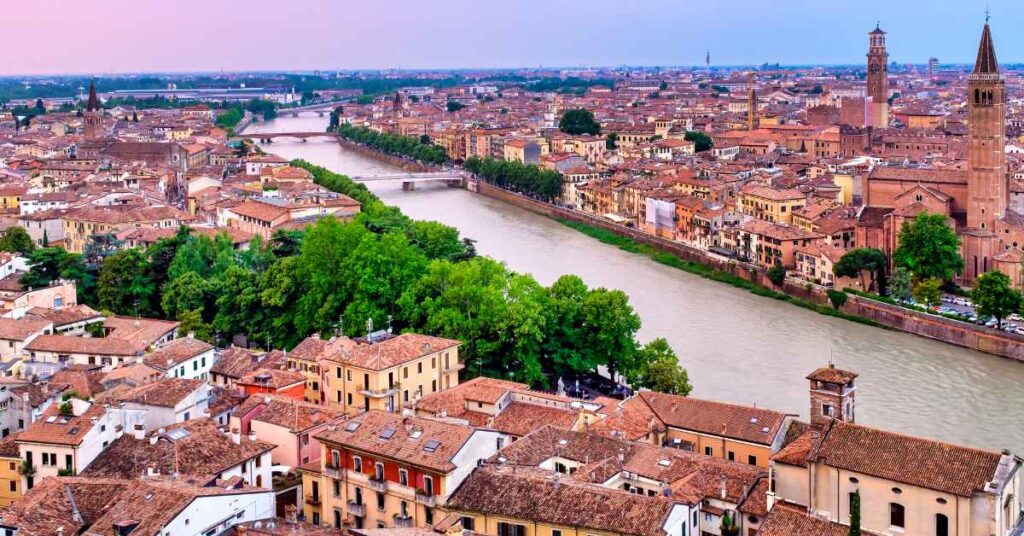
Yes, Verona has Juliet’s balcony. And yes, tourists crowd the courtyard to touch her bronze breast for luck in love. But stay a little longer, and you’ll discover that Verona doesn’t need Shakespeare to be romantic. It has a nearly perfectly preserved Roman amphitheater that still hosts opera under the stars—and locals fill every seat, singing along to Nessun Dorma like it’s a soccer match.
What stops you in your tracks: The Arena di Verona (1st century AD) is pink-tinged marble and massive—the third-largest Roman arena in the world. On a summer evening, with candles flickering and voices rising to the moon, you’ll feel ancient Rome breathing down your neck. During the day, climb the nearby Torre dei Lamberti for a pigeon’s-eye view of the Adige River curving around the city like a protective arm.
The taste of Verona: This is wine country—Valpolicella reds and Soave whites. Order pastissada de caval (slow-cooked horse meat, a local tradition) or keep it simple with gnocchi on Friday (locals still follow the tradition). For dessert, pandoro—a star-shaped, dusted-with-powdered-sugar cake that rivals panettone.
Local secret: Walk across the Ponte Pietra, the old stone bridge rebuilt after WWII brick by brick. Then climb up to Castel San Pietro for the best free sunset view in town. Bring a bottle of local Bardolino and a scarf—the breeze off the river is cool even in summer.
How to get there: Verona is on the high-speed line between Milan and Venice. From Venice, it’s just over an hour by train.
Nearby day trip: Lake Garda is 20 minutes away—Sirmione’s castle juts into turquoise water like a fairy tale.
For more details about Verona, check out this post.
3. Siena: The Gothic Dream That Won’t Let Go
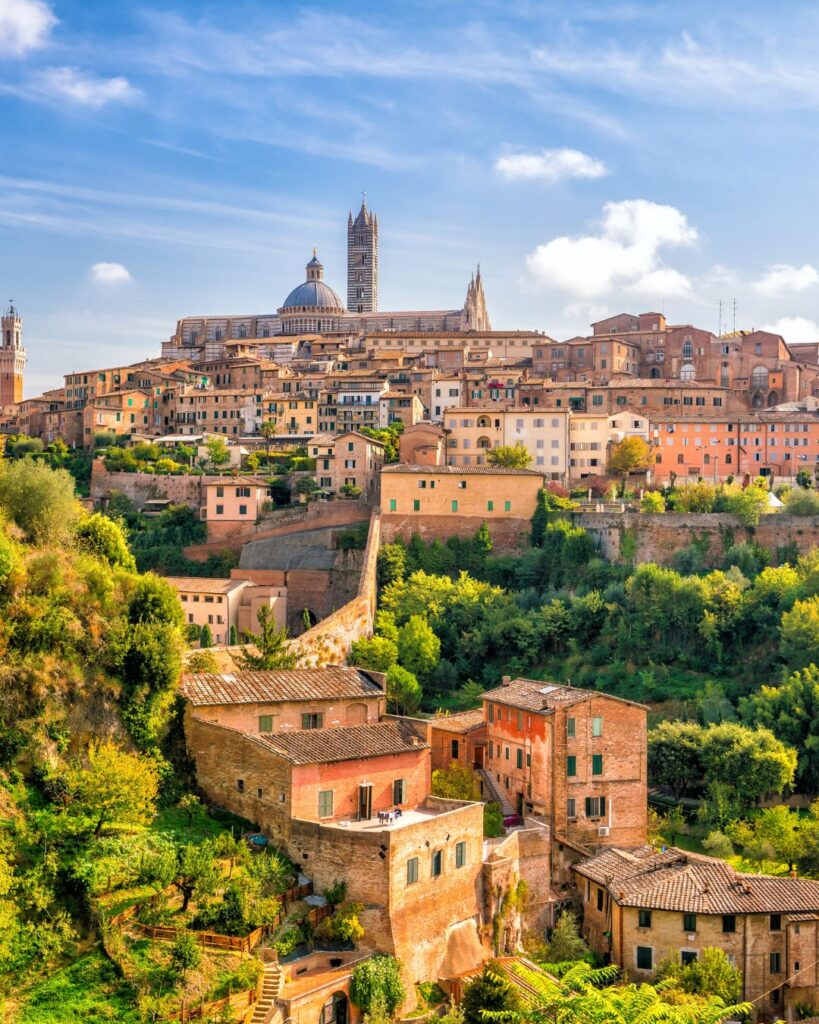
Florence may have won the Renaissance, but Siena won the Middle Ages. This hilltop city feels frozen in time—not in a musty museum way, but in the way a beloved old photograph feels alive. The moment you step into Il Campo, the shell-shaped main piazza, you’ll understand. Brick laid in a herringbone pattern. No straight lines. Eleven medieval streets emptying into it like rivers into a sea.
What stops you in your tracks: The Palio di Siena—a bareback horse race around Il Campo that happens twice each summer. It’s chaotic, dangerous, and utterly magical. Even if you visit off-season, you can stand on the same cobblestones and hear the ghosts of the crowd. Then climb the Torre del Mangia (400+ steps) for a view of the surrounding Tuscan hills that will make you weep.
The taste of Siena: This is ribollita country—the famous Tuscan bread and vegetable soup that gets better each time you reheat it. Also try pici, hand-rolled pasta thicker than spaghetti, tossed in garlic and breadcrumbs. For something sweet, panforte—a dense, peppery fruit-and-nut cake that’s been made here since the 13th century.
Local secret: The Duomo of Siena is a striped cathedral of black and white marble that rivals anything in Florence. But don’t miss the Piccolomini Library inside—frescoes so vivid you’ll think the Renaissance happened here first. (It almost did.)
How to get there: Trains from Florence to Siena take about 1.5 hours, but the bus (from Florence’s bus station) drops you right at the foot of the escalators that carry you up into the medieval center. Buses run hourly.
Nearby day trip: San Gimignano—the “medieval Manhattan” of towers—is 40 minutes by bus.
I have written a separate post about Siena for you to read. Check it out here
4. Orvieto: A City on a Cliff, and Another City Below
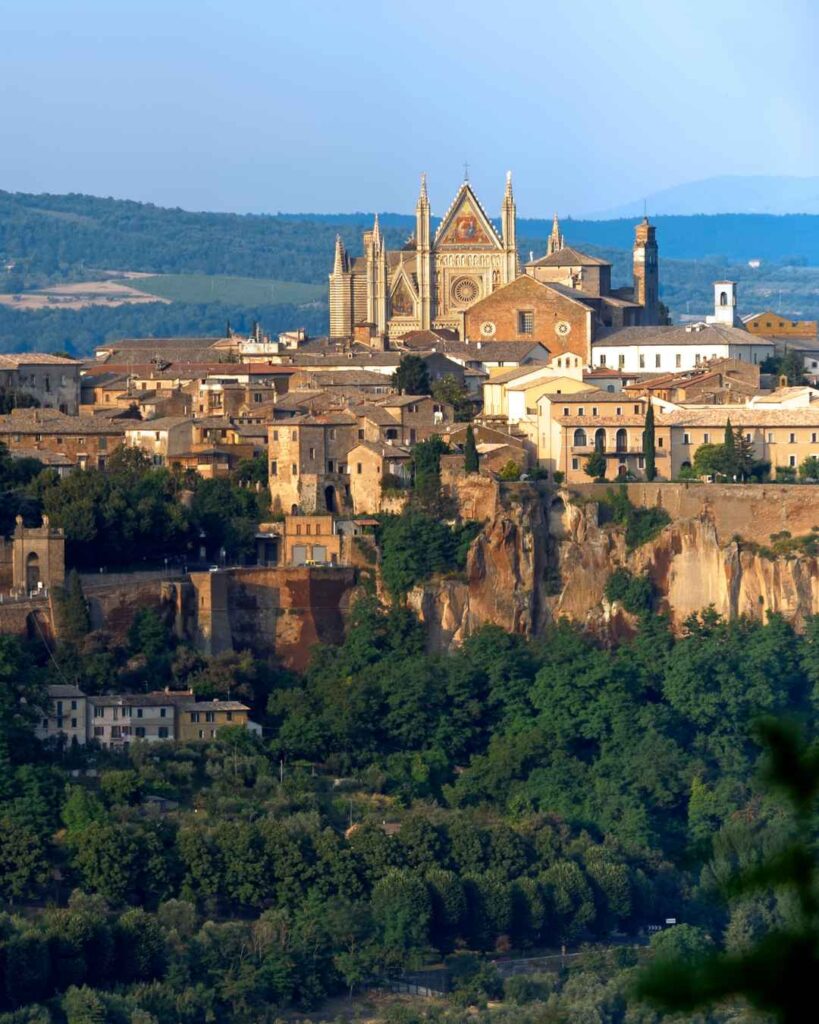
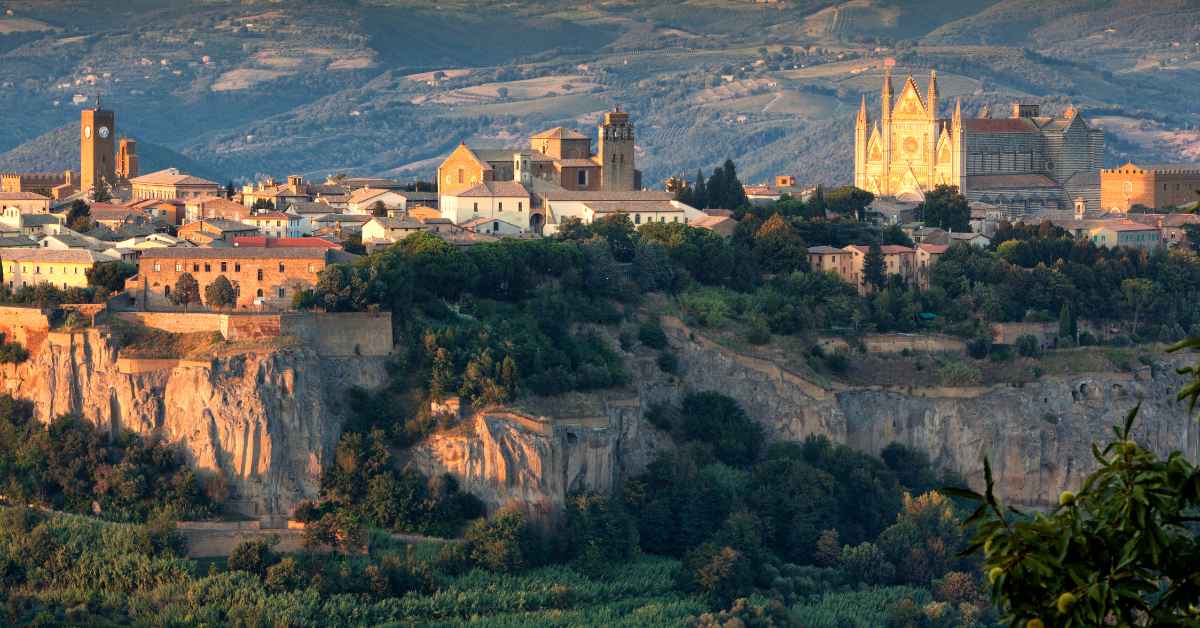
Orvieto sits on a volcanic plateau of tufa rock, rising abruptly from the Umbrian countryside like a ship at sea. But here’s the secret: underneath the charming streets and Gothic cathedral, there’s another Orvieto—a labyrinth of 1,200 caves, tunnels, and cisterns carved into the soft stone over 2,500 years by Etruscans, Romans, and medieval refugees.
What stops you in your tracks: The Duomo of Orvieto is a striped Gothic stunner—its facade a kaleidoscope of mosaics, stained glass, and bronze doors. Inside, the Chapel of San Brizio has a fresco cycle of the Last Judgment by Luca Signorelli that Michelangelo studied before painting his own version in Rome. You’ll see the direct line—the muscular bodies, the dramatic poses, the terror and ecstasy.
The taste of Orvieto: Orvieto Classico—the crisp white wine that pairs perfectly with the city’s love of truffles. Order umbricelli (thick, hand-rolled pasta) with black truffle shaved on top like snow. For a cheap lunch, grab porchetta (slow-roasted, herb-stuffed pork) in a crusty roll from a street vendor.
Local secret: Take the funicular from the train station up to the old town—it’s part of the adventure. Then book a tour of the Orvieto Underground. You’ll walk through Etruscan wells, medieval pigeon towers (yes, pigeons were dinner), and WWII air-raid shelters. It’s damp, dark, and absolutely riveting.
How to get there: Orvieto is on the high-speed Rome-Florence line. From Rome, it’s just over an hour. From Florence, about 1.5 hours. The funicular meets every train.
Nearby day trip: Civita di Bagnoregio, the “dying town,” is a 30-minute bus ride away—a crumbling fairy-tale village connected only by a footbridge.
5. Naples: Chaos, Beauty, and the Best Pizza on Earth
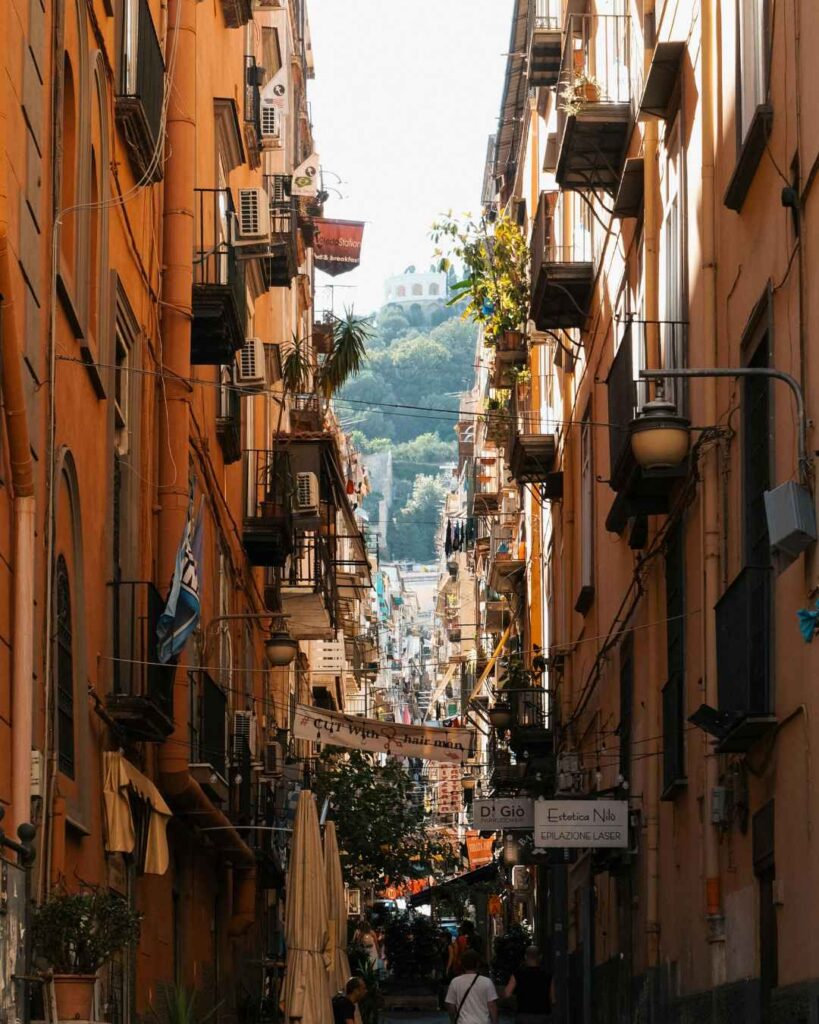
Naples is not polite. Naples shouts, honks, and throws laundry across the street. It has traffic that would terrify a stunt driver and a history of drama that includes volcanoes, monarchies, and the Camorra (the local mafia). But Naples is also the most alive city in Italy. It gave us pizza, the espresso machine, and Sophia Loren. It guards Pompeii and Herculaneum in its backyard. And it will break your heart and fill your stomach in the same afternoon.
What stops you in your tracks: The Sansevero Chapel holds one of the most astonishing sculptures ever made—Giuseppe Sanmartino’s Veiled Christ. A marble veil so thin you can see the wounds beneath. It’s not magic. It’s Naples. Also, walk along the Spaccanapoli—a straight, narrow street that cuts through the old center like a knife, lined with churches, street shrines, and old women selling fried dough.
The taste of Naples: Pizza. Not just any pizza. Pizza margherita—tomato, mozzarella, basil—was born here in 1889 for Queen Margherita. Go to L’Antica Pizzeria da Michele (where Julia Roberts ate in Eat, Pray, Love) and order one. Just one. No toppings. It’s perfect. Then try sfogliatella—a shell-shaped pastry filled with ricotta and candied fruit—and caffè from any random bar (Neapolitans take their coffee very seriously).
Local secret: The Naples Underground (Napoli Sotterranea) is a 40-minute tour through Greek aqueducts, Roman theaters, and WWII bomb shelters. You’ll wear a hard hat and squeeze through tiny passages. It’s claustrophobic and thrilling. Above ground, the National Archaeological Museum holds the best collection of Roman and Greek artifacts in the world—including mosaics and erotic art from Pompeii.
How to get there: Naples’ airport has direct flights from many European cities. By high-speed train, it’s just over an hour from Rome, three hours from Florence.
Nearby day trip: Pompeii is 30 minutes on the Circumvesuviana train. Go early, bring water, and hire a guide—or you’ll just wander through rubble wondering what you’re looking at.
If you want to learn more about Naples, read this post.
How to Visit These 5 Towns (A Practical Itinerary)
You cannot see all five in one trip without rushing. But here are two sensible options:
One week (North focus):
Bologna (2 nights) → Verona (2 nights) → Siena (3 nights). Train between them.
Ten days (South & center):
Orvieto (2 nights) → Naples (4 nights, including Pompeii day trip) → Siena (3 nights).
If you must choose just two: Bologna and Naples. They are the soul of Italian food and life.
Final Thoughts
Rome, Florence, and Venice are like the first three tracks on a greatest-hits album—brilliant, but overplayed. The towns I’ve shared with you today are the B-sides, the deep cuts, the songs that true fans whisper about. Bologna’s porticoes, Verona’s opera under the stars, Siena’s shell-shaped piazza, Orvieto’s underground maze, and Naples’ chaotic, beautiful, pizza-scented streets—they are waiting for you.
Go slowly. Eat twice as much as you planned. Get lost. And when a local asks where you’re from, smile and say, “I’m just happy to be here.”
Again, feel free to go through the list below of my Italy recommendations that I have crafted after years of travel to this beautiful country:
- Packing List: Things Not to Go to Italy Without
- Must-Do Things: Unforgettable Experiences
- Where to Stay: Best Hotels in Italy.
- Where to Stay in Rome: Rome’s Best Neighborhoods
- Where to Stay in Florence: Picking the Best Area
- Where to Stay in Venice: Venice’s Best Districts
- Italy’s Cobblestone Streets: Best Shoes For the Job
- Backpack or Suitcase?: Italy Luggage Guide
- Travel Insurance: Always Be Covered
- E-Sim: Be Connected At All Times
The reviews look inspiring. I plan to go,somewhere, September 2026.
I’m also a guy who’s travelled the world 🌎 often, 50 years + , as a solo.
I’d appreciate the costing, for a week.
Regards Rob