
Most tourists zip through Bologna on the high-speed train between Florence and Venice. That’s a mistake. A big one.
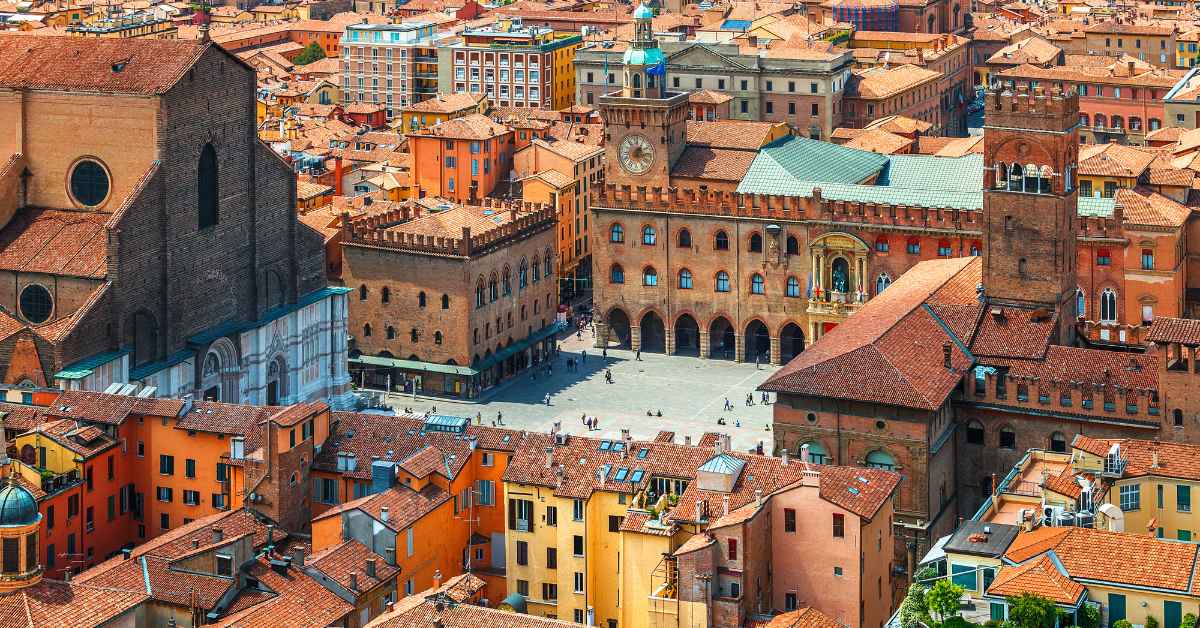
Bologna has three nicknames, and they tell you everything you need to know. La Rossa – the Red – for its terracotta rooftops and its left-leaning politics. La Dotta – the Learned – because it’s home to the oldest university in the Western world, founded in 1088. And La Grassa – the Fat – for its legendary food culture.
When my wife and I first arrived, we stepped out of Bologna Centrale station, walked under the first covered portico, and immediately felt something different. The city is alive but not frantic. Students on scooters zip past grandmothers carrying mesh bags of produce. The noise is conversation, not traffic.
Skip the day trip. Give Bologna at least two nights. You’ll eat better here than anywhere else in Italy.
Best Time to Visit Bologna
Spring, from April to June, is close to perfect. The weather is warm but not oppressive, the markets are bursting with asparagus and artichokes, and the city feels optimistic after winter. You’ll share the sidewalks with locals, not just tourists.
Fall, September through October, is my personal favorite. This is harvest season. White truffles appear on menus, chestnuts roast on street corners, and the humidity finally breaks. The light turns golden and soft. My wife still talks about a plate of tagliatelle al ragù we had on an October evening near Piazza Santo Stefano – the air was cool, the pasta was silky, and the whole scene felt like a movie.
Summer, July and August, is hot. Really hot. The porticoes provide shade, but the heat lingers well into the night. Many locals flee to the coast during August for ferragosto, so some shops and restaurants close. If you must come in summer, book air conditioning and plan your sightseeing for morning and evening.
Winter has its own charm. November through February brings fog, low prices, and empty piazzas. The Christmas markets are modest but cozy. And this is sfoglia season – when you’ll find the best fresh pasta because the cool, dry air helps the dough.
One more thing: avoid the first week of October if you don’t like crowds. That’s when Cinema Ritrovato brings film lovers from around the world, and the city gets wonderfully busy.
How to Get to Bologna (And How to Get Around)
Bologna’s airport, Guglielmo Marconi, sits about six kilometers from the center. The Marconi Express shuttle train runs every fifteen minutes and drops you at Bologna Centrale in seven minutes. A ticket costs around twelve euros.
But most visitors arrive by train. Bologna Centrale is a high-speed hub. Milan is one hour away. Florence is thirty-five minutes – yes, you read that right. Rome takes two hours. Venice is ninety minutes. This makes Bologna an excellent base for exploring Emilia-Romagna, which we’ll get to in the day trip section.
Now, a word about driving. Don’t. The historic center is protected by a Limited Traffic Zone, or ZTL. If you accidentally drive into it, a camera will photograph your license plate, and you’ll receive a fine in the mail months later – usually for around one hundred euros. Even if you’re staying inside the center, most hotels will tell you to park in a garage on the edge and walk. Listen to them.
Getting around once you’re here is simple. The historic center is flat and compact. You can walk from one end to the other in thirty minutes. My wife and I never once took a bus inside the center. Everything is connected by those wonderful porticoes – 40 kilometers of covered walkways that protect you from sun and rain.
If your feet get tired, buses run frequently. Buy tickets at any tabacchi shop (look for the big T sign) or use the TPER app. Validate your ticket as soon as you board.
Where to Stay: Neighborhood Guide
Choosing the right neighborhood changes everything. Here’s the honest breakdown.
The Centro Storico, the historic center, is where most first-time visitors want to be. You’ll wake up steps from Piazza Maggiore, stumble out for morning coffee, and hear church bells echo off medieval walls. It’s magical. It’s also noisy at night. Bring earplugs.
The University Quarter, along Via Zamboni, is the budget choice. Students have been studying here for nearly a thousand years. You’ll find cheap trattorias, lively bars, and a chaotic energy that’s fun if you’re young at heart. Not great for light sleepers.
Santo Stefano, in the southeastern part of the center, is where we stayed. It’s quieter, more refined, and home to one of the most beautiful piazzas in Italy. You’re still only a ten-minute walk from everything, but you don’t hear the late-night crowds. This is the sweet spot.
Via Indipendenza, the main street from the station to the center, is convenient but forgettable. Good for an early train departure. Not good for atmosphere.
The Bolognina neighborhood, north of the station, is up-and-coming. Cheap hotels, authentic local life, and fewer tourists. My wife felt perfectly safe here during the day, but it’s a twenty-minute walk to the main sights.
If you have money to spend and don’t mind hills, look near Porta Saragozza or the Colli hills. Luxury B&Bs with panoramic views. You’ll need a taxi or strong legs to get home at night.
Below are some great hotels that I recommend to my friends visiting Bologna:
1. Casa Isolani Santo Stefano
If you want to stay somewhere that feels like a piece of history, this is it. Casa Isolani is a unique “hotel diffuso” concept, meaning your room is actually spread across two historic residences within a beautiful ancient palace on Via Santo Stefano, one of Bologna’s most charming streets . You’re not just staying near the sights—you’re sleeping inside a landmark. Check it out here
2. Vlll PORTICO
For travelers who want a modern boutique experience right in the heart of the action, Vlll PORTICO is an excellent choice. This four-star property sits on Via Capo di Lucca, literally steps from the medieval towers and Bologna’s famous porticoes. Check it out here
3. I Portici Hotel Bologna
If you are looking to splurge on a memorable stay, I Portici Hotel Bologna comes Michelin-recommended and lives up to the reputation. Check it out here
Top Attractions & Landmarks
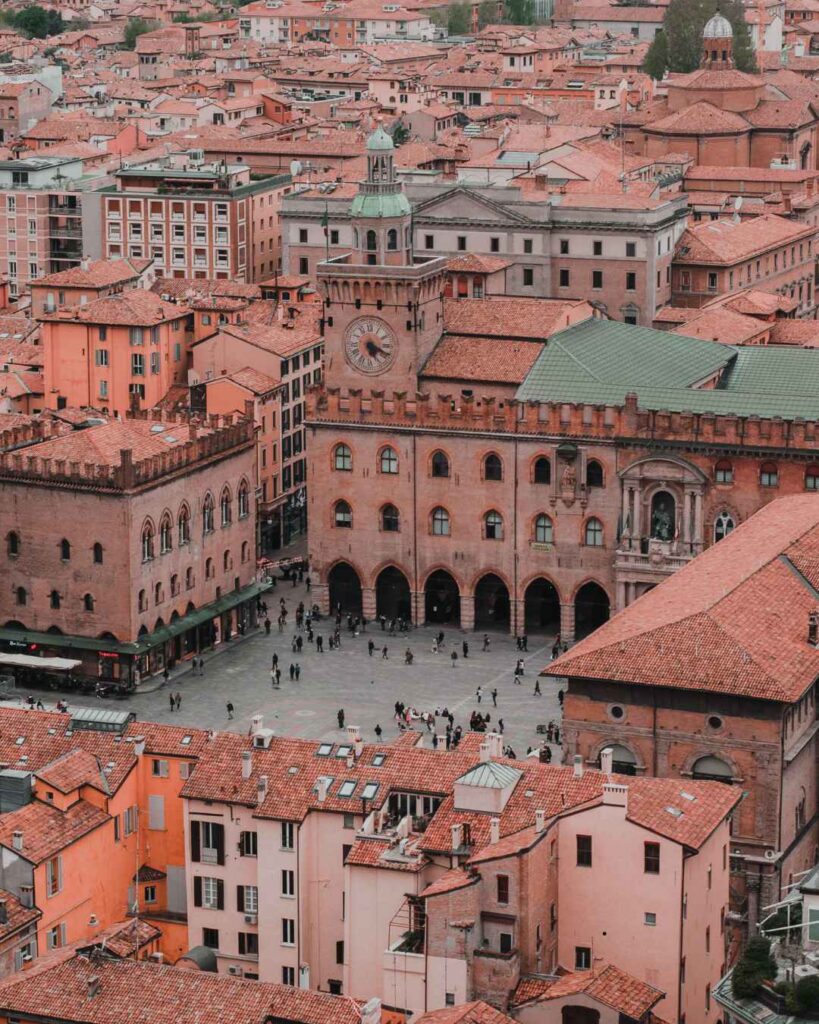
Piazza Maggiore is the heart of Bologna. Sit at a café, watch the old men argue in fast Emilian dialect, and admire the unfinished Basilica of San Petronio. Why unfinished? The pope ordered construction to stop in the 1500s because he didn’t want a church in Bologna to outshine St. Peter’s in Rome. Inside, look for the longest indoor meridian line in the world – a brass strip that acts as a giant sundial.
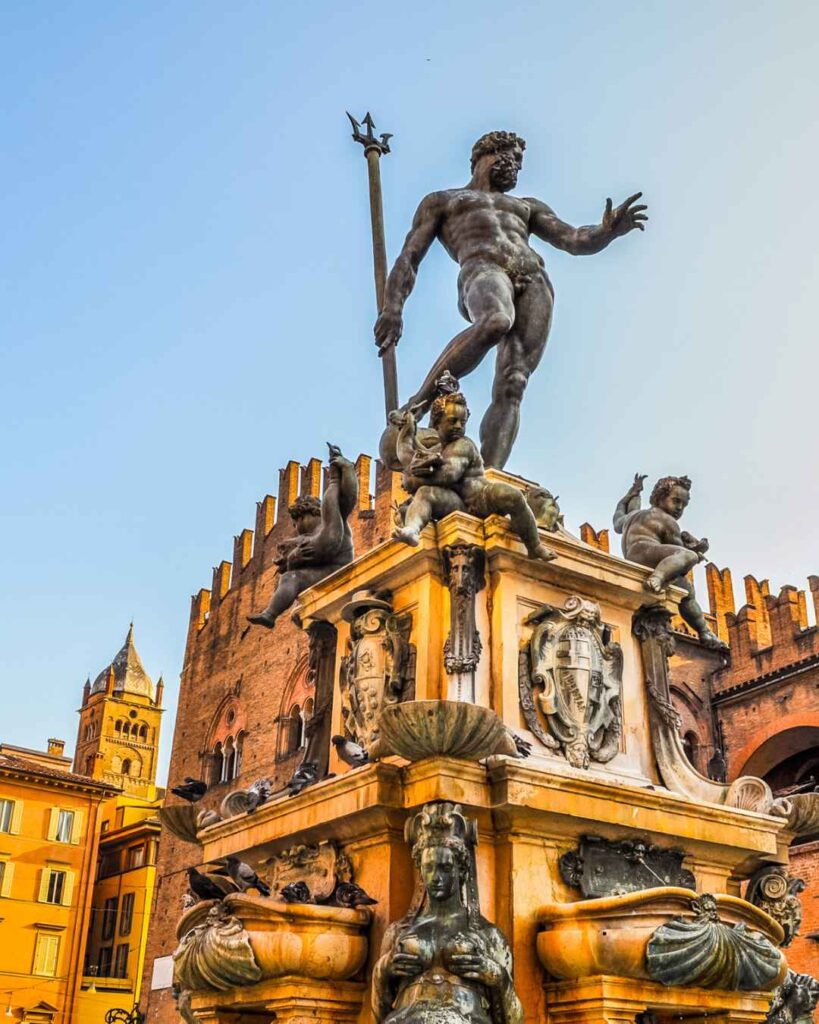
Right next to the piazza stands the Fountain of Neptune. Locals call him al Żnèr (the giant in Bolognese dialect). Look closely at the water nymphs around his base. Their hands are positioned in a way that inspired a famous Michelangelo drawing.
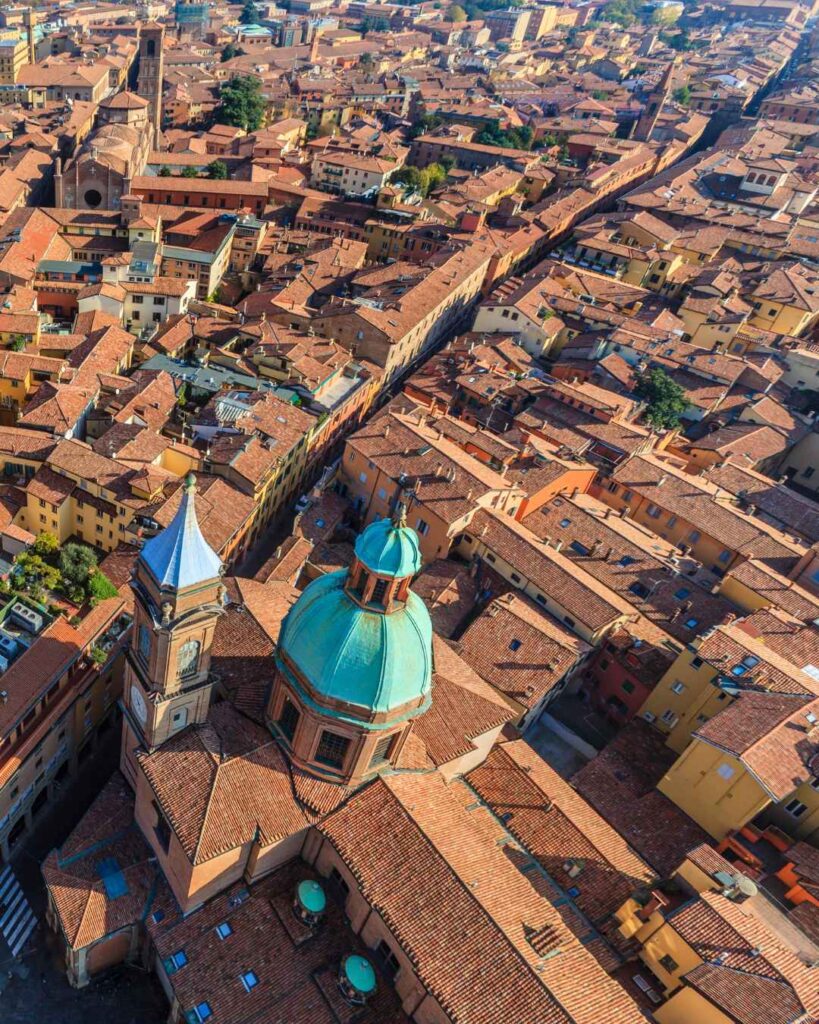
The Due Torri, or Two Towers, are Bologna’s leaning landmarks. The taller one, Asinelli, has 498 steps to the top. My wife made it about halfway before asking why I’d done this to her. But the view from the top – a sea of red roofs stretching to the green hills – makes every step worth it. Book your time slot online in advance. The smaller tower, Garisenda, leans even more dramatically. Dante mentioned it in the Inferno.
The Archiginnasio was the main building of the university for nearly two hundred years. Its walls are covered with thousands of student coats of arms, like a medieval yearbook. The star attraction is the Teatro Anatomico – a wooden anatomy theater where medical students once watched dissections. The statue of the patron saint of medicine holds a human nose. No joke. Book ahead; it sells out daily.
The Santo Stefano complex, known locally as the Sette Chiese (Seven Churches), is a religious time machine. It’s a collection of churches built on top of churches, including a Roman temple to Isis and a chapel that once held Jesus’s tomb replica. Go early in the morning when the light streams through the cloisters. Entrance is free.
Finally, the Portico di San Luca. This is the world’s longest portico – 3.8 kilometers and 666 arches – stretching from the city gate up to the Sanctuary of the Madonna di San Luca on a hilltop. You can walk the whole thing in about an hour and a half. Or cheat like we did and take the tourist train from Piazza Maggiore. The sanctuary offers stunning views back over the city.
The Ultimate Food Guide
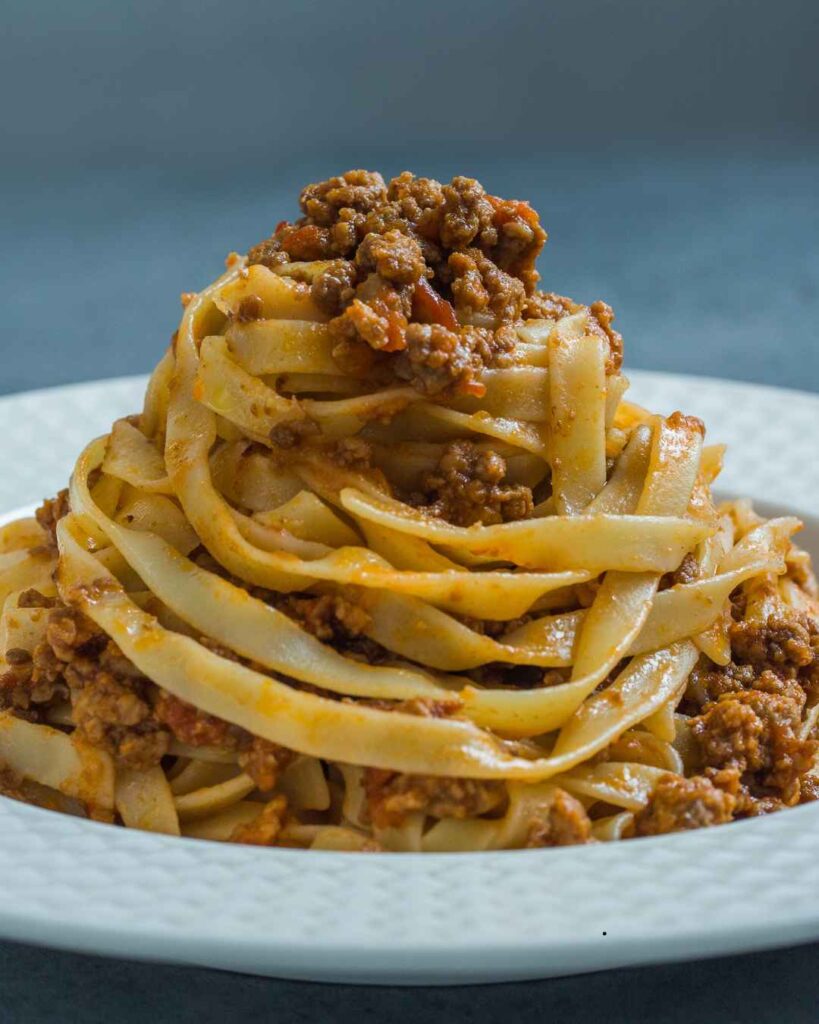
This is why you came to Bologna. Let’s get specific.
First, forget everything you know about “spaghetti bolognese.” That dish does not exist here. The real deal is tagliatelle al ragù. Tagliatelle is a long, flat, fresh pasta – never dried spaghetti. The ragù is a slow-cooked meat sauce with just a touch of tomato. When it’s made right, the sauce coats each ribbon of pasta perfectly.
The holy trinity of Bolognese pasta includes two others. Tortellini are small, ring-shaped pasta pillows traditionally stuffed with pork, prosciutto, and Parmigiano. Legend says the shape was inspired by the navel of Venus. Eat them in brodo – in a rich capon broth. Tortelloni are larger and stuffed with ricotta and herbs, usually served with butter and sage.
Other local classics: lasagne alla Bolognese (made with green spinach pasta), gramigna con salsiccia (curly pasta with crumbly sausage), and passatelli (breadcrumb and Parmesan noodles in broth).
And do not leave without trying mortadella. This is the original Bologna sausage – smooth, delicate, studded with pistachios or black pepper. The pre-sliced pink stuff from the grocery store back home is a sad imitation. Get it sliced fresh at a market and eat it with crescentine (little fluffy flatbreads) or torta fritta (fried dough pockets).
For markets, you have two excellent options. Mercato di Mezzo, in the heart of the medieval Quadrilatero district, has been renovated into a lively food hall. You can graze your way through pasta, wine, cheese, and gelato all in one place. It’s touristy but still good. Go at lunchtime.
Mercato delle Erbe is where actual Bolognese shop for produce during the day. In the evening, the stalls close and the outdoor bars open for aperitivo. This transition is one of my favorite things about Bologna – from workaday market to social hub without missing a beat.
For historic food shops, seek out Tamburini on Via Drapperie. They’ve been selling cured meats and fresh pasta since 1932. You can eat at their counter or grab food to go. Paolo Atti & Figli, on the same street, roasts some of the best coffee in the city. La Baita, near the Due Torri, is a tiny cheese shop where the owner will let you taste before you buy.
Where should you actually eat? Here’s a simple breakdown.
For cheap, authentic meals, head to Osteria dell’Orsa near the university. Students have been filling up here for decades. No reservations, no frills, just excellent pasta for under ten euros. Mò Mortadella Lab serves mortadella sandwiches so good you’ll dream about them.
For mid-range, try Trattoria della Santa, a tiny spot near Santo Stefano that only has six tables. Book a week ahead. Sfoglia Rina is a fresh pasta shop that turned into a restaurant – you watch them roll the dough while you eat. Ristorante Donatello does a perfect tortellini in brodo.
For a splurge, I Portici on Piazza Santo Stefano holds a Michelin star without being stuffy. Or take a day trip to Modena and eat at Osteria Francescana – if you can get a reservation six months in advance.
One last food tip: do a food tour. My wife was skeptical at first – she thought they were overpriced. But we booked Italian Days Food Tour and spent four hours visiting a Parmigiano factory, a prosciutto curing house, and a family-run balsamic vinegar attic. It was worth every euro. You learn more in one morning than you would in a week of eating on your own. While in Bologna, this one here is a particularly good one
Aperitivo, Drinks & Nightlife
Aperitivo is sacred in Bologna. From about six to nine in the evening, bars put out small buffets. You pay for a drink – a Spritz, a glass of Lambrusco, or a Negroni – and the food is essentially free. Some places offer just chips and olives. Others lay out full spreads of pasta salads, cured meats, and little fried things.
Camera a Sud is my favorite. It sits right next to one of the few remaining stretches of the Canale di Reno – Bologna’s hidden canal system. Order a vino sfuso (house wine from a tap) and watch the water flow under a medieval window. It feels secret and special.
Le Stanze is unforgettable. The bar occupies what used to be a family chapel. Frescoed ceilings, velvet couches, and a moody atmosphere. Drinks are expensive but the experience is unique.
Bar Zanarini on Piazza Maggiore is the classic people-watching spot. Sit outside, order a Negroni, and watch the world walk by.
For wine bars, Enoteca Italiana has been around for decades. They have a massive selection of Emilia-Romagna wines. Ask for a Lambrusco – not the sweet, fizzy stuff you remember. Real Lambrusco is dry, complex, and pairs perfectly with cured meats.
The nightlife scene centers on Via del Pratello, a narrow street lined with small bars and outdoor seating. It’s loud, casual, and full of students and off-duty chefs. My wife and I wandered down here after dinner one night and ended up sharing a bottle of natural wine with strangers from Milan. That’s the Bologna spirit.
If you want to dance, Covo Club plays indie and electronic music. LINK is more underground techno. Both are outside the center, so take a taxi.
Day Trips from Bologna
One of Bologna’s great advantages is its train connections. In less than an hour, you can be in some of Italy’s most remarkable small cities.
Modena is twenty-five minutes away. This is the home of traditional balsamic vinegar – not the stuff you buy at the grocery store, but the dark, syrupy, twenty-five-year-aged treasure that sells for hundreds of euros a bottle. Visit a acetaia (vinegar loft) like Acetaia di Giorgio. Also worth seeing: the Enzo Ferrari Museum and Modena’s magnificent Romanesque Duomo.
Parma is fifty minutes. Yes, that Parma – home of Parmigiano-Reggiano and Prosciutto di Parma. You can tour a cheese factory and see the giant wheels aging in rows. The Teatro Farnese, a wooden theater inside the Palazzo della Pilotta, is one of the most beautiful performance spaces I’ve ever seen.
Ravenna is one hour. This small city holds eight UNESCO World Heritage sites, all of them filled with shimmering Byzantine mosaics. The Basilica of San Vitale and the Mausoleum of Galla Placidia will make you believe in the power of art. My wife, who usually gets bored in churches, stared at the mosaics for forty-five minutes without speaking.
Ferrara is thirty minutes. A Renaissance jewel box with a massive Este Castle at its center. The city is flat and bike-friendly – rent a bicycle and ride the old city walls, which are still intact and lined with trees.
For nature lovers, consider Monte Sole, a half-hour drive south. It’s a regional park and a WWII peace memorial. Hiking trails wind through forests that hide abandoned villages. It’s somber but beautiful.
Practical Tips & Italian Etiquette
Let’s talk coffee. Italians have rules. A cappuccino is for morning only – never after a meal. An espresso is appropriate any time. If you order a latte, you’ll get a glass of milk. Order a caffè latte if you want coffee with milk. And stand at the bar to save money – you’ll pay an extra euro or two to sit down. My wife learned this the hard way.
Tipping is not required. Restaurants charge a coperto – a small cover charge per person, usually one to three euros. This covers bread and service. Locals might leave a few coins for excellent service, but no one expects a percentage.
Safety in Bologna is good. The main risk is pickpockets, especially around the train station and on the crowded bus to San Luca. Keep your wallet in a front pocket. Use common sense. Violent crime is rare.
Learn a few words. Buongiorno (good morning). Permesso (excuse me – say this when you need to pass someone in a narrow portico). Grazie mille (thank you very much). Un caffè, per favore (a coffee, please). A little effort goes a long way.
Pack comfortable walking shoes like these ones. Cobblestones and portico steps will destroy your feet if you wear cute flats. My wife packed stylish leather boots and regretted it by day two. We found a shoe store and bought her sneakers. Don’t make that mistake.
Also pack a light scarf or shawl like these ones. Churches require covered shoulders and knees. The Basilica of San Petronio will turn you away if you’re dressed for summer.
Sample Itineraries
If you only have twenty-four hours, here’s the sprint. Wake up early and take the tourist train to San Luca before the crowds. Back in the center by ten, climb the Due Torri. Have lunch at Sfoglia Rina – tagliatelle al ragù, obviously. Spend the afternoon in Piazza Maggiore and Santo Stefano. Aperitivo on Via del Pratello. Dinner at Osteria dell’Orsa. Gelato at Cremeria Cavour. You’ll sleep well.
Three days is better. Day one: the history tour. Archiginnasio in the morning, Santo Stefano after lunch, Due Torri at sunset. Day two: the food tour. Mercato di Mezzo in the morning, a pasta-making class in the afternoon, aperitivo at Camera a Sud. Day three: a day trip to Modena or Ravenna. Return for one last bowl of tortellini in brodo.
For five days, slow down. Take a cooking class. Go truffle hunting in the Apennines. Visit a Parmigiano factory. Spend a lazy afternoon in Giardini Margherita, Bologna’s main park, watching families and dogs and old men playing bocce. Read a book under a portico. That’s the real Bologna.
What to Buy & Bring Home
Skip the cheap magnets. Bring home real food.
Traditional balsamic vinegar, the real DOP stuff, comes in a squat bottle with a consorzio seal. Expect to pay forty euros and up for a small bottle. It’s worth it.
A wedge of Parmigiano-Reggiano, vacuum-sealed for travel. Ask for vecchio (aged two years) or stravecchio (three years). It will last a month unrefrigerated.
Dry tortellini or tortelloni from a pasta shop like Tamburini. They stay fresh for weeks. Cook them at home and pretend you’re back in Bologna.
Sbrisolona is a crumbly almond cake from Mantua but popular throughout Emilia-Romagna. It’s meant to be broken with your hands, not sliced.
For non-food items, look for hand-painted ceramics from Ceramiche Pezzetta. Silk scarves – Bologna once had a booming silk industry. And chocolate from Majani, the oldest chocolate maker in Bologna, who invented the cremino – a soft layered chocolate cube.
The best shopping street is Via Clavature for food gifts and Via Pescherie Vecchie for vintage and crafts.
Common Mistakes to Avoid
- Do not ask for spaghetti bolognese. Do not ask for garlic bread. You will get a very polite but very firm explanation of why those things are not Italian.
- Avoid eating anywhere with a plastic menu and a waiter calling to you from the doorway. Those places cluster around Piazza Maggiore. Walk five minutes in any direction and the quality doubles while the price drops.
- Validate your train ticket before boarding regional trains. There are little green or yellow boxes on platforms. If you forget and an inspector finds you, that’s a fifty-euro fine. No excuses.
- Do not drive inside the ZTL. Even if you don’t see a camera, there is a camera. The fines arrive by mail months later, and the rental car company will happily charge your credit card for the privilege.
- Remember that many restaurants close on Sunday and Monday. Plan ahead. On those days, head to the markets or the university area, where places stay open.
- Book your Due Torri climb online. The tower limits visitors for safety, and same-day tickets often sell out by mid-morning.
Conclusion: The Bologna Mindset
Bologna teaches you to slow down.
In Florence, you feel the pressure to see every Renaissance masterpiece. In Rome, you’re overwhelmed by scale. In Venice, you’re constantly lost. But Bologna asks nothing of you except to walk under its porticoes, to eat well, and to enjoy the company of the person next to you.
My wife and I sat one evening on the steps of Santo Stefano. A street musician played a sad trumpet solo. An old woman walked past with a bag of groceries. A student on a bicycle rang his bell. None of it was for us, but we got to be part of it anyway.
That’s Bologna. It’s not a museum. It’s a city where people live and eat and argue and love. Stay a few days. Get lost. Follow your nose. You’ll leave a little fuller, a little slower, and a lot happier.
NOTE BEFORE YOU GO: Italy rewards travelers who go prepared. And it is easy to ruin your trip. I have a checklist for you of things you should never go to Italy without. CHECK IT OUT HERE. I have also curated a list of some of the best hotels in Italy. I would highly recommend checking them out before booking. THESE ARE THE BEST HOTELS IN ITALY. And for unique experiences, attractions, and tours, don’t book before CHECKING THIS OUT. Thank me later!
Great review . Going to Bologna in 10 days. I will check it out 🙃
Good content, but, one mistake: Bar Zanarini is not in Piazza Maggiore — its outdoor tables are instead in Piazza Galvani, a smaller, beautiful piazza sporting the back of San Petronio church and a statue of Luigi Galvani, the discoverer of electricity, who was a professor at Bologna University. Definitely worth trying, but, if you do want a bar on Piazza Maggiore, you must pick another one — my personal favorite is Bar Vittorio Emanuele, at the corner of Piazza del Nettuno.
Oops, and another mistake: the Michelin-starred restaurant I Portici is not in Piazza Santo Stefano — it’s in Via Indipendenza. To dine in Piazza Santo Stefano, you have many other great choices; Cesarina would be my personal pick.