
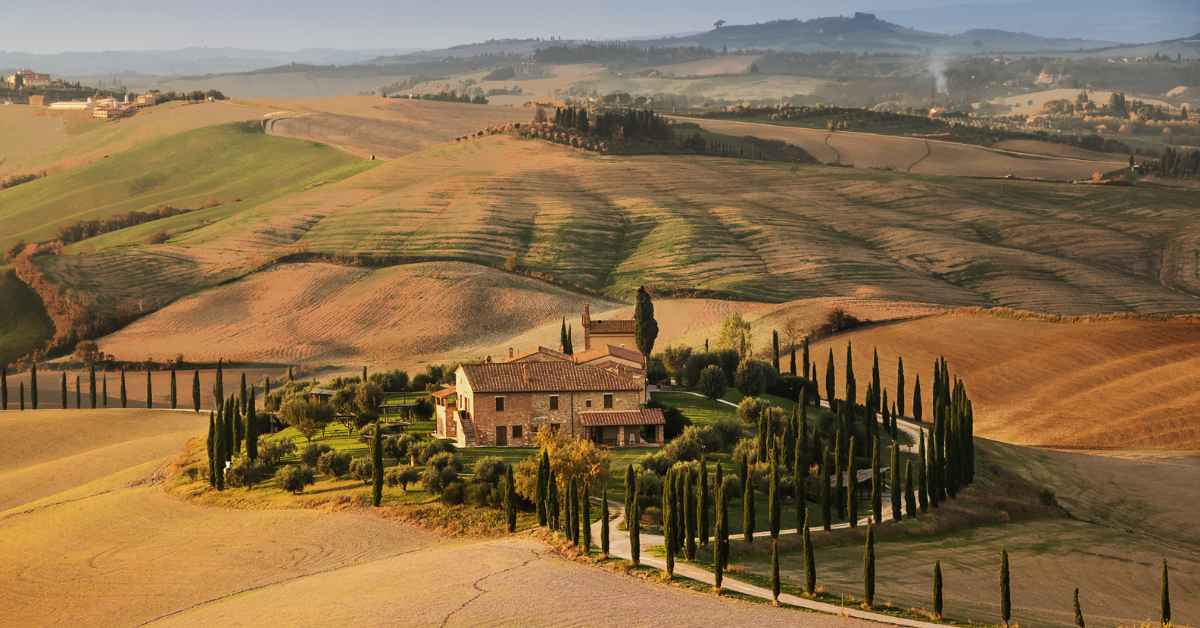
Val d’Orcia. Rolling hills that shift from bright green in spring to soft gold in summer. Rows of cypress trees standing like dark sentinels on ridgelines. Little stone farmhouses that haven’t changed in centuries. My wife still talks about the first time we crested the hill near Pienza and just stopped talking. We sat there for twenty minutes watching the light move across the wheat fields.
This valley in southern Tuscany earned its UNESCO World Heritage status because it represents the perfect Renaissance landscape. Artists from that era painted ideals of harmony between nature and human settlement. Here, those paintings come to life. The region sits roughly ninety minutes southeast of Florence, tucked between the larger towns of Siena and the volcanic Mount Amiata.
The Backstory That Makes It All Richer
Understanding a little history transforms a pretty view into a meaningful experience. The Etruscans first settled these hills, followed by the Romans who built roads and thermal baths. But the medieval period shaped the valley most dramatically through the Via Francigena, the ancient pilgrim route connecting Canterbury to Rome. Walk any unpaved trail today and you might follow the same footsteps millions of pilgrims took over a thousand years ago.
During the Renaissance, powerful families like the Piccolomini and the Medici transformed the valley into an agricultural masterpiece. They drained swamps, planted orderly rows of cypresses, and built ideal towns like Pienza to demonstrate their refined taste.
Film directors have since fallen in love with this landscape. You will recognize sections of Gladiator filmed near the famous curved cypress hill. The English Patient captured the valley’s melancholic beauty. Under the Tuscan Sun turned it into a fantasy of Italian escape.
When the Valley Shows Its Best Face
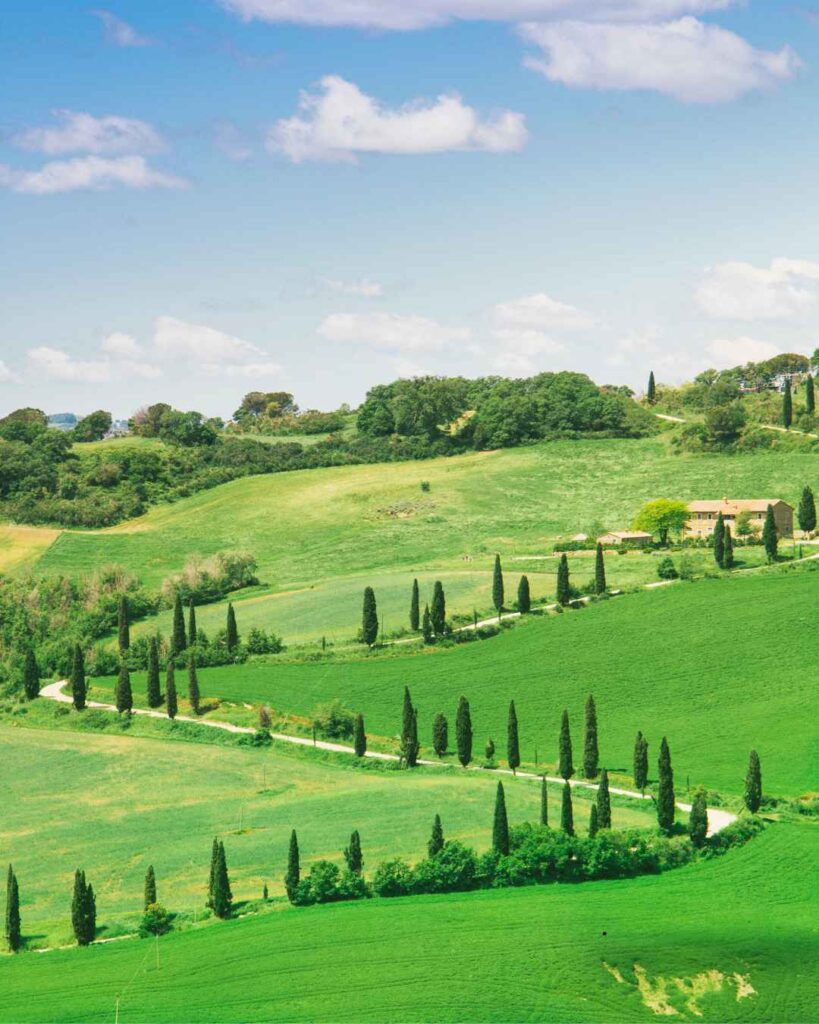
The valley has four distinct personalities depending on when you visit. Spring, roughly April to early June, paints everything in brilliant greens. Wildflowers carpet the meadows. The weather feels gentle, and the crowds have not yet arrived in full force. My wife and I returned from a spring trip with photos so vibrant they looked edited. They were not.
Early summer, from mid-June through July, transforms the wheat fields into waving oceans of gold. The days stretch long and warm. Expect more tourists, especially around Pienza and Montalcino. August brings serious heat and the Italian holiday exodus. I would skip August unless you love crowds and air conditioning.
Autumn arrives in late September and lingers through October. The harvest season means grape picking, olive pressing, and truffle fairs in nearly every village. Morning fogs settle into the valleys, creating those moody photographs where cypress trees emerge from mist.
Winter empties the valley. From November to February, you will have the roads and viewpoints nearly to yourself. The bare cypress branches trace dark lines against low winter sun. Many restaurants close for a month or more, but the ones that stay open welcome you like family.
Photographers take note. The best light happens within an hour of sunrise and sunset. In summer, sunset falls around 9 pm. In winter, you can catch golden hour by 4:30 pm. Plan your daily drives around those precious windows.
The Towns Worth Your Time

Do not try to see every town. Pick two or three bases and explore slowly. These are the ones that matter.
Pienza stands as the jewel of the valley. Pope Pius II rebuilt his entire hometown in the 15th century according to Renaissance ideals of urban design. The result feels almost too perfect. The main street runs straight toward the horizon, ending in a panoramic terrace that looks out over the entire Val d’Orcia. Spend an evening here just sitting on that wall. The pecorino cheese made in this area is famous for good reason. Stop at any small shop and ask for a tasting.
Montalcino sits on a steep hill covered in Brunello vineyards. This is serious wine country. Brunello di Montalcino ranks among Italy’s most respected reds. The fortress at the top of town offers incredible views and houses a wine shop where you can taste dozens of local producers. The town feels less polished than Pienza but more authentic. Narrow alleys still serve local families, not just tourists.
Montepulciano technically sits just outside the official Val d’Orcia borders, but you would be foolish to skip it. The main street climbs steeply from bottom to top. Along the way, you pass wine cellars carved into ancient tufa stone, Renaissance palaces, and hidden courtyards. The Vino Nobile di Montepulciano offers a slightly softer alternative to Brunello.
San Quirico d’Orcia makes an excellent home base. It sits at the crossroads of the main valley roads. The Horti Leonini gardens provide a peaceful green escape, and the collegiate church contains lovely medieval sculpture. From here, you can reach every other town within twenty minutes.
Castiglione d’Orcia remains quieter than its neighbors. The Rocca fortress watches over the town, and the Via Francigena passes directly through. Thermal springs bubble up just outside town at Bagno San Filippo, where you can soak for free in the white calcium cascades.
Radicofani feels wilder and more remote. The massive fortress on the hilltop was once a major stop for pilgrims. Few tourists make it this far south, so you will find authentic trattorias and undisturbed views.
Bagno Vignoni might be the strangest and most wonderful village in Tuscany. Instead of a town square, it has a large rectangular thermal pool built by the Medici family. You cannot swim in that central pool, but thermal water flows into modern facilities just below the village. Sitting in steaming hot water while looking over the valley on a cool autumn evening is a memory you will carry forever.
To book worthwhile accommodation in this area, check out here
The Famous Views and How to Find Them

You can drive the main roads and see beautiful things. But the iconic photographs require specific coordinates. Here is where to point your car.
The famous curved cypress row sits on the SP88 road between San Quirico and Pienza. Look for the gentle S-curve of trees leading to a farmhouse. Park carefully on the shoulder and walk back. Sunrise is best when the sun lights the hills from behind you.
The Cappella della Madonna di Vitaleta is that tiny chapel standing alone in the middle of a field. You cannot drive directly to it. Park on the SP146 near the marked viewpoint and use a telephoto lens. Late afternoon light turns the chapel golden. Respect the private property signs and do not climb fences.
The Gladiator road, officially called Podere Belvedere, appears in the opening battle scene of the film. The road curves through cypresses with a farmhouse at the end. Arrive at sunrise to avoid the crowds that form by mid-morning.
The panoramic road SP146 runs the entire length of the valley. Do not rush it. Stop at every pullout. Some of the best compositions are unmarked and unnamed. My wife and I discovered our favorite view simply because she needed to stretch her legs. We sat on a stone wall for an hour just watching the light shift over wheat fields.
What to Do Besides Take Pictures
Wine tasting deserves a full day. In Montalcino, skip the biggest names and visit smaller family producers. Many require appointments, so email ahead. Ask for vertical tastings of different vintages. The difference between a Brunello and a Rosso di Montalcino is worth understanding.
Pecorino cheese tasting works differently. Drive to Pienza and visit the cooperative cheese factory just outside town. You can watch them make cheese, then sample everything from fresh ricotta to thirty-month-aged wheels. Bring some home. It travels well if you buy it vacuum-sealed.
The thermal baths offer a uniquely Italian experience. Free options include the Fosso Bianco near Bagno San Filippo, where hot water cascades over white mineral formations. Bring old swimsuits because the minerals will stain. Luxury options like the Adler Thermae cost more but provide robes, restaurants, and spa treatments.
Hiking the Via Francigena sections between towns gives you the valley from a different perspective. The walk from San Quirico to Bagno Vignoni takes about two hours and follows ancient pilgrim paths. Pack water and a hat. The sun is stronger than you expect.
Agriturismo stays combine accommodation with farm life. Many working farms rent apartments and serve dinner made almost entirely from their own produce. Olive oil, wine, vegetables, eggs, and meat all come from the property. This is not glamorous. It is real.
Eating Well Without Getting Robbed
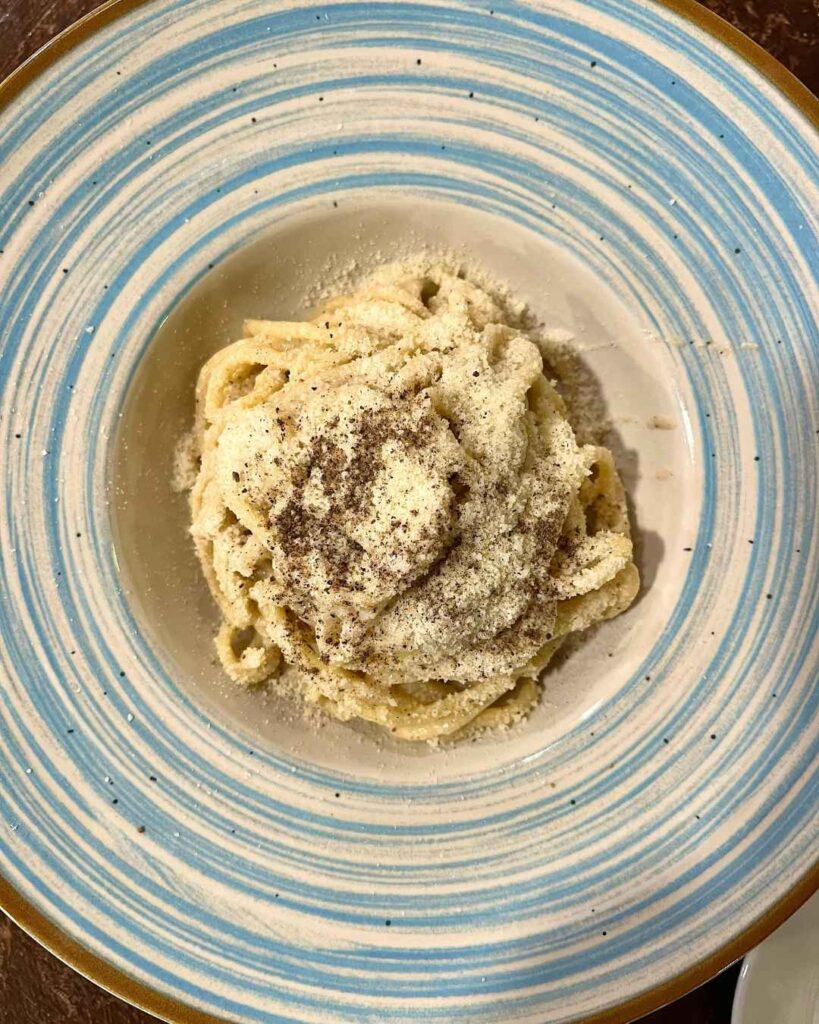
The local food rivals the wine for excellence. Pici cacio e pepe is the signature pasta dish of the region. Thick, hand-rolled spaghetti tossed with pecorino cheese and black pepper. Simple. Perfect. You will eat it multiple times.
Acquacotta means cooked water, which sounds terrible but tastes wonderful. This vegetable and bread soup originated as peasant food. Modern versions include poached eggs and local olive oil drizzled on top.
Wild boar appears in stews, ragùs, and grilled chops. The meat is leaner than pork and deeply flavorful. Try it at a trattoria that roasts it over an open fire.
For cheap lunches, stop at a forno or panificio. These bakeries sell pizza bianca, stuffed focaccia, and schiacciata. Grab a piece, a cold beer, and sit on a church step. You will eat better than most restaurant diners.
For mid-range dinners, avoid the main piazzas. Walk one street back. Look for places with handwritten menus and Italian voices inside. Trattoria Osenna in Montalcino serves honest food at fair prices. La Buca in Pienza feels touristy but delivers good classic dishes.
For a splurge, book La Chiusa outside Montepulciano. The tasting menu changes with the seasons and features ingredients from their own garden.
Where to Lay Your Head
Agriturismo stays offer the best value and experience. You wake up to valley views, eat breakfast with eggs from the farm chickens, and live like a local for a few days. Look for properties between Pienza and Montalcino for central access.
Historic monasteries sometimes rent simple rooms. The convent of Sant’Anna in Camprena, which appeared in The English Patient, offers basic accommodations in a stunning setting. Do not expect luxury. Expect peace.
Luxury resorts like Rosewood Castiglion del Bosco cost a fortune but deliver unforgettable experiences. Private wine tastings, cooking classes, and views that seem designed for magazines. If budget allows, consider one night as a splurge. Check it out here
Villa rentals work well for families or groups. Split between four couples, a restored farmhouse becomes affordable. Check for working kitchens, pools, and outdoor dining spaces.
Getting Around Without Losing Your Mind
You need a car. This is non-negotiable. Buses run infrequently and only between major towns. The best views sit along country roads that public transit never touches.
Rent the smallest car you can manage. Fiat 500 or similar. The roads are narrow, the parking spots are tiny, and larger cars will cause you genuine stress. My wife laughs remembering my white-knuckle grip while passing another car on a one-lane road.
Diesel engines perform better on hills than gasoline. Manual transmission costs less than automatic but requires comfort with hill starts. If you normally drive automatic, pay extra for it. The stress saved is worth the money.
Parking requires attention. Every historic town has a ZTL, or limited traffic zone. Enter one and you will receive a ticket mailed to your home months later. Look for blue or white parking lines outside the walls. Pienza has a large lot at the bottom of the hill. Montalcino has parking near the fortress. Never follow GPS into the narrow gates of the old town centers.
Plan your route before driving. The SP146 runs the length of the valley and is mostly manageable. The SP71 and SP40 offer incredible views but narrower conditions. If someone approaches from the opposite direction, one of you may need to reverse.
Sample Itineraries for Different Travelers
If you only have two days, base yourself in San Quirico. Day one explores Pienza in the morning and Montalcino in the afternoon. Day two drives the SP146 stopping at every viewpoint, then finishes at Bagno Vignoni for a thermal soak.
With five days, choose one base in the Pienza area. Spend full days on wine, cheese, and photography. Take a Via Francigena hike. Book a cooking class at an agriturismo. Leave one day completely unplanned. The best discoveries happen on unplanned days.
For a full week, split your stay. Three nights near Pienza for the classic landscapes and cheese. Three nights near Montalcino for the wine and wilder hills. Use the seventh day to revisit your favorite spot. My wife insisted on returning to the curved cypress hill at sunset. That second visit was better than the first.
For families, stick to shorter walks, picnic lunches, and towns with playgrounds. San Quirico has a nice playground near the gardens. Most agriturismos have pools and farm animals that entertain children for hours.
For honeymooners, book a hot air balloon ride at sunrise over the valley. Follow it with a spa day at Adler Thermae. Dinner at a quiet trattoria where you share a bottle of Brunello and watch the valley darken.
Common Mistakes and How to Avoid Them
- Renting a large car tops the list of regrets. Do not do it. The Fiat 500 is not a punishment. It is the right tool for these roads.
- Trying to day trip from Florence or Rome leads to frustration. The valley is too far, the roads too slow, and the magic happens in early morning and late evening light. Stay overnight. At least two nights.
- Eating in the main piazza of any town guarantees mediocre food and high prices. Walk one street back. Follow locals who carry shopping bags.
- Forgetting that shops and restaurants close midday ruins plans. From roughly 12:30 to 3 pm, most businesses shut down. This is when Italians eat lunch and rest. Join them. Have a long lunch with a glass of wine. You are on vacation.
- Speeding on the SP146 earns you fines in the mail. Italy uses automated speed cameras. Drive the limit. The views are worth slowing down for.
Simple Italian for the Road
You do not need fluency, but a few phrases open doors. Buongiorno for good morning. Buonasera for good evening. Per favore for please. Grazie mille for thank you very much. Un caffè, per favore gets you an espresso. Un bicchiere di vino rosso gets you a glass of red wine.
When you enter a shop or restaurant, greet the staff. In Italy, walking in and demanding service is rude. Say buongiorno first. Then ask.
Related Post: The Most Beautiful Villages in Tuscany
Leaving the Valley Behind
The best souvenir from Val d’Orcia is not something you buy. It is the memory of a particular moment. Perhaps you will remember a glass of Brunello drunk on a terrace as the sun sinks behind Monte Amiata. Or your wife turning to you after a long silence and saying, “I understand why people write poems about this place.”
The valley teaches you to slow down. You cannot rush these roads. You cannot force the light. You can only be present, pay attention, and let the landscape work on you.
Take nothing but photographs. Leave nothing but footprints. Never rush a sunset. That is the only rule worth following in Val d’Orcia.
Again, feel free to go through the list below of my Italy recommendations that I have crafted after years of travel to this beautiful country:
- Packing List: Things Not to Go to Italy Without
- Must-Do Things: Unforgettable Experiences
- Where to Stay: Best Hotels in Italy.
- Where to Stay in Rome: Rome’s Best Neighborhoods
- Where to Stay in Florence: Picking the Best Area
- Where to Stay in Venice: Venice’s Best Districts
- Italy’s Cobblestone Streets: Best Shoes For the Job
- Backpack or Suitcase?: Italy Luggage Guide
- Travel Insurance: Always Be Covered
- E-Sim: Be Connected At All Times
I thoroughly enjoyed reading this article. It is the best that I have read on Tuscany. Thank you.
Thank you. Very well done!
Thanka for this tips