
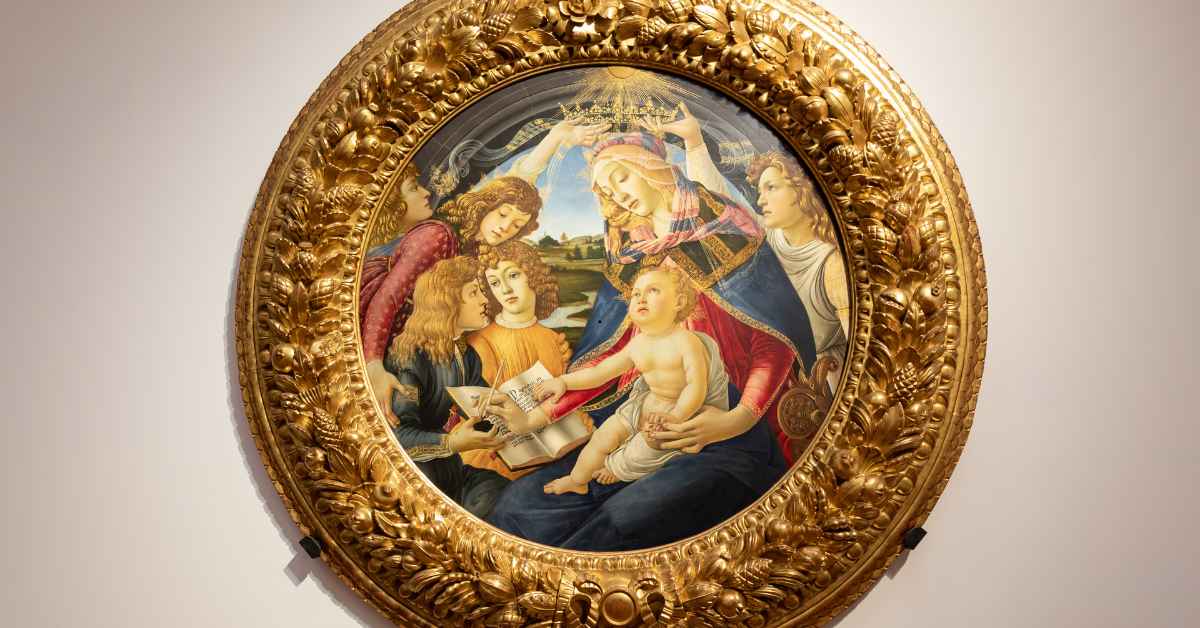
A flower at someone’s feet. A skull hidden in a portrait. A mirror reflecting figures you almost missed.
Renaissance painters filled their masterpieces with details that are easy to overlook but difficult to forget once you understand their meaning. What looks like decoration often tells a much deeper story.
But they are not decoration. In the Renaissance, every detail meant something. A snail was not just a snail. A fly was not just a fly. A dog was not just a dog.
The artists of the fifteenth and sixteenth centuries were working within a visual language that was as precise and as coded as any written text, and they expected their viewers to read it.
This article is about that language. It is about the strange details in Renaissance paintings that actually mean something, and about the hidden stories they tell.
Some of these details are funny. Some are disturbing. Some are so subtle that scholars are still arguing about what they mean. But all of them are there for a reason, and once you learn to see them, you will never look at a Renaissance painting the same way again.
Before you read further, remember that Italy rewards travelers who come prepared. I’ve found a few things especially useful on an Italy trip, and they’re worth having and/or knowing beforehand. See the checklist here. Also, if you want me to plan an Italy trip for you that you will never forget, drop me a message here
Why Renaissance Artists Hid Meanings in Their Paintings
The Renaissance was a period of extraordinary intellectual ferment. Artists were not just craftsmen. They were intellectuals, and they moved in circles that included poets, philosophers, scientists, and theologians. They read classical texts, studied ancient sculptures, and debated the nature of beauty, truth, and knowledge.
This intellectual context shaped the way they painted. A Renaissance painting was not just a picture. It was an argument, a meditation, a puzzle. It was designed to be read on multiple levels, and the artist expected the viewer to bring their own knowledge to the experience.
The patrons who commissioned these paintings were often highly educated. They were members of the Medici circle, or the papal court, or the great merchant families of Florence, Venice, and Rome.
They understood the classical references and the symbolic language that the artists used, and they expected the paintings they commissioned to reflect their own sophistication.
This is why Renaissance paintings are so dense with meaning. The artist was not just painting a scene. He was painting a world, and every element in that world was chosen for a reason.
1. The Arnolfini Portrait — Jan van Eyck
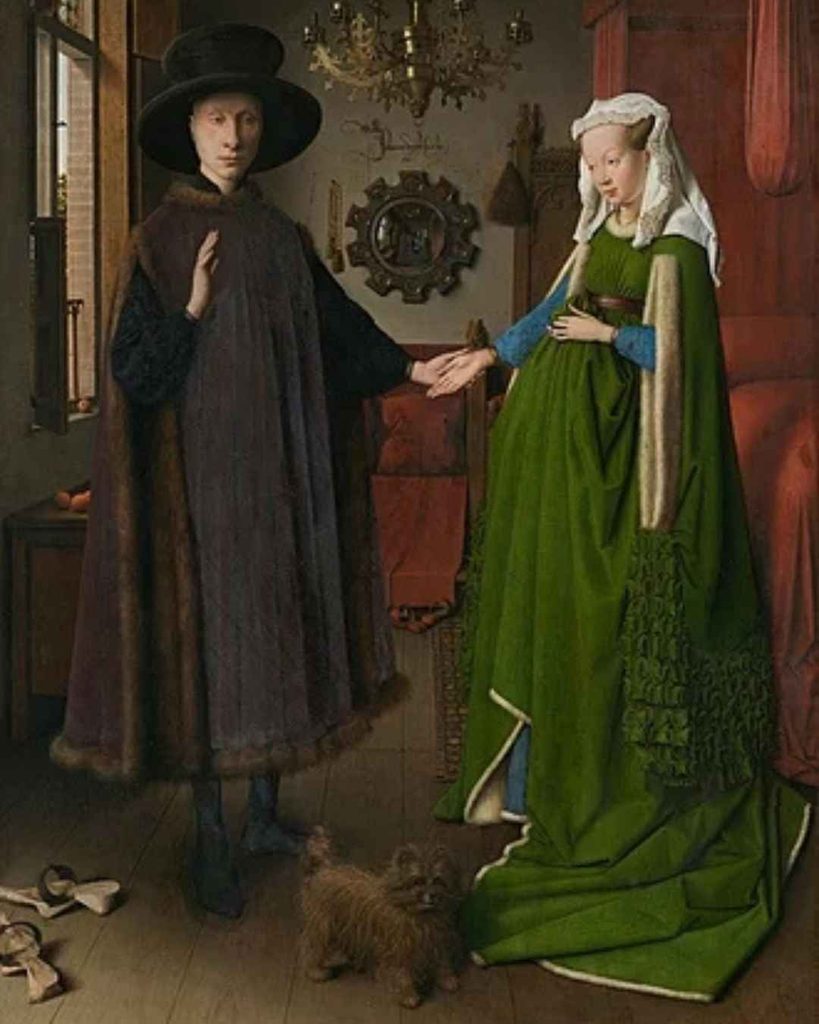
The Arnolfini Portrait is one of the most famous and most mysterious paintings of the Northern Renaissance.
It depicts a couple standing in a room, their hands joined, surrounded by objects that are rich in symbolic meaning. The painting was completed in 1434, and it is one of the first great portraits of the Renaissance.
The most famous detail is the convex mirror on the back wall. The mirror reflects the entire room, including two figures who are standing in the doorway.
One of them is believed to be the artist himself. The mirror is a symbol of the eye of God, who sees everything, and it is also a symbol of the artist’s own role as a witness and a creator.
Above the mirror, there is a Latin inscription that translates roughly as “Jan van Eyck was here.” This is a bold statement of authorship, and it makes the artist’s presence part of the mystery of the painting. Van Eyck is not just painting the scene. He is claiming his place in it.
The painting is full of other symbolic details. The dog at the couple’s feet represents fidelity. The oranges on the windowsill represent wealth and fertility.
The shoes that have been removed represent the sacred nature of the space. The single candle burning in the chandelier represents the presence of God.
The painting is in the National Gallery in London. It is one of the most important works in the collection, and it is one of the most studied paintings in the history of art.
2. The Birth of Venus — Sandro Botticelli

The Birth of Venus is one of the most beautiful paintings of the Renaissance, and it is also one of the most symbolic. It depicts the goddess Venus emerging from the sea on a giant seashell, surrounded by winds and attended by one of the Hours.
Venus stands on a giant seashell, which symbolizes her miraculous birth from the sea. The shell is a scallop, and its radiating lines create a sense of harmony and order. The shell is also a symbol of fertility, and it was associated with Venus in classical antiquity.
The roses blowing around Venus represent love and beauty. The roses are a symbol of Venus herself, and they are also a symbol of the spring season. The roses are painted with botanical accuracy, and they can be identified as specific species.
The woman waiting with a cloak is usually identified as one of the Horae, the goddesses associated with the seasons.
She is holding a cloak decorated with flowers, and she is about to wrap it around Venus to cover her nudity. The cloak is a symbol of modesty, and it is also a symbol of the fertility of the earth.
The painting is in the Uffizi Gallery in Florence. It is one of the most famous paintings in the world, and it is one of the most important works of the Renaissance.
3. Primavera — Sandro Botticelli
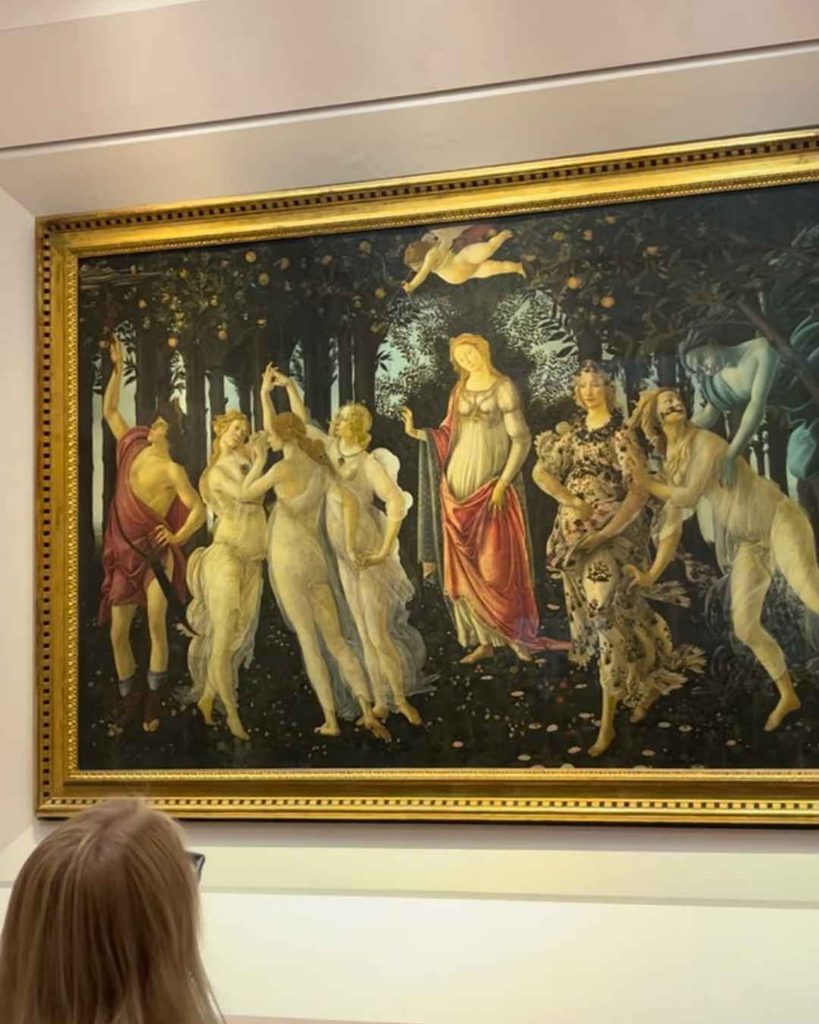
The Primavera is Botticelli’s other great mythological painting, and it is even more complex than The Birth of Venus. It depicts nine figures from classical mythology in an orange grove, and it contains hundreds of plant species, many of them carefully rendered.
Behind Venus, Cupid aims his arrow while blindfolded. The blindfold suggests that love strikes without warning, and that it can strike anyone at any time. The arrow is aimed at the Three Graces, who represent the virtues of chastity, beauty, and love.
To the right, Zephyrus pursues the nymph Chloris, who transforms into Flora, the flower-bearing goddess. Zephyrus is the god of the west wind, and he represents the fecundating power of nature.
Chloris is the nymph of flowers, and Flora is the goddess of spring. The transformation is depicted in the painting, with flowers pouring from Chloris’s mouth as she becomes Flora.
The painting contains hundreds of plant species, and at least 42 have been identified. Each one has a symbolic meaning, and together they create a garden that is both a physical space and a philosophical one. The painting is in the Uffizi Gallery in Florence.
4. The Last Supper — Leonardo da Vinci
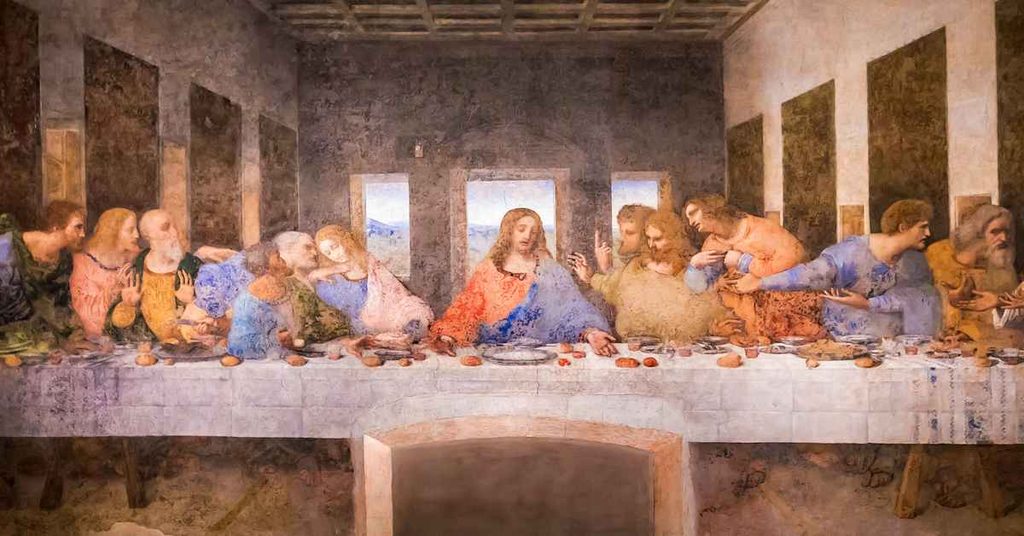
The Last Supper is one of the most famous paintings in the world, and it is also one of the most psychologically complex.
It depicts the moment after Christ has announced that one of his disciples will betray him, and the reaction of the apostles is captured in a series of gestures and expressions that are rich in meaning.
The apostles react in distinct ways to Jesus’s announcement. Some recoil in shock. Some argue with each other. Some look at Christ with questioning eyes.
Judas sits among the other disciples rather than being isolated, and his hand reaches toward the same dish as Jesus’s. This is a deliberate choice. Leonardo is showing that betrayal can come from within, that the enemy is not always easy to identify.
The painting is a study of suspicion, shock, and human emotion. Leonardo spent years planning the composition, and he made hundreds of sketches of hands, faces, and gestures. The result is one of the most expressive paintings ever made.
The painting is in the Convent of Santa Maria delle Grazie in Milan. It is one of the most important works of the Renaissance, and it is one of the most visited paintings in the world.
5. The School of Athens — Raphael

The School of Athens is one of the most famous paintings of the Renaissance, and it is also one of the most intellectual. It depicts a gathering of the greatest philosophers of antiquity, and it contains more than fifty figures, each with a specific identity and a specific meaning.
Plato points upward toward the world of ideas, while Aristotle gestures toward the earthly world of experience. Their opposing gestures summarize two major philosophical approaches.
Plato believed that true knowledge was found in the realm of ideal forms. Aristotle believed that knowledge came from observation and experience.
Raphael also gave some figures the features of famous contemporaries. Plato has the face of Leonardo da Vinci. Michelangelo appears as Heraclitus, brooding and alone. Raphael himself appears at the far right, standing with a group of mathematicians.
The painting is in the Vatican Museums in Rome. It is one of the most important works of the Renaissance, and it is one of the most studied paintings in the world.
6. The Ambassadors — Hans Holbein the Younger
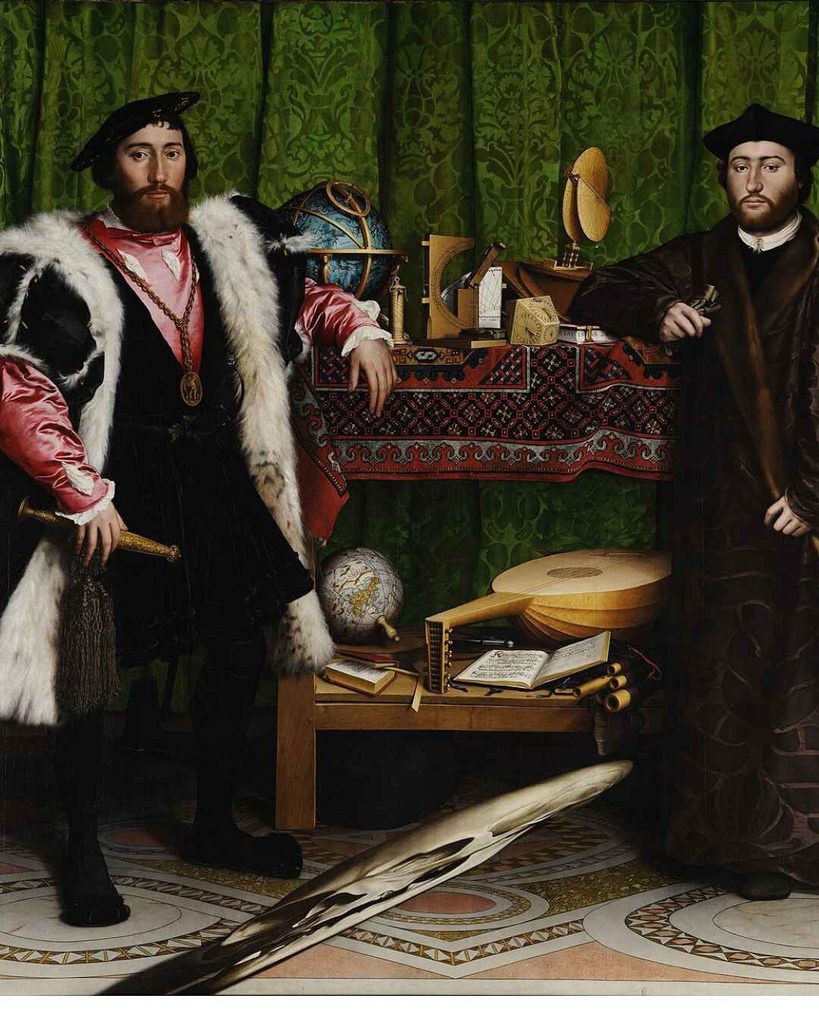
The Ambassadors is one of the most mysterious paintings of the Northern Renaissance. It depicts two men standing on either side of a table covered with objects that represent knowledge, science, and worldly achievement.
But the most famous detail is the strange, stretched shape across the bottom of the painting.
The shape becomes a human skull when viewed from an extreme angle. This technique, called anamorphosis, introduces the theme of mortality into a portrait filled with expensive objects.
The skull is a memento mori, a reminder that death is inevitable, and that all worldly achievements are temporary.
The painting is full of other symbolic details. The lute with a broken string represents discord. The open hymn book represents the Reformation. The globe represents the exploration of the world. The scientific instruments represent the pursuit of knowledge.
The painting is in the National Gallery in London. It is one of the most important works of the Northern Renaissance, and it is one of the most complex paintings in the history of art.
7. The Madonna of the Meadow — Raphael
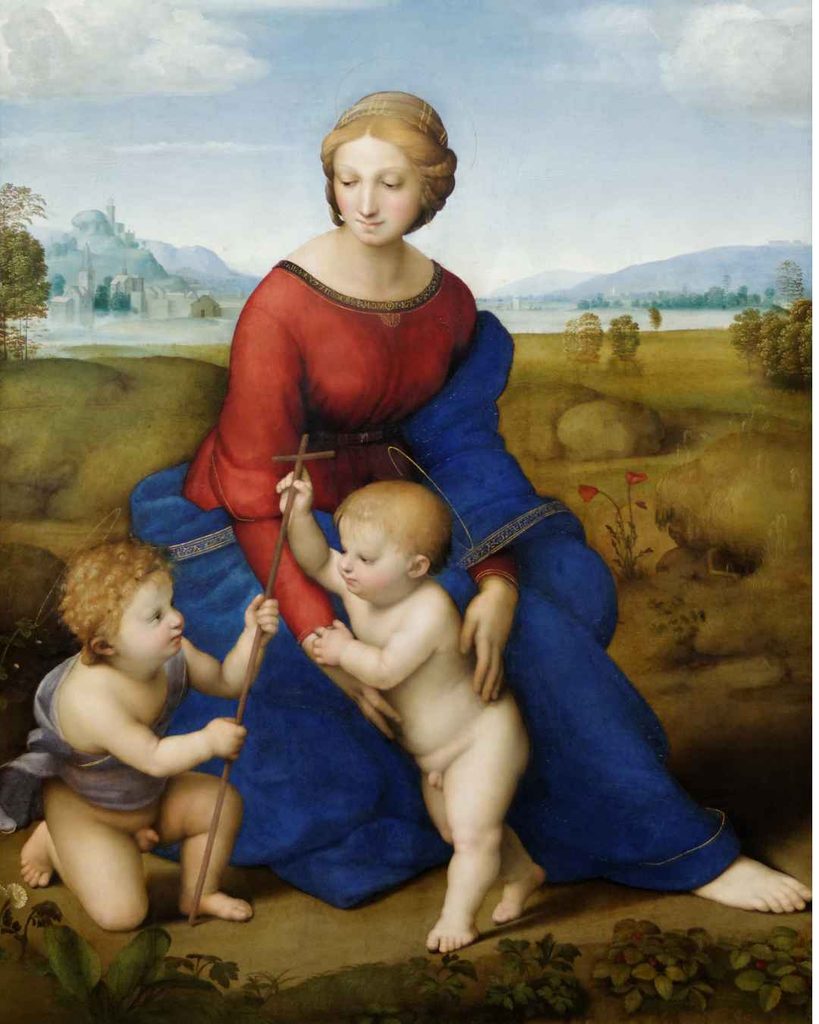
The Madonna of the Meadow is one of Raphael’s most beautiful paintings, and it is also one of his most subtle. It depicts the Virgin Mary with the Christ child and the young John the Baptist, and it is a study in innocence and foreshadowing.
The Christ child reaches toward the young John the Baptist’s cross, which foreshadows Christ’s eventual crucifixion. The children’s seemingly innocent interaction therefore carries a much darker religious meaning. The cross is a symbol of death, and the child who reaches for it is reaching for his own fate.
The painting is in the Kunsthistorisches Museum in Vienna. It is one of the most important works of the Renaissance, and it is one of the most beautiful depictions of the Madonna and Child.
8. The Tempest — Giorgione
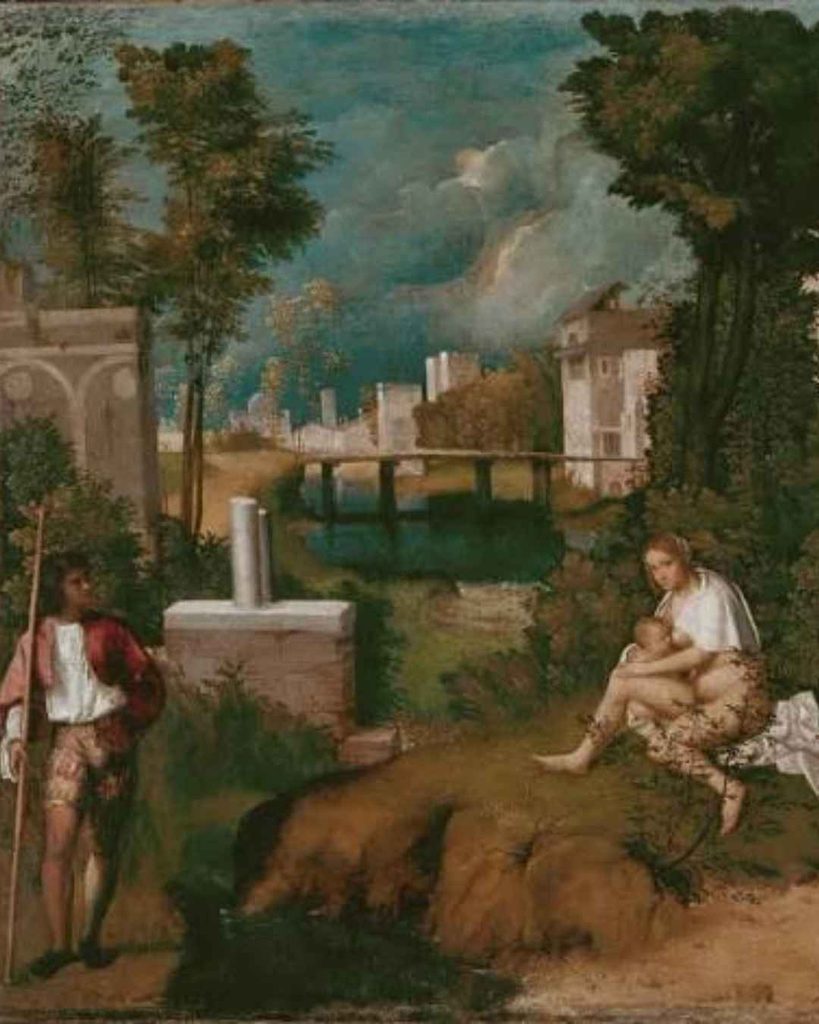
The Tempest is one of the most mysterious paintings of the Renaissance. It depicts a soldier and a nursing woman in a mysterious landscape beneath a threatening sky.
The lightning bolt in the distance creates an ominous atmosphere, but the painting’s exact story remains unknown.
The painting is full of symbolic details. The broken columns represent the fall of a great civilization. The river represents the flow of time. The city in the background represents human civilization. The lightning bolt represents the power of nature and the unpredictability of fate.
The painting is in the Gallerie dell’Accademia in Venice. It is one of the most important works of the Venetian Renaissance, and it is one of the most enigmatic paintings in the history of art.
9. The Allegory of Good and Bad Government — Ambrogio Lorenzetti
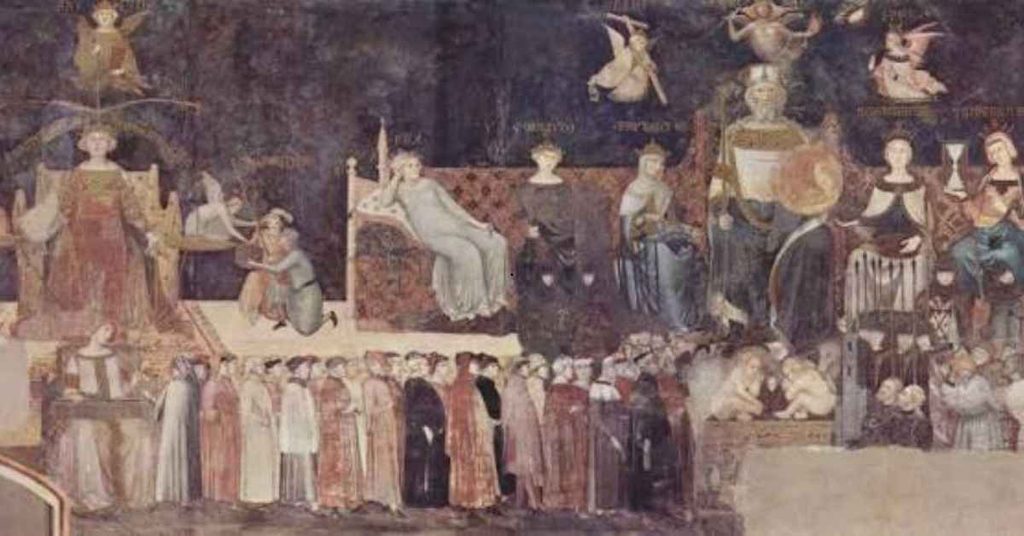
The Allegory of Good and Bad Government is one of the most important political paintings of the Renaissance. It is a fresco cycle in the Palazzo Pubblico in Siena, and it depicts the effects of good and bad government on the city and the countryside.
In the scenes of good government, townspeople work, trade, dance, and move safely through the city. In the scenes of bad government, violence and decay take over. These contrasting details turn an elaborate mural into a visual warning about corruption and political misrule.
The fresco is one of the first great political paintings in Western art, and it is one of the most important works of the Sienese school. It is in the Palazzo Pubblico in Siena.
10. The Garden of Earthly Delights — Hieronymus Bosch

The Garden of Earthly Delights is one of the most bizarre and disturbing paintings of the Renaissance. It is a triptych, and it depicts the creation of the world, the garden of earthly delights, and the torments of hell.
Tiny figures engage in bizarre activities involving enormous fruit, strange creatures, and oversized birds. In the right-hand panel, musical instruments become instruments of torture in a nightmarish vision of Hell. The contrast suggests that earthly pleasures can have disturbing consequences.
The painting is in the Museo del Prado in Madrid. It is one of the most famous works of the Northern Renaissance, and it is one of the most complex paintings in the history of art.
11. The Annunciation — Leonardo da Vinci

The Annunciation is one of Leonardo’s earliest paintings, and it is also one of his most symbolic. It depicts the moment when the Archangel Gabriel appears to the Virgin Mary to announce that she will conceive and bear a son.
The angel Gabriel holds a lily, a traditional symbol of Mary’s purity. The enclosed garden behind Mary can also symbolize her virginity. The painting contains subtle spatial irregularities that become noticeable when you study the scene carefully.
The painting is in the Uffizi Gallery in Florence. It is one of the most important works of the Renaissance, and it is one of the most beautiful depictions of the Annunciation.
12. The Mystical Nativity — Sandro Botticelli

The Mystical Nativity is one of Botticelli’s most personal paintings, and it is also one of his most mysterious. It depicts the birth of Christ, but it is filled with symbolic details that reflect the religious and political anxieties of Botticelli’s own era.
Angels embrace and dance above the stable, while tiny demons flee underground below. The Greek inscription at the top refers to the turbulent events of Botticelli’s own era and has led scholars to connect the painting with apocalyptic expectations and the religious anxieties of the late fifteenth century.
The painting is in the National Gallery in London. It is one of the most important works of Botticelli’s late career, and it is one of the most personal paintings of the Renaissance.
How to Study a Painting and See All the Details
Most visitors spend less than thirty seconds in front of a painting. They take a photograph, glance at the label, and move on to the next room. This is understandable.
Museums are crowded, time is limited, and the sheer volume of art can be overwhelming. But if you want to see the details that make Renaissance paintings so rewarding, you need to slow down. You need to learn how to look.
The first step is to choose one painting and commit to spending at least ten minutes with it. Do not try to see everything in the room. Pick a single work that interests you, stand in front of it, and give it your full attention.
Ten minutes is longer than it sounds. It is enough time to see things you would otherwise miss.
Start with the whole composition. Before you look at any details, step back and take in the entire painting. Notice the overall shape, the arrangement of figures, the use of light and shadow.
Ask yourself what the painting is about. What is the main subject? What is happening? Where is your eye drawn first?
Then start moving closer. Look at the faces. Look at the hands. Renaissance artists put enormous effort into hands, and they are often the most expressive part of a painting.
A gesture can tell you what a figure is thinking or feeling. A hand pointing upward, a hand resting on a shoulder, a hand clutching a piece of cloth. Every gesture has a meaning.
Look at the background. Many visitors ignore the background, but in Renaissance painting, the background is often where the most interesting details are hidden.
Look at the landscape, the buildings, the sky. Look at the objects on the shelves, the flowers in the vase, the animals in the corners. These details are not decoration. They are part of the painting’s meaning.
Look at the light. Where is it coming from? What does it illuminate? What does it hide? Light is one of the most important tools in a painter’s arsenal, and it is used to create drama, to reveal character, and to guide the viewer’s eye.
Look at the colors. Why did the artist choose these particular colors? What do they symbolize? In Renaissance painting, colors are rarely random. Blue represents heaven. Red represents blood and sacrifice. Gold represents wealth and immortality. White represents purity. Every color has a meaning.
Look for the details that seem out of place. A fly on a leaf. A snail on a ledge. A skull on a table. A mirror reflecting something that should not be there. These details are often the key to understanding the painting’s deeper meaning. They are there for a reason, and they are waiting to be discovered.
Talk to yourself. Ask questions. What is this object? Why is it here? What does it mean? You do not need to know the answers. The act of asking is what matters. The more questions you ask, the more you will see.
If you are visiting a museum, consider bringing a small notebook. Write down the details that interest you. Sketch the composition. Make a note of the colors and the gestures. This will slow you down and help you remember what you have seen.
Finally, do not be afraid to come back. A painting that seems simple on first viewing can reveal new depths on the second or third. The details are not always obvious.
Sometimes they reveal themselves only after you have spent time with the painting, and sometimes they reveal themselves only after you have learned more about the artist, the period, and the symbols that were important to the people who created the work.
If you would like to enjoy art in Italy, I would highly recommend referring to this guide.
Final Thoughts
The strange details in Renaissance paintings are not strange at all. They are part of a visual language that was understood by the people who created them and the people who commissioned them. They are symbols, signs, and messages, and they are there to be read.
The next time you stand in front of a Renaissance painting, look closer. Look at the small things. Look at the flowers, the animals, the mirrors, the shadows. Look at the things that seem out of place.
You will find a world of meaning that most visitors never see. And you will understand that the Renaissance was not just a period of beautiful art. It was a period of profound thought, expressed in a language of images that is still waiting to be decoded.
Again, feel free to go through the list below of my Italy recommendations that I have crafted after years of travel to this beautiful country:
- Packing List: Things Not to Go to Italy Without
- Must-Do Things: Unforgettable Experiences
- Where to Stay: Best Hotels in Italy.
- Where to Stay in Rome: Rome’s Best Neighborhoods
- Where to Stay in Florence: Picking the Best Area
- Where to Stay in Venice: Venice’s Best Districts
- Italy’s Cobblestone Streets: Best Shoes For the Job
- Backpack or Suitcase?: Italy Luggage Guide
- Travel Insurance: Always Be Covered
- E-Sim: Be Connected At All Times