
There is a painting in Florence that has become the image of beauty itself. It hangs in the Uffizi Gallery, in the same room as the Primavera.
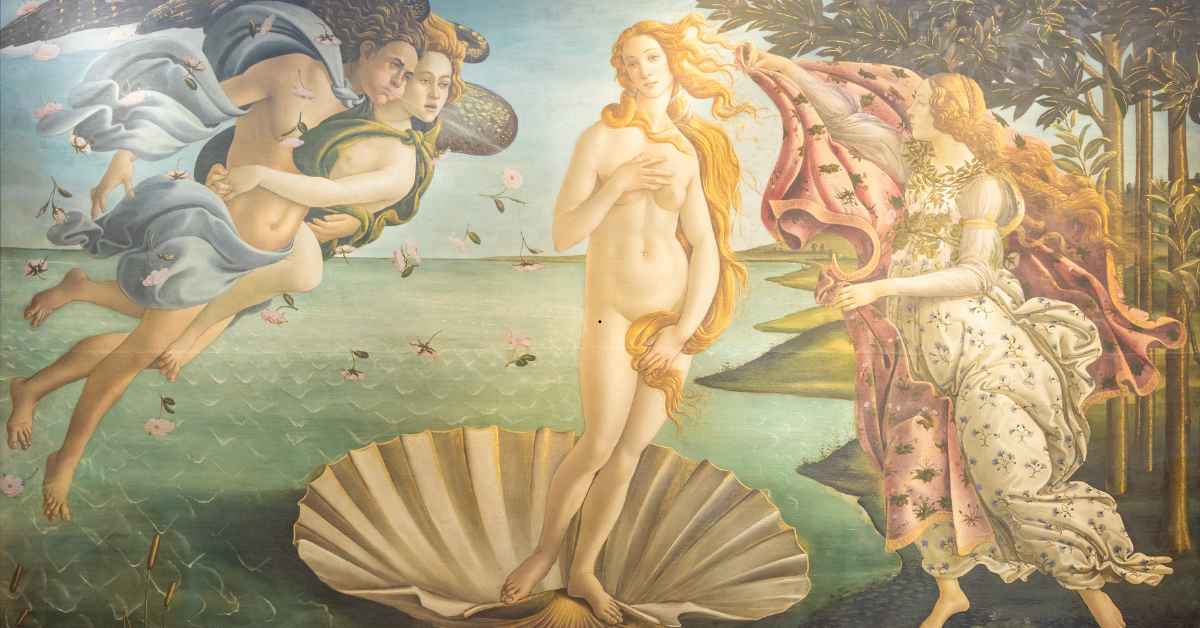
It shows a naked woman standing on a giant seashell, her hair blowing in the wind, her skin pale as pearl, her expression calm and untroubled. She is Venus, the goddess of love, and she has just been born from the sea.
The painting is one of the most famous images in the world. It has been reproduced on postcards, posters, coffee mugs, and phone cases. It has been copied by artists for centuries and referenced in films, advertisements, and pop songs.
And yet, for all its fame, The Birth of Venus remains one of the most mysterious paintings of the Renaissance. We do not know exactly when it was painted, who it was painted for, or what it was intended to mean. We do not even know if Botticelli painted it alone or with assistants.
What we do know is that it changed the course of Western art. Before The Birth of Venus, the nude female figure was rare in painting, and when it appeared, it was usually associated with sin, shame, or the Fall of Man.
Botticelli painted a nude woman who was not ashamed. She was not sinful. She was divine. She was beauty itself, and she was worthy of admiration.
This is the story of The Birth of Venus. The myth, the figures, the symbolism, the artist, and the mystery.
Before you read further, remember that Italy rewards travelers who come prepared. I’ve found a few things especially useful on an Italy trip, and they’re worth having and/or knowing beforehand. See the checklist here. Also, if you want me to plan an Italy trip for you that you will never forget, drop me a message here
1. The Story Behind Botticelli’s The Birth of Venus

The Birth of Venus was painted by Sandro Botticelli in the mid-1480s, probably between 1483 and 1485. It is a large panel painting, measuring 172.5 by 278.9 centimeters, and it is painted in tempera on canvas.
This is unusual for the period, because most paintings of this size were painted on wood. The use of canvas suggests that the painting was intended to be displayed in a less formal setting, perhaps in a country villa rather than a palace.
The painting was almost certainly commissioned by the Medici family, the most powerful patrons in Florence. It was probably painted for Lorenzo di Pierfrancesco de’ Medici, the cousin of Lorenzo the Magnificent, who also commissioned the Primavera.
The two paintings were likely intended to be displayed together, and they were later moved to the Villa di Castello, where they were seen by Giorgio Vasari in 1550.
Vasari described the painting in his Lives of the Artists, and he noted that it was in the villa of the Duke Cosimo I de’ Medici. He called it “Venus, born from the sea, and pushed to the shore by the winds, with the Graces and the Hours.”
This is the first written record of the painting, and it confirms that it was already famous by the mid-sixteenth century.
Despite its fame, we do not know exactly when The Birth of Venus was painted, or who it was painted for, or what it was intended to mean.
These uncertainties are part of what makes the painting so fascinating. It is a work of art that resists easy interpretation and that continues to generate new readings centuries after it was created.
2. The Mythological Story of Venus’s Birth
The story of Venus’s birth comes from classical mythology. According to Hesiod’s Theogony, Venus was born from the foam of the sea, after the Titan Cronus castrated his father Uranus and threw the severed genitals into the ocean.
The foam mixed with the water, and from it emerged Aphrodite, the goddess of love and beauty.
The Greek name Aphrodite means “foam-born,” and the myth was understood as a story about the origin of love and beauty from the sea. In later Roman mythology, Aphrodite became Venus, and the story was adapted by poets like Ovid and Virgil.
Botticelli’s painting depicts the moment after Venus’s birth, when she is being blown to shore on a shell. She is not a baby, as she is in some versions of the myth. She is a fully grown woman, perfect and beautiful, and she is arriving in the world for the first time.
The sea is calm, the sky is clear, and the scene is peaceful. There is no violence in Botticelli’s version of the myth. The castration of Uranus, the blood, the foam, and the struggle are all absent. What remains is the beauty of the goddess, the movement of the wind, and the flowers falling from the sky.
3. Who Are the Mysterious Figures Surrounding Venus?

The Birth of Venus contains five figures: Venus herself, two winds, and two attendants.
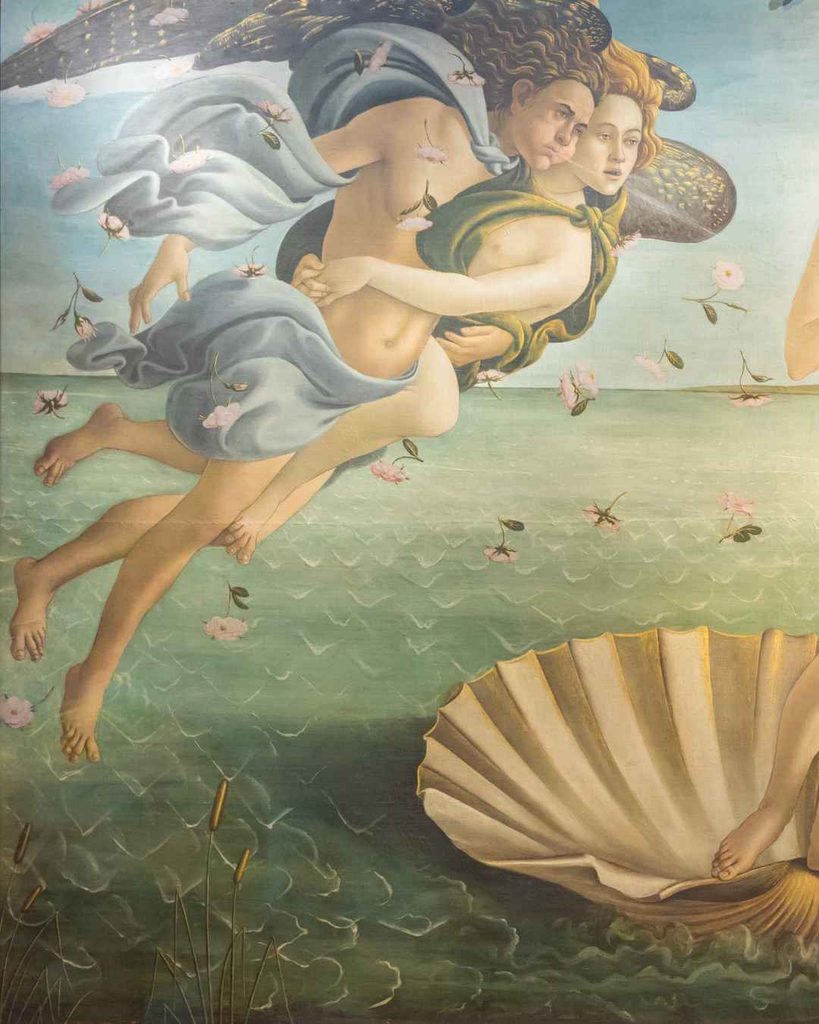
On the left side of the painting, two figures are blowing Venus toward the shore. The male figure is Zephyrus, the god of the west wind, and he is recognizable by his wings and his blue-green color.
The female figure is Aura, the goddess of the breeze, or possibly Chloris, the nymph of flowers. She is holding Zephyrus and blowing with him.
On the right side of the painting, a woman is waiting to receive Venus with a cloak. She is one of the Hours, the goddesses of the seasons, and she is holding a cloak decorated with flowers. The cloak is a symbol of modesty, and she is about to wrap it around Venus to cover her nudity.
The identity of the figures has been debated for centuries. Some scholars believe the female wind is Aura, others believe she is Chloris, and still others believe she is simply an attendant of Zephyrus.
The Hour is usually identified as one of the Horae, the goddesses of the seasons, and she is sometimes identified specifically as Flora, the goddess of spring.
4. Why Venus Stands on a Giant Seashell

Venus stands on a giant seashell, which is one of the most distinctive elements of the painting. The shell is a scallop, and it is large enough to hold the goddess, who is larger than life.
The shell is a symbol of birth and fertility. In classical mythology, the shell was associated with Venus, and it was often depicted in art as the vehicle that carried her to shore. The shell is also a symbol of the sea, and it is a reminder that Venus was born from the water.
The shell is also a symbol of beauty. The scallop shell is one of the most beautiful shapes in nature, and its radiating lines create a sense of harmony and order. The shell is a frame for Venus, and it draws the eye toward her.
Botticelli’s shell is painted with great attention to detail. The ridges of the shell are clearly visible, and the color shifts from pink to white to grey. The shell is not a realistic object. It is a symbol, a poetic image, and it is one of the things that makes the painting so memorable.
5. The Hidden Meaning of Venus’s Pose, Pale Skin, and Flowing Hair
Venus’s pose is one of the most discussed aspects of the painting. She stands with her weight on her right leg, her left leg slightly bent, and her body turned slightly to the left. Her right arm covers her breasts, and her left arm covers her groin.
This is the Venus Pudica pose, the “modest Venus,” which was used in classical sculpture to depict the goddess in a state of modesty.
The pose is based on the Venus de’ Medici, a classical sculpture that was in the Medici collection. Botticelli would have known the sculpture, and he adapted it for his painting.
But he also made changes. In the classical sculpture, Venus is covering herself because she has been seen by a mortal. In Botticelli’s painting, Venus is covering herself because she is being born. She is not ashamed. She is simply modest.
Venus’s skin is pale, almost white, and it is painted with a luminosity that makes her seem to glow. The paleness is a symbol of beauty and purity. It is also a sign that she is not human. She is a goddess, and she is made of something more than flesh.
Venus’s hair is long and flowing, and it is blown by the wind. The hair is painted with great attention to detail, and it is one of the most beautiful elements of the painting. The hair is a symbol of vitality and fertility, and it is also a symbol of the wind that is carrying her to shore.
6. The Symbolism of the Roses, Sea, Wind, and Orange Trees

The Birth of Venus is full of symbolic details. The roses that fall from the sky are a symbol of love and beauty. The roses are associated with Venus, and they are also a symbol of the spring season.
The sea is a symbol of birth and fertility. In the painting, the sea is calm and peaceful, which is unusual for a mythological scene. The calm sea represents the harmony and order that Venus brings to the world.
The wind is a symbol of the Holy Spirit, which is sometimes depicted as a breath or a wind in Christian art. The wind is also a symbol of the breath of life, which is what Venus brings to the world.
The orange trees in the background are a symbol of the Medici family, who commissioned the painting. The orange was the symbol of the Medici, and the trees are a way of honoring the patron. The orange trees are also a symbol of the garden of the Hesperides, the mythical garden at the edge of the world.
7. Who Was Sandro Botticelli?
Sandro Botticelli was born in Florence in 1445, and he died in 1510. He was one of the most important painters of the Renaissance, and he was known for his distinctive style, which combined classical themes with a lyrical, almost dreamlike beauty.
Botticelli was trained as a goldsmith, and he brought a jeweler’s attention to detail to his paintings. He was also a master of drawing, and his figures are defined by their contours rather than by their volume.
His style is more linear and more decorative than the styles of Leonardo or Michelangelo, and it is one of the things that makes his work so distinctive.
Botticelli was a favorite of the Medici family, and he received many commissions from them. He painted the Primavera and The Birth of Venus for the Medici, and he also painted portraits and religious works for them.
He was a member of the Platonic Academy, the intellectual circle that gathered around Marsilio Ficino, and he was influenced by the Neoplatonic philosophy that was popular in the Medici circle.
8. The Medici Family’s Connection to the Painting
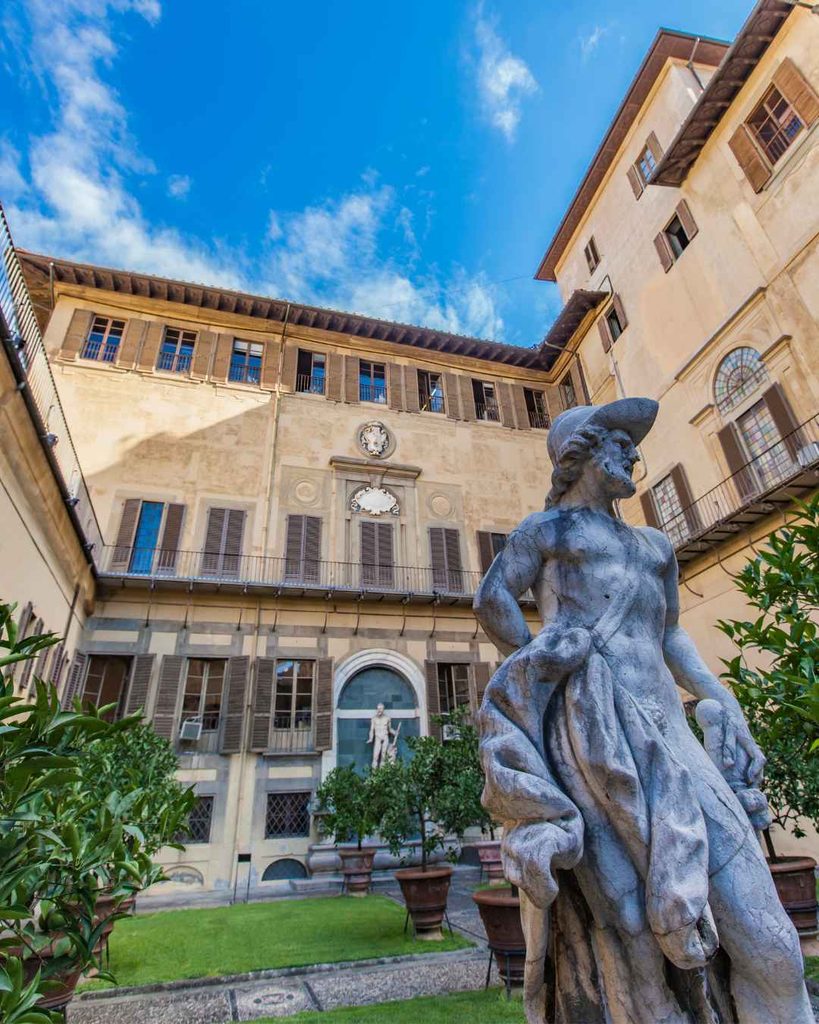
The Birth of Venus was almost certainly commissioned by the Medici family, and it was probably painted for Lorenzo di Pierfrancesco de’ Medici. Lorenzo was the cousin of Lorenzo the Magnificent, and he was a member of the Medici household.
The painting was later moved to the Villa di Castello, where it was seen by Giorgio Vasari in 1550. Vasari described it together with the Primavera, and he noted that both paintings were in the villa of the Duke Cosimo I de’ Medici.
The Medici connection is important because it helps to explain the painting’s intellectual program. The Medici were patrons of the arts and learning, and they surrounded themselves with humanists, poets, and philosophers.
The Birth of Venus was created for an audience that would understand its classical references and its Neoplatonic symbolism.
9. Was Venus Inspired by a Real Woman?
One of the most enduring questions about The Birth of Venus is whether the goddess was modeled on a real woman. Several candidates have been proposed, including Simonetta Vespucci, a Florentine noblewoman who was famous for her beauty.
Simonetta Vespucci was the wife of Marco Vespucci, and she was the mistress of Giuliano de’ Medici, the brother of Lorenzo the Magnificent.
She was celebrated for her beauty, and she was painted by Botticelli in several works. She died in 1476, at the age of twenty-two, and her death was mourned by the entire city of Florence.
Some scholars believe that Venus was modeled on Simonetta, and that the painting is a tribute to her beauty. Others believe that Venus is an idealized figure, not a portrait of a specific woman.
The truth may never be known, but the legend of Simonetta Vespucci has become part of the painting’s mystique.
10. The Hidden Details Most People Never Notice
The Birth of Venus is full of details that most visitors never notice. The roses that fall from the sky are painted with botanical accuracy, and they can be identified as specific species.
The cloak that the Hour is holding is decorated with flowers, and the flowers are the same ones that appear in the Primavera.
The wind that is blowing Venus to shore is painted with great attention to detail. The breath of the winds is visible, and it creates a sense of movement that is one of the most dynamic elements of the painting.
The shell that Venus stands on is painted with such precision that you can see the ridges and the texture of the surface. The sea is painted with a translucency that suggests depth and movement.
The painting is a treasure trove of details, and the more you look, the more you see. It is a work that rewards attention, and that continues to reveal new secrets with every viewing.
11. The Painting’s Connection to Renaissance Ideas About Beauty
The Birth of Venus is a product of the Renaissance, and it reflects the ideas about beauty that were current in Florence in the late fifteenth century. The most important of these is the idea that beauty is a reflection of divine perfection.
In Neoplatonic philosophy, beauty was understood as a way of ascending from the physical world to the spiritual world. When you look at a beautiful object, you are reminded of the beauty of God, and you are drawn toward it.
Venus, as the goddess of beauty, is a symbol of this ascent, and the painting is a meditation on the power of beauty to lead the soul toward the divine.
The painting also reflects the Renaissance interest in classical antiquity. Botticelli drew on classical sources for the myth and the pose of Venus, and he adapted them for a Christian audience. The result is a painting that is both classical and Christian, both pagan and sacred.
12. The Strange Proportions and Dreamlike Beauty of the Figures

Botticelli’s figures are not naturalistic. They are elongated, stylized, and idealized. Venus’s neck is too long, her shoulders are too sloped, and her left arm is positioned in a way that is anatomically impossible.
The Hour’s body is similarly elongated, and the winds are painted with a fluidity that is more decorative than realistic.
The proportions are not a mistake. They are a deliberate choice. Botticelli was not interested in anatomical accuracy. He was interested in beauty, in grace, and in the expression of ideas. His figures are dreamlike, and they seem to exist in a world that is not quite real.
The dreamlike quality of the painting is one of the things that makes it so memorable. It is a work of art that invites the viewer to enter its world, to explore its details, and to lose themselves in its beauty.
13. The Painting’s Controversial History and Original Purpose
The Birth of Venus has been controversial at various points in its history. In the sixteenth century, some churchmen objected to the nude figure, and there were calls to cover the painting or destroy it. The painting survived, but it was hidden away for centuries, first in the Villa di Castello and later in the Uffizi.
The original purpose of the painting is not entirely clear. Some scholars believe it was painted for a wedding, and that it was intended to celebrate the beauty of the bride. Others believe it was painted for a private collection, and that it was intended to be a meditation on the nature of beauty and love.
The painting was probably not intended for public display. It was a private work, created for a private patron, and it was meant to be seen by a small circle of people who would understand its classical references and its Neoplatonic symbolism.
14. How The Birth of Venus Became One of the World’s Most Famous Paintings
The Birth of Venus became one of the most famous paintings in the world in the nineteenth century, when it was rediscovered by the Pre-Raphaelite Brotherhood in England.
The Pre-Raphaelites were drawn to Botticelli’s lyrical humanism, his classical scholarship, and his distinctive style, and they championed his work as an alternative to the academic art of their own time.
The painting was also popularized by the rise of mass reproduction. In the twentieth century, it appeared on postcards, posters, and merchandise, and it became one of the most recognizable images in the world.
It is now one of the most visited paintings in the Uffizi Gallery, and it is one of the symbols of the Renaissance.
15. Where to See The Birth of Venus in Florence Today
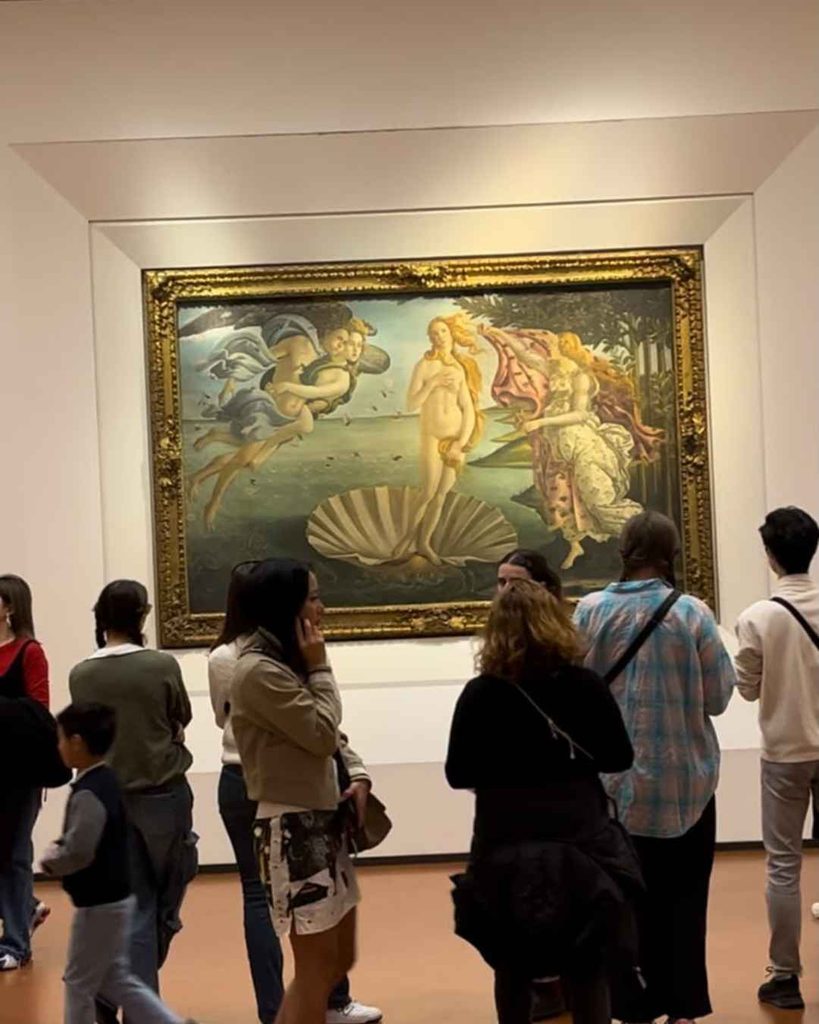
The Birth of Venus is in the Uffizi Gallery in Florence, in Room A11, which also contains the Primavera. The museum is open Tuesday through Sunday, and tickets should be booked in advance. The painting is displayed in a climate-controlled environment, and its condition is regularly monitored.
The Uffizi is one of the most visited museums in the world, and the Botticelli rooms are among the most crowded. The best time to see The Birth of Venus is early in the morning, right at opening, or in the late afternoon, when the crowds have thinned.
Take your time with the painting. Look at the figure of Venus, the shell, the winds, the flowers, and the sea. Look at the details that most visitors miss. And let the beauty of the painting wash over you. It is one of the greatest works of art ever made, and it is waiting for you to discover it.
If you would like to do a guided tour of the Uffizi Gallery so that you know exactly what you are looking at, this is the tour I recommend.
Final Thoughts
The Birth of Venus is one of the most beautiful paintings ever made, and it is also one of the most mysterious. It depicts the birth of the goddess of love from the sea, and it contains five figures, a giant shell, and a hundred symbolic details.
It was painted by Sandro Botticelli for the Medici family, and it was intended to be a meditation on beauty, love, and the power of art to elevate the soul. It has been admired, copied, and reproduced for centuries, and it has become one of the most recognizable images in the world.
If you go to Florence, see The Birth of Venus. Stand in front of it. Let the beauty of the painting wash over you. And then start looking for the details. The roses in the sky. The breath of the winds. The flowers on the cloak. The calm sea. Every detail has a meaning, and every meaning is a story.
The Birth of Venus is not just a painting. It is a hymn to beauty. And it is waiting for you to hear it.
Related article: 15 Must-See Paintings at the Uffizi Gallery
Again, feel free to go through the list below of my Italy recommendations that I have crafted after years of travel to this beautiful country:
- Packing List: Things Not to Go to Italy Without
- Must-Do Things: Unforgettable Experiences
- Where to Stay: Best Hotels in Italy.
- Where to Stay in Rome: Rome’s Best Neighborhoods
- Where to Stay in Florence: Picking the Best Area
- Where to Stay in Venice: Venice’s Best Districts
- Italy’s Cobblestone Streets: Best Shoes For the Job
- Backpack or Suitcase?: Italy Luggage Guide
- Travel Insurance: Always Be Covered
- E-Sim: Be Connected At All Times