
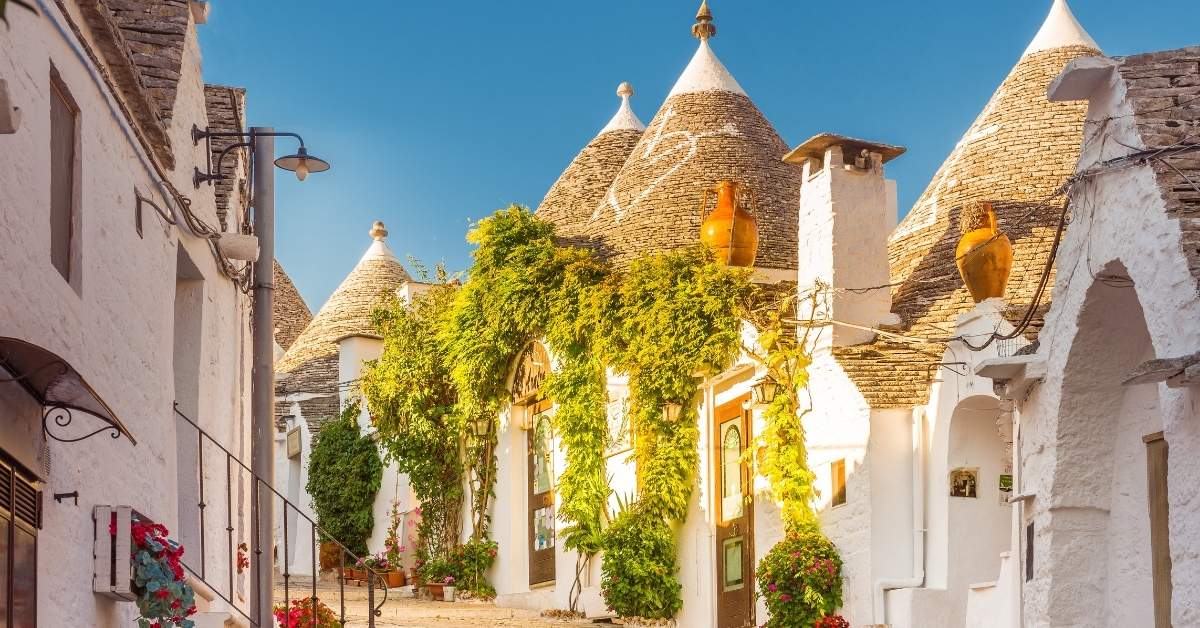
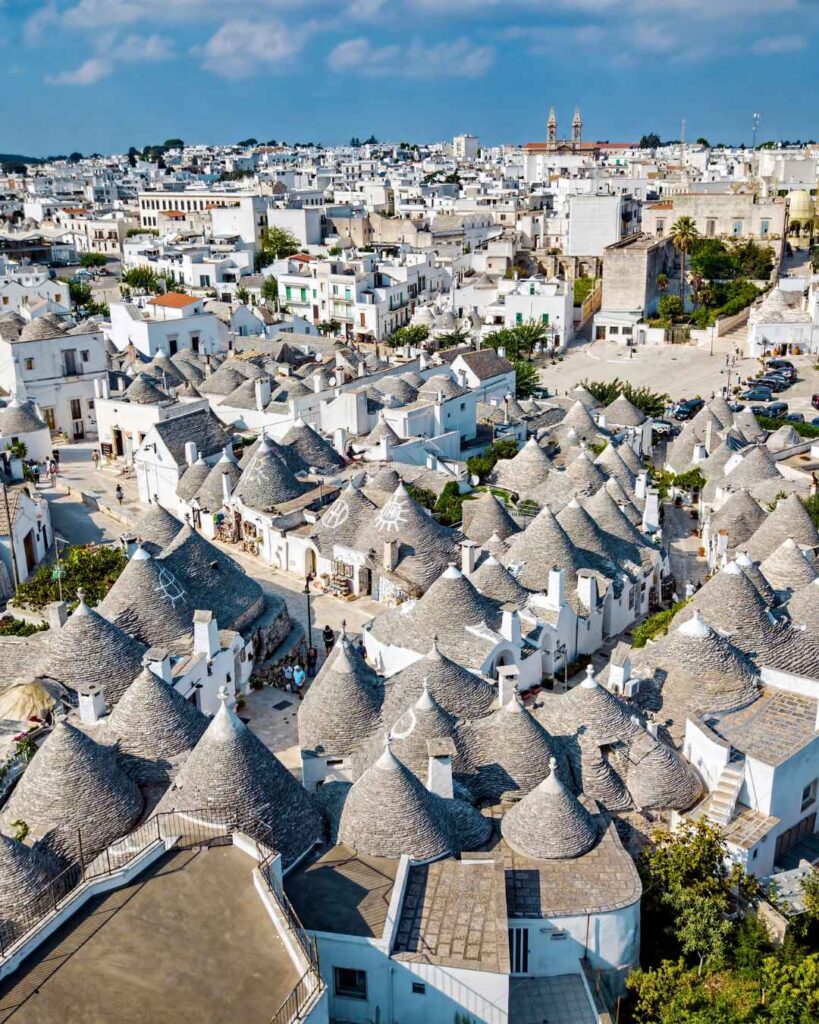
You are walking in Alberobello, Puglia. You round the corner into Rione Monti and stop walking. Hundreds of whitewashed cone-roofed houses tumble down the hillside before you, gray stone domes clustered together like a forest of mushrooms. It looks like something from a storybook, a village where hobbits might live or where witches might brew their potions. But this is not a fantasy. This is Alberobello.
Nestled in the heart of Puglia, the heel of Italy’s boot, Alberobello is home to over 1,500 trulli, the traditional dry-stone dwellings with conical roofs that have made this town a UNESCO World Heritage site. These are not replicas or tourist attractions built for show. They are living homes, shops, restaurants, and hotels, occupied by real people who have carried on a building tradition that stretches back centuries.
Before reading further, please take the time to ensure you have packed everything you need for your trip to Italy. See the checklist here.
The Story Behind the Stone Cones
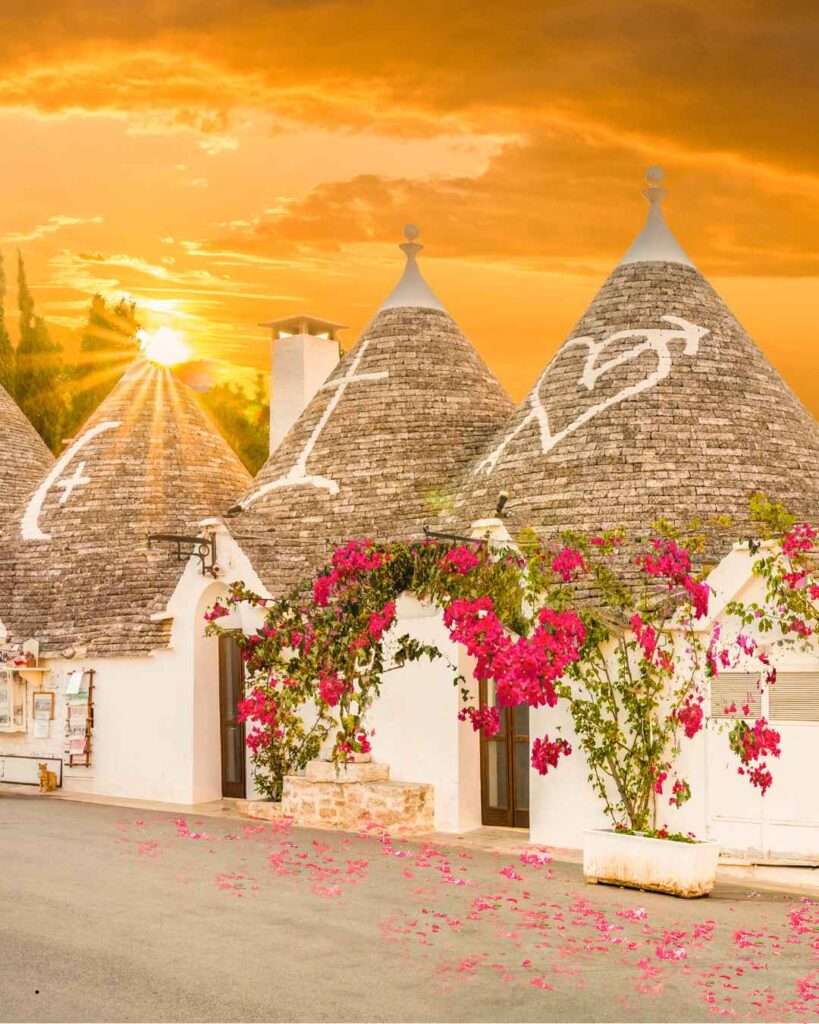
The trulli of Alberobello are remarkable not just for their appearance but for the ingenious purpose they once served. The story begins in the 14th century when the Acquaviva family, feudal lords of the region, wanted to settle the land and collect taxes. But there was a problem. Under the Kingdom of Naples, feudal lords had to pay a tax on new settlements. The solution was brilliantly simple.
The lords ordered their laborers to build houses without mortar, using the dry-stone technique. This meant the peasants could dismantle their dwellings completely when they heard that the king’s tax inspectors were approaching. Once the inspectors left, they would quickly rebuild their homes. The roof cones were built of stacked limestone slabs, carefully balanced so that removing a single keystone would bring the entire structure down.
For centuries, the trulli remained illegal, standing only as temporary structures. It was not until 1797 that King Ferdinand IV declared Alberobello a royal city, freeing the inhabitants from feudal rule and legitimizing their unique homes. From that moment on, the construction of new trulli began to decline. But the existing ones remained, and today they stand as a testament to the resourcefulness of their builders.
What to See: The Two Faces of Alberobello
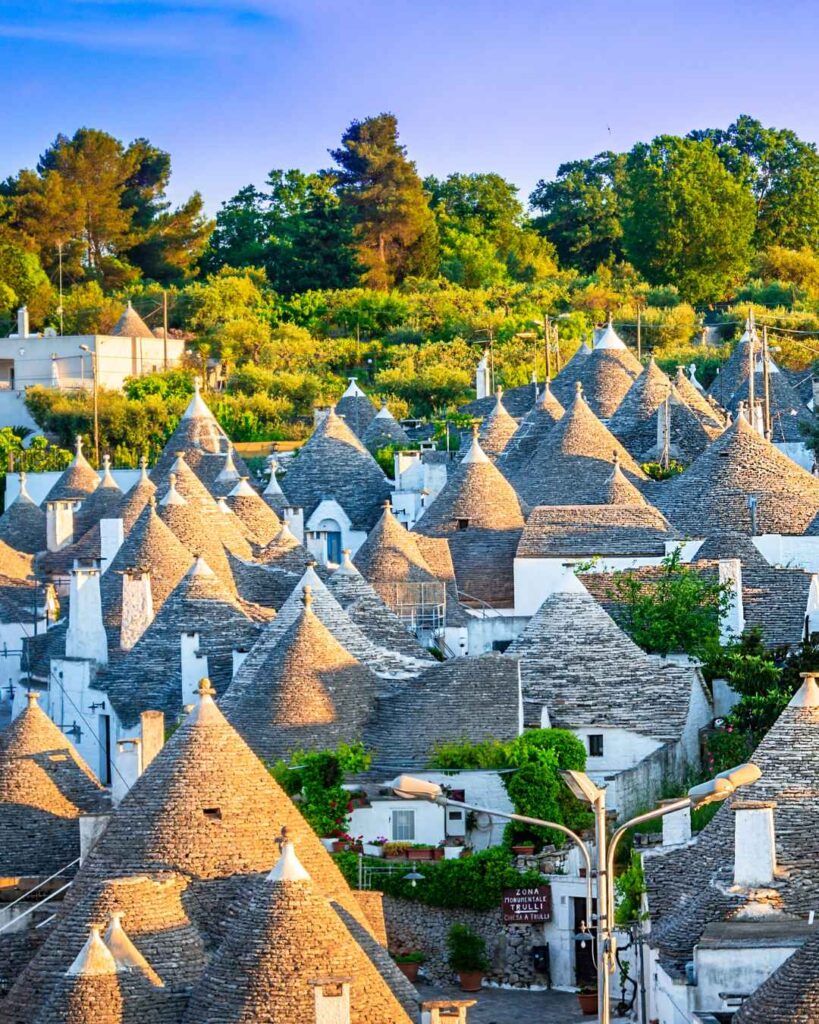
The trulli are concentrated in two main districts, each with its own character and both worth exploring.
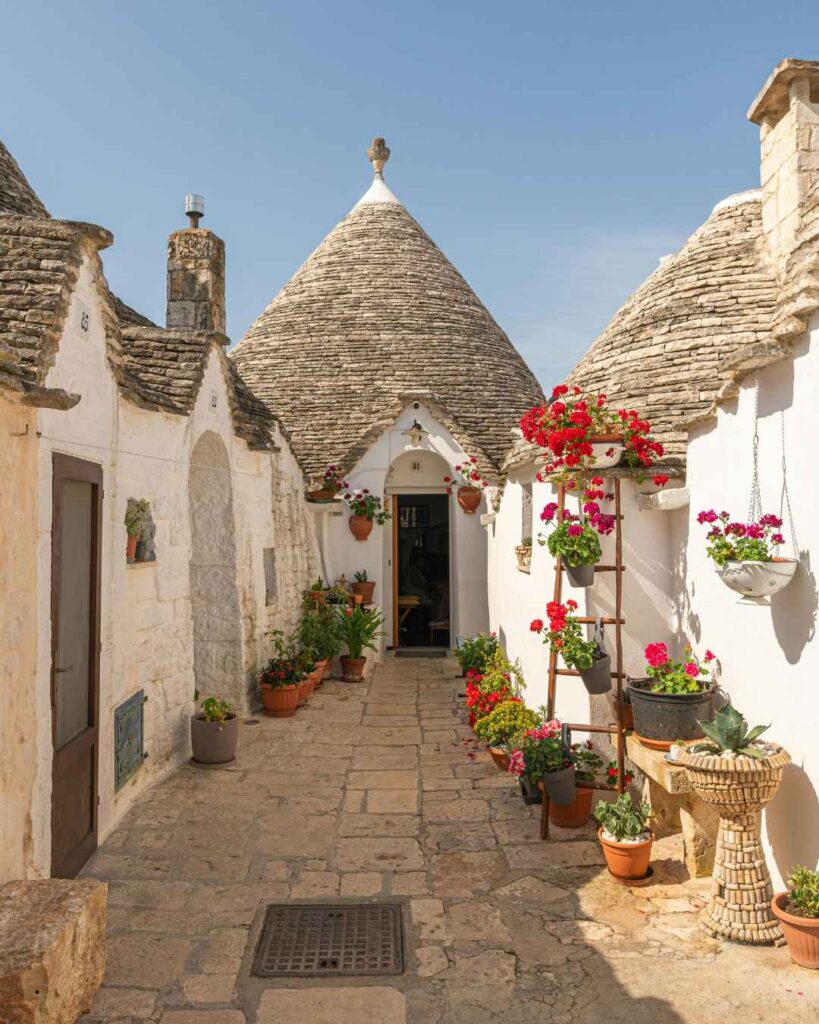
Rione Monti is the heart of the tourist experience. This hillside neighborhood contains over a thousand trulli, packed tightly together along narrow cobblestone streets. The houses here have been converted into artisan shops, ceramics galleries, wine bars, and gelaterias. It is lively, colorful, and undeniably photogenic. Wander along Via Monte Pertica and the surrounding alleys, and you will find tiny boutiques selling hand-painted plates, miniature trulli souvenirs, and local olive oils.
The best time to visit Rione Monti is early morning, around six or seven, before the tour groups arrive. The light is soft and golden, the streets are empty, and you can experience the neighborhood as something other than a crowded attraction.
Rione Aia Piccola, on the other hand, is quieter and more residential. With about 590 trulli, it is smaller and less homogeneous than Monti. This is where locals actually live. The streets are calmer, the pace slower, and you get a more authentic sense of what life in a trullo was and still is like. It is the perfect place for a peaceful stroll away from the bustle.
Between the two districts lies the Piazza del Mercato, a historic market square that once served as the economic heart of the town. From here, you can easily access both neighborhoods.
The Must-See Sights
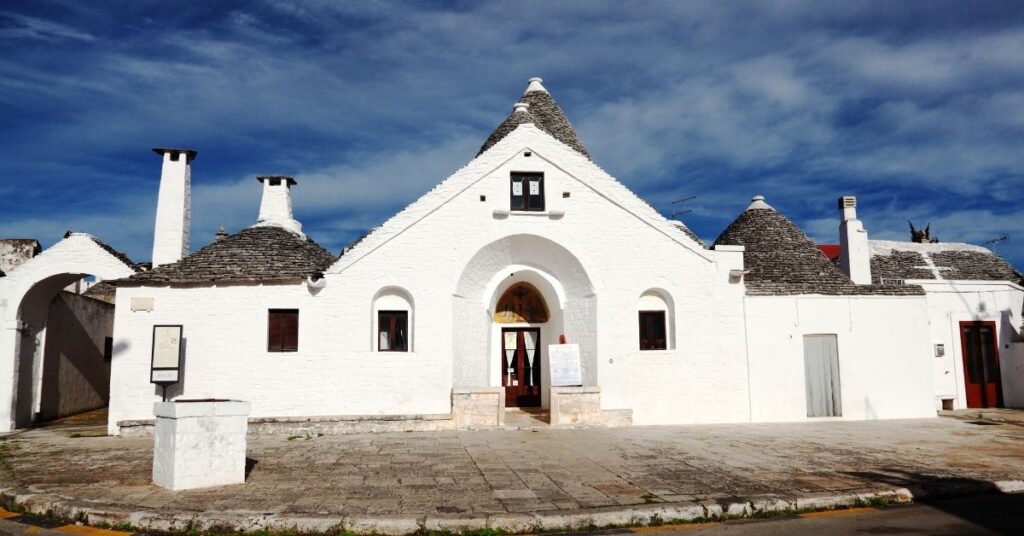
The Church of Sant’Antonio is a unique sight in Alberobello. Built in the 1920s, it is the only trullo-shaped church in the world. Its conical dome rises twenty-one meters high, and the interior is a Greek cross design. If you time your visit, you can catch the free guided tours offered in multiple languages.
Trullo Sovrano is the town’s largest and most famous trullo. Standing two stories high with twelve cones, it is a rare example of a trullo with an elevated floor reached by a masonry staircase. Built in the eighteenth century, it is now a museum where you can see original furniture and understand how people lived in these structures. The main dome rises forty-six feet, making it an unmistakable landmark.
Belvedere Santa Lucia is where you will get the postcard shot. This viewpoint offers sweeping, unobstructed views over the entire Rione Monti district. It is especially stunning at sunset when the golden light bathes the white stone cones and the evening shadows begin to gather in the alleys. It is also the perfect place for a coffee or a lemon granita while you take it all in.
For a deeper dive into the history, visit the Museo del Territorio Casa Pezzolla. This museum is housed in a complex of fifteen interconnected trulli and tells the story of the town’s traditions, folklore, and architecture. In the evenings, it sometimes transforms into a living museum with actors and workshops on lacemaking and folk dancing.
Where to Eat: The Flavors of Puglia
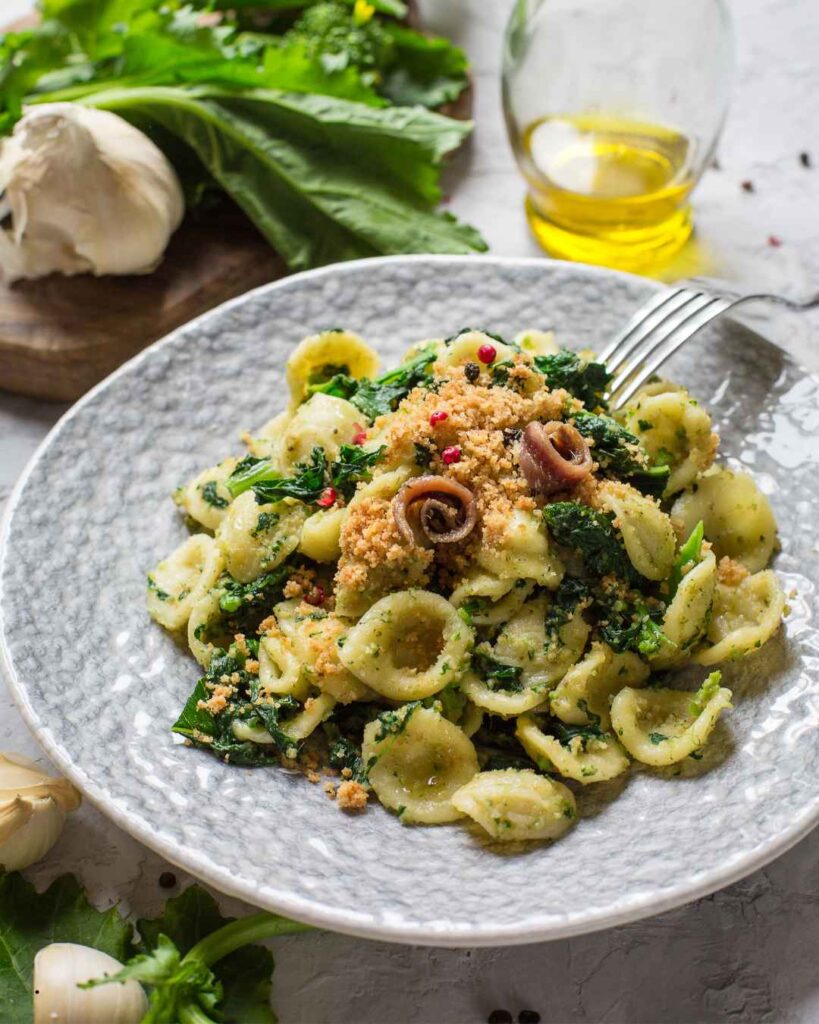
Alberobello’s food is rooted in the cucina povera of southern Italy, simple and hearty dishes made from the freshest local ingredients.
You cannot leave without trying orecchiette, the ear-shaped pasta that is the signature of Puglia. Trattorias like La Cantina and Il Pinnacolo are excellent choices for traditional dishes. Il Pinnacolo also offers a spectacular terrace view over the trulli, making it a memorable spot for a meal.
For a sandwich, hunt down a Pasqualino. This is the local specialty, a hearty roll stuffed with tuna, capers, salami, and cheese. Grab one from Focacciaria La Lira and eat it on a bench in one of the quiet squares.
Corte dei Trulli is a restaurant inside a trullo with a beautiful intimate garden. Their millefoglie dessert is legendary, and the Pugliese cuisine is considered top-notch. For a more modern take on regional dishes, try Oil-O-Bistro. And when you need a gelato break, Arte Fredda is the go-to spot.
If you are visiting the Rione Aia Piccola district, look for the smaller, family-run trattorias that serve recipes passed down through generations. The prices here are often more reasonable, and the atmosphere is far more local.
Where to Stay
Sleeping in a trullo is the ultimate Alberobello experience. The town has numerous trulli converted into guesthouses, hotels, and vacation rentals.
Trulli Holiday Resort is a well-regarded option with a range of beautifully restored trulli and stone houses. Each one offers modern amenities while preserving the charm of the original architecture. Some even come with private terraces and pools.
Le Alcove – Luxury Hotel nei Trulli offers an upscale experience. It has been recognized as one of the best luxury hotels in the area, with elegant rooms set in carefully restored trulli. The breakfast is exceptional, and the location is central.
For a more budget-friendly option, consider staying in one of the many B&Bs scattered throughout the town. Many offer breakfast in a courtyard or garden, and the hosts are often wonderfully welcoming.
Book well in advance, especially in high season. The trulli are small, and the best ones fill up months ahead.
When to Go
Alberobello is a year-round destination, but each season offers something different.
Spring and fall are the sweet spots. The weather is mild, the crowds are lighter, and the landscape is beautiful. April and May bring wildflowers to the surrounding countryside. September and October offer golden light and warm, pleasant days.
Summer is hot and crowded. The narrow streets of Rione Monti can feel packed, and the heat radiates off the white stone. But the evenings are long and lively, with outdoor dining and festivals that bring the town to life.
Winter is quiet and cooler. The crowds thin out, and you can have the streets almost to yourself. Some attractions have limited hours, but the peaceful atmosphere is a pleasure for those who prefer solitude.
Getting There
Alberobello is located in Puglia, about an hour’s drive from both Bari and Brindisi, the region’s major cities.
The nearest airport is Bari Karol Wojtyła Airport, which has connections to major European cities. From Bari, you can rent a car, which is the most flexible option for exploring the region. The drive is straightforward and takes you through the beautiful Pugliese countryside.
Alternatively, there is a train line from Bari to Alberobello. The trip takes about an hour and a half, and the station is a short walk from the town center. Trains are affordable and comfortable, making them a good option for those without a car.
Buses are also available from Bari and other nearby towns. They are less frequent but offer another reliable option.
You can also do guided tours from nearing towns, some which also have a stopover in Matera. Here are some of the best tours.
The Practical Things You Need to Know
Wear comfortable shoes. The streets of Alberobello are cobblestone, and there is a lot of walking up and down hills.
Bring a camera. This is one of the most photogenic towns in Italy, and you will want to capture every angle. The best light is early morning and late afternoon.
Pack a hat and sunscreen in summer. The white stone reflects the sun, and there is little shade in the open areas.
Visit the quieter Rione Aia Piccola for a more authentic experience. You can walk through and imagine how the town looked centuries ago.
Be respectful of residents. Remember that trulli are still homes, not museums. Admire them from the street, but do not peek through windows or disturb the people who live there.
Alberobello is unlike any other place on earth. Its white stone cones rising from the Pugliese hillside feel timeless and otherworldly, a testament to human ingenuity and resilience. The story behind them, the clever deception that kept them standing for centuries, adds layers of meaning to every view.
Walk the quiet streets of Rione Aia Piccola at dawn. Watch the sunset from Belvedere Santa Lucia. Eat orecchiette in a trattoria lit by candlelight. Sleep in a trullo and dream of a time when stone was shelter and cunning was survival.
NOTE BEFORE YOU GO: Italy rewards travelers who go prepared. And it is easy to ruin your trip. I have a checklist for you of things you should never go to Italy without. CHECK IT OUT HERE. I have also curated a list of some of the best hotels in Italy. I would highly recommend checking them out before booking. THESE ARE THE BEST HOTELS IN ITALY. And for unique experiences, attractions, and tours, don’t book before CHECKING THIS OUT. Thank me later!