
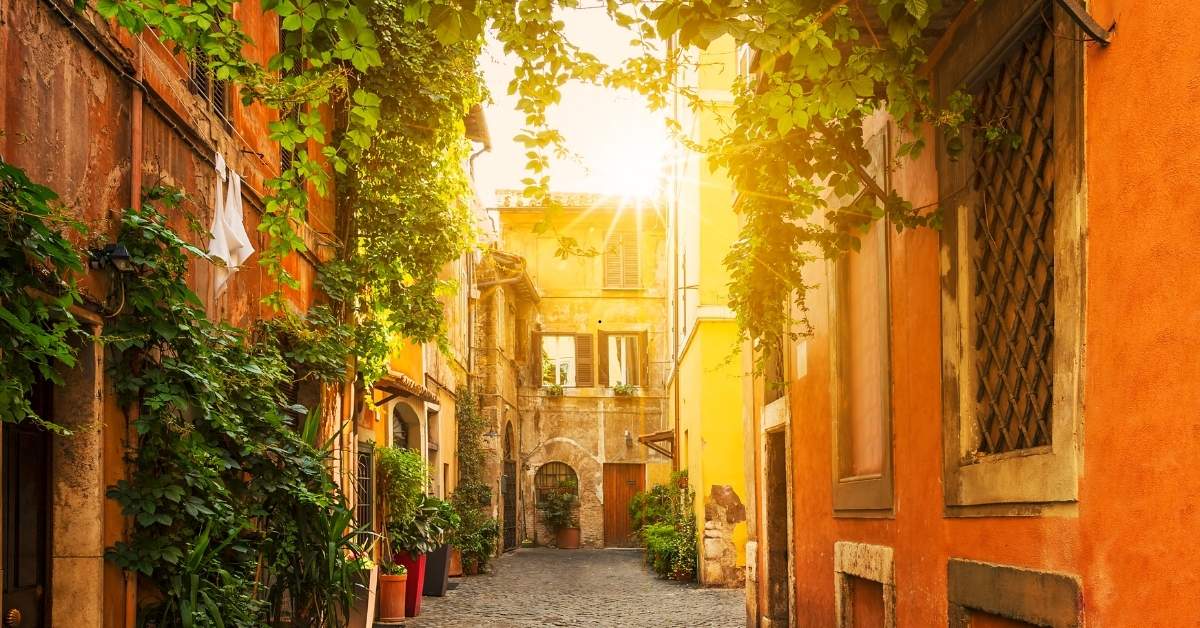
You are walking in Rome, and just after you cross the Ponte Sisto, the noise of central Rome begins to fade. The grand monuments, the roaring traffic, the crowds of selfie sticks, they all recede. What replaces them is something entirely different. Narrow cobblestone lanes. Ivy creeping up faded terracotta walls. The sound of laughter spilling from a tiny trattoria. This is Trastevere, and it is the Rome you did not know you were looking for.
Trastevere means “beyond the Tiber” in Latin, and that is exactly what it is. A neighborhood set apart from the historic center, across the river, with a character that is entirely its own. It is ancient, dating back to Roman times, when it was home to sailors and fishermen and immigrants from across the empire. It is deeply Roman in a way that the Vatican and the Colosseum, for all their grandeur, never quite are.
Before reading further, please take the time to ensure you have packed everything you need for your trip to Italy. See the checklist here.
The Story of Trastevere

Trastevere has always been a place apart. In ancient times, it lay outside the city walls, a multicultural melting pot of Jews, Syrians, and working-class families. During Imperial Rome, wealthy citizens like Julius Caesar built lavish homes here, drawn by the views and the proximity to the river.
The Middle Ages brought a strong religious presence, with churches and monasteries springing up along the narrow streets. The Renaissance and Baroque periods added grand palazzi, ornate facades, and hidden courtyards.
But the neighborhood never lost its working-class roots. Even today, while other districts of Rome have become tourist-centric, Trastevere retains a strong sense of local identity. Many of its family-run trattorias and artisan workshops have been passed down through generations. It is a living neighborhood, not a museum.
What to See: The Sights You Cannot Miss
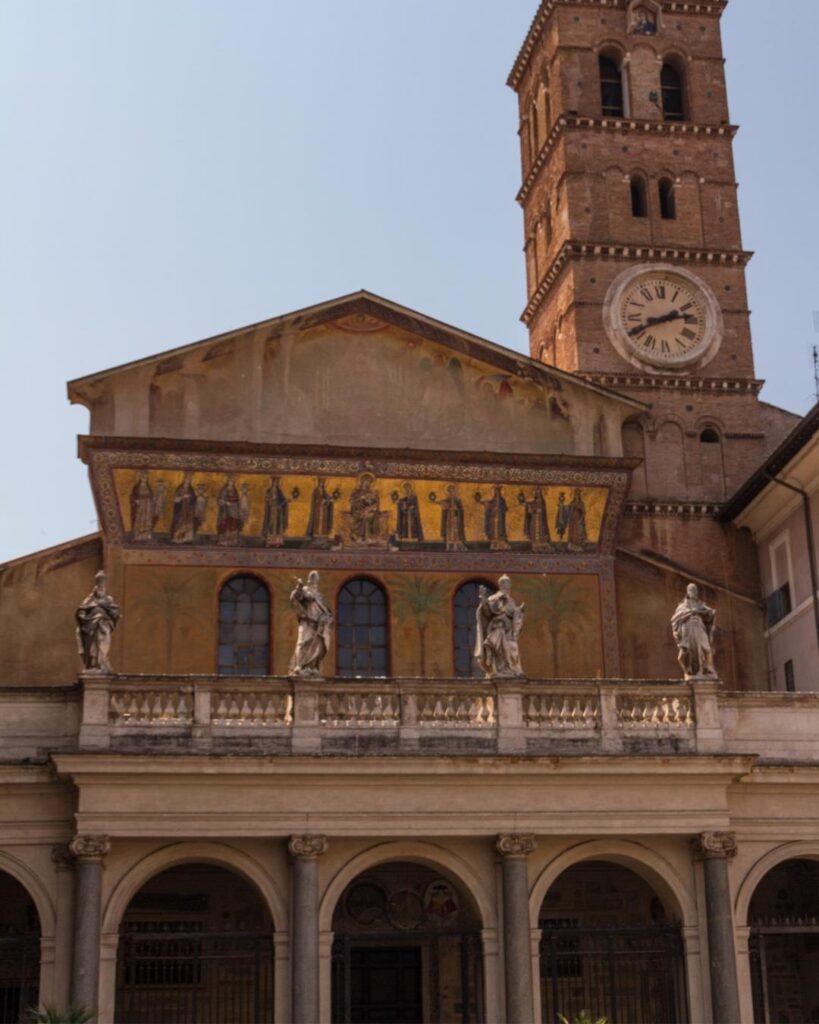
Arguably, the best way to experience Trastevere is to get lost in its maze of streets. But there are a few landmarks that deserve your attention.
The Basilica of Santa Maria in Trastevere is the heart of the neighborhood. One of the oldest churches in Rome, it dates back to 340 AD. The golden mosaics on its facade and interior are breathtaking. The central nave is lined with ancient columns, and the coffered ceiling glimmers in the dim light. Outside, the Piazza di Santa Maria is always buzzing with life, perfect for people-watching. Entry is free.
For a different kind of beauty, climb Gianicolo Hill. The walk is steep, but the panoramic views over Trastevere and Rome are worth every step. At the foot of the hill is the monumental Fontana dell’Acqua Paola, a seventeenth-century engineering marvel. At the top, you will find the Garibaldi Monument, and a cannon is fired here every day at noon, a tradition that has continued for over a century. Come at sunset with a bottle of wine and prepare to be moved.
The Villa Farnesina is a Renaissance treasure that many visitors overlook entirely. This stunning villa, designed for a wealthy Sienese banker, is covered in frescoes by Raphael and his students. The Loggia of Cupid and Psyche is particularly spectacular, with scenes from ancient mythology that seem to come alive on the walls. It is a quiet, elegant escape from the crowds.
For a glimpse of daily life, visit the Porta Portese flea market. Held every Sunday morning, it is an institution. Thousands of stalls sell everything from antiques to vintage clothing to bizarre collectibles. Even if you do not buy anything, the energy is infectious.
And do not forget to explore the side streets. Wander down Via della Scala, Vicolo del Cinque, and Via dei Fienaroli. Look up at the laundry hanging from windows. Peer into hidden courtyards. Trastevere rewards the curious traveler.
Where to Eat: The Heart of Roman Cuisine
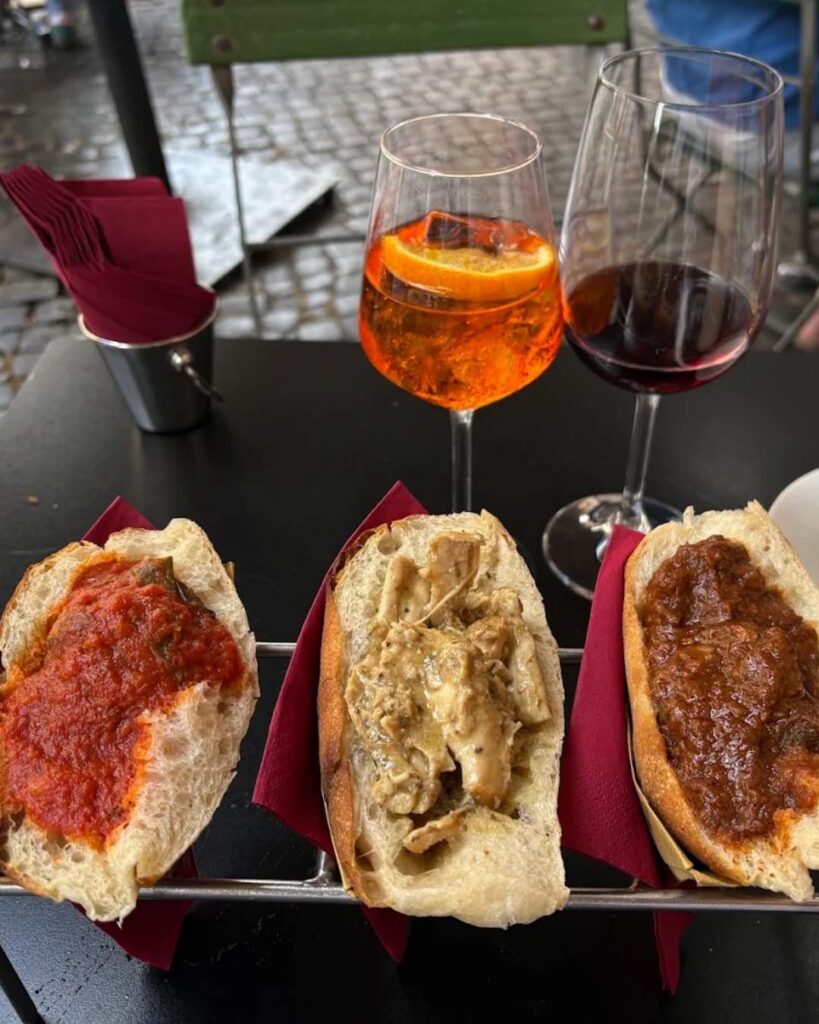
Trastevere is one of the best places in Rome to eat. The neighborhood is packed with trattorias, osterias, and tiny wine bars, many of which have been serving locals for decades.
Da Enzo al 29 is legendary. The line snakes down the street, and for good reason. The pasta is perfection, the carbonara creamy and rich, the cacio e pepe simple and sublime. Go early or prepare to wait. It is worth every minute. My wife also really enjoyed Trappizino. It is actually her favorite street food joint in Rome.
For pizza, Dar Poeta is the local favorite. The thin, crispy crust is topped with fresh ingredients, and the supplì, fried rice balls with a gooey cheese center, are a must-order. The atmosphere is casual and lively, exactly what you want in Trastevere.
If you are looking for something more refined, La Gensola is excellent. It is a small, intimate place with a focus on seafood. The fresh fish is displayed daily, and the chef creates dishes that are both creative and deeply Roman.
For a taste of history, eat at Antico Arco. Set just off Gianicolo Hill, it offers spectacular views alongside innovative cuisine. The tasting menu is a journey through Roman flavors with a modern twist.
And then there is the gelato. Fatamorgana is one of the best gelaterias in Rome, with unusual flavors like basil and black sesame alongside classic pistachio and stracciatella. It is the perfect end to any meal.
Where to Drink: Wine Bars and Evening Magic
Trastevere comes alive at night. The streets fill with people, the music spills from bars, and the atmosphere is electric. This is where Romans come to unwind.
Freni e Frizioni is a legendary cocktail bar. The drinks are creative, the crowd is stylish, and the vibe is effortlessly cool. It is always busy, and for good reason. Arrive early to snag a seat.
Bar San Calisto is the opposite. It is a dive bar in the best sense of the word. Cheap drinks, plastic chairs, and a mix of locals, students, and artists. It is unpretentious and wonderful, exactly the kind of place where you can spend an entire evening watching the world go by.
For wine lovers, Enoteca Trastevere is a must. The selection is outstanding, and the staff are passionate about what they pour. Sit outside, order a glass of something local, and let the evening unfold.
And do not miss the street performers. In the piazzas and along the main lanes, musicians, jugglers, and artists entertain the crowds. It adds to the carnival-like atmosphere that makes Trastevere so special after dark.
Where to Stay
Choosing where to stay in Trastevere is a decision about what kind of Roman experience you want. If you are looking for quiet and elegance, there are beautiful boutique hotels tucked into the quieter corners of the neighborhood.
Hotel Santa Maria is a charming option. Set around a peaceful courtyard, it offers comfortable rooms and a genuinely warm welcome. The location is perfect, right near the basilica, but set back from the noise.
Trastevere has a range of vacation rentals as well. Apartments in historic buildings offer a chance to live like a local, with kitchens and living spaces that make you feel like you belong. Booking well in advance is essential, especially in high season.
The neighborhood is well-connected by public transport, with trams and buses crossing the river into central Rome. Taxis are also plentiful. But the real joy of staying in Trastevere is being able to walk everywhere, to wake up in the middle of the action and step straight into its magic.
When to Go
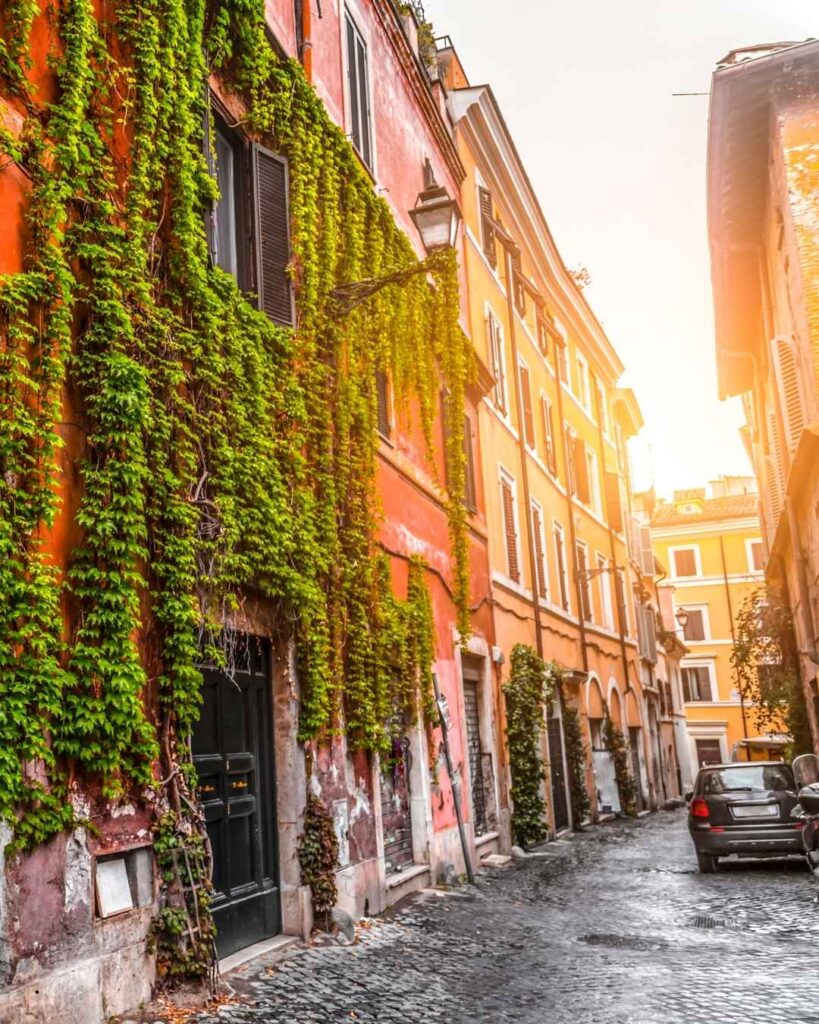
Trastevere is wonderful year-round, but each season offers something different. Spring and fall are the sweet spots, with mild weather and manageable crowds.
Summer is hot and lively. The streets are packed, the restaurants are bustling, and the evenings are long and warm. The Porta Portese market and outdoor dining are at their best, but prepare for the heat and the crowds.
Winter is quieter and cooler. The neighborhood has a different charm in the off-season, with fewer tourists and a more local feel. Some bars and restaurants may have limited hours, but the atmosphere is cozier and more intimate.
Visit on a Sunday if you can. The Porta Portese market is in full swing, and the streets are buzzing with energy. Monday is quieter, a good day for exploring without the crowds.
The Practical Things You Need to Know
Wear comfortable shoes. Trastevere’s cobblestones are uneven and can be slippery after rain. You will walk far more than you expect.
Bring cash. Many of the smaller trattorias and bars prefer cash over cards. ATMs are available, but having euros in your pocket is wise.
Learn a few Italian phrases. Trastevere is less touristy than central Rome, and locals appreciate the effort. A simple “grazie” and “per favore” go a long way.
Be aware of pickpockets. Like all crowded tourist areas in Rome, Trastevere attracts opportunistic thieves. Keep your bag zipped and your valuables close.
Leave time to wander. The best discoveries in Trastevere happen when you have no destination in mind. Follow a narrow alleyway. Sit in a piazza. Let the neighborhood reveal itself.
Do a food tour. It will be the highlight of your visit. This is the one I recommend.
There is a reason why Romans love Trastevere. It is the part of Rome that feels most like a community, where ancient stones and modern life coexist in perfect harmony. The artists in their studios, the families in their apartments, the chefs in their kitchens, they all contribute to a place that is greater than the sum of its parts.
Cross the river. Leave the crowds behind. Find a quiet courtyard, order a glass of wine, and watch the light change over the rooftops. Trastevere is not just a neighborhood. It is a feeling. And once you find it, you will never want to leave.
NOTE BEFORE YOU GO: Italy rewards travelers who go prepared. And it is easy to ruin your trip. I have a checklist for you of things you should never go to Italy without. CHECK IT OUT HERE. I have also curated a list of some of the best hotels in Italy. I would highly recommend checking them out before booking. THESE ARE THE BEST HOTELS IN ITALY. And for unique experiences, attractions, and tours, don’t book before CHECKING THIS OUT. Thank me later!