
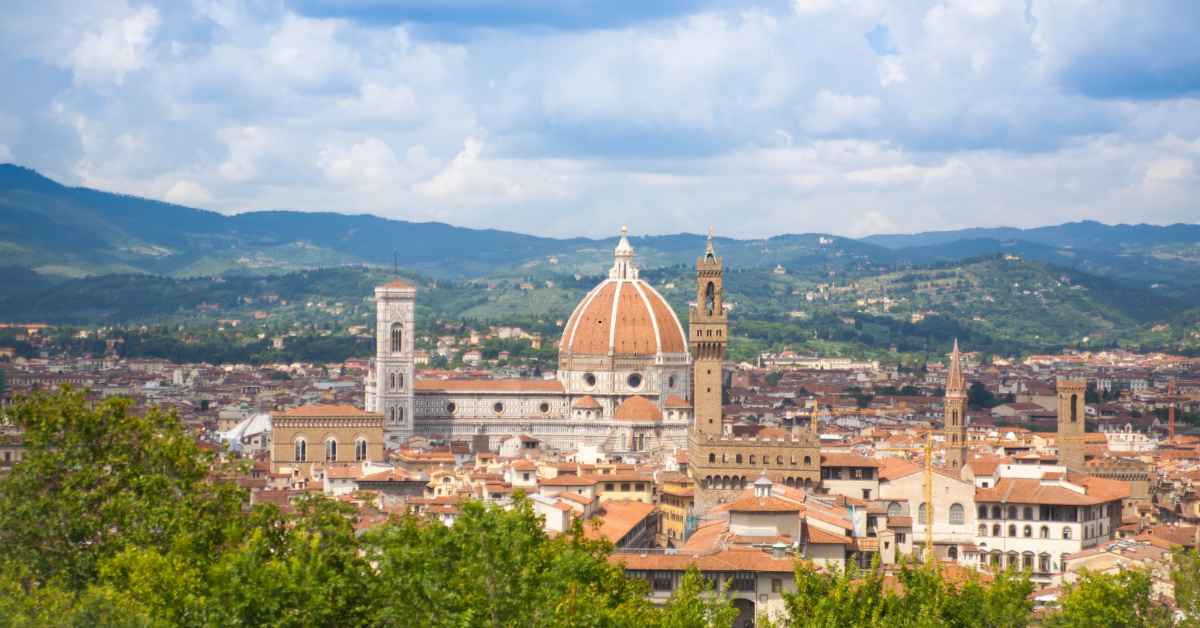
Florence is one of those cities that almost everyone recognises, even before setting foot in Italy. Its magnificent cathedral, the Ponte Vecchio, the Uffizi Gallery, and Michelangelo’s David have made it one of the most visited destinations in Europe.
For many people, these are the places that define Florence, and rightly so. Few cities can match its concentration of Renaissance art, architecture, and history.
But there is another side to Florence that is easy to miss.
Walk a little further from the crowds around the Duomo, cross the Arno, and explore the streets of Oltrarno.
You will find neighbourhood squares where residents gather for coffee, old workshops where craftspeople continue traditions passed down through generations, and churches containing extraordinary works of art that receive only a fraction of the attention given to the city’s famous museums.
There are also beautiful gardens tucked behind historic palaces, medieval streets that have changed surprisingly little over the centuries, and small museums with collections that are every bit as fascinating as those in Florence’s better-known institutions.
Some of these places are only a few minutes from the busiest tourist attractions. Others require a little more effort to reach. What they have in common is that they offer a different perspective on a city that has so much more to show than its most famous landmarks.
If you have already visited Florence or simply want to experience something beyond the usual tourist itinerary, these are some of the places and experiences worth seeking out.
Before you read further, remember that Italy rewards travelers who go prepared. I have prepared a checklist of things you must have when visiting Italy if you want to have an unforgettable trip. See the checklist here.
1. Explore Florence’s Neighbourhoods That Most Tourists Never Visit
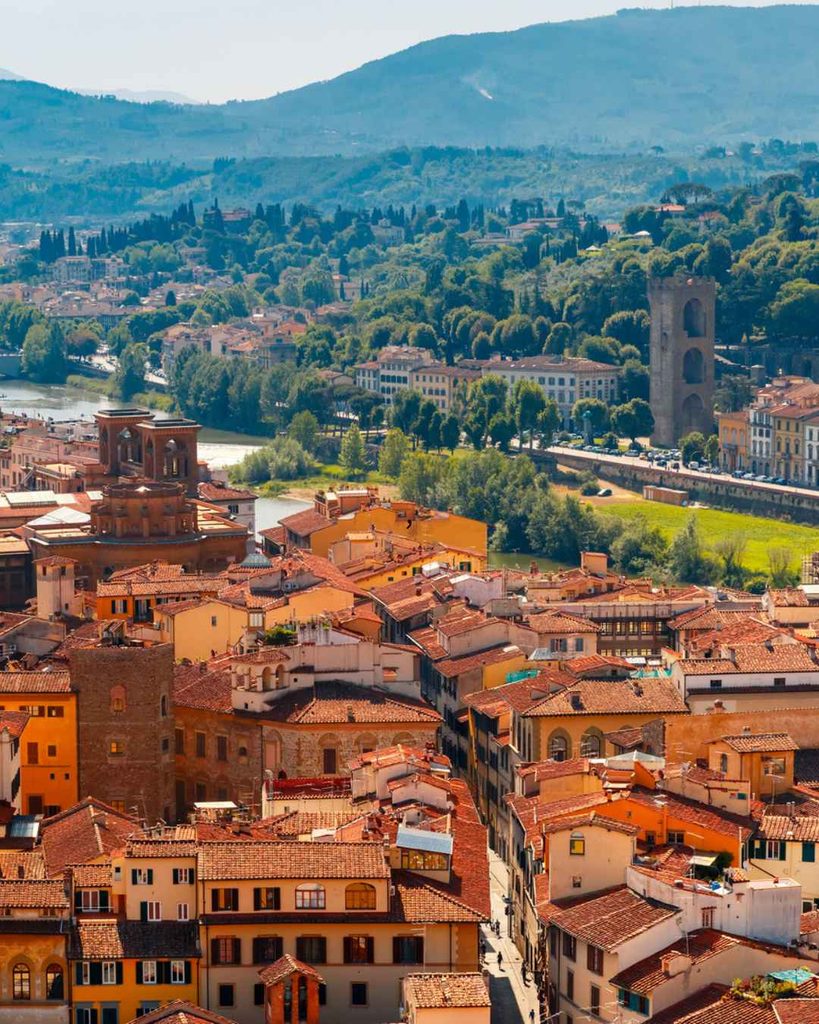
One of the best ways to discover a different side of Florence is to spend time in its neighbourhoods. While most visitors concentrate on the historic centre between the Duomo, Piazza della Signoria, and the railway station, some of the city’s most interesting streets are found a little further away.
These neighbourhoods have their own identities, histories, and daily rhythms. They are places where you can sit at a small café, browse independent shops, visit traditional workshops, and experience Florence without feeling as though every street exists for tourists.
Oltrarno: Florence on the Other Side of the Arno
Oltrarno literally means beyond the Arno, referring to the part of Florence located on the southern side of the river. It is one of the most rewarding areas to explore if you want to get away from the busiest parts of the historic centre.
The neighbourhood has a long history of craftsmanship. For centuries, its streets were home to artisans, furniture makers, leather workers, metalworkers, and other tradespeople. Some of that tradition survives today, particularly around Santo Spirito and San Frediano.
Unlike the grand streets around the Duomo, Oltrarno has a more relaxed atmosphere. You will find small squares, traditional restaurants, independent boutiques, and workshops occupying buildings that have stood for hundreds of years.
One of the pleasures of exploring this area is that you rarely need a strict itinerary. Wander along Via Maggio, turn into one of the smaller streets, and see where you end up. You might find an antique shop, a quiet courtyard, or a workshop where someone is still making things by hand.
Make time for Piazza Santo Spirito, Basilica di Santo Spirito, and the surrounding streets. You can easily spend half a day exploring this part of Florence.
Santo Spirito: A Neighbourhood Square With Character
Piazza Santo Spirito is one of my favourite places to recommend to visitors who want to experience Florence beyond its famous attractions.
The square is dominated by the Basilica di Santo Spirito, a Renaissance church designed by Filippo Brunelleschi. Its relatively simple exterior contrasts with the architectural richness of many other Florentine churches.
The piazza itself has a different character from the grand squares in the historic centre. Rather than being surrounded by monumental buildings and major tourist attractions, it is lined with restaurants, cafés, and neighbourhood businesses.
During the day, people stop here for coffee, lunch, and conversation. In the evening, the atmosphere becomes livelier as restaurants and bars fill with locals and visitors.
It is also an excellent starting point for exploring the surrounding Oltrarno streets. Allow yourself some time to wander without worrying about ticking off attractions.
San Frediano: One of Florence’s Most Characterful Neighbourhoods
San Frediano sits in the western part of Oltrarno and has long been associated with working-class Florentine life and traditional craftsmanship.
It is an area of narrow streets, old buildings, small businesses, and traditional restaurants. While it has become increasingly popular with visitors, it still retains much of its neighbourhood character.
One of its most important landmarks is the Basilica of Santa Maria del Carmine, home to the famous Brancacci Chapel. The chapel contains some of the most influential frescoes of the early Renaissance, including works by Masaccio and Masolino.
Away from the basilica, explore the streets around Borgo San Frediano and Piazza del Carmine. You will find plenty of places to stop for food, browse small shops, or simply enjoy the atmosphere.
San Frediano is particularly appealing in the late afternoon and evening, when the neighbourhood begins to come alive.
San Niccolò: A Quiet Corner Beneath Florence’s Hills
San Niccolò is a small neighbourhood on the southeastern edge of the historic centre, between the Arno River and the hills leading towards Piazzale Michelangelo.
It is an interesting place to explore because it combines medieval architecture, narrow streets, historic buildings, and access to some of Florence’s best panoramic viewpoints.
The neighbourhood is centred around Via San Niccolò, a street lined with old buildings, small businesses, and restaurants. As you walk uphill, you will encounter remnants of Florence’s medieval defensive system, including Porta San Niccolò.
San Niccolò is also a convenient starting point for visiting the Rose Garden, Piazzale Michelangelo, and San Miniato al Monte.
It is worth exploring slowly rather than simply passing through on your way to the viewpoints.
Sant’Ambrogio: Where Florentines Do Their Shopping
If you want to see a more everyday side of Florence, head towards Sant’Ambrogio.
This neighbourhood, east of the historic centre, is best known for its traditional food market. Unlike some of the more heavily visited food markets in the city, Mercato di Sant’Ambrogio retains an important role in the daily lives of local residents.
Inside, you will find stalls selling fresh vegetables, fruit, meat, fish, cheese, and other local produce. It is a good place to see the ingredients that form the basis of Tuscan cooking.
The surrounding streets are equally interesting, with traditional bakeries, cafés, and small restaurants.
Spend some time around Piazza Lorenzo Ghiberti and the nearby streets. It is not necessarily a place filled with spectacular monuments, but that is precisely what makes it interesting.
Santa Croce Beyond the Basilica
The Basilica of Santa Croce is one of Florence’s most important attractions, attracting visitors who come to see the tombs of Michelangelo, Galileo, and other famous figures.
However, the neighbourhood surrounding it deserves more attention than simply being a place to visit before moving on.
The streets extending away from the basilica contain historic buildings, small squares, traditional shops, and restaurants. Piazza dei Ciompi and the surrounding streets are particularly worth exploring.
Rather than leaving immediately after visiting the church, spend an hour walking through the neighbourhood. You will discover a more relaxed side of Florence that many visitors miss.
2. Wander Through Florence’s Beautiful Streets and Hidden Squares
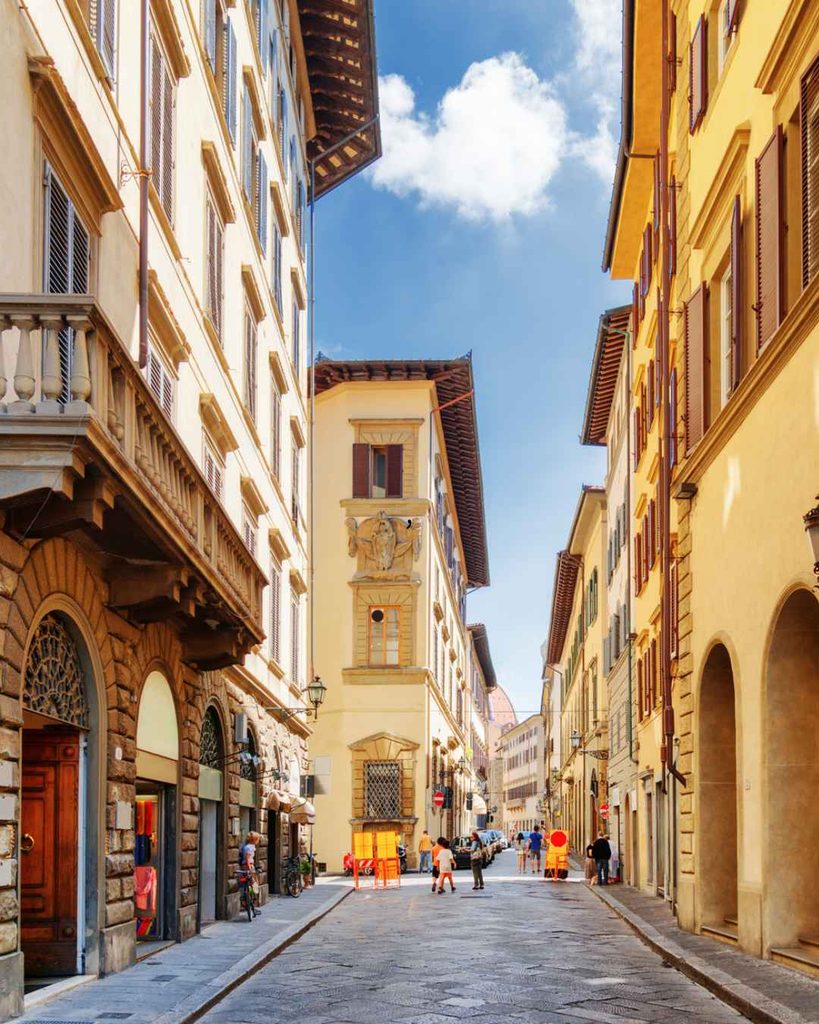
Florence is often photographed from its famous bridges and grand piazzas, but some of its most beautiful scenes are found in ordinary streets.
There is something special about walking through a narrow Florentine street early in the morning. The shutters are opening, shopkeepers are preparing for the day, and the sunlight slowly reaches the upper floors of Renaissance buildings.
These are the moments that make exploring Florence on foot so rewarding.
Here are some streets and squares worth adding to your walk.
Via Maggio
Via Maggio is one of the most elegant streets in Oltrarno. It is lined with historic palaces, many of which date from the Renaissance.
The street became particularly important during the period when wealthy Florentine families began building impressive residences on the southern side of the Arno.
Today, it is known for its antique shops, galleries, and historic architecture. Look closely at the façades as you walk because many contain beautiful architectural details that are easy to overlook.
It is also an excellent street to explore if you are interested in Florence’s history beyond its famous churches and museums.
Borgo San Jacopo
Running close to the Arno, Borgo San Jacopo is one of the most atmospheric streets in the Oltrarno.
It is particularly interesting because of its proximity to Ponte Vecchio and its collection of historic buildings. The street has a distinctly medieval character, with narrow sections and old palaces that reflect the development of this part of Florence.
It is also a wonderful place to appreciate the architecture surrounding the river without standing in the crowds on Ponte Vecchio itself.
Via dei Bardi
Via dei Bardi runs through the eastern part of Oltrarno, connecting the area around Ponte Vecchio with San Niccolò.
The street is lined with historic palaces and buildings that reflect the wealth and influence of Florence’s powerful families.
It is not a particularly long street, but it provides a lovely introduction to this part of the city. Take your time and look at the architectural details, particularly around the older palace entrances.
Via Toscanella
Via Toscanella is a small street in the Oltrarno that offers a glimpse of old Florence.
It is close to Piazza della Passera and Piazza Santo Spirito, making it easy to include in a walking tour of the neighbourhood.
The surrounding streets have a wonderful mix of traditional buildings, small businesses, and quieter corners. It is the sort of place where you can appreciate Florence without constantly encountering large tour groups.
Piazza della Passera
This tiny square in Oltrarno is one of those places that you might easily walk past without realising you have found something special.
Piazza della Passera is surrounded by old buildings and small restaurants, giving it an intimate neighbourhood atmosphere.
It is particularly pleasant around lunchtime and in the evening when people gather at the surrounding establishments.
It is not a monumental square like Piazza della Signoria, nor does it contain a famous landmark. Its appeal lies in its simplicity and the feeling that you have stumbled upon a little corner of everyday Florence.
Piazza Tasso
Located in San Frediano, Piazza Tasso is a relatively quiet square with a more residential character.
It offers a contrast to the grand historic squares in central Florence. There are fewer monumental attractions, and the atmosphere is more closely connected to neighbourhood life.
It is worth including if you are exploring San Frediano and want to see how the city changes as you move away from the main tourist routes.
3. Visit Florence’s Overlooked Churches and Religious Treasures
Florence has an extraordinary collection of churches. Most visitors concentrate on the Cathedral of Santa Maria del Fiore, Santa Croce, and Santa Maria Novella, but some of the city’s most interesting religious buildings receive considerably less attention.
Many contain remarkable frescoes, sculptures, and architectural details. Others are historically important because of the artists and families associated with them.
If you enjoy art and history, these churches deserve a place on your itinerary.
San Miniato al Monte
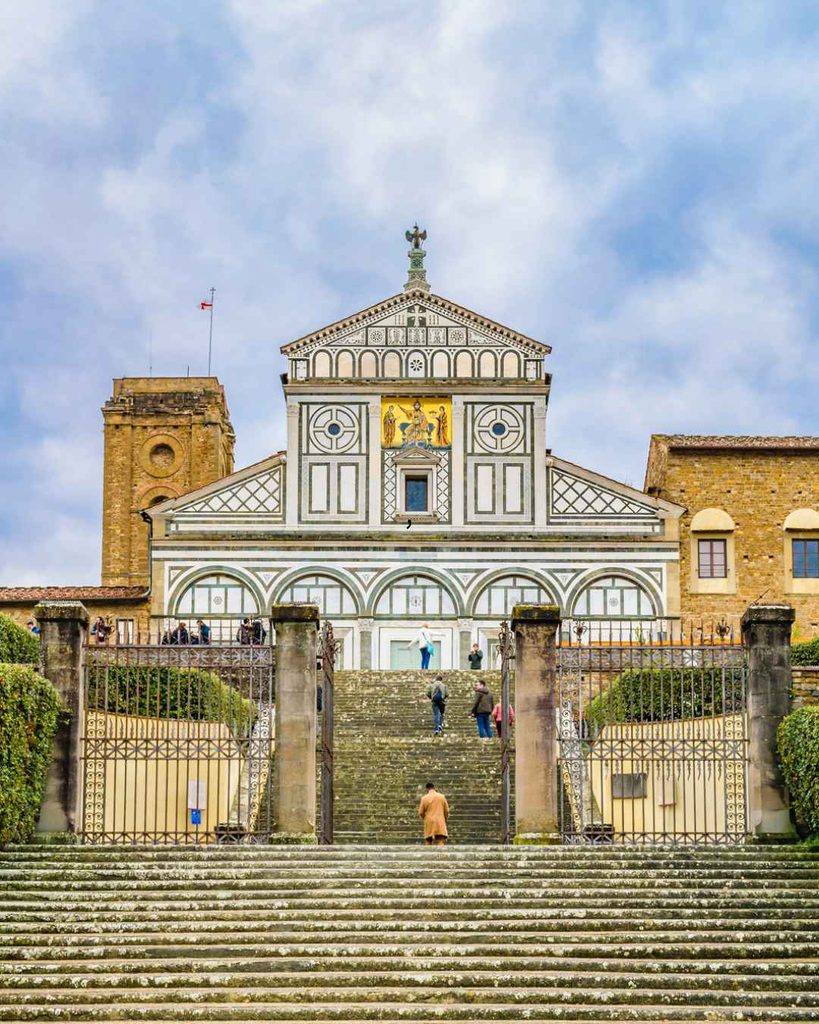
Perched on a hill above Florence, San Miniato al Monte is one of the finest examples of Romanesque architecture in Tuscany.
The church dates back to the 11th century and is particularly beautiful because of its geometric marble façade, decorated with patterns of white and green marble.
Its interior is equally impressive. Look for the beautiful mosaic in the apse, the elaborate marble floor, and the Chapel of the Crucifix.
The church is dedicated to Saint Minias, traditionally identified as an early Christian martyr associated with Florence.
However, one of the reasons I particularly recommend visiting is the setting. San Miniato al Monte sits above Piazzale Michelangelo, offering a wonderful opportunity to see Florence from a slightly different perspective.
Many visitors stop at the famous panoramic square without making the short additional walk to the church. That is a mistake.
Santa Felicita
Santa Felicita is one of the oldest churches in Florence and is particularly important for its artistic treasures.
It is located just a short walk from Ponte Vecchio, yet many visitors pass nearby without realising what is inside.
The church contains Pontormo’s famous Deposition, one of the most remarkable paintings of the Italian Mannerist period. Completed in the 16th century, the work is known for its unusual composition, vivid colours, and the emotional expressions of the figures surrounding Christ.
The painting occupies the Capponi Chapel, which is itself an important artistic space.
Santa Felicita is also interesting because of its connection to the Vasari Corridor, which passes above the church entrance. The Medici family used this elevated passage to move between Palazzo Vecchio and Palazzo Pitti without having to walk through the streets.
For art lovers, this is one of the most rewarding lesser-known stops in Florence.
Ognissanti
The Church of Ognissanti is located west of the main historic centre, not far from the Arno.
It is particularly interesting because of its connections to two major Renaissance artists: Sandro Botticelli and Domenico Ghirlandaio.
Botticelli is buried here, while Ghirlandaio painted a remarkable Last Supper fresco in the former refectory of the adjoining complex.
The fresco is especially worth seeing because it provides an opportunity to appreciate Ghirlandaio’s skill outside the more famous collections of the Uffizi and the Vatican.
The church itself has an impressive interior, with works of art spanning different periods.
It is an excellent stop for anyone interested in Renaissance painting and the artistic history of Florence.
Badia Fiorentina
Badia Fiorentina is a historic abbey located close to the Bargello Museum.
Founded in the 10th century, it has undergone several transformations over the centuries. Its architecture reflects the different periods of its development.
One of its most interesting features is the distinctive bell tower, designed by Filippo Brunelleschi.
Inside, visitors can find significant religious artworks, including works associated with Filippino Lippi.
The church is also connected to the history of medieval Florence. Its location near the Bargello and the historic centre makes it an easy addition to a walking tour.
Santi Apostoli
The Church of Santi Apostoli is one of Florence’s oldest religious buildings.
Although its precise origins are debated, it is generally associated with the early medieval development of the city. Its relatively modest appearance makes it easy to overlook, especially when compared with the grand Renaissance churches nearby.
Inside, you will find a simple but atmospheric interior with Romanesque architectural features.
The church is also associated with the traditional story of the sacred stones used to light the Easter fire in Jerusalem, which were brought to Florence by Pazzino de’ Pazzi after the First Crusade.
It is a fascinating example of how much history can be found in an otherwise unassuming building.
San Marco
San Marco is one of the most important places in Florence for understanding the relationship between Renaissance art and religion.
The complex was home to the Dominican friar and painter Fra Angelico, whose frescoes transformed the monastery into one of the great artistic treasures of the city.
The most famous is the Annunciation, painted near the top of the staircase leading to the monks’ cells.
However, the real experience is exploring the individual rooms and seeing the frescoes that were created to provide religious inspiration for the monks who lived there.
Unlike the grand paintings found in the Uffizi, these works were created for a quiet religious environment.
San Marco is not exactly unknown, but it is frequently overlooked by visitors who spend most of their time around the Duomo and the Uffizi.
4. Discover Extraordinary Artworks That Most Visitors Overlook
Florence is often described as an open-air museum, and it is difficult to disagree. However, much of the attention is concentrated on a relatively small number of famous masterpieces.
Michelangelo’s David, Botticelli’s Birth of Venus, and the paintings of Leonardo da Vinci attract enormous crowds. Yet Florence contains many other works that deserve just as much appreciation.
Some are hidden inside small churches, others in former monasteries, and a few are found in museums that visitors rarely include in their itineraries.
Pontormo’s Deposition
Located inside Santa Felicita, Pontormo’s Deposition is one of the most extraordinary paintings in Florence.
Created between 1525 and 1528, it depicts the removal of Christ’s body from the cross. However, it is very different from the traditional Renaissance representations of the subject.
The figures appear almost weightless, arranged in an unusual composition that draws the eye towards the centre of the painting.
The colours are particularly striking, with shades of pink, blue, and green creating an almost dreamlike atmosphere.
It is one of the defining works of Italian Mannerism, a style that moved away from the balanced compositions and natural proportions associated with the High Renaissance.
Fra Angelico’s Annunciation
The Annunciation at San Marco is one of the most beautiful religious frescoes in Florence.
Painted by Fra Angelico, it depicts the moment when the angel Gabriel announces to Mary that she will give birth to Jesus.
The composition is remarkably simple. The figures are placed beneath a classical portico, and the soft colours create a peaceful atmosphere.
The painting is particularly moving when you consider where it is located. It was created for a monastery, where the monks would encounter it as they moved through the building.
Rather than being designed for a crowded public gallery, it was intended as a quiet moment of contemplation.
Ghirlandaio’s Last Supper at Ognissanti
Domenico Ghirlandaio’s Last Supper is another remarkable artwork that often escapes the attention of visitors.
Painted in the late 15th century, it depicts Christ sharing his final meal with the apostles.
One of the most interesting details is the setting. Ghirlandaio included a garden beyond the dining room, filled with trees and birds.
The scene is carefully composed, with the figures arranged around the table and Judas positioned separately on the opposite side.
It is a wonderful opportunity to appreciate Ghirlandaio’s attention to detail and his ability to combine religious storytelling with realistic surroundings.
The Brancacci Chapel Frescoes
The Brancacci Chapel, inside Santa Maria del Carmine, contains some of the most influential frescoes in the history of Western art.
The decoration was begun by Masolino and Masaccio in the early 15th century and later completed by Filippino Lippi.
Masaccio’s contribution was particularly important because of his use of perspective, realistic human figures, and convincing representations of light and space.
The Expulsion from the Garden of Eden is among the most famous scenes. Adam and Eve are shown leaving paradise, their expressions conveying an extraordinary sense of shame and sorrow.
The chapel had a profound influence on later Renaissance artists, including Michelangelo, who studied its frescoes.
For anyone interested in the development of Renaissance painting, this is one of the most important places to visit in Florence.
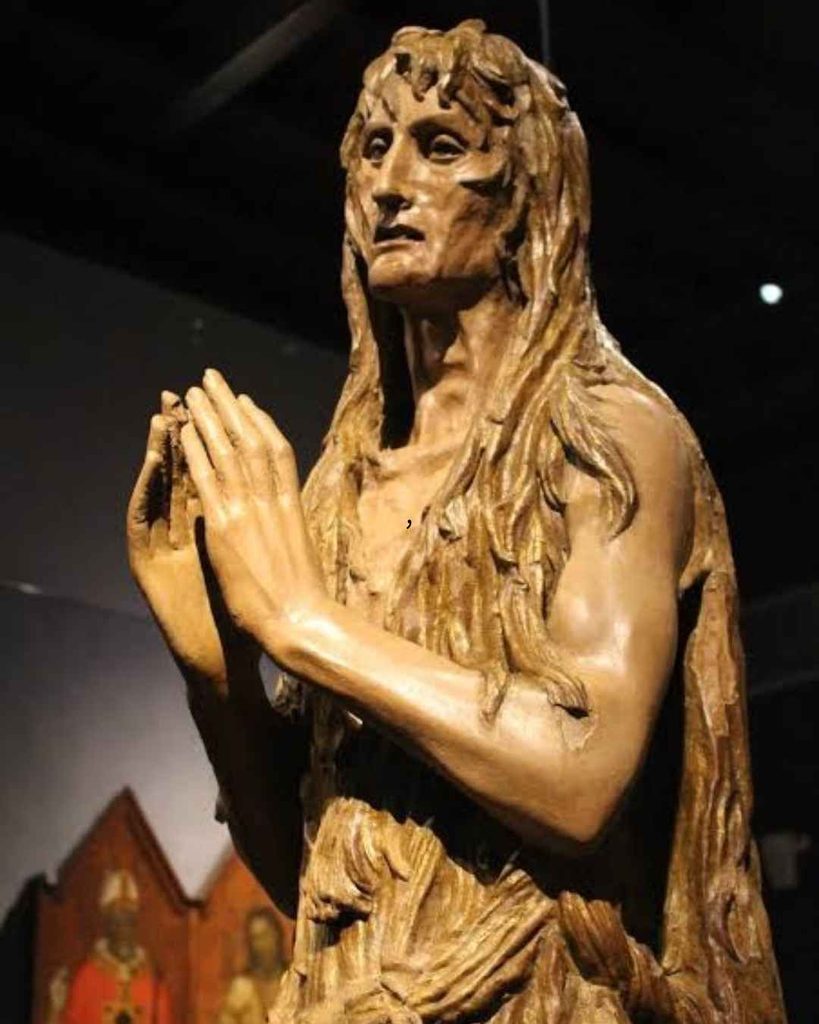
Donatello’s Penitent Magdalene
Donatello’s Penitent Magdalene is a striking wooden sculpture that differs considerably from the idealised figures commonly associated with Renaissance art.
Rather than presenting Mary Magdalene as a youthful and beautiful woman, Donatello depicts her as an elderly ascetic, with a gaunt face, long hair, and a visibly exhausted body.
The sculpture was created from wood and is remarkable for its emotional intensity.
It can be found in the Museo dell’Opera del Duomo, where it is one of the most memorable works in the collection.
It is worth seeking out, particularly if you have already seen the museum’s more famous sculptures.
Andrea del Castagno’s Last Supper
Another remarkable Last Supper can be found in the former refectory of Sant’Apollonia.
Painted by Andrea del Castagno in the 15th century, the fresco is particularly interesting because of its architectural setting.
The figures sit behind a long table within a richly decorated room, creating an almost theatrical composition.
The use of perspective makes the scene appear remarkably three-dimensional.
The museum is relatively small, and the fresco is its main attraction. However, its artistic importance makes it well worth visiting.
5. Find Florence’s Beautiful Hidden Gardens
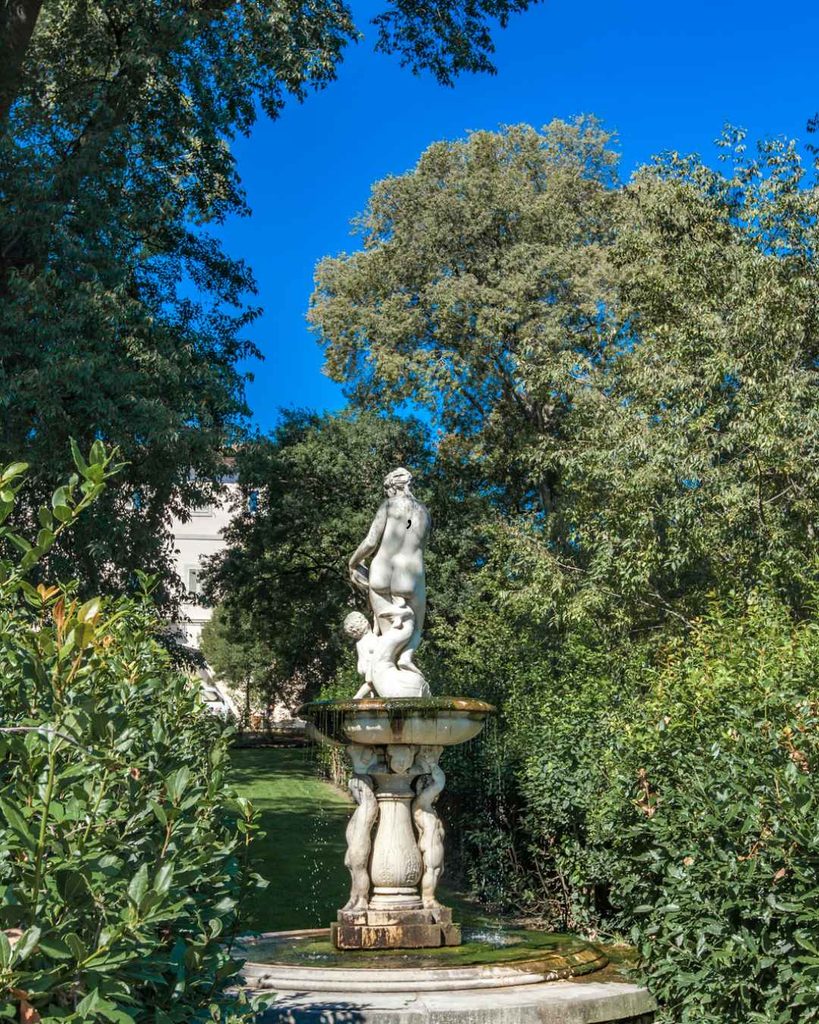
Florence is famous for its Renaissance architecture, but some of its most beautiful spaces are its historic gardens.
Many are associated with wealthy families who built magnificent residences surrounded by landscaped grounds. Others were created as public spaces where residents could enjoy greenery and panoramic views.
If you need a break from museums and busy streets, these gardens offer a welcome change of pace.
Giardino Bardini
Giardino Bardini is one of the most beautiful gardens in Florence, and it offers some of the finest views over the city.
Located on a hillside in Oltrarno, the garden combines Italian-style terraces, fountains, wooded paths, and carefully maintained flower beds.
One of its most photographed features is the wisteria-covered pergola, which becomes particularly beautiful during the flowering season in spring.
The garden also offers excellent views of Florence’s rooftops, with the Duomo standing prominently in the distance.
It is a wonderful place to spend an hour or two, particularly if you want to escape the crowds around the main attractions.
Giardino delle Rose
Situated just below Piazzale Michelangelo, the Rose Garden is one of Florence’s most pleasant green spaces.
It contains a collection of roses, other flowering plants, and sculptures, including works by the Belgian artist Jean-Michel Folon.
The garden is particularly attractive during the spring flowering season, although it remains a pleasant place to visit throughout much of the year.
One of its biggest advantages is its location. You can combine a visit with San Niccolò, Piazzale Michelangelo, and San Miniato al Monte.
It is also a lovely place to sit for a while and enjoy the view.
Giardino Torrigiani
Giardino Torrigiani is one of Florence’s most interesting historic gardens.
Located in Oltrarno, it is a large private garden associated with the Torrigiani family.
The grounds contain a mixture of landscaped gardens, woodland, historic structures, and unusual architectural features.
One of its most recognisable landmarks is the garden’s tower, which adds to its romantic appearance.
Unlike many of Florence’s other gardens, access is restricted and generally requires advance arrangements or organised visits.
Nevertheless, it is worth knowing about, particularly if you are interested in historic gardens and the private estates of Florence’s wealthy families.
Giardino dell’Iris
The Iris Garden sits on the hillside beneath Piazzale Michelangelo and is dedicated to the flower that has long been associated with Florence.
The iris appears on Florence’s historic coat of arms, although the city’s emblem is traditionally represented with a red lily.
The garden contains a large collection of iris varieties from different parts of the world.
It is particularly beautiful during the annual flowering period, generally around late April and May.
The garden is not open throughout the year, so check its seasonal opening arrangements before planning a visit.
Parco delle Cascine
Parco delle Cascine is Florence’s largest public park, stretching along the northern bank of the Arno.
It covers a substantial area west of the historic centre and provides a very different experience from the city’s formal gardens.
The park was originally developed as a hunting estate for the Medici family before becoming a public space.
Today, it is popular with residents who come here to jog, cycle, walk their dogs, and enjoy the outdoors.
It is also home to the Cascine market, which takes place on Tuesdays.
If you want to see where Florentines go to escape the historic centre, this is an excellent place to start.
6. Enjoy Florence From Its Lesser-Known Viewpoints
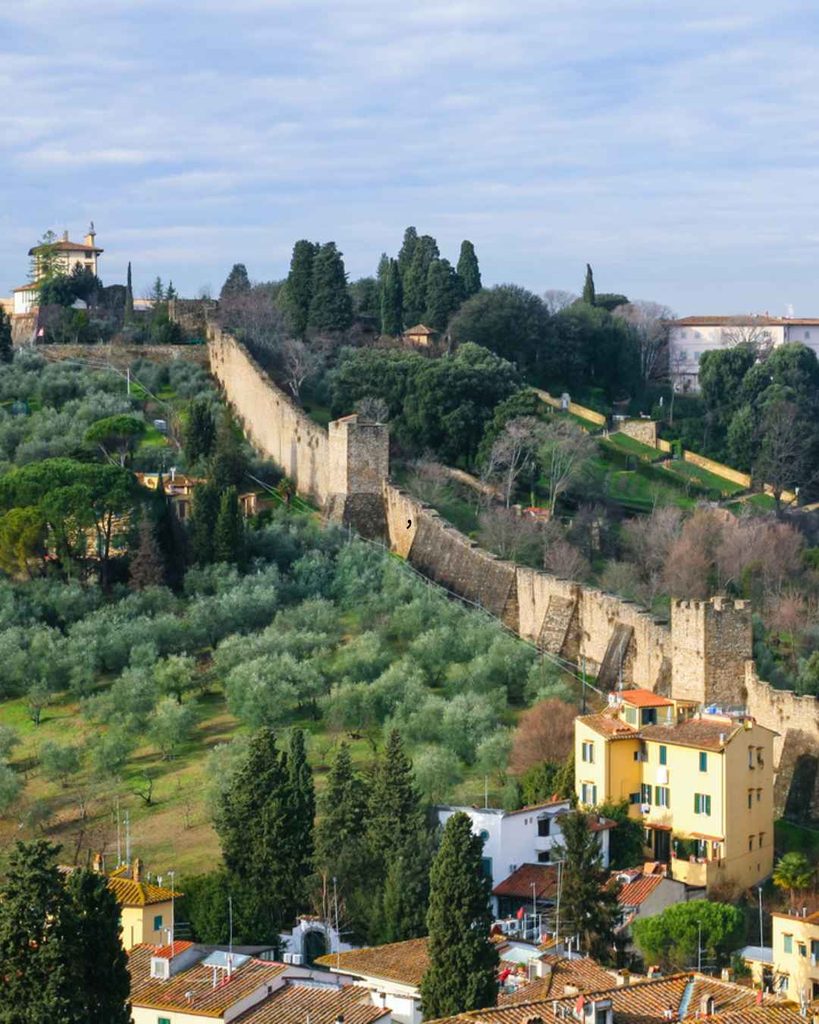
Most visitors who want a panoramic view of Florence head straight to Piazzale Michelangelo. It is an excellent viewpoint, but it is far from the only place where you can appreciate the city’s extraordinary skyline.
The surrounding hills, historic gardens, and medieval towers provide several alternative perspectives.
Some are particularly beautiful at sunset, while others are worth visiting simply because they offer a quieter place to appreciate the city.
Giardino Bardini Belvedere
The upper terraces of Giardino Bardini offer one of the finest panoramic views in Florence.
From here, you can look across the historic centre, with the Cathedral of Santa Maria del Fiore, Palazzo Vecchio, and the surrounding rooftops forming a beautiful skyline.
The advantage of this viewpoint is that you can enjoy it while exploring one of Florence’s most attractive gardens.
During spring, the wisteria-covered pergola makes the experience even more memorable.
San Miniato al Monte
San Miniato al Monte is another excellent place to admire Florence from above.
The church sits on one of the hills overlooking the city, slightly higher than Piazzale Michelangelo.
From the surrounding terraces, you can enjoy beautiful views across the rooftops and towards the distant Tuscan countryside.
It is particularly rewarding to visit in the late afternoon, when the light begins to soften.
Many visitors come for the famous view at Piazzale Michelangelo but never make the additional walk to San Miniato. If you have time, I would strongly recommend doing both.
Torre San Niccolò
For a completely different perspective, consider climbing Torre San Niccolò.
The tower is part of Florence’s medieval defensive system and once formed an important part of the city’s walls.
Unlike the open panoramic terraces, climbing the tower allows you to appreciate Florence from within one of its historic fortifications.
The views from the top include the Arno, the historic centre, and the surrounding hills.
Access is seasonal and generally organised through guided visits, so check availability before arriving.
Bellosguardo
Bellosguardo is a residential hillside area southwest of Florence.
It is known for its historic villas, green surroundings, and beautiful views over the city.
The area feels quite different from the historic centre. Instead of narrow streets filled with visitors, you encounter quiet roads, elegant residences, gardens, and views across the Tuscan landscape.
It is particularly interesting if you have already visited Florence’s main attractions and want to explore some of the surrounding hills.
Fiesole
Although technically outside Florence, Fiesole deserves a place on any list of the city’s best viewpoints.
This hilltop town sits northeast of Florence and has a history that predates the Roman settlement of the city below.
From its panoramic viewpoints, you can see Florence spread across the valley, with the cathedral and other major landmarks visible in the distance.
Fiesole is also worth visiting for its Roman theatre, archaeological remains, and historic centre.
It makes an excellent half-day excursion from Florence.
7. Visit Florence’s Unusual Museums That Deserve More Attention
Florence has some of the world’s most famous museums, but the Uffizi and Accademia are only part of the story.
The city also contains museums devoted to armour, anatomical models, scientific instruments, decorative arts, and unusual historical collections.
Some are housed in beautiful historic buildings, making the experience as much about the setting as the objects themselves.
Museo Stibbert
The Stibbert Museum is one of the most unusual museums in Florence.
It was created from the private collection of Frederick Stibbert, a wealthy collector who spent much of his life assembling objects from different parts of the world.
The collection is particularly famous for its armour and weapons, including European, Islamic, and Japanese examples.
One of the most impressive rooms contains rows of mounted knights wearing elaborate suits of armour.
There are also collections of paintings, furniture, porcelain, and decorative objects.
The museum is housed in Stibbert’s former residence, surrounded by a historic garden.
It is an excellent choice for anyone looking for something completely different from Florence’s traditional art museums.
La Specola
La Specola is one of Florence’s most fascinating museums, particularly if you have an interest in science and the natural world.
It is part of the University of Florence’s Museum of Natural History and is particularly famous for its collection of anatomical wax models.
These remarkably detailed models were created centuries ago to help teach human anatomy before modern medical imaging and photography.
Some are displayed in elaborate arrangements showing the different systems of the human body.
The collection can be unsettling in places, but it is also an extraordinary example of the relationship between art, science, and medicine.
La Specola is not a typical Florence museum, which is precisely why it deserves attention.
Museo Horne
The Horne Museum is a small museum housed in a historic palace in the Oltrarno.
It contains the collection of Herbert Horne, an English art historian and collector who devoted much of his life to Renaissance art.
Unlike larger museums, the collection is displayed in a way that recreates aspects of a historic Florentine residence.
You will find paintings, sculptures, furniture, ceramics, and decorative objects from the medieval and Renaissance periods.
The museum offers a glimpse into how wealthy Florentines lived and decorated their homes centuries ago.
It is particularly appealing if you enjoy looking beyond famous paintings and are interested in everyday objects and domestic interiors.
Museo Stefano Bardini
The Stefano Bardini Museum is another excellent museum that tends to receive less attention than the Uffizi or Bargello.
It is named after the art dealer and collector Stefano Bardini, who assembled an impressive collection of paintings, sculptures, furniture, and decorative objects.
The museum occupies a former church and other historic spaces, with rooms that contain everything from medieval sculptures to Renaissance paintings.
One of its most interesting aspects is the variety of the collection. You can move from religious art to furniture, armour, and decorative pieces within the same visit.
It is particularly rewarding for visitors who enjoy discovering objects that are not necessarily among the most famous works of Renaissance art.
Museo Galileo
Florence’s connection to science is often overshadowed by its artistic heritage, but the city played an important role in the development of modern scientific thought.
Museo Galileo celebrates this history through an extraordinary collection of scientific instruments.
Among its objects are telescopes, globes, mathematical instruments, and equipment associated with Galileo Galilei.
The museum also explores the relationship between science, exploration, and the Medici and Lorraine families, who supported scientific research and collecting.
It is a fascinating place to visit if you want to understand another aspect of Florence’s intellectual history.
Museo degli Innocenti
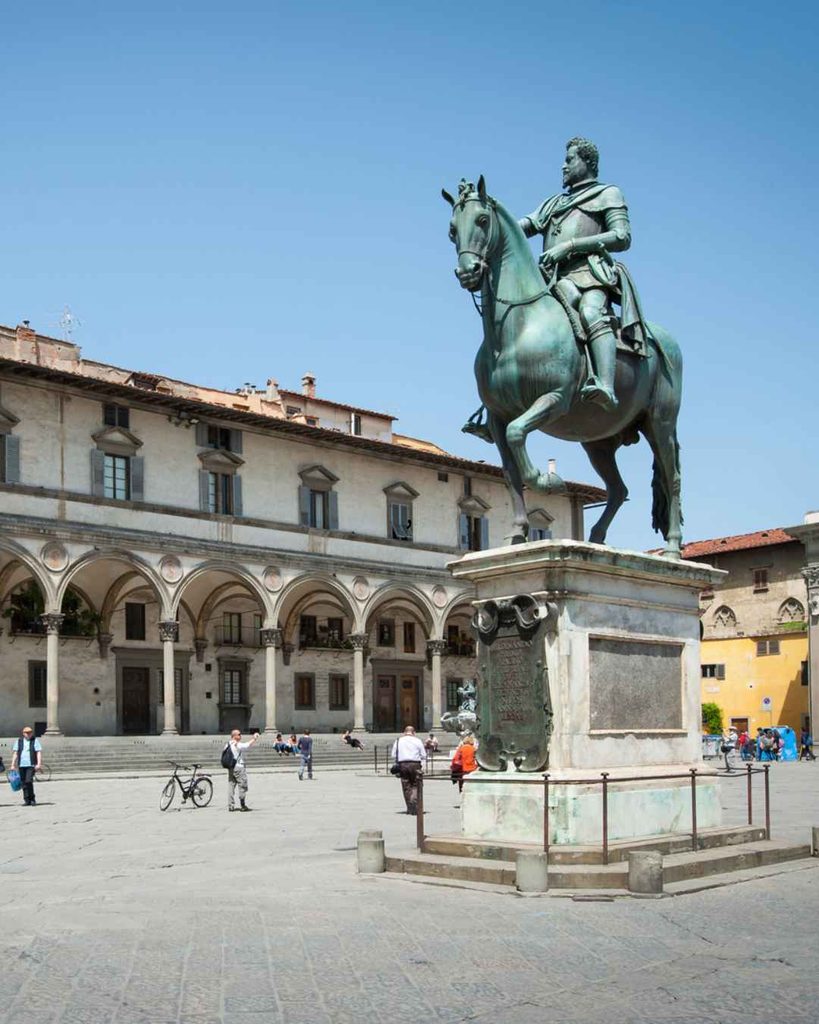
The Museo degli Innocenti is housed in the historic Ospedale degli Innocenti, one of Florence’s most important Renaissance buildings.
Designed by Filippo Brunelleschi, the building is famous for its elegant portico overlooking Piazza Santissima Annunziata.
The institution was founded in the 15th century to care for abandoned children, and it played an important role in Florence’s social history.
The museum explores the history of the institution through documents, artworks, and personal stories.
It also contains an important collection of Renaissance art.
What makes this museum particularly interesting is the way it combines architecture, art, and social history. It tells a story of Florence that is very different from the usual accounts of wealthy merchants and celebrated artists.
Casa Buonarroti
Casa Buonarroti is a museum dedicated to Michelangelo and his family.
Although Michelangelo did not live here permanently, the building was developed by his descendants to preserve his memory and celebrate his artistic legacy.
The collection includes early works associated with the artist, drawings, family documents, and other historical objects.
Among its most important pieces are the Battle of the Centaurs and the Madonna of the Stairs, two early relief sculptures by Michelangelo.
It is a particularly interesting visit if you want to learn more about the artist beyond the David and the Sistine Chapel.
8. Discover Florence’s Traditional Artisan Workshops and Forgotten Crafts

Florence’s artistic heritage is not limited to paintings, sculptures, and grand buildings.
For centuries, the city was one of Europe’s most important centres of craftsmanship. Its artisans produced leather goods, jewellery, textiles, furniture, mosaics, and decorative objects that were traded throughout Europe.
Some of these traditions have survived, and exploring them offers a different way of understanding the city.
Traditional Florentine Leather Making
Florence has a long association with leatherworking, and the craft remains an important part of its identity.
The city’s leather tradition developed over centuries, supported by the availability of materials, skilled workers, and the wealth of merchants who traded across Europe.
Today, visitors can still find workshops producing leather bags, wallets, belts, and other handmade items.
One particularly interesting place is the Scuola del Cuoio, located within the Santa Croce complex.
The school was established after the Second World War and became known for training leather artisans.
Visitors can learn about traditional leatherworking techniques and see examples of handmade products.
If you are interested in buying leather goods in Florence, it is worth looking beyond the souvenir stalls and seeking out established workshops where you can learn about the production process.
Florentine Marbled Paper
Another traditional Florentine craft is the production of marbled paper.
The technique involves applying colours to a liquid surface and transferring the resulting patterns onto sheets of paper.
The designs can be remarkably intricate, with swirling colours and patterns that resemble natural stone or flowing water.
Florentine marbled paper has traditionally been used for book covers, notebooks, stationery, and decorative objects.
Several historic paper shops and artisan workshops in the city continue this tradition.
Even if you are not planning to buy anything, watching the process is fascinating. It is a reminder that some of Florence’s most beautiful objects are created through techniques that have changed very little over the centuries.
Handmade Jewellery and Goldsmithing
Florence has one of Europe’s most famous goldsmithing traditions.
The connection is particularly visible around Ponte Vecchio, where jewellery shops have occupied the bridge for generations.
However, the city’s jewellery-making tradition extends beyond the famous bridge.
Small workshops throughout Florence continue to produce handmade rings, necklaces, bracelets, and other pieces.
Many combine traditional techniques with contemporary designs.
If you are interested in jewellery, look for independent goldsmiths in Oltrarno and around the historic centre. You may have an opportunity to see how pieces are designed, shaped, and finished.
Florentine Mosaics and Stone Inlay
One of Florence’s most distinctive decorative traditions is commesso fiorentino, a form of stone inlay that uses carefully cut pieces of coloured stone to create pictures and decorative designs.
The technique became particularly popular under the Medici family, who supported workshops producing elaborate stone panels for palaces, churches, and other prestigious buildings.
Unlike ordinary mosaics, the technique involves cutting stones into precise shapes so that they fit together to create a continuous image.
The results can be astonishingly detailed, with flowers, landscapes, animals, and architectural scenes made entirely from stone.
The Opificio delle Pietre Dure is closely associated with this tradition and is one of the most important institutions for understanding the craft.
Traditional Silk Weaving
Florence was once an important centre of silk production, and its textile industry played a significant role in the city’s wealth.
One of the most interesting places connected to this tradition is Antico Setificio Fiorentino.
Founded in the 18th century, the workshop continues to produce luxury fabrics using historic looms and traditional techniques.
Its collections include elaborate silk fabrics inspired by historic designs, many of which are used in prestigious interiors and restoration projects.
Visits generally need to be arranged in advance, but the opportunity to see traditional weaving machinery still in use is particularly worthwhile.
Bookbinding and Furniture Restoration
Florence also has a long tradition of bookbinding, gilding, and furniture restoration.
The city’s historic libraries, palaces, and private collections created a demand for skilled craftspeople who could preserve valuable books, manuscripts, and furnishings.
Today, some workshops continue to specialise in handmade books, leather-bound notebooks, restoration, and decorative finishes.
These crafts may not be as immediately recognisable as Florence’s leather and jewellery industries, but they are part of the city’s wider artistic heritage.
If you encounter a traditional workshop while walking around Oltrarno, take a moment to look inside. You may discover a craft that has been practised in Florence for generations.
9. Explore Florence’s Local Markets and Food Culture
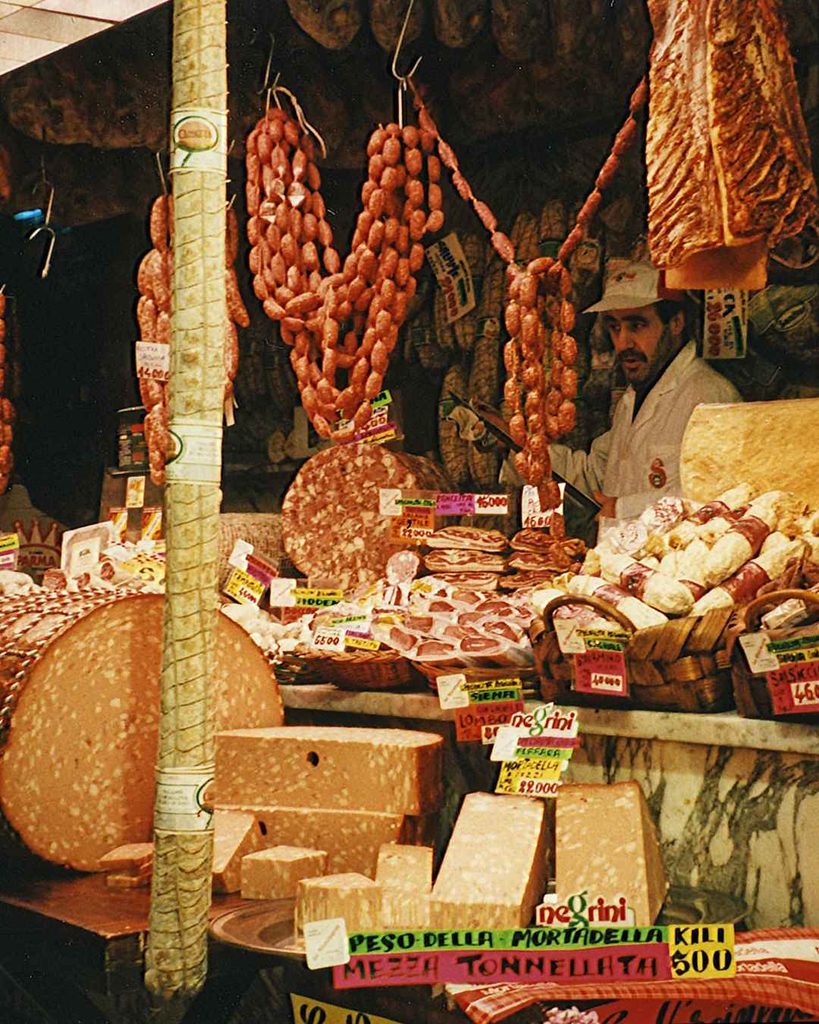
You cannot properly understand Florence without spending some time exploring its food culture.
The city is famous for bistecca alla Fiorentina, lampredotto, Tuscan bread, and traditional dishes made with simple local ingredients.
However, many visitors end up eating around the same tourist-heavy streets without experiencing the places where Florentines actually shop and eat.
A visit to the neighbourhood markets and traditional food establishments offers a much better introduction to the city’s culinary traditions.
Mercato Sant’Ambrogio
If you want to experience a traditional Florentine food market, Mercato Sant’Ambrogio is an excellent place to start.
Located in the Sant’Ambrogio neighbourhood, the market has served local residents for generations.
Inside, you will find stalls selling fresh fruit and vegetables, meat, fish, cheese, bread, and other everyday ingredients.
It is a particularly interesting place in the morning, when residents come to do their shopping and traders prepare their stalls.
There are also places to eat, making it a convenient stop if you want to try some traditional Tuscan food.
Unlike some of the city’s more tourist-oriented food halls, Sant’Ambrogio feels closely connected to the everyday life of Florence.
Mercato delle Cascine
The Cascine Market takes place every Tuesday in Parco delle Cascine.
It is one of the city’s largest outdoor markets and offers a very different experience from the traditional food markets.
You will find clothing, household goods, accessories, food products, and various other items.
The market attracts local shoppers and is an interesting place to experience a different side of Florence.
If you are visiting on a Tuesday, it is worth combining the market with a walk through the surrounding park.
Florence’s Traditional Food
Florentine cuisine is based on relatively simple ingredients, with an emphasis on meat, vegetables, beans, bread, and olive oil.
One of the most famous dishes is bistecca alla Fiorentina, a thick-cut T-bone steak traditionally prepared over a wood or charcoal fire.
The steak is generally served rare, and it is often large enough to share.
Another traditional dish is ribollita, a hearty soup made with bread, beans, and vegetables, particularly cavolo nero.
Pappa al pomodoro is another local favourite. It is made using tomatoes, bread, olive oil, garlic, and basil.
Both dishes reflect the traditional Tuscan approach of making delicious food from relatively inexpensive ingredients.
For something to eat while walking around the city, try a lampredotto sandwich.
Lampredotto is made from the fourth stomach of a cow and has been a popular Florentine street food for generations.
It is usually served in a bread roll, often with green sauce and sometimes a spicy red sauce.
It may not appeal to everyone, but it is one of the most authentic food experiences you can have in Florence.
Traditional Bakeries and Schiacciata
Florence is also known for schiacciata, a type of flat Tuscan bread that is often served with olive oil and salt.
It can be enjoyed on its own or filled with cured meats, cheese, and other ingredients.
Traditional bakeries are excellent places to try it, particularly if you want something quick and affordable for lunch.
Look beyond the establishments with long queues and explore the neighbourhood bakeries. Some of the best food experiences in Florence are found in small places that do not advertise themselves as tourist attractions.
Florence’s Historic Wine Windows
One of Florence’s most unusual architectural features is its wine windows, known locally as buchette del vino.
These are small openings built into the façades of historic buildings, originally used by wine merchants and wealthy families to sell wine directly to customers.
The windows became particularly associated with Florence during the 17th century, when selling wine through these openings offered a convenient way to conduct business.
Many survive today, although not all are still in use.
Some have been restored and adapted for modern wine service, allowing visitors to experience a small part of this unusual Florentine tradition.
As you walk through the historic centre and Oltrarno, look carefully at the lower sections of old palace façades. You may notice small arched openings that are easy to mistake for ordinary architectural details.
Finding them can become a fun activity in itself.
10. Admire Florence’s Historic Buildings and Architectural Treasures
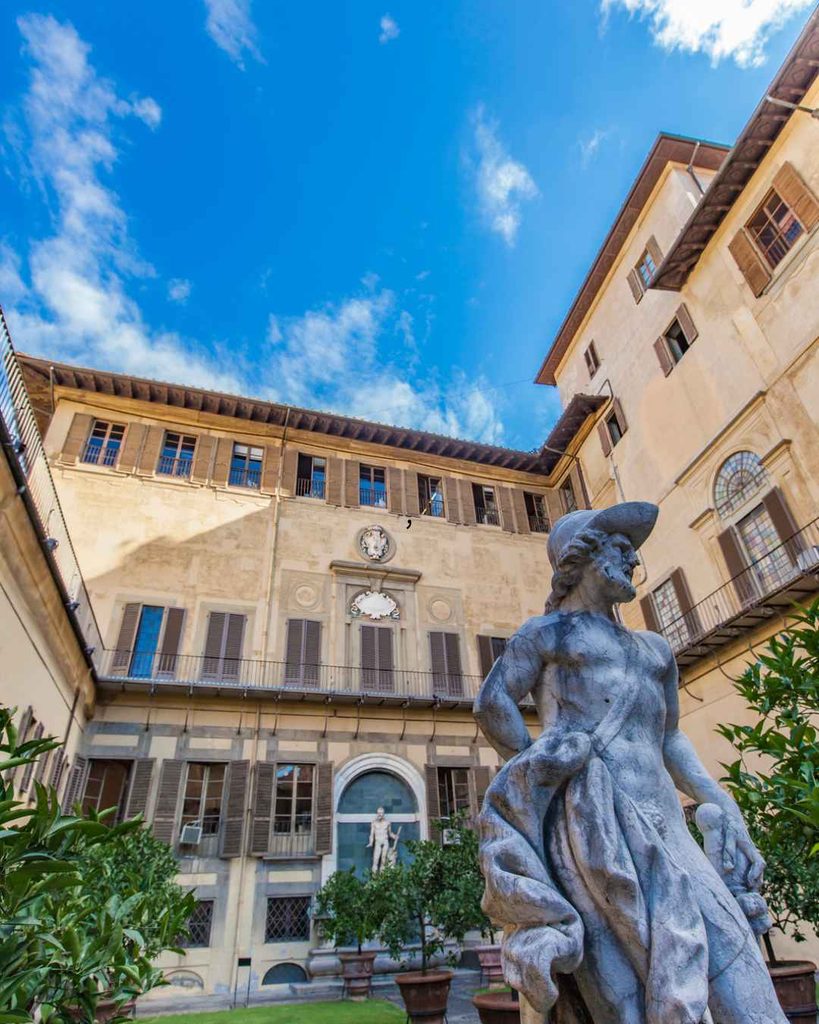
Florence’s architectural heritage extends far beyond the cathedral and the grand palaces that dominate its most famous squares.
The city contains medieval houses, Renaissance residences, historic institutions, and buildings that reveal how Florentine society developed over the centuries.
Some are open to visitors, while others are best appreciated from the street.
Palazzo Davanzati
Palazzo Davanzati is one of the most interesting historic buildings in Florence because it offers a glimpse into domestic life during the Middle Ages.
Unlike the grand museums that display individual artworks, this palace helps visitors understand how wealthy Florentine families actually lived.
The building dates mainly from the 14th century and retains many features associated with medieval domestic architecture.
Inside, you can explore furnished rooms, decorated walls, historic furniture, and other objects that recreate aspects of life in a wealthy Florentine household.
One of its most interesting features is the private courtyard and the arrangement of rooms across different floors.
It is particularly worthwhile if you want to understand the difference between medieval Florence and the Renaissance city that followed.
Palazzo Medici Riccardi
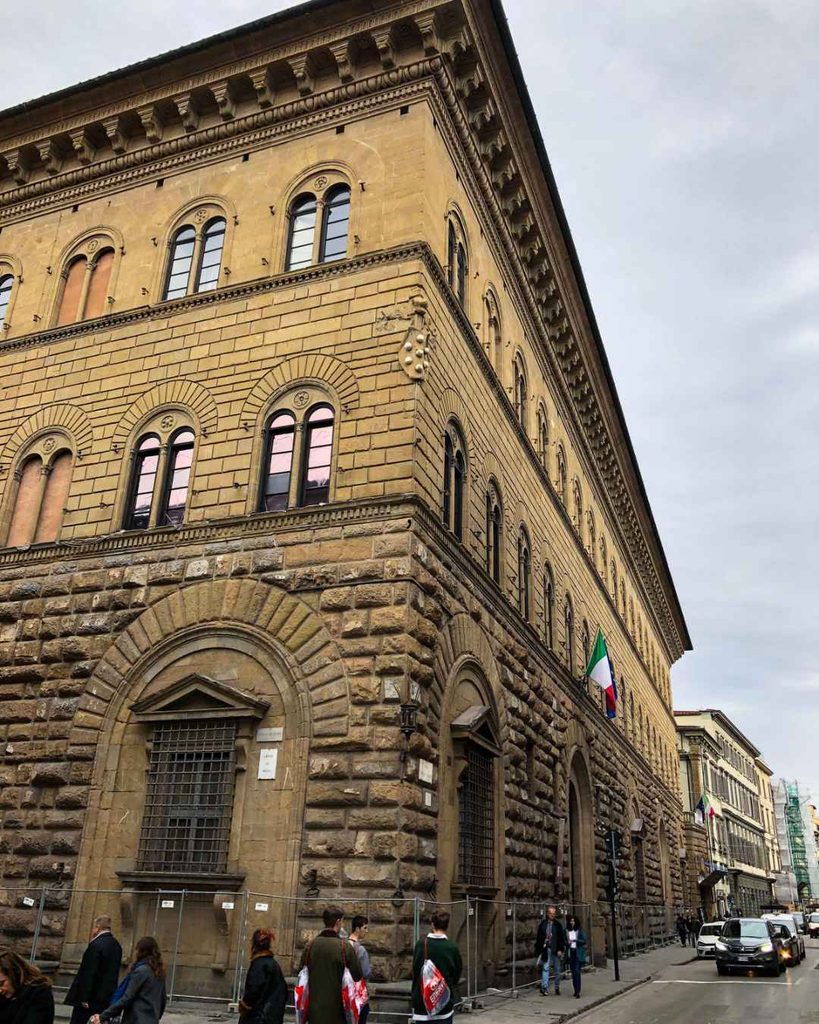
Palazzo Medici Riccardi was built for the powerful Medici family during the 15th century.
Designed by Michelozzo, it became an important model for Renaissance palace architecture.
The building has a relatively restrained exterior, but its interior contains some extraordinary spaces.
The most famous is the Chapel of the Magi, decorated with frescoes by Benozzo Gozzoli.
The paintings depict the journey of the Magi and include richly dressed figures, elaborate landscapes, and portraits associated with the Medici family and their circle.
The palace is particularly interesting because it illustrates how the Medici used architecture and art to communicate wealth, influence, and political power.
Orsanmichele
Orsanmichele is one of Florence’s most unusual historic buildings.
It originally served as a grain market before becoming an important religious centre.
The building is particularly recognisable because of its exterior niches, which contain sculptures representing the patron saints of Florence’s powerful guilds.
The sculptures were commissioned by the city’s trade associations, reflecting the important role that guilds played in Florentine political and economic life.
Several of the original sculptures have been moved into museums for preservation, but the exterior remains one of the most interesting examples of Florence’s medieval and Renaissance artistic heritage.
The interior contains an elaborate Gothic tabernacle designed by Andrea Orcagna.
It is easy to overlook Orsanmichele because it sits between more famous attractions, but it is well worth a stop.
Palazzo Rucellai
Palazzo Rucellai is one of the finest examples of Renaissance palace architecture in Florence.
Designed by Leon Battista Alberti in the 15th century, its façade is notable for its carefully organised classical elements.
The building reflects the Renaissance interest in symmetry, proportion, and the architecture of ancient Rome.
It was commissioned by the wealthy Rucellai family, whose influence extended into Florence’s commercial and cultural life.
Even if you do not enter the palace, it is worth stopping outside to appreciate the architectural details.
Palazzo Antinori
Located at the end of Via de’ Tornabuoni, Palazzo Antinori is another beautiful example of Renaissance palace architecture.
It was built in the 15th century and has been associated with the Antinori family for generations.
The family is particularly famous for its long history in Tuscan winemaking.
The palace’s elegant façade and symmetrical design make it one of the most attractive buildings in this part of Florence.
It is also a reminder of how closely the city’s architecture was connected to the wealth of its merchant families.
Palazzo Spini Feroni
Palazzo Spini Feroni is a striking medieval palace overlooking the Arno, near Ponte Santa Trinita.
Its imposing appearance is quite different from the more refined Renaissance palaces found elsewhere in the city.
The building dates from the late 13th century and was originally constructed for a wealthy Florentine family.
Over the centuries, it has served different purposes and is now closely associated with the fashion house Salvatore Ferragamo.
The building’s medieval character makes it particularly interesting when viewed alongside the more elegant architecture surrounding it.
Florence’s Medieval City Gates
Florence once had extensive defensive walls, built to protect the growing city and control access through its main roads.
Much of the medieval wall system has disappeared, but several important gates survive.
Porta San Frediano is one of the most impressive. Built in the 14th century, it is a reminder of the scale of Florence’s medieval fortifications.
Porta San Niccolò is another important survivor. Located near the Arno, it is a tall medieval tower-like gate that once formed part of the city’s defensive system.
These structures are particularly interesting because they help visitors imagine what Florence looked like before the Renaissance palaces and later urban development transformed the city.
11. Discover the Forgotten History of Medieval Florence
Florence is often celebrated as the birthplace of the Renaissance, but its story begins much earlier.
Long before Michelangelo, Leonardo da Vinci, and Botticelli, Florence was a medieval city shaped by powerful families, wealthy merchants, religious institutions, and competing political factions.
Understanding this earlier period makes exploring the city much more interesting. Many of the streets, towers, churches, and palaces that visitors encounter today are reminders of a time when Florence was a very different place.
Florence Before the Renaissance
Florence began as a Roman settlement known as Florentia, established during the Roman period.
The original settlement developed around the area now occupied by the historic centre, with its streets following aspects of the Roman town plan.
After the fall of the Western Roman Empire, the city experienced periods of political and economic uncertainty.
However, Florence gradually recovered and expanded during the Middle Ages, becoming one of Europe’s most important commercial centres.
By the 13th and 14th centuries, the city had grown considerably, supported by its textile industry, banking activities, and international trade.
This was the Florence that eventually produced the Renaissance.
The Medieval Towers of Florence
One of the most interesting features of medieval Florence was its towers.
Wealthy families built tall defensive structures as symbols of power, status, and protection.
These towers were particularly common during periods of political rivalry, when powerful families competed for influence within the city.
Some were used as fortified residences, while others served as defensive structures during conflicts.
Many were later reduced in height or incorporated into larger buildings as the city became more stable.
Although most have disappeared, traces of Florence’s medieval tower houses can still be found throughout the historic centre.
Look carefully as you walk through the older streets, particularly around the areas near the Bargello and Santa Croce.
The Powerful Families of Medieval Florence
Florence’s history was shaped by powerful families who competed for political influence and commercial success.
The city was governed through a complicated system involving guilds, political offices, and wealthy merchant families.
Among the most influential were the Albizzi, Strozzi, Pazzi, and later the Medici.
The Medici eventually became the dominant political family, using their banking wealth and cultural influence to transform Florence.
However, their rise was not without opposition. Rival families frequently competed for control, and political disagreements sometimes resulted in exile, imprisonment, and violence.
The palaces and historic residences scattered around Florence provide reminders of these powerful families and the world they inhabited.
The Guilds That Built Florence
During the Middle Ages, Florence’s economy was organised around powerful trade guilds known as arti.
These associations represented different professions, including wool merchants, silk producers, bankers, leather workers, and other craftspeople.
Membership in the most influential guilds was essential for anyone hoping to gain political power or economic influence.
The guilds also played an important role in the city’s artistic development.
They commissioned churches, sculptures, and public buildings, helping transform Florence into one of Europe’s most important centres of artistic production.
Orsanmichele is one of the best places to understand this relationship because its exterior sculptures were commissioned by the city’s guilds.
The building is a reminder that Florence’s artistic achievements were not produced by individual artists alone. They were also supported by a wealthy and highly organised society.
The Arno River and Florence’s Development
The Arno River has always been central to Florence’s history.
It provided water, supported trade, and helped connect the city with other parts of Tuscany.
For centuries, the river was also an important source of economic activity, with mills and other industries operating along its banks.
The bridges of Florence developed as essential connections between the northern and southern parts of the city.
Ponte Vecchio is the most famous surviving example, but the river has shaped the city’s architecture and development in countless other ways.
However, the Arno has also brought destruction.
Its most devastating modern flood occurred on 4 November 1966, when exceptionally heavy rainfall caused the river to overflow its banks.
Large parts of Florence were submerged, damaging historic buildings, churches, libraries, and priceless artworks.
The disaster became an international effort to rescue and restore the city’s cultural heritage.
Today, visitors can still find markers showing the height reached by the floodwaters on buildings around Florence.
They are small reminders of one of the most difficult moments in the city’s recent history.
Again, feel free to go through the list below of my Italy recommendations that I have crafted after years of travel to this beautiful country:
- Packing List: Things Not to Go to Italy Without
- Must-Do Things: Unforgettable Experiences
- Where to Stay: Best Hotels in Italy.
- Where to Stay in Rome: Rome’s Best Neighborhoods
- Where to Stay in Florence: Picking the Best Area
- Where to Stay in Venice: Venice’s Best Districts
- Italy’s Cobblestone Streets: Best Shoes For the Job
- Backpack or Suitcase?: Italy Luggage Guide
- Travel Insurance: Always Be Covered
- E-Sim: Be Connected At All Times