
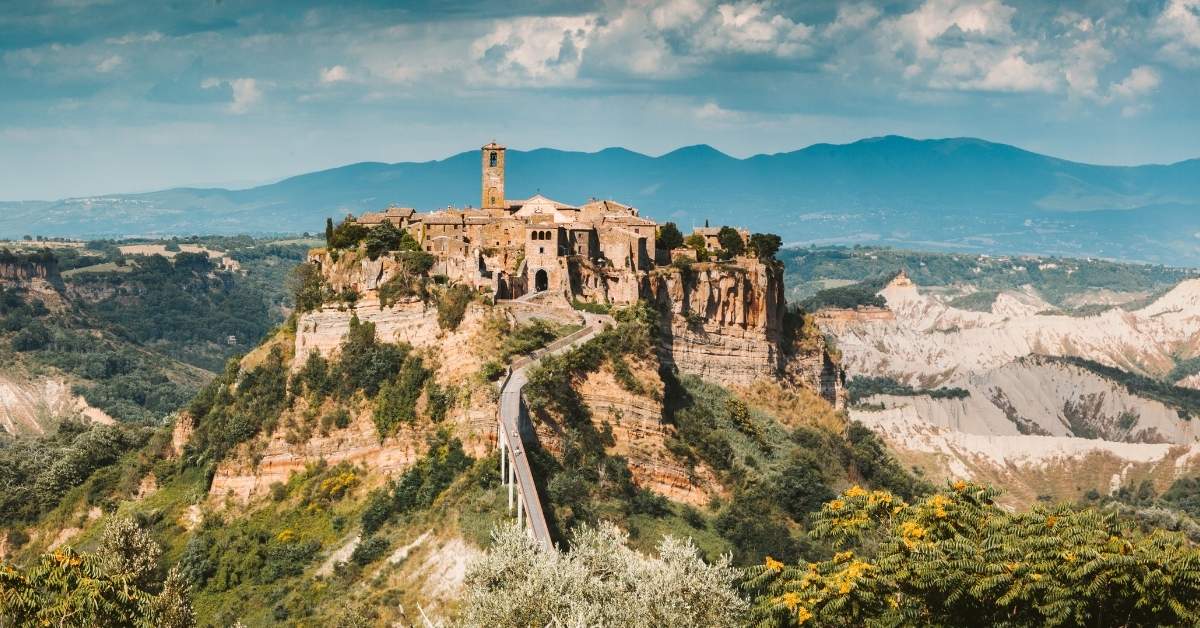
Civita di Bagnoregio is not like any other Italian hill town. It is called “Il paese che muore,” the dying town, because the fragile tufa rock it sits upon has been eroding for millennia. Earthquakes, landslides, and the relentless forces of nature have slowly eaten away at its foundation. The mountain is still sinking, inch by inch, year by year.
Yet this place has survived for 2,500 years. The Etruscans built it. The Romans conquered it. The Lombards and Franks ruled it. And despite everything, it still stands. UNESCO has listed it among the world’s most endangered sites, making a visit here feel like a privilege and a farewell all at once.
This guide will tell you everything you need to know to experience this city in the sky before it disappears.
Before reading further, please take the time to ensure you have packed everything you need for your trip to Italy. See the checklist here.
The Story That Gives It a Haunting Name

Civita was once connected to its larger neighbor, Bagnoregio, by a narrow strip of land. The two were essentially one city, a prosperous settlement along major trade routes. Then came the earthquake of 1695, and everything changed.
The quake caused catastrophic damage. Many inhabitants fled, and the landslide and erosion that followed sealed Civita’s fate. People continued to leave in waves over the centuries, especially after World War II when opportunities elsewhere drew them away.
Today, the permanent population hovers around ten. Ten people. In winter, that number can drop to six. The village is kept alive by tourism, by the steady flow of day-trippers who come to marvel at its beauty and its fragility.
And yet, those few remaining residents are fiercely loyal. They are the guardians of a place that nature has been trying to reclaim for centuries. Walking through the silent streets, you can feel their presence in the potted plants on windowsills and the carefully tended gardens.
What to See: The Tiny Marvels of a Tiny City
Civita is small. You can walk from one end to the other in ten minutes. But what it lacks in size, it makes up for in atmosphere and history.
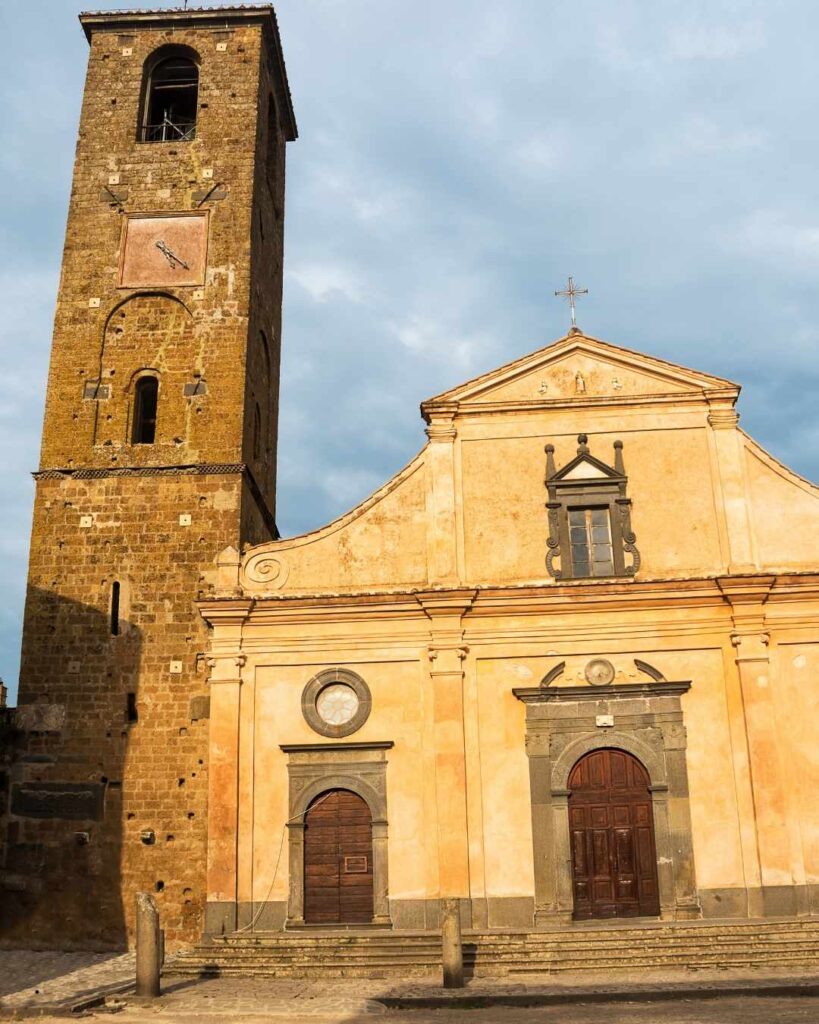
The main square, Piazza San Donato, is the heart of the village. It is a peaceful, sun-drenched space with a simple well at its center. The Church of San Donato dominates the square, a Romanesque building that dates back to the fifth century.
Inside the church, look for the wooden crucifix and the statue of the Madonna. The crypt beneath the altar is worth a visit, with its ancient stone arches and sense of deep, quiet history. The church also houses a small museum with archaeological finds from the Etruscan era.
Wandering the narrow alleyways is the real attraction. The stone streets are worn smooth by centuries of footsteps. The houses are made of the same tufa rock as the cliff, blending seamlessly into the landscape. Every doorway seems to frame a view, and every corner reveals another panorama of the valley below.
Do not miss the viewpoint at the edge of town. From here, you can see the footbridge stretching across the valley, the distant hills of Lazio and Umbria, and the sheer cliffs that make this place so extraordinary. It is the spot where you truly understand why Civita is called the dying city.
The Footbridge: Your Only Way In

There is only one way to reach Civita di Bagnoregio. The footbridge, a raised pedestrian walkway built in 1965, spans the valley and connects the village to the modern town of Bagnoregio. It is a stunning piece of engineering, a steel arch bridge that rises dramatically over the ravine.
Crossing it is an experience in itself. The bridge is long, nearly three hundred meters, and narrow. As you walk, you can look down into the gorge far below. The wind can be strong. The views are spectacular. And you will feel, with every step, that you are entering a place set apart from the ordinary world.
There is a small fee to cross the bridge. It is a few euros, and it goes toward the preservation of the village. Pay it gladly. You are helping to keep this place alive, even as the mountain beneath it crumbles away.
On clear days, the walk is pure joy. On foggy days, it feels otherworldly, as if you are crossing into a cloud city. Either way, it is the prelude to the experience, a threshold that prepares you for something unforgettable.
Where to Stay and What to Eat
Civita is tiny, and accommodation options are limited. But for those willing to plan ahead, staying overnight in the dying city is an experience you will never forget.
The Hotel del Corso is one of the few options, offering simple, comfortable rooms right on the main street. There are also a handful of bed and breakfasts and vacation rentals. Book early, especially for the warmer months, as rooms fill up quickly.
The real magic, however, is eating. Civita has a handful of excellent restaurants, and they make the most of their spectacular setting.
Trattoria Antico Forno is a classic, serving traditional Lazio cuisine in a warm, rustic atmosphere. Try the pasta with wild boar sauce or the local porchetta, roasted pork that is a regional specialty. La Cantina is another favorite, with outdoor seating that offers incredible views across the valley.
Do not leave without trying the local wine. The surrounding hills produce excellent white wines, crisp and refreshing, perfect for sipping on a terrace as the sun sets over the tufa cliffs. The food here is honest and simple, rooted in the same land that gave this place its precarious existence.
When to Go and How to Get There

The best time to visit Civita di Bagnoregio is spring or fall. The weather is mild, the crowds are manageable, and the light is beautiful. April and May bring wildflowers to the valley below. September and October offer golden sunsets and cooler temperatures.
Summer is hot and crowded. The small village can feel overwhelmed by day-trippers, and the heat on the exposed footbridge is intense. Winter is quiet and cold, but the village has a stark, haunting beauty in the off-season. Just check ahead, as some restaurants and attractions may be closed.
Getting to Civita requires some effort. The nearest airport is Rome, about ninety minutes away by car. From Rome, you can rent a car or take a train to Orvieto, then a bus to Bagnoregio. The bus from Orvieto is the simplest option for those without a car.
From Bagnoregio, you walk to the footbridge. It is about a ten-minute walk from the bus stop, and the path is well-marked. If you are driving, there is parking at the entrance to Bagnoregio. Leave your car and walk the rest of the way.
If, however, you are in Rome and would want to take a guided day trip to both Civita and Orvieto, this is the tour I recommend.
The Practical Things You Need to Know
Wear comfortable shoes. The footbridge is narrow and can be windy. The streets of Civita are uneven stone, worn smooth by centuries of foot traffic. Sneakers are your best choice.
Bring cash. Many of the small shops and some restaurants do not accept credit cards. An ATM is available in Bagnoregio before you cross, but it is wise to have euros with you.
Pack water and a snack. There are a few options in the village, but they are limited and can be expensive. A bottle of water and a piece of fruit will keep you going.
Visit early in the day or late in the afternoon. The middle of the day brings crowds and harsh sunlight. Early morning, when the mist is still rising from the valley, is magical. Late afternoon, when the light turns golden and the day-trippers have left, is equally special.
And be prepared for the weather. The exposed cliff-top position means wind and sun can be intense. A hat, sunscreen, and a light jacket are all worth packing.
Civita di Bagnoregio is not just a place you visit. It is a place you feel. The silence of its streets, the breathtaking views from its edge, the knowledge that you are standing on a piece of land that may not be here forever, all of it stays with you long after you leave.
There is a tragedy to Civita, a bittersweet awareness that nature will eventually claim what it has been trying to reclaim for centuries. But there is also triumph. The triumph of human ingenuity, of art and architecture built on impossible ground. The triumph of a handful of stubborn souls who refuse to abandon their home.
Walk the footbridge. Feel the wind. Look out across the valley. And then, before you cross back to the modern world, take a moment to thank the dying city for letting you visit. It will not forget you. And you will never forget it.
NOTE BEFORE YOU GO: Italy rewards travelers who go prepared. And it is easy to ruin your trip. I have a checklist for you of things you should never go to Italy without. CHECK IT OUT HERE. I have also curated a list of some of the best hotels in Italy. I would highly recommend checking them out before booking. THESE ARE THE BEST HOTELS IN ITALY. And for unique experiences, attractions, and tours, don’t book before CHECKING THIS OUT. Thank me later!