
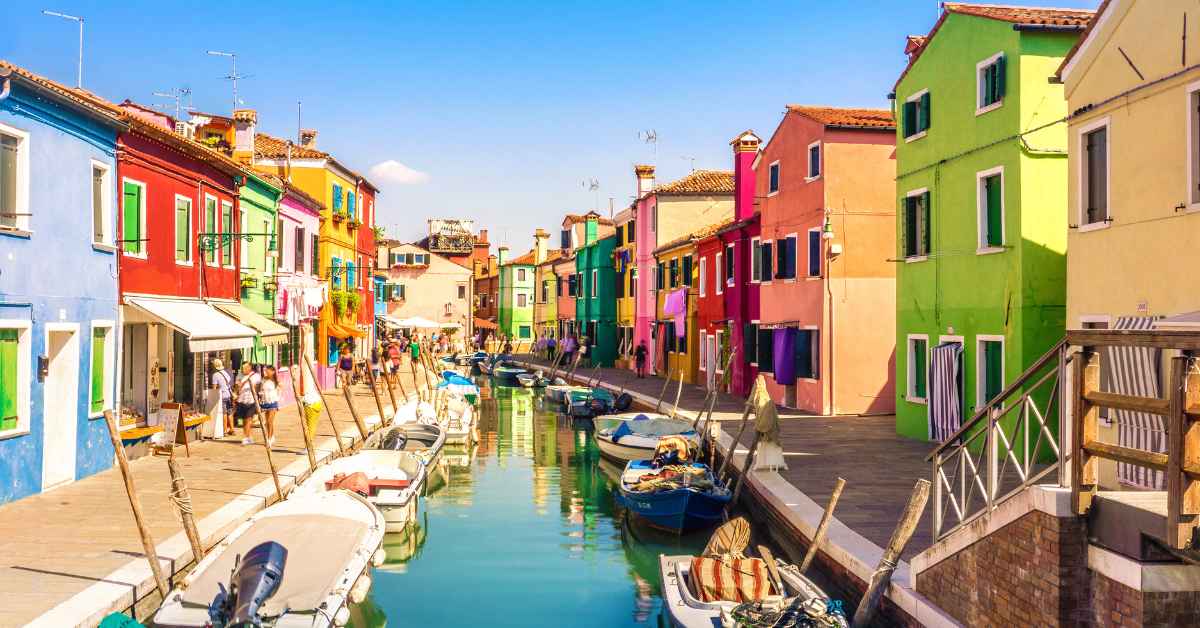
Somewhere out in the Venetian lagoon, there’s an island that looks like a box of crayons melted into a fishing village. And about twenty minutes before that, there’s an island where men have been turning molten sand into art for over seven hundred years.
Together, Murano and Burano offer something Venice proper cannot: breathing room, a slower pace, and a glimpse into traditions that have shaped this corner of the world for centuries.
When my wife and I stepped off the vaporetto onto Murano that first morning, we felt the shift immediately. The crowds thinned. The canals seemed wider. And we had no idea we were about to watch a man create a galloping glass horse from a blob of glowing orange goo in under five minutes. That moment alone was worth the trip.
Before you read further, remember that Italy rewards travelers who come prepared. I’ve found a few things especially useful on an Italy trip, and they’re worth having and/or knowing beforehand. See the checklist here. Also, if you want me to plan an Italy trip for you that you will never forget, drop me a message here
Why Bother Leaving Venice?
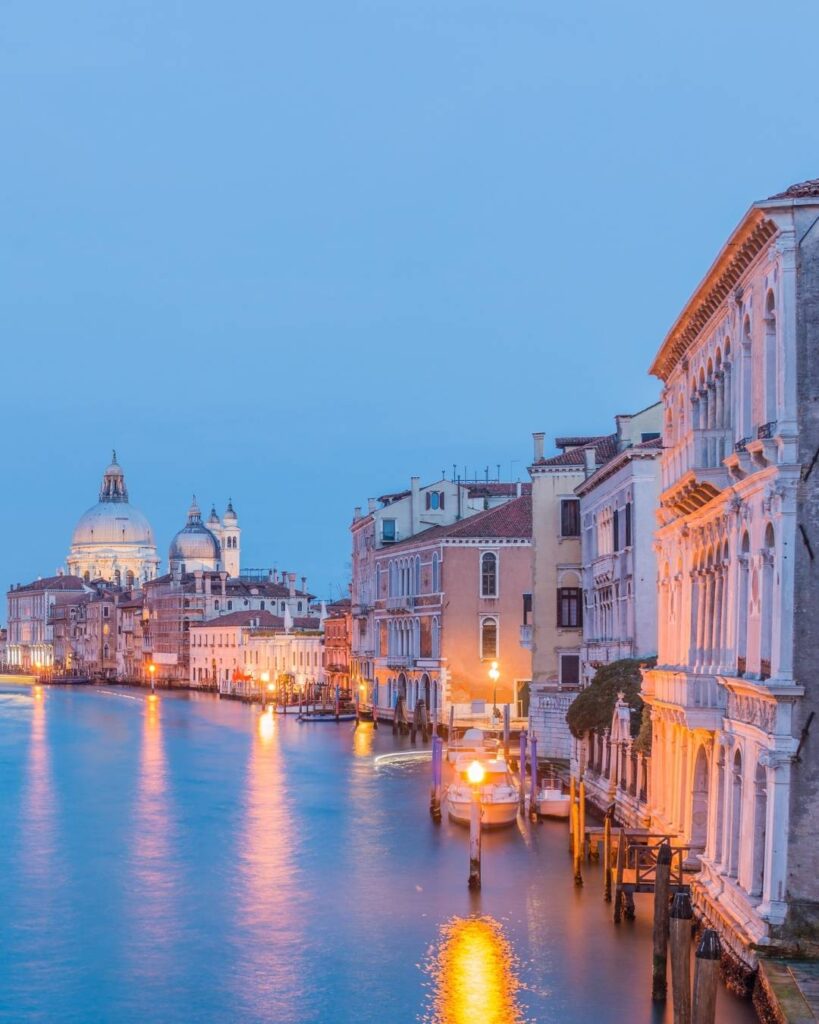
Let’s be honest. Venice itself is spectacular. St. Mark’s Square, the Rialto Bridge, the Grand Canal—they’re iconic for a reason. But Venice can also feel like a theme park during peak season. You shuffle through narrow alleyways shoulder-to-shoulder with strangers, pay twelve euros for a mediocre cappuccino, and wonder if this is really what you traveled across the ocean for.
The lagoon islands offer an antidote. Murano and Burano are still part of Venice, but they move at a different tempo. On Murano, you can watch master artisans do what their ancestors have done since 1291, when the Venetian Republic forced all glassmakers to relocate their furnaces here.
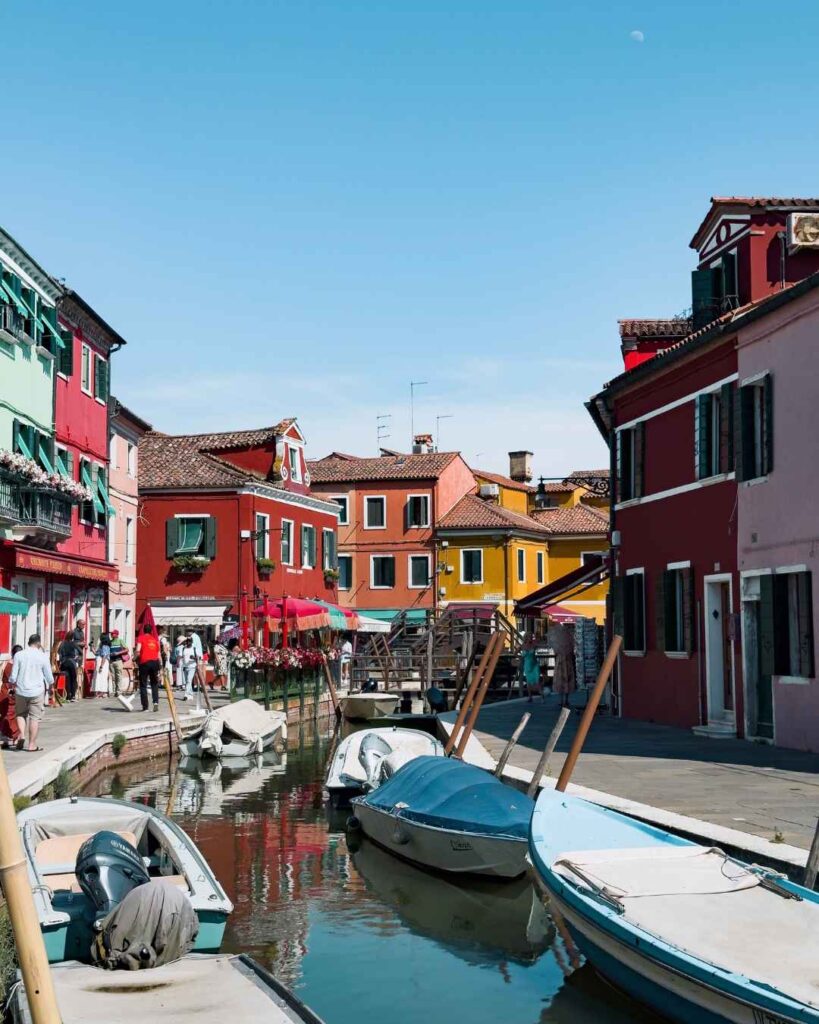
They did it partly to protect trade secrets and partly because the furnaces kept setting the main city on fire. On Burano, you’ll find a fishing community that painted its houses in candy-bright colors. Legend says fishermen did this so they could spot their homes through the thick lagoon fog. True or not, the result is one of the most photogenic places on earth.
These islands aren’t a consolation prize for people who couldn’t get into the Doge’s Palace. They’re the real deal.
Also, if you would like to know about the best areas to stay in Venice, check out this post.
Getting There Without Losing Your Mind
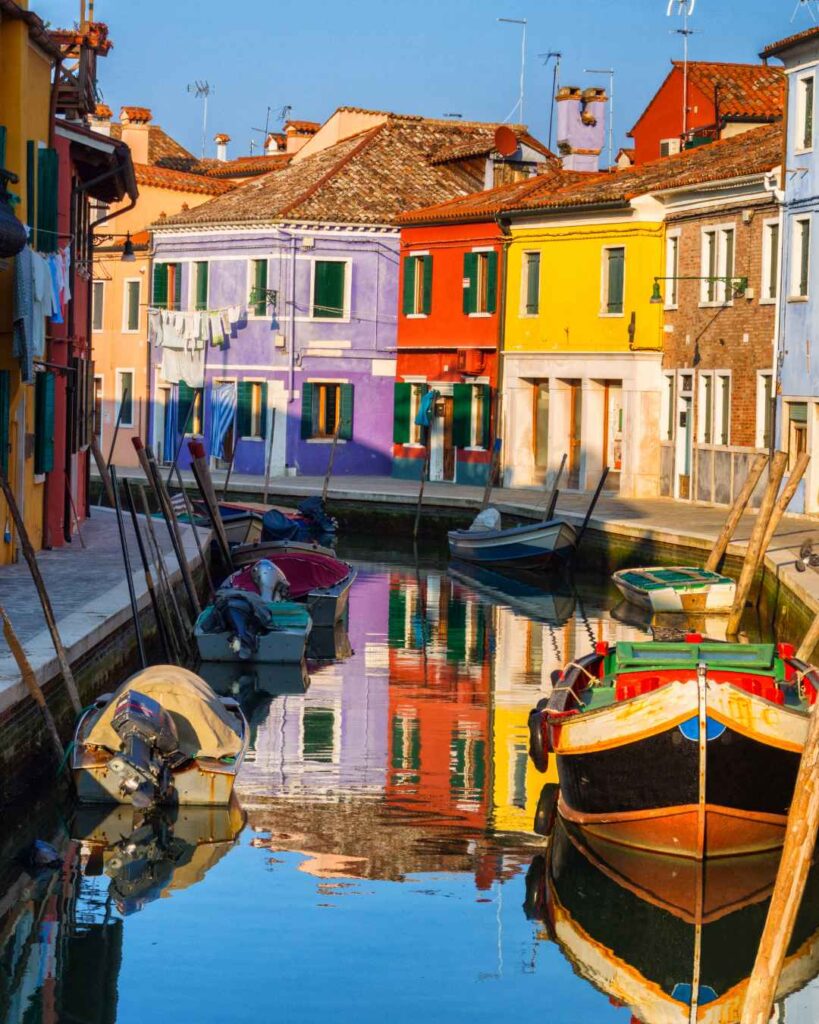
The good news: getting to Murano and Burano is straightforward. The better news: you don’t need to book an expensive tour if you don’t want to.
The public vaporetto system, operated by ACTV, is your friend. Head to the Fondamente Nove stop on Venice’s northern edge—it’s the main launching point for the lagoon islands. From there, you can catch Line 4.1, 4.2, or 12 to Murano in about ten minutes. Once you’ve explored Murano, hop on Line 12 for the thirty- to forty-minute ride to Burano. The same line brings you back to Venice when you’re done.
Here’s the smart move: buy a 24-hour ACTV vaporetto pass for about twenty-five euros. Single tickets cost nearly ten euros each, and you’ll be hopping between islands multiple times. The pass pays for itself quickly and covers all your water bus travel in Venice proper too. If you’re under twenty-nine, look into the Rolling Venice Pass—it offers discounted transport and attractions.
One piece of advice I can’t emphasize enough: start early. Really early. Before nine in the morning if you can manage it. The tour boats arrive around mid-morning, and the islands transform from peaceful enclaves to bustling attractions. We caught the first vaporetto out of Fondamente Nove and had Murano’s glass workshops practically to ourselves. By the time we left, groups were streaming off boats in waves.
Murano: Where Fire Meets Art

Murano is the closest island to Venice, and it’s built on one craft: glass. Everywhere you look, there are workshops, showrooms, and furnaces. About ninety percent of the shops sell glass creations. It could feel overwhelming, but the island is small enough to wander comfortably.
The absolute must-do here is watching a glassblowing demonstration. It is genuinely mesmerizing in a way that no YouTube video can prepare you for. A master artisan scoops molten glass from a furnace that burns at over a thousand degrees, twirls it on a metal rod, and within minutes has shaped it into something recognizable and beautiful—a vase, a horse, a delicate ornament. The heat hits you as you walk into the workshop. The skill is humbling. And there’s something primal about watching a craftsman work with fire, breath, and centuries of transmitted knowledge.
Many factories offer free or inexpensive demonstrations. Some charge about ten euros but give you a voucher for the same amount to spend in their shop. We visited one where the lead glassmaker worked in silence, his hands moving with an economy that spoke of decades of practice, while an assistant narrated the process in three languages. Everyone in the room was silent, even the kids.
If you have time and interest, the Museo del Vetro, or Glass Museum, traces the history of Venetian glassmaking from Roman times to the present. It costs about ten euros and takes forty-five minutes to an hour to see properly. The historical pieces are genuinely stunning, but if you’re mainly here for the vibe and the canals, you can skip it without guilt.
Beyond the glass, Murano has quiet canals away from the main drag, and the Chiesa di Santa Maria e San Donato is a twelfth-century church with beautiful Byzantine mosaics and a peaceful interior. Admission is free, and it offers a nice break from the commercial buzz.
Here’s a word of warning, though: a lot of what’s sold as “Murano glass” around Venice is actually imported imitation. If you want the real thing, buy it on the island itself, from a workshop, and look for the “Vetro Artistico Murano” trademark that certifies authenticity. And remember, you’re not obligated to buy anything just because you watched someone do their job. Watch the demo, say thank you, and move on without guilt.
Burano: The Rainbow That Refuses to Be Photoshopped
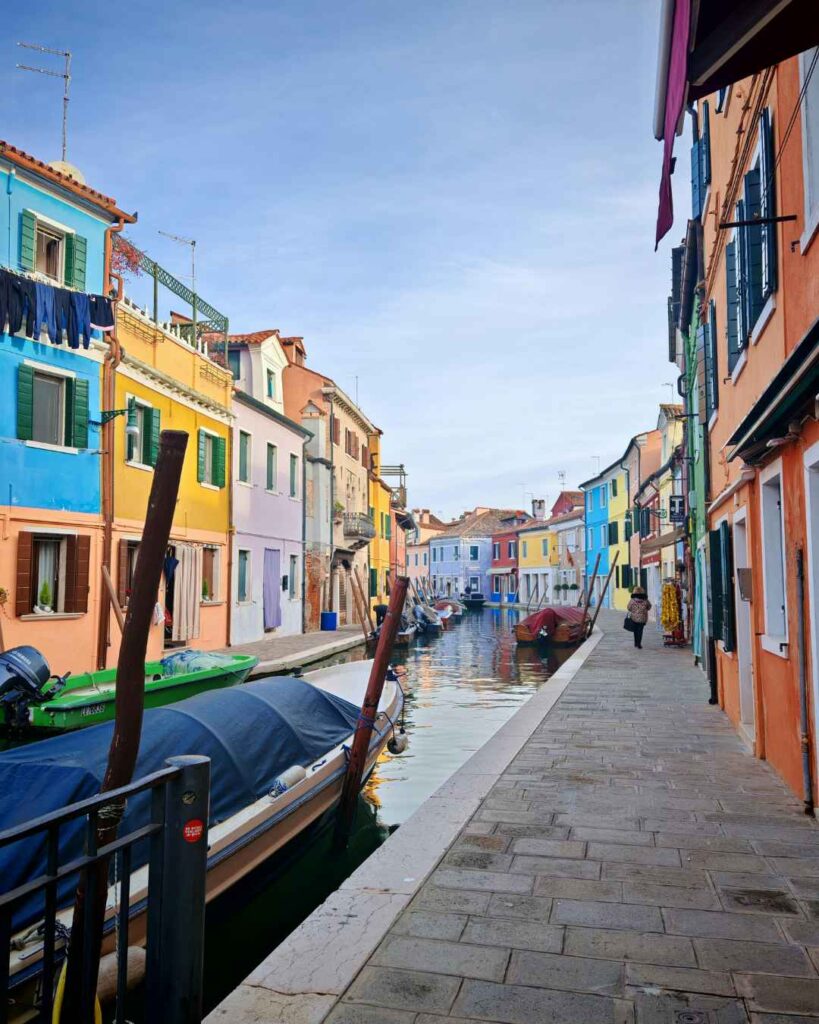
If Murano is about craft, Burano is about pure visual delight. The island is small—you can walk across it in fifteen minutes—but it packs more color per square foot than anywhere I’ve ever been.
The houses are painted in shades so vivid they’d look absurd on a paint swatch: electric blue, hot pink, bright yellow, deep orange, vivid green. But here, reflected in the canals with fishing boats bobbing alongside, they somehow work perfectly. The local story—whether true or not—is that fishermen painted their homes in bright colors to navigate home through the fog. Whatever the origin, the result is a photographer’s paradise.
My wife spent the first twenty minutes on Burano with her camera glued to her face, shooting every corner, every bridge, every laundry line strung between two pastel buildings. I can’t blame her. The light here is different. The colors pop against the blue sky and the green water, and even the peeling paint and worn shutters add character.
The best photos come from the side canals rather than the main drags. Wander away from Piazza Baldassarre Galuppi, the main square, and you’ll find quieter lanes where you can frame a pink house against a turquoise one with a little bridge in between. Calle Daffan is one of the most colorful alleyways on the island—a tiny corridor bursting with every color of the rainbow. Fondamenta di Cavanella runs along a narrow canal and offers some of the most scenic views.
Besides the colors, Burano has a lace-making tradition that dates back to the sixteenth century. The Museo del Merletto, or Lace Museum, on the main square tells the history, and some boutiques still sell the real handmade article. As with Murano glass, much of what’s sold cheaply is machine-made imitation, so buy carefully if you’re interested. The real stuff is expensive and takes months to produce.
The leaning bell tower of San Martino church is another landmark worth spotting—it tilts at an angle similar to the Leaning Tower of Pisa. And the bridges, particularly Tre Ponti, offer classic photo opportunities overlooking colorful canals.
Where to Eat: A Serious Note
Burano has genuinely good seafood, and this is where you should plan your lunch. The local specialty is risotto de gò, a risotto made with goby fish from the lagoon. It’s rich, savory, and utterly Venetian. Bussolà, the island’s signature butter cookies, make for a sweet afternoon treat or souvenir.
Restaurants here can get crowded, so consider booking ahead or arriving early for lunch. Trattoria al Gatto Nero is famous—Anthony Bourdain visited there—but there are other excellent options too. Ask around, follow your nose, and avoid places with aggressive touts out front.
Tour or DIY?
This is the big question, and the answer depends on what kind of traveler you are.
DIY with the vaporetto gives you total freedom. You can spend three hours on Burano if you want, or zip through Murano in an hour. Your day pass works all over Venice. The downside: you won’t get a guided glassblowing demonstration included, there’s no one narrating the history, and during peak season the vaporetto can be packed with long queues at the stops.
Guided tours handle the logistics. Most include a glassblowing demonstration, a guide who knows the islands, and transportation by private or small-group boat. The boat is usually faster than the vaporetto because it doesn’t stop at every dock. The downside: fixed schedule. You get the time they allocate—usually thirty to sixty minutes per island—and then you’re back on the boat. If you fall in love with Burano and want to linger, you’re out of luck.
My honest take: if this is your first visit and you want to see both islands without stress, a guided tour is worth the money. The boat logistics alone save you at least an hour of waiting. This is the tour I recommend
However, if you’ve already visited Venice and want to spend a lazy half-day just exploring Burano at your own pace, go DIY.
One budget-friendly option: some guided tours cost about the same as a vaporetto day pass when you account for the included demonstrations and commentary. The most popular tours have strong ratings from thousands of travelers and include a glassblowing demonstration.
Timing and Practical Advice
A full day is enough to do both islands at a humane pace. A half-day will feel rushed. Here’s a realistic breakdown:
- Venice to Murano: 10 minutes on the vaporetto
- Murano visit: 1.5 to 2 hours
- Murano to Burano: 30 to 40 minutes
- Burano visit: 2 to 2.5 hours
- Burano to Venice: 40 to 45 minutes
That’s about six to seven hours minimum, excluding waiting time for boats. If you’re on a cruise port day with a tight turnaround, start early and watch the clock.
A few other practical notes:
Cash is helpful. Smaller shops and bakeries may not accept cards, so have some euros on hand. Tipping isn’t expected in Italy like it is in the U.S., but rounding up or leaving a small amount is appreciated.
The islands are exposed, so bring sunscreen, a hat, and water in summer. In winter, the lagoon winds can bite, so dress accordingly.
If you have extra time and a genuine interest in history, consider adding Torcello. This tiny island, accessible by a short vaporetto hop from Burano, was the original settlement in the lagoon—populated centuries before Venice existed. Today, fewer than a dozen people live there. The seventh-century Basilica di Santa Maria Assunta has breathtaking Byzantine mosaics, and the silence is profound. But if your day is tight, Murano and Burano are the priority.
The Bottom Line
Murano and Burano are not just day trips from Venice. They are essential chapters of the Venetian story. On Murano, you’ll witness an ancient craft that survives against all odds in a world of mass production. On Burano, you’ll find joy in color and community, in the simple beauty of fishermen’s houses that have been brightening the lagoon for centuries.
Skip them if you want. But you’ll be missing what Venice was really about: not just power and commerce, but extraordinary craftsmanship and everyday beauty. And you’ll miss the chance to slow down, breathe the salt air, and watch a man create a glass horse from fire and sand.
Again, feel free to go through the list below of my Italy recommendations that I have crafted after years of travel to this beautiful country:
- Packing List: Things Not to Go to Italy Without
- Must-Do Things: Unforgettable Experiences
- Where to Stay: Best Hotels in Italy.
- Where to Stay in Rome: Rome’s Best Neighborhoods
- Where to Stay in Florence: Picking the Best Area
- Where to Stay in Venice: Venice’s Best Districts
- Italy’s Cobblestone Streets: Best Shoes For the Job
- Backpack or Suitcase?: Italy Luggage Guide
- Travel Insurance: Always Be Covered
- E-Sim: Be Connected At All Times