
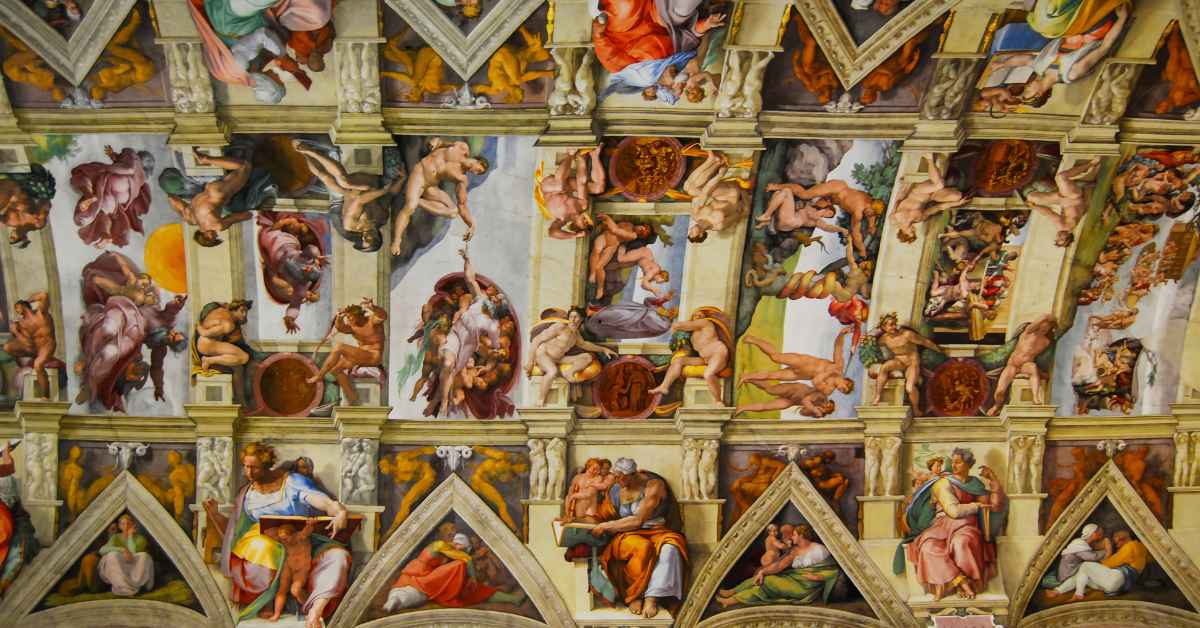
If you ask anyone who has been to the Vatican City, they will tell you that the Vatican Museums are quite overwhelming. There is just way too much to see, and sometimes it’s quite crowded. That, however, changes when you enter the Sistine Chapel. And you can’t visit the chapel alone. The ticket is sold as one, for both attractions, and the chapel is at the very end.
I will never forget the first time I entered the chapel. I had heard and read that the ceiling would take my breath away, but being there holding my wife’s hand as we stared up (the ceiling is quite high) is something I will never forget. That memory will live with me forever.
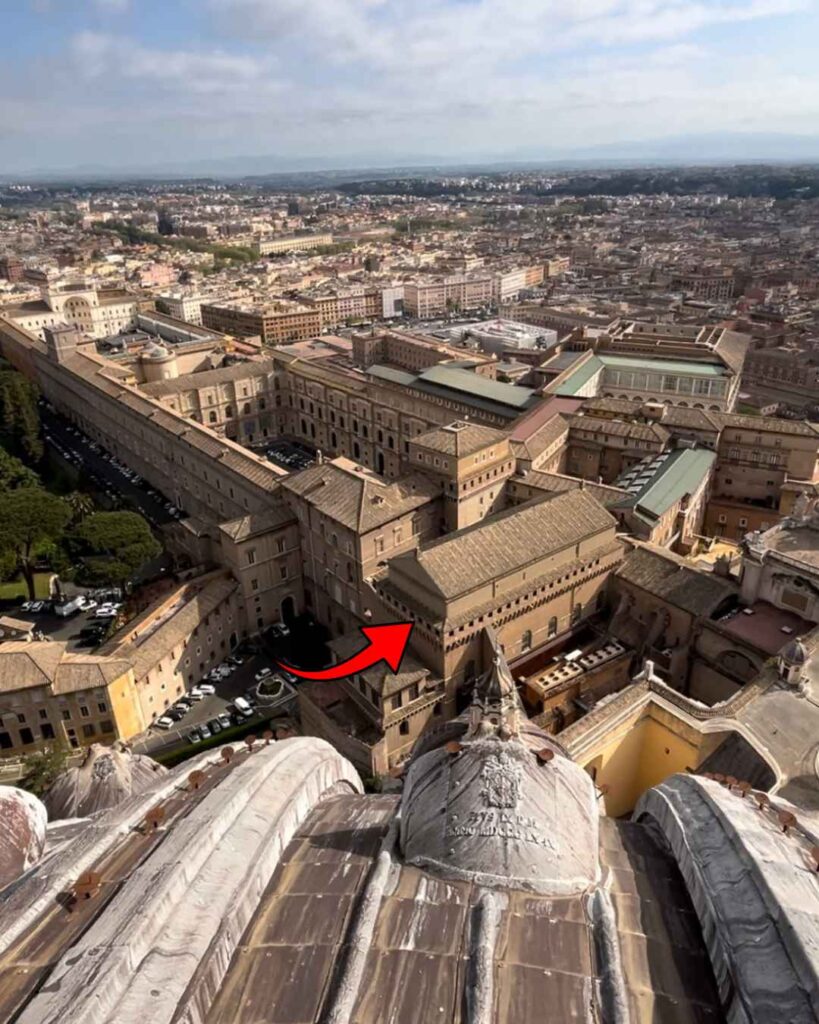
The chapel itself is a relatively modest rectangle, built in the late fifteenth century under Pope Sixtus IV, the man whose name it bears. Its proportions were no accident. The architects deliberately followed the measurements of the Holy of Holies in Solomon’s Temple as described in the Book of Kings, a not-so-subtle attempt to draw a line between this new papal chapel and the sacred heart of ancient Jerusalem.
On the outside, the building is fortified and unassuming, with battlements that hint at the turbulent times in which it was constructed. On the inside, however, it was always meant to be something far greater than its exterior suggested.
When Sixtus IV first consecrated the chapel in 1483, the walls were already adorned with frescoes by some of the finest painters of the Quattrocento. Sandro Botticelli was there, along with Domenico Ghirlandaio, who would later become Michelangelo’s teacher, and Pietro Perugino, who likely oversaw the entire commission.
These artists worked in remarkable harmony, producing a cycle of frescoes that told parallel stories from the lives of Moses and Christ. The message was clear: the old covenant gave way to the new, and the Pope stood as the living successor to Christ’s authority on earth. The walls were a theological argument rendered in pigment and plaster, a visual sermon for the cardinals and dignitaries who gathered within them.
Above it all, the ceiling was painted a deep blue and scattered with gold stars, a simple celestial canopy that served its purpose for nearly three decades. That starry sky would not last.
Before reading further, please take the time to ensure you have packed everything you need for your trip to Italy. See the checklist here.
The Unlikely Artist and His Impossible Task
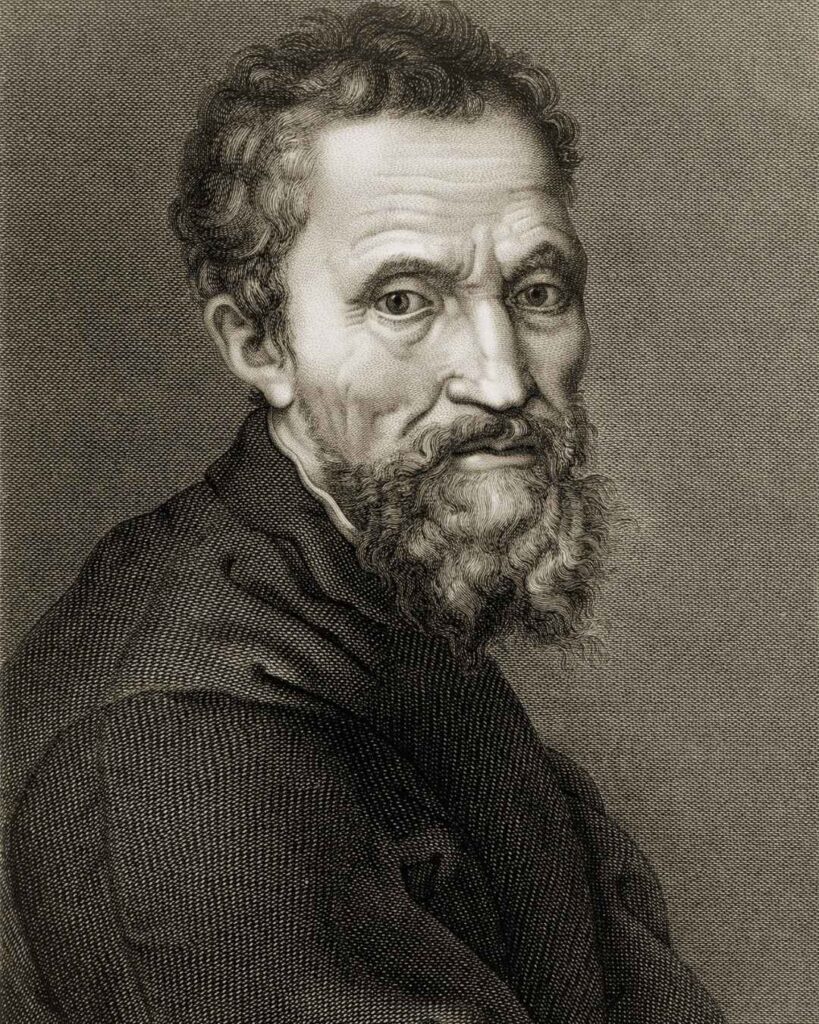
In 1504, a crack appeared in the vaulted ceiling, and the starry sky was marred by an unsightly seam. Pope Julius II, the nephew of Sixtus IV and a man whose ambition matched his ego, saw an opportunity. He summoned a young Florentine sculptor named Michelangelo Buonarroti to Rome and commissioned him to paint the ceiling.
It was a strange choice. Michelangelo was a sculptor, not a painter, and he had made his reputation with the monumental David in Florence. He had little interest in fresco, a demanding medium that required speed, precision, and a willingness to work while lying on your back with plaster dripping into your eyes.
Michelangelo initially refused the commission. He considered it a trap, a scheme by his rivals to embarrass him. When he finally relented, it was only after Julius threatened to cut off his funding for other projects. The sculptor arrived in Rome furious, resentful, and determined to prove his worth. What emerged from that anger and insecurity was nothing less than a revolution in Western art.
The original plan was modest. Julius wanted the twelve apostles painted in the spandrels, surrounded by decorative motifs. It was a straightforward, almost pedestrian program that would have been forgotten within a generation. Michelangelo, however, argued for something far more ambitious.
He proposed a grand narrative cycle drawn from the Book of Genesis, a sweeping vision of creation, fall, and redemption that would encompass the entire vault. Julius, whether out of wisdom or impatience, gave him free rein. It was one of the most consequential decisions in art history.
The Genesis Cycle
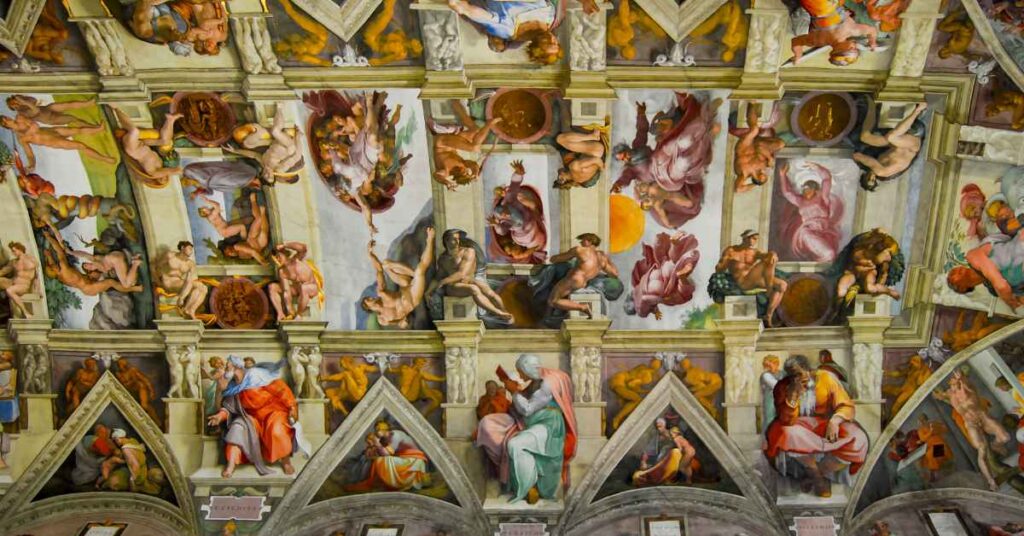
Michelangelo organized the ceiling into three bands of narrative, with nine scenes from Genesis running down the center. The first three scenes depict the creation of the world, beginning with the Separation of Light from Darkness, a scene so abstract and powerful that it feels almost modern in its simplicity. Next comes the Creation of the Sun, Moon, and Plants, followed by the Separation of Land from Water.
These are not gentle, pastoral scenes. They are violent, explosive moments of divine will, with God sweeping across the void like a force of nature.
The second band contains the scenes involving Adam and Eve, and here Michelangelo produced the single most famous image in the history of art. The Creation of Adam shows God reaching out to touch his newly formed human, their fingers hovering a breath apart. It is a moment frozen in time, charged with an almost unbearable tension.
The image has been parodied, reproduced, and analyzed to the point of exhaustion, and yet it retains its power. That gap between divine and human fingers is the central drama of the entire chapel, the space where grace meets flesh.
Alongside this masterpiece, Michelangelo painted the Creation of Eve, where she emerges from Adam’s side in a gesture that echoes the creation of the universe itself. Then comes the Temptation and Expulsion from Eden, a scene that manages to capture both the seduction of the serpent and the crushing despair of exile in a single, devastating composition.
The third band follows the story of Noah, with the Sacrifice, the Flood, and the Drunkenness of Noah. These are darker, more chaotic scenes, filled with fear and human weakness. The Flood is particularly remarkable, a writhing mass of figures struggling against the rising waters, a vision of divine judgment that foreshadows Michelangelo’s later masterpiece on the altar wall.
Prophets, Sibyls, and the Ignudi
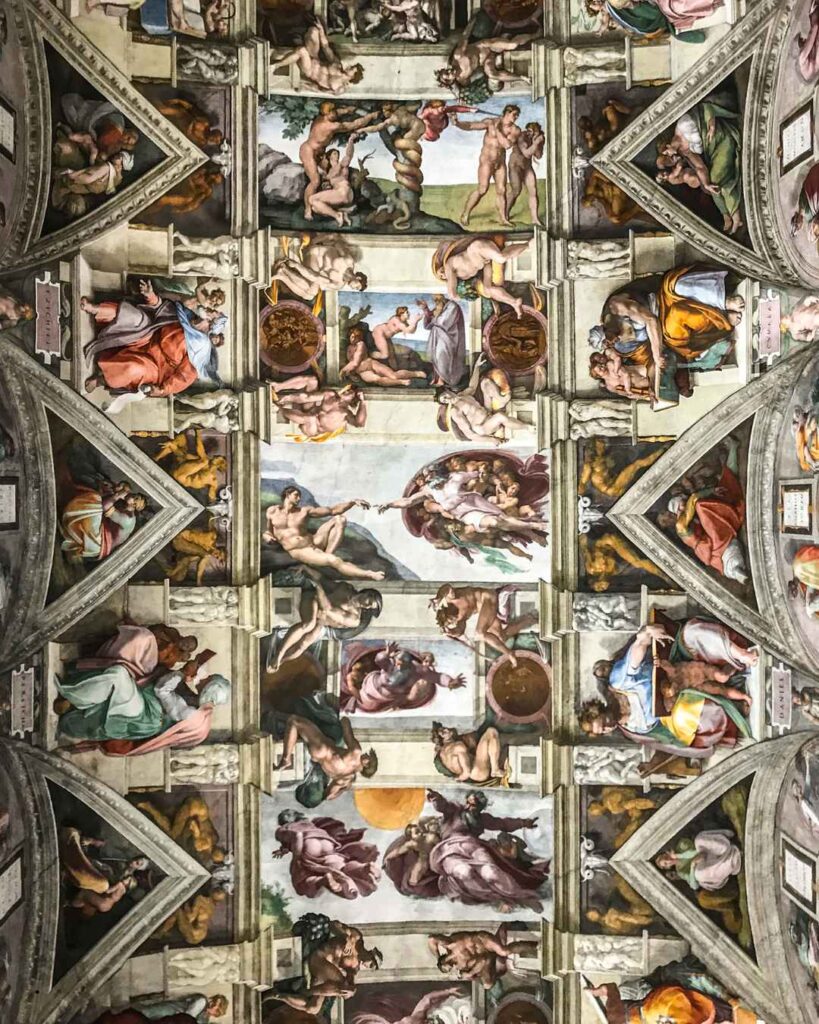
Flanking these central scenes are the prophets and sibyls, figures from both Jewish and pagan traditions who foretold the coming of Christ. Isaiah and Jeremiah, Daniel and Ezekiel sit alongside the Delphic and Cumaean sibyls, each one a monumental figure lost in thought. Michelangelo gave them extraordinary physical presence, their bodies twisted and animated, their faces lined with the weight of prophecy. They are not serene or beatific. They are troubled, burdened by visions they can barely comprehend.
Above each of these figures sit the ignudi, the twenty nude youths who have puzzled scholars for centuries. They hold garlands and bronze medallions, their poses complex and athletic, their bodies rendered with a perfection that borders on the obsessive.
What do they represent? Angels? Personifications of the soul? Ancient gods repurposed for Christian themes? The debate continues, but their real purpose may be simpler: they allowed Michelangelo to celebrate the human form in its most idealized state, to demonstrate that the body itself was a vessel of divine beauty.
The corner spandrels and the lunettes above the windows contain the ancestors of Christ, a long genealogy of humanity waiting for salvation. These figures are more intimate, more human than the grand prophets and sibyls above them. They are family portraits, capturing the quiet dignity of ordinary people caught up in an extraordinary story.
The Labor and the Agony
The physical toll of painting the ceiling is almost impossible to imagine. Michelangelo designed his own scaffolding, a wooden platform suspended from the ceiling itself, allowing him to work above the chapel while the cardinals continued to celebrate mass below.
He did not lie flat on his back, as the myths suggest, but worked standing upright, his head tilted back, his arms raised for hours on end. The strain was excruciating. He described the experience in a famous poem, complaining of a goiter from the strain and paint dripping into his face.
The technical challenges were equally daunting. Fresco requires the painter to apply pigment to wet plaster, a process that demands speed and precision. Mistakes are nearly impossible to correct. Michelangelo worked section by section, removing the scaffolding and moving it to the next bay as he progressed. The entire project took four years, from 1508 to 1512, and by the end, Michelangelo was physically broken. But he had created something that transcended the limitations of its medium.
The Last Judgment
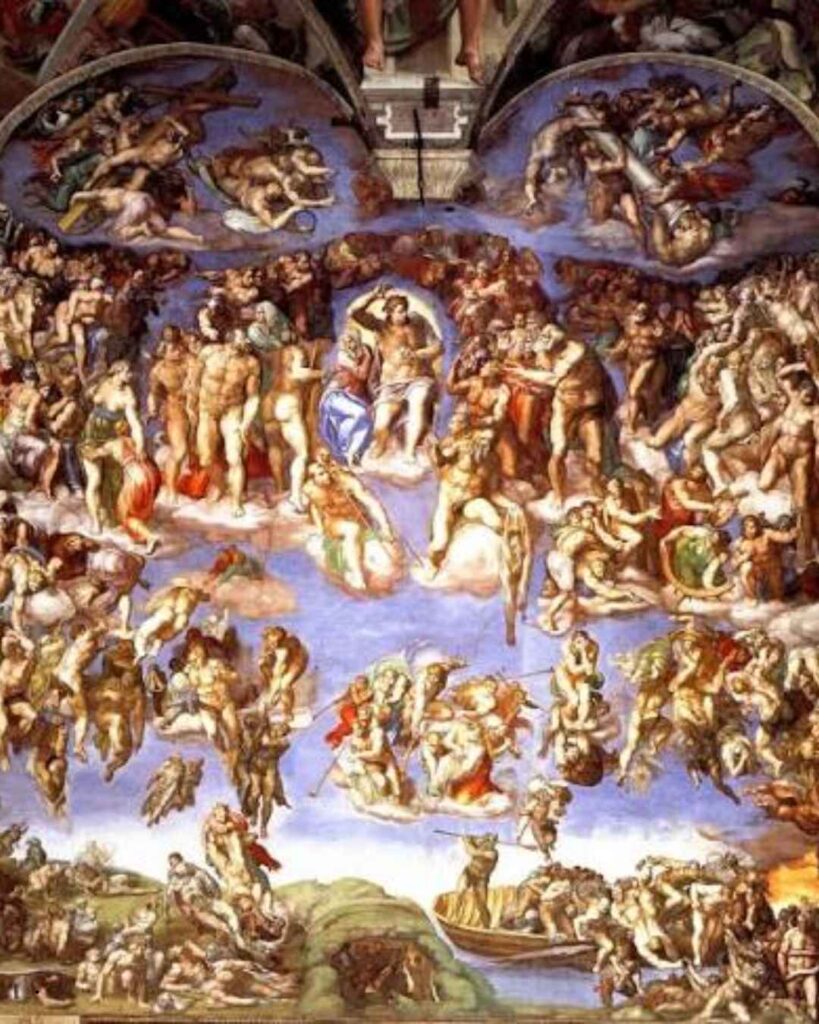
More than two decades later, Michelangelo returned to the Sistine Chapel to paint the altar wall. The Pope was now Paul III, and the commission was initially for a Resurrection scene. But Paul, like Julius before him, allowed Michelangelo to change the subject. The result was the Last Judgment, a massive fresco that covers the entire wall behind the altar and depicts the second coming of Christ and the final fate of humanity.
It is a terrifying vision. Christ stands at the center, not the gentle savior of the gospels but a muscular, implacable judge who raises his hand to condemn the damned. The Virgin Mary shrinks beside him, her face a mask of sorrow. Around them swirl the saints and the blessed, including Saint Bartholomew holding his own flayed skin, on which Michelangelo supposedly painted his own self-portrait as a grim joke. Below, the dead rise from their graves, their bodies contorted with hope or despair, while demons drag the damned down into the fiery depths.
The Last Judgment is a work of profound unease, reflecting the anxieties of the Reformation era. The Catholic Church was under attack, the unity of Christendom was crumbling, and Michelangelo responded with a vision of judgment that leaves no room for comfort. The nudity of the figures sparked immediate controversy, with critics accusing the artist of obscenity in a sacred space. After Michelangelo’s death, his pupil Daniele da Volterra was commissioned to paint breeches and loincloths over the most explicit figures, earning him the unfortunate nickname “Il Braghettone,” the breeches-maker.
The Restoration Controversy
Between 1980 and 1994, the Sistine Chapel underwent a massive restoration that removed centuries of soot, grime, and the glue-varnish applied by earlier restorers. The results were stunning. The ceiling was suddenly awash in brilliant colors, pinks and greens and blues that had been hidden for generations. The frescoes looked as though they had been painted yesterday.
But the restoration was not without its critics. Some argued that the process was too aggressive, that it stripped away not only dirt but also Michelangelo’s own revisions, the secco additions he had painted onto dry plaster to deepen shadows and add subtle details. Copies of the ceiling made in Michelangelo’s lifetime showed shadows and contours that were now gone. Was the restoration revealing the original masterpiece or destroying the work as it had evolved over the centuries?
The debate continues to rage, but for most visitors, the restored ceiling is nothing short of revelatory. The colors are almost too bright to be believed, and the energy of the figures feels immediate and alive. Whether this is what Michelangelo intended or a modern reinterpretation, it is undeniably spectacular.
Walking Through the Chapel
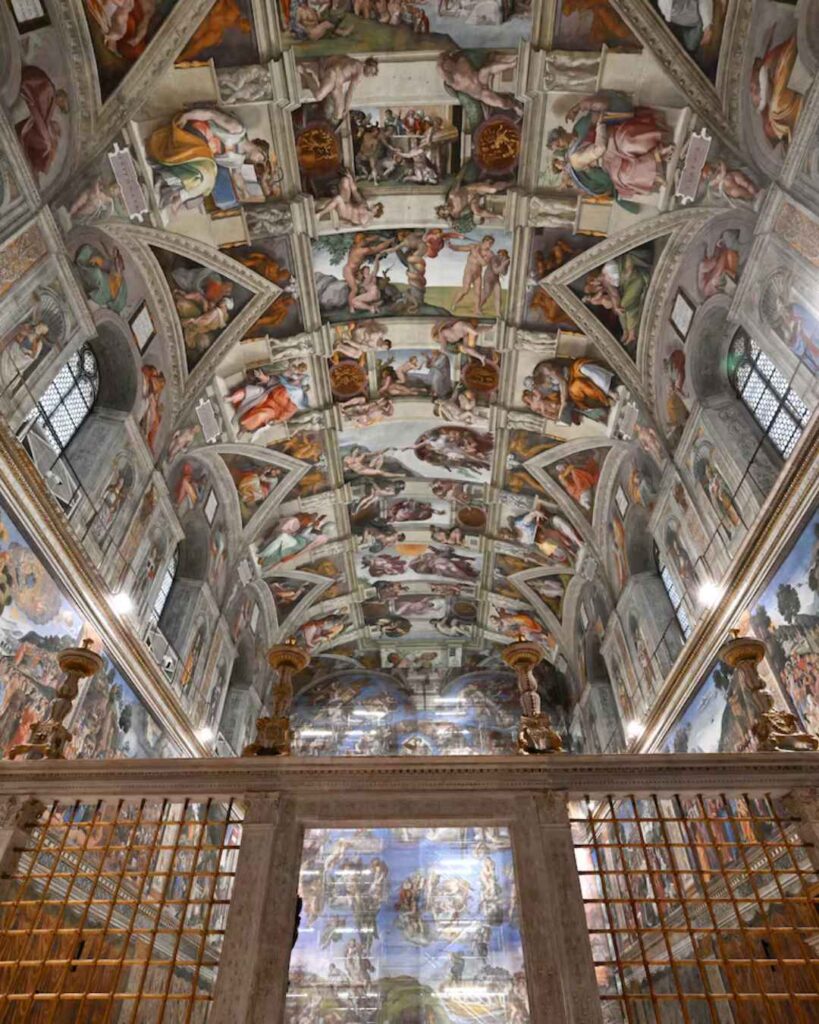
Visiting the Sistine Chapel is an exercise in patience and endurance. The crowds are immense, the noise can be overwhelming, and the guards are constantly shushing visitors who forget that this is still a functioning place of worship. The dress code is strictly enforced. Shoulders and knees must be covered, and if you arrive in shorts or a sleeveless shirt, you will be turned away or forced to buy a disposable paper garment.
The chapel is located at the end of the Vatican Museums, a vast complex of galleries and corridors filled with ancient statues, Renaissance tapestries, and countless other treasures. By the time you reach the chapel, you may already be exhausted. But when you step through the doorway, all of that fades away. The room is long and rectangular, with windows high above letting in shafts of natural light. The walls are covered in the Quattrocento frescoes, the stories of Moses and Christ that set the stage for what lies above.
And above, of course, is the ceiling. It takes a moment for your eyes to adjust, for your brain to process the sheer scale of the thing. The figures are enormous, the compositions are complex, and the colors are so vivid they almost hurt to look at. The Creation of Adam is on the far end, directly above the altar, and when you finally locate it, you understand why it has become so iconic. It is not just a painting. It is a meditation on the nature of existence, the relationship between creator and created, the spark that gives life meaning.
The Last Judgment is equally overwhelming, but in a different way. It is chaotic, violent, and deeply unsettling. The damned are dragged into hell with an almost sadistic glee, while the blessed struggle upward toward a Christ who seems more judge than savior. It is not a comforting image, but it is a powerful one, a reminder of the stakes that the Renaissance Church believed were eternal.
The Legacy
The Sistine Chapel is one of those rare places that truly lives up to the hype. It is not just a masterpiece of art. It is a document of its time, a reflection of the ambitions, fears, and faith of the Renaissance papacy. Michelangelo poured his anger, his doubt, and his genius into those frescoes, and the result is a work that transcends its religious context to speak to something universal about the human condition.
The legacy of the chapel is everywhere. Michelangelo’s figures influenced generations of artists, from Raphael to the Mannerists to the Baroque painters who followed. The heroic nude became a central subject in Western art, and the dramatic poses and twisted compositions of the ignudi and the prophets set the stage for the emotional intensity of the Baroque era. Even today, contemporary artists continue to draw inspiration from the chapel, reinterpreting its themes and images for a modern audience.
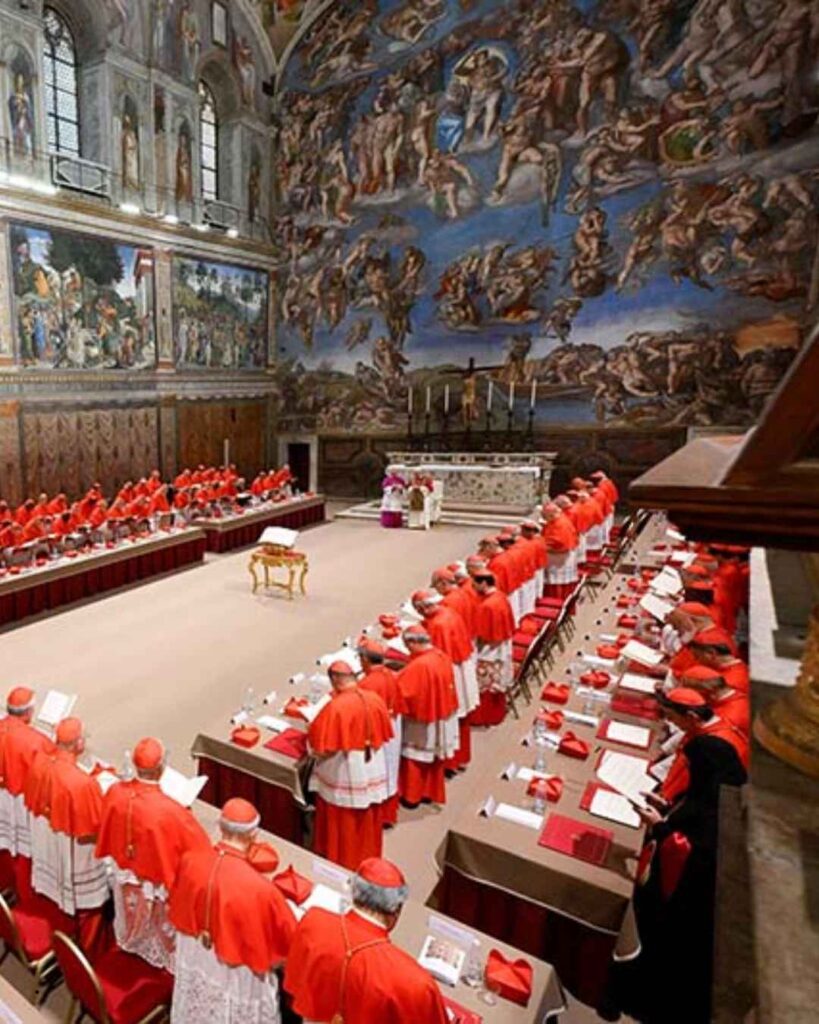
The chapel also remains a living, functioning space. It is the site of the papal conclave, the secret election of the Pope, a tradition that dates back centuries. When the cardinals gather here to choose a new leader for the Catholic Church, they do so under the gaze of Michelangelo’s Christ, a reminder of the weight of their responsibility. The smoke that rises from the chimney above the chapel signals the world that a new Pope has been chosen, a tradition that connects the modern Church to its ancient roots.
For all its historical and artistic significance, the Sistine Chapel is also a profoundly personal experience. Standing in that room, surrounded by the greatest achievements of Renaissance art, you cannot help but feel small. And yet you also feel connected, part of a long chain of humanity that has looked up at those frescoes and felt wonder. That is the power of art, and the Sistine Chapel is its greatest testament.
Reflections
The Sistine Chapel is not a place you visit once and forget. It stays with you, popping into your mind at unexpected moments, reminding you of the heights that human creativity can reach. Michelangelo was a difficult, temperamental, often unpleasant man, but he was also a genius, and he poured every ounce of his talent into that room. The result is a gift to all of humanity, a work that continues to inspire and challenge and awe, five hundred years after it was first unveiled.
My wife and I left the chapel in silence, our voices hushed by the experience. It was only when we reached the spiral staircase at the exit that we finally spoke, both of us trying and failing to put into words what we had just witnessed. Some things are beyond language, and the Sistine Chapel is one of them.
NOTE BEFORE YOU GO: Italy rewards travelers who go prepared. And it is easy to ruin your trip. I have a checklist for you of things you should never go to Italy without. CHECK IT OUT HERE. I have also curated a list of some of the best hotels in Italy. I would highly recommend checking them out before booking. THESE ARE THE BEST HOTELS IN ITALY. And for unique experiences, attractions, and tours, don’t book before CHECKING THIS OUT. Thank me later!