

Let me tell you something that took me far too long to figure out about the Amalfi Coast. Positano is absolutely gorgeous. I am not going to argue with that. The pastel houses tumbling down the cliff, the glittering sea, the lemon-scented air—it is all as magical as everyone says.
But here is the thing that nobody tells you before you go. You will spend half your day looking for parking, the other half waiting in line, and your entire budget on one overpriced lunch with a view.
The Amalfi Coast has this whole other side that feels like Italy did thirty years ago, and it is sitting right there, usually just one village over from the chaos. These are the places where you can actually hear yourself think, where a plate of pasta does not cost thirty euros, and where you might be the only tourist at dinner.
So let me introduce you to the Amalfi Coast that most guidebooks forget to mention.
Before you read further, remember that Italy rewards travelers who come prepared. I’ve found a few things especially useful on an Italy trip, and they’re worth having and/or knowing beforehand. See the checklist here. Also, if you want me to plan an Italy trip for you that you will never forget, drop me a message here
Atrani: Italy’s Smallest Municipality

Atrani is living proof that good things come in small packages. As Italy’s smallest municipality by area—barely a quarter of a square mile, and home to just over 900 people—it’s easy to miss on a map. But don’t let the size fool you. This little gem packs more charm per square foot than cities ten times its size.
Most people mistake Atrani for a smaller neighborhood within Amalfi, but the towns were actually autonomous during the height of the region’s power in the Middle Ages. That independent spirit still lingers today. You walk through a pedestrian tunnel from Amalfi—a ten-minute stroll that feels like passing through a portal into another world—and suddenly the crowds disappear.
The town is built into a dramatic ravine, with pastel-colored houses clinging to the cliffs on both sides. The main piazza feels like a local’s living room rather than a tourist attraction. There are no designer shops here, only a few charming cafes, a fountain, and the entrance to the main church. In the morning, grab a cappuccino and watch the village wake up. In the evening, join the locals for an aperitivo before dinner. It is simple, and it is wonderful.
The beach is a small crescent of dark pebbles boxed in by the village on three sides. In summer, the day-trippers from Amalfi do trickle in, but the beach retains an intimate, neighborhood feel. Kids play in the shallow water while grandparents watch from plastic chairs set directly on the sand, and conversations flow between families as if privacy were a foreign concept. If you want to experience the Amalfi Coast as it actually is, not as it appears on Instagram, this is the place.
Read more about Atrani here. Also check the best accommodations in Atrani here
Minori: The Town That Time Forgot
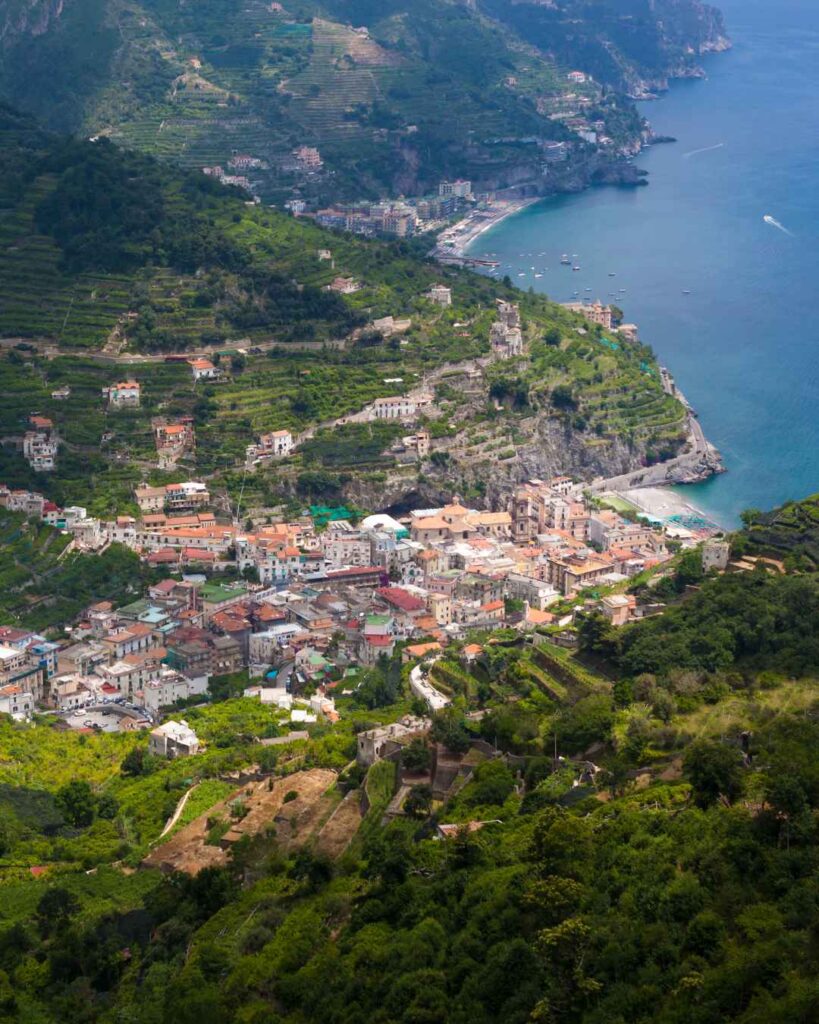
Sequestered between Atrani and Maiori and overlooked by the hilltop village of Ravello, Minori remains stubbornly under the radar. It is billed as a town, but it is really little more than a seaside village with one main street, and all the better for its diminutive size.
Unlike the glamorous towns that attract the glitterati, Minori is a real working community. You will find grocery stores, butchers, barbers, hairdressers, tabacchi, and unassuming cafes where locals actually go. The beach is wide and relatively calm, making it easier to get into the water than in other coastal towns—a major advantage for families and anyone who does not want to scramble over rocks to find a swimming spot.
Minori is also famous for its lemons, and you will find lemon desserts and limoncello everywhere you look. But the real culinary claim to fame here is pasta. The town has a proud pasta-making tradition, and you can still see evidence of this heritage in black and white photographs on the walls of the side streets. The pasta makers used to hang rows of pasta on the beachfront to dry, and that tradition is still alive in the local restaurants that serve fresh, handmade pasta every day.
Another hidden gem in Minori is the Villa Romana, a first-century Roman villa that was discovered in the 1930s. It is small but fascinating, with remarkably preserved frescoes that rival anything you will find in Pompeii. The villa was buried by a flood in the fourth century, and its excavation is still ongoing, so you never know what might be uncovered next.
For the best accommodations in Minori, check out this guide.
Maiori: The Long Beach
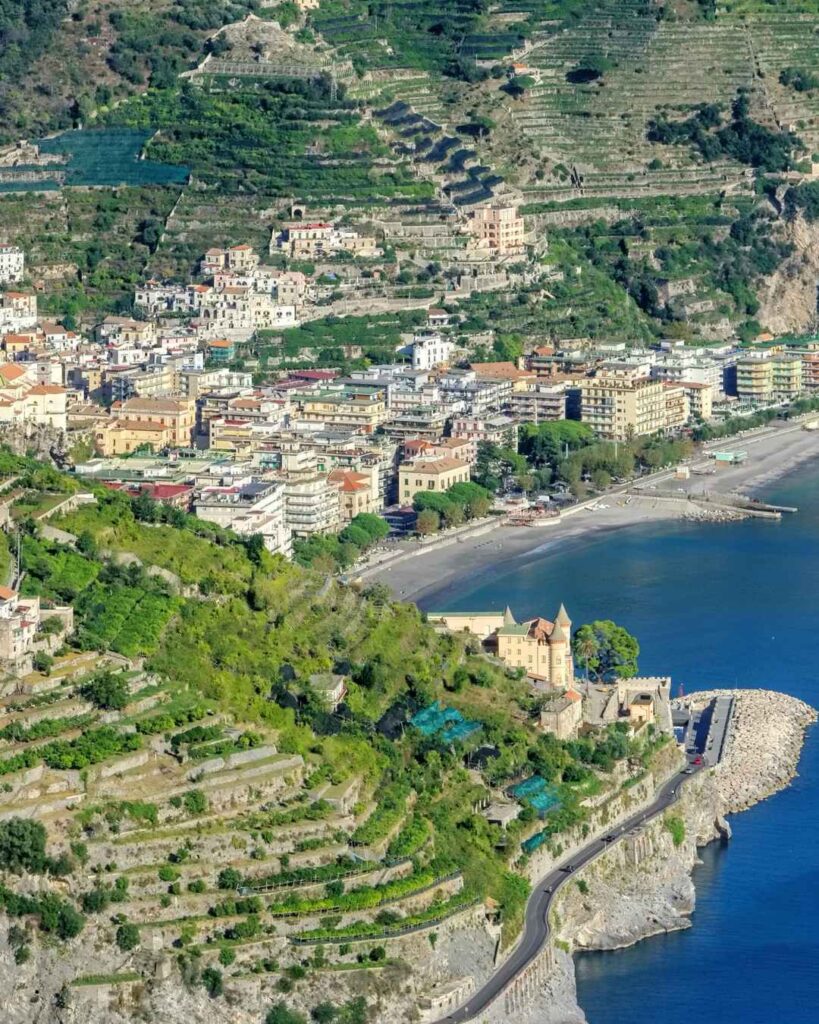
Maiori is the town that has been overshadowed by its neighbors for centuries, and it is not complaining one bit. This is where the Amalfi Coast gets practical. The beach stretches for nearly a kilometer, making it the longest uninterrupted stretch of sand on the entire coast. That alone makes it worth a visit if you actually want to spread out a towel without touching elbows with a stranger.
Maiori has a fascinating history. It was one of the wealthiest towns on the coast during the Maritime Republics period, and it still has the grand buildings to prove it. The Collegiate Church of Santa Maria a Mare dominates the waterfront with its beautiful majolica-tiled dome, and the Norman Tower at the end of the beach stands as a reminder of more turbulent times.
What I love about Maiori is that it feels like a real town, not a theme park. Families have been coming here for generations, and you can feel that continuity in the way people interact with each other and with visitors. The restaurants along the seafront are excellent and reasonably priced. They have to be, because the locals eat there too and they will not tolerate tourist-trap nonsense.
For a true hidden gem, make your way up the hill to the Badia di Santa Maria de’ Olearia, a ninth-century abbey tucked into the cliffs. The frescoes inside are medieval treasures, and the views from the terrace will make you wonder why everyone is still stuck in Positano.
These here are great hotels to stay in while visiting Maiori.
Cetara: The Fishing Village
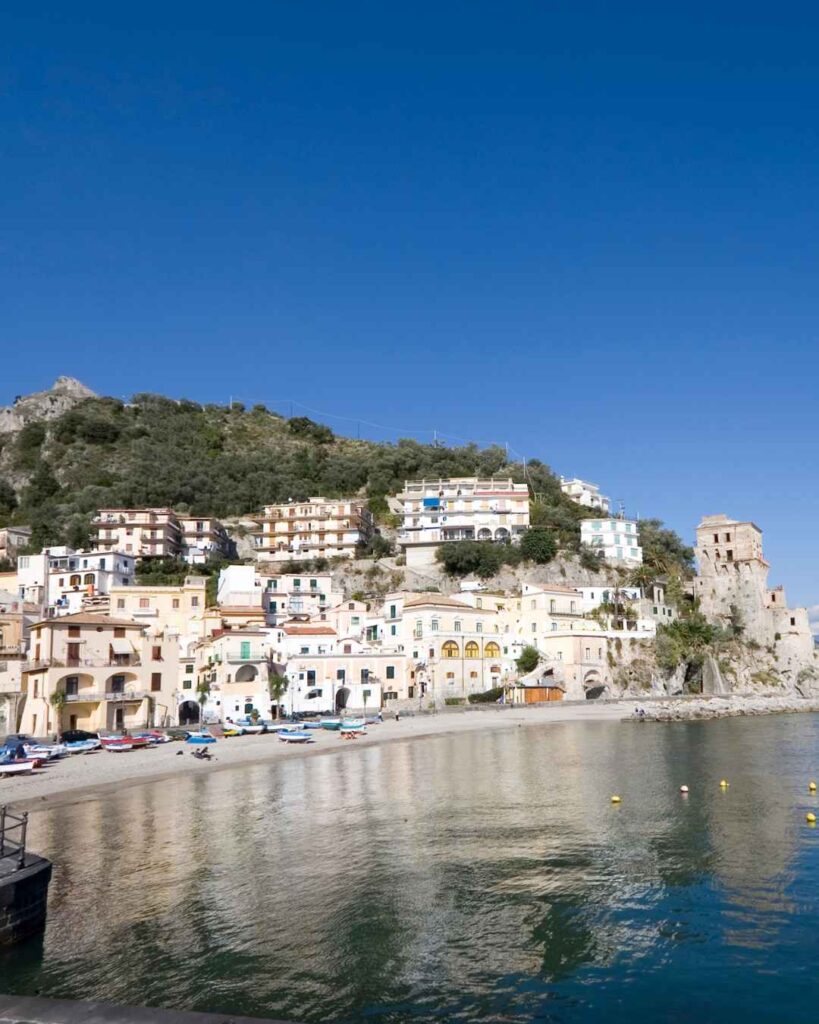
Cetara is the town that smells like the sea, and I mean that in the best possible way. This is a working fishing village, one of the last on the coast where fishing is still the primary industry. When you see the boats bobbing in the harbor, they are not there for the tourists. They are there because the fishermen of Cetara still head out every morning to bring back the catch of the day.
Cetara is famous for one thing in particular, and it is an acquired taste. The town is the birthplace of colatura di alici, a fermented anchovy sauce that dates back to Roman times. It is made by salting anchovies and pressing them to extract the liquid, and it adds an incredibly deep, savory flavor to pasta dishes. If you order spaghetti with colatura in Cetara, you are having the real deal. The recipe has been passed down through generations, and the locals take it very seriously.
The town itself is tiny, even by Amalfi Coast standards. It is essentially one street that runs along the waterfront and a handful of alleys that climb the hillside. The beach is small and pebbly, but the water is crystal clear and the views of the watchtower on the hill are postcard-perfect.
One of the best experiences in Cetara is simply sitting at a restaurant on the harbor and watching the fishermen mend their nets while you eat the freshest seafood imaginable. The tuna in Cetara is legendary, and the local restaurants serve it in ways that will make you forget every tuna salad you have ever eaten.
Conca dei Marini: The Cliffhanger

Conca dei Marini is the town that clings to the cliff like it is afraid of falling into the sea. It is situated between Amalfi and Praiano, and if you blink while driving the coastal road, you will miss it entirely. That is a shame, because this tiny village has more character per square meter than almost any other town on the coast.
The Emerald Grotto is the main attraction here, a sea cave with an eerie, otherworldly beauty. The water glows an impossible shade of emerald green, and the stalactites and stalagmites create shapes that look like they belong in a fantasy novel. You can visit by boat or by stairs carved into the cliff, and either way, it is an experience you will not forget.
But Conca dei Marini is more than just a cave. The town itself is a maze of steep staircases and narrow alleyways that lead to hidden courtyards and spectacular viewpoints. The Church of San Giovanni Battista sits right at the edge of the cliff, and its baroque interior is worth the climb. And if you are lucky enough to be there on a quiet evening, the sunset views from the terrace will make you wonder why anyone would ever want to leave.
Praiano: The Sunset Capital
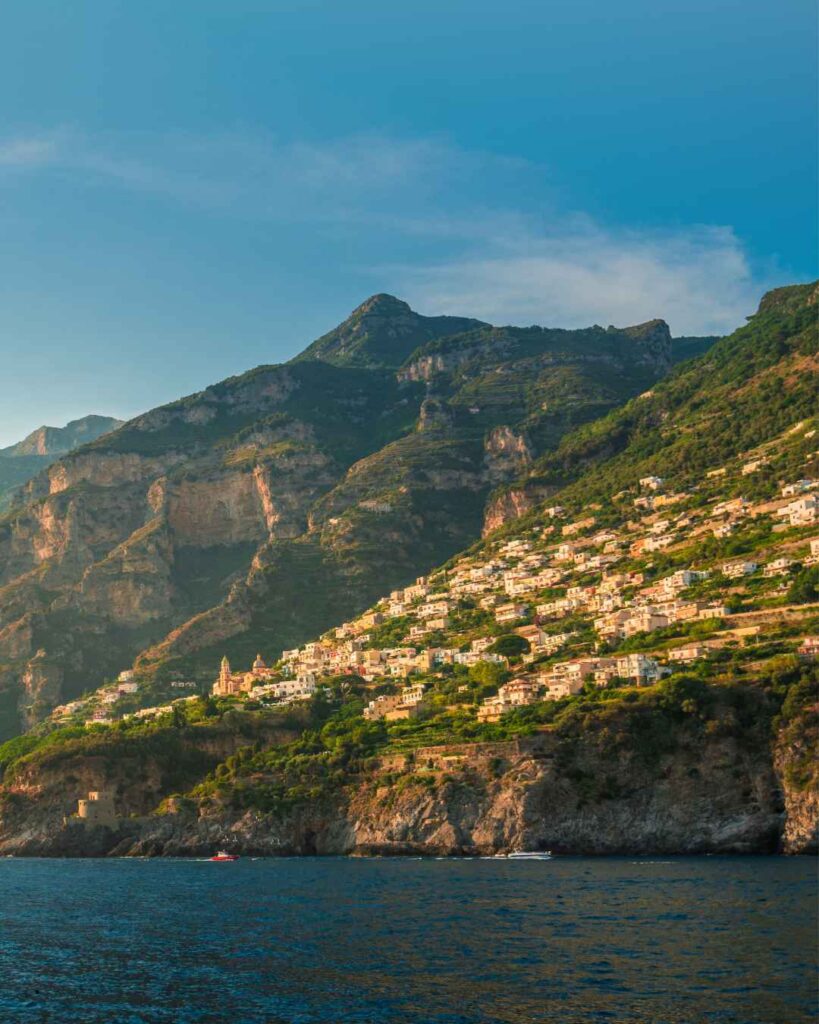
Praiano is the town that gets the best light. It is perched between Amalfi and Positano, but it manages to feel miles away from both. The sunsets here are legendary. The cliffs catch the golden light in a way that makes the entire town glow like a painting, and the views over the Gulf of Salerno are breathtaking.
Praiano has a relaxed, bohemian vibe that attracts artists and musicians. There is no main square in the traditional sense, and the town is spread out along the cliffside, but that just means every corner offers a new perspective. The Church of San Gennaro has two beautiful majolica domes that are visible from miles away, and the inside is surprisingly ornate for such a small village.
The beach at Praiano is called Marina di Praia, and it is one of the most picturesque on the coast. The beach is nestled at the bottom of a deep gorge, flanked by cliffs covered in bougainvillea. The water is deep and clear, and the sunsets from here are absolutely unforgettable.
For the adventurous, Praiano is also a great base for hiking. The Path of the Gods trail is nearby, and the views from the cliffs above the town are some of the best on the coast. After a long hike, nothing beats a seafood dinner at one of the local restaurants, where the prices are still reasonable and the welcome is always genuine.
Furore: The Village That Isn’t There

Furore is the town that hides in plain sight. If you drive along the coastal road, you will see the famous Fiordo di Furore, a dramatic gorge that cuts into the cliffs with a tiny beach at its base. You will also see a bridge arching over the gorge, but you might not even realize that there is a village up there.
Furore is actually the highest town on the Amalfi Coast, sprawling across the clifftop rather than hugging the shoreline. The views from up here are spectacular, stretching all the way from Capri to Salerno on a clear day. The village is small and quiet, with narrow streets and flower-filled courtyards that feel like a different world from the crowded coast below.
The fiordo itself is the main attraction, and it is well worth a visit. The beach at the bottom of the gorge is tiny but stunning, and the water is deep enough for cliff jumping if you are feeling brave. The old fishermen’s houses that line the gorge add to the atmosphere, and there is something about the place that feels ancient and mystical.
Scalea: The Off-the-Beaten-Path Wonder

Scalea is the town that does not belong on any tourist itinerary, and it likes it that way. It is actually located just north of the Amalfi Coast proper, but it deserves a mention because it shares the same spectacular coastline without any of the crowds.
This medieval town sits on a cliff above the Tyrrhenian Sea, with a historic center that is a labyrinth of cobblestone streets and ancient buildings. The views from the clifftop are breathtaking, and the beaches below are long and sandy, a rarity on this coast.
Scalea also has a fascinating history. The town was founded by the ancient Greeks and later became a Roman colony. The medieval old town still has its original defensive walls, and the Norman castle at the top of the hill is worth exploring. The beaches are less crowded than further south, and the seafood is as fresh as it gets.
How to Visit These Towns
Most of these towns are connected by the SITA bus that runs along the coast, though the schedules can be unpredictable and the buses get crowded. The ferry is a better option in summer for the towns that have ports, but for inland villages like Furore, the bus is your only choice.
Renting a scooter is actually the best way to explore the lesser-known towns. You can zip through traffic, park anywhere, and stop whenever something catches your eye. It takes confidence to navigate the winding roads, but the freedom is worth it.
A rental car is possible but stressful. Parking is limited, and the roads are narrow. However, having a car allows you to visit the clifftop towns like Furore and Ravello with ease.
Final Thoughts
The Amalfi Coast is one of the most beautiful places on earth, and the famous towns deserve their reputations. But the lesser-known villages are where you will find the real Italy. They are places where grandmothers still dry pasta on the beachfront, fishermen still mend their nets by the harbor, and nobody has ever heard of influencer culture.
My wife and I have made it our mission to explore every corner of this coast, and we keep coming back to these hidden gems. They remind us why we fell in love with Italy in the first place. They are not polished, not pretentious, and certainly not cheap. But they are authentic, and that is a quality you cannot buy.
So do yourself a favor. Spend a day in Positano, take your photos, eat your expensive lunch, and enjoy the glamour. Then get on a bus or a boat and head to one of these lesser-known towns. Find a table at a local trattoria, order something you have never heard of, and watch the sun set over a quiet beach. That is the Amalfi Coast that stays with you long after you have gone home.
Again, feel free to go through the list below of my Italy recommendations that I have crafted after years of travel to this beautiful country:
- Packing List: Things Not to Go to Italy Without
- Must-Do Things: Unforgettable Experiences
- Where to Stay: Best Hotels in Italy.
- Where to Stay in Rome: Rome’s Best Neighborhoods
- Where to Stay in Florence: Picking the Best Area
- Where to Stay in Venice: Venice’s Best Districts
- Italy’s Cobblestone Streets: Best Shoes For the Job
- Backpack or Suitcase?: Italy Luggage Guide
- Travel Insurance: Always Be Covered
- E-Sim: Be Connected At All Times