

If Positano is the glamorous movie star of the Amalfi Coast—stunning, photogenic, and utterly crowded—then Atrani is the quiet, soulful neighbor who doesn’t need the spotlight. And honestly? That is precisely what makes it so special.
Atrani is the smallest town in all of Italy — barely 0.05 square miles and home to just over 800 people. It’s tucked into a ravine, a quick ten-minute walk from the bustling town of Amalfi, but it feels like a whole different world. This is the Amalfi Coast the way it used to be — before the Instagram crowds, the souvenir shops, and the $350 beach loungers. It’s authentic, intimate, and absolutely unforgettable.
Before you read further, remember that Italy rewards travelers who come prepared. I’ve found a few things especially useful on an Italy trip, and they’re worth having and/or knowing beforehand. See the checklist here. Also, if you want me to plan an Italy trip for you that you will never forget, drop me a message here
More About Atrani
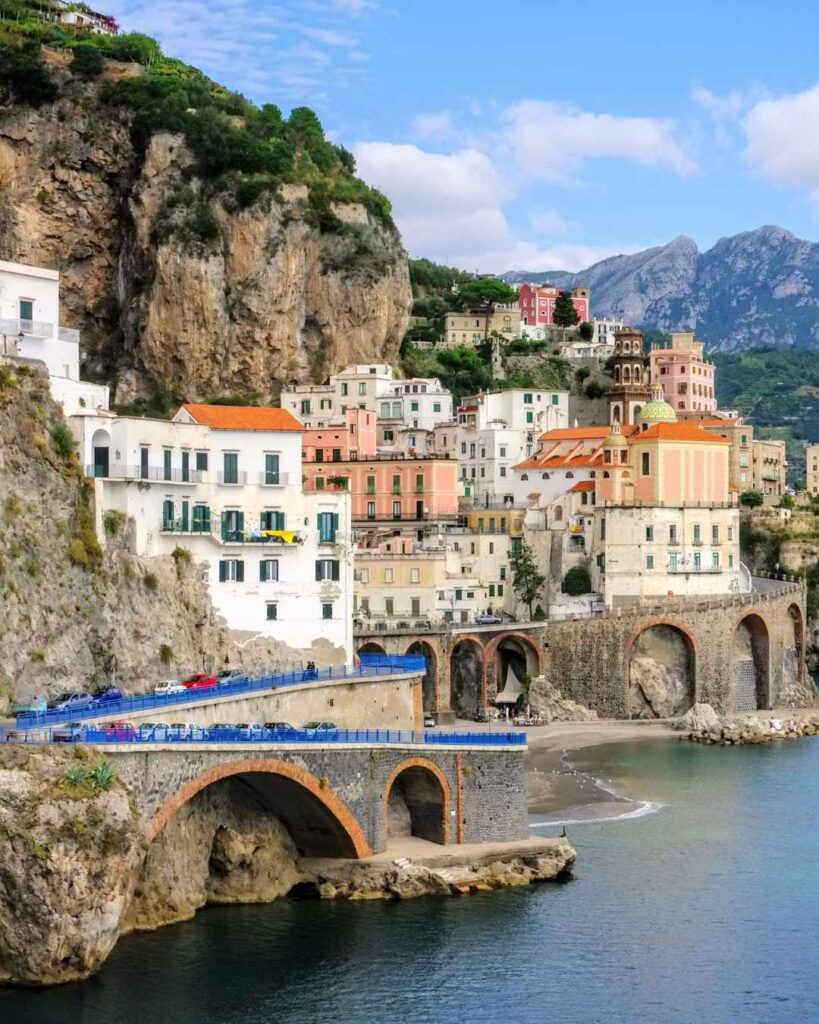
Let me tell you something that took me a while to learn about the Amalfi Coast. The famous towns are famous for a reason, but the real magic often happens when you step just slightly off the beaten path. Atrani is that step. It is a fishing village that has somehow resisted the relentless tide of mass tourism, offering a glimpse of coastal Italian life that feels genuine rather than performative.
The town is built into a dramatic ravine, with pastel-colored houses clinging to the cliffs on both sides. From the shoreline, you look back and see an explosion of color against the lush green mountains, with the deep blue sea stretching out before you. It is no wonder that filmmakers have fallen in love with this place.
Atrani served as a filming location for The Equalizer 3 starring Denzel Washington, and the Netflix series Ripley starring Andrew Scott was also shot here. The church featured in The Equalizer 3 requires climbing seven hundred steep steps from the main square if you are feeling particularly ambitious.
But beyond the Hollywood connections, Atrani has a deeper artistic pedigree. The famous Dutch engraver M.C. Escher lived in Italy for eleven years and was fascinated by this tiny village. His work featuring the town’s distinctive architecture and staircases reveals exactly what captured his imagination.
When you walk through Atrani’s labyrinthine alleys, you can see the same patterns and perspectives that inspired one of the great artistic minds of the twentieth century.
When Should You Visit?
The same seasonal rules that apply to the rest of the Amalfi Coast apply here, but with one crucial difference. Atrani is never quite as crowded as Positano or Amalfi, even in high summer. That said, the shoulder months of April through June and September through October offer the best combination of pleasant weather and manageable crowds.
Summer brings vacationing Italians and day-trippers, but the town’s tiny size means there is simply less room for the masses to descend.
If you can manage it, I would strongly recommend visiting in late spring or early autumn. The temperatures are comfortable for walking, the sea is still warm enough for swimming, and the light is absolutely spectacular for photography. Winter, as elsewhere on the coast, means many restaurants and hotels close their doors, so plan accordingly.
How to Get There

Atrani is wonderfully accessible despite its hidden-gem status. The nearest airport is Naples International Airport. From Naples, you can take a train to Salerno, then a bus to Amalfi, and finally a ten-minute walk through a short tunnel that deposits you directly into the village. The bus from Salerno to Amalfi takes about an hour and can get packed, so be prepared in case you cannot squeeze onto the first one that arrives.
If you are already on the coast, the easiest way to reach Atrani is from Amalfi. The ten-minute walk is flat, easy, and surprisingly pleasant. You walk through a tunnel that opens up into the village, and the transition from the chaos of Amalfi to the calm of Atrani is almost jarring in the best possible way.
Do not drive unless you absolutely must. Atrani has little parking space, and traffic is heavily limited. On the Amalfi Coast, non-residents’ cars can only circulate on alternate days based on license plate numbers, which adds another layer of complication. The ferry is your friend. Frequent service connects Sorrento, Positano, Amalfi, Maiori, and Salerno from June to September. From the Amalfi pier, Atrani is just a short walk away.
Where to Stay

This is where Atrani truly shines. Accommodation here costs significantly less than in Positano or Amalfi, often less than half the price. You can find a lovely B&B or guesthouse for anywhere from ninety to two hundred euros per night during high season, compared to the two hundred fifty to six hundred euros you would pay in Positano.
Palazzo Ferraioli is a beautiful four-star hotel offering central location and good breakfast. La Scogliera is a guesthouse known for its warm welcome and sea views. Eva Rooms and Atrani Rooms are B&Bs offering modern style and local charm respectively. L’Argine Fiorito is another guesthouse with a family atmosphere and a suggestive position.
Here is the catch. The town is tiny, and accommodation is limited. Book early. If you want to stay in Atrani, treat it as a book-first, plan-around-it decision. Those who do the research and secure a room early are rewarded with one of the most peaceful and authentic stays on the entire coast.
The Beach in Atrani
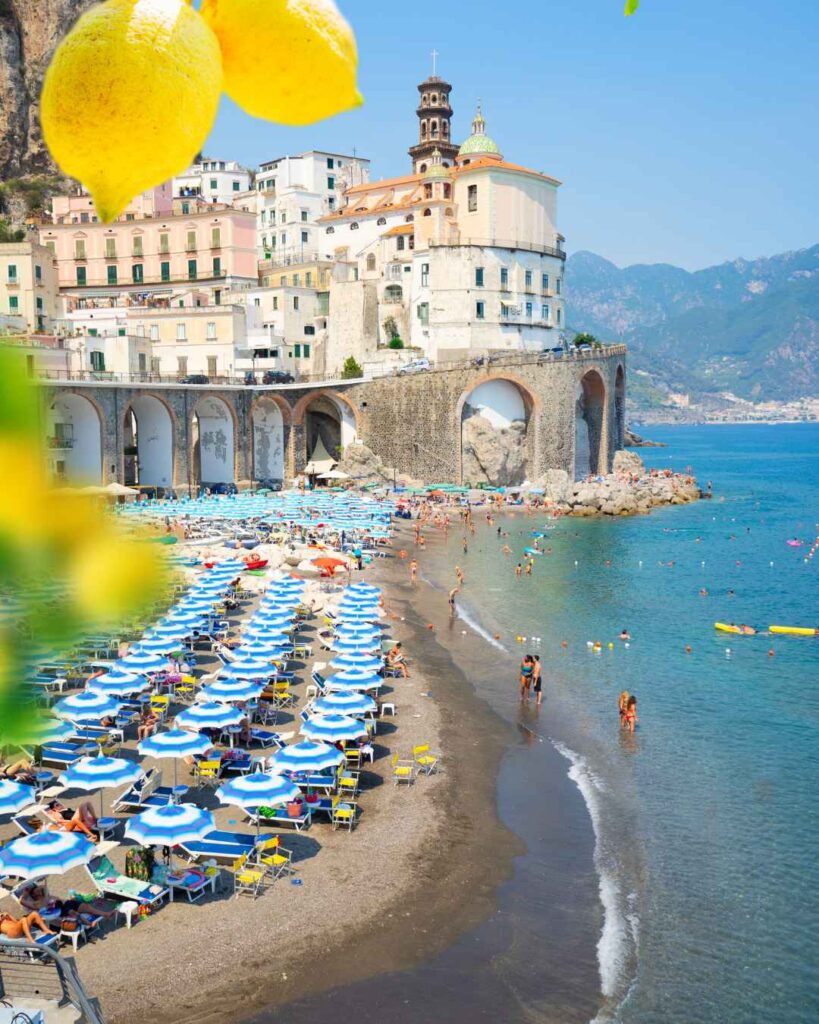
Atrani’s beach is everything the Amalfi Coast beaches should be, only smaller and more intimate. The small crescent of dark pebbles sits boxed in by the village on three sides, creating a natural amphitheater of pastel houses. You are swimming in impossibly clear blue water while surrounded by the colorful buildings that define this stretch of coast.
The beach is free, with no loungers and no fees. Just show up, find a spot, and enjoy. Expect more families from nearby towns than international tour groups. This is not a place for influencers to stage elaborate photo shoots. It is a place for actual Italians to enjoy their summer.
The size of the beach means it gets crowded fast on summer afternoons. Arrive in the morning or stay for the evening swim after the day-trippers have left. And bring water shoes. The pebbles heat up quickly in the summer sun, and they are not comfortable to walk on barefoot.
Dining
For such a tiny village, Atrani offers a surprisingly excellent dining scene. The focus here is on simple, hyper-fresh seafood prepared with care and tradition. You will not find tourist traps serving frozen fish at inflated prices. What you will find is honest, family-run establishments serving food they are genuinely proud of.
Le Arcate is a favorite, right next to the beach with a wide terrace perfect both for lunch and for dinner under the stars. The grilled fish is simple and perfect, and the location cannot be beaten.
Ristorante Savo, in the main piazza, is known for its fresh ingredients and intimate atmosphere. Their spaghetti alle vongole veraci is outstanding. A Paranza, a bit further inland, is well known for exceptional seafood and pasta. The scialatielli ai frutti di mare, a regional pasta with mixed seafood, is life-changing according to those who have tried it.
Le Palme, near the sea, offers a friendly atmosphere with a warm wooden interior and a terrace, featuring Campanian seafood and homemade pasta. Il Veliero, right in the piazza, offers homemade-style food, generous portions, and modest prices, specializing in seafood dishes like risotto alla pescatora.
Do not overlook the simple pleasure of grabbing a slice of pizza or a panino from a small cafe and eating it on the beach. It is one of life’s great, simple pleasures, and Atrani is the perfect place to enjoy it.
Exploring the Village
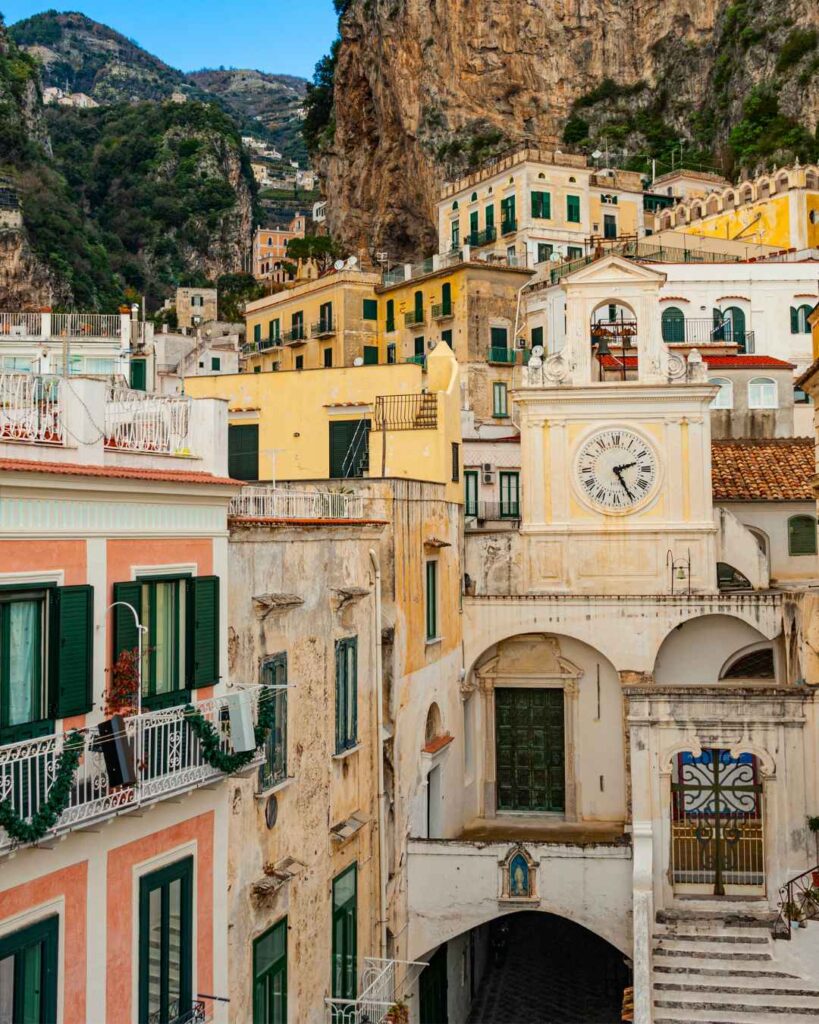
The magic of Atrani is not in a long list of sights, but in its atmosphere. The best thing you can do is simply wander.
The soul of the village is Piazza Umberto I. Unlike the bustling squares in other towns, this one feels like a local’s living room. It is set back from the beach, creating a sheltered, intimate amphitheater of daily life. There are no designer shops, only a few charming cafes and restaurants, a fountain, and the entrance to the main church. In the morning, grab a cappuccino and watch the village wake up. In the evening, join the locals for an aperitivo before dinner. It is simple, and it is wonderful.
The Church of Santa Maria Maddalena, with its prominent sixteenth-century bell tower and yellow and green majolica tile domes, cannot be missed from the perspective of the Gulf of Salerno. The church of San Salvatore de Birecto dates back to the tenth century and crowns the town with its towering dome.
The narrow alleyways and steep staircases, known locally as “vicoli,” are the heart of Atrani. Put away your map. Wander aimlessly. Every turn reveals a hidden courtyard, a pot of vibrant geraniums, or a stunning glimpse of the sea. It is in these quiet moments, away from the piazza, that you will feel the town’s ancient history.
Hiking
Atrani’s position makes it a fantastic starting point for coastal hikes. The stunning route from Atrani to Ravello is not to be missed. The approximately hour-and-a-half walk offers breathtaking views through fragrant lemon trees and ancient stairways. The coastal trail connecting Amalfi and Atrani is also spectacular, offering postcard-perfect views at every turn.
For the truly ambitious, the seven hundred steps up to Santuario Santa Maria del Bando offer a challenging workout and a spectacular reward. The views from the top are worth every drop of sweat.
A Perfect Day in Atrani

Here is how I would spend a perfect day in this hidden gem. Start with a morning walk on the beach before the crowds arrive. Find a spot on the dark pebbles, dip your toes in the impossibly clear water, and simply exist for a while. When the sun gets too warm, wander up into the village and explore the labyrinthine alleys. Discover hidden courtyards and secret views that the guidebooks do not mention.
For lunch, find a spot in Piazza Umberto I and order something simple. A pasta with fresh seafood, a glass of local white wine, and the pleasure of watching village life unfold around you. In the afternoon, take the walk to Ravello. The views along the way are spectacular, and Ravello’s gardens offer a different kind of beauty entirely.
Return to Atrani in the evening. The day-trippers are gone now. The beach is quiet, the piazza is coming alive, and the locals are emerging for their evening stroll. Find a table at a restaurant, order the catch of the day, and enjoy one of the most peaceful evenings you will ever have on the Amalfi Coast.
If you would like to do day trips or activities in Atrani, or the other Amalfi Coast towns, start by checking out this guide.
Final Thoughts
Atrani is not for everyone. It is too small for those who need constant entertainment. It lacks the designer shops and five-star glitz of Positano. The beach is tiny, and in the height of summer, it can still get crowded.
But for those who value authenticity over glamour, peace over prestige, and genuine Italian village life over a curated tourist experience, Atrani is everything. It is the Amalfi Coast without the crowds, the prices, and the pretense. It is the place that locals love, and once you visit, you will understand exactly why.
Again, feel free to go through the list below of my Italy recommendations that I have crafted after years of travel to this beautiful country:
- Packing List: Things Not to Go to Italy Without
- Must-Do Things: Unforgettable Experiences
- Where to Stay: Best Hotels in Italy.
- Where to Stay in Rome: Rome’s Best Neighborhoods
- Where to Stay in Florence: Picking the Best Area
- Where to Stay in Venice: Venice’s Best Districts
- Italy’s Cobblestone Streets: Best Shoes For the Job
- Backpack or Suitcase?: Italy Luggage Guide
- Travel Insurance: Always Be Covered
- E-Sim: Be Connected At All Times