
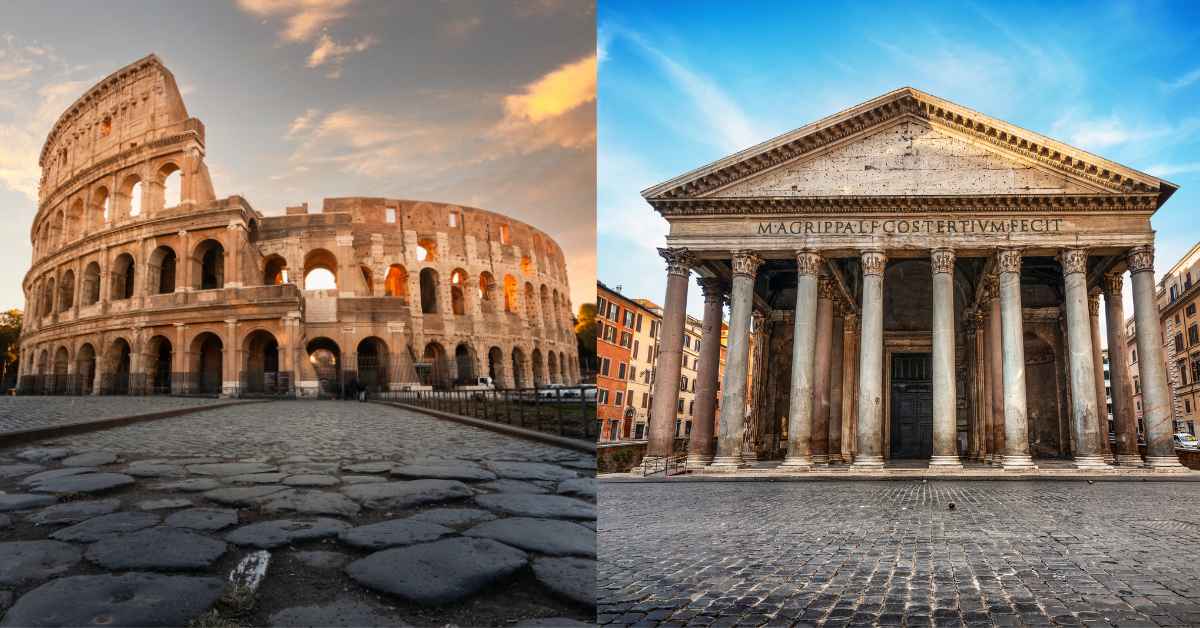
Rome has a way of making comparisons feel almost unfair. You stand in the shadow of the Colosseum, and you think nothing could be more extraordinary. Then you walk into the Pantheon, look up at the oculus, and you are no longer sure.
Both buildings have stood for nearly two thousand years. Both have survived earthquakes, fires, invasions, and the slow erosion of time. Both are among the most visited monuments on earth.
But the question of which is more impressive is not really about which one you should visit. You should visit both. The question is a matter of argument, of criteria, of what we mean when we say a building is impressive.
Is it size? Engineering? Beauty? Historical significance? Emotional impact? The answer changes depending on which measure you apply.
This post is not a travel guide telling you to choose one monument over the other. It is an argument. It examines both buildings in detail, compares them across a range of criteria, and tries to answer the question that has fascinated historians, architects, and travelers for centuries.
Which Roman wonder is truly more impressive?
Before you read further, remember that Italy rewards travelers who come prepared. I’ve found a few things especially useful on an Italy trip, and they’re worth having and/or knowing beforehand. See the checklist here. Also, if you want me to plan an Italy trip for you that you will never forget, drop me a message here
Two Roman Landmarks, Two Very Different Stories
The Colosseum and the Pantheon were built for entirely different purposes, in different eras, under different emperors. They were not designed to be compared, and they were not designed to complement each other. They represent two different visions of what a monument should be.
The Colosseum was built by the Flavian dynasty between 72 and 80 AD, on the site of Nero’s former palace and private lake. It was a gift to the people of Rome, a place of entertainment and spectacle.
It was designed to hold tens of thousands of spectators and to host the most elaborate games the empire had ever seen.
The Pantheon was built by Hadrian around 126 AD, on the site of an earlier temple built by Marcus Agrippa.
It was a place of worship, dedicated to all the gods of Rome. It was designed to be a perfect space, a microcosm of the universe, a building that reflected the order of the cosmos.
The Colosseum was a place of death. The Pantheon was a place of life. One was for the crowd, and the other was for the divine. One was built to impress the masses, and the other was built to honor the gods.
The Colosseum: Rome’s Greatest Arena
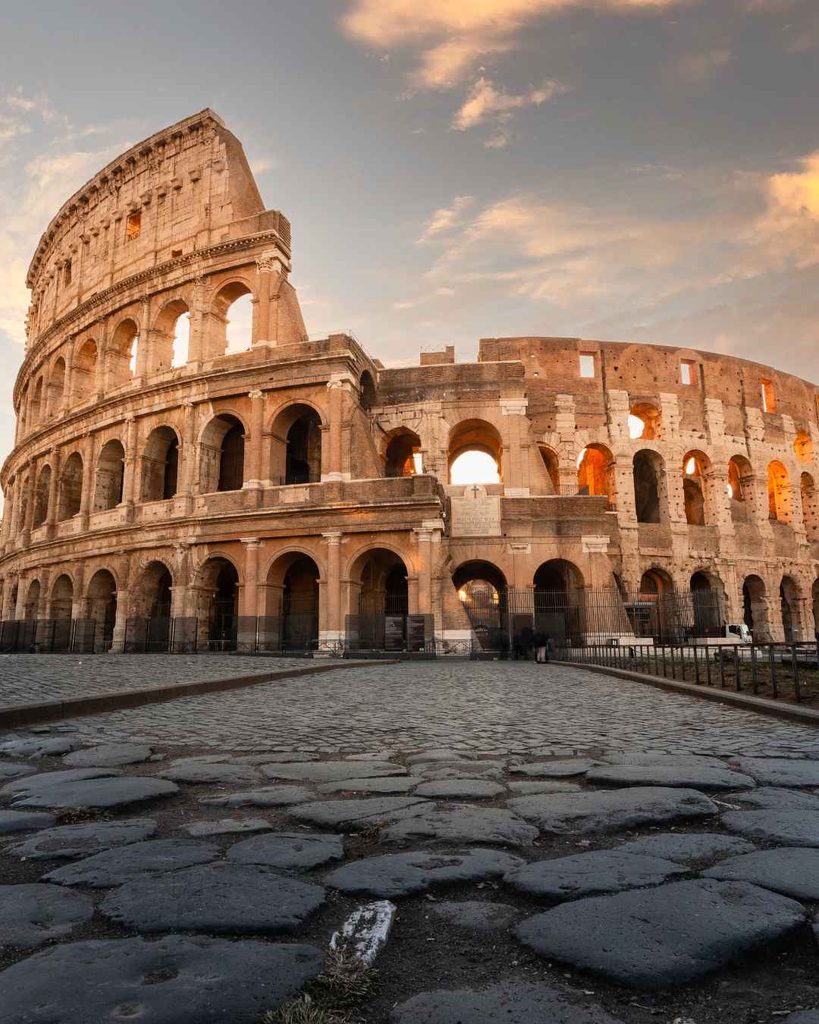
The Colosseum is the largest amphitheater ever built. It could hold between fifty thousand and eighty thousand spectators, making it one of the largest entertainment venues in the ancient world.
It was commissioned by the emperor Vespasian, who wanted to distance himself from the tyranny of Nero and to win the favor of the Roman people.
The amphitheater was built on the site of Nero’s private lake, which was drained to make way for the new building. The construction was funded by the spoils of the Jewish War, and the building was inaugurated by Vespasian’s son Titus in 80 AD with one hundred days of games.
The Colosseum is a masterpiece of engineering. It is built of concrete, travertine, and tufa, and it has a complex system of vaults, arches, and corridors that allowed the crowd to move in and out efficiently.
The building has eighty entrances, and it could be emptied in a matter of minutes.
The arena itself was a wooden platform covered with sand. Below the arena was the hypogeum, a labyrinth of corridors, cells, and lifts where the gladiators, the animals, and the scenery were kept. The hypogeum was a building within a building, a hidden world that made the spectacle possible.
The Colosseum was in use for more than four centuries. It was damaged by earthquakes, fires, and neglect, and by the Middle Ages it had been abandoned and was being used as a quarry. Much of the stone was taken for other buildings, including St. Peter’s Basilica.
The Pantheon: The Ancient Temple That Defied Time
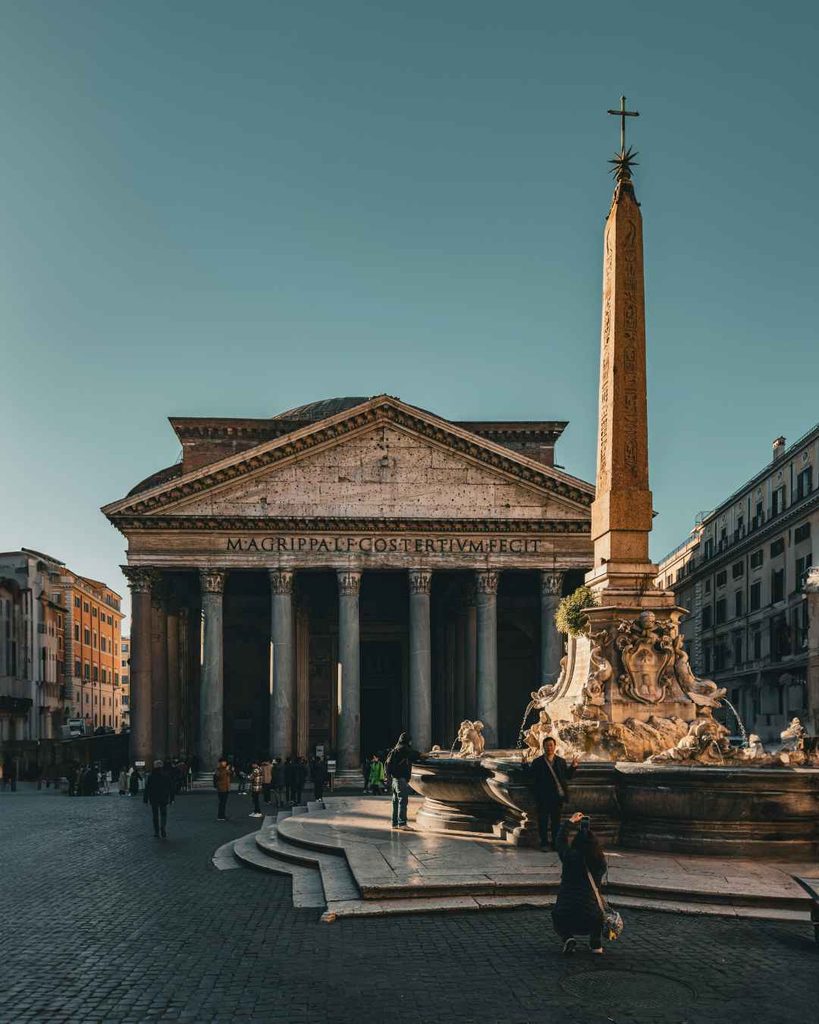
The Pantheon is the best-preserved building of ancient Rome. It was built by Hadrian, one of the greatest emperors in Roman history, on the site of an earlier temple. The building is a combination of a classical temple front and a revolutionary domed rotunda.
The front is a portico with sixteen granite columns, each weighing sixty tons. The columns were quarried in Egypt and transported to Rome by ship and barge.
The portico is topped with a triangular pediment, and the inscription on the frieze reads “M. Agrippa L. F. Cos. Tertium Fecit,” which means “Marcus Agrippa, son of Lucius, consul for the third time, built this.”
The interior is a circular space covered by a dome. The dome is one of the greatest achievements of Roman engineering. It is 43.3 meters in diameter, the same as its height, and it is the largest unreinforced concrete dome ever built.
At the top of the dome is the oculus, a circular opening that is the only source of natural light. The oculus is open to the sky, and the rain falls into the building, draining through holes in the floor.
The light from the oculus moves across the interior as the sun moves across the sky, creating a constantly changing pattern of illumination.
The Pantheon has been in continuous use for nearly two thousand years. It was converted into a church in 609 AD, which saved it from destruction. It is now the Basilica of Santa Maria ad Martyres, and it contains the tombs of the artist Raphael and the kings of Italy.
Architecture and Engineering: Which Building Is More Extraordinary?
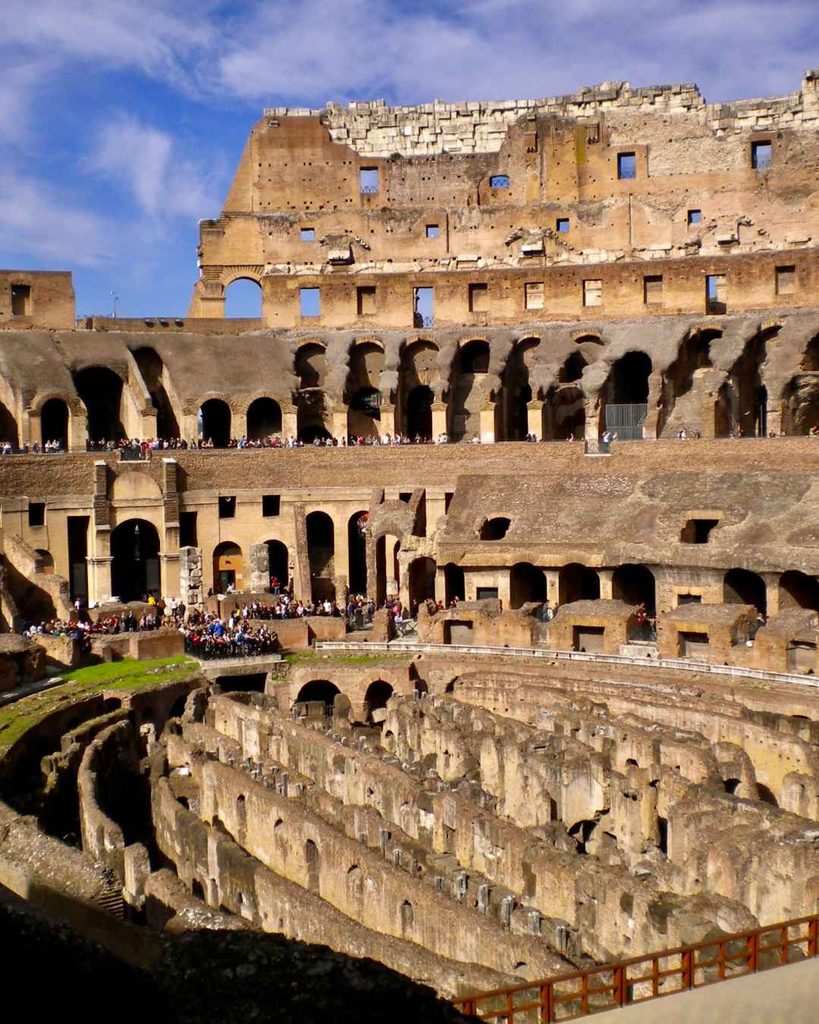
The Colosseum is a masterpiece of engineering. It is built with a complex system of concrete vaults and arches, and it has a sophisticated system of corridors and staircases that allowed the crowd to move quickly. The building is a marvel of organization and efficiency.
But the Pantheon is the more extraordinary building. The dome is a single span of concrete that has survived for nearly two thousand years without reinforcement. It is a feat of engineering that has never been surpassed.
The concrete used in the Pantheon is a special mix of volcanic ash, lime, and aggregate. The aggregate changes as it rises, from heavy travertine at the base to lightweight pumice at the top. This allowed the dome to be light enough to support itself.
The design of the Pantheon is also more refined. The proportions of the interior are perfect, with the height of the dome equal to the diameter of the rotunda. The result is a space that feels harmonious and balanced.
The Colosseum is impressive in its size and its complexity. The Pantheon is impressive in its perfection and its longevity. Both are extraordinary, but the Pantheon is the greater achievement.
Size and Scale: Which Monument Feels More Impressive in Person?
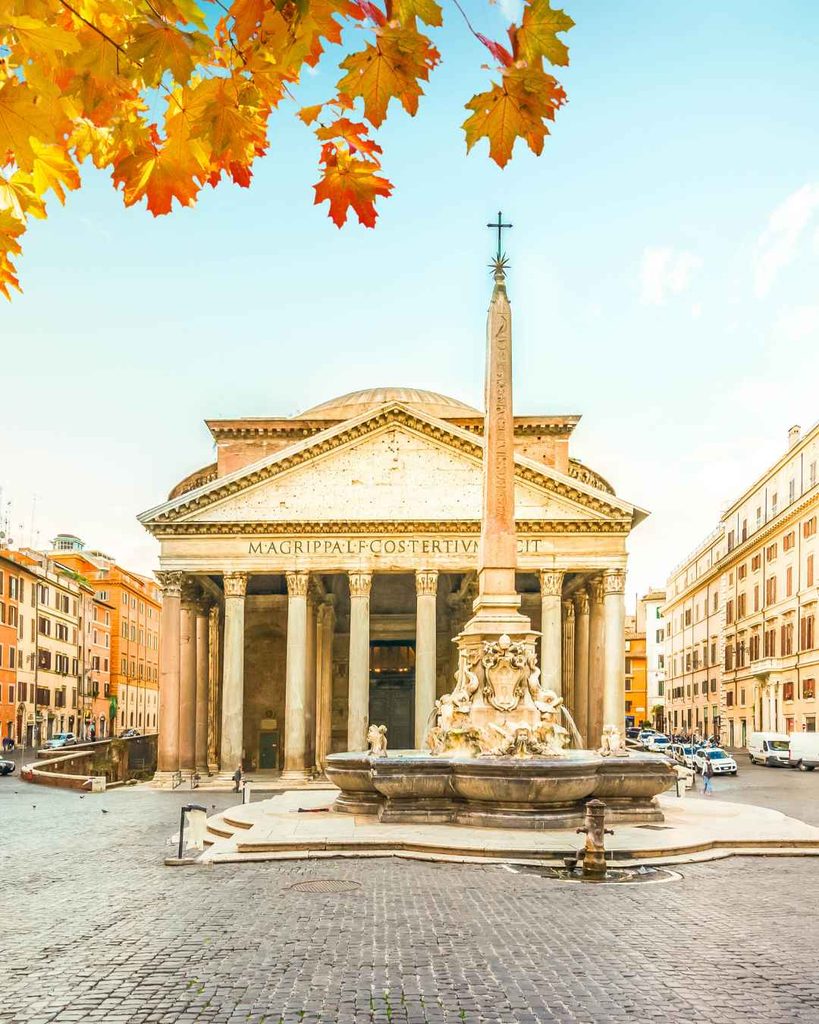
The Colosseum is larger. It rises to a height of 48 meters, and it covers an area of 24,000 square meters. It is visible from many parts of Rome, and it dominates the surrounding neighborhood.
The Pantheon is smaller. The dome reaches a height of 43.3 meters, and the building is much more compact. But the interior of the Pantheon is arguably more impressive.
The Colosseum is impressive in a way that is easy to understand. It is large, it is monumental, and it is unmistakably a building of power. The scale is overwhelming, and it is easy to imagine the crowds that once filled it.
The Pantheon is impressive in a way that is more subtle. The interior is a perfect sphere, and the light from the oculus moves across the walls and floor as the sun moves across the sky. The effect is mesmerizing.
The verdict on size and scale is a tie. The Colosseum is more impressive from the outside. The Pantheon is more impressive from the inside.
The Stories Behind the Stones: Gladiators vs. Roman Gods
The Colosseum is a monument to violence. It was a place where gladiators fought to the death, where wild animals were hunted and killed, and where criminals were executed in elaborate and cruel ways.
The games were not just entertainment. They were a form of social control. The emperor used the games to demonstrate his power, and the crowd used them to express its opinions. The games were a place where the relationship between the ruler and the people was negotiated.
The Pantheon is a monument to the divine. It was a temple dedicated to all the gods, and it was a place where the Romans could worship and reflect. The building is a statement about the relationship between the human and the divine.
The dome is a symbol of the heavens, and the oculus is a symbol of the eye of God. The interior is a representation of the cosmos, and the light that enters through the oculus is a symbol of divine illumination.
The verdict on stories is a tie. The Colosseum has the more dramatic stories. The Pantheon has the more spiritual ones.
Inside the Colosseum: What It Was Really Like to Attend a Spectacle
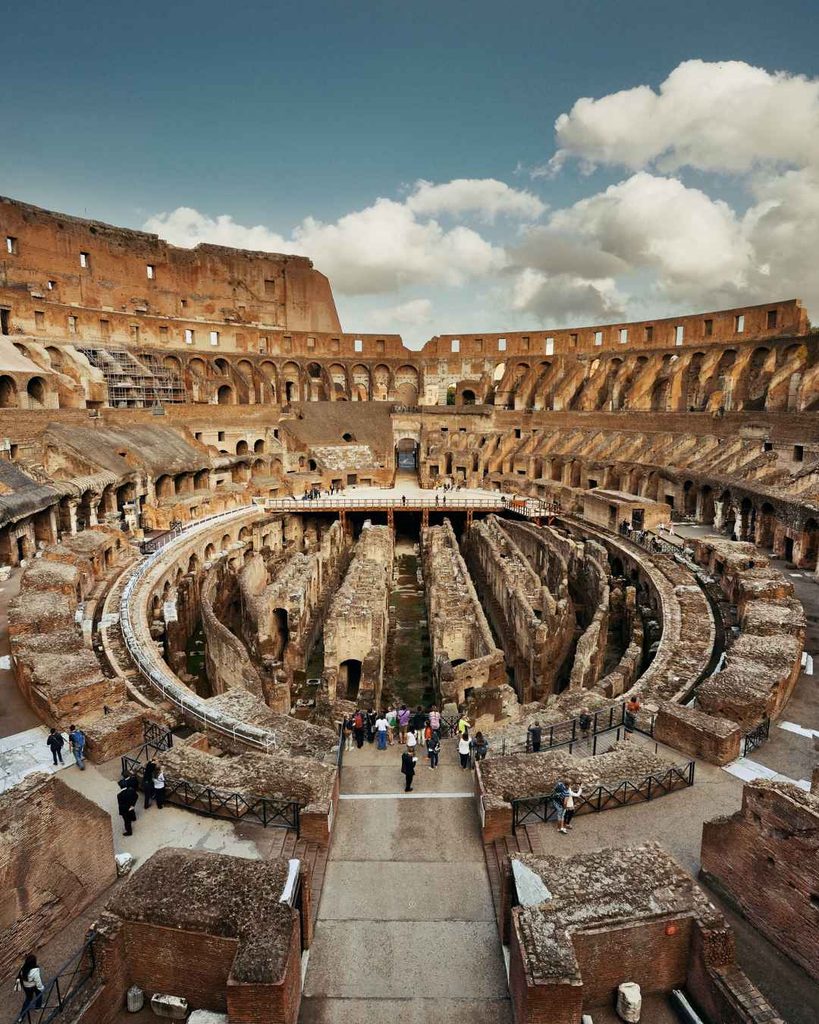
A day at the Colosseum was a long and intense experience. The games began in the morning and continued until dusk. The crowd was seated according to social status, with the emperor and the senators at the front and the common people at the back.
The morning was reserved for animal hunts. The afternoon was reserved for gladiatorial combat. The most popular events were the fights between famous gladiators, who were the celebrities of their day.
The atmosphere was electric. The crowd cheered, shouted, and sometimes rioted. The games were a place where the people could express their emotions and their opinions.
But the games were also brutal. Many of the participants died, and the animals were killed in large numbers. The Colosseum was a place of death, and the games were a celebration of violence.
The crowd was protected from the sun by a system of awnings, the velarium, which was operated by sailors from the imperial fleet. The awnings could be extended or retracted depending on the weather.
The seats were numbered, and the spectators had tickets that indicated their section and row. The Colosseum was a highly organized building, designed to handle large crowds efficiently and safely.
Inside the Pantheon: The Dome, the Oculus, and the Light from Above
A visit to the Pantheon is a very different experience. You enter through the portico, which is supported by massive columns. You pass through the bronze doors, which are original.
You emerge into the rotunda, and the first thing you see is the dome. It is a vast, curving surface that rises above you. At the center is the oculus, the circular opening that lets in the light.
The light is the most important feature of the Pantheon. It changes throughout the day, moving across the walls and the floor. On a sunny day, the light enters as a single beam that illuminates the interior.
The effect is spiritual and meditative. The Pantheon is a place of peace, a place where you can sit and reflect. It is the opposite of the Colosseum, which is a place of noise and violence.
The interior is decorated with marble and porphyry, and the walls are lined with niches and chapels. The floor is a pattern of colored marble, and the original bronze rosettes are still visible in the coffers of the dome.
The Pantheon is a building that rewards stillness. You sit, you look up, and you feel the presence of something larger than yourself.
The Engineering Mysteries That Still Fascinate Historians
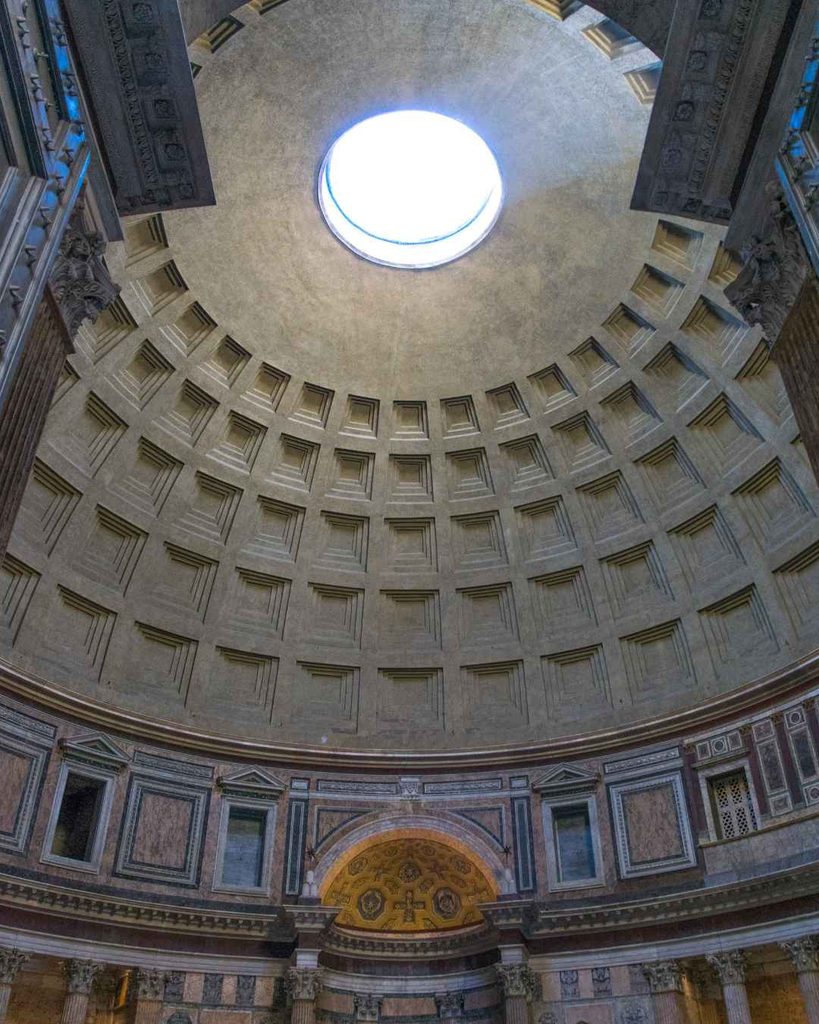
The Colosseum is a marvel of engineering. It is built with a complex system of vaults and arches that allowed the crowd to move efficiently. It also had a system of awnings, called the velarium, that could be extended to shade the spectators.
But the Pantheon is the greater engineering mystery. The dome is a single span of concrete that has survived for nearly two thousand years without reinforcement. The exact composition of the concrete is still being studied, and it has never been fully replicated.
The aggregate in the concrete changes as it rises, from heavy travertine at the base to lightweight pumice at the top. This allowed the dome to be light enough to support itself. The walls are thickest at the base and thinnest at the top, which further reduces the weight.
The oculus also serves an engineering purpose. It reduces the weight of the dome at its apex, which is the point of greatest stress. It also allows the building to expand and contract with changes in temperature.
The Pantheon is a building that has never been fully understood. It is a mystery that continues to fascinate historians and engineers, and it is one of the reasons why it is so impressive.
Emperors, Gods, and Power: What These Monuments Reveal About Ancient Rome
The Colosseum is a monument to the power of the emperor. It was built by the Flavian dynasty to celebrate their victory over the Jews and to distance themselves from Nero. The games were a way of demonstrating the emperor’s generosity and control.
The Pantheon is a monument to the power of the gods. It was built by Hadrian to honor all the gods of Rome. It is a statement about the relationship between the human and the divine.
The two monuments reveal different aspects of ancient Rome. The Colosseum reveals the city’s love of spectacle and its appetite for violence. The Pantheon reveals the city’s sophistication and its search for the divine.
The verdict on what these monuments reveal is a tie. Both are essential to understanding ancient Rome.
The Colosseum vs. the Pantheon Through the Eyes of an Ancient Roman
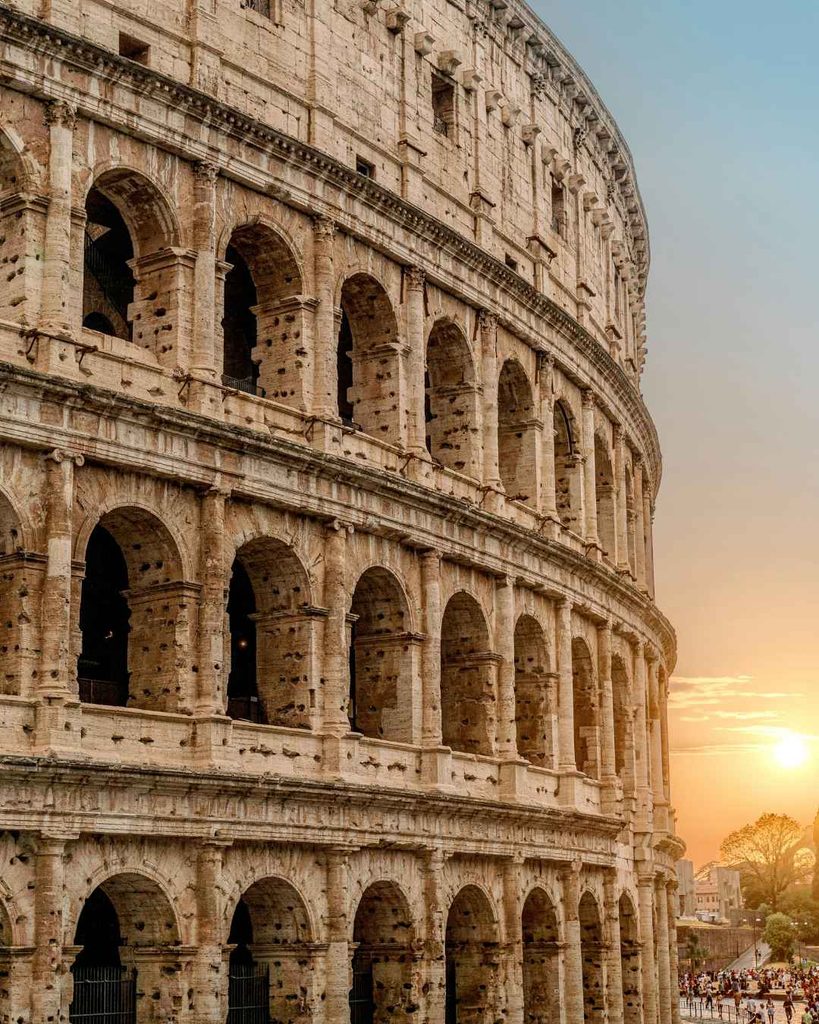
An ancient Roman would have known both monuments. He would have attended the games at the Colosseum, and he would have worshipped at the Pantheon.
But he would not have thought of them as tourist attractions. He would have thought of them as part of the fabric of his city. The Colosseum was a place of entertainment, and the Pantheon was a place of worship.
An ancient Roman would probably have been more impressed by the Colosseum. It was the largest amphitheater in the world, and the games were the most popular form of entertainment. The Pantheon was a temple, and temples were common in ancient Rome.
The verdict through the eyes of an ancient Roman is clear. The Colosseum was the more impressive monument.
Crowds, Queues, Tickets, and Costs: Which Is Easier to Visit?
The Colosseum is one of the most visited monuments in the world. It receives millions of visitors a year, and the queues can be hours long. Tickets should be booked in advance, and the most popular time slots sell out quickly.
The Pantheon is also popular, but it is easier to visit. It is smaller, and the queue is usually shorter. Tickets can be booked in advance, but they are also available at the door.
The Colosseum is more expensive. A standard ticket costs around 18 euros, and a guided tour costs more. The Pantheon is cheaper, with a standard ticket costing around 5 euros.
The verdict on crowds, queues, tickets, and costs is clear. The Pantheon is easier to visit. The Colosseum is more crowded and more expensive.
A guided tour of the Colosseum (arena, underground, night, etc.) as well as the Roman Forum and Palatine Hill comes highly recommended. Check out the best tours in this guide.
Lesser-Known Facts That Make Each Monument Even More Fascinating
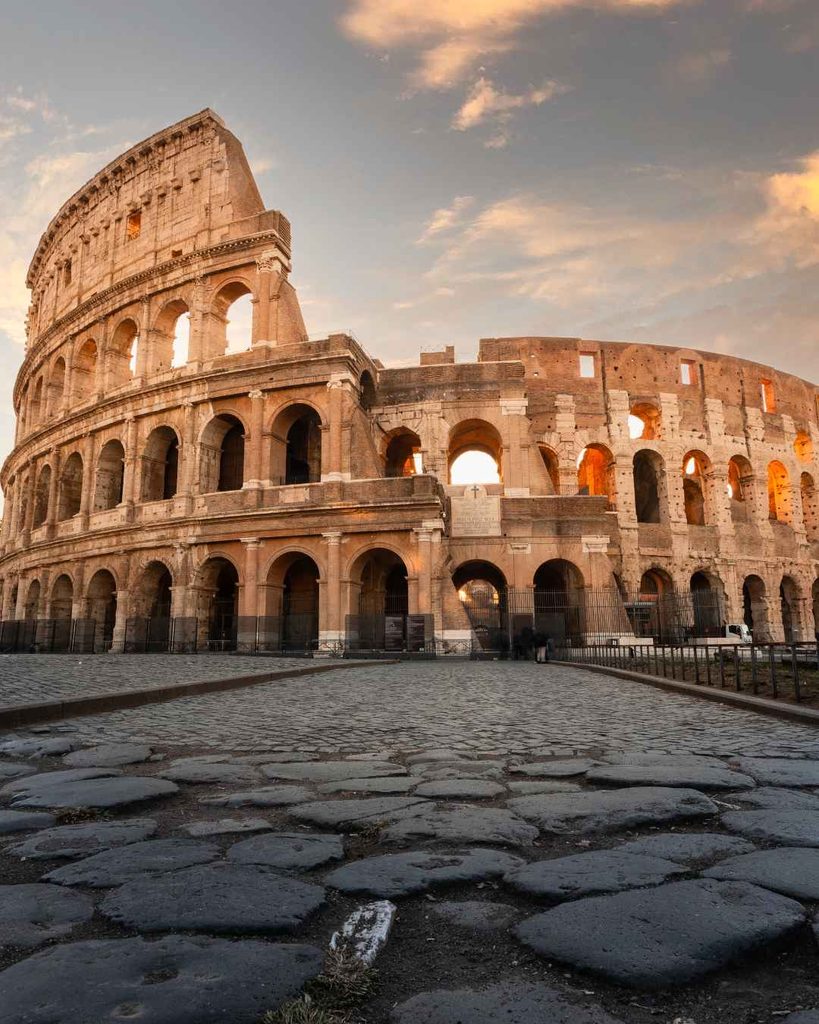
The Colosseum was originally called the Flavian Amphitheatre. The name “Colosseum” comes from the Colossus of Nero, a giant bronze statue that stood nearby.
The Colosseum had a system of underground tunnels and lifts that allowed animals and scenery to appear in the arena as if by magic. It also had a system of awnings that could be extended to shade the spectators.
The Pantheon’s dome is still the largest unreinforced concrete dome in the world. The oculus is the only source of natural light, and the rain falls into the building and drains through holes in the floor.
The Pantheon was converted into a church in 609 AD, which saved it from destruction. It is now the Basilica of Santa Maria ad Martyres.
The Colosseum vs. the Pantheon: Which Roman Wonder Wins?
There is no single answer to this question. The Colosseum and the Pantheon are both extraordinary, but they offer different kinds of wonder.
The Colosseum is the more dramatic monument. It is large, it is iconic, and it is a symbol of ancient Rome’s power and violence. It is the place to go if you want to feel the scale of the Roman Empire.
The Pantheon is the more perfect monument. It is harmonious, it is spiritual, and it is a symbol of ancient Rome’s engineering and sophistication. It is the place to go if you want to feel the presence of the divine.
If you have to choose one, the choice depends on what you value most. If you want drama and spectacle, choose the Colosseum. If you want perfection and peace, choose the Pantheon.
But the best answer might be to visit both. They are close enough to see in a single day, and they offer complementary experiences. The Colosseum shows you the power of Rome. The Pantheon shows you the soul of Rome.
Related post: The neighborhood to stay in while in Rome.
A Final Thought
The question of which monument is more impressive is ultimately a question about what you are looking for. The Colosseum is impressive in the way that a great spectacle is impressive. It is loud, it is dramatic, and it is unforgettable.
The Pantheon is impressive in the way that a great work of art is impressive. It is quiet, it is harmonious, and it is eternal.
Both are worth visiting. Both will stay with you. And both will make you understand why Rome is called the Eternal City.
Again, feel free to go through the list below of my Italy recommendations that I have crafted after years of travel to this beautiful country:
- Packing List: Things Not to Go to Italy Without
- Must-Do Things: Unforgettable Experiences
- Where to Stay: Best Hotels in Italy.
- Where to Stay in Rome: Rome’s Best Neighborhoods
- Where to Stay in Florence: Picking the Best Area
- Where to Stay in Venice: Venice’s Best Districts
- Italy’s Cobblestone Streets: Best Shoes For the Job
- Backpack or Suitcase?: Italy Luggage Guide
- Travel Insurance: Always Be Covered
- E-Sim: Be Connected At All Times