
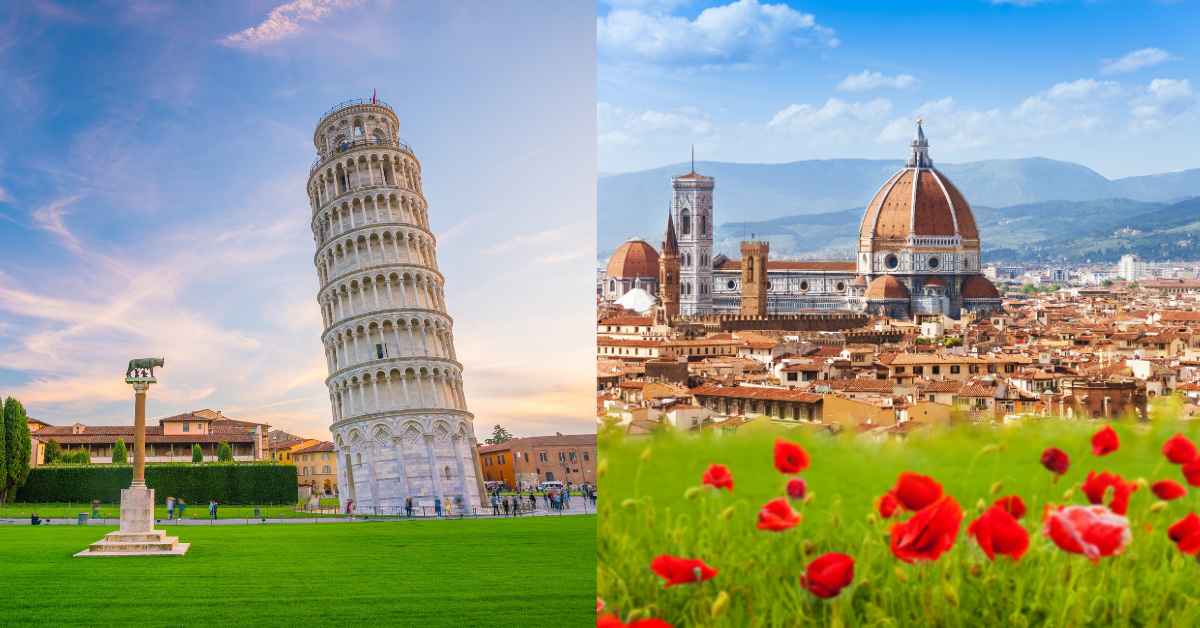
Tuscany is home to two engineering marvels that make you question what medieval builders were capable of. In Pisa, a tower that defies gravity captures your attention. In Florence, Brunelleschi’s magnificent dome leaves you wondering which achievement is truly more extraordinary.
Both structures are among the most famous in the world. Both were built in the same region, within a hundred years of each other. Both are marvels of medieval and Renaissance engineering. But they are not the same kind of marvel.
The Leaning Tower of Pisa is a monument to accident and survival. It was never meant to lean. It was meant to be a simple bell tower, and its lean was the result of a foundation that failed.
The Florence Duomo is a monument to intention and genius. It was designed to be impossible, and it was built by a man who invented new techniques to make it possible.
This post is not a travel guide telling you to choose one monument over the other. It is an argument. It examines both structures in detail, compares their engineering challenges, and tries to answer the question that has fascinated historians and architects for centuries. Which is the greater feat of engineering?
Before you read further, remember that Italy rewards travelers who come prepared. I’ve found a few things especially useful on an Italy trip, and they’re worth having and/or knowing beforehand. See the checklist here. Also, if you want me to plan an Italy trip for you that you will never forget, drop me a message here
Two Tuscan Icons, Two Extraordinary Engineering Challenges
The Leaning Tower of Pisa and the Florence Duomo were built for different purposes, in different cities, under different conditions. They were not designed to be compared, and they were not designed to complement each other. They represent two different approaches to building.
The Leaning Tower of Pisa was begun in 1173 as the bell tower of the Pisa Cathedral. It was designed to be a simple, elegant structure, a symbol of the city’s wealth and power. But the tower began to lean almost immediately after construction started, and the builders spent the next two centuries trying to correct it.
The Florence Duomo was begun in 1296 as the cathedral of Florence. It was designed to be the largest church in the world, with a dome that would rival the domes of antiquity. But the dome was not designed until the 1420s, when Filippo Brunelleschi proposed a solution that no one else had imagined.
One structure was a failure that became a wonder. The other was an impossibility that became a masterpiece. Both are extraordinary. But they are extraordinary in different ways, and the question of which is the greater feat of engineering requires us to examine them closely.
The Leaning Tower of Pisa: The Accident That Became a Wonder
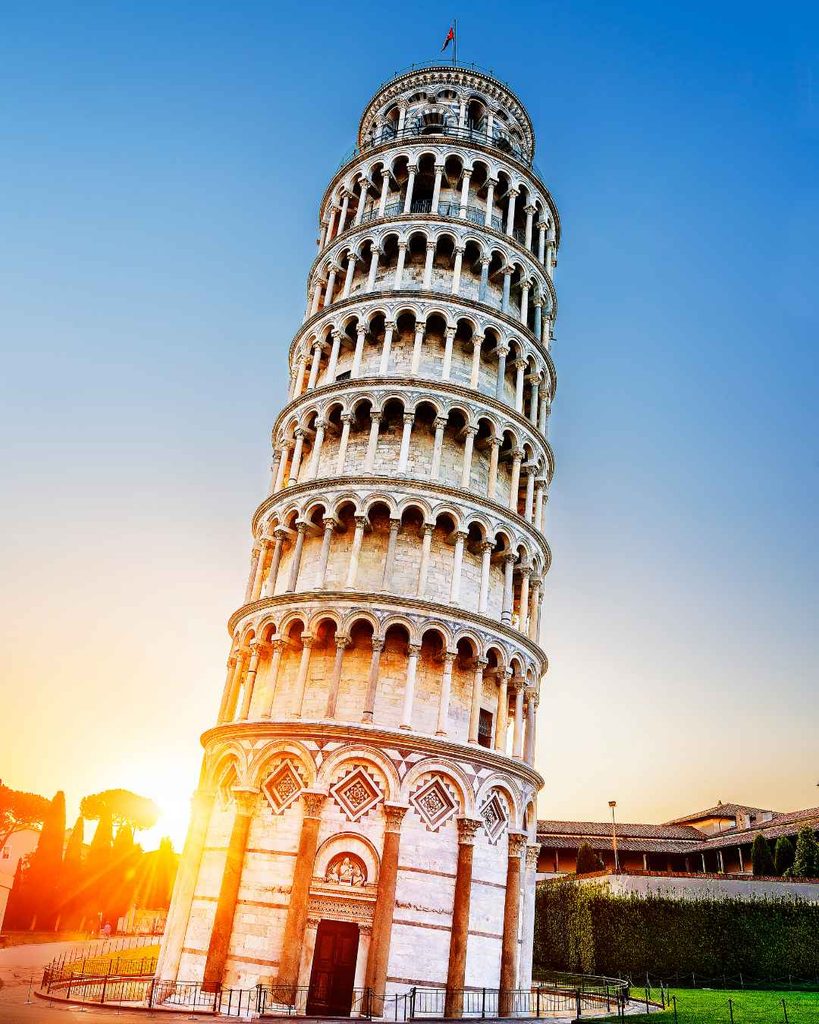
The Leaning Tower of Pisa is one of the most recognizable structures in the world. It is a cylindrical bell tower, eight stories tall, built of white marble. It leans at an angle of about four degrees, which means that the top of the tower is offset from the base by nearly four meters.
The tower was begun in 1173, during a period of prosperity and military success for the Republic of Pisa. It was designed to be the bell tower of the cathedral, and it was intended to be a symbol of the city’s wealth and power.
The architect is usually identified as Bonanno Pisano, though the attribution is uncertain. The tower was built in stages over nearly two centuries, with long interruptions caused by wars and political turmoil. The first phase of construction lasted until the 1170s, when the tower had reached the third story.
The tower began to lean almost immediately after construction started. The foundation was too shallow, and the soil beneath it was too soft. The lean was noticed by the time the third story was completed, and construction was halted for nearly a century.
When construction resumed in the 1270s, the builders tried to compensate for the lean by making the upper stories slightly taller on one side. This made the tower curved, but it did not stop the lean. The tower was finally completed in the fourteenth century, with the addition of the belfry.
The belfry was designed by Giovanni di Simone, and it was built with a slight counter-lean to compensate for the tilt of the lower stories. The result is a tower that is not straight but curved, a subtle detail that most visitors never notice.
The tower is built of white marble from the quarries of Carrara, which was transported to Pisa by ship and barge. The marble is decorated with arcades, columns, and sculptures, and it is one of the finest examples of Pisan Romanesque architecture.
The tower has seven bells, one for each note of the musical scale. The largest bell weighs more than three tons. The bells were installed over several centuries, and they are still rung today.
Florence’s Duomo: The Impossible Dome That Changed Architecture
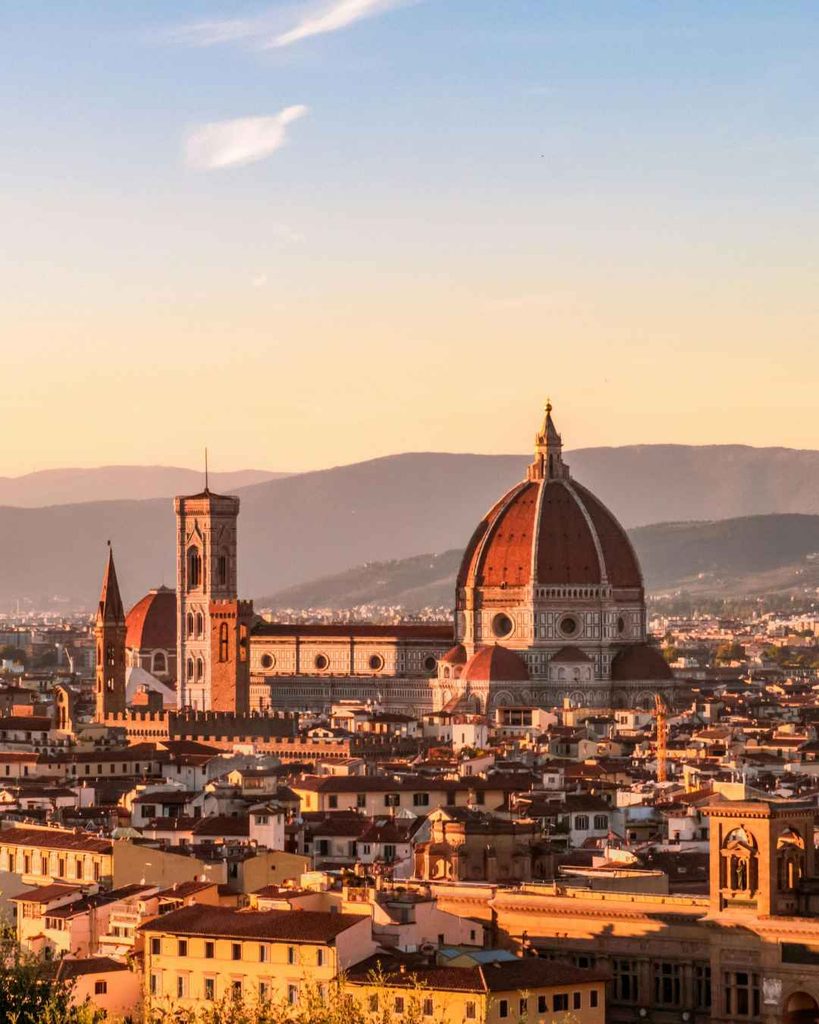
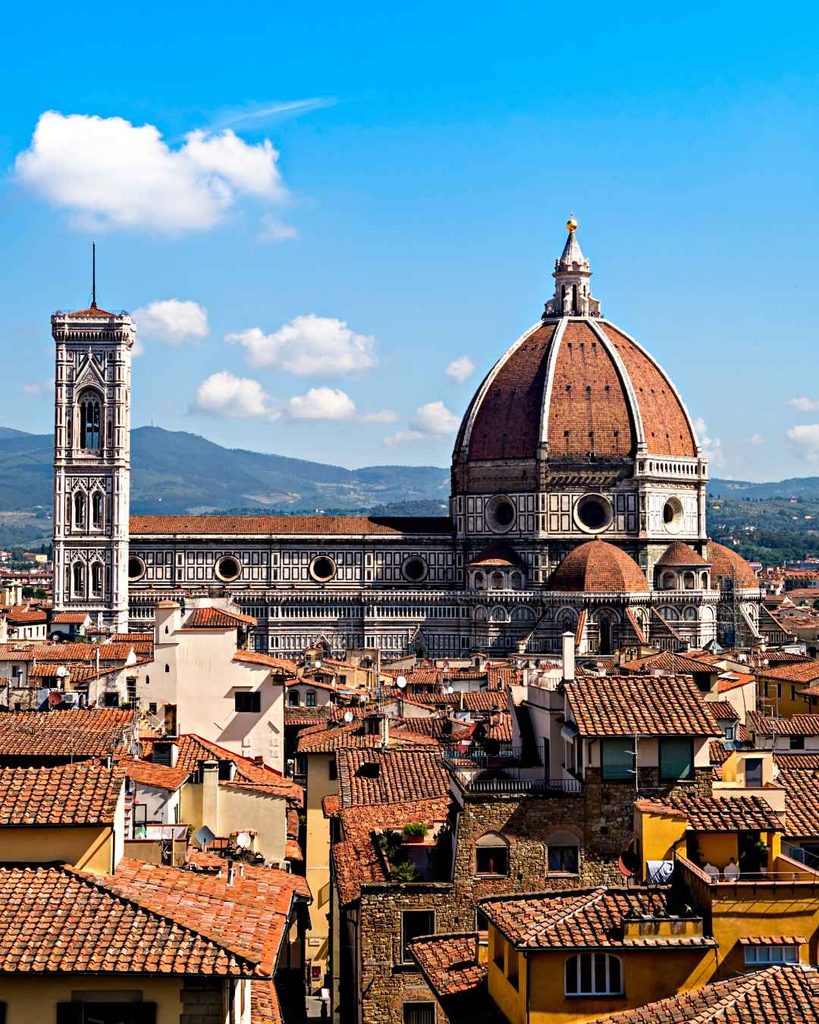
The Florence Duomo is one of the largest churches in the world, and its dome is one of the greatest achievements of Renaissance engineering. The cathedral was begun in 1296, and it was designed to be the largest church in Christendom.
The cathedral was designed by Arnolfo di Cambio, who planned a church with a massive octagonal opening at the crossing. The opening was nearly forty-six meters wide, and it was intended to be covered by a dome.
But the dome was a problem. No one knew how to build a dome that large without wooden centering, which would have required forests’ worth of timber. The problem remained unsolved for more than a century.
The cathedral stood with its opening exposed to the sky, and the city of Florence began to despair of ever completing it. Rain fell into the opening, and the unfinished structure became a symbol of the city’s ambition and its limitations.
In 1418, the Opera del Duomo announced a competition for a solution. Filippo Brunelleschi, a goldsmith with no formal architectural training, proposed a radical solution. He would build a double-shell dome, with a thick inner shell and a lighter outer shell, held together by stone ribs and horizontal chains.
Brunelleschi’s design was unlike anything that had been built before. It was a masterpiece of engineering, and it was completed in 1436, just sixteen years after construction began. The dome was the largest masonry dome ever built, and it remains the largest today.
The dome is 43.3 meters in diameter, and it rises to a height of 52 meters. It is built of brick, which was made locally and fired in kilns. The bricks were laid in a herringbone pattern, and they were held together with mortar made from lime and volcanic ash.
Why Does the Leaning Tower of Pisa Lean?
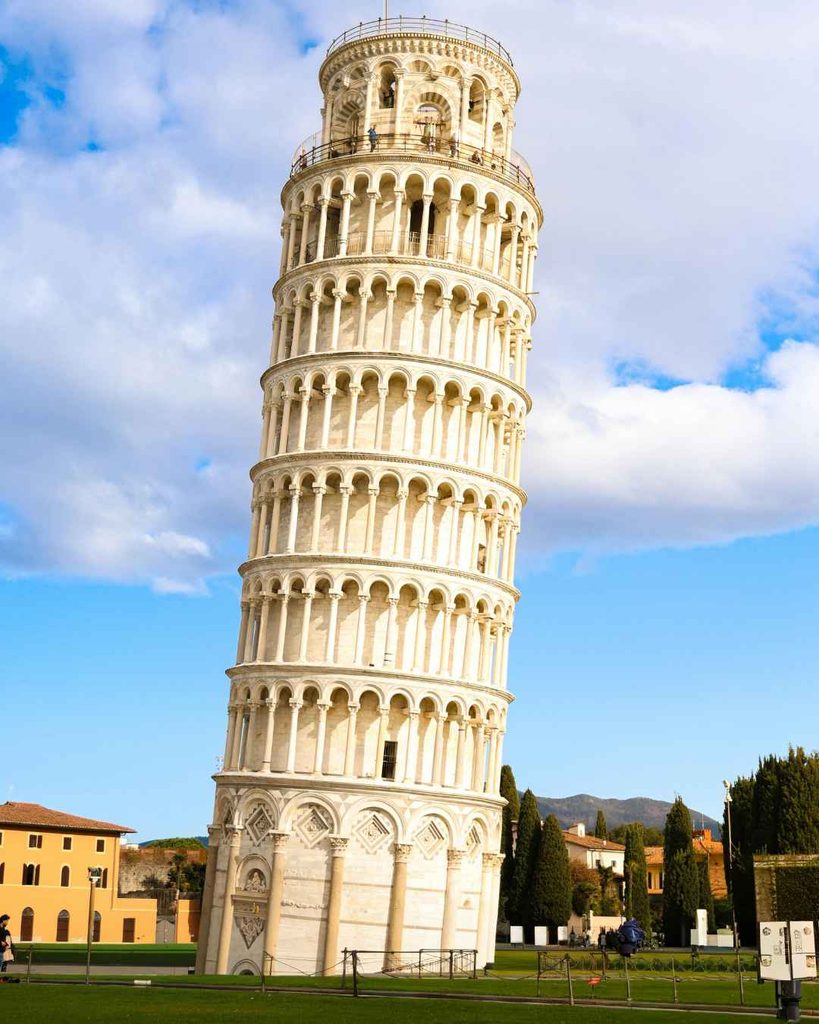
The Leaning Tower of Pisa leans because of a problem with its foundation. The tower was built on soft, sandy soil that was not strong enough to support its weight. The foundation was only three meters deep, which was not enough to reach the solid layer of clay beneath.
The soil beneath the tower is a mixture of sand, silt, and clay, and it is denser on one side than the other. This caused the tower to settle unevenly, and the lean began almost immediately. The problem was made worse by the fact that the tower was built in stages, which allowed the soil to settle between phases of construction.
The lean has been a problem for centuries. In the 1990s, the tower was closed to the public for more than a decade while engineers worked to stabilize it. They removed soil from beneath the higher side of the tower, which caused it to settle back slightly.
The lean was reduced from about 5.5 degrees to about 4 degrees. The tower is now stable, and it is expected to remain stable for at least another two hundred years. But it still leans, and it always will. The lean is part of its identity.
Engineers have also installed a system of counterweights and drainage pipes to prevent the soil from shifting again. These measures are invisible to visitors, but they are essential to the survival of the tower.
Brunelleschi’s Dome: How Did They Build It Without Scaffolding?
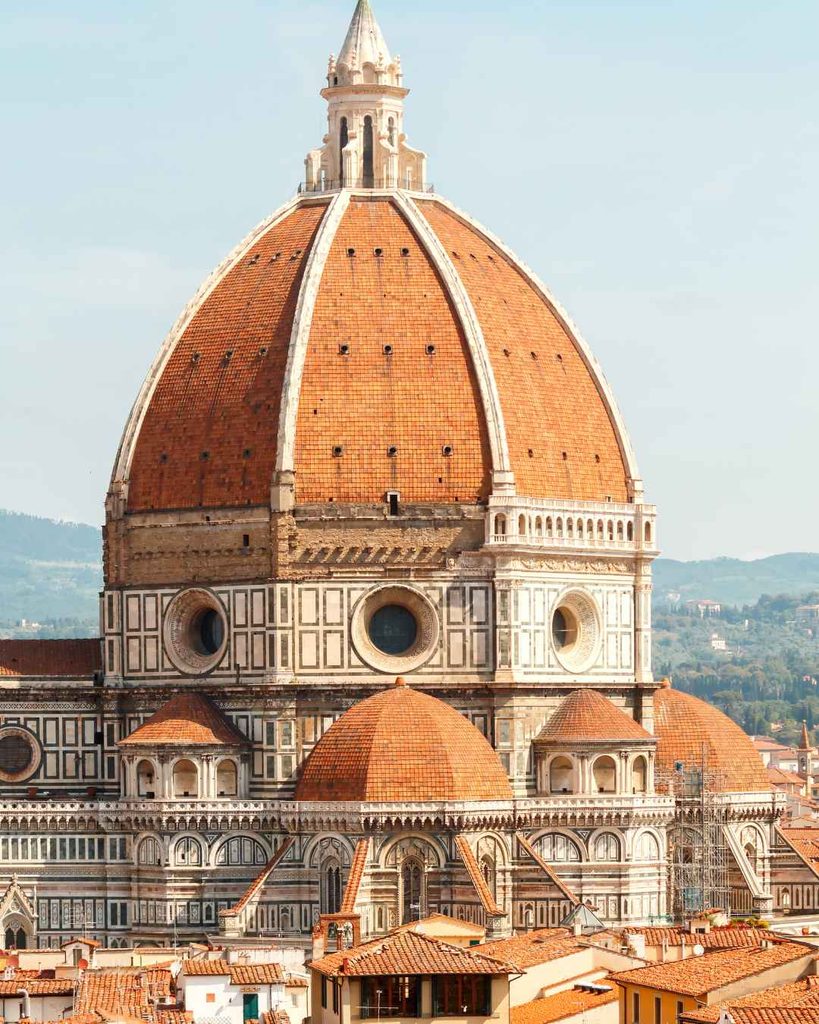
Brunelleschi’s dome was built without the wooden centering that would have been required by traditional methods. This was the great innovation of the project, and it is what makes the dome such an extraordinary feat of engineering.
The dome is a double-shell structure. The inner shell is thick and strong, and it carries the weight of the dome. The outer shell is lighter, and it protects the inner shell from the weather. The two shells are connected by twenty-four stone ribs.
The dome is held together by a series of horizontal chains made of stone, iron, and timber. These chains act like the hoops on a barrel, preventing the dome from spreading outward under its own weight. There are four chains in total, and they are hidden between the two shells.
The bricks of the dome are laid in a herringbone pattern, which allows the masonry to lock itself in place as it rises. This technique, which Brunelleschi may have learned from Roman builders, was essential to the success of the project.
Brunelleschi also invented new machines to lift the heavy stones and bricks to the top of the dome. He designed a hoist that was powered by oxen, and he designed a crane that could move in multiple directions. These machines were centuries ahead of their time.
The dome was built without a traditional wooden framework, which meant that the bricks had to support themselves as they rose. This was possible because of the herringbone pattern and the horizontal chains, which held the structure together as it grew.
Which Structure Was More Difficult to Build?
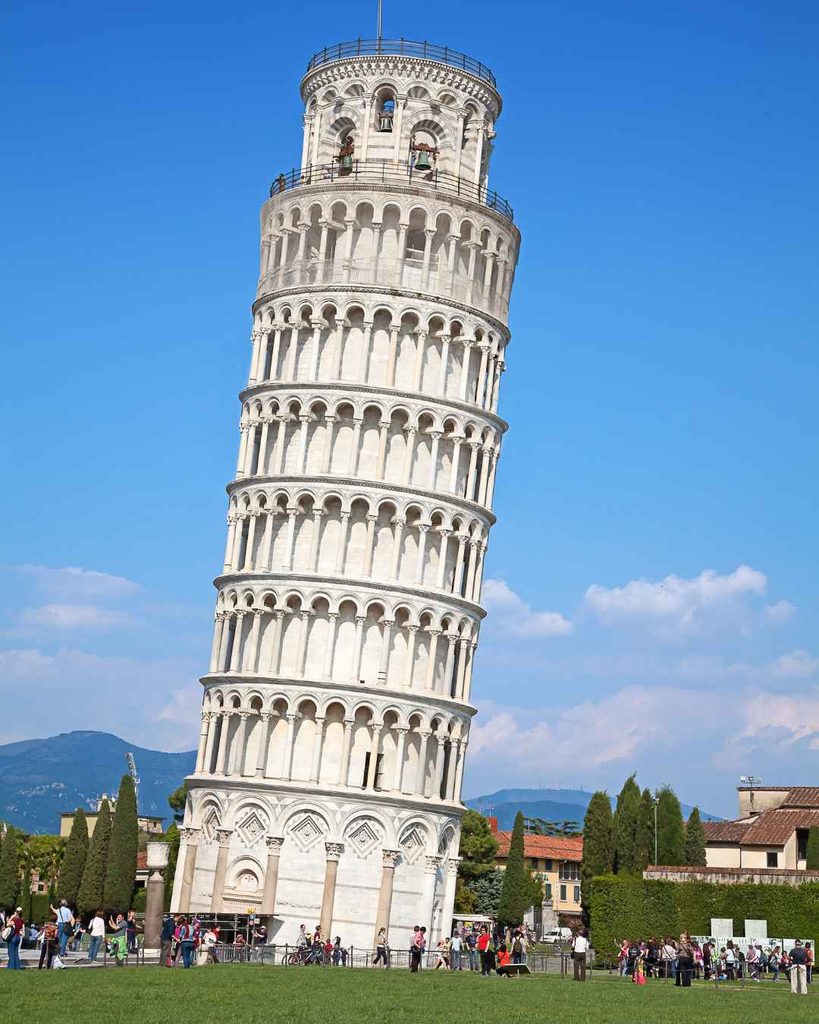
The Leaning Tower of Pisa was difficult to build because of its foundation. The builders did not realize that the soil was too soft, and they did not know how to correct the lean once it began. They spent centuries trying to fix a problem they did not understand.
But the Florence Duomo was more difficult to build. The dome was an unprecedented engineering challenge, and it required the invention of new techniques, new materials, and new machines. Brunelleschi had to solve problems that no one had ever faced before.
The tower was a failure that was corrected over time. The dome was a success that was achieved through genius. The tower required persistence. The dome required imagination.
The dome was the greater feat of engineering because it required a level of innovation that the tower did not. The tower was built with techniques that were already known. The dome was built with techniques that had to be invented.
Materials, Design, and Construction Techniques
The Leaning Tower of Pisa is built of white marble, which was quarried in the mountains of Carrara. The marble was transported to Pisa by ship and barge, and it was cut and shaped on site. The tower is a cylindrical structure with a series of arcades and columns.
The design of the tower is a masterpiece of Romanesque architecture. It is simple, elegant, and harmonious. The arcades wrap around the tower in a continuous spiral, and the columns are decorated with carved capitals and sculptures.
The Florence Duomo is built of marble, brick, and stone. The dome is built of brick, which was made locally and fired in kilns. The bricks were laid in a herringbone pattern, and they were held together with mortar made from lime and volcanic ash.
The design of the dome is a masterpiece of geometry. It is an octagonal structure, with eight ribs that rise from the base to the top. The ribs are connected by arches, and the whole structure is held together by the chains.
The dome is also decorated with marble panels, which were added in the sixteenth century. The panels are white, green, and pink, and they create a pattern that is visible from across the city.
The dome required more sophisticated materials and more advanced construction techniques than the tower. The tower was built with marble and stone. The dome was built with brick, iron, and timber, and it required a level of precision that was unprecedented.
The Genius Behind the Monuments: Bonanno Pisano vs. Filippo Brunelleschi
Bonanno Pisano is the architect traditionally credited with the design of the Leaning Tower. He was a sculptor and architect who worked on several important buildings in Pisa, including the cathedral. Very little is known about Bonanno.
He was a talented artist, but he was not a revolutionary. The tower he designed was a beautiful building, but it was not an innovative one. The problems with the foundation were not his fault, but he did not solve them.
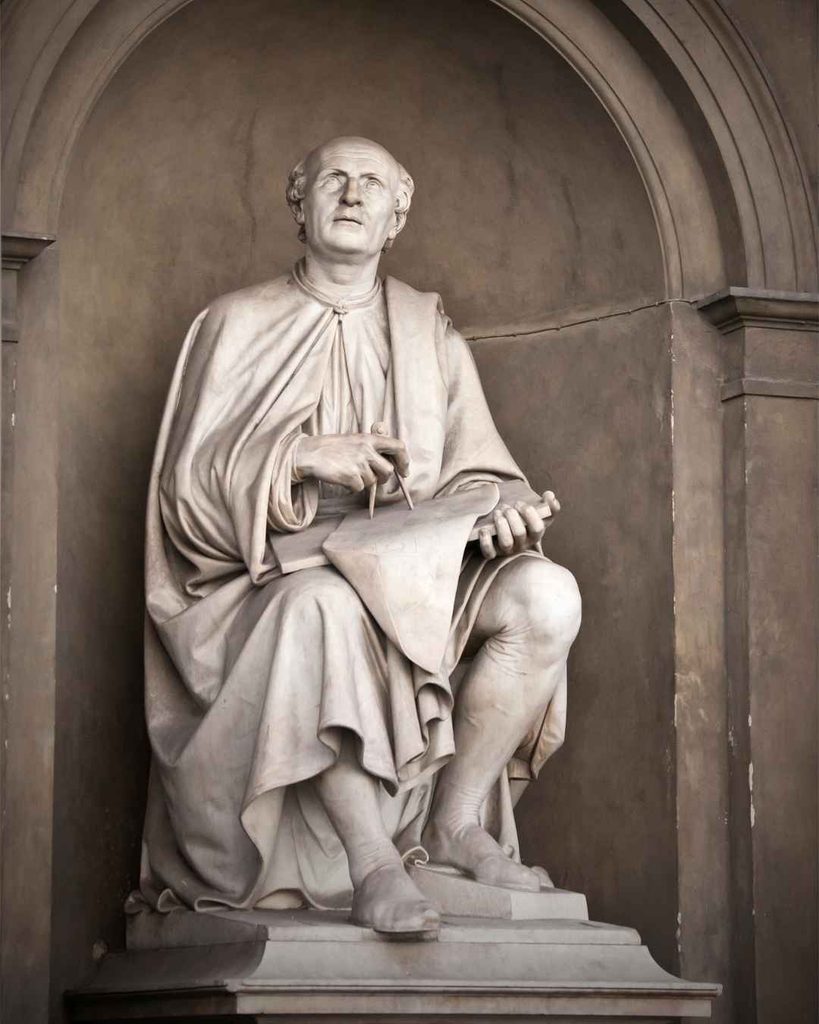
Filippo Brunelleschi was one of the greatest geniuses of the Renaissance. He was a goldsmith, a sculptor, and an architect, and he was also a mathematician and an engineer. He studied the ruins of ancient Rome, and he used what he learned to solve the problem of the dome.
Brunelleschi was a difficult man. He was secretive, competitive, and hot-tempered. But he was also a visionary, and he was willing to take risks that no one else would take. He was the first person to design a dome without centering, and he was the first person to build a dome that large.
The comparison is not fair. Bonanno was a talented architect, but Brunelleschi was a genius. The dome is the greater achievement because Brunelleschi was the greater architect.
Engineering Mistakes vs. Engineering Breakthroughs
The Leaning Tower of Pisa is a monument to an engineering mistake. The foundation was too shallow, and the soil was too soft. The lean was the result of a failure of planning, not a failure of execution.
But the tower is also a monument to survival. It has survived earthquakes, wars, and centuries of neglect. It has been stabilized by modern engineers, and it is now expected to stand for centuries to come. The tower is a testament to the resilience of human construction.
The Florence Duomo is a monument to an engineering breakthrough. The dome was built without centering, using techniques that had never been used before. It was a triumph of imagination and ingenuity.
The tower is a mistake that became a wonder. The dome is a wonder that was achieved through genius. The tower is a story of failure and recovery. The dome is a story of ambition and achievement.
The dome is the greater feat of engineering because it was a deliberate achievement rather than an accidental one. The tower is impressive because it survived. The dome is impressive because it was built.
The Hidden Engineering Secrets Most Visitors Never Notice
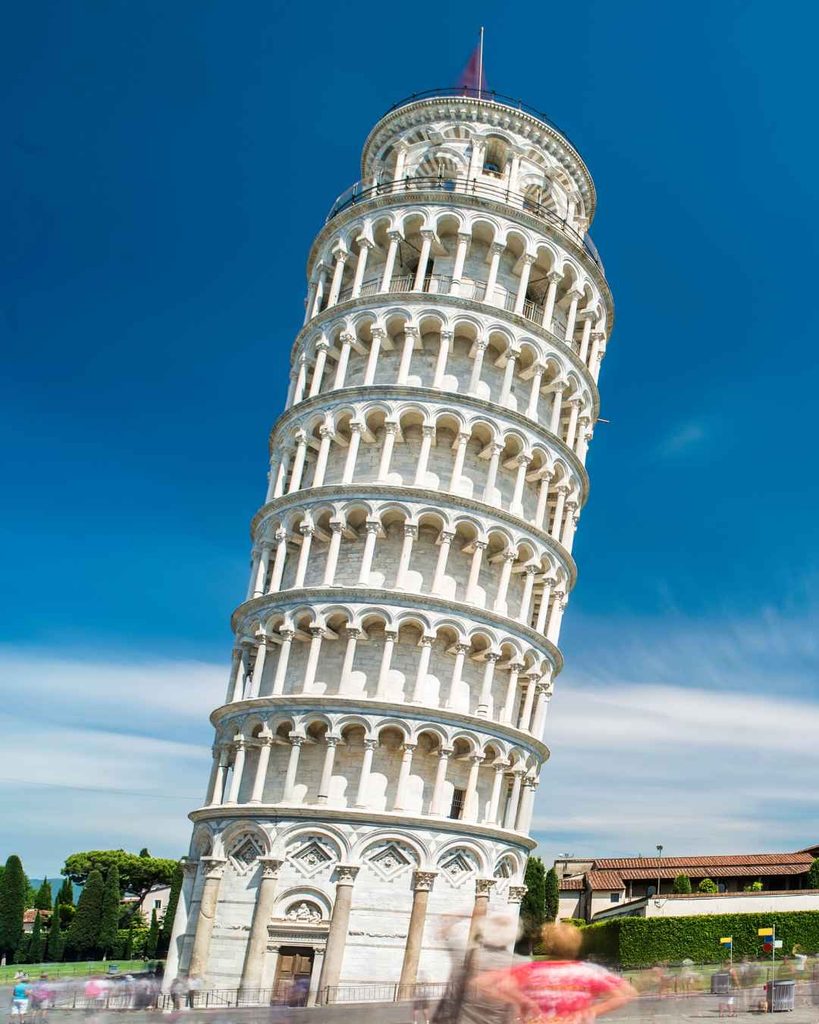
The Leaning Tower of Pisa has several hidden engineering secrets. The staircase that spirals up the tower is built with a slight curve, which compensates for the lean. The columns on the upper stories are slightly taller on one side, which was an attempt to correct the lean.
The tower also has a system of counterweights, which were added in the twentieth century to stabilize it. These counterweights are hidden inside the tower, and they are not visible to visitors.
The bells of the tower are also arranged in a specific way. The largest bell is on the side of the tower that leans the least, which reduces the stress on the foundation.
The Florence Duomo has its own hidden secrets. The dome is held together by a series of chains, which are hidden behind the inner shell. The chains are made of stone, iron, and timber, and they are essential to the stability of the dome.
The dome also has a series of cracks, which have been monitored for centuries. These cracks are caused by the movement of the building, and they have been repaired several times. The cracks are a reminder that even the greatest buildings are not immortal.
The dome also has a secret passageway that runs between the two shells. This passageway was used by the builders during construction, and it is now used by maintenance workers. It is not open to the public, but it is one of the most fascinating hidden spaces in Florence.
How Have They Survived Centuries of Earthquakes, Weather, and Wear?
The Leaning Tower of Pisa has survived several earthquakes, including a major one in 1280 and another in 1846. The tower has also survived wars, including the Second World War, when it was almost destroyed by Allied bombing.
The tower has survived because of its flexibility. The soil beneath it absorbs the shock of earthquakes, and the tower itself is able to sway without collapsing. The tower is also made of marble, which is a durable material that resists weathering.
The Florence Duomo has also survived earthquakes, including a major one in 1453 and another in 1895. The dome has survived because of its strength and its flexibility. The chains that hold it together allow it to move slightly without collapsing.
The dome is also protected by a layer of lead, which covers the outer shell and prevents water from penetrating the brickwork. The lead was added in the fifteenth century, and it has been replaced several times.
Both structures have survived because of a combination of good design and good luck. The tower is lucky to be still standing. The dome is a testament to the genius of its creator.
The Leaning Tower of Pisa vs. Florence’s Duomo: Which Is More Beautiful?
The Leaning Tower of Pisa is a beautiful building. It is elegant, graceful, and unique. Its lean gives it a sense of movement and uncertainty that is strangely appealing. The white marble, the arcades, and the sculptures all contribute to its beauty.
The Florence Duomo is also a beautiful building. It is grand, harmonious, and perfectly proportioned. Its dome is a masterpiece of design, and it dominates the skyline of Florence. The marble panels, the sculptures, and the stained glass windows all contribute to its beauty.
The beauty of the tower is in its imperfection. The beauty of the dome is in its perfection. The tower is beautiful because it is flawed. The dome is beautiful because it is flawless.
The verdict on beauty is a tie. Both are beautiful, but in different ways. The tower is more unique. The dome is more harmonious.
Can You Visit Both Monuments on the Same Trip?
Yes. Pisa and Florence are about an hour apart by train, and both cities are easily accessible from each other. You can visit the Leaning Tower in the morning and the Florence Duomo in the afternoon, or vice versa.
The train from Florence to Pisa takes about an hour, and the station is a short walk from the Campo dei Miracoli. The train from Pisa to Florence is equally convenient. There are also buses that connect the two cities, though they take longer than the train.
If you have a car, you can drive between the two cities in about an hour and a half. The route passes through some of the most beautiful countryside in Tuscany, including the hills of Chianti and the vineyards of the Arno Valley.
If you are visiting both monuments, book your tickets in advance. The Leaning Tower requires a timed ticket, and the Florence Duomo requires a reservation for the dome climb. Both can sell out in high season.
If you are based in Florence, you can do a day trip that takes you to Pisa, Siena, and San Gimignano. Check out the details in this guide.
The Verdict: Which Is the Greater Feat of Engineering?
There is no single answer to this question. The Leaning Tower of Pisa and the Florence Duomo are both extraordinary structures, but they are extraordinary in different ways.
The tower is a monument to accident and survival. It was never meant to lean, and its lean is the result of a mistake. But it has survived for more than eight centuries, and it has become one of the most recognizable structures in the world.
The dome is a monument to intention and genius. It was designed to be impossible, and it was built by a man who invented new techniques to make it possible. It is a masterpiece of engineering, and it changed the course of architecture.
If you have to choose one, the choice depends on what you value most. If you value survival against the odds, the tower is the answer. If you value human ingenuity and innovation, the dome is the answer.
But the best answer might be to visit both. They are close enough to see in a single day, and they offer complementary experiences. The tower shows you what happens when things go wrong. The dome shows you what happens when things go right.
There are lots of experiences that are worth your money while in Florence, Italy. Try to book in advance as much as possible. Use this guide to check what would interest you and book before your trip.
The Final Thought
The question of which structure is the greater feat of engineering is ultimately a question about what you are looking for. The tower is impressive in the way that a survivor is impressive. It is flawed, it is fragile, and it is still standing.
The dome is impressive in the way that a masterpiece is impressive. It is perfect, it is innovative, and it is eternal.
Both are worth visiting. Both will stay with you. And both will make you understand why Tuscany is one of the most remarkable regions in the world.
Again, feel free to go through the list below of my Italy recommendations that I have crafted after years of travel to this beautiful country:
- Packing List: Things Not to Go to Italy Without
- Must-Do Things: Unforgettable Experiences
- Where to Stay: Best Hotels in Italy.
- Where to Stay in Rome: Rome’s Best Neighborhoods
- Where to Stay in Florence: Picking the Best Area
- Where to Stay in Venice: Venice’s Best Districts
- Italy’s Cobblestone Streets: Best Shoes For the Job
- Backpack or Suitcase?: Italy Luggage Guide
- Travel Insurance: Always Be Covered
- E-Sim: Be Connected At All Times