
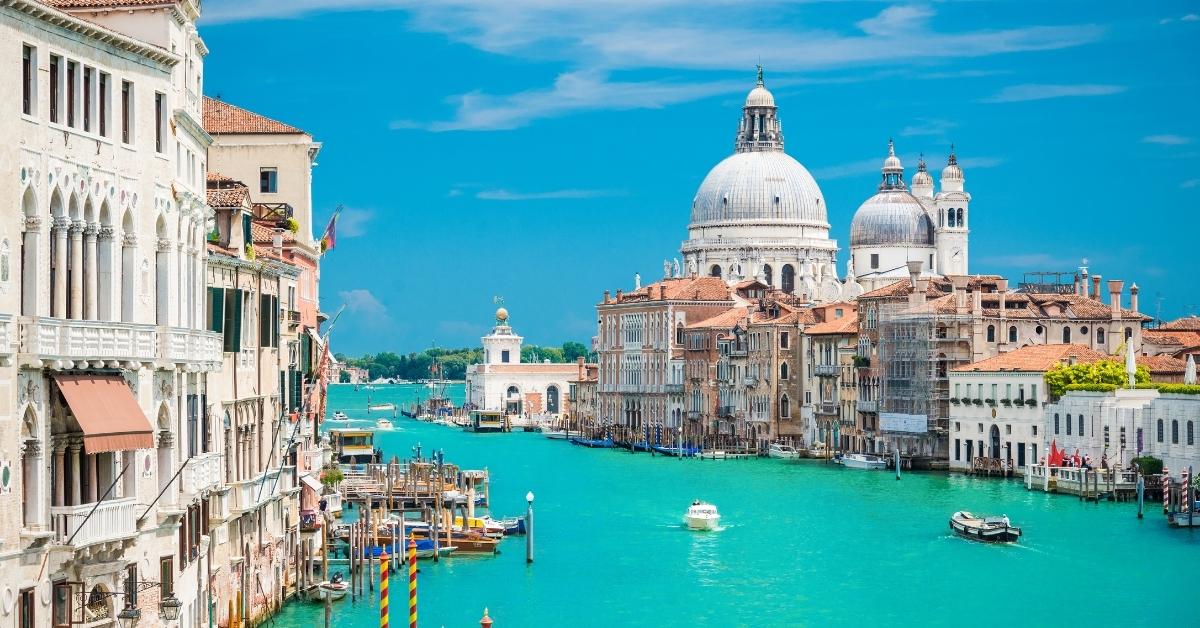
Venice. One of the most iconic cities in the world. You may think you have read and seen everything there is about it. So it’s easy to arrive with a simple plan: see St. Mark’s Square, walk across the Rialto Bridge, take a gondola ride, and move on.
But Venice is much more than its famous sights. It’s a real city with a long and complicated history, narrow streets that can be confusing, quiet corners that most tourists never see, and plenty of surprises along the way. Once you start looking beyond the postcard views, you begin to see Venice very differently. Here are 13 things about Venice that might surprise you and change the way you experience the city.
Before you read further, remember that Italy rewards travelers who come prepared. I’ve found a few things especially useful on an Italy trip, and they’re worth having and/or knowing beforehand. See the checklist here. Also, if you want me to plan an Italy trip for you that you will never forget, drop me a message here
1. Venice Is Built on a Forest That Refuses to Rot

Every visitor eventually asks the question: how on earth do you build a city on water? The answer is surprisingly simple and utterly astonishing. Venice rests on approximately ten to twelve million wooden pilings, each one a tree trunk driven deep into the mud of the lagoon. These trees came from the larch forests of the Dolomites, a hundred miles away, floated down rivers and assembled into a subterranean forest that holds the city aloft.
The miraculous part is that this wood has not rotted in over a thousand years. The reason lies in the oxygen-deprived mud and the constant flow of mineral-rich saltwater, which petrifies the wood over time, turning it into something harder than stone.
The Venetians did not stumble upon this technique by accident. They studied the lagoon for generations, learning its tides, its currents, and its moods, before driving a single pile. When you stand in Saint Mark’s Square, you are standing on a forest that grew centuries before Columbus set sail, a forest that remains alive in the only way wood can be when it refuses to die.
Next time you cross a bridge, pause for a moment and imagine the silent, petrified giants beneath your feet, holding you up with the patience of the dead.
2. The City Has Lots of Bridges But Only Four Cross the Grand Canal

Venice is laced with over four hundred footbridges, some so ancient that their worn stones cradle the impressions of a million soles. But here is the surprise: the Grand Canal, that majestic S-curve that divides the city in two, can only be crossed on foot at four points.
The famous Rialto Bridge, the elegant Accademia, the more modern Scalzi, and the controversial Constitution Bridge designed by Santiago Calatrava. That is it. For a city so defined by water, this scarcity seems almost intentional, as if Venice wants you to commit to one side or the other.
What most guidebooks fail to mention is that scores of smaller, hidden bridges are privately owned. The wealthy families of old built their own crossings, connecting their palazzos to warehouses or gardens on the opposite bank. Some of these private bridges are now walled off, their entrance blocked by iron gates, their stones gathering moss in quiet oblivion.
And then there are the bridges with no railings at all, slick with moisture and treacherous in the rain. The Venetians navigate them with the casual grace of tightrope walkers, while tourists cling to the walls, their hearts in their throats. There is a dark Venetian saying: every family has a story of someone who took a wrong step on a railless bridge on a foggy night. The city remembers, even if the guidebooks do not.
3. Venice Once Celebrated the New Year on the First of March
Before Napoleon arrived and dismantled the Republic in 1797, Venice marched to its own drum, its own flag, and its own calendar. The Venetian calendar, known as the more veneto, began the new year on March 1st, not January 1st.
This was not a quirky local custom; it was a declaration of independence from Rome and papal authority. The Venetian Republic considered itself a sovereign entity in every conceivable way, including how it measured time itself.
This means that historical records from the Venetian golden age are a nightmare for historians. A document dated “February 25, 1500” in Venetian terms actually falls in the year 1501 by our modern reckoning. Wars, treaties, marriages, and deaths must all be carefully recalculated. The Venetians saw no irony in this. They were merchants, pragmatists, and proud republicans who answered to no pope and no emperor. Their calendar was a quiet rebellion etched into every official parchment.
When you wander through the Doge’s Palace today, remember that the dates on the ancient documents are speaking a language that no longer exists, a language of a city that once believed it could outlast time itself.
4. The Address System Is a Beautiful, Infuriating Madness
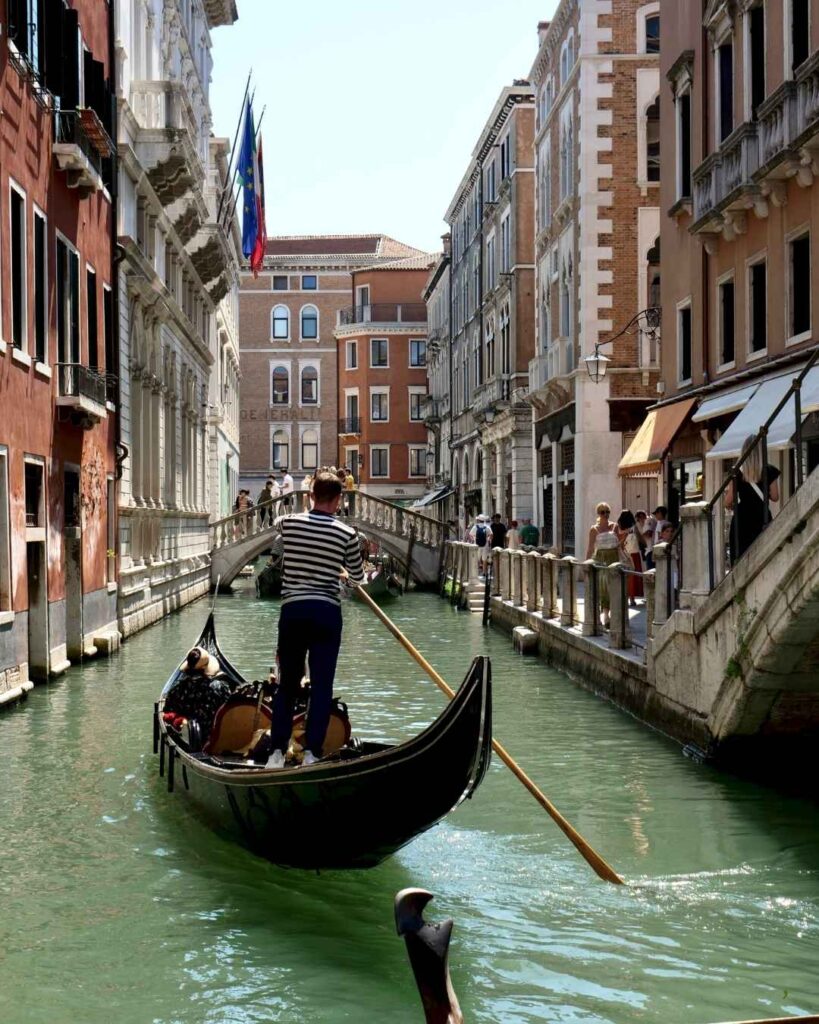
Every city has its logic. New York has its numbered grid. London has its winding, historical chaos. But Venice? Venice has the sestieri, six districts that carve the city into rough halves. Within each sestiere, addresses are assigned sequentially as you walk, not street by street, but throughout the entire district.
This means that number 301 on one street and number 302 might be around three corners and two bridges away. You can stand at number 500 and your destination, number 503, might be a twenty-minute walk through a labyrinth of alleys and dead ends.
I remember the first time I tried to find a small restaurant my wife had read about online. We circled the same fountain three times, asked three different locals who gave three different directions, and finally stumbled upon it by accident, only to realize we had walked past its unmarked entrance four times.
The Venetian address is not designed for efficiency; it is designed for the initiated. It forces you to slow down, to look up, to read the faded plaques and the names of calli and campi that have not changed in five hundred years. In a strange way, the madness of Venetian navigation is the city’s greatest gift. It forbids you from treating her like a checklist.
5. Gondolas Were Once a Carnival of Colors, and They Are Intentionally Crooked

The black gondola is so iconic that it feels eternal, like the city itself. But for most of Venetian history, gondolas were painted in extravagant colors and adorned with gold leaf, heraldic symbols, and even silk canopies.
They were floating status symbols, each noble family competing to outshine the others. The black we know today was imposed by sumptuary laws in the 16th century, partly to curb excess and partly, some say, to mourn the repeated plagues that devastated the city. Whatever the origin, the black gondola became law, and the law became tradition.
But the real secret is in the asymmetry. Every gondola is built with the left side wider than the right, a subtle engineering trick that counterbalances the weight of the single oarsman. Without this imbalance, the gondola would spin in circles. The craft is made from eight different types of wood and requires over five hundred hours of labor to build.
And those gondoliers? There are only about four hundred licensed ones in existence, a number strictly controlled by a guild that passes down the profession from father to son, with rare exceptions. The gondola is not a tourist gimmick; it is a living craft that has survived for a millennium through stubborn Venetian defiance.
6. Venice Gave the World the Word Quarantine
You have heard the word a thousand times, especially in recent years, but you may not know that it was born right here, in the Venetian lagoon. During the Black Death of the 14th century, the Venetian Republic implemented a radical measure: all ships arriving from plague-stricken ports were required to anchor for forty days before their crews could disembark. The Italian word for forty is quaranta, and the practice became known as la quarantena.
The island of Lazzaretto Vecchio, a short boat ride from the city, became the first quarantine station in human history. Ships would unload their cargo to be aired and sunned, while the crew waited in isolation. Those who perished were buried on the island, their bones still resting in the soil.
This Venetian innovation saved countless lives and became the template for global pandemic response for centuries. Today, the island is largely forgotten, a grassy, crumbling ghost of a place where desperate sailors once watched the spires of Venice from a distance, counting each dawn as one day closer to freedom.
7. There Is an Entire Underground City Beneath Your Feet
Venice is not a single city but two. Above ground, you see the canals, the palazzos, the piazzas. Below ground lies a forgotten labyrinth of ancient cellars, buried canals, disused cisterns, and even Roman foundations. In the 19th century, the Venetians filled in some canals to create more land for streets and housing, burying entire waterways beneath the asphalt.
These subterranean passages are largely inaccessible today, sealed off by subsequent construction, but they are very much there, holding the secrets of older Venices that no living soul has seen.
The most widespread underground feature is the cistern system. Before modern plumbing, every Venetian palazzo collected rainwater from the roof, funneled it through sand filters, and stored it in massive underground stone tanks. These cisterns were the city’s lifeline, providing fresh drinking water in a city surrounded by salt.
Many still exist beneath the paving stones of the campi you stroll across. When you stand in Campo Santa Margherita or the Piazza San Marco, you are standing over ancient water that once quenched the thirst of merchants, sailors, and doges.
8. The Bridge of Sighs Was Romanticized by a Poet Who Got It Wrong
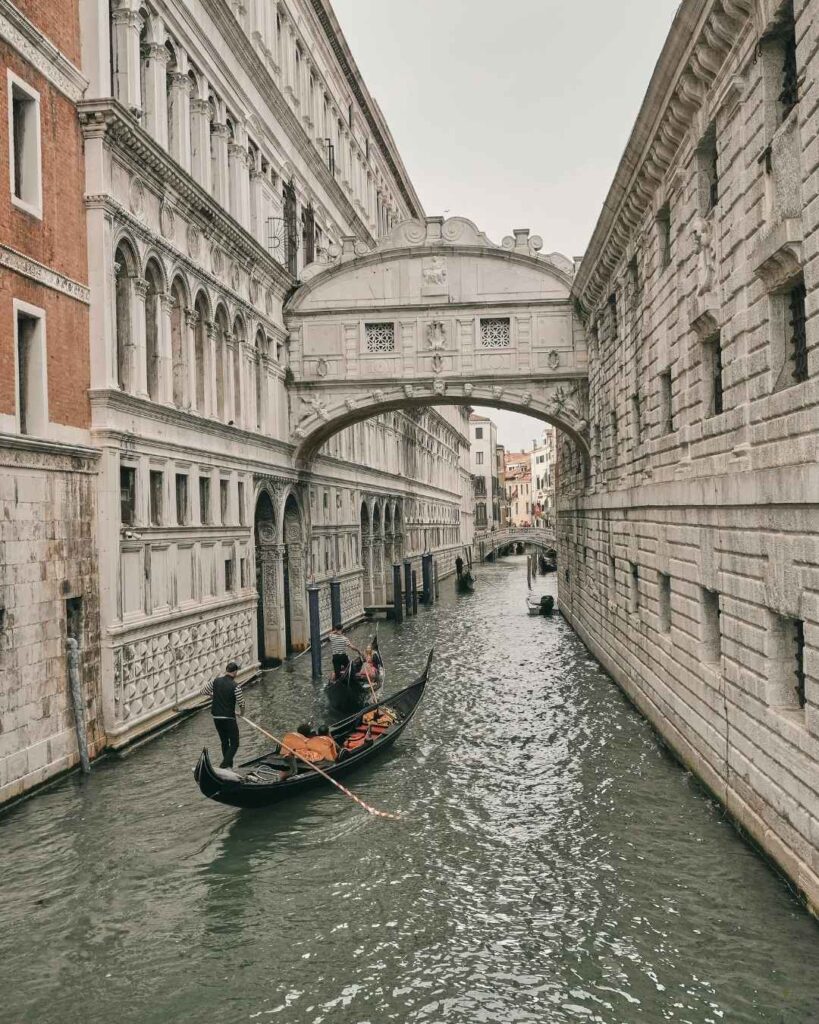
There is a famous bridge in Venice that connects the Doge’s Palace to the prisons. It has a name that has launched a thousand love letters: the Bridge of Sighs. But the bridge was never meant to be romantic. It was a place of finality, a covered passage where condemned prisoners were led to their cells.
The “sigh” was not the sigh of lovers but the sigh of the condemned catching their last glimpse of freedom through the bridge’s small, latticed windows.
The romantic misinterpretation came from Lord Byron, who visited Venice in 1816 and wrote of “the Bridge of Sighs, a palace and a prison on each hand.” Byron, ever the dramatist, transformed a grim execution corridor into a symbol of poetic longing.
The Venetians themselves never called it by that name. For centuries, they had more pragmatic and darker names for the passage. The tragedy of the bridge is not the tragedy of love lost but of lives ended. And yet, we continue to swoon over it, proof that sometimes we prefer the fantasy of a place to its truth.
9. Venice Declared Independence and Fought for It in 1848
Long after the Republic fell to Napoleon, Venice remained a restless spirit. In 1848, amid the revolutionary fervor that swept across Europe, the city rose against its Austrian rulers and declared the Republic of San Marco. For seventeen glorious, desperate months, Venice was an independent nation again, the first time in over fifty years.
The Venetian resistance was extraordinary. They used hot-air balloons for military observation, the first such use in history. They defended their lagoon with makeshift fleets and sheer determination. Hunger eventually forced their surrender to the Austrians, but the defiance of those seventeen months remains a source of pride to this day.
The city had tasted freedom once more, and even after the Habsburgs regained control, the spirit of rebellion smoldered beneath the surface. When you walk through the narrow streets, remember that these walls once echoed with the shouts of revolutionaries who refused to let their Republic die quietly.
10. The Canals Have Traffic Rules as Strict as Any Highway

It is easy to assume that the Venetian canals are chaotic, a picturesque jumble of boats drifting where they please. But beneath the charming surface lies a rigorous maritime code enforced by the city’s water police.
The Grand Canal is a highway, complete with speed limits, no-passing zones, one-way routes, and designated overtaking lanes. Gondolas have the right of way over motorized vessels in narrow canals, and every water bus has a schedule as precise as any train.
There are water ambulances racing to emergencies with sirens that echo off the palazzo walls. There are garbage collection boats that perform their rounds at dawn, silent and efficient. In busy seasons, traffic jams form at canal intersections, with boatmen gesturing and shouting in a language that sounds less Italian and more like universal frustration.
The city that floats has learned to drive, and it does so with an authority that surprises every first-time visitor. Boating in Venice is not romantic; it is a serious business, and the Venetians treat it with the gravity of a military operation.
11. The Marciana Library Holds a Secret Archive of Venetian Espionage
The Biblioteca Marciana, with its glorious facade overlooking the Piazzetta San Marco, is one of the world’s great libraries. But its most fascinating holdings are not the illuminated manuscripts or the classical texts. Hidden deep in the vaults are the cryptographic records of the Venetian Republic, including encrypted diplomatic correspondence, secret treaties, and reports from Venetian spies across Europe and the Ottoman Empire.
Venice was the espionage capital of the Renaissance, a city that mistrusted everyone and kept meticulous records of its suspicion. The archive contains letters written in codes that remained unbroken for four centuries. There are also the “relazioni,” the detailed reports that Venetian ambassadors submitted upon returning from foreign courts, filled with intimate observations about the private lives and weaknesses of Europe’s rulers.
These documents read like a Renaissance version of spy novels, and they reveal a city that was as paranoid as it was powerful. Venice built its empire on trade, but it sustained it on secrets.
12. Carnival Masks Were a Revolutionary Tool of Anonymity

The image of the Venetian Carnival mask is one of decadence and frivolity, a beautiful accessory for champagne-soaked parties. But the mask’s true purpose was far more political. During Carnival, and at certain other permitted times, Venetians of every class could wear masks and completely dissolve the rigid social hierarchy.
A noble could mingle with a merchant. A commoner could speak freely to a patrician without fear of retribution. It was a temporary suspension of the immense class divisions that defined the Republic.
But the masks also served a darker purpose. They allowed citizens to cast anonymous ballots in elections, protecting them from the revenge of the powerful families who dominated Venetian politics. The Republic, for all its grandeur, was a network of feuds and alliances, and voting without a mask could be a death sentence.
The authorities eventually restricted mask-wearing outside Carnival to prevent crime and sedition, but the tradition persisted. When you buy a paper-mâché mask on the Rialto, you are holding a piece of the most democratic gesture the Venetian Republic ever invented.
13. Venice Is Sinking, but Parts of It Are Also Rising
The sinking of Venice is so famous that it has become a cliché, the tragic backdrop to every travel piece. And it is true: the city subsides at a rate of about one to two millimeters per year, accelerated by groundwater extraction in the 20th century and compounded by rising sea levels. The acqua alta, the periodic flooding that turns Saint Mark’s Square into a shallow lake, is becoming more frequent and more severe.
But the truth is more nuanced, and oddly hopeful. The MOSE project, a system of mobile flood barriers at the three inlets of the lagoon, is the most ambitious flood defense in modern engineering. Despite decades of controversy, cost overruns, and corruption, the system has begun to function, protecting the city from the highest tides.
And here is the lesser-known counterbalance: parts of Venice are actually rising. Tectonic rebound, the geological process by which the Earth’s crust adjusts after the retreat of ancient glaciers, is lifting some areas of the lagoon at a rate of about one millimeter per year. It is not enough to save the city on its own, but it offers a strange, geological optimism.
Conclusion
Venice is not a city that gives up her secrets easily. She rewards patience, curiosity, and a willingness to get lost. She demands that you look beyond the postcard and into the cracks where her true history lurks. The wooden piles beneath your feet, the misremembered bridge, the buried canals, the revolutionary masks—these are not trivia. They are the real Venice, the one that survives not despite her peculiarities but because of them.
The next time you visit, and you will visit again because Venice does not let anyone leave without a promise to return, step off the main thoroughfares. Walk down a calle that looks like it leads nowhere. Ask a local about the bridge you just crossed.
Watch the water traffic with the same attention you would give a city highway. Venice will reveal herself slowly, reluctantly, but she will reveal herself. And when she does, you will understand that she is not a relic of the past but a living, complicated, stubbornly human city that has been refusing to disappear for sixteen centuries.
She is sinking. She is rising. She is drowning in tourists and flourishing in defiance. She is a contradiction wrapped in a lagoon, and she is worth every single step you take to know her.
Again, feel free to go through the list below of my Italy recommendations that I have crafted after years of travel to this beautiful country:
- Packing List: Things Not to Go to Italy Without
- Must-Do Things: Unforgettable Experiences
- Where to Stay: Best Hotels in Italy.
- Where to Stay in Rome: Rome’s Best Neighborhoods
- Where to Stay in Florence: Picking the Best Area
- Where to Stay in Venice: Venice’s Best Districts
- Italy’s Cobblestone Streets: Best Shoes For the Job
- Backpack or Suitcase?: Italy Luggage Guide
- Travel Insurance: Always Be Covered
- E-Sim: Be Connected At All Times