
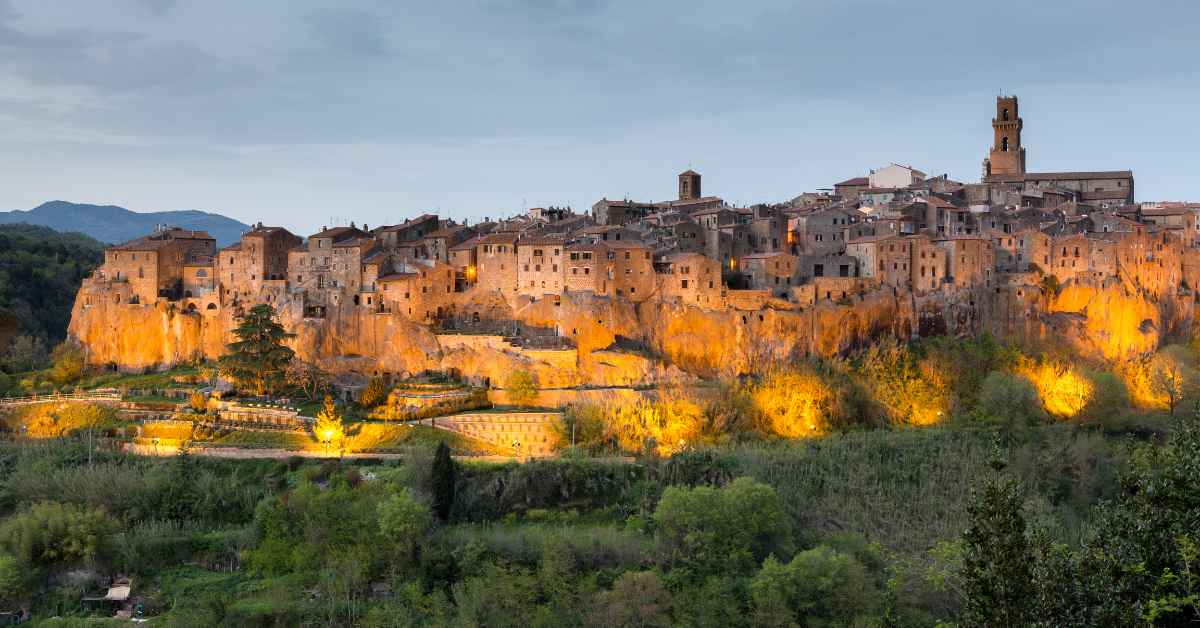
Most people who visit Tuscany go to the same places. Florence, Siena, Pisa, maybe a quick stop in San Gimignano if they have time. They take the same photos, eat at the same restaurants, and leave with the same impressions.
And that is exactly what my wife and I did on our first trip to Florence. We did a day trip that took us to Pisa (the Leaning Tower is actually stunning, though there is nothing much to do), a Chianti winery, San Gimignano, and Siena. Read the details in this post.
That was not a bad trip, by the way. It was just an incomplete one, perhaps since we didn’t have enough time.
The Tuscany that most travelers never see is still there, waiting. It’s in hill towns where the evening passeggiata still happens on schedule, where the person serving your coffee has lived in the same house for forty years, and where you can walk down a cobblestone street at sunset without hearing a single word of English.
These places exist. They are not hard to reach. They are just not on the standard itinerary. We had to go back to Tuscany and discover them for ourselves.
This blog post is about those towns. The ones that reward curiosity. The ones where you can sit in a piazza for an hour and feel like you’ve actually arrived somewhere, rather than just passed through.
Before you read further, remember that Italy rewards travelers who come prepared. I’ve found a few things especially useful on an Italy trip, and they’re worth having and/or knowing beforehand. See the checklist here
1. Barga: The Most Scottish Town in Italy
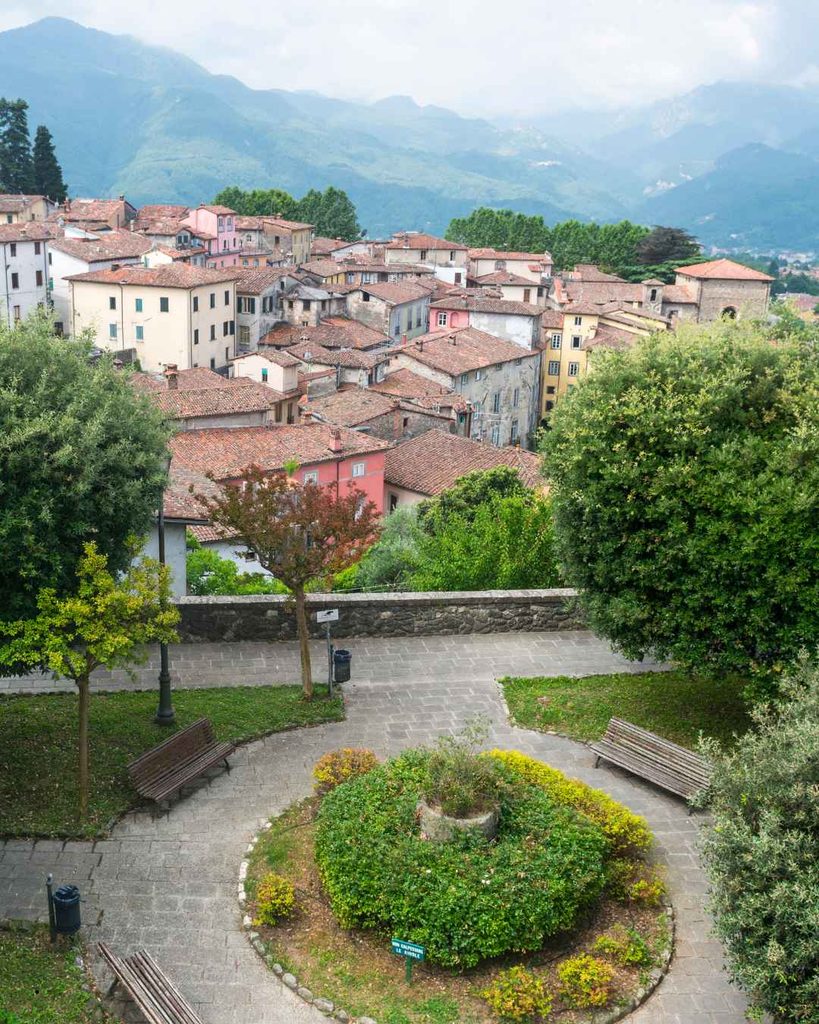
Barga sits in the Garfagnana valley, nestled between the Tuscan-Emilian Apennines and the Apuan Alps, and it has a story unlike any other town in Tuscany. In the late nineteenth century, when the local silk industry collapsed and Italy’s unification stripped the town of its tax privileges, waves of residents left for Scotland.
They found work in Glasgow’s shipyards and the forestry industries of Ayrshire, and many eventually returned or maintained close ties with their adopted homeland.
The result is a town where an estimated forty to sixty percent of the current population has at least partial Scottish roots. You’ll see the St Andrew’s Cross hanging above cobblestone lanes, hear bagpipes at certain times of year, and find fish and chips on the menus of local restaurants.
Every summer, the Sagra del Pesce e Patate fills the streets with the smell of battered fish and fried potatoes, and in January, a Burns Night celebration brings poetry, haggis, and whisky to this corner of Tuscany. The town even has its own tartan, woven in the colors of the Italian flag.
Beyond the Scottish connection, Barga is simply beautiful. The Duomo di San Cristoforo, a Romanesque church built from white marble, sits at the highest point of the town and offers sweeping views of the valley below.
Inside, a thirteenth-century marble pulpit, a polychrome wooden statue of Saint Christopher, and terracotta works attributed to Andrea della Robbia are on display. The town has been recognized as one of Italy’s most beautiful villages and holds the Orange Flag from the Touring Club Italiano for its well-preserved historic center and cultural offerings.
2. Montemerano: A Medieval Puzzle in the Maremma
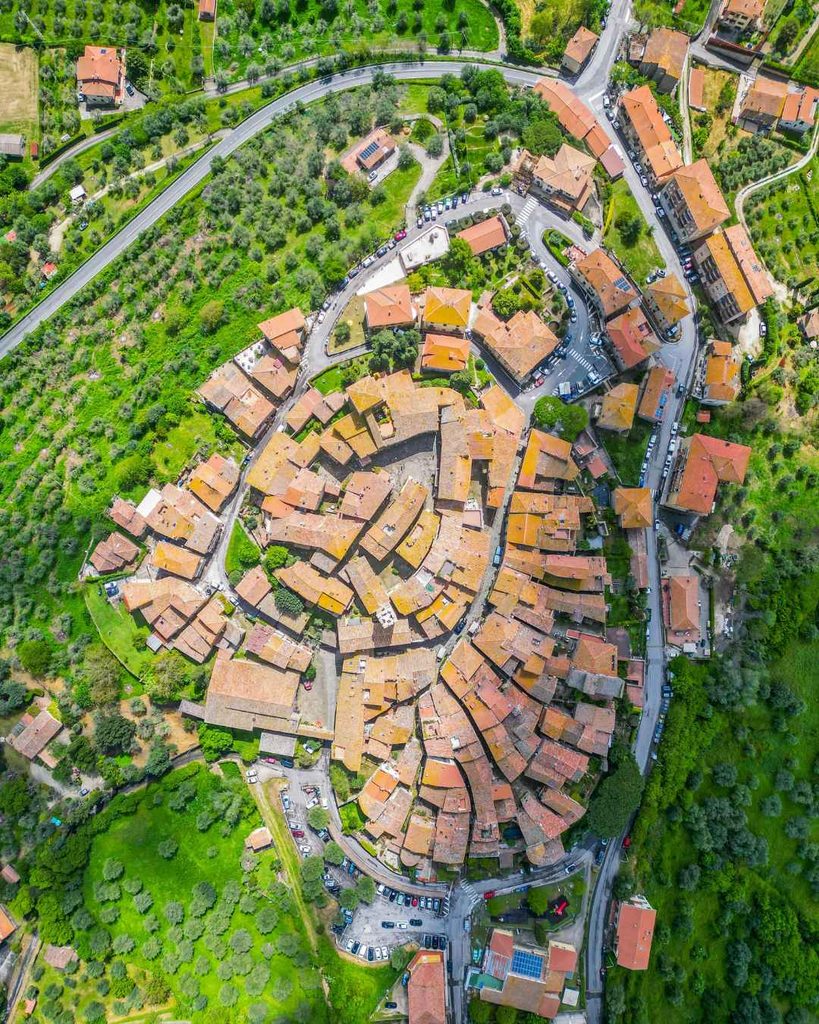
Montemerano is a small village in the Maremma, southern Tuscany, perched on a hill between Saturnia and Manciano. It was founded as a possession of the Aldobrandeschi family and has kept its medieval character remarkably intact, protected by three concentric walls that still stand today.
The population is under five hundred, which means you can walk the entire village in an hour and still feel like you’ve discovered something most travelers never find.
The heart of the town is Piazza del Castello, a stone-paved square surrounded by historic buildings that feels almost theatrical in its compactness. The Palazzo del Podestà and the Palazzo Aldobrandeschi with its tower frame the space, and the archway leading into the piazza creates a sense of stepping through time.
The Church of San Giorgio, consecrated in 1430, holds fifteenth-century artworks including a polyptych by Sano di Pietro and the famous Madonna della Gattaiola, a painting with a hole at the bottom that legend says was cut by a priest who used it as a door.
Montemerano has also become a surprising destination for serious diners. Ristorante Caino, run by chef Valeria Piccini, holds two Michelin stars and serves creative Tuscan cuisine in a space that has been in the family since 1971.
For something simpler, the local specialty is Trippa Montemeranese, a tripe dish flavored with nutmeg, cinnamon, cloves, and fresh thyme, served with zolfini beans or tomato sauce.
3. Casole d’Elsa: A Fortified Hill Town in the Valdelsa
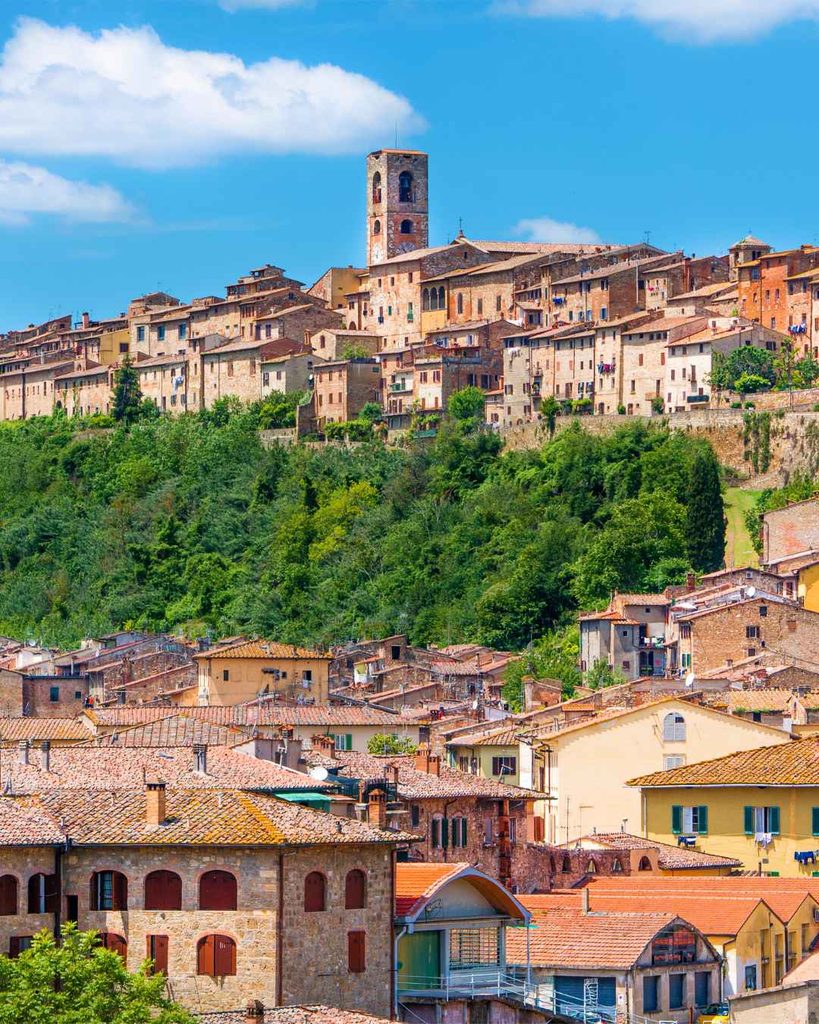
Casole d’Elsa sits on a hill in the Valdelsa, between the Chianti hills and the boraciferous zone of Larderello, about thirty kilometers west of Siena. Its origins go back to the Etruscans, and by the eleventh century it was a feudal possession of the Bishops of Volterra before passing to Siena in 1260.
The town’s strategic position meant it needed fortifications, and the ovoid walls that still encircle the historic center are among the best preserved in the Valdelsa.
The Rocca, a fourteenth-century fortress, now serves as the town hall. Its massive quadrangular form and stone towers dominate the skyline, and the atrium hosts contemporary art exhibitions every two weeks.
The Collegiate Church of Santa Maria Assunta, consecrated in 1161, contains a remarkable collection of art: a baptismal font from the sixteenth century, the funeral monument of B. Aringhieri by Marco Romano, and works by Alessandro Casolani and Giovanni della Robbia. The Palazzo Pretorio, with its facade covered in the coats of arms of ancient Casole and Sienese families, houses a Pinacoteca of twentieth-century Sienese art.
What makes Casole d’Elsa worth seeking out is its lived-in quality. It is not a museum town. The archaeological museum holds Etruscan finds from local necropolises, the streets are quiet, and the views from the walls stretch across the Valdelsa toward the Sienese mountains and the Maremma beyond.
The Palio and other traditional festivals throughout the year keep the town’s identity alive for its roughly four thousand residents.
4. Montefioralle: A Chianti Village Inside Its Own Walls
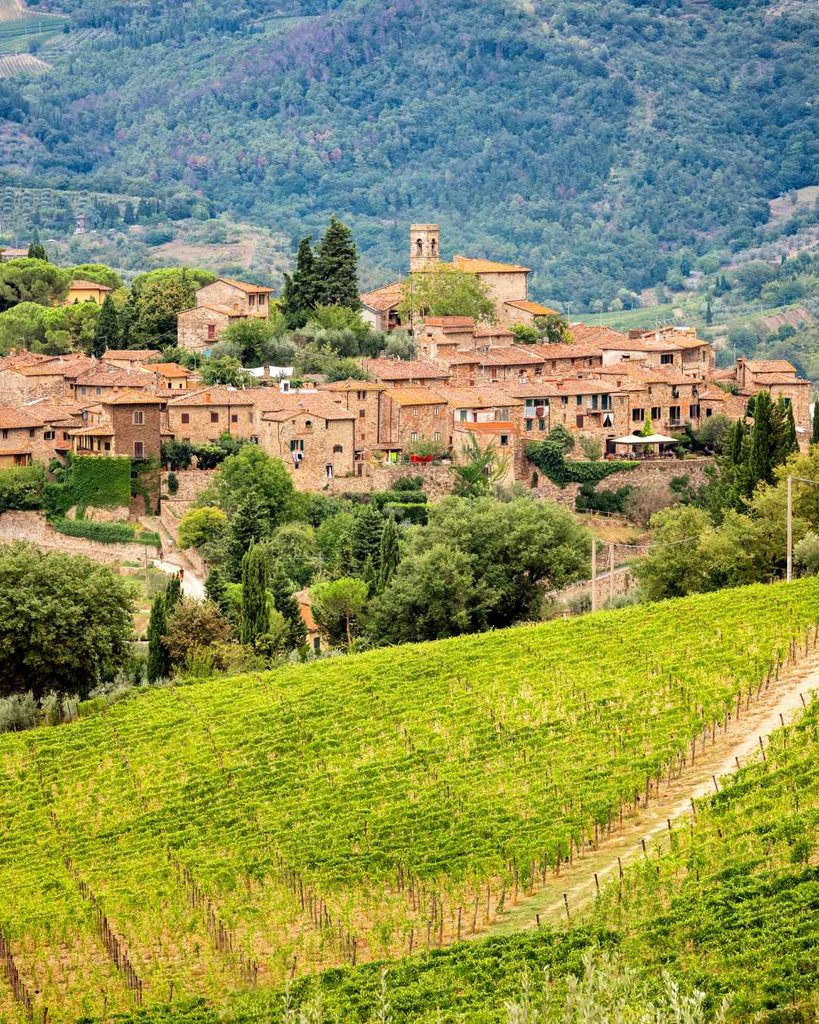
Montefioralle is a tiny village of seventy-nine residents just above Greve in Chianti, strategically positioned between Florence and Siena on a hill that was fiercely disputed by the two republics in the Middle Ages. The original name was Monteficalle, referring to the fig trees that grew in the surrounding fields, and the village is still enclosed within its original defensive walls, which formed a double ring with four gates.
What sets Montefioralle apart is how completely it has preserved its medieval structure. The stone houses climb through the village along ancient streets, and some of the buildings are incorporated directly into the old towers that were part of the original fortifications.
At the highest point, the church of Saint Stefano, rebuilt in the seventeenth and eighteenth centuries, offers views across vineyards, olive groves, and the rolling Chianti landscape. The village is almost entirely car-free, which means the soundtrack of your visit will be birdsong and wind rather than engines.
Montefioralle is also a good place to eat well. The local restaurants serve classic Tuscan dishes, including the famous Florentine steak with white beans and a glass of Chianti Classico. It makes an easy half-day trip from Greve, which is only a twenty-minute walk away, and the white roads leading toward Mercatale Val di Pesa open up corners of the Chianti that most visitors never see.
5. The Maremma’s Tufa Towns
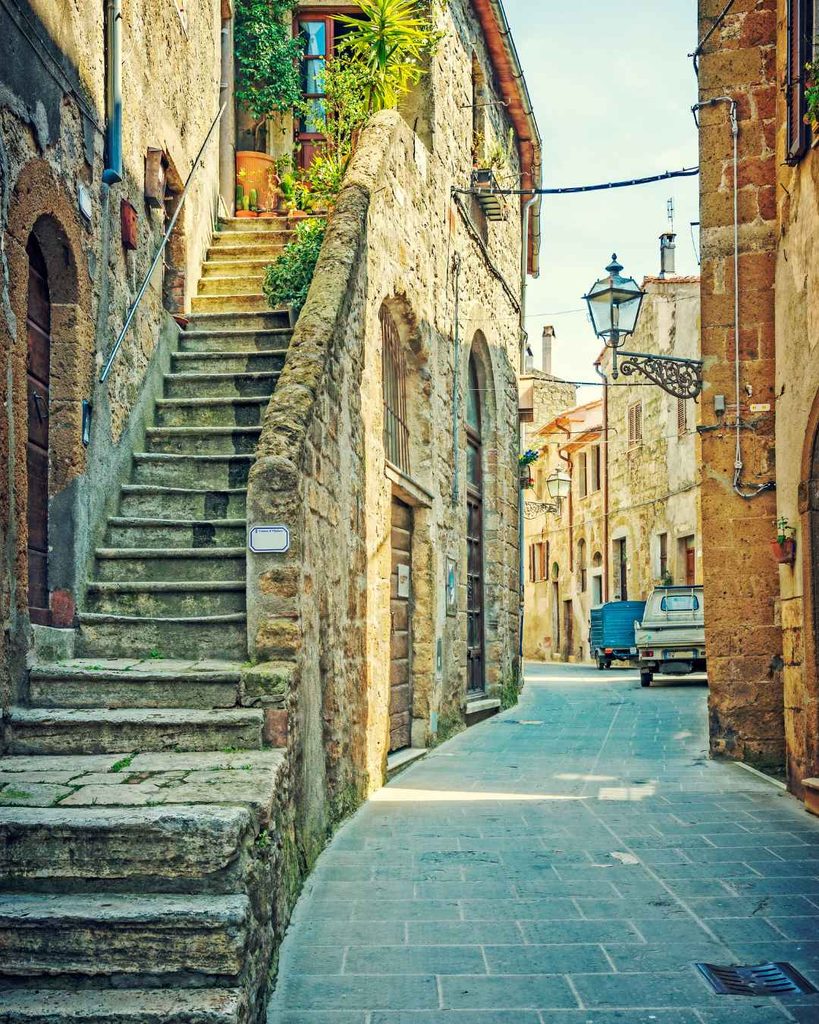
Southern Tuscany has a different character from the postcard landscapes of the north. This is the Maremma, a wilder, more rugged region where the hills are steeper, the towns are older, and the landscape is shaped by tufa, a soft volcanic rock that people have been carving into for thousands of years.
Pitigliano is the most dramatic example. The town rises from a tufa cliff over three hundred meters above sea level, with houses that seem to grow directly out of the rock face. From a distance, it looks impossible.
Up close, it’s a lattice of narrow streets winding around a Baroque cathedral, an Orsini palace, and a sixteenth-century aqueduct bridge. The town has a remarkable Jewish history. A vibrant Jewish community lived here from the fifteenth century onward, earning Pitigliano the nickname “Little Jerusalem.”
The synagogue and Jewish museum are both worth visiting, and the kosher wine cellars tell a story about religious tolerance in Renaissance Italy that most history books skip.
Sorano sits nearby, another town carved from tufa, sometimes called “little Matera” for the way its buildings blend into the rock. The approach through narrow gorges is dramatic, and the town itself feels like a medieval fortress that somehow survived unchanged.
Below the streets, underground passages and caves honeycomb the cliffs, some dating back to Etruscan times. Farther south, near the border with Lazio, is Rocchette di Fazio, a village of just twenty-six inhabitants perched on a limestone cliff.
It dates back to around 1000 AD and was once a stronghold of the Knights Templar. The village fell into decline in the sixteenth century and was only revived in the late 1990s when its stone houses and cobbled streets were restored.
6. The Val d’Orcia’s Quieter Corners
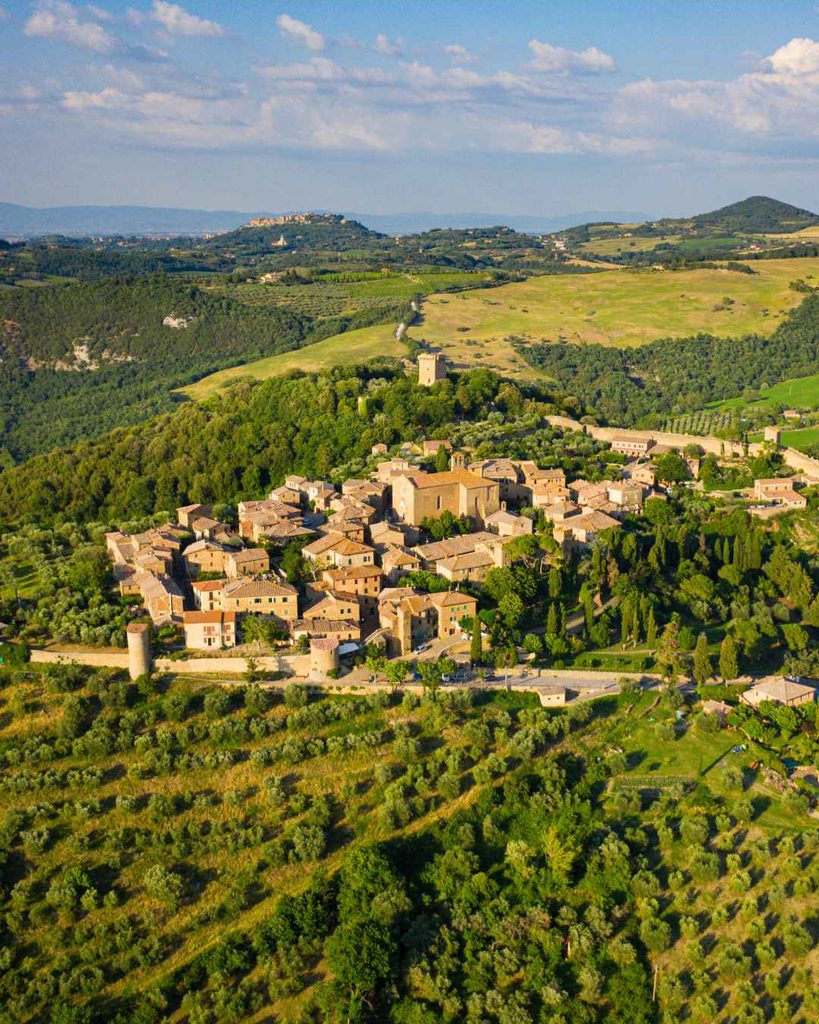
The Val d’Orcia is a UNESCO World Heritage landscape, and it deserves the designation. But the main towns, Pienza and Montepulciano, can feel overrun in high season. There are alternatives.
Monticchiello is a small village in the heart of the Val d’Orcia, quieter than its neighbors but just as beautiful. The central square, Piazzetta della Vittoria, is surrounded by quiet alleyways, and a gravel path traces the line of the historic walls with views across the valley.
La Guardiola, just outside the walls, has a terrace where you can sit with a plate of local salamis and pecorino and watch the afternoon pass.
Bagno Vignoni is another Val d’Orcia town that does things differently. Instead of a central piazza, it has a central pool. The town’s main square is a thermal bath fed by hot mineral springs, and while you can’t swim in the historic pool, the sight of steam rising from the center of the village is memorable.
San Quirico d’Orcia is the administrative hub of the Val d’Orcia and often overlooked by travelers rushing between Pienza and Montalcino. It has a beautiful Collegiata church and the Horti Leonini, a formal garden that offers a quiet escape from the summer heat.
It’s a good base for exploring the valley, with easy access to both the famous towns and the smaller villages that most people never find.
7. The Mugello: Florence’s Backyard
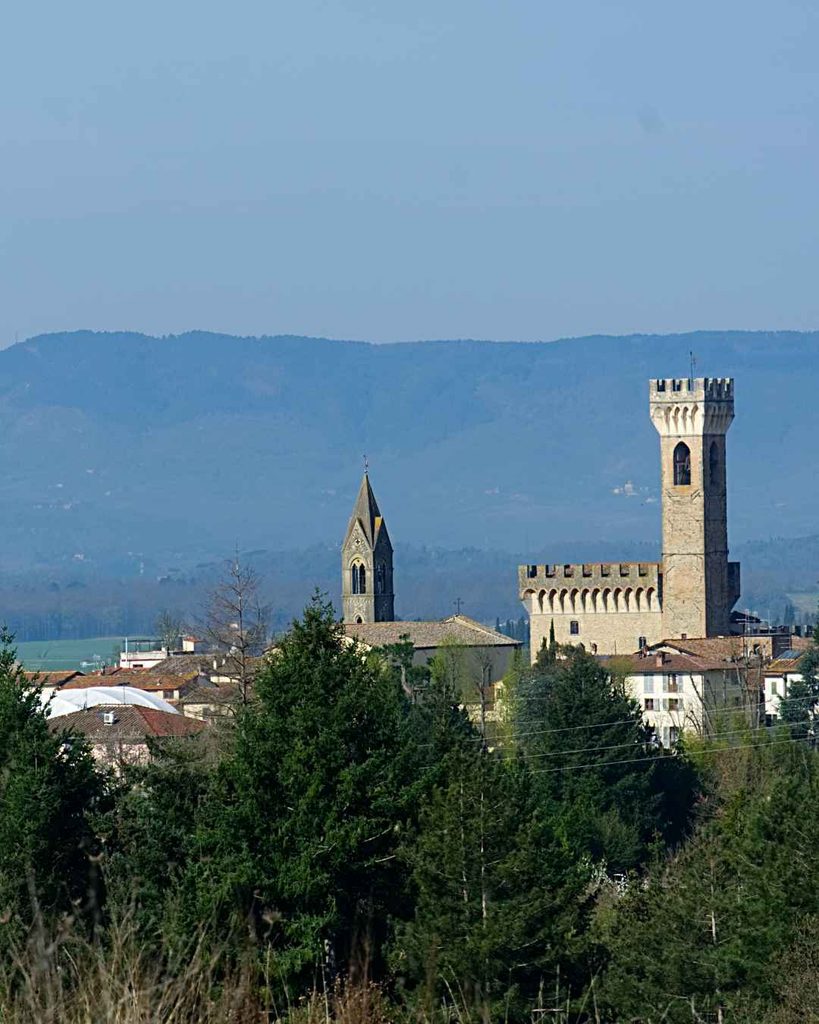
The Mugello valley sits just north of Florence, close enough for a day trip but far enough that most tourists never consider it. This was Medici territory, and the family’s presence is still visible in the villas and castles scattered across the hills.
Scarperia is the most compelling town in the valley. Founded by the Florentine Republic in 1306 as a strategic outpost on the road to Bologna, it’s now officially recognized as one of Italy’s most beautiful villages.
The Palazzo dei Vicari dominates the main square, its façade covered with the coats of arms of centuries of Florentine governors. What makes Scarperia genuinely unusual is its knife-making tradition. The town has been a center for blade craftsmanship since the fourteenth century, and you can still find artisan knife shops in the historic center. The Museo dei Ferri Taglienti documents the trade, which had already gained prestige by the 1400s.
Vicchio, nearby, is worth a stop for a different reason. It’s the birthplace of Giotto, the fourteenth-century painter who is often credited with starting the Renaissance before the Renaissance officially began.
Fra Angelico was also born here, making Vicchio an unexpectedly significant place in the history of Western art. Borgo San Lorenzo, the main town of the Mugello, has a lively weekly market, a Romanesque church, and Art Nouveau architecture tied to the Chini family of artists.
8. The Garfagnana’s Mountain Towns
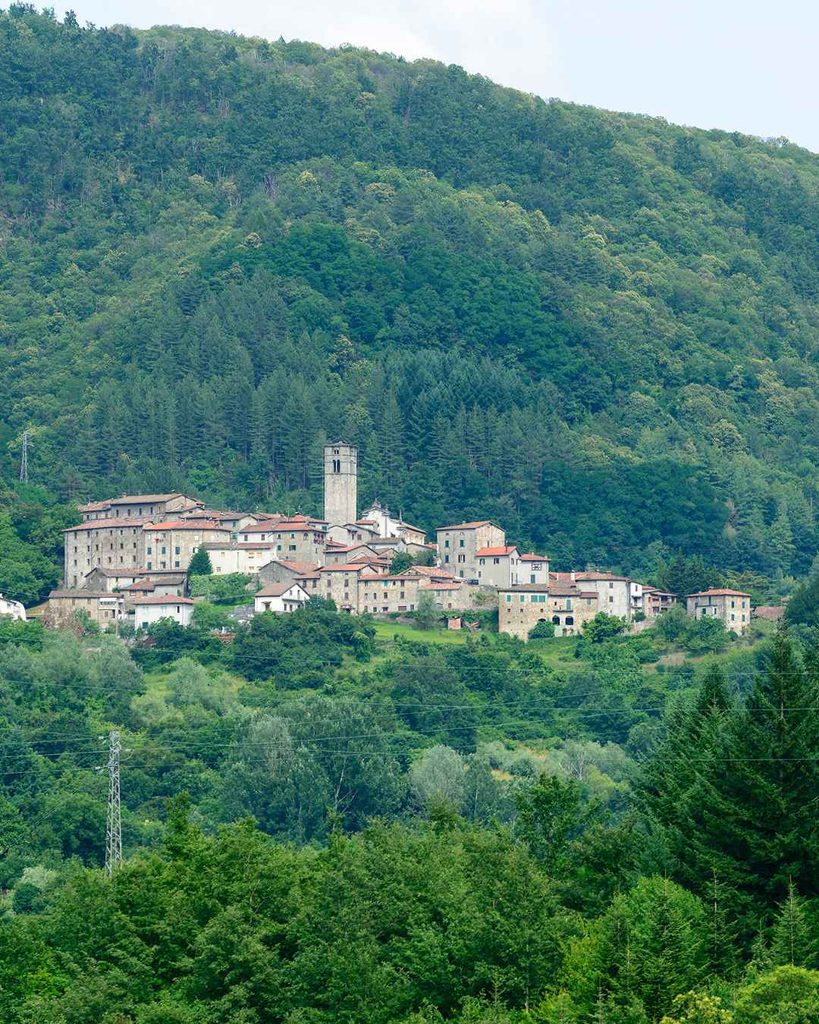
The Garfagnana is a valley in northern Tuscany, between the Apennines and the Apuan Alps. It’s not the Tuscany of gentle hills and vineyards. This is mountain country, with dense forests, rushing rivers, and a climate that’s wetter and cooler than the rest of the region. The vegetation is lush and wild, and the roads are perfect for hiking and mountain biking.
Castelnuovo Garfagnana is the administrative center of the valley, with a history going back to the eighth century. The 1920 earthquake damaged much of the historic center, but it has been nicely renovated.
The town is a good base for exploring the valley, with easy access to hiking trails and the Grotta del Vento, a wind cave that’s a good rainy-day alternative. Sillico is a smaller hamlet in the Garfagnana, perched on a hilltop with views over the Serchio Valley and the alpine mountains beyond.
It was first mentioned in a document from 926, and the cobbled streets and stone church of San Lorenzo still feel stopped in time. The Sentieri del Moro, a network of walking paths, passes through the area, making it a good stop for hikers.
9. Monte Amiata: The Quiet Volcano
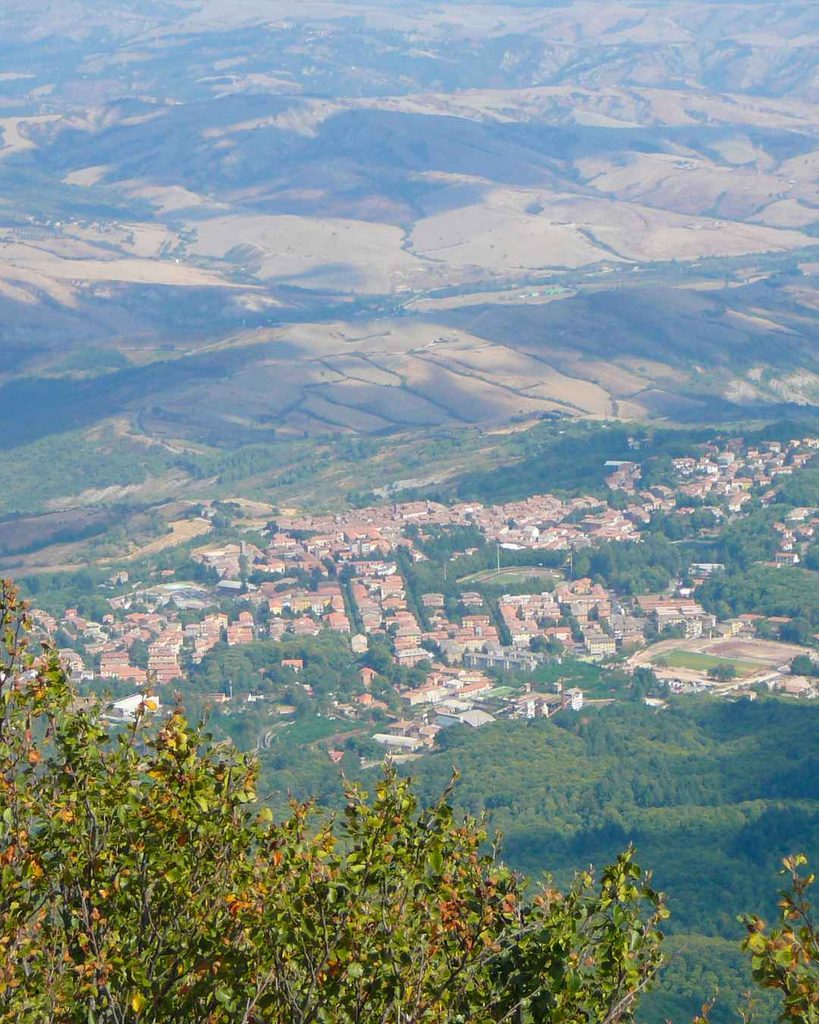
Monte Amiata is an extinct volcano in southern Tuscany, and the villages on its slopes are among the least visited in the region. The area is known for its chestnut forests, its olive oil, and its medieval towns, but it rarely appears on international itineraries.
Santa Fiora, on the mountain’s slopes, is one of the most beautiful villages in southern Tuscany. The stone houses and narrow alleyways are well preserved, and the town has a peaceful atmosphere that’s hard to find in the more famous hill towns.
Arcidosso sits on the western slope and serves as a starting point for hikes, while Castel del Piano is known for its chestnut forests and a historic Palio horse race. Seggiano is home to some of the region’s finest olive oil production.
Semproniano, at the southern edge of the Amiata region, has a well-preserved medieval structure with a town wall that has been largely incorporated into the houses. The church of Santa Croce holds a wooden crucifix from the twelfth or thirteenth century, and the Mineralogical Museum has a collection of minerals from the Amiata area.
10. The Valdinievole: Between Pistoia and Lucca
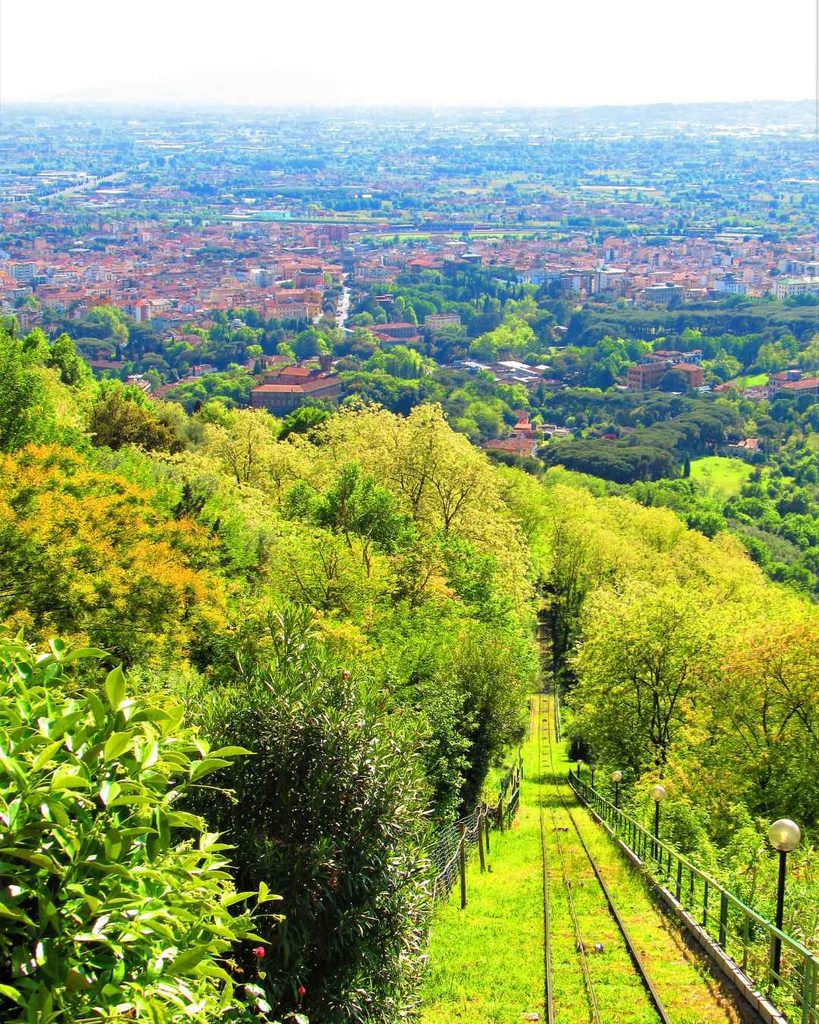
The Valdinievole is a valley between Pistoia and Lucca, close to Florence and Pisa but somehow overlooked by most travelers. The name means “valley of mists,” and the landscape is a mix of olive groves, gardens, and small fortified villages.
Montecatini Alto is the most charming village in the area, reachable by a historic funicular railway from the spa town of Montecatini Terme below. The village has cobbled streets, a medieval fortress, and a piazza with panoramic views over the valley.
It has two distinct characters: the medieval heart with its Palazzo del Podestà and tower, and an Art Nouveau side with the Teatro del Risorto. The sunsets from Piazza Giusti are particularly good.
The Pescia area, known locally as the “Swiss Pesciatina,” is a collection of small fortified villages scattered across gently sloping hills. Massa, Castella, and Uzzano Castella are all worth exploring, with narrow alleys, medieval gates, and views across the valley. Uzzano Castella is especially atmospheric at night, when the village is illuminated and visible from across the valley.
11. Anghiari and the Valtiberina
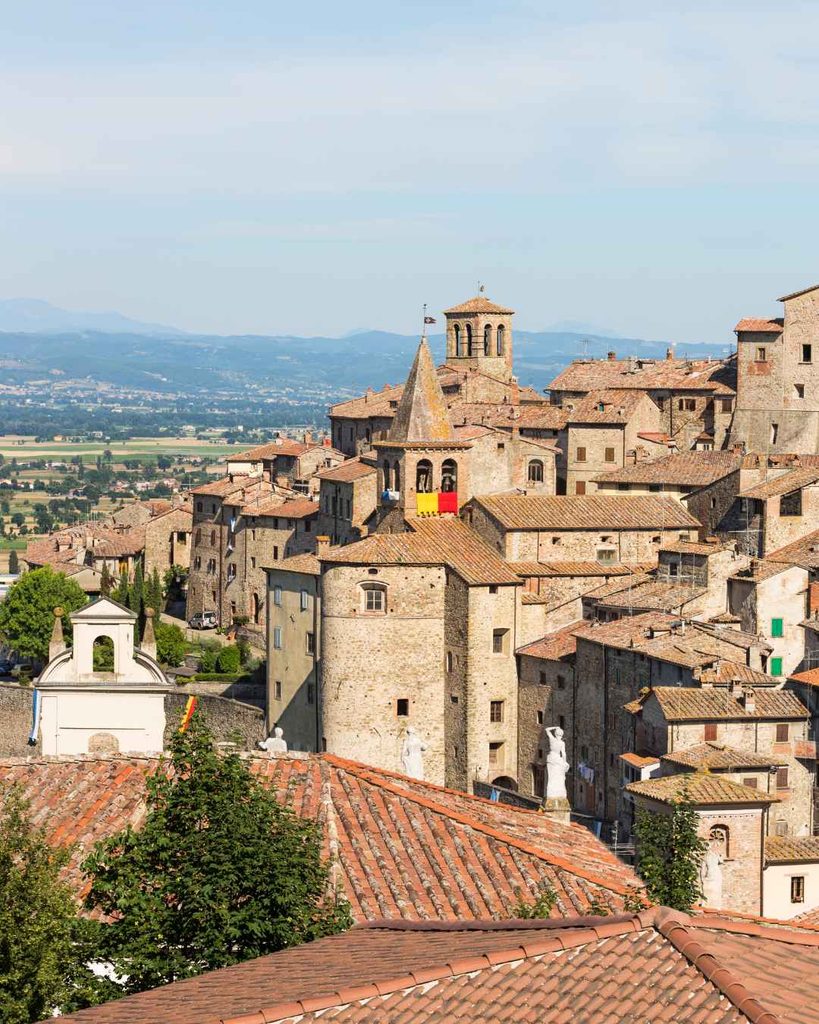
Anghiari is a walled town near the border with Umbria, and it has a place in art history that most people don’t know about. Leonardo da Vinci painted a fresco here, the Battle of Anghiari, which was lost centuries ago.
The town itself remains blissfully undiscovered by mass tourism. Medieval streets wind between stone houses decorated with flower boxes, and the surrounding countryside offers views across the Tiber Valley that haven’t changed much since Renaissance times. The local restaurants serve hearty mountain cuisine that’s completely different from the coastal cooking of southern Tuscany.
The Palio della Vittoria, held every June 29th, commemorates the Battle of Anghiari with an uphill race through the town. It’s a local tradition that gives you a reason to plan a visit around a specific date.
But Why These Towns?
The famous towns of Tuscany are famous for a reason. Florence has the Uffizi and the Duomo. Siena has the Piazza del Campo and the Palio. San Gimignano has its towers. These are extraordinary places, and no one should skip them.
But the smaller towns offer something different. They offer the experience of being somewhere rather than just seeing something. In Pitigliano, you can watch alabaster artisans work in tiny workshops using techniques passed down through generations.
In Scarperia, you can buy a knife from the same tradition that has been practiced since the fourteenth century. In Montemerano, you can eat at a two-Michelin-star restaurant run by a chef whose family has been cooking in the same space for over fifty years.
These are not experiences you can have in a crowded museum. They require time, curiosity, and a willingness to go slightly off the standard route. But that’s exactly what makes them worth seeking out.
The Tuscany that most people imagine—the quiet hill towns, the slow dinners, the sense of stepping back in time—still exists. You just have to know where to look.
Again, feel free to go through the list below of my Italy recommendations that I have crafted after years of travel to this beautiful country:
- Packing List: Things Not to Go to Italy Without
- Must-Do Things: Unforgettable Experiences
- Where to Stay: Best Hotels in Italy.
- Where to Stay in Rome: Rome’s Best Neighborhoods
- Where to Stay in Florence: Picking the Best Area
- Where to Stay in Venice: Venice’s Best Districts
- Italy’s Cobblestone Streets: Best Shoes For the Job
- Backpack or Suitcase?: Italy Luggage Guide
- Travel Insurance: Always Be Covered
- E-Sim: Be Connected At All Times