
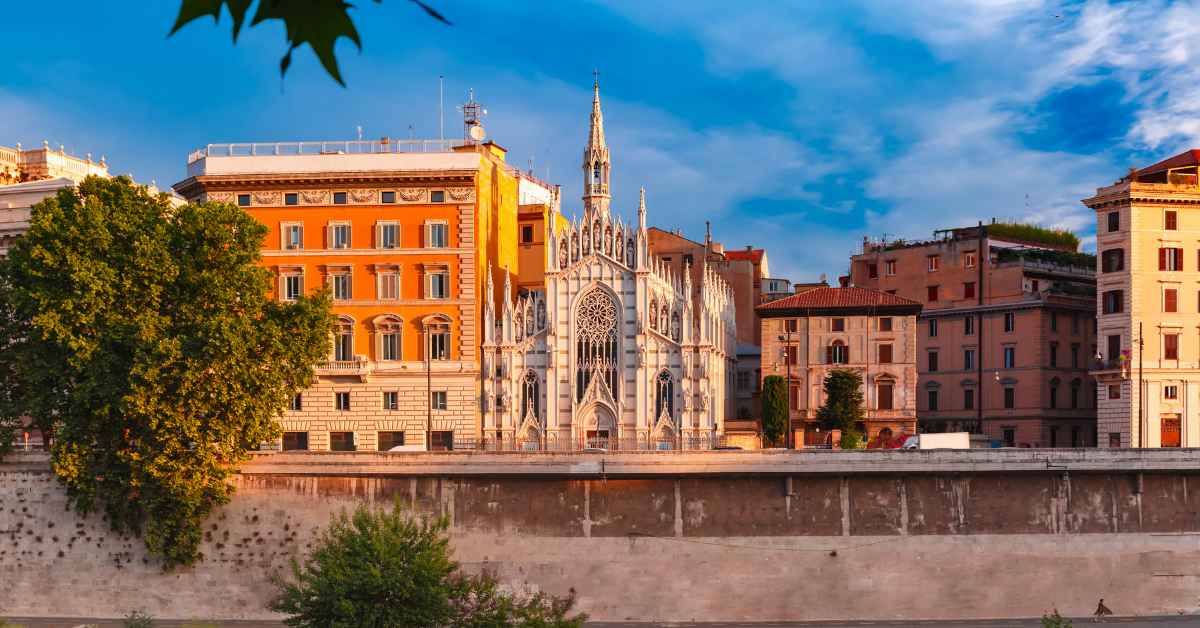
Rome is one of the most visited cities on Earth, and it shows. The area around the Pantheon, the Trevi Fountain, and the Spanish Steps is a constant crush of tour groups, selfie sticks, and people moving at the pace of a slow-moving river. If you stay in the historic center, you are choosing to sleep in the middle of that river.
But here is the thing that most visitors never figure out: Rome has entire neighborhoods that feel like a different city. Quiet, leafy, residential places where the loudest sound in the morning is a church bell or a delivery scooter.
Places where you can walk down the street without weaving between tour groups, where the person at the cafe remembers your order by the second day, and where the evening feels like it belongs to the people who actually live there.
The trade-off is real. You will not step out of your hotel and see the Pantheon. You will need to take a metro, a tram, or a taxi to reach the major sights. But if you hate crowds, that trade-off is not a sacrifice. It is the whole point of the trip. You spend your days in the busy parts of Rome, seeing what you came to see, and then you retreat to a neighborhood where you can breathe.
This article is about the neighborhoods that make that possible. Some are close to the center. Some are farther out. Some are leafy and elegant. Some are working-class and full of character. All of them offer something the historic center cannot: peace and quiet when you need it.
Before you read further, remember that Italy rewards travelers who come prepared. I’ve found a few things especially useful on an Italy trip, and they’re worth having and/or knowing beforehand. See the checklist here
What “Avoiding Crowds” Actually Means in Rome
Before we get into specific neighborhoods, it is worth being honest about what you are avoiding and what you are not.
The crowds in Rome are concentrated in a relatively small area. The historic center, roughly between Piazza del Popolo and the Colosseum, contains the Pantheon, the Trevi Fountain, Piazza Navona, the Spanish Steps, and the main shopping streets. This is where the tour groups are. This is where the pickpockets work. This is where restaurant prices are highest, and quality is most inconsistent.
Outside that zone, Rome becomes something else. The neighborhoods on the hills, the residential districts along the river, the working-class quarters south of the center — these are where Romans live their lives. They have markets, bakeries, trattorias, and wine bars that cater to locals, not visitors. The streets are quieter. The pace is slower. And the prices are often lower.
You do not have to choose between seeing Rome and avoiding crowds. You just have to choose the right base. The metro system, while limited, connects several of these quiet neighborhoods to the center in ten to twenty minutes. Buses and trams fill in the gaps. Taxis are an option for late nights or when you are carrying luggage.
1. The Aventine Hill: Rome’s Best-Kept Secret
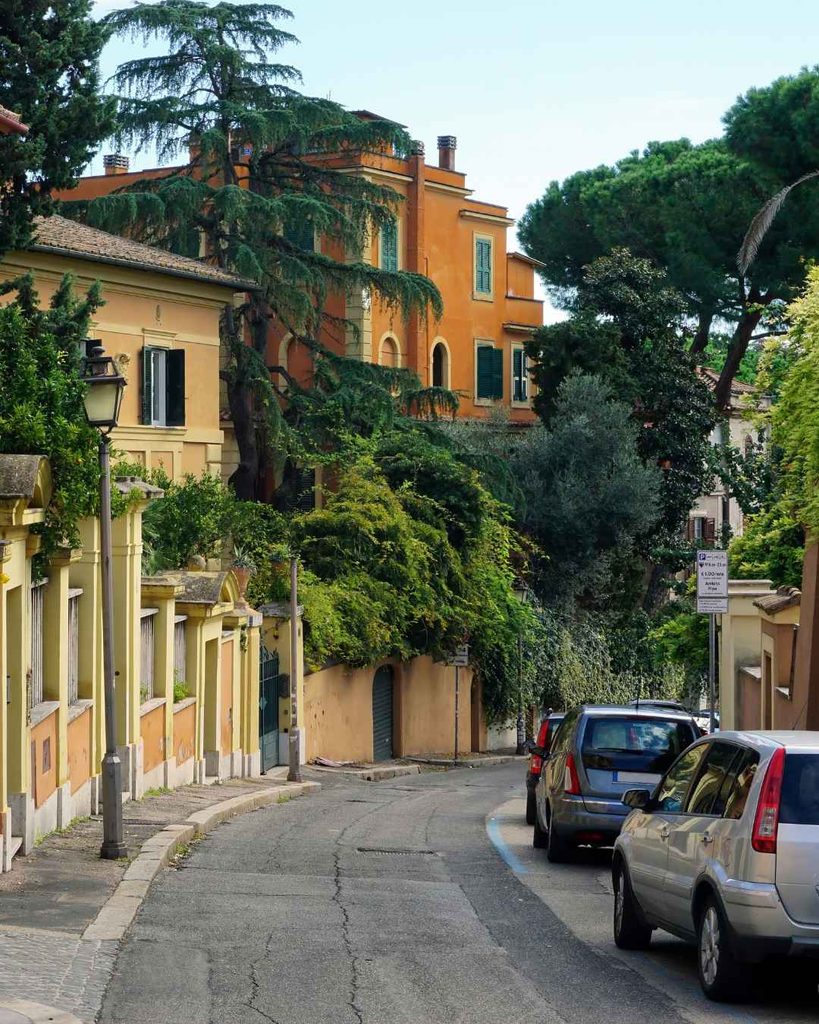
If I could only recommend one neighborhood for someone who hates crowds, it would be the Aventine. This is one of Rome’s seven hills, and it is almost entirely residential. The streets are lined with embassies, villas, and grand 1920s apartment buildings.
There are no tour buses. There are no souvenir shops. There is just a quiet, leafy hilltop that happens to be a ten-minute walk from the Circus Maximus and a twenty-minute walk from the Colosseum.
The Aventine is the neighborhood where you stay when you want Rome to feel like a village. The morning starts with coffee at a local bar, where the barista is more interested in the regulars than in you. The afternoon is for the Giardino degli Aranci, the Orange Garden, which offers the best sunset view in Rome. The evening is for a slow dinner in Testaccio, which is just downhill and has the best traditional food in the city.
The famous Aventine Keyhole is here. It is a small hole in the gate of the Knights of Malta priory, and when you look through it, you see a perfectly framed view of St. Peter’s Basilica through a tunnel of trees. It is one of Rome’s most photographed spots, but it is not crowded in the way the Trevi Fountain is crowded. You might wait a few minutes for your turn. That is all.
The practical details matter. The Aventine is served by the Circo Massimo metro station on Line B, which is about a ten- to fifteen-minute walk from most points on the hill. From there, it is one stop to the Colosseum and four stops to Termini. Bus lines also serve the area. The hill itself is steep in places, which is part of why it stays quiet. You will walk uphill to get home. That is a small price for the calm.
For accommodation, the Aventine has a handful of small boutique hotels and short-term rentals in restored villas. The Hotel San Anselmo is a converted nineteenth-century villa with a garden, antique furnishings, and a reputation for quiet. The Hotel Villa San Pio is similar, with a garden setting and a location near the Orange Garden. Prices are mid-range to upscale, but the quality of sleep you get here is worth the premium.
2. Monteverde: The Green Escape Above Trastevere
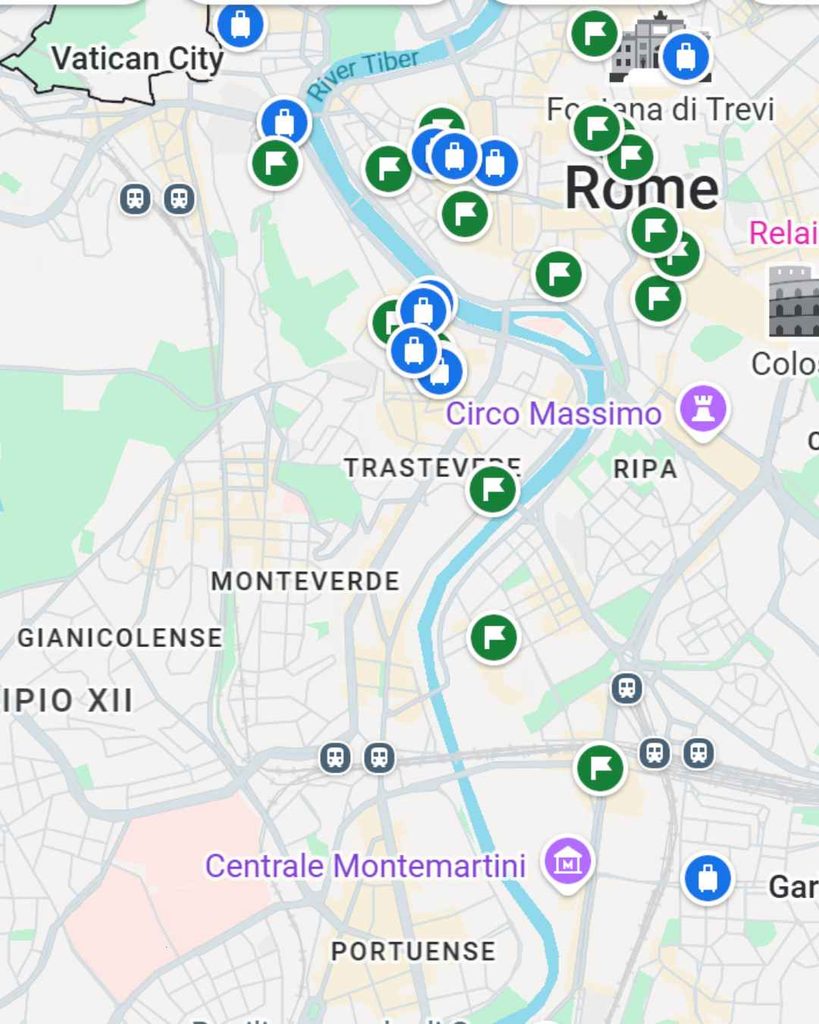
Monteverde sits on a hill just above Trastevere, close enough to walk down for dinner but far enough that you never hear the noise. This is one of Rome’s most pleasant residential neighborhoods, with tree-lined streets, handsome villas, and a pace that feels almost suburban.
The name means “green mountain,” and it earns the name. Monteverde is next to Villa Doria Pamphilj, the largest landscaped park in Rome. This is where locals go to jog, picnic, and escape the city without actually leaving it. The park has fountains, shaded paths, and views across the city. It is the kind of place you can spend an entire morning and forget that you are in a capital city.
Monteverde Vecchio, the older part of the neighborhood, is the more charming section. It has cafes, bakeries, and family-run trattorias tucked among the residential blocks. The atmosphere is calm and lived-in. You will not find many tourists here, because there is nothing specifically touristy to see. That is exactly the point.
The trade-off is transport. Monteverde does not have its own metro station. You will rely on buses and trams, particularly the Tram 8, which connects the area to Trastevere and the historic center. Walking down to Trastevere takes about fifteen to twenty minutes, depending on where you are. From there, you can cross the river into the center. It is a pleasant walk, but it is a walk.
For accommodation, Monteverde has fewer hotels than the Aventine. Most options are short-term rentals and small guesthouses. This is a neighborhood for travelers who want space, quiet, and a genuine residential feel. It works best for people staying a week or more, who are comfortable with public transport and do not mind a walk to reach the action. CHECK OPTIONS HERE
3. Testaccio: The Foodie’s Quiet Base
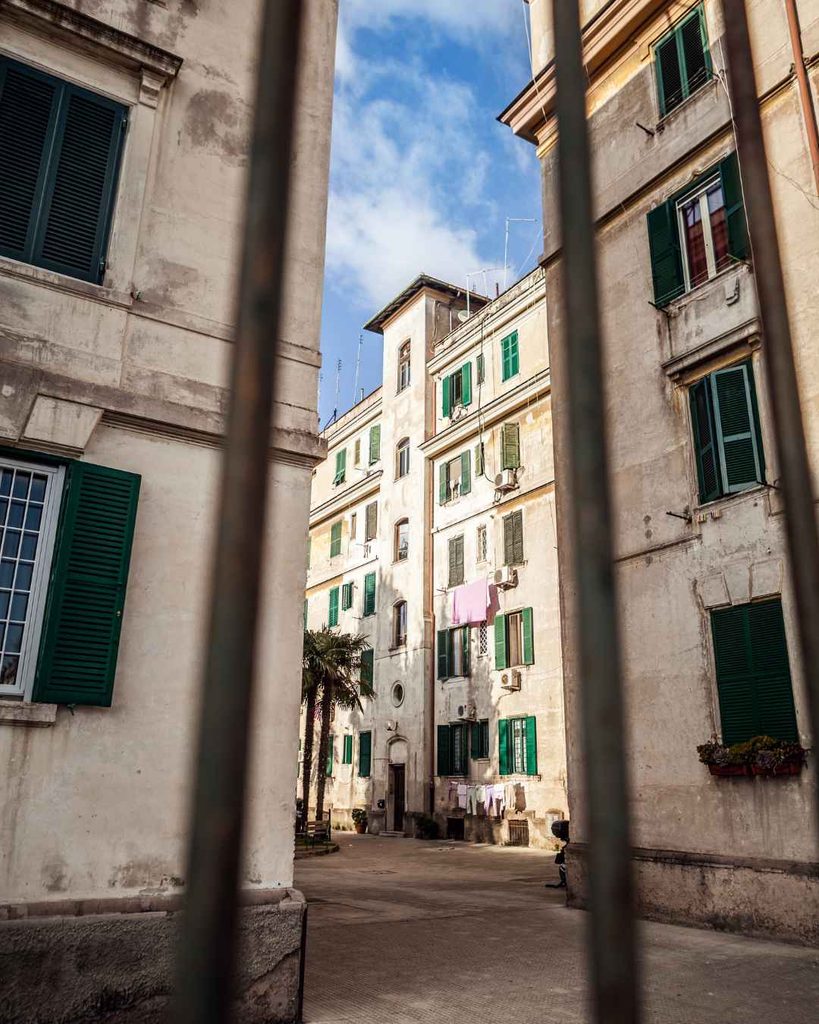
Testaccio is not quiet in the way the Aventine is quiet. It is a working neighborhood with a market, a busy piazza, and some of the best restaurants in Rome. But it is not a tourist neighborhood, and that makes all the difference.
Testaccio was built around a slaughterhouse, and for most of its history it was a working-class district. That history shaped its food culture. The restaurants here serve the dishes that were made from the parts of the animal that butchers brought home: coda alla vaccinara, pajata, trippa.
The Testaccio Market is the best food market in Rome, with vendors selling produce, cheese, meat, and prepared food. Eating here is not a tourist experience. It is a Roman experience.
The neighborhood is also quiet at night in a way that Trastevere is not. Trastevere, across the river, is famous for its nightlife and its crowds. Testaccio has nightlife too, but it is more local. The bars are smaller. The streets are calmer. You can have a late dinner and a glass of wine without feeling like you are in a theme park.
Transport from Testaccio is good. The Piramide metro station on Line B is at the northern edge of the neighborhood, and the Ostiense rail hub is nearby for trains to Ostia Antica and other destinations. From Piramide, it is two stops to the Colosseum and a few more to Termini. The neighborhood is also walkable to Trastevere and the Circus Maximus.
Accommodation in Testaccio is mostly short-term rentals and small guesthouses. Prices are lower than the historic center, often by twenty-five to fifty percent. You can find a comfortable apartment with a kitchen for less than a basic hotel room near the Pantheon. For travelers who want to cook, eat well, and sleep in a real neighborhood, Testaccio is hard to beat.
4. Prati: Elegant, Convenient, and Calmer Than You Think
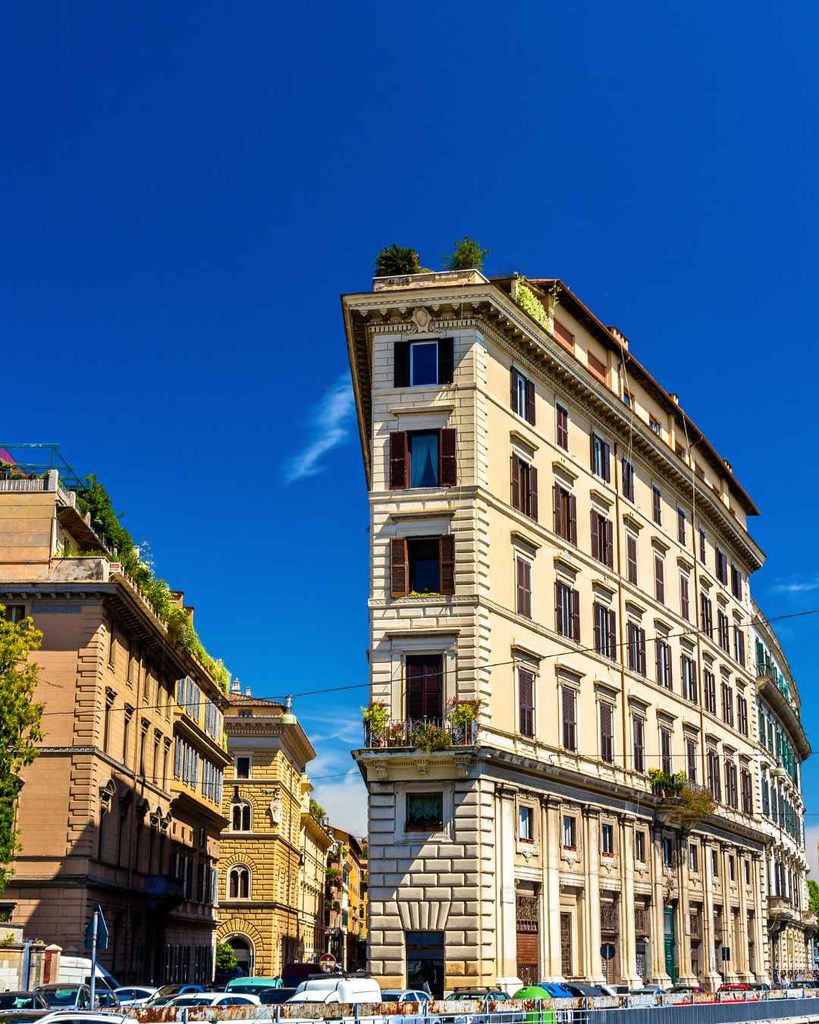
Prati is the neighborhood just north of the Vatican. It is elegant, well-planned, and more residential than the historic center. The streets are wide and tree-lined. The buildings are grand but not imposing. The atmosphere is calm and slightly formal.
The advantage of Prati is that it is close to the action without being in it. St. Peter’s Square and the Vatican Museums are a ten-minute walk away. The historic center is a fifteen-minute metro ride or a thirty-minute walk across the river. You get the convenience of a central location with the quiet of a residential neighborhood.
Prati also has its own food scene, and it is a good one. The neighborhood is home to century-old bakeries, pizza al taglio spots, and restaurants that cater to Vatican employees rather than tourists. The shopping on Via Cola di Rienzo is excellent and much less crowded than the streets around the Spanish Steps. If you want to do some serious shopping without the crush, Prati is the place.
The metro stations are Ottaviano and Lepanto on Line A, which connects to Termini and the Spanish Steps. This makes Prati one of the better-connected quiet neighborhoods. You can get to most of the major sights in fifteen to twenty minutes without much trouble.
Accommodation in Prati ranges from well-priced four-star hotels to elegant boutique properties. The Hotel Mama Shelter Roma is a stylish, modern option with a rooftop and a pool, located in the Prati district. It is not a quiet hotel in itself — it has a lively bar and restaurant — but the neighborhood around it is calm.
For travelers who want a hotel with amenities and a quiet base, Prati is a strong choice. See other Prati accommodation options here.
5. Garbatella: Rome’s Village Within the City
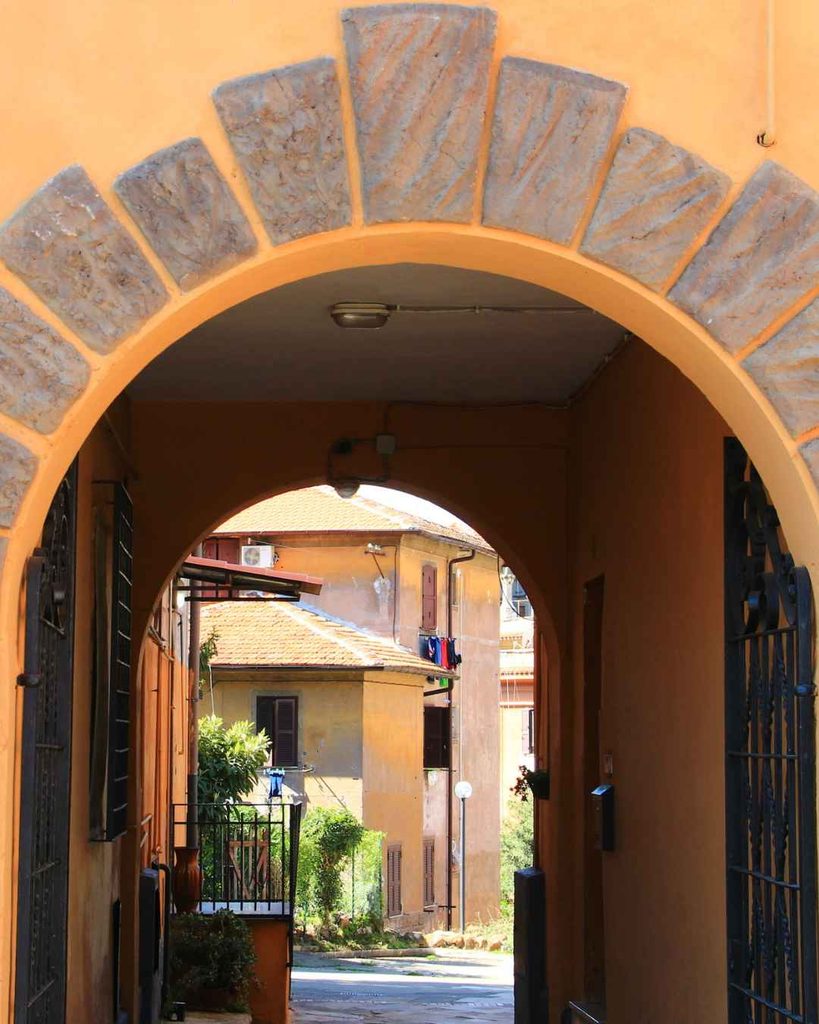
Garbatella is a neighborhood that feels like a small town that somehow ended up inside Rome. It was built in the 1920s as a garden suburb, and it still has that feeling. The architecture is distinctive: low-rise buildings with courtyards, gardens, and a style that blends Art Nouveau with English garden-city ideas. The streets are narrow and winding. The piazzas are small and intimate.
This is a neighborhood where people live, not visit. There are no major sights. There is no reason for a tour group to come here. That is what makes it perfect for travelers who hate crowds. You can walk for an hour and see nothing but locals going about their day. You can have a coffee in a piazza and be the only person speaking English.
Garbatella is served by the Garbatella metro station on Line B, which puts it within easy reach of the Colosseum, Termini, and the Ostiense rail hub. The neighborhood is also close to Testaccio and the Aventine, so you can walk to those areas for dinner or exploration.
Accommodation in Garbatella is mostly short-term rentals. Prices are among the lowest of the neighborhoods on this list, and the quality of life is high. For budget-conscious travelers who want character and quiet, Garbatella is an excellent choice. It is not for everyone. It is not polished. It is not convenient in the way the historic center is convenient. But it is real, and it is peaceful.
6. Pigneto: The Bohemian Alternative
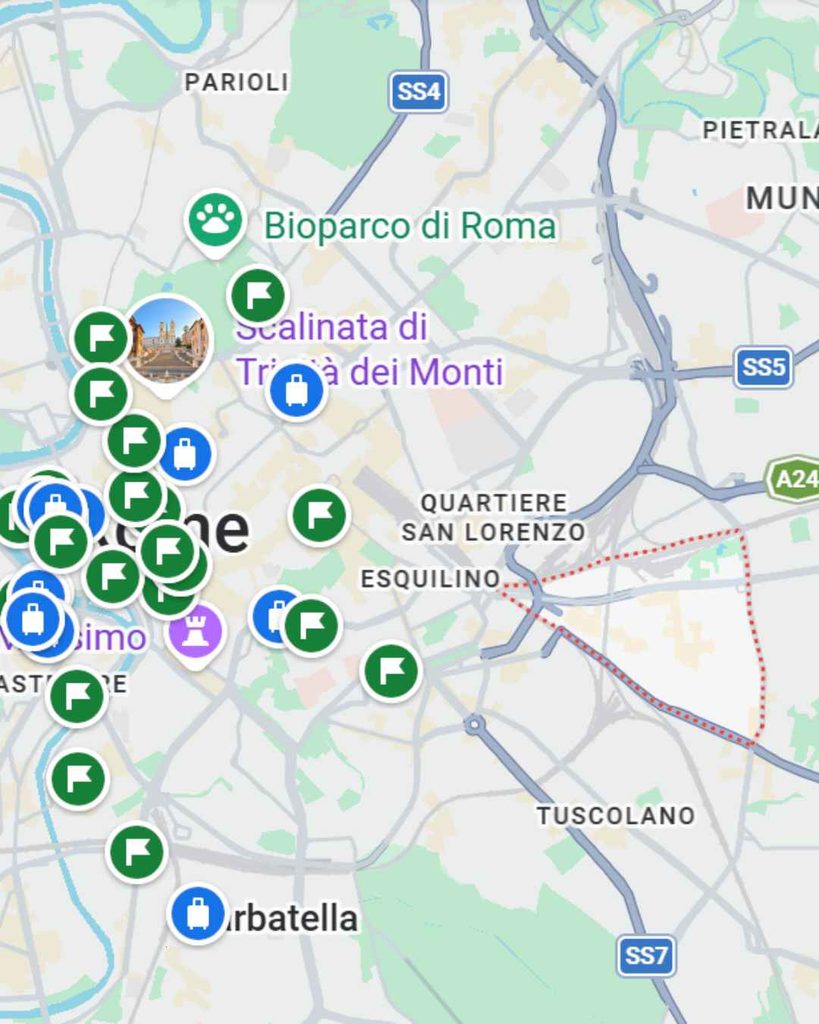
Pigneto is a neighborhood on the eastern edge of Rome, and it has a reputation as the city’s bohemian quarter. It is where artists, students, and creative types live. It has street art, vintage shops, independent cinemas, and a nightlife scene that is more about bars and live music than clubs.
Pigneto is not quiet in the way the Aventine is quiet. It has a lively evening scene, and some streets can be noisy at night. But it is not a tourist neighborhood, and the crowds are different. You will see Romans, not tour groups. You will hear Italian, not English. The pace is relaxed during the day and energetic at night.
The Pigneto metro station serves the neighborhood on Line C, which connects to San Giovanni and the historic center. Buses and trams also serve the area. It is not as convenient as the Aventine or Prati for reaching the major sights, but it is manageable.
Accommodation in Pigneto is mostly short-term rentals and small guesthouses, often with a design-forward aesthetic. Prices are competitive, especially for longer stays. This is a good choice for travelers who want a neighborhood with personality, a good food scene, and a local atmosphere, and who do not mind a slightly longer commute to the ancient sights.
Related Post: Rome Neighborhoods Guide: Where to Stay
How to Choose
The right neighborhood depends on what you value most.
If you want the quietest possible experience with the best access to the center, choose the Aventine. It is the gold standard for peaceful Rome.
If you want green space and a residential feel, choose Monteverde. It is the best neighborhood for slow mornings and long walks in the park.
If you want food and local life, choose Testaccio. It is the best neighborhood for eating well and feeling like you are in the real Rome.
If you want elegance and convenience, choose Prati. It is the best neighborhood for combining a quiet base with easy access to the Vatican and the center.
If you want character and value, choose Garbatella. It is the best neighborhood for feeling like you discovered somewhere no one else knows about.
If you want bohemian energy and a local scene, choose Pigneto. It is the best neighborhood for nightlife and creative atmosphere without the tourist crush.
None of these neighborhoods will put you steps from the Pantheon. That is the trade-off. But when you return to your quiet street after a day in the crowded center, you will understand why it is worth it. You are not just visiting Rome. You are staying there. And that is a different experience entirely.
Again, feel free to go through the list below of my Italy recommendations that I have crafted after years of travel to this beautiful country:
- Packing List: Things Not to Go to Italy Without
- Must-Do Things: Unforgettable Experiences
- Where to Stay: Best Hotels in Italy.
- Where to Stay in Rome: Rome’s Best Neighborhoods
- Where to Stay in Florence: Picking the Best Area
- Where to Stay in Venice: Venice’s Best Districts
- Italy’s Cobblestone Streets: Best Shoes For the Job
- Backpack or Suitcase?: Italy Luggage Guide
- Travel Insurance: Always Be Covered
- E-Sim: Be Connected At All Times