
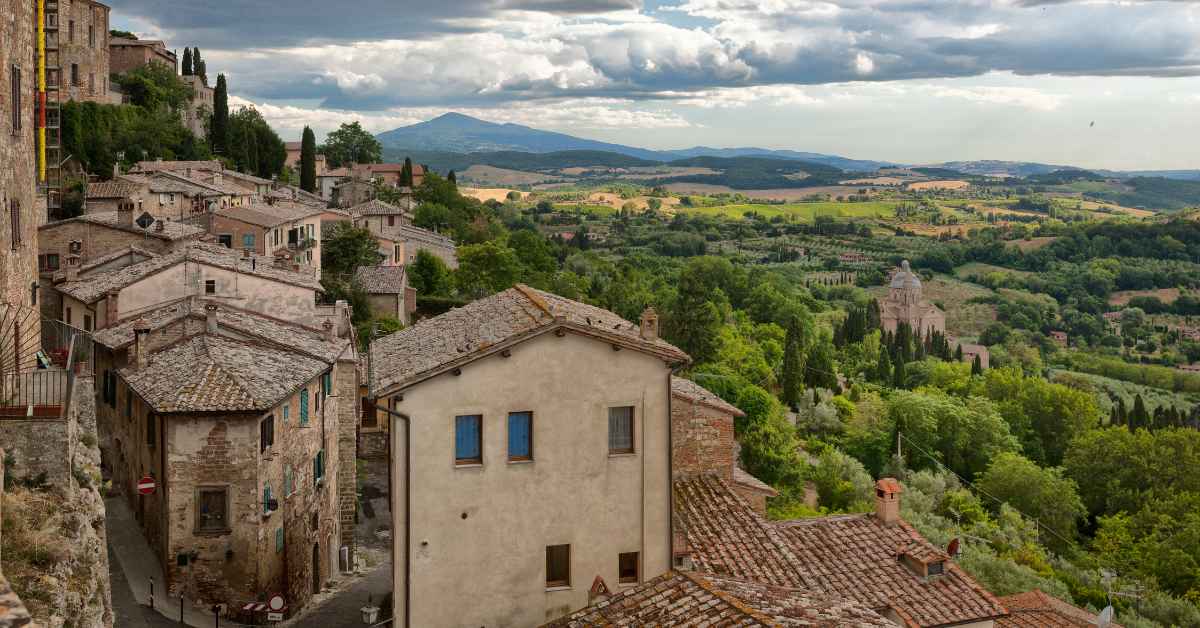
Tuscany is not a place you see. It is a place you move through. The difference sounds small, but it changes everything about how you experience the region.
If you treat Tuscany as a series of destinations, you will spend your days arriving and leaving, and the hours in between will blur into a haze of road signs and rest stops.
If you treat it as a landscape to travel through, the journey itself becomes the point. I learned this on a drive from Siena to Montalcino.
I had planned to arrive in an hour. It took me four, because I kept stopping. A cypress-lined road that looked too perfect to pass. A viewpoint where the light was doing something extraordinary to the hills. A tiny village that was not on my map.
By the time I reached Montalcino, I had seen more of Tuscany than I had in the previous three days combined.
That is what this post is about. The roads that wind through the hills, the villages that sit on top of them, and the views that make you pull over and turn off the engine.
It is about how to travel through Tuscany rather than just visit it, and why the journey is often better than the destination.
Before you read further, remember that Italy rewards travelers who come prepared. I’ve found a few things especially useful on an Italy trip, and they’re worth having and/or knowing beforehand. See the checklist here. Also, if you want me to plan an Italy trip for you that you will never forget, drop me a message here
Why the Roads Matter as Much as the Places
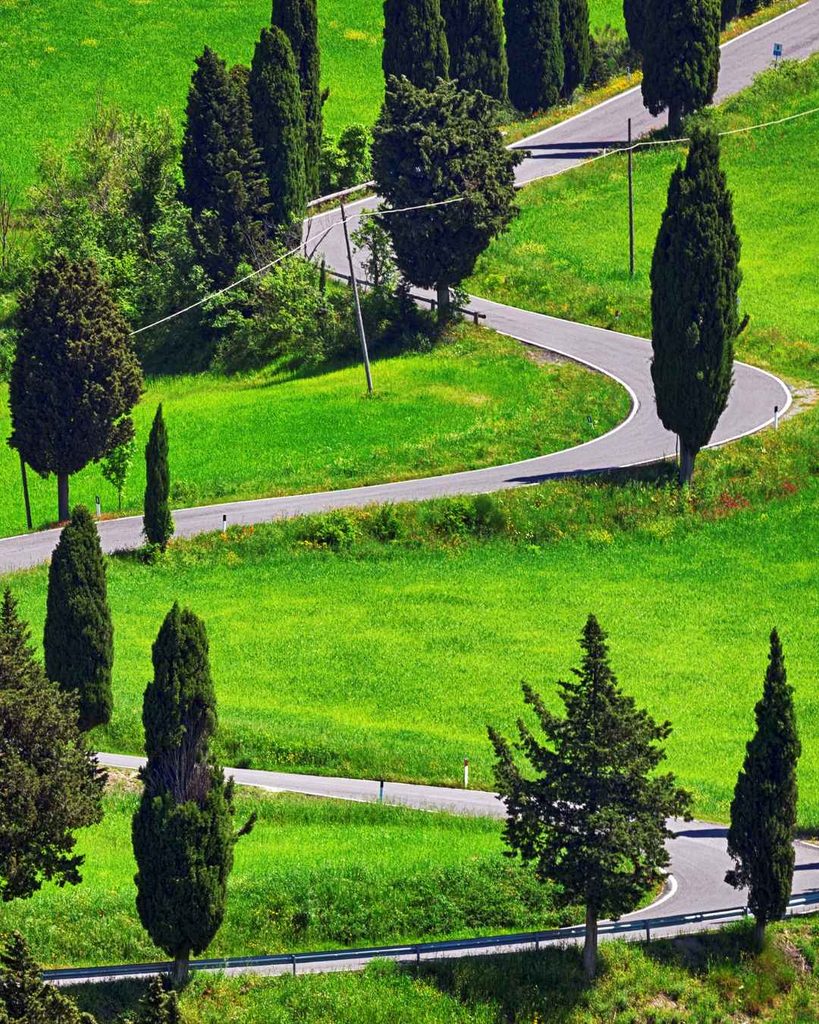
Tuscany’s road network is one of the reasons the region is so rewarding to explore. The roads follow the contours of the land, which means they wind, climb, and descend in ways that reveal the landscape slowly. You do not see Tuscany all at once. You see it in pieces, around corners, through gaps in the trees.
The roads also connect places that are not on the main tourist route. The superstrada, the fast highway that runs from Florence to Siena, will get you where you are going quickly.
But it will not show you anything. The secondary roads, the ones marked with a yellow or white line on the map, are the ones that lead to the villages and views that make Tuscany memorable.
Driving in Tuscany is not difficult. The roads are well maintained, the signage is good, and the traffic outside the major cities is light.
The main challenges are the narrow roads in the historic centers, which are usually restricted to residents, and the hills, which can be steep and winding. A small car is easier to handle than a large one, and a car with a manual transmission is more common than an automatic.
One thing to know before you drive in Tuscany is the ZTL, the Zona a Traffico Limitato. These are restricted traffic zones in the historic centers of most Italian towns.
Cameras monitor the entrances, and if you drive into one without authorization, you will receive a fine in the mail months later. The fines are not small. The solution is simple. Park outside the walls and walk in. Most towns have parking areas just outside the historic center, and the walk is usually short and pleasant.
Another thing to know is that Italian drivers are confident and sometimes impatient. They will tailgate, overtake on curves, and expect you to move aside if you are driving slowly.
The best response is to stay calm, drive at your own pace, and pull over when you can to let faster traffic pass. Do not feel pressured into driving faster than you are comfortable with.
If you do not want to drive, you can still experience the roads of Tuscany. The region has an extensive network of walking trails, and the Via Francigena, the ancient pilgrimage route from Canterbury to Rome, passes through some of the most beautiful parts of the region.
Cycling is also popular, and there are rental shops in most of the main towns. The trains connect the major towns, though the smaller villages often require a bus or a taxi.
The Classic Drives
Some roads in Tuscany are famous for a reason. They pass through landscapes that have been painted, photographed, and written about for centuries, and they are worth experiencing even if you have seen them in pictures.
The Chiantigiana

The Chiantigiana is the road that runs from Florence to Siena through the heart of the Chianti region. It is one of the most beautiful drives in Italy, and it passes through some of the most famous wine country in the world.
The road leaves Florence and climbs into the hills, passing through the town of Greve in Chianti, which is a good place to stop for lunch. Greve has a handsome main square, a good market, and a selection of wine shops where you can taste before you buy.
The butcher shop of Dario Cecchini is nearby, in Panzano, and it has become something of a pilgrimage site for meat lovers.
From Greve, the road continues through Panzano, then on to Radda and Castellina. Each town has its own character. Radda is small and quiet, with a medieval center and a good selection of restaurants.
Castellina has a more substantial historic center, with a fortress and a network of streets that climb the hillside.
The landscape along the Chiantigiana is a mix of vineyards, olive groves, and forests, with stone farmhouses and cypress trees scattered across the hills. The vineyards are the source of Chianti Classico, the most prestigious version of the wine, and many of the estates along the road offer tastings and tours.
The Chiantigiana is not a fast road. It winds through the hills, and there are plenty of places to stop. Allow a full day for the drive if you want to do it properly.
If you have time, take a detour to the Abbey of Passignano, a tenth-century monastery that sits on a hill above the road, or to the castle of Monteriggioni, a walled town that looks like something out of a fairy tale.
The Val d’Orcia Route

The Val d’Orcia is the landscape that most people picture when they think of Tuscany. It is a UNESCO World Heritage Site, and the road that runs through it is one of the most photographed in Italy.
The classic route starts in Siena and runs south through Buonconvento and San Quirico d’Orcia. From there, you can take the road to Pienza, which passes through some of the most beautiful countryside in the region.
The road from Pienza to Montalcino is another highlight, with views across the valley that change with every bend.
The Val d’Orcia is best experienced slowly. The road is not long, but there are so many places to stop that a short drive can take hours. Pull over at the viewpoints, walk through the villages, and take your time. This is not a road to rush.
One of the most beautiful stretches is the road from Pienza to Montepulciano, which climbs through the hills and offers views across the valley to the east. Another is the road from San Quirico to Montalcino, which passes through vineyards and olive groves and offers glimpses of the town on its hilltop in the distance.
The Val d’Orcia is also home to some of the best food in Tuscany. The pecorino cheese of Pienza, the Brunello wine of Montalcino, and the pici pasta of the whole region are all worth seeking out. Stop at a countryside trattoria for lunch, and take your time.
The Maremma Coast Road
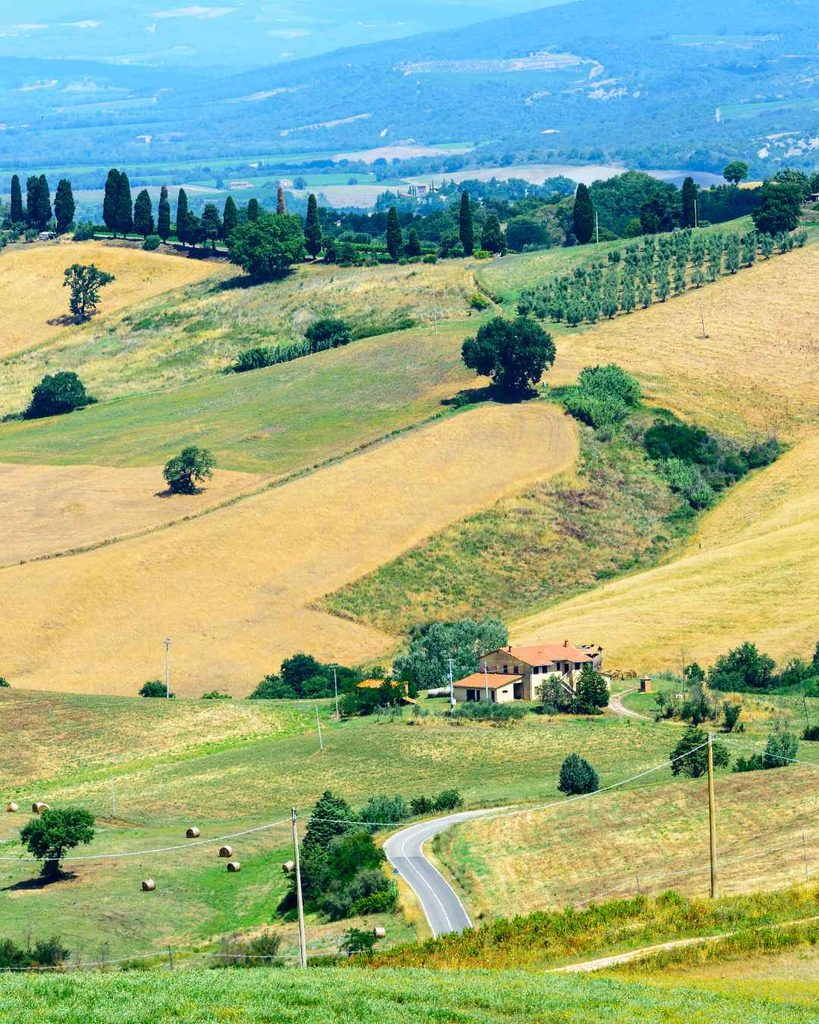
The Maremma coast road runs from Livorno down to Piombino, passing through some of the most unspoiled coastline in Tuscany. The road is less famous than the inland routes, but it is just as beautiful in its own way.
The route passes through Bolgheri, which is famous for its wines, and through the pine forests and sandy beaches of the Maremma. There are fewer villages on this route, but the landscape is wilder and more dramatic. It is a good choice if you want to combine a drive with a day at the beach.
The Maremma is also home to some of the best-preserved medieval towns in Tuscany. Pitigliano, Sorano, and Sovana are all within easy reach of the coast road, and each is worth a detour. The tufa cliffs, the Etruscan tombs, and the narrow streets make this one of the most fascinating corners of the region.
The Garfagnana and the Apuan Alps

The Garfagnana is a valley in northern Tuscany, between the Apennines and the Apuan Alps. It is not the Tuscany of gentle hills and vineyards. This is mountain country, with dense forests, rushing rivers, and a climate that is wetter and cooler than the rest of the region.
The road that runs through the Garfagnana follows the Serchio River, passing through towns like Castelnuovo di Garfagnana and Barga. The landscape is dramatic, with steep mountains on both sides and villages clinging to the hillsides.
The Apuan Alps, which rise above the valley, are famous for their marble. The quarries of Carrara have been producing marble since Roman times, and the white peaks of the mountains are visible from miles away.
The road that climbs into the mountains is one of the most spectacular drives in Italy, with views across the valley and out to the sea.
Barga is the most beautiful town in the Garfagnana. The medieval center sits on a hilltop, with narrow cobblestone streets, stone houses, and a relaxed atmosphere.
The Duomo, which dates back to the ninth century, dominates the old town and offers views of the surrounding mountains.
The Villages That Define Tuscany
The villages of Tuscany are the reason the region is so beloved. They are the places where the landscape meets human history, where the hills are topped with stone towers and the streets are lined with buildings that have been there for centuries.
San Gimignano
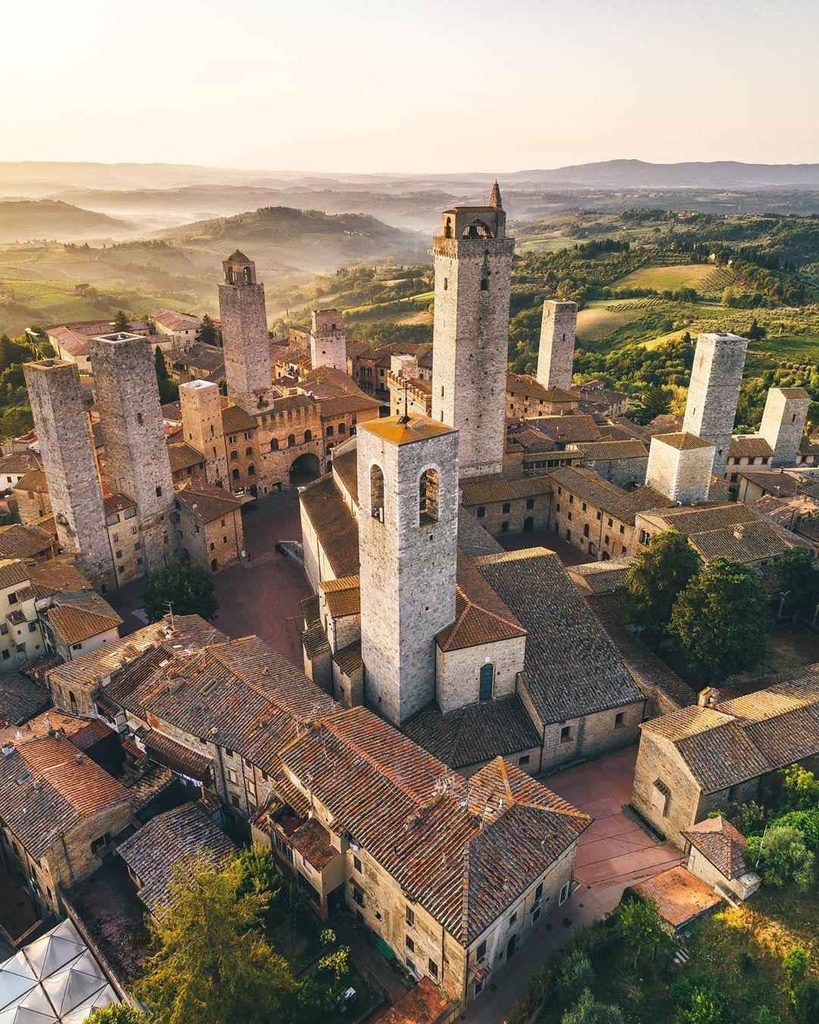
San Gimignano is the village of towers. At its peak, it had seventy-two towers, built by noble families as symbols of their wealth and power. Fourteen remain today, and they give the town a distinctive profile that has earned it the nickname “Medieval Manhattan.”
The town is small enough to walk end to end in fifteen minutes. Its two main squares, Piazza della Cisterna and Piazza del Duomo, are surrounded by medieval buildings, cafes, and shops.
The Collegiate Church contains a cycle of frescoes that are among the best-preserved in Tuscany, depicting scenes from the Old and New Testaments as well as the life of Saint Fina, the town’s patron saint.
San Gimignano is also known for its wine. Vernaccia di San Gimignano was the first Italian white wine to receive DOCG status, and it is still produced in the vineyards surrounding the town.
The wine is crisp, mineral, and slightly bitter, and it pairs well with the local food, which includes pecorino cheese, saffron, and wild boar.
The problem with San Gimignano is its popularity. It is one of the most visited towns in Tuscany, and between late morning and late afternoon, it is overrun with tour groups.
This is why the advice to stay overnight is so common. The town transforms in the evening, when the buses have gone, and the streets belong to the people who are staying there.
I have written a separate guide for San Gimignano. Read it here.
Montepulciano
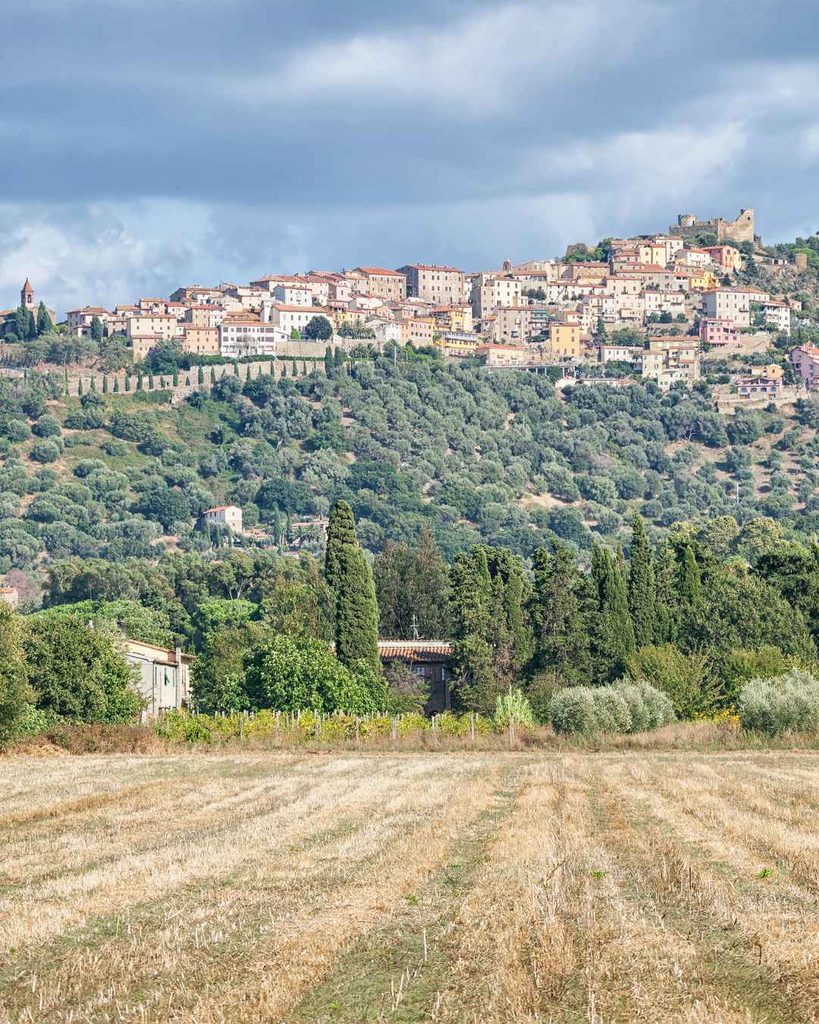
Montepulciano is a hill town in southern Tuscany, known for its wine and its Renaissance architecture. The town sits on a ridge, and its main street climbs from the lower gate to the upper piazza, passing churches, palazzos, and wine cellars along the way.
The wine of Montepulciano is Vino Nobile, a red made from Sangiovese grapes. It is one of the most prestigious wines in Italy, and it has been produced in the area for centuries. Many of the wine cellars in town are open for tastings, and some of them are carved into the tufa rock beneath the buildings.
Montepulciano is also a good base for exploring the Val d’Orcia, the UNESCO World Heritage landscape that lies to the south. The valley is famous for its rolling hills, its cypress-lined roads, and its golden light, which has made it a favorite of photographers and filmmakers.
The town itself is beautiful, with a handsome main square, a Renaissance church, and a network of streets that climb the hillside. The view from the upper piazza is one of the best in Tuscany, stretching across the valley to the hills beyond.
Pienza
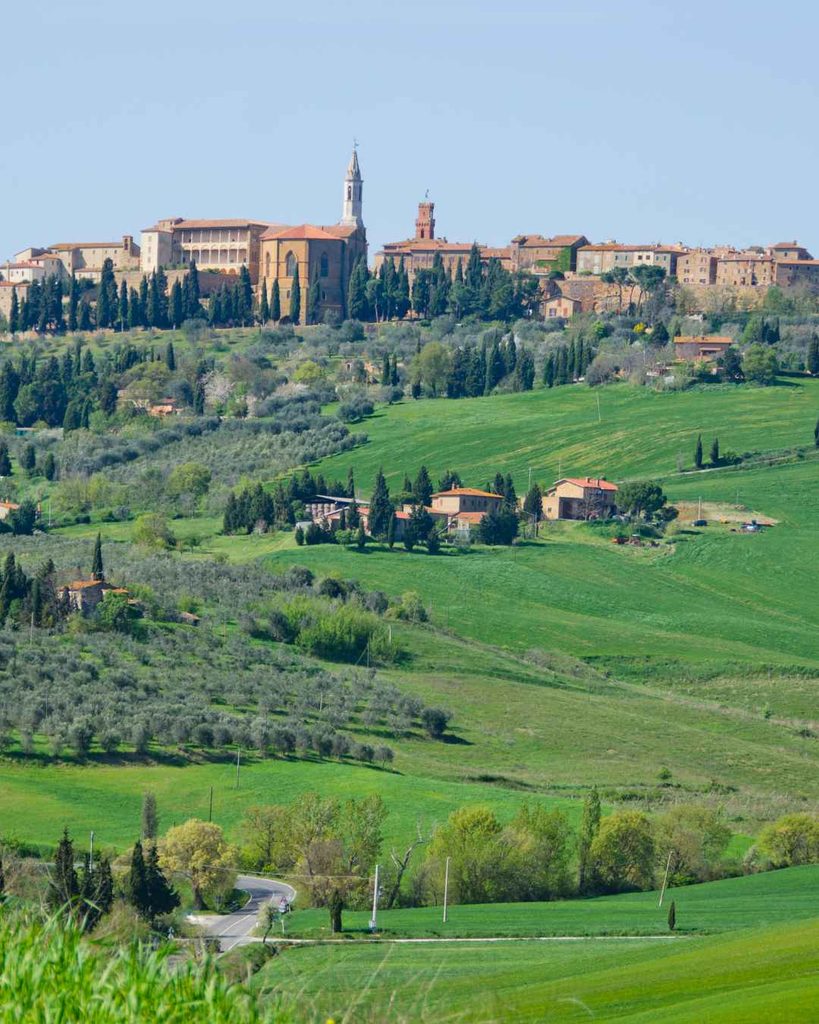
Pienza is a small town in the Val d’Orcia, and it is one of the most beautiful in Tuscany. It was rebuilt in the fifteenth century by Pope Pius II, who wanted to transform his birthplace into an ideal Renaissance town. The result is a compact, harmonious center with a cathedral, a papal palace, and a series of elegant streets.
Pienza is also known for its pecorino cheese. The cheese is made from sheep’s milk and aged in the cellars beneath the town. It is one of the most famous products of the region, and it is worth buying some to take home.
The town is small enough to see in a few hours, but it is worth staying overnight if you want to experience it without the crowds. The evenings are quiet, and the views across the Val d’Orcia are spectacular. Walk along the walls at sunset, and you will understand why Pius II wanted to build his ideal town here.
Read more about Pienza in this guide.
Montalcino
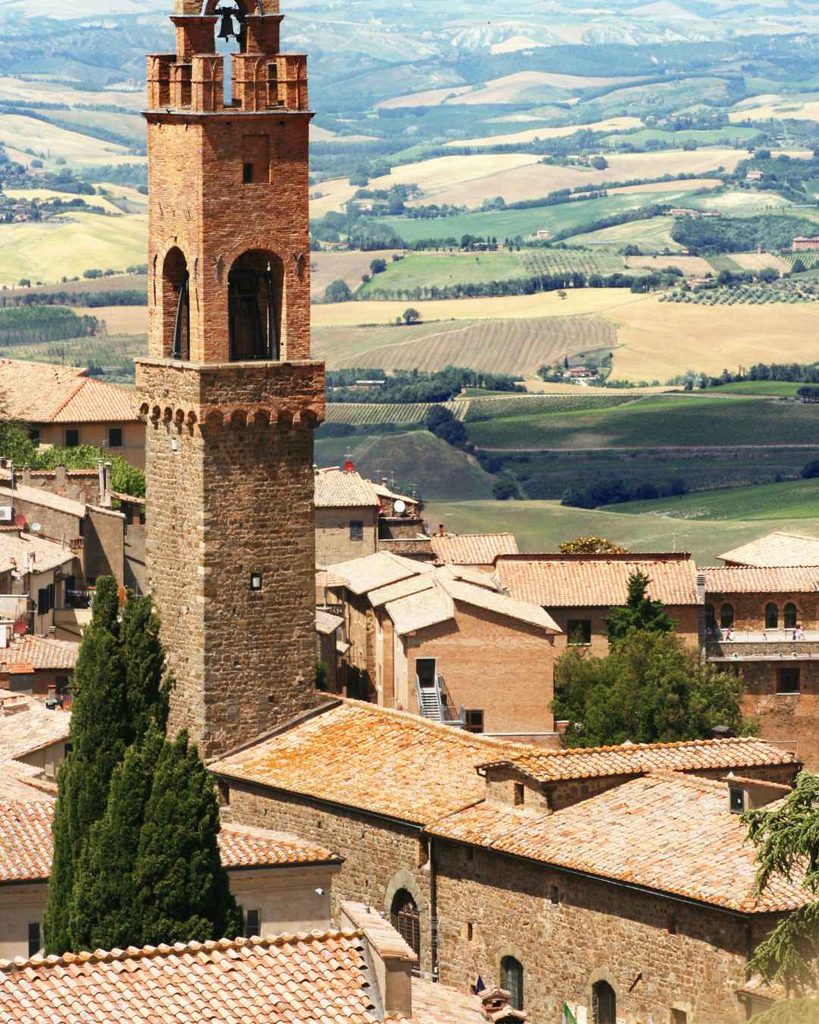
Montalcino is a hill town in southern Tuscany, known for its Brunello wine. Brunello di Montalcino is one of the most prestigious red wines in the world, made from Sangiovese grapes and aged for at least five years before release.
The town itself is charming, with a medieval fortress, a handsome piazza, and a network of narrow streets. The wine cellars in town are open for tastings, and many of them offer tours of their aging rooms.
Montalcino is also a good base for exploring the Val d’Orcia and the surrounding countryside. The views from the fortress are among the best in the region, stretching across the valley to the hills of Siena and the mountains beyond.
Cortona

Cortona is a hill town in eastern Tuscany, near the border with Umbria. It is one of the oldest towns in Italy, with origins that go back to the Etruscans.
The town is built on a steep hillside, and its streets climb from the lower gates to the upper piazza. The views from the top are panoramic, stretching across the Val di Chiana and toward Lake Trasimeno.
Cortona has a lively atmosphere, with plenty of restaurants, cafes, and shops. It is also a good base for exploring the surrounding countryside, which is known for its olive oil and its vineyards.
Pitigliano

Pitigliano is the most dramatic town in the Maremma. It rises from a tufa cliff, with houses that seem to grow directly out of the rock. From a distance, it looks impossible. Up close, it is a lattice of narrow streets winding around a Baroque cathedral, an Orsini palace, and a sixteenth-century aqueduct bridge.
The town has a remarkable Jewish history. A vibrant Jewish community lived here from the fifteenth century onward, earning Pitigliano the nickname “Little Jerusalem.” The synagogue and Jewish museum are both worth visiting, and the kosher wine cellars tell a story about religious tolerance in Renaissance Italy.
Barga
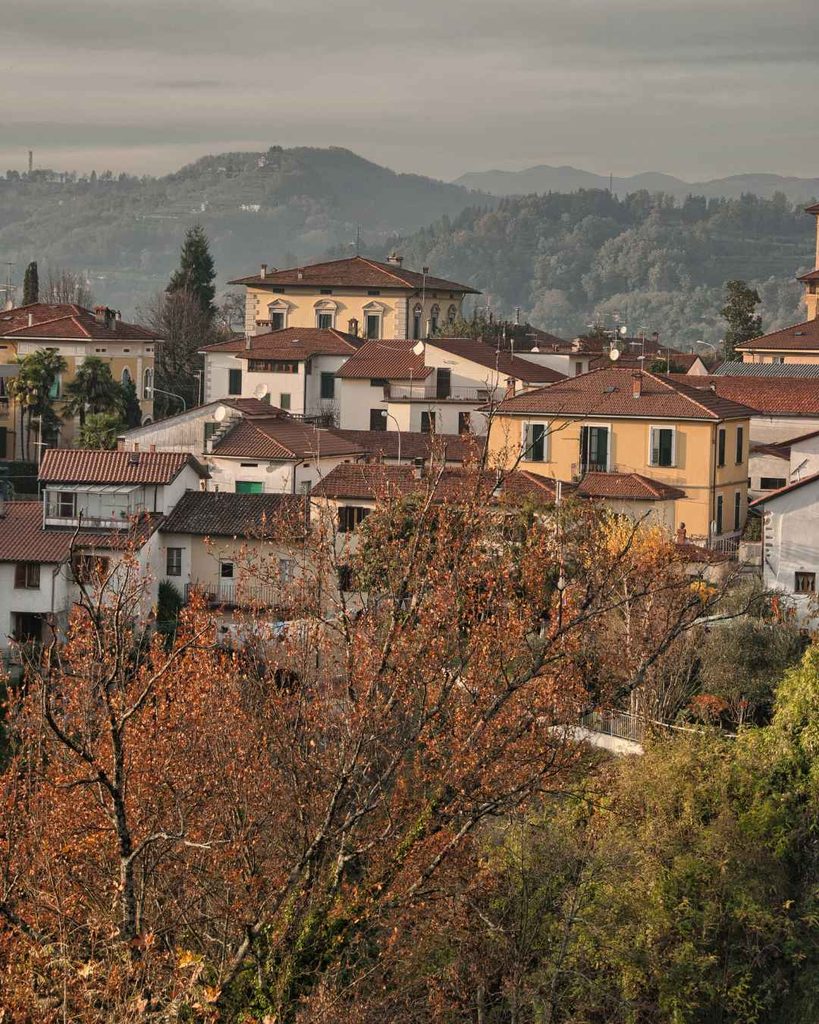
Barga is the most beautiful town in the Garfagnana, a valley in northern Tuscany between the Apennines and the Apuan Alps. The medieval center sits on a hilltop, with narrow cobblestone streets, stone houses, and a relaxed atmosphere.
The Duomo, which dates back to the ninth century, dominates the old town and offers views of the surrounding mountains. Barga has a surprising connection to Scotland.
In the late nineteenth century, many residents emigrated to Scotland, and their descendants still maintain ties with the town. You will see Scottish flags alongside Italian ones, and there is a fish and chips festival every summer.
The Views That Make You Stop the Car
Tuscany is full of views that make you pull over and turn off the engine. Some of them are famous, and some of them are the kind of thing you find by accident, on a road you did not plan to take.
The Val d’Orcia from Pienza

The view from the walls of Pienza is one of the most famous in Tuscany. You look out across the Val d’Orcia, with its rolling hills, its cypress-lined roads, and its isolated farmhouses. The light changes throughout the day, and the colors shift from green to gold to pink.
The best time to see it is in the late afternoon, when the sun is low and the shadows are long. Walk along the walls, find a spot, and sit for a while. This is not a view to photograph and leave. It is a view to absorb.
The Cypress Road Near Montichiello
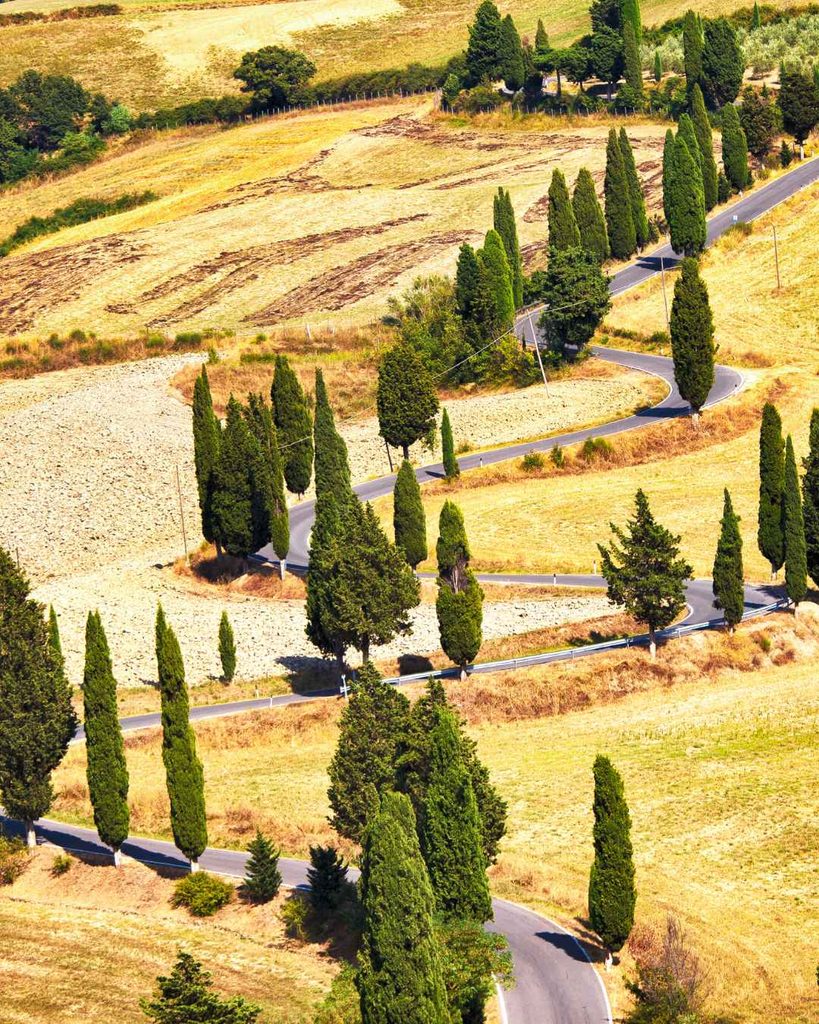
The road from Pienza to Montichiello passes through some of the most beautiful countryside in the Val d’Orcia. There is a stretch of road, just before you reach the village, where the cypress trees line the road in a way that seems almost too perfect to be real.
This is one of the most photographed spots in Tuscany, and it is easy to see why. The road curves through the hills, the cypress trees frame the view, and the landscape stretches out in every direction. It is worth stopping, even if you have seen it in pictures a hundred times.
The View from Montepulciano
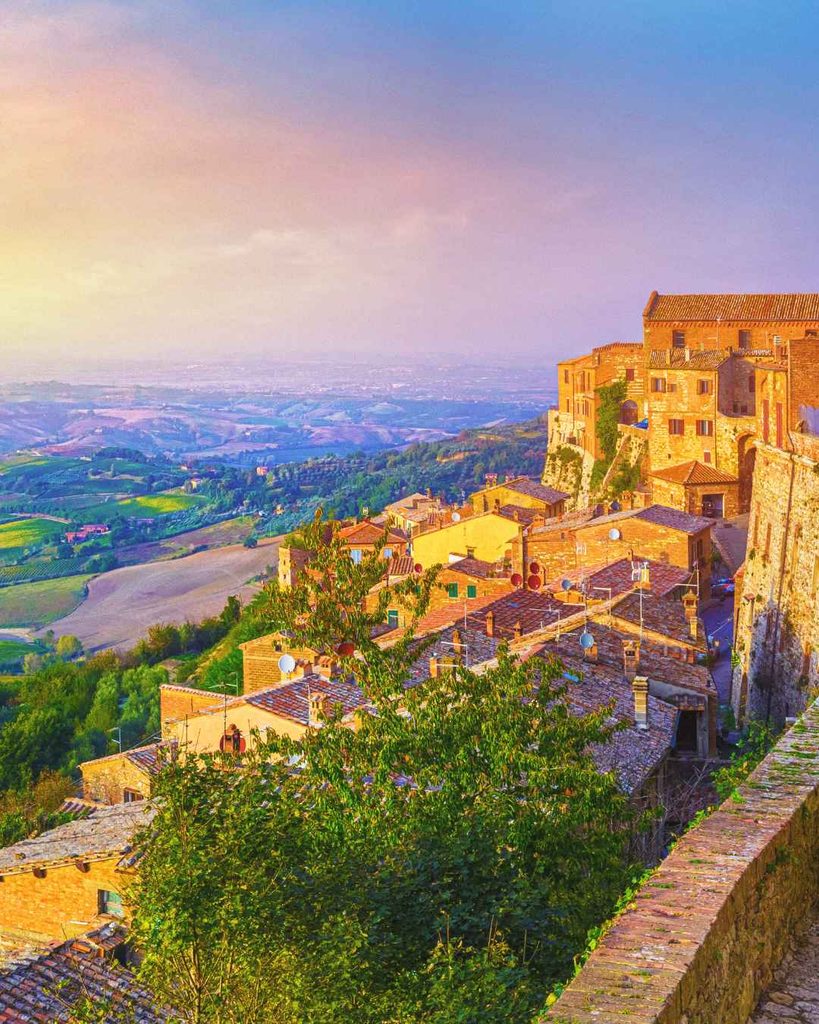
Montepulciano sits on a ridge, and the views from the town are among the best in Tuscany. From the upper piazza, you can see across the Val d’Orcia and the Val di Chiana, with the hills of Siena in the distance.
The view is particularly good in the evening, when the sun sets behind the hills and the light turns golden. Find a spot on the walls, order a glass of Vino Nobile, and watch the day end. It is one of the simplest pleasures in Tuscany.
The Maremma from Pitigliano
Pitigliano sits on a tufa cliff, and the views from the town are dramatic. You look out across the valley, with its deep gorges and its wooded hills, and you understand why the town was built where it was.
The view is best from the walls, where you can see the houses that seem to grow out of the rock. It is a reminder that Tuscany is not just a landscape of gentle hills and vineyards. It is also a landscape of cliffs, gorges, and wild country.
The View from San Gimignano’s Towers

The towers of San Gimignano offer some of the best views in Tuscany. The Torre Grossa, the tallest of the remaining towers, is open to the public, and the climb is worth the effort. From the top, you can see across the town, the surrounding countryside, and the hills beyond.
The view is particularly good in the morning, when the light is clear and the crowds have not yet arrived. Climb the tower early, and you will have the view to yourself.
How to Experience Tuscany Slowly
The roads, villages, and views of Tuscany are best experienced slowly. This is not a region to rush through. It is a region to linger in, to return to, to explore over days and weeks.
The first principle of slow travel in Tuscany is to choose fewer places and stay longer in each. Do not try to see five villages in a day. Choose one or two, and give them time. Sit in the piazza. Have a long lunch. Walk the streets without a destination.
The second principle is to drive the secondary roads. The superstrada will get you where you are going quickly, but it will not show you anything. The secondary roads, the ones that wind through the hills, are the ones that lead to the views and the villages that make Tuscany memorable.
The third principle is to stop when you see something that interests you. If a road looks beautiful, take it. If a village looks interesting, stop. If a view makes you want to pull over, pull over. The best moments in Tuscany are often the ones you did not plan.
The fourth principle is to travel in the shoulder seasons. Spring and autumn are the best times to visit Tuscany. The weather is mild, the crowds are thinner, and the light is beautiful. Summer is hot and crowded, and winter is cold and quiet.
The fifth principle is to eat where the locals eat. The best food in Tuscany is not in the restaurants on the main squares. It is in the trattorias on the side streets, the ones with handwritten menus and no English translations. Look for places that are full of Italians, and you will not go wrong.
Related Post: https://seeingitaly.com/the-tuscany-i-would-choose-for-a-slow-unforgettable-trip/
Final Thoughts
Tuscany is a region that rewards travelers who are willing to slow down and pay attention. The roads, the villages, and the views are the things that make it special, and they are best experienced not as destinations but as a journey.
Drive the Chiantigiana. Stop in San Gimignano, Montepulciano, and Pienza. Pull over at the viewpoints. Sit in the piazzas. Have long lunches. Take the secondary roads.
Do not try to see everything. Choose a few places and give them time. Let the journey be the point. That is when Tuscany reveals itself. That is when the roads, the villages, and the views become more than a checklist. They become memories.
Tuscany is waiting. Take the long way.
Again, feel free to go through the list below of my Italy recommendations that I have crafted after years of travel to this beautiful country:
- Packing List: Things Not to Go to Italy Without
- Must-Do Things: Unforgettable Experiences
- Where to Stay: Best Hotels in Italy.
- Where to Stay in Rome: Rome’s Best Neighborhoods
- Where to Stay in Florence: Picking the Best Area
- Where to Stay in Venice: Venice’s Best Districts
- Italy’s Cobblestone Streets: Best Shoes For the Job
- Backpack or Suitcase?: Italy Luggage Guide
- Travel Insurance: Always Be Covered
- E-Sim: Be Connected At All Times