
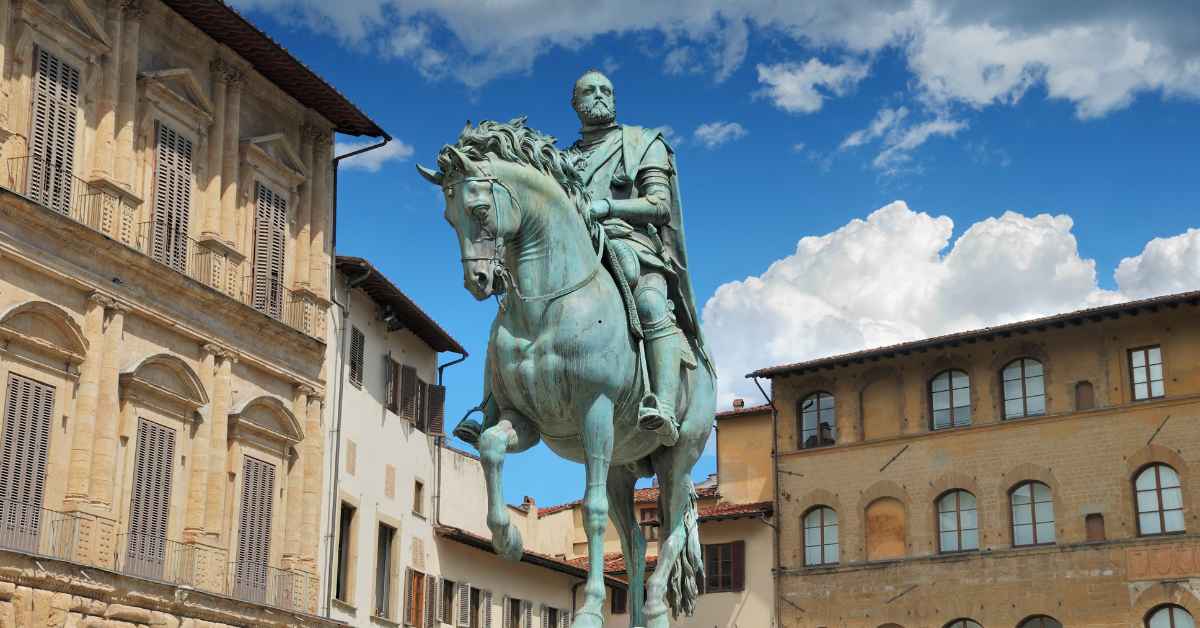
Florence in the fifteenth century was not a great power. It had no navy, no empire, and no natural defenses worth mentioning. It was a city of bankers and wool merchants, surrounded by stronger neighbors who could crush it if they chose.
And yet, within a hundred years, this small Tuscan city would become the center of the most extraordinary flowering of art, science, and human thought that Europe had seen since antiquity. The Renaissance did not begin in Florence by accident. It began because one family decided to make it happen.
That family was the Medici. They were not kings, not princes, not even nobles by birth. They were bankers, and they used their wealth and their cunning to become the most powerful dynasty in Italy, and eventually one of the most influential families in Europe.
Their story is inseparable from the story of Florence itself, and the story of the modern world.
But of all the things the Medici did, the thing that matters most today is what they did for art. They did not just commission paintings and sculptures. They created an entire culture of artistic patronage that made the Renaissance possible.
They discovered geniuses, supported them for decades, and gave them the freedom to create works that still define Western civilization. Without the Medici, the history of art would be unrecognizable.
This is the story of the Medici: how they rose, how they ruled, and how they changed the world through art.
Who Were the Medici?
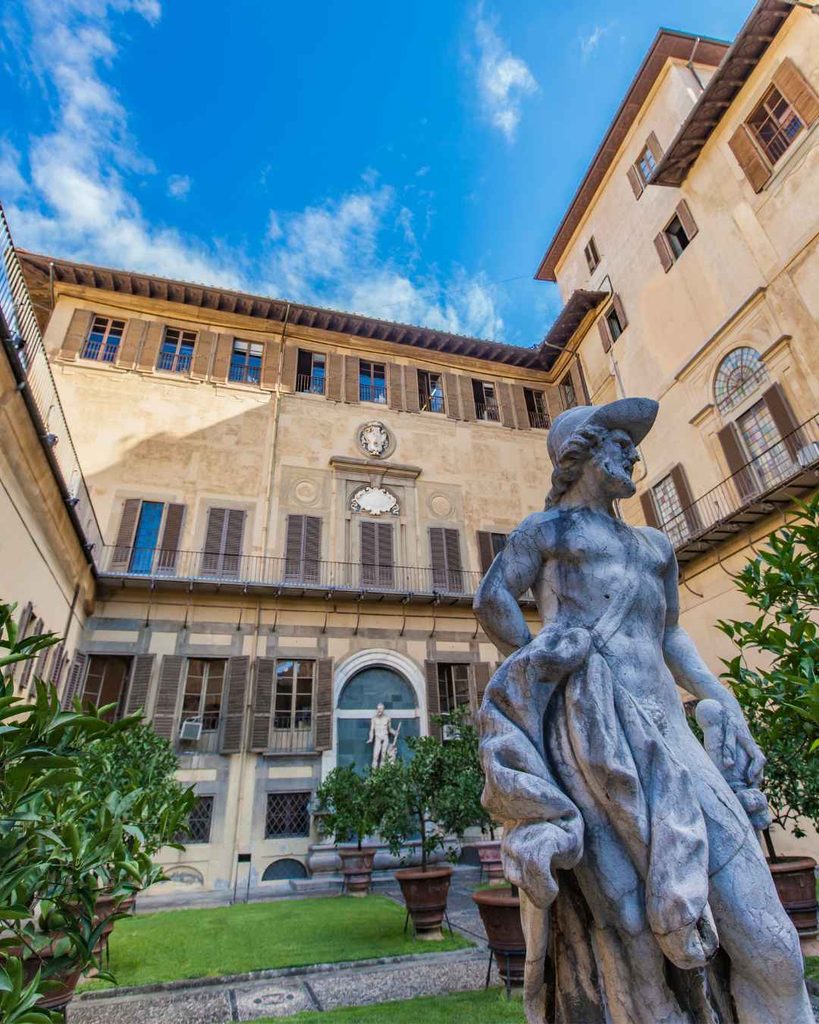
The Medici were a family of Florentine bankers who rose to prominence in the late fourteenth century. The founder of the family fortune was Giovanni di Bicci de’ Medici, who established the Medici Bank in 1397 and built it into one of the most successful financial institutions in Europe.
Giovanni was not a revolutionary. He was a careful, conservative businessman who understood that in a city like Florence, wealth alone was not enough. You needed influence, and influence required caution.
He stayed out of politics as much as he could, and he used his money to build relationships rather than to buy power outright.
His son, Cosimo, had different ideas.
Cosimo de’ Medici: The Father of the Nation
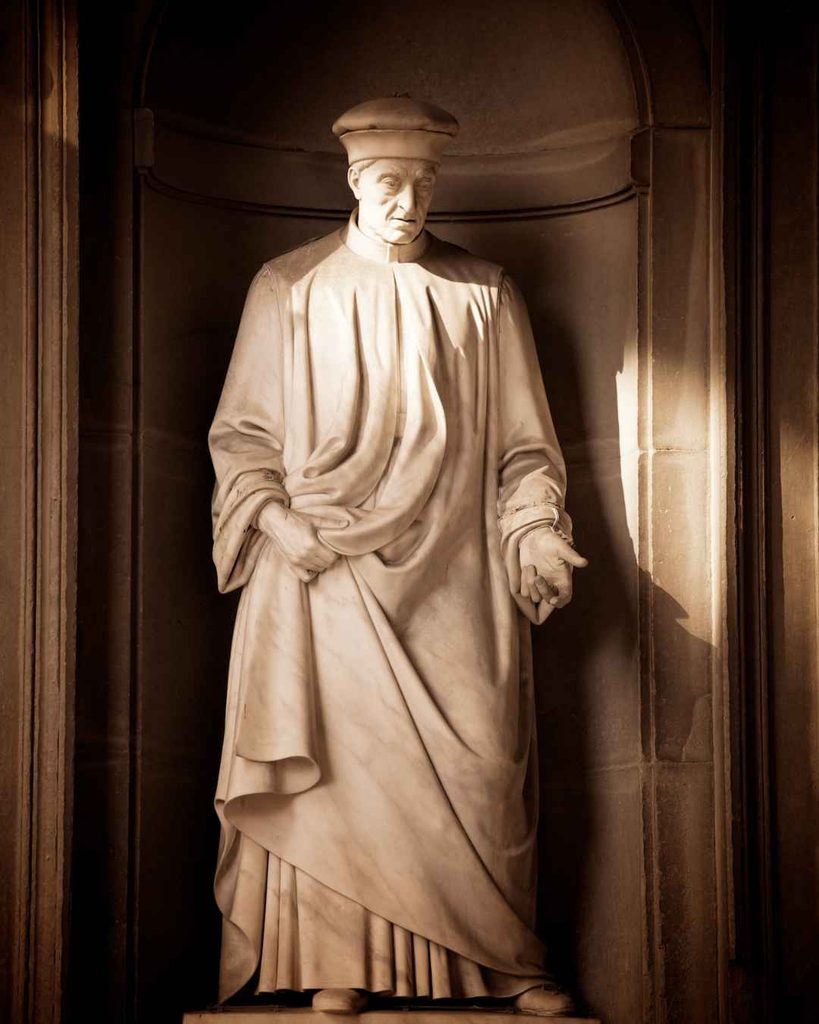
Cosimo de’ Medici, born in 1389, was the man who transformed the Medici from a wealthy banking family into the de facto rulers of Florence. He was educated in finance, managed the papal accounts, and built a fortune through a monopoly on alum, a vital component in the Florentine textile industry.
But Cosimo understood something that many wealthy men of his era did not: money was a means, not an end. He used his wealth to buy influence, and he used his influence to shape the city in his image.
In 1434, after a period of political conflict that ended in his exile, Cosimo returned to Florence and took control of the government. He did not call himself a ruler.
Florence was technically a republic, with elected officials and a constitution. But Cosimo controlled the elections, placed his allies in key positions, and ensured that the government did what he wanted.
He was, in every way that mattered, the master of Florence. And he used that mastery to make the city great.
Cosimo de’ Medici is the single most important patron of the arts in the history of Florence. He spent enormous sums of money on art and architecture, not just because he loved beauty but because he understood that great art was a form of immortality.
Buildings and paintings last longer than bankers. They carry the name of their patron down through the centuries.
Cosimo’s first great commission was the dome of the Florence Cathedral. The cathedral had been under construction for over a hundred years, and the dome opening was still exposed to the sky. No one knew how to span it.
Cosimo hired Filippo Brunelleschi, a goldsmith with no architectural training, to solve the problem. Brunelleschi built the largest masonry dome in the world, and Cosimo paid for it.
The dome is still the symbol of Florence, and it exists because Cosimo took a chance on a man everyone else thought was mad.
Cosimo also commissioned Brunelleschi to rebuild the Basilica of San Lorenzo, the Medici family church. Brunelleschi designed a church of perfect Renaissance proportions, with grey stone columns and clean lines.
Cosimo spent so much on San Lorenzo that he joked it would ruin him. He also commissioned Michelozzo to build the Medici Palace, the family’s first great residence, which became the model for palatial architecture across Italy.
Cosimo’s most important artistic relationship was with Donatello. He employed the sculptor for decades and gave him the freedom to experiment.
Donatello’s bronze David, the first free-standing nude statue since antiquity, was commissioned by Cosimo. The statue depicts the biblical hero after his victory over Goliath, standing naked with his sword and the head of the giant at his feet.
It is one of the most important sculptures in the history of art, and it exists because Cosimo paid for it.
Donatello also carved the wooden crucifix in the Basilica of Santa Croce, the Magdalene, and the bronze pulpits in San Lorenzo. Cosimo supported him through his entire career, and when Donatello died, Cosimo had him buried in the Medici church, next to the family he had served.
Cosimo’s patronage extended to painting as well. He supported Fra Angelico, the Dominican friar whose frescoes in the Monastery of San Marco are among the most beautiful religious paintings of the Renaissance.
Cosimo paid for the monastery to be rebuilt and commissioned Fra Angelico to decorate the cells and corridors. The result is a cycle of frescoes that is intimate, devotional, and profoundly moving.
Fra Filippo Lippi was another Medici artist. He painted the Annunciation and the Madonna and Child with Two Angels, among many other works. His son, Filippino Lippi, also became a Medici artist, and his frescoes in the Brancacci Chapel are among the finest of the fifteenth century.
Cosimo also supported Benozzo Gozzoli, whose frescoes in the Chapel of the Magi in the Medici Palace depict the procession of the Magi.
The frescoes are a masterpiece of narrative painting, and they include portraits of Cosimo, his family, and his allies. The chapel is a statement of Medici power, wealth, and piety, all rendered in gold, color, and meticulous detail.
Cosimo’s patronage was not limited to Florence. He collected ancient manuscripts and founded the Platonic Academy, a center of learning that attracted scholars from across Europe. He supported humanist scholarship and helped create the intellectual climate that made the Renaissance possible.
When Cosimo died in 1464, the Signoria bestowed upon him the posthumous title “Pater Patriae,” Father of the Nation. It was a fitting tribute to a man who had, in many ways, created the Florence that the world still admires today.
Lorenzo the Magnificent: The Golden Age of Art
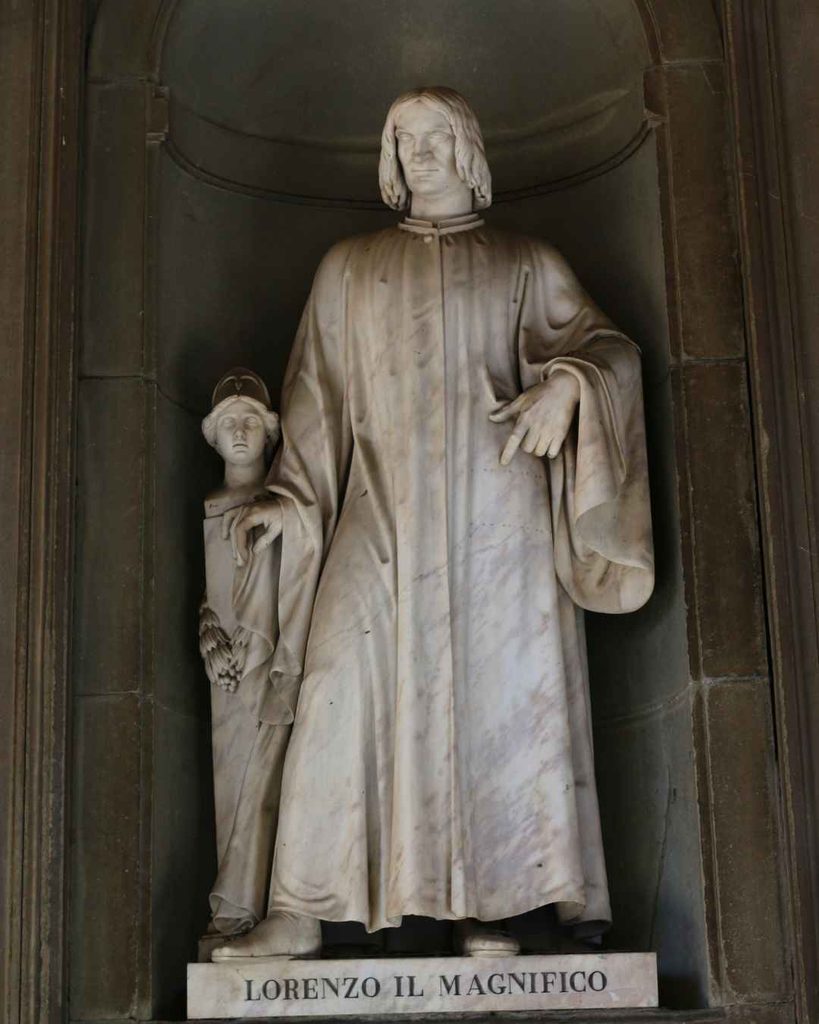
Cosimo’s grandson, Lorenzo de’ Medici, was the most famous of the family. He was not the most effective ruler, and he was not the most successful banker. But he was the most brilliant, the most charismatic, and the most culturally significant.
Lorenzo was twenty years old when he took control of Florence in 1469. He had received an exceptional education, and he was himself a poet, a collector, and a lover of ancient texts. He wrote sonnets, collected cameos, and surrounded himself with artists, writers, and philosophers.
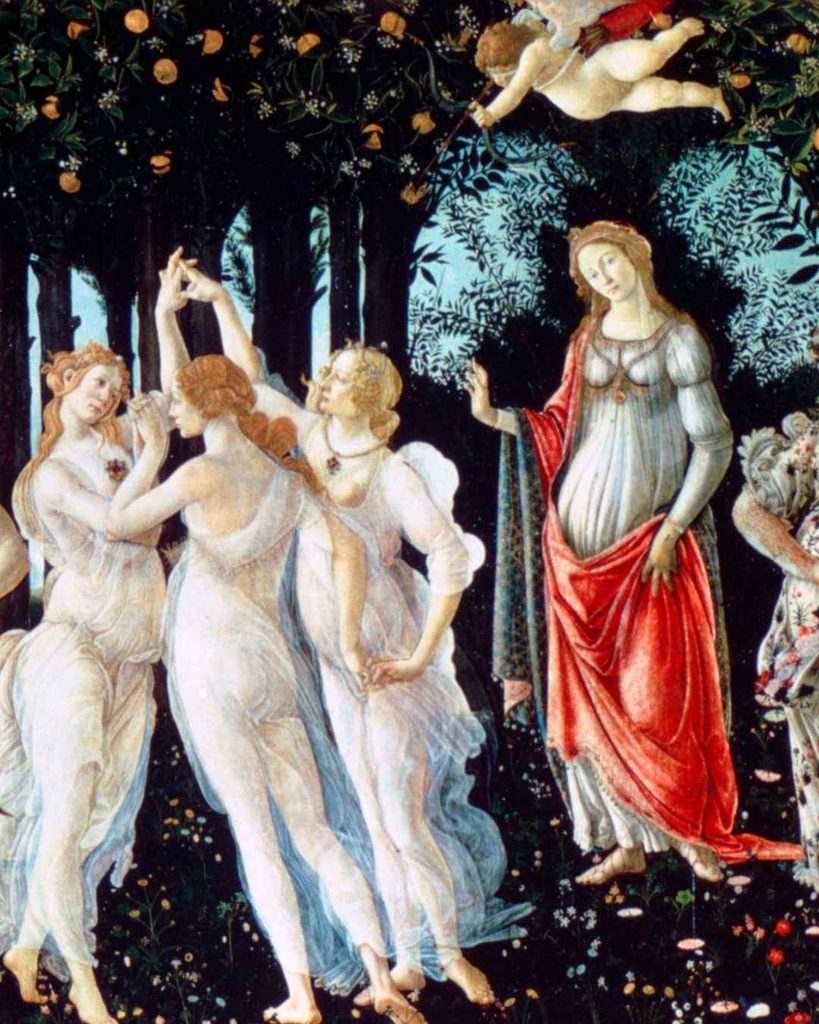
His court was the center of the Florentine Renaissance. Botticelli painted The Birth of Venus and Primavera, both of which are among the most famous paintings in the world.
Botticelli was a Medici artist, and his work reflects the humanist ideas that the Medici championed. The Birth of Venus depicts the goddess of love emerging from the sea, a scene from classical mythology that would have been unthinkable in the Middle Ages.
Primavera is an allegory of spring, filled with mythological figures and botanical details. Both paintings were commissioned by the Medici, and both are now in the Uffizi Gallery, which was built by the Medici to house their art collection.
Michelangelo was discovered by Lorenzo de’ Medici when he was a young man. Lorenzo invited him to live in the Medici Palace and treated him almost like a son.
Michelangelo ate at the family table, studied the ancient sculptures in the Medici collection, and learned from the artists and scholars who surrounded Lorenzo.
He carved the Battle of the Centaurs and the Madonna of the Stairs while he was living in the palace, and he studied with Bertoldo di Giovanni, the curator of Lorenzo’s antiquities collection.
Without Lorenzo’s patronage, Michelangelo might have remained a talented but unknown sculptor. Instead, he became the greatest artist of the Renaissance.
Leonardo da Vinci, though not a Medici court artist in the same way, benefited from the artistic environment that the Medici had created.
He was born in Vinci, a small town near Florence, and he trained in the workshop of Andrea del Verrocchio, who was patronized by the Medici. Leonardo’s early work was influenced by the Medici circle, and his later career was made possible by the culture of artistic patronage that the Medici established.
Lorenzo’s patronage was not just about art. He founded universities, supported printing, and initiated the revival of Italian literature. He was a pioneer of the humanist movement that would reshape European thought.
But Lorenzo was also a political operator. He survived the Pazzi Conspiracy, a plot by a rival family to assassinate him and his brother Giuliano in 1478. Giuliano was killed, but Lorenzo escaped, and the failed coup actually strengthened his position.
He made alliances with other Italian states, secured a cardinal’s hat for his son Giovanni, and extended Medici influence beyond Florence.
Lorenzo died in 1492, at the age of forty-three. The golden age of Florence died with him.
The Medici Popes: Art in the Service of the Church
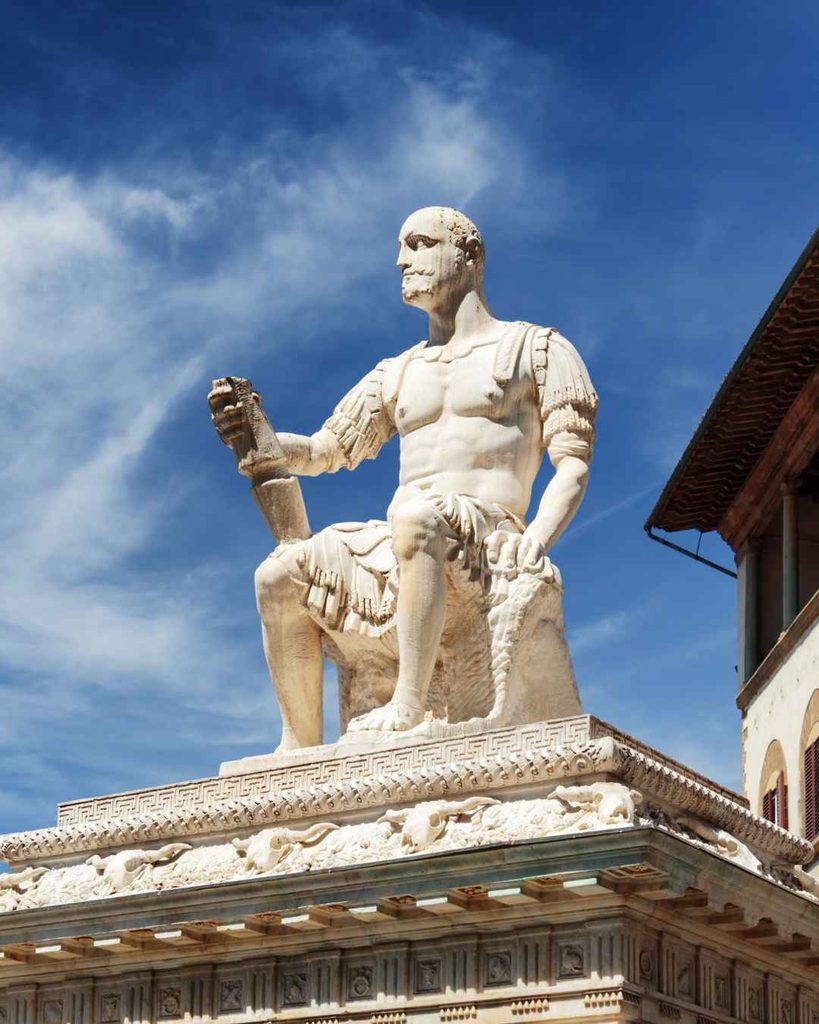
The Medici did not limit their ambitions to Florence. They also conquered Rome.
Giovanni de’ Medici, Lorenzo’s son, became Pope Leo X in 1513. He was the first Medici pope, and he used his position to extend the family’s power across the Papal States.
His reign was characterized by extravagance and cultural patronage, but also by a host of problems, the biggest one being a former friar named Martin Luther.
Leo X’s sale of indulgences to fund the rebuilding of St. Peter’s Basilica helped trigger the Protestant Reformation, a movement that would tear Europe apart for centuries.
But Leo X was also a great patron of the arts. He commissioned Raphael to paint the frescoes in the Vatican Stanze, including the School of Athens, one of the most famous paintings in the world.
He employed Michelangelo to work on the Medici Chapels in Florence and to paint the Sistine Chapel ceiling. He supported Leonardo da Vinci, who worked for him in Rome. And he made Rome the center of the artistic world, just as Florence had been under his father.
The second Medici pope was Giulio de’ Medici, who became Clement VII in 1523. Clement was more politically astute than Leo, but he was also more cautious, and his caution often led to indecision.
He was pope during the Sack of Rome in 1527, one of the most traumatic events in the city’s history, and he was unable to prevent the devastation.
But Clement was also a patron of the arts. He commissioned Michelangelo to paint the Last Judgment on the altar wall of the Sistine Chapel, one of the most powerful and controversial paintings in the history of art.
He commissioned Raphael to design the Villa Madama, a masterpiece of Renaissance architecture. And he supported the work of Sebastiano del Piombo, one of the finest painters of the sixteenth century.
Despite their flaws, the two Medici popes transformed the family from Florentine bankers into international power players. They commissioned art, built monuments, and extended Medici influence into the heart of the Catholic Church. And they made Rome a center of artistic patronage that rivaled Florence itself.
Catherine de’ Medici: The Queen Who Brought Italy to France
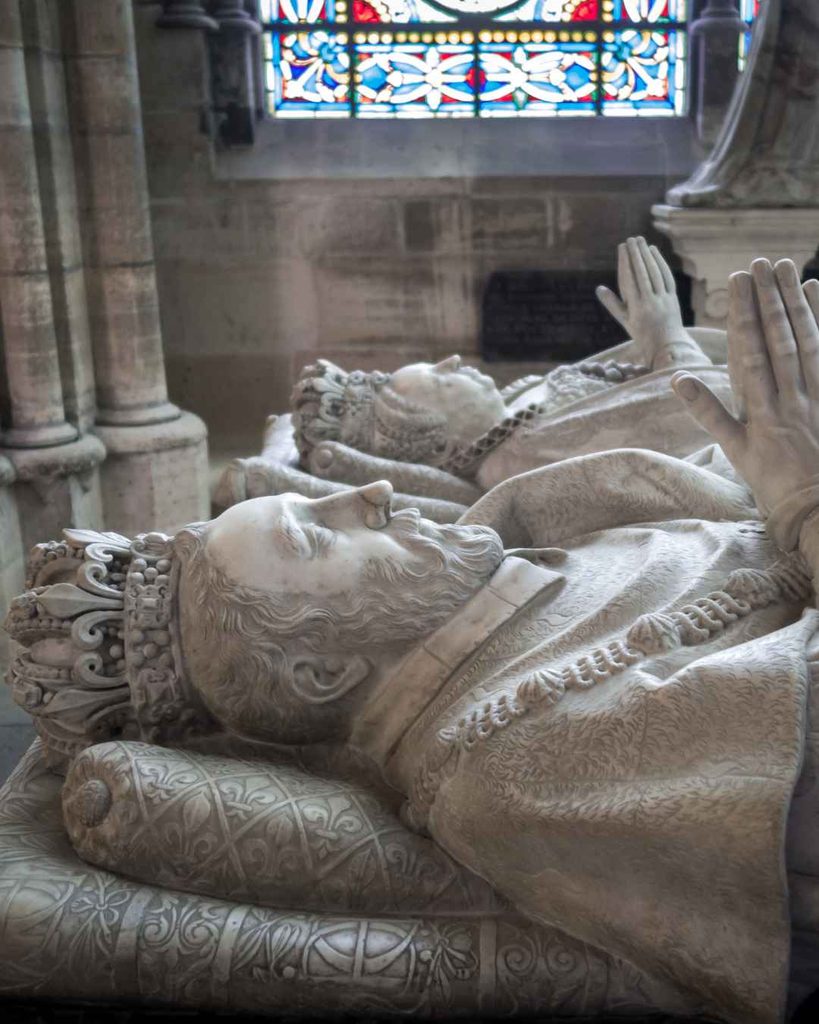
Catherine de’ Medici was born in 1519, the daughter of Lorenzo II de’ Medici. She was married to Henry of Valois, who became Henry II of France, and she became the first Medici to marry into European royalty.
Catherine was not just a queen. She was a political operator in her own right. She served as regent for her sons during their minorities, and she wielded significant influence over French politics for decades. She was also a patron of the arts, and she brought Italian artistic traditions to the French court.
Catherine commissioned the Tuileries Palace and the Louvre’s Grande Galerie, and she supported the work of Italian artists who moved to France.
She was a collector of art and antiquities, and she helped create the French royal collection that would later become the Louvre. Her patronage helped spread the Renaissance beyond Italy, and she was one of the most important cultural figures of the sixteenth century.
Catherine’s story is a reminder that the Medici were not just a Florentine phenomenon. They were a European dynasty, with branches that reached into France, Spain, Austria, and England.
Cosimo I: The Grand Duke and the Uffizi
The Medici were expelled from Florence in 1494, restored in 1512, expelled again in 1527, and restored again in 1530. By the time Cosimo I de’ Medici came to power in 1537, the family’s position was precarious.
Cosimo I was seventeen years old when he became Duke of Florence, and he quickly proved himself to be one of the most capable rulers the family had ever produced. He consolidated power, expanded the Medici territories, and in 1569 obtained the title of Grand Duke of Tuscany.
Cosimo I was not a patron of the arts in the way that Cosimo the Elder or Lorenzo had been. He was more interested in power than in beauty. But he understood that art and architecture were tools of statecraft, and he used them to project the image of a powerful, cultured ruler.
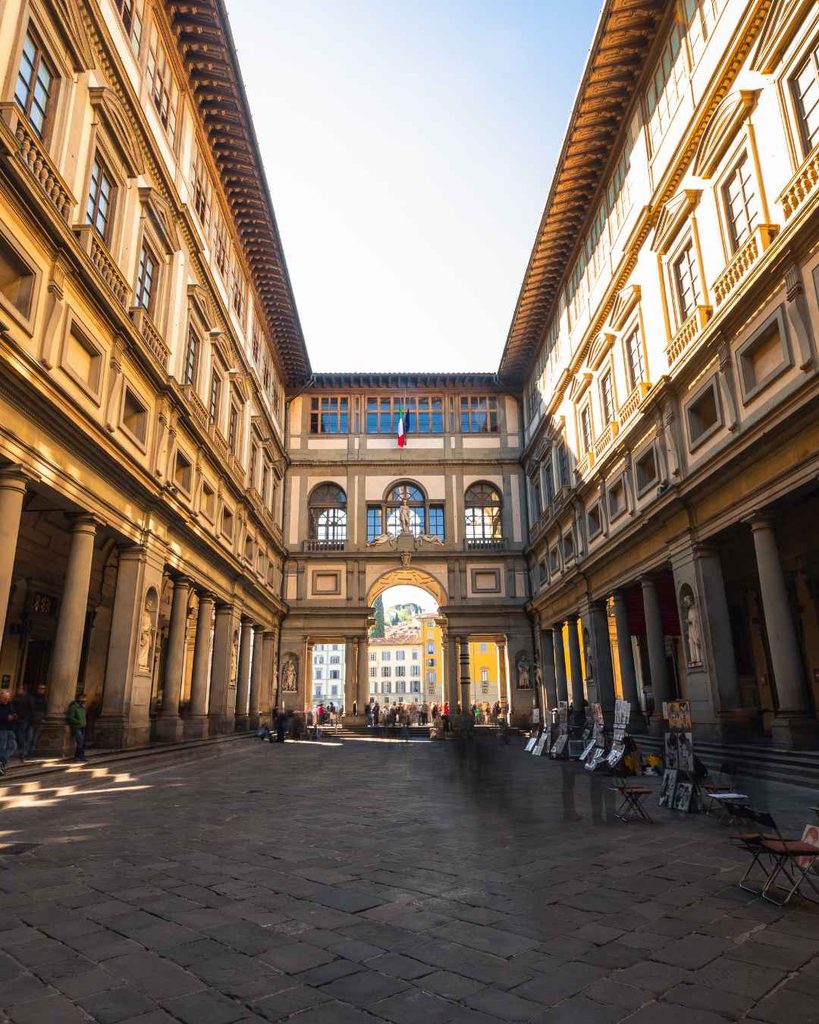
His greatest artistic achievement was the Uffizi Gallery. Cosimo commissioned Giorgio Vasari to design a building to house the offices of the Florentine government, and the result was the Uffizi, a long, elegant structure that now houses one of the most important art collections in the world.
Cosimo also commissioned Vasari to paint the frescoes in the Salone dei Cinquecento in the Palazzo Vecchio, which celebrate Medici victories and present the family as the rightful rulers of Florence.
Cosimo also supported the work of Benvenuto Cellini, one of the greatest goldsmiths and sculptors of the Renaissance. Cellini’s bronze Perseus, in the Loggia dei Lanzi, was commissioned by Cosimo and is one of the masterpieces of Mannerist sculpture.
Cosimo also commissioned the Neptune Fountain in Piazza della Signoria, by Bartolomeo Ammannati, which was intended to rival the David of Michelangelo.
Under Cosimo I, Florence became a more autocratic state, but it also became more stable and more prosperous. The Medici ruled Tuscany for another two centuries, until the last of the line, Gian Gastone de’ Medici, died in 1737.
The Medici Legacy in Art
The Medici did not just change Florence. They changed the world. And the most visible part of that change is the art they left behind.
Their patronage of the arts made possible some of the greatest works of Western civilization. Without the Medici, we might never have heard of Donatello, Botticelli, or Michelangelo. The Sistine Chapel ceiling, the dome of St. Peter’s, the Uffizi Gallery, and countless other masterpieces exist because the Medici paid for them.
Their support of humanism and learning helped create the intellectual climate that produced the Renaissance. They collected ancient texts, founded academies, and supported scholars who recovered the wisdom of Greece and Rome.
Their banking practices helped create the modern financial system. The Medici Bank was one of the most sophisticated financial institutions of its day, with branches across Europe and a system of credit and exchange that anticipated modern banking.
And their political example influenced the development of modern statecraft. They showed that power could be built through wealth, influence, and cultural patronage, rather than through brute force alone. Machiavelli, who wrote The Prince in Florence during the Medici era, was in part responding to the Medici phenomenon.
Where to See the Medici in Florence Today
If you want to understand the Medici, you have to go to Florence. The city is full of their legacy.
The Medici Palace, now called the Palazzo Medici Riccardi, was the family’s first great residence. It was built by Michelozzo in the fifteenth century, and it contains the Chapel of the Magi, with frescoes by Benozzo Gozzoli that depict members of the Medici family in the procession.
The Church of San Lorenzo was the Medici family church. It contains the Medici Chapels, with tombs designed by Michelangelo, and the New Sacristy, one of the master’s greatest architectural works.
The Uffizi Gallery was commissioned by Cosimo I to house the Medici art collection. It is now one of the most important museums in the world, with works by Botticelli, Leonardo, Michelangelo, and Raphael.
The Pitti Palace was the Medici family’s later residence. It contains the Palatine Gallery, with one of the best collections of Raphael paintings in the world, and the Boboli Gardens, which offer views across the city.
The Palazzo Vecchio was the seat of Florentine government. It contains the Salone dei Cinquecento, with frescoes by Vasari that celebrate Medici victories, and the Studiolo of Francesco I, a small room decorated with paintings and sculptures that reflect the Medici interest in the natural world.
The Bargello Museum contains Donatello’s bronze David, which was commissioned by Cosimo de’ Medici and is one of the most important sculptures in the history of art.
The Brancacci Chapel contains frescoes by Masaccio and Filippino Lippi, both of whom were supported by the Medici.
The Monastery of San Marco contains frescoes by Fra Angelico, who was supported by Cosimo de’ Medici.
The Medici Chapels contain the tombs of the Medici family, designed by Michelangelo, and are among the most important monuments of the Renaissance.
Final Thoughts
The Medici were not saints. They were bankers who became politicians, and they were willing to use whatever means necessary to maintain their power. They manipulated elections, exiled their rivals, and in some cases resorted to violence. Their story is one of ambition, wealth, and the pursuit of power.
But they were also visionaries. They understood that art and learning could be more than decoration. They could be the foundation of a civilization. They could make a small city in Tuscany the center of the world.
The Renaissance did not begin because of the Medici alone. But it might not have begun at all without them. They created the conditions for genius to flourish, and they gave artists the freedom to experiment, to innovate, and to imagine new possibilities.
That is their legacy. Not just the paintings and the buildings, but the idea that culture matters. That beauty is worth investing in. That a city can be transformed by the vision of a single family.
The Medici changed Florence. And through Florence, they changed the world.