
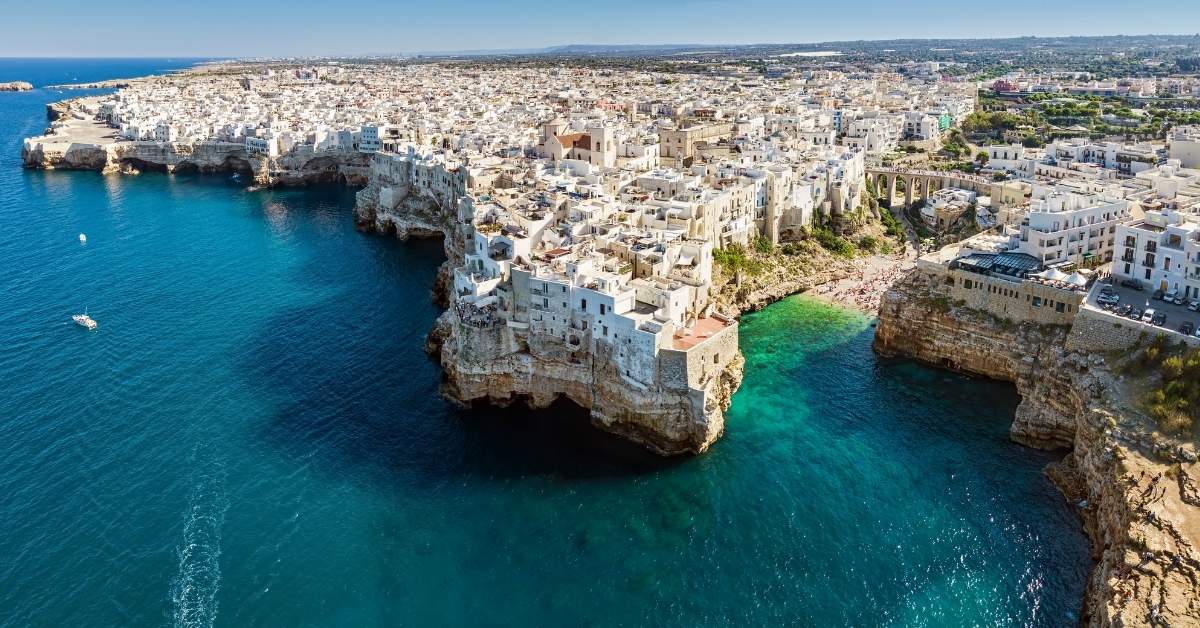
Puglia stretches between the Adriatic Sea to the east and the Ionian Sea to the west. It offers over 500 miles of coastline that rivals any in the Mediterranean for sheer beauty. But its allure goes far beyond its beaches.
Here, whitewashed hilltop towns gleam under the southern sun, ancient olive groves stretch to the horizon, and a culinary tradition rooted in centuries of agricultural heritage produces some of the most memorable food in all of Italy.
My wife and I spent two weeks winding our way through this remarkable region. Every day felt like discovering a secret the rest of the world had somehow overlooked. The pace of life here is slower, more deliberate, and it forces you to breathe deeply and savour every moment.
The Fairy-Tale Trulli of Alberobello
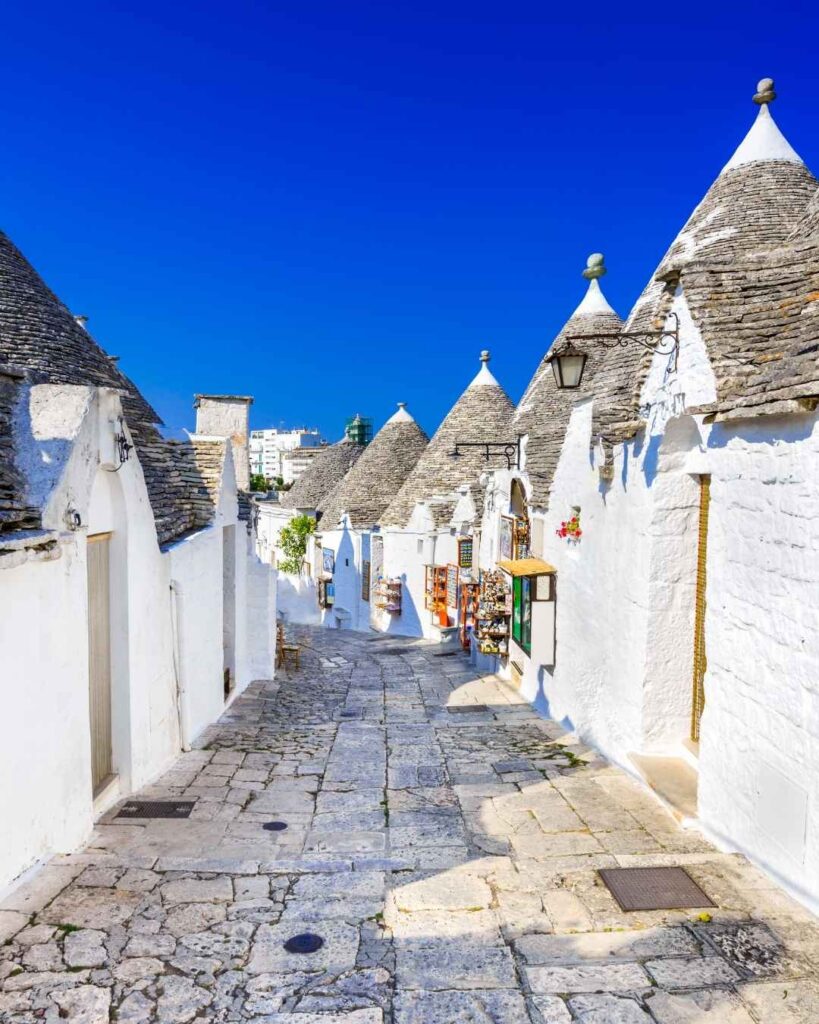
No image is more synonymous with Puglia than the cone-roofed trulli houses of Alberobello. Walking through this UNESCO World Heritage site feels like stepping into a storybook. The small, whitewashed dwellings with their distinctive grey stone roofs appear to have grown organically from the earth. Their conical shapes pierce the sky in a way that is both whimsical and deeply rooted in history.
The trulli date back to the fourteenth century, when residents built them without mortar. This clever construction allowed them to be quickly disassembled when tax collectors came calling. Today, over fifteen hundred of these remarkable structures survive, clustered in two main districts connected by tiny, pedestrianised streets.
The Rione Monti district is the more bustling area, filled with shops and restaurants. Aia Piccola offers a quieter glimpse into a neighbourhood where locals still inhabit traditional trulli. Look closely at the roof symbols painted on some of the dwellings. These mysterious motifs were believed to ward off evil and protect the families within.
A visit here at sunrise or sunset, when the crowds have thinned, reveals the true enchantment of this extraordinary village. The golden light casts long shadows, and the white walls seem to glow. It is a moment of pure magic.
The White City: Ostuni
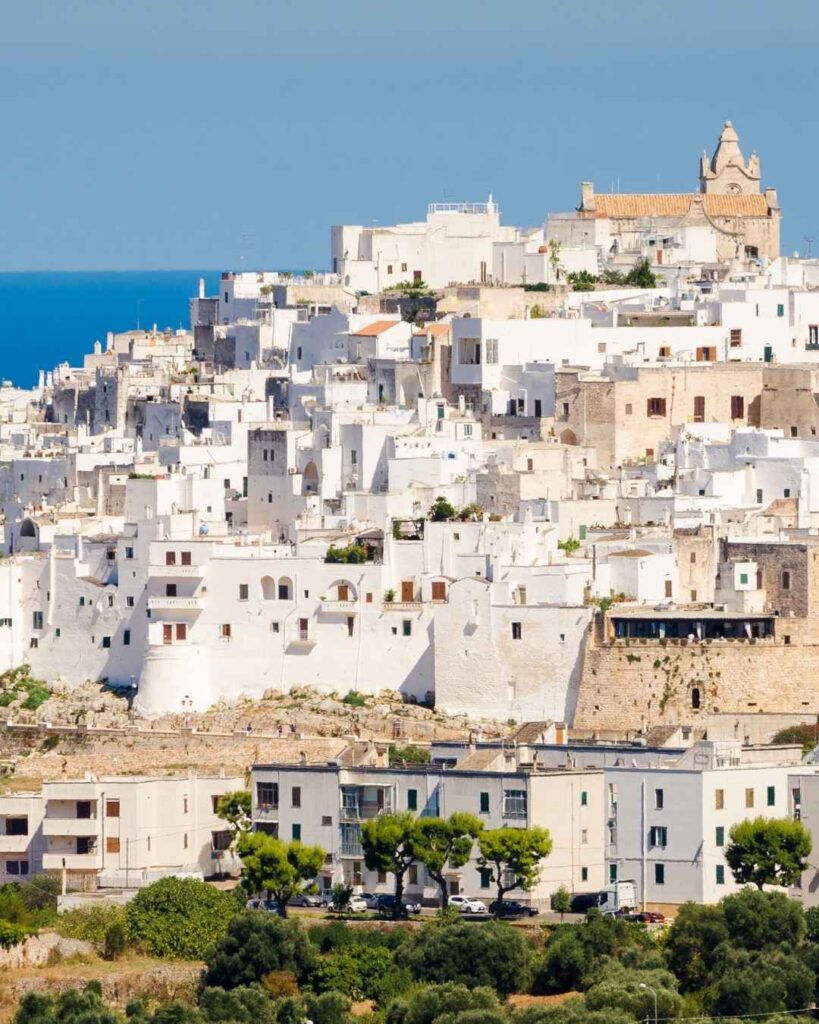
Perched dramatically on a hilltop overlooking the olive groves of the Valle d’Itria, Ostuni is a vision of dazzling whiteness against the brilliant blue sky. Known as La Città Bianca, this medieval town captivates visitors with its labyrinth of whitewashed alleyways. Blue doors and cascading bougainvillea provide splashes of colour against the blinding limestone.
The historic centre is a maze of narrow lanes that wind their way up to the ornate fifteenth-century cathedral. This presides over the town from its commanding position. From the Piazza della Libertà, the views stretch across the valley all the way to the Adriatic Sea. It is a panorama that explains why Ostuni has long been a favourite among travellers.
Wander through the archways and alleys, getting lost in the quiet charm of the place. Stop for a glass of local wine at a terrace overlooking the olive groves below. There is a quiet, unhurried elegance to Ostuni that makes it one of the most rewarding places to simply exist in the region.
The Baroque Splendour of Lecce
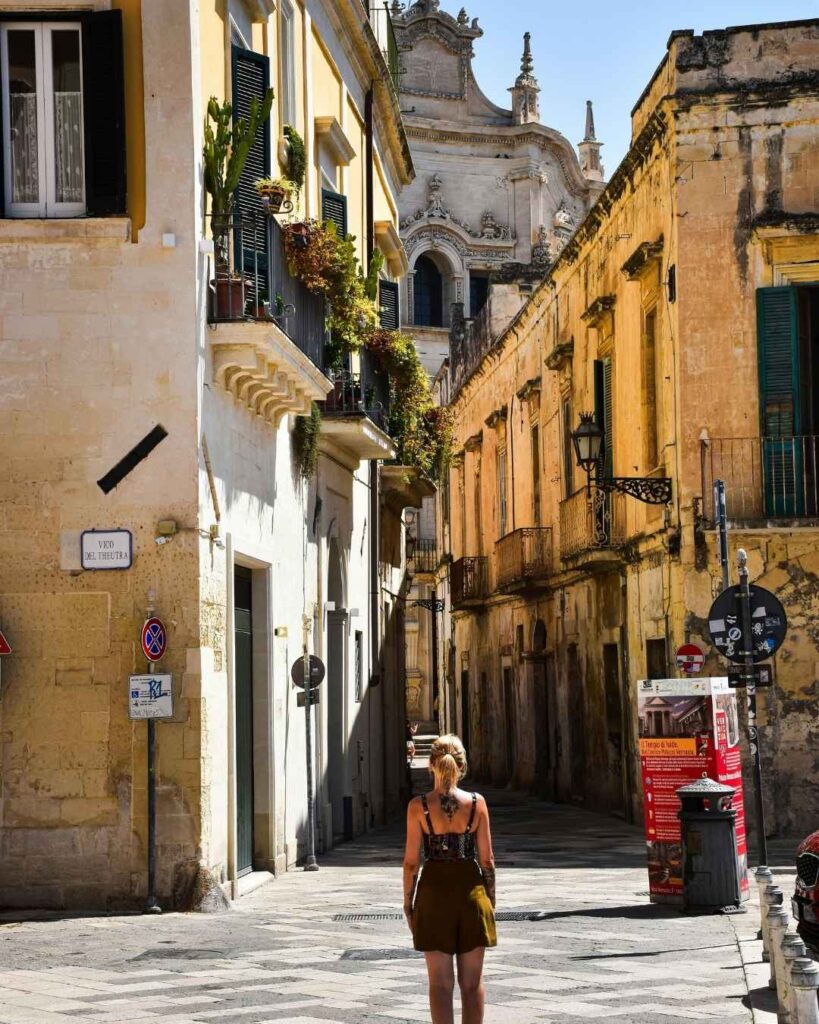
Often called the Florence of the South, Lecce is a city that dazzles with its exuberant Baroque architecture. Carved from the warm, golden limestone known as pietra leccese, the buildings seem to glow in the southern Italian light. Their intricately carved facades are a testament to the skill and ambition of the artists who created them.
The Basilica di Santa Croce is the crowning glory of the Lecce Baroque style. Its facade is a riot of detail and decoration that demands to be studied. The Duomo, set in its own beautiful piazza, is equally magnificent. The remains of a Roman amphitheatre in the heart of the city remind visitors that Lecce’s history stretches back far beyond the Baroque period.
This is not just a city to visit; it is a city to linger in. Join the locals for the evening passeggiata, when the pedestrianised centre comes alive with families and friends strolling, chatting, and enjoying the art of doing very little. It is a ritual that captures the essence of southern Italian life.
The Dramatic Cliffs of Polignano a Mare
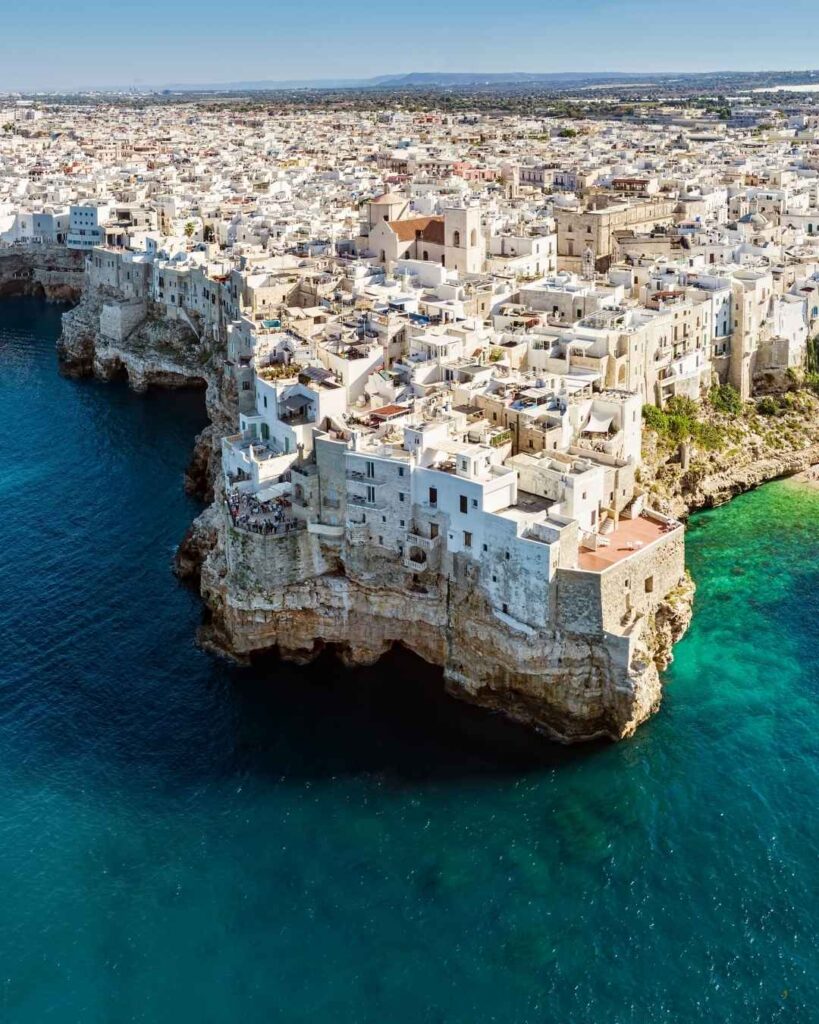
If there is one place in Puglia that demands to be photographed, it is Polignano a Mare. Built directly into the limestone cliffs above the turquoise Adriatic, this town offers one of Italy’s most dramatic coastal settings. The iconic Lama Monachile beach is a tiny sliver of pebbled sand flanked by towering cliffs. It is a natural amphitheatre where the sea meets the stone in a breathtaking collision of elements.
The old town itself is a warren of narrow streets and white houses that seem to hover over the water. Wander until you find a terrace with a view, order a drink, and watch the sun sink into the sea. For the adventurous, a boat tour will reveal the hidden sea caves that riddle the cliffs below.
The famous Grotta Palazzese is a restaurant carved directly into the rock where diners eat to the sound of waves crashing below. And for a truly local experience, queue at Pescaria for their legendary fish sandwich. It is a glorious mess of crispy bread and fresh seafood that might just be the best thing you eat in Puglia.
The Valle d’Itria and Its Hilltop Gems
Beyond the famous towns, the Valle d’Itria is the verdant heartland of Puglia. This is a landscape of rolling hills dotted with vineyards, centuries-old olive trees, and the occasional trullo farmhouse. This is the region for slow exploration, for cycling through olive groves and stopping at a family-run masseria for a lunch that stretches lazily into the afternoon.
Locorotondo
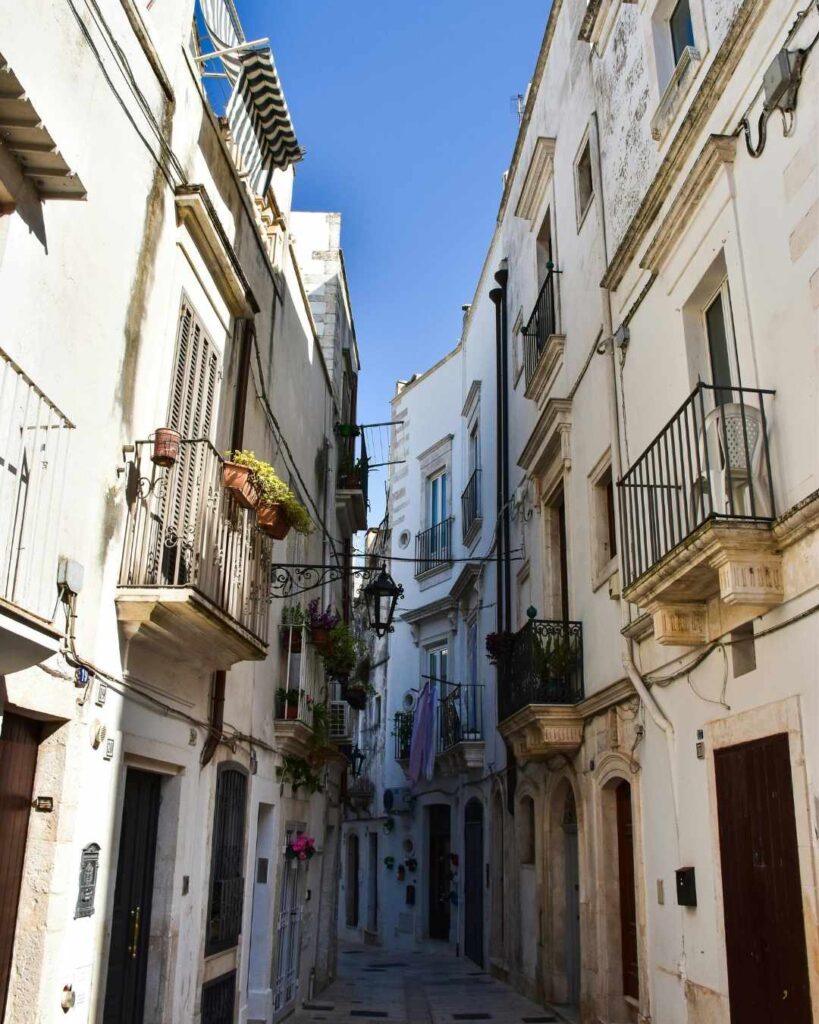
This perfectly circular hilltop village is one of the most beautiful in Italy. Its narrow, whitewashed lanes are adorned with flower-draped balconies. From the Villa Comunale, the views across the valley are spectacular. The locals take their floral displays seriously, and a balcony competition ensures that the town is always at its photogenic best.
Martina Franca
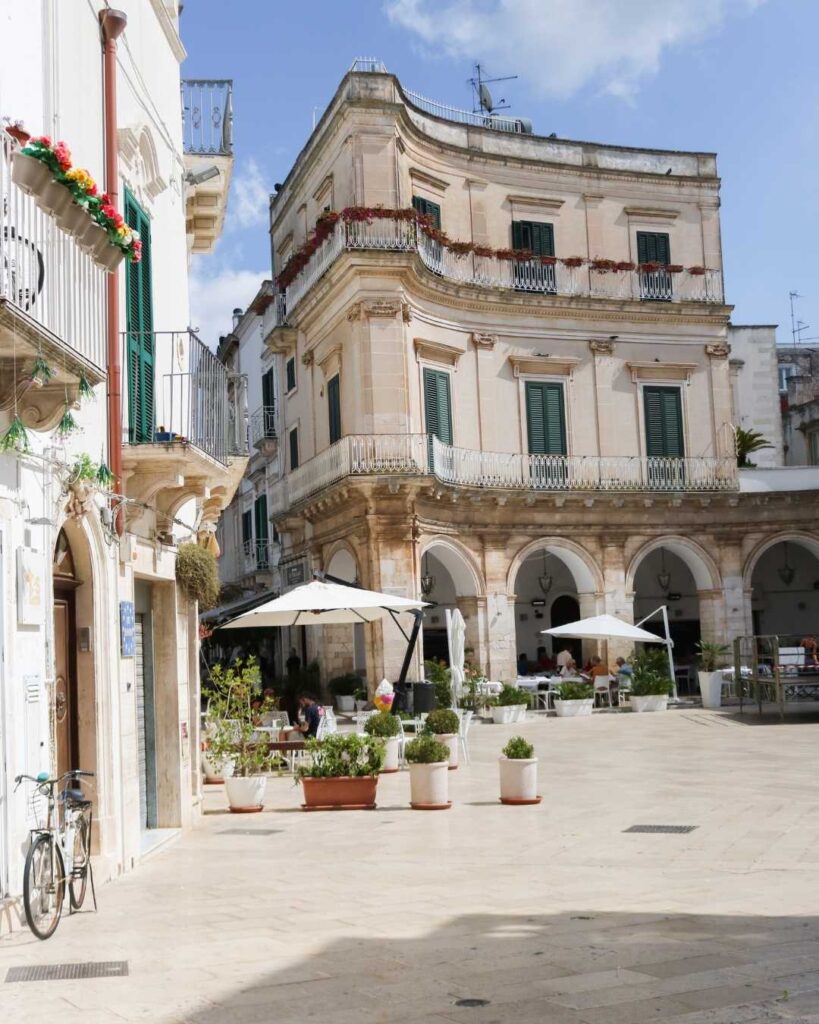
Larger and less touristy than its neighbours, Martina Franca offers a more sophisticated experience. Its baroque and rococo architecture distinguishes it from the simple whitewashed villages nearby. Its dining scene is excellent. Try the capocollo, a prized smoked salami that is a local speciality, and the bombette, small rolls of meat stuffed with cheese that are grilled to perfection.
Cisternino
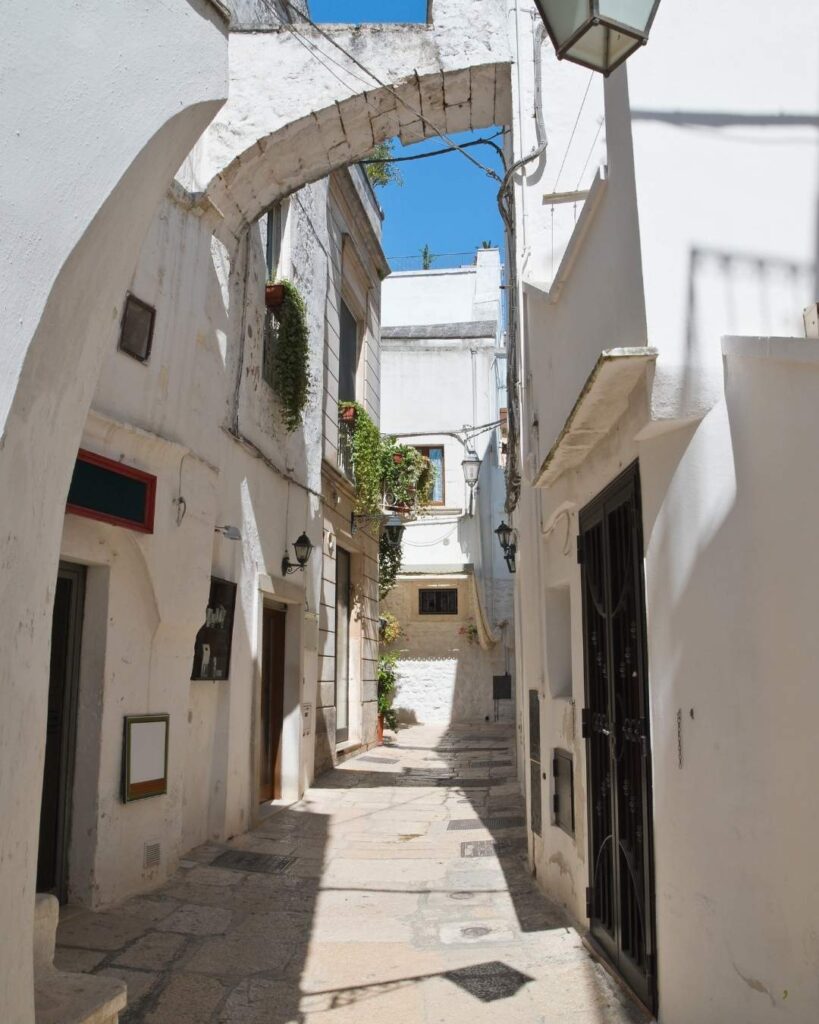
Another gem among Italy’s most beautiful towns, Cisternino is beloved for its fornelli pronti. These are butcher-grill restaurants where you choose your meat from the counter and it is cooked for you on the spot. Sit at a communal table with a glass of local red wine, and you will understand why this is one of the most authentic and beloved food experiences in Puglia.
The Salento Peninsula: Beaches and Coastal Magic
The southernmost tip of Puglia, the Salento Peninsula, is where the Adriatic and Ionian Seas meet. This is the land of white sand beaches, crystalline waters, and ancient towns that seem to rise from the sea. It feels like the edge of the world, a place where the land finally gives way to the vastness of the Mediterranean.
Otranto
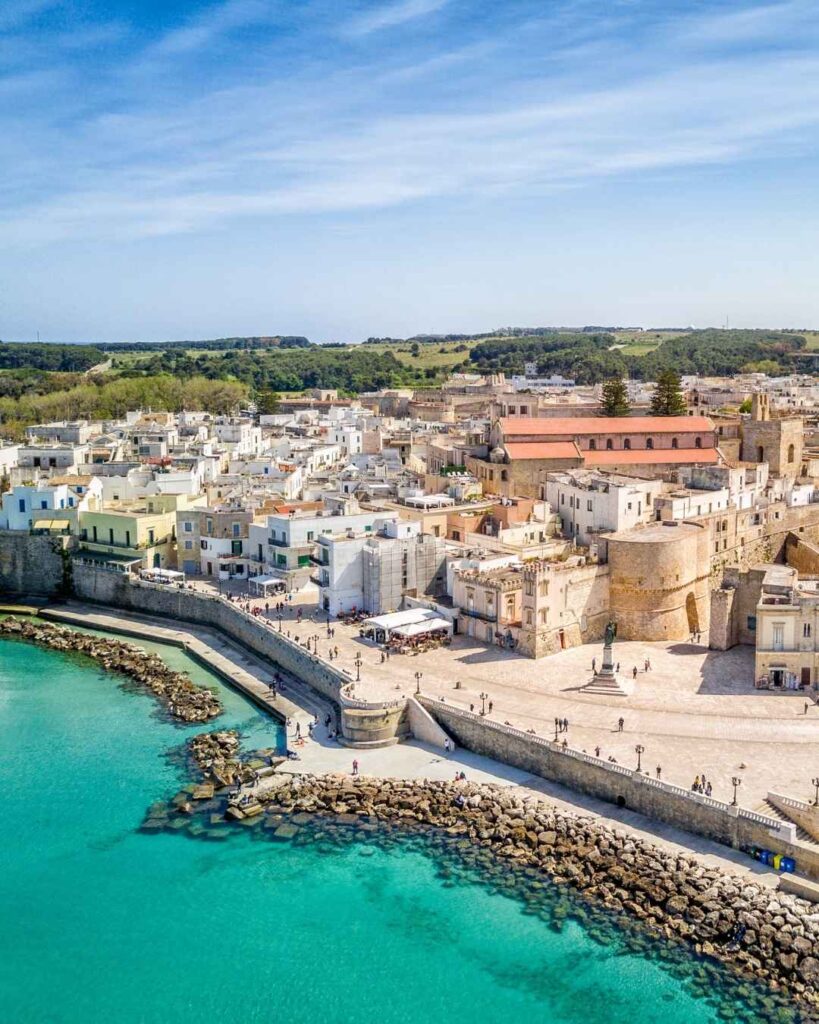
This historic port town is famous for its magnificent cathedral. It houses an extraordinary twelfth-century floor mosaic that covers the entire nave. The images, depicting scenes from the Old Testament and medieval bestiaries, are one of Italy’s most remarkable medieval artworks. The Aragonese Castle overlooks the sea, and the town’s charming old town is filled with artisan shops and excellent seafood restaurants.
Gallipoli
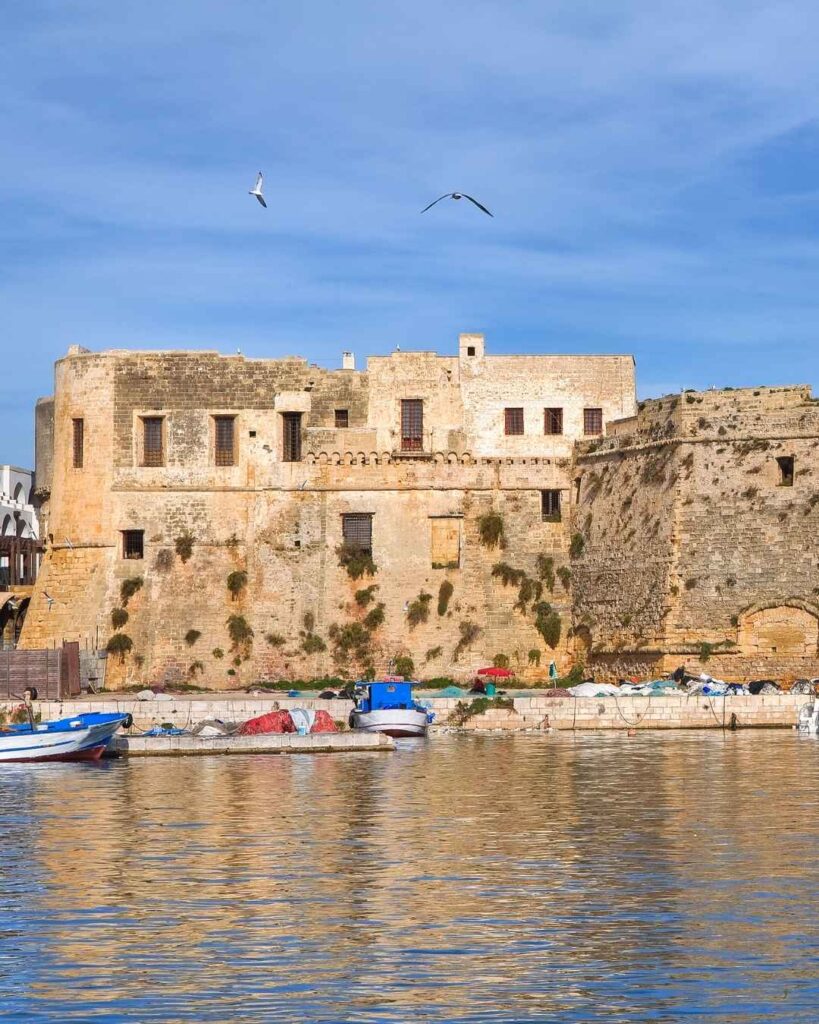
The old town of Gallipoli sits on a small limestone island connected to the mainland by a bridge. Its narrow, winding streets are a maze of baroque churches, ancient houses, and hidden courtyards. The name means “beautiful city,” and it lives up to the billing. Turquoise waters lap at its ancient walls, and the sunsets here are nothing short of spectacular.
The Beaches of Salento
Some of Italy’s most beautiful beaches are found here. Punta Prosciutto offers white sand and Caribbean-clear water. Torre dell’Orso boasts a crescent of golden sand framed by dramatic rock stacks. The pristine nature reserve of Torre Guaceto offers an untouched coastline for those seeking peace and natural beauty. Each beach has its own character, and discovering them is a joy in itself.
The Wild Gargano Peninsula
While most visitors to Puglia head south, the Gargano Peninsula in the north remains one of the region’s best-kept secrets. This promontory jutting into the Adriatic is home to the Gargano National Park. It offers a dramatic contrast to the sun-bleached plains of Salento, with dense forests and rugged cliffs that feel wild and untamed.
Vieste and Peschici
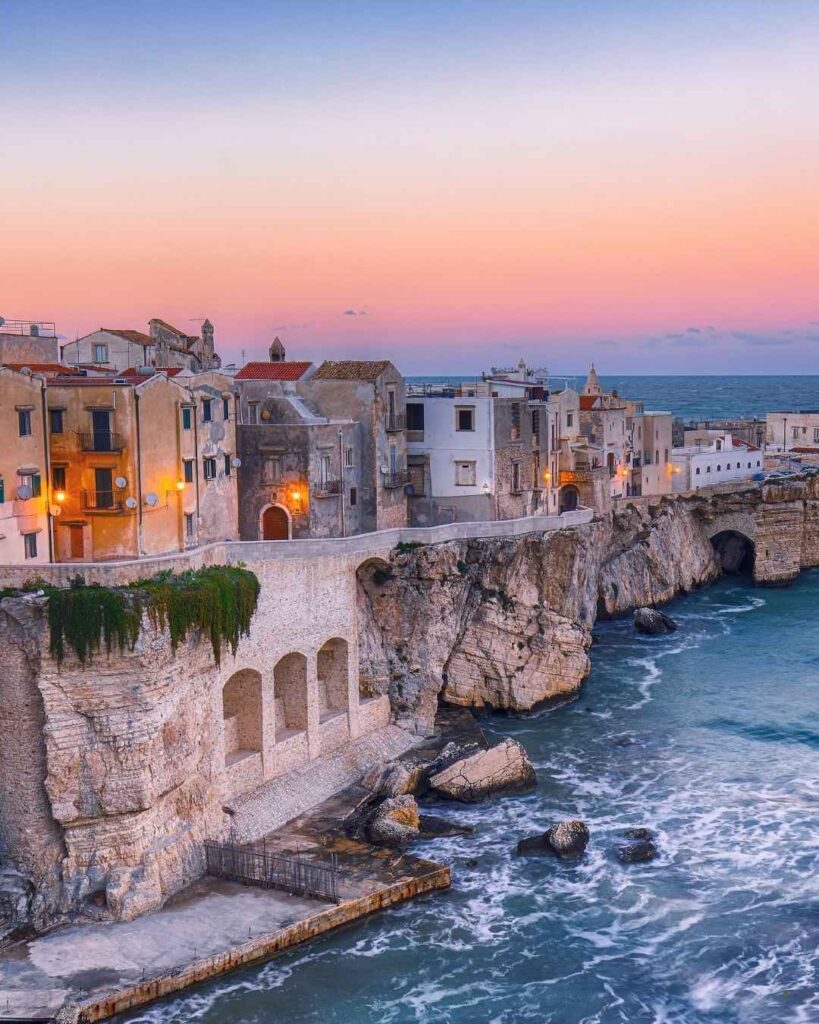
These two coastal towns perch on cliffs above the sea. Their white houses tumble down to hidden coves and pebble beaches. Vieste is the larger resort town, with its medieval centre built onto a cliff and the iconic Pizzomunno sea stack rising from the beach. Peschici is a smaller, more intimate town, a labyrinth of alleys and balconies that offer breathtaking views of the Adriatic.
A boat trip along the coast reveals hidden sea caves and secluded swimming spots that rival anything in Capri or the Amalfi Coast. Local captains know the best places to stop, pulling up to pebble beaches within cavernous caves where you can swim in complete seclusion. This is Puglia at its most wild and beautiful, a place that rewards those who venture beyond the well-trodden path.
Puglia is a region that does not reveal itself in a single visit. It unfolds slowly, with each day offering a new discovery. The places listed here are the highlights, the must-sees, the treasures that no traveller should miss. But the true magic of Puglia lies in the spaces between them.
It lies in the quiet roads through olive groves that have stood for centuries. It lies in the meals shared with locals in tiny trattorias where the wine flows freely and the laughter is loud. It lies in the feeling that you have discovered something that has been waiting for you all along. Puglia does not shout. It waits. And when you finally arrive, it welcomes you like an old friend.
Related Post: The 17 most beautiful places in Italy
NOTE BEFORE YOU GO: Italy rewards travelers who go prepared. And it is easy to ruin your trip. I have a checklist for you of things you should never go to Italy without. CHECK IT OUT HERE. I have also curated a list of some of the best hotels in Italy. I would highly recommend checking them out before booking. THESE ARE THE BEST HOTELS IN ITALY. And for unique experiences, attractions, and tours, don’t book before CHECKING THIS OUT. Thank me later!