
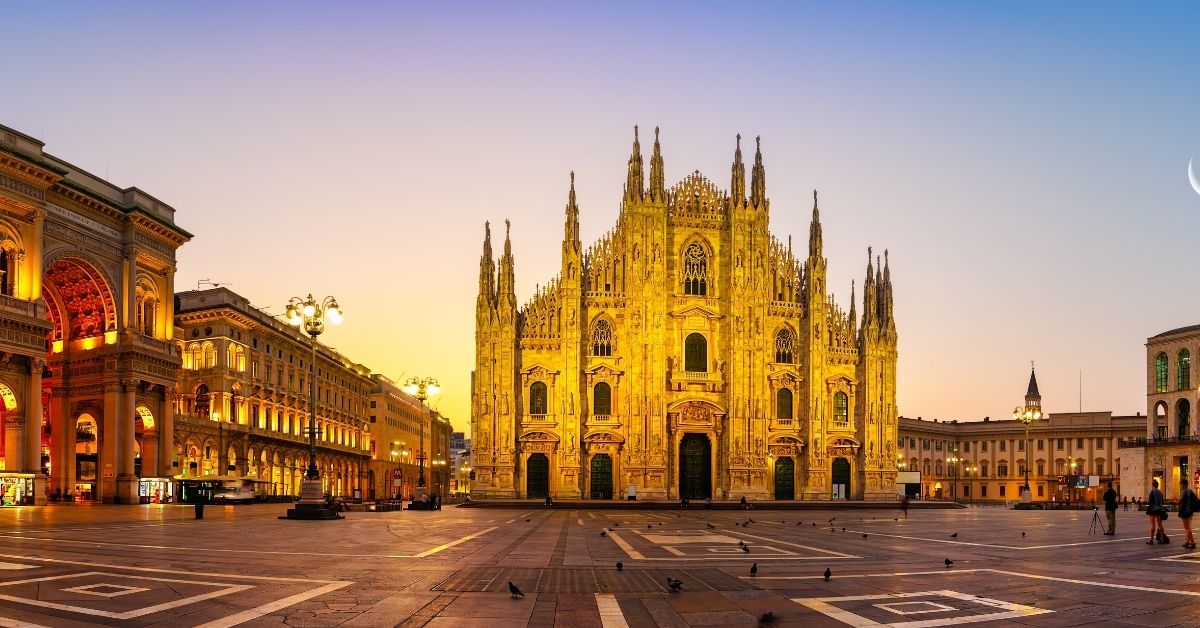
Every travel guide, every seasoned Italy veteran, and probably your cousin who studied abroad in Florence will tell you the same thing. Never eat near a famous landmark. Walk ten minutes away. Find the alley with no English menu. That is where the real Italy lives.
And you know what? They are absolutely right. For ninety percent of your meals, that advice is golden. You should follow it religiously.
But absolutes leave no room for the human heart. And the human heart, especially when it finds itself standing in the shadow of Brunelleschi’s Dome or watching sunlight pour through the oculus of the Pantheon, wants something that a back alley trattoria simply cannot provide. It wants the stage.
Eating near a landmark in Italy is not about the food on your plate. It is about the two-thousand-year-old backdrop behind it. You are not paying for pasta. You are paying for a front-row seat to the greatest open-air theater on earth.
Once you understand that transaction for what it truly is, you realize that the rule was never meant to be broken. It was meant to be bent, just once or twice, for the sake of a memory that will outlast any meal.
Before you read further, remember that Italy rewards travelers who come prepared. I’ve found a few things especially useful on an Italy trip, and they’re worth having and/or knowing beforehand. See the checklist here. Also, if you want me to plan an Italy trip for you that you will never forget, drop me a message here
The Value of a View
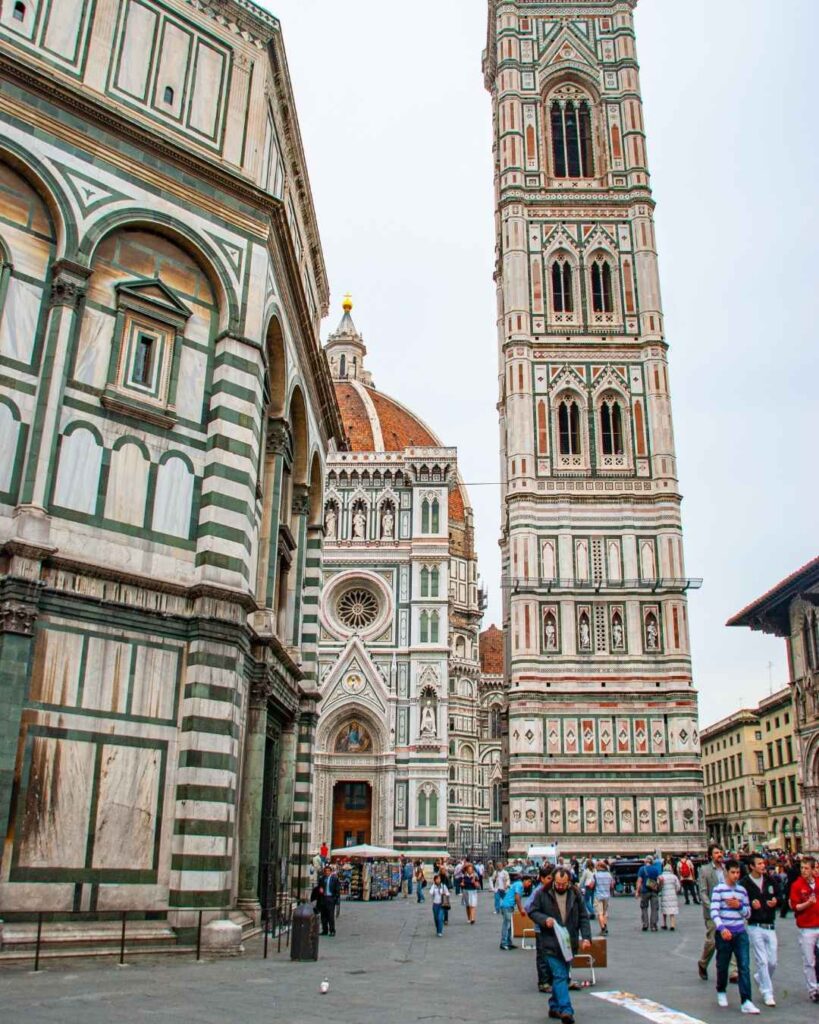
Let us talk about value, because that is where most travelers get tripped up. They look at a menu outside a café facing the Duomo and see a cappuccino priced at eight euros. They recoil in horror. Eight euros for coffee that costs one-fifty around the corner.
It feels like robbery. It feels like a tourist trap. But that calculation misses the point entirely.
The coffee itself is perhaps average. The foam might be slightly too thick, and it will arrive in a ceramic cup that has seen better days. But the view does not arrive in a cup. It arrives in your retinas, and it stays there long after the coffee is gone.
You are not buying a beverage. You are buying a seat in history. You are buying the chance to sit exactly where millions of people have dreamed of sitting, to watch the light change on ancient marble, to hear the echo of footsteps and laughter bouncing off stones that have witnessed empires rise and fall.
That is not a rip-off. That is a souvenir. And unlike the plastic David statue or the mass-produced cameo, this souvenir does not gather dust on a shelf. It gathers warmth in your chest every time you remember it.
The Strategy, Not the Rule
Let us be clear about something. I am not suggesting you eat every meal this way. That would be financial suicide and culinary disappointment rolled into one.
Italy has too many glorious, humble, soul-stirring restaurants tucked away in quiet corners to ignore them for the sake of a view. The family-run osteria where the nonna still makes the pasta by hand, that is where you go for dinner. That is where you taste Italy.
But for a single breakfast, or a single sunset aperitivo, the rules change entirely. You do not need to abandon the hidden gems. You just need to make one or two deliberate exceptions.
Breakfast Is the Secret
Breakfast is the secret weapon in this strategy. The quality gap between a landmark café and a local bar is significantly narrower in the morning.
A croissant is a croissant. Espresso is espresso. The pastry might be slightly less flaky, and the coffee might arrive a degree cooler, but you are not ordering a complex four-course meal. You are ordering simplicity. And simplicity is hard to ruin.
More importantly, the crowds are thinner in the morning. You can claim a small table on the edge of the piazza and watch the city wake up around you. That quiet hour with a cappuccino and a view of the Pantheon is worth three times the price of the drink.
You feel like you have the whole place to yourself. The waiters are less rushed. The light is soft and golden. It is the most peaceful moment of the day, and you have bought it for the price of a pastry.
The Magic of Aperitivo
The aperitivo hour is another perfect window for this indulgence. This is the golden time in Italy, that magical stretch between six and eight in the evening when the light turns honey-colored and the entire country seems to exhale.
This is when you order a spritz or a glass of prosecco and a small plate of olives or bruschetta. You are not committing to a heavy, mediocre dinner. You are committing to a ritual.
You are paying for the golden hour, for the people-watching, for the sheer spectacle of watching tourists and locals alike wander through a piazza that has been the center of civic life for millennia. The small bites are incidental. The atmosphere is everything.
The wine tastes better when you are watching the sun dip behind a dome that has stood for six hundred years. That is not snobbery. That is just how memory works.
If You Must Do Dinner
If you must do a full dinner near a landmark, choose one spot for the entire trip. Make it a ritual. Plan for it.
Dress slightly nicer than you usually would. Order something simple, something classic, something that is hard to mess up. A Cacio e Pepe in Rome. A Margherita pizza in Naples. A plate of spaghetti alle vongole by the sea.
The famous spots know how to make these dishes in their sleep. They will never match the transcendent quality of the tiny place down the alley. But they will be perfectly adequate companions to an unforgettable view.
One dinner. That is all you need. Save the adventurous eating for the other six nights of your trip.
The Price Tag Breakdown
Let us address the price tag again, because it haunts travelers. Yes, the view tax is real. But when you break it down, the premium is rarely as outrageous as the guides suggest.
You might pay twenty-five euros for a pasta dish that would cost eighteen euros five minutes away. That seven-euro difference is your cover charge for the most beautiful dining room in the world.
Compare that to what you pay for a ticket to a museum, or a guided tour, or a gondola ride. Suddenly, seven euros for a memory that includes a UNESCO World Heritage site as your wallpaper seems almost reasonable.
You are not being cheated. You are making a choice. And it is a choice you will remember.
The Hidden Cost of Hunting
There is a hidden cost to the relentless pursuit of authenticity that nobody talks about. The hunt for the perfect hidden gem is exhausting.
You are tired. Your feet hurt. The sun is beating down. And your spouse is looking at you with that expression that says, “Please just sit down somewhere before I collapse.”
Spending thirty minutes walking away from the landmark, consulting three different apps, second-guessing every review, only to end up in a perfectly average place anyway, that drains something from the experience. Sometimes, convenience and joy are more valuable than the vague promise of a better meal.
On our last afternoon in Florence, my wife and I were exhausted and frankly out of energy for another culinary pilgrimage. We sat down at a café facing the Duomo, ordered two glasses of wine and a plate of cured meats, and watched the sunset paint the marble dome in shades of pink and gold.
The food was fine. The wine was drinkable. The memory was extraordinary. We still talk about that evening more than we talk about some of the supposedly superior meals we hunted down. There is a lesson in that.
How to Do It Right
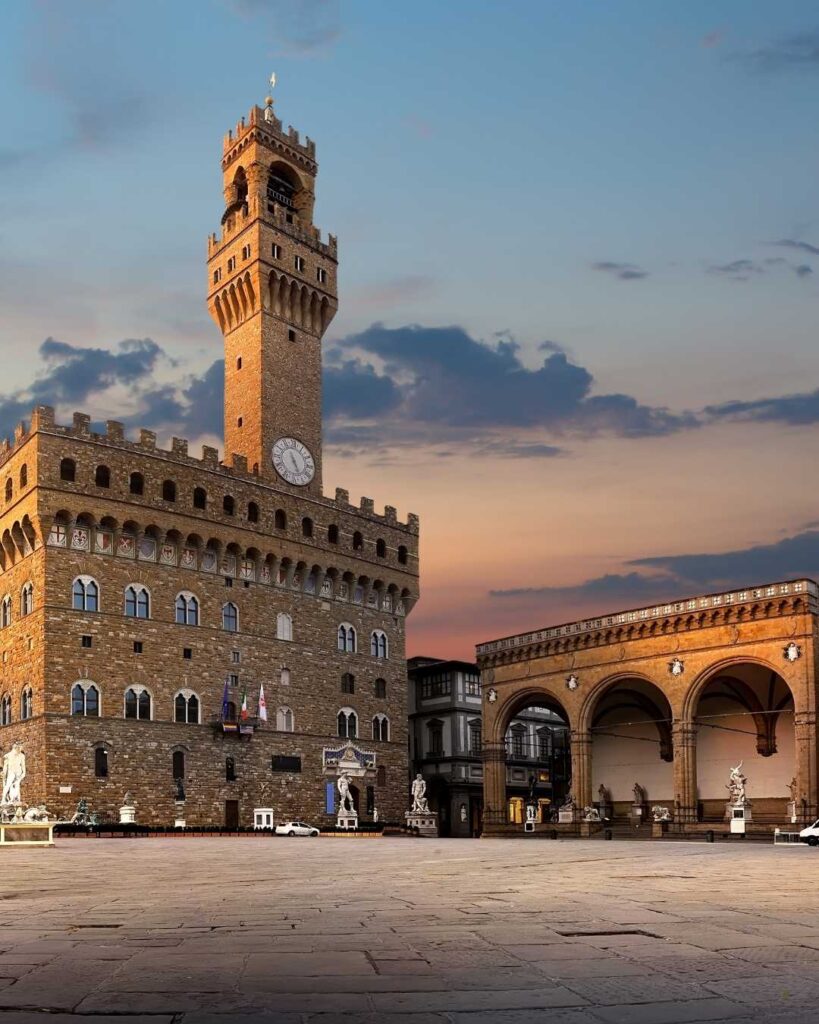
If you are going to break the rule, do it with intention. Look at the menu before you sit down. Make sure the prices are clearly displayed, which is legally required in Italy.
Give a wide berth to places with photographic menus or pushy staff standing outside waving laminated cards. These are the true traps. They prey on confusion and exhaustion.
But a café with a chalkboard menu, a respectable awning, and a view that makes your heart skip, that is a place worth considering. Trust your instincts. If it feels wrong, walk away. If it feels right, sit down.
Order smart. Stick to drinks and simple dishes. Avoid anything that requires precise execution, like seafood or complicated sauces. The house wine is usually a safe bet because it comes from a tap and the markup is reasonable.
The bruschetta is almost always fine because it requires no cooking skill whatsoever. The gelato, if you choose the right spot, is often sourced from the same suppliers as the more expensive places. You can game the system slightly without feeling like you have compromised too much.
Timing Is Everything
Timing matters enormously. The lunch and dinner rushes are when these places are at their worst, churning out plates as fast as possible to turn tables. Go during the off-hours instead.
Have your coffee at eleven in the morning when the square is still stretching its legs. Have your aperitivo at five in the afternoon before the dinner crowd descends. The service will be better, the atmosphere more relaxed, and you will not feel like a number on an assembly line.
The same table that feels chaotic at one in the afternoon feels serene at eleven in the morning. The same waiter who ignores you during dinner might chat with you during a quiet afternoon lull. Timing transforms the experience entirely.
Where to Splurge
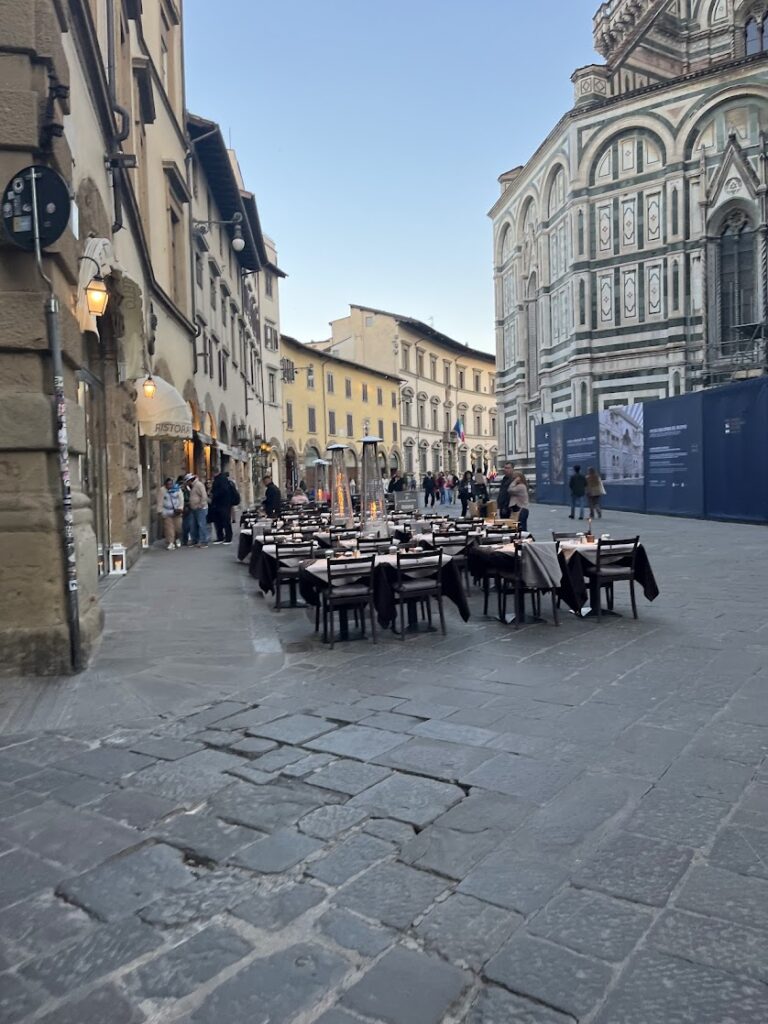
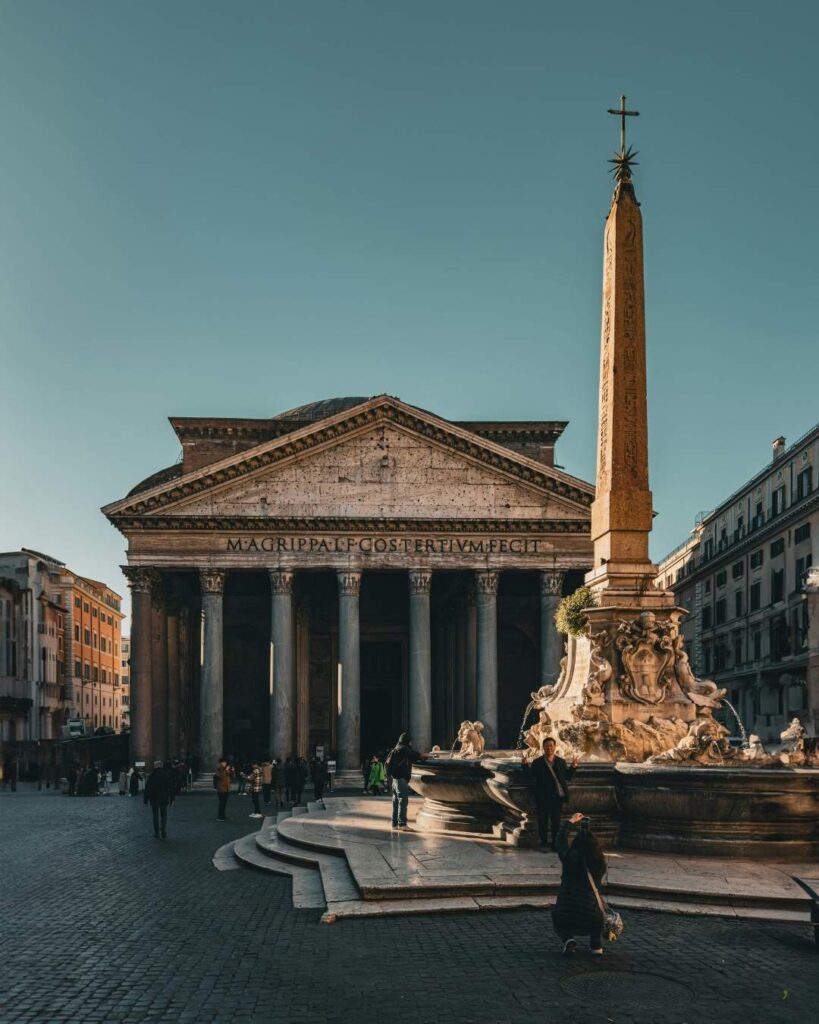
Certain landmarks lend themselves to this experience more than others. The Piazza della Rotonda in Rome, with the Pantheon looming impossibly intact after two thousand years, has a particular magic.
The cafes there are plentiful and the competition keeps the quality from plummeting too far. You can find a decent spot without trying too hard. The view is so overwhelming that it almost does not matter what you are eating.
The Piazza del Duomo in Florence offers a view so breathtaking that your eyes are too busy drinking in the marble and the mosaics to care much about the plate. St. Mark’s Square in Venice, with its orchestras playing waltzes in the evening, is worth every overpriced euro for the sheer theatricality.
You are paying for live music, a floating city, and a thousand years of history. The cocktail is just the excuse to stay and soak it all in. Choose your stage wisely, and the performance will not disappoint.
Letting Go of the Guilt
There is a freedom that comes with letting go of the guilt. So many travelers arrive in Italy burdened by the weight of doing it correctly. They have read the blogs and studied the rules and they are terrified of being identified as tourists.
But here is the truth. You are a tourist. That is wonderful. That is a privilege. You are not Italian, you are not a local, and you do not have to pretend otherwise.
The obsessive search for authenticity can become its own kind of prison. It is a relentless treadmill of checking boxes and proving your travel credentials. It can make you forget why you came in the first place.
Authenticity, in the end, is not about the food. It is about the feeling. If sitting in a busy piazza, surrounded by languages you do not understand, watching the light fade over a monument you have only ever seen in photographs, makes you feel the way you always imagined Italy would feel, then that is authentic.
That is real. That is yours. And nobody can take that away from you.
A Souvenir for the Heart
The meal is a souvenir. Just as you might buy a piece of Murano glass or a leather journal, you are buying a moment. The moment costs slightly more than it should, but you will not remember the price a year later.
You will remember the warmth of the sun. You will remember the sound of an accordion drifting across the square. You will remember the way your partner looked at you across the table, both of you silent, both of you aware that something ordinary had become extraordinary simply because of where you happened to be sitting.
That memory is worth more than the few extra euros you spent. It is worth more than the slightly average pasta. It is worth more than the guilt you felt for breaking the sacred rule.
The Permission You Need
So give yourself permission. Break the rule once. Order the expensive drink. Eat the average pasta. Pay the view tax without resentment.
You do not need to do it every day. You do not need to abandon the hidden trattorias and the family-run gems that make Italian food truly great. But for one breakfast, or one sunset, or one evening when the stars align and the city is glowing, sit down, look up, and let the history wash over you.
Your taste buds will survive the experience. Your camera roll will thank you. And years from now, when someone asks you about the best meal you had in Italy, you might surprise yourself.
You might tell them about the one with the worst food and the best view. The one that cost twice as much as it should have. The one that felt like a movie scene. You might tell them about the time you sat in front of the Pantheon and watched the world go by and felt, for just a moment, like you were exactly where you were supposed to be.
Again, feel free to go through the list below of my Italy recommendations that I have crafted after years of travel to this beautiful country:
- Packing List: Things Not to Go to Italy Without
- Must-Do Things: Unforgettable Experiences
- Where to Stay: Best Hotels in Italy.
- Where to Stay in Rome: Rome’s Best Neighborhoods
- Where to Stay in Florence: Picking the Best Area
- Where to Stay in Venice: Venice’s Best Districts
- Italy’s Cobblestone Streets: Best Shoes For the Job
- Backpack or Suitcase?: Italy Luggage Guide
- Travel Insurance: Always Be Covered
- E-Sim: Be Connected At All Times