
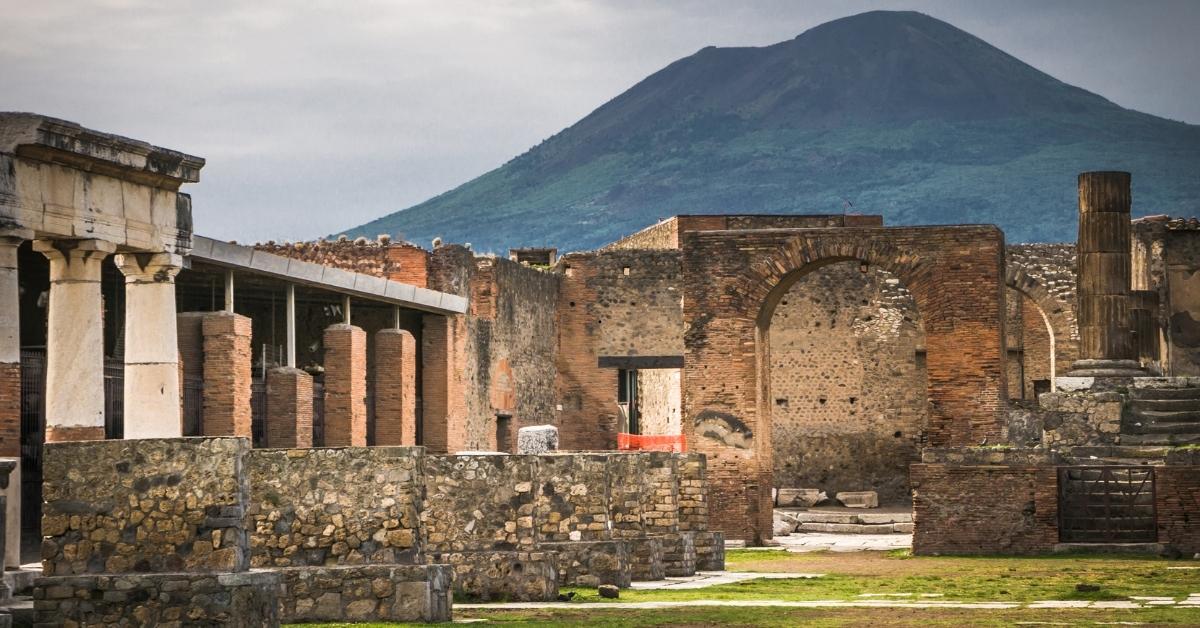
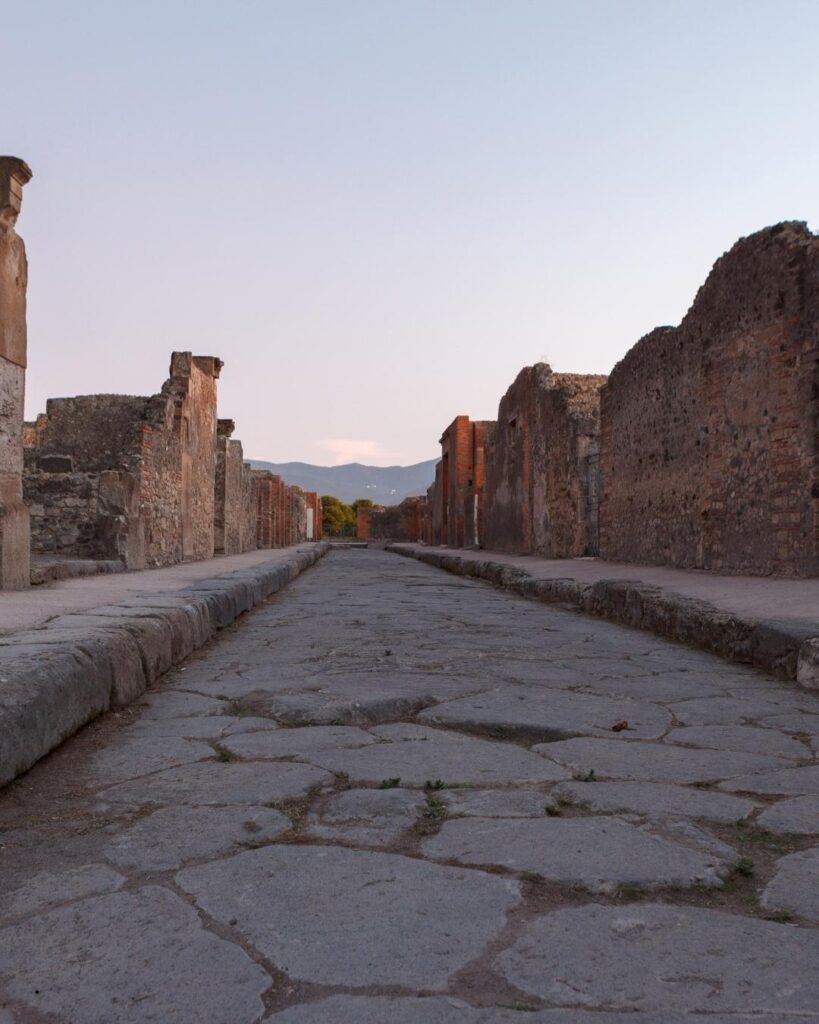
When Mount Vesuvius erupted in 79 AD, it didn’t just destroy this Roman settlement—it preserved it. The ash and pumice that buried the city acted as a time capsule, protecting buildings, frescoes, and even everyday objects from the elements for nearly two thousand years. What you’re walking through today is not a reconstruction. It’s the real thing, frozen in its final moments.
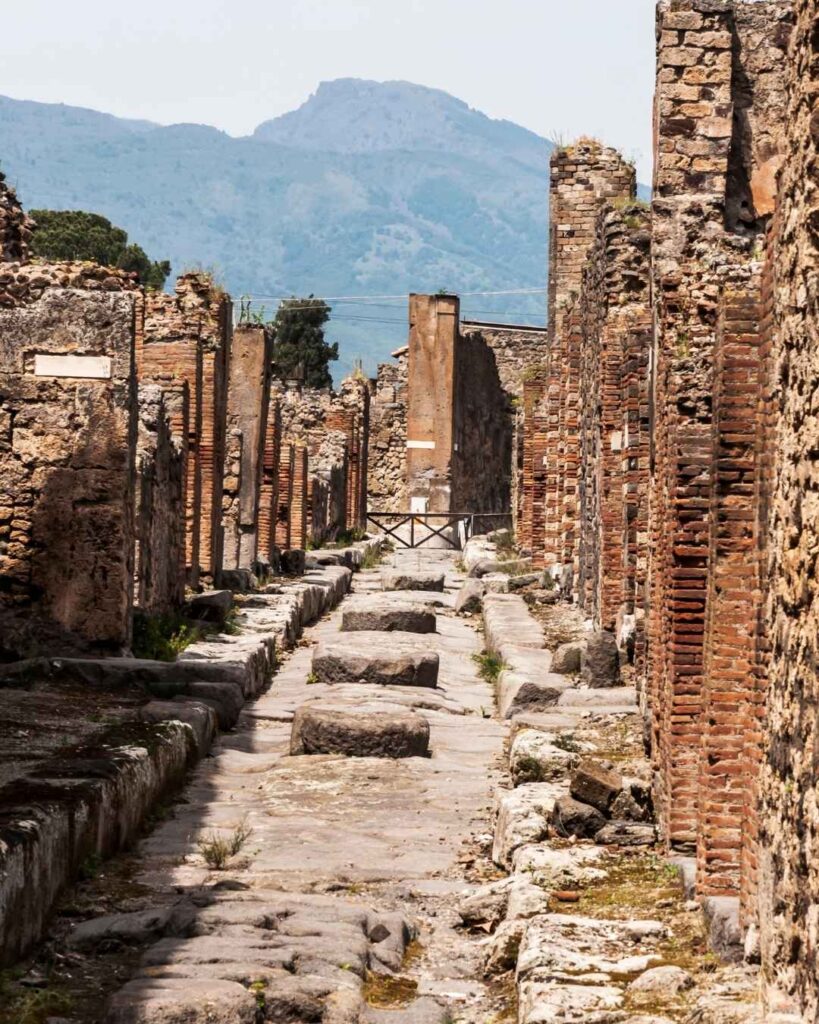
You’ll walk on chariot-grooved streets, peer into bakeries with ovens still intact, and stand in homes where the frescoes on the walls are as vivid as the day they were painted. It’s haunting, beautiful, and utterly unforgettable.
Stop experiencing Italy like everyone else. Your trip is different because you are different. Tell me when you’re going, who you’re traveling with, where you want to go, what you absolutely want to see and do, your budget, and anything else that matters to you. I’ll put it all together into a tailor-made Italy itinerary that tells you where to go, where to stay, what to eat, and how to make the most of your time. Use this form
Pompeii is enormous. We’re talking about sixty-six hectares of excavated ruins, complete with homes, shops, temples, theaters, and even a brothel. This wasn’t a village. It was a thriving Roman city of about twelve thousand people.
The city was rediscovered in the 16th century, but serious excavation didn’t begin until the 18th century. And here’s a mind-bending fact: about one-third of Pompeii still hasn’t been excavated. Archaeologists are working every day, and new discoveries are still being made. When you visit, you might actually see them at work.
The site is split into regions, numbered from I to IX, and the layout can be confusing at first. But don’t worry—you don’t need to see everything. Focus on the highlights, and you’ll leave with a deep sense of what life was like in ancient Rome.
The Masterpieces You Cannot Miss
The Forum
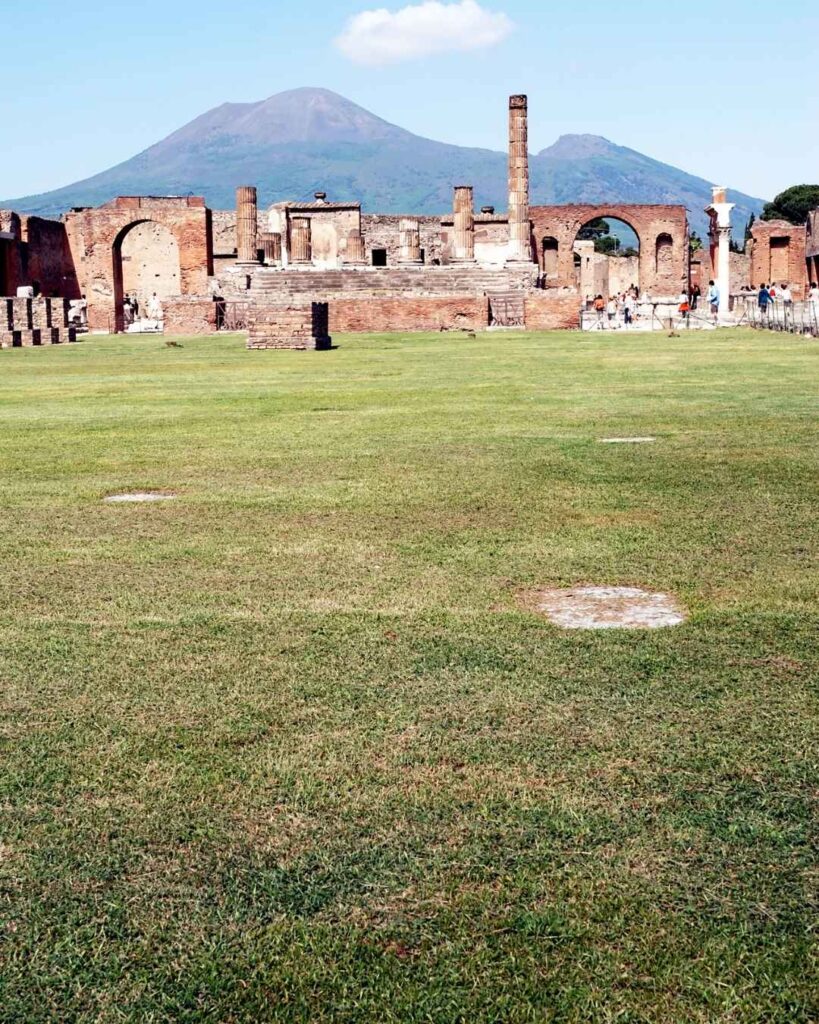
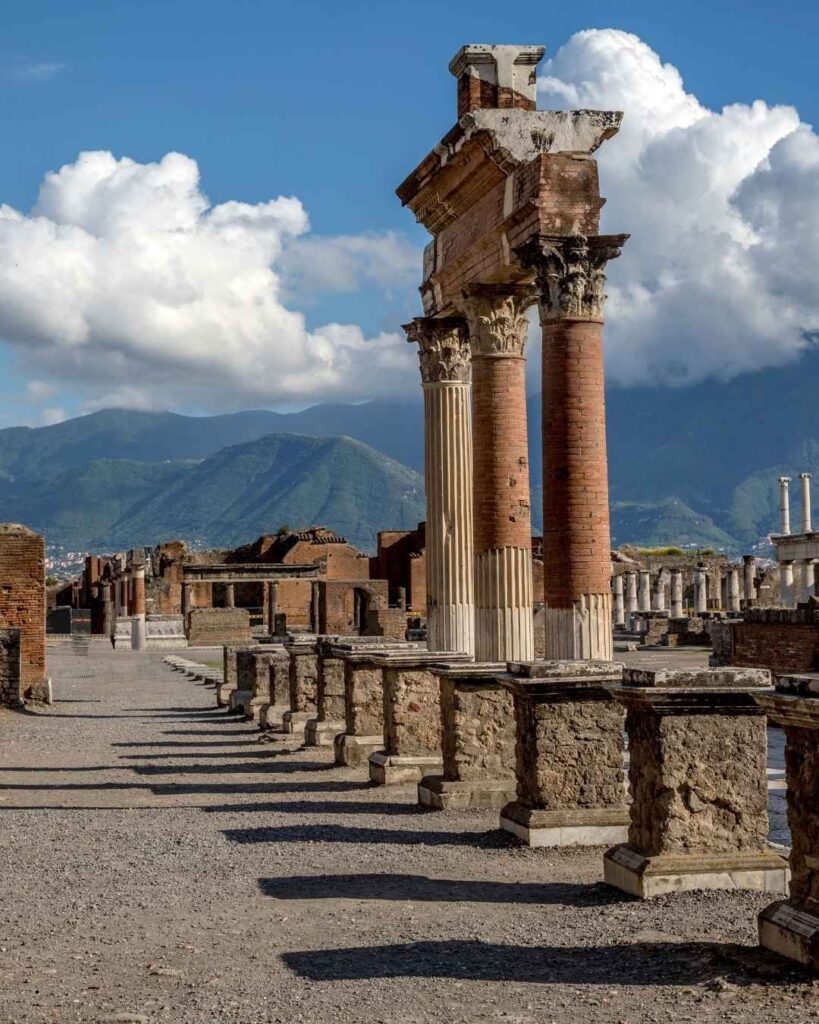
This was the heart of Pompeii. The Forum was the center of political, spiritual, and commercial life, surrounded by important buildings like the Temple of Jupiter and the Basilica. Stand in the middle and look around. The towering columns and the brooding presence of Mount Vesuvius in the background create one of the most iconic views in all of Italy. Take your time here.
The Villa of the Mysteries
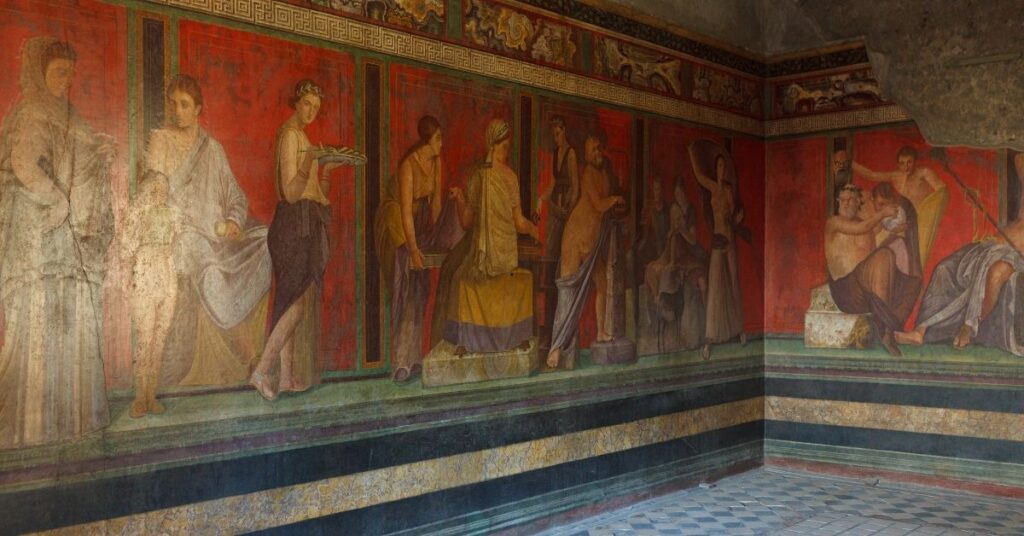
This is one of the best-preserved villas in Pompeii, located just outside the Herculaneum Gate. The reason everyone talks about it is the breathtaking Dionysian frieze that spans three walls of the dining room like an ancient IMAX screen. The vivid fresco depicts the initiation of a bride-to-be into the cult of Dionysus, the Greek god of wine. The colors are still so intense, it’s hard to believe they’re two thousand years old. Walk the entire room slowly, following the figures as they dance, read, and prepare for the ritual.
The Lupanar
Pompeii’s most famous brothel is small but fascinating. The building had ten rooms, five on each floor, and the frescoes above the doorways show the different services available. It’s unsubtle, to say the least, but it gives you an unfiltered glimpse into the daily life of a Roman city. The graffiti scratched into the walls is also worth reading; some of it is remarkably personal and even poetic.
The Amphitheater
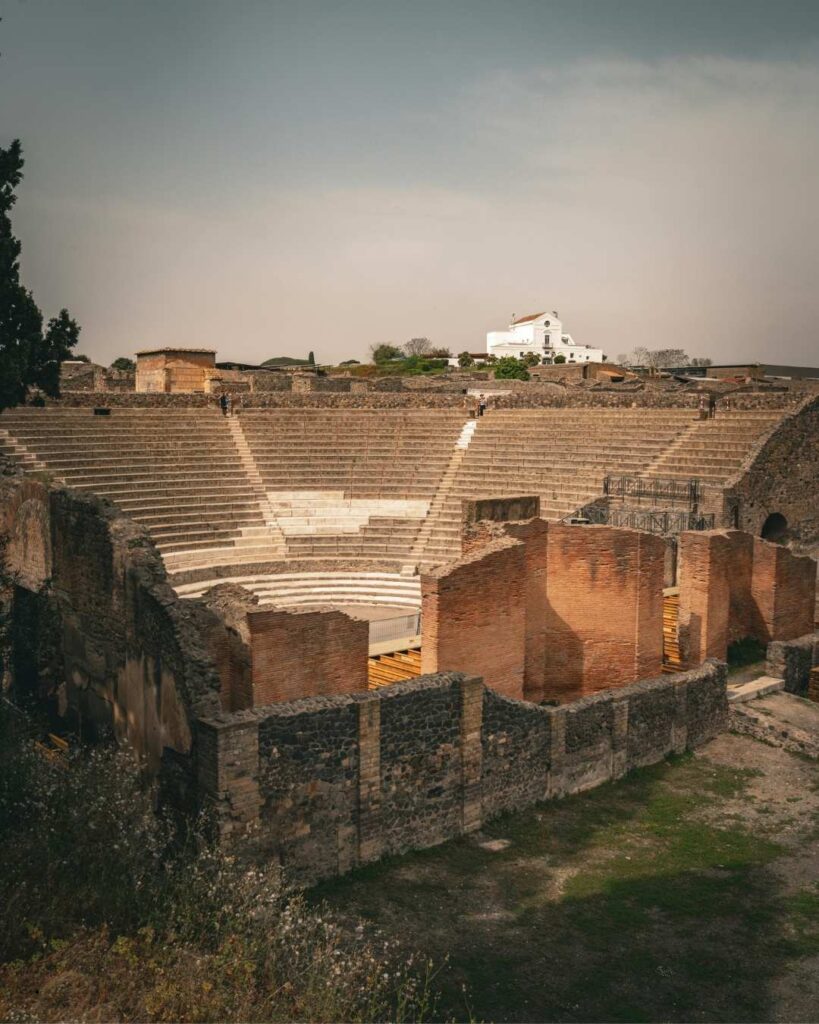
This is the oldest surviving Roman amphitheater in the world, predating the Colosseum in Rome by about 150 years. It could hold twenty thousand spectators, which is remarkable considering the city’s population was only twelve thousand. Stand in the center and imagine the roar of the crowd as gladiators fought below. The acoustics are incredible, and the views of Vesuvius from the top tier are spectacular.
The Plaster Casts
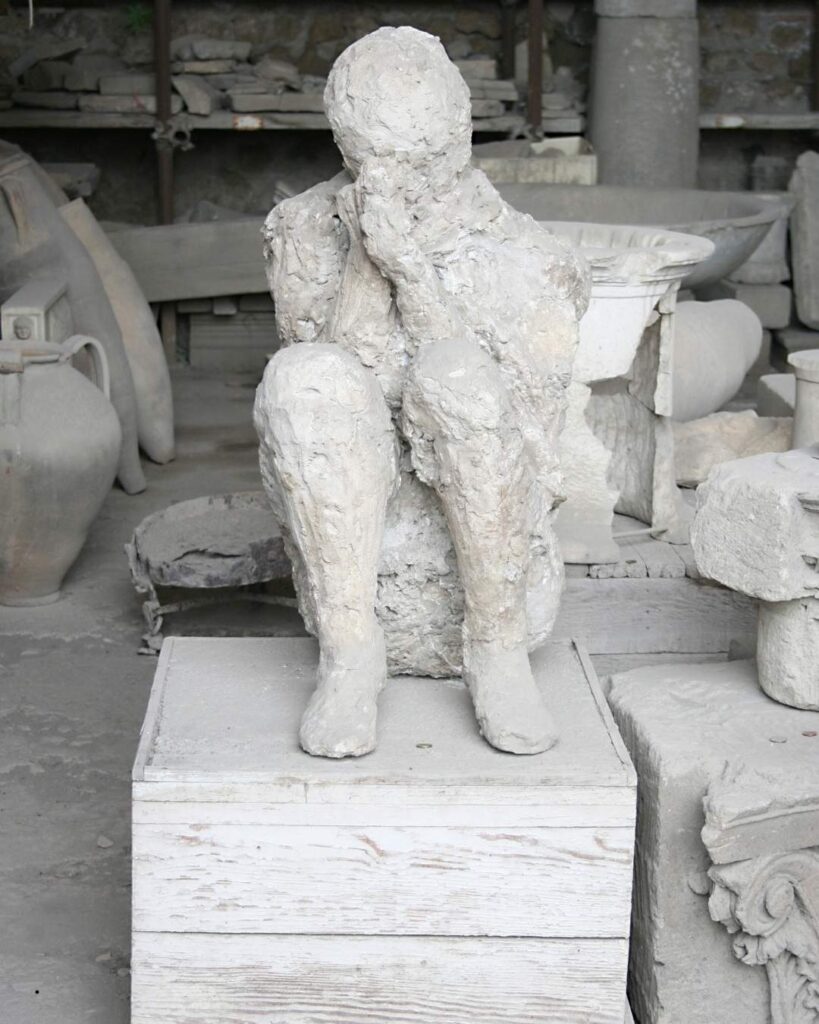
In the Garden of the Fugitives, you’ll find some of the most haunting sights in Pompeii. When archaeologists excavated the site, they discovered voids in the ash that had once contained human bodies. They poured plaster into these voids, creating casts of the victims in their final moments. You’ll see families huddled together, a man covering his mouth, and even a dog contorted in agony. It’s sobering, but it’s also the closest you’ll ever come to witnessing history in real time.
The House of the Faun
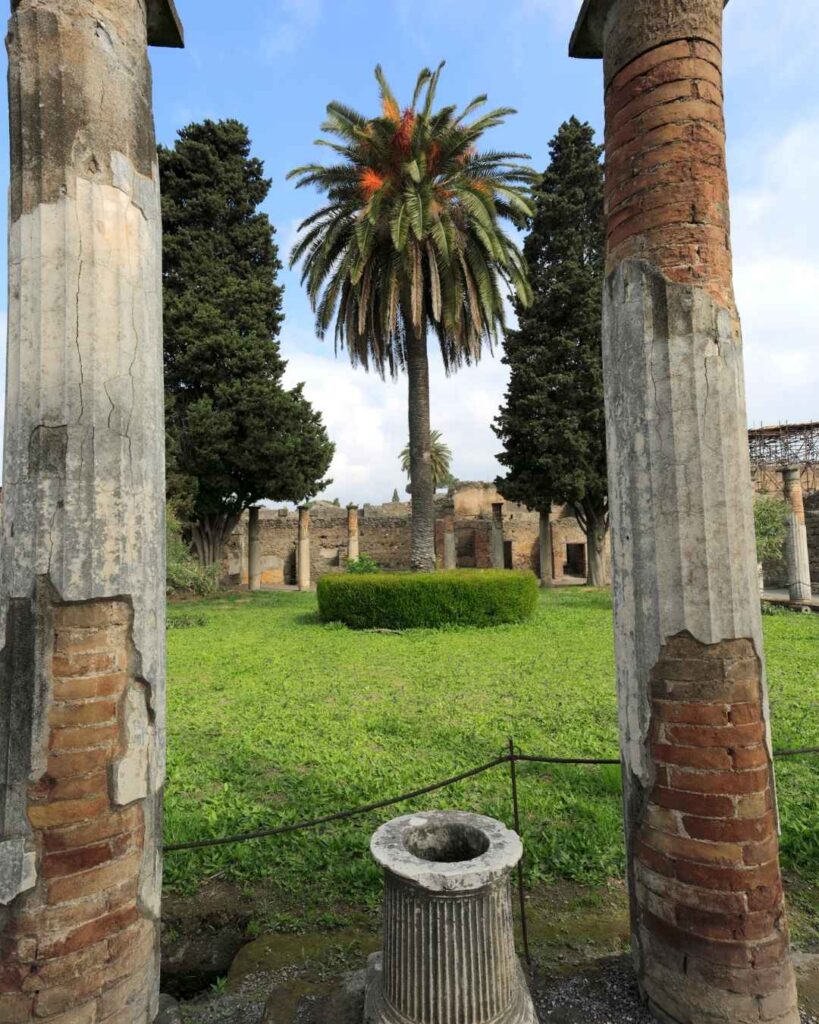
This was one of the largest and most luxurious homes in Pompeii, occupying an entire city block. The name comes from the bronze statue of a dancing faun in the atrium. But the real treasure is the Alexander Mosaic, which depicts Alexander the Great in battle against the Persian king Darius. The original is now in the National Archaeological Museum in Naples, but a replica is in place here. The house also has beautiful gardens and several stunning frescoes.
The Baths
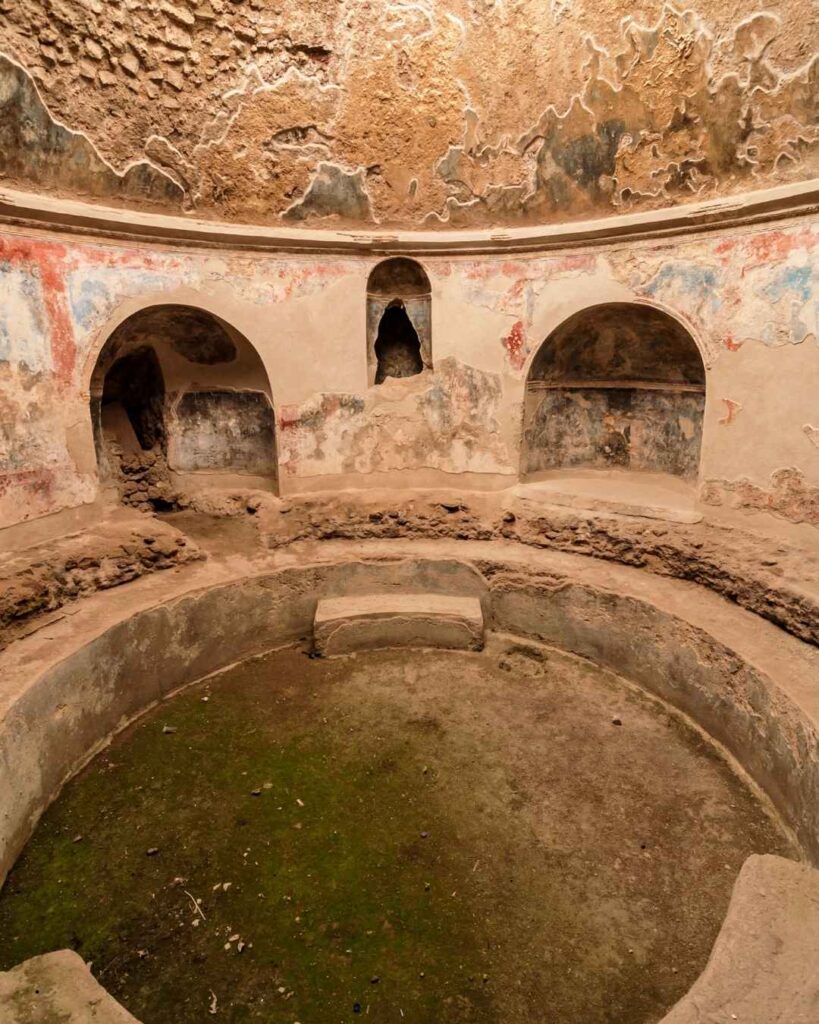
The Stabian Baths are the oldest in Pompeii, and they give you a clear sense of how Romans socialized. The complex includes changing rooms, warm baths, hot baths, cold baths, and even a palaestra for exercise. The domed ceilings and the intricate stucco work are impressive, and you can still see the lead pipes that brought water to the baths.
The Temple of Apollo
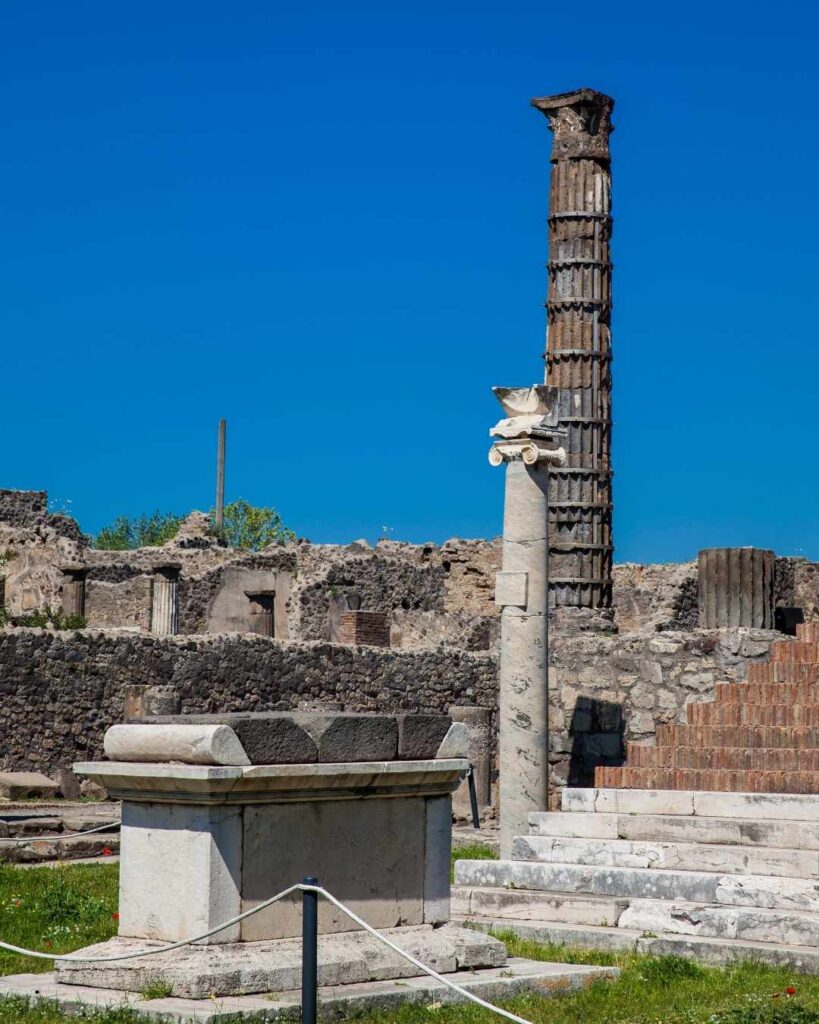
This is one of the oldest religious sites in Pompeii, dating back to the 6th century BC. The colonnade and the podium are well-preserved, and the bronze statue of Apollo that once stood here is now in the Naples museum. The temple overlooks the Forum, and the views are lovely.
The Thermopolium
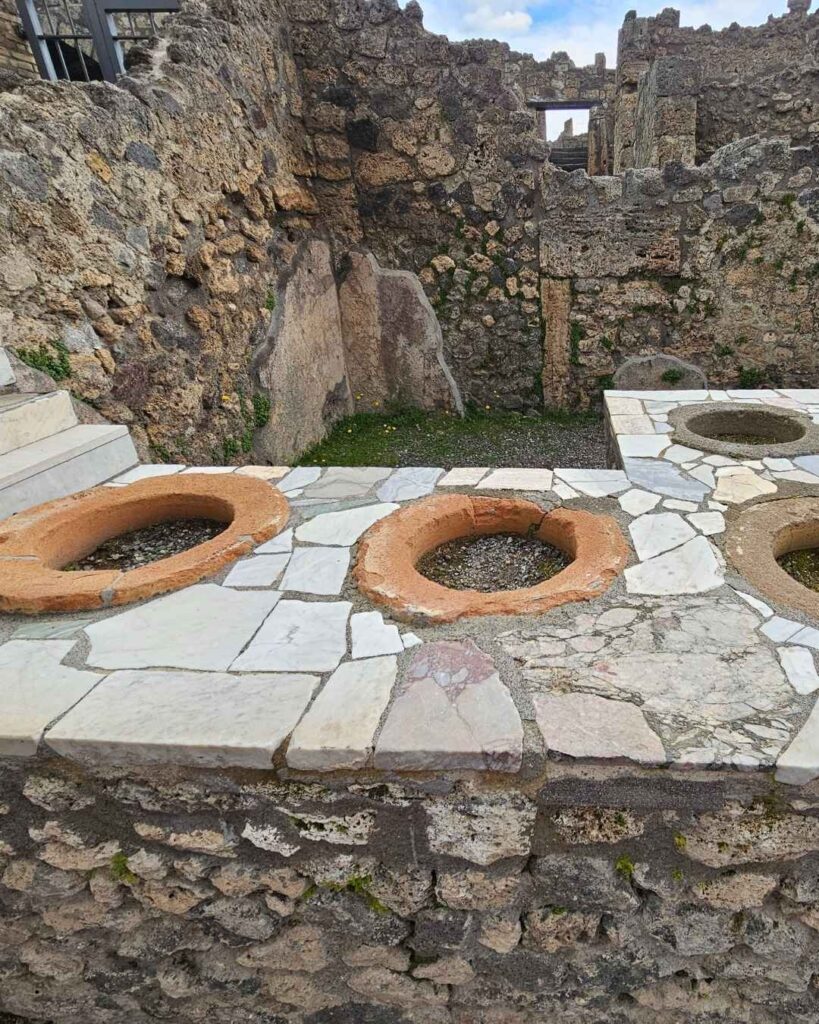
This is the ancient version of a fast-food restaurant. The Thermopolium was a street-side eatery where you could grab a hot drink or a meal on the go. You’ll see the terracotta pots embedded in the counter, which once held food and wine. Recent excavations have even revealed traces of the food that was served, including goat meat, fish, and snails.
The Secret Cabinet
If you’re traveling with adults, the Secret Cabinet is a fascinating detour. This small room displays a collection of erotic art from Pompeii and nearby sites. The items were once locked away and only accessible to scholars, but they’re now on display for the public. It’s a reminder that the Romans were far less prudish about certain subjects than we are today.
Types of Tickets and Tours
Standard Entry Ticket
The standard ticket costs around 18 euros and gives you access to the entire excavated area. You can wander freely, follow the marked paths, and explore at your own pace. There’s no time limit, so you can stay from opening until closing if you want.
The ticket includes entry to the main site, and there are separate entrances at Porta Marina, Piazza Anfiteatro, and Piazza Esedra. Choose the one that’s most convenient for your transportation.
Pompeii Express Ticket
This is the standard ticket with a time slot reservation. During peak season, it’s worth paying the small extra fee to secure your entry time. The queues can be long, especially in the morning, and this ticket allows you to bypass the main ticket line.
If you need a ticket that also comes with a guide (a local archaeologist), this is the best place to get one
Combined Pompeii and Herculaneum Ticket
Herculaneum is the smaller but remarkably well-preserved sister city of Pompeii. It was buried by the same eruption, but the mud that covered it preserved even more organic materials like wood, furniture, and even food. This combined ticket gives you access to both sites within three days, and it’s usually cheaper than buying separate tickets.
The catch is that Herculaneum is smaller and easier to cover in two hours, while Pompeii needs a full day. Plan accordingly. You can visit Pompeii in the morning and Herculaneum in the afternoon, or split them across two days.
Pompeii and Vesuvius Combo
This is a popular combination. You visit the ruins in the morning and hike to the crater of Mount Vesuvius in the afternoon. The volcano is still active, and you can peer into the smoking crater while taking in panoramic views of the Bay of Naples.
Tickets and tours for this combo are available from various operators. Some include round-trip transportation, which saves you from navigating the buses on your own. The hike takes about thirty minutes each way and is moderately strenuous.
Guided Tours of Pompeii
A guided tour is absolutely worth it. The site is vast, and without a guide, it’s easy to wander through endless streets without understanding what you’re seeing. A good guide brings the city to life, telling stories about the people who lived here, the businesses they ran, and the final moments of their lives.
There are two main types of guided tours.
Group Tours: These run several times a day and cost around 30 to 50 euros in addition to your entry ticket. Groups are usually limited to twenty-five people, and the tour lasts about two hours. This is the most budget-friendly option. This is the tour I recommend.
Private Tours: These are more expensive but infinitely better. You’ll have a licensed archaeologist or art historian to yourself, and you can customize the route to suit your interests. Prices start around 200 euros and can go higher depending on the duration and the guide’s expertise. My wife and I splurged on a private tour, and it was worth every penny. Our guide took us into areas most tourists never see and explained the history with such passion that we felt transported back in time. This is the tour we booked.
Guided Walking Tours from Naples
Naples is the closest major city to Pompeii, and dozens of tour companies offer guided trips from there. These tours usually include round-trip transportation in an air-conditioned minivan or bus, a licensed guide at the site, and entry tickets. Some also include lunch or time for a pizza break, because you’re in Naples, and you should eat pizza.
Prices vary widely, but expect to pay around 80 to 100 euros per person for a half-day tour. Full-day tours that include Herculaneum or Vesuvius cost more. This is the tour I recommend.
Guided Tours from Rome
This is a long day—it takes about two hours by train or bus each way—but it’s entirely doable. Several companies offer day trips from Rome to Pompeii, with transportation, a guided tour, and sometimes a stop for lunch.
These tours usually leave early in the morning, around 7:00 AM, and return to Rome in the evening. Prices start around 150 euros per person and go up from there. They’re convenient because you don’t have to worry about transportation or tickets, but they do limit your time at the site. Most Rome tours give you about three hours at Pompeii, which is enough for the highlights but not for a deep exploration. See the details of the tour here.
Guided Tours from Sorrento
Sorrento is even closer to Pompeii than Naples, and the tours from there are excellent. You can take the Circumvesuviana train on your own, or you can book a guided tour that includes transportation. Many Sorrento tours also combine Pompeii with a visit to a local winery on the slopes of Mount Vesuvius, where you can taste the famous Lacryma Christi wine. This is the best tour.
Practical Details for Your Visit
When to Go
Early morning is the best time, right when the gates open at 9:00 AM. The crowds are thinner, the light is soft, and the temperature is still manageable. Afternoon visits can be brutal in the summer, with temperatures soaring above 35 degrees Celsius and very little shade.
Spring and autumn are ideal seasons. The weather is pleasant, the crowds are smaller, and the wildflowers that bloom among the ruins create a beautiful contrast with the ancient stone.
How Long to Spend
You need at least three hours to see the highlights. Four to five hours is better. Six hours will allow you to cover most of the excavated areas, including the houses and temples outside the main circuit. There’s no time limit, so you can stay until closing.
What to Wear
This is an archaeological site, not a polished museum. You’ll be walking on uneven stone cobblestones, sometimes with significant gaps between them. Wear sturdy, comfortable shoes, like these. Sneakers or hiking sandals are perfect. Flip-flops are a terrible idea.
The sun is relentless in summer. Wear a hat, sunglasses, and sunscreen. The site is partially shaded in some areas, but the Forum and the streets are wide open.
What to Bring
Bring plenty of water. The site has drinking fountains, but they can be crowded, and some are seasonal. A refillable water bottle is essential. Carry snacks; there are a few cafes and vending machines on site, but the food is mediocre and expensive.
Bring a map. The site provides a map at the entrance, but it can be confusing. Download an offline map or the official app before you go.
Accessibility
Pompeii is challenging for visitors with mobility issues. The streets are uneven, the stones are slippery, and there are no ramps in most areas. Some houses have steps at the entrance. There are electric carts available for those with disabilities, but they must be reserved in advance through the site’s accessibility office. Contact them at least three days before your visit to arrange assistance.
Photography
Photography is allowed throughout the site. Tripods and professional equipment are not permitted without special authorization. If you’re using a smartphone, you’ll get great shots, especially in the early morning or late afternoon light.
Food and Drink on Site
There are a few cafes, vending machines, and a restaurant in the Pompeii complex. The food is passable but nothing special. Better to bring a picnic and eat in the grassy areas near the amphitheater or in the shaded gardens of the houses. There are also several excellent trattorias just outside the Porta Marina entrance, serving traditional Campanian dishes.
Getting There
From Naples
This is the easiest and most common route. Take the Circumvesuviana train from Napoli Centrale station. The train runs every thirty minutes, and the journey takes about forty minutes. Get off at the Pompeii Scavi station, which is right at the entrance to the archaeological site. The train is run by Ente Autonomo Volturno, not Trenitalia, so don’t look for the usual green and white carriages.
If you’re staying near the port, take the train from Napoli Porta Nolana station. If you’re near the main station, use Napoli Centrale. The trains are notoriously unreliable and often crowded, so give yourself plenty of time.
From Sorrento
Take the same Circumvesuviana train but in the opposite direction. The journey from Sorrento to Pompeii takes about thirty minutes. The Pompeii Scavi station is the same stop. Trains run every thirty minutes, and the service is slightly more pleasant on this stretch.
From Rome
You have three options: train, bus, or organized tour.
Train: Take the high-speed train from Roma Termini to Napoli Centrale. The journey takes about an hour and ten minutes. From there, transfer to the Circumvesuviana train to Pompeii Scavi, which takes another forty minutes. The total journey is about two hours each way. Trains are frequent, but you’ll need to manage the transfer in Naples. The station is easy to navigate, but it’s chaotic.
Bus: Several bus companies run direct trips from Rome to Pompeii. It takes about two and a half to three hours, depending on traffic. Buses are cheaper than trains but less comfortable and more prone to delays. The drop-off is at a parking lot near the Porta Marina entrance.
Organized Tour: This is the most convenient option, as described above. You won’t have to worry about navigation, tickets, or timing. The tour guides are also experts in Pompeii, so you’ll get a much richer experience than if you explored on your own. The trade-off is the cost and the limited time at the site.
From the Amalfi Coast
If you’re staying in Positano, Amalfi, or Ravello, you’ll need to take a ferry or bus to Sorrento first, and then take the Circumvesuviana train. The journey is scenic but time-consuming. An organized tour that includes private transportation is often worth the extra cost, especially if you have limited time.
By Car
You can drive to Pompeii from anywhere in Italy. The A3 highway has a dedicated exit for Pompei Scavi, and there are several parking lots near the entrance. Parking costs around five to ten euros for the day. Traffic can be heavy, especially in summer, so plan accordingly.
Herculaneum: The Sister Site
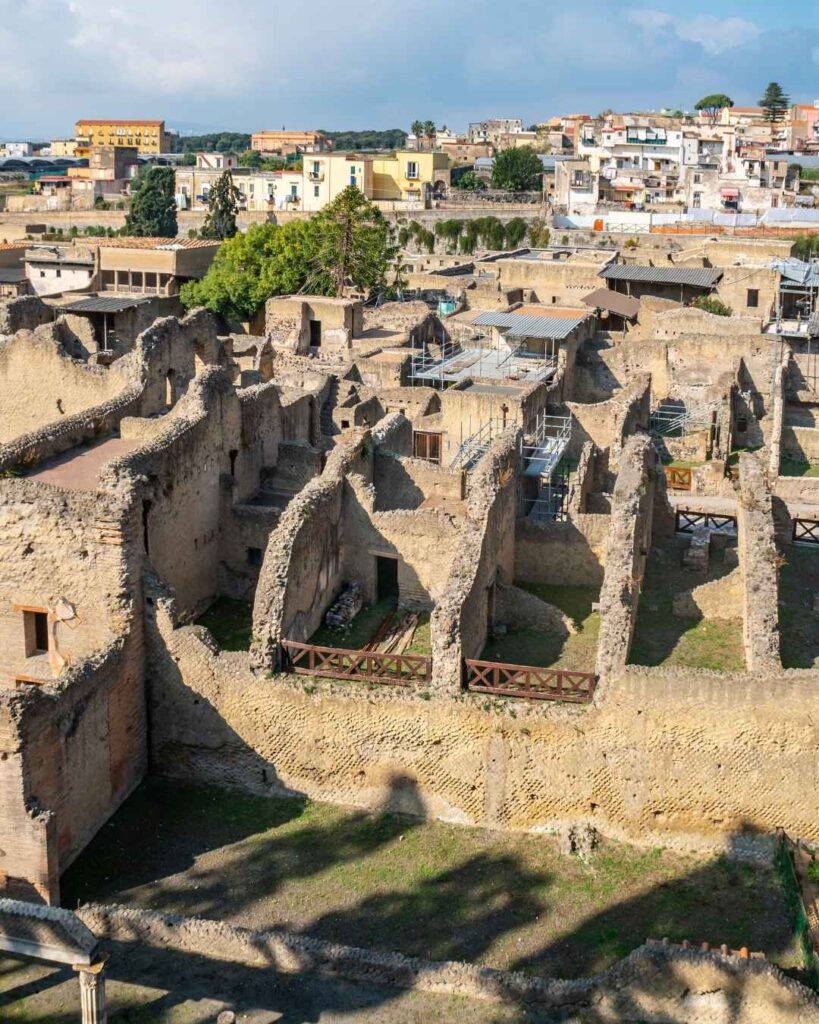
Herculaneum is smaller than Pompeii, but it’s remarkably well-preserved. The mud that covered the city hardened into a rock-like material that protected organic materials, which means you’ll see wooden doors, furniture, and even bedding that have survived intact. The houses are also more complete, with second floors and balconies still standing.
The site is easier to navigate than Pompeii because it’s compact. You can cover everything in about two hours. Highlights include the House of the Deer, the House of the Mosaic Atrium, and the ancient boat houses along the shore.
If you have time, visit both sites. They complement each other perfectly. Pompeii shows you the civic and commercial heart of a Roman city, while Herculaneum gives you a more intimate look at domestic life.
Final Thoughts
Pompeii is one of those rare places that changes you. Standing in the Forum, staring at the mountain that destroyed a civilization, you feel the weight of history in a way that no museum can replicate. It’s sad and beautiful and deeply affecting.
My wife and I spent an entire day there, from opening to closing, and we still felt like we had only scratched the surface. We followed our private guide through the back streets, away from the crowds, and listened to stories about the people who lived and died here. It was exhausting, but it was also unforgettable.
Here’s what I tell my readers: don’t try to see everything. It’s impossible, and you’ll just exhaust yourself. Pick your highlights, hire a good guide if you can, and give yourself the time to really absorb the place. Stand in the amphitheater and imagine the roar of the crowd. Walk through the Villa of the Mysteries and let the frescoes tell you their story. And when you see those plaster casts, take a moment to think about the people they represent. They were just like you, going about their daily lives, never suspecting that their world was about to end.
Pompeii is a reminder of how fragile we are and how powerful nature can be. But it’s also a celebration of how much we can learn from the past. The Romans were sophisticated, creative, and resilient. Their legacy lives on in the stones of this ancient city and in the memories of everyone who walks through its gates.
NOTE BEFORE YOU GO: Italy rewards travelers who go prepared. And it is easy to ruin your trip. I have a checklist for you of things you should never go to Italy without. CHECK IT OUT HERE. I have also curated a list of some of the best hotels in Italy. I would highly recommend checking them out before booking. THESE ARE THE BEST HOTELS IN ITALY. And for unique experiences, attractions, and tours, don’t book before CHECKING THIS OUT. Thank me later!