

Ischia sits in the Gulf of Naples, a short ferry ride from the chaos of the city, yet it feels like a world away. While its more famous sibling Capri gleams with polished sophistication and draws crowds by the boatload, Ischia moves at a different pace.
It is the largest island in the gulf, a volcanic mass that rises dramatically from the sea, crowned by the peak of Mount Epomeo. This is not an island putting on a show. It is a place of everyday Italian life, where families have returned for generations, where the rhythm is set by the seasons and the tides, and where the greatest luxury is simply the chance to slow down.
What makes Ischia truly unique, however, is the very thing that has shaped its dramatic landscapes and its history: it sits atop a caldera of a still-active volcano. The island is home to over a hundred thermal springs, a natural gift that has made it a destination for wellness and healing since the days of the ancient Greeks.
A holiday here is an invitation to soak, to hike, to eat, and to let the island’s restorative spirit work its quiet magic on you.
Before reading further, please take the time to ensure you have packed everything you need for your trip to Italy. See the checklist here.
How to Get to Ischia
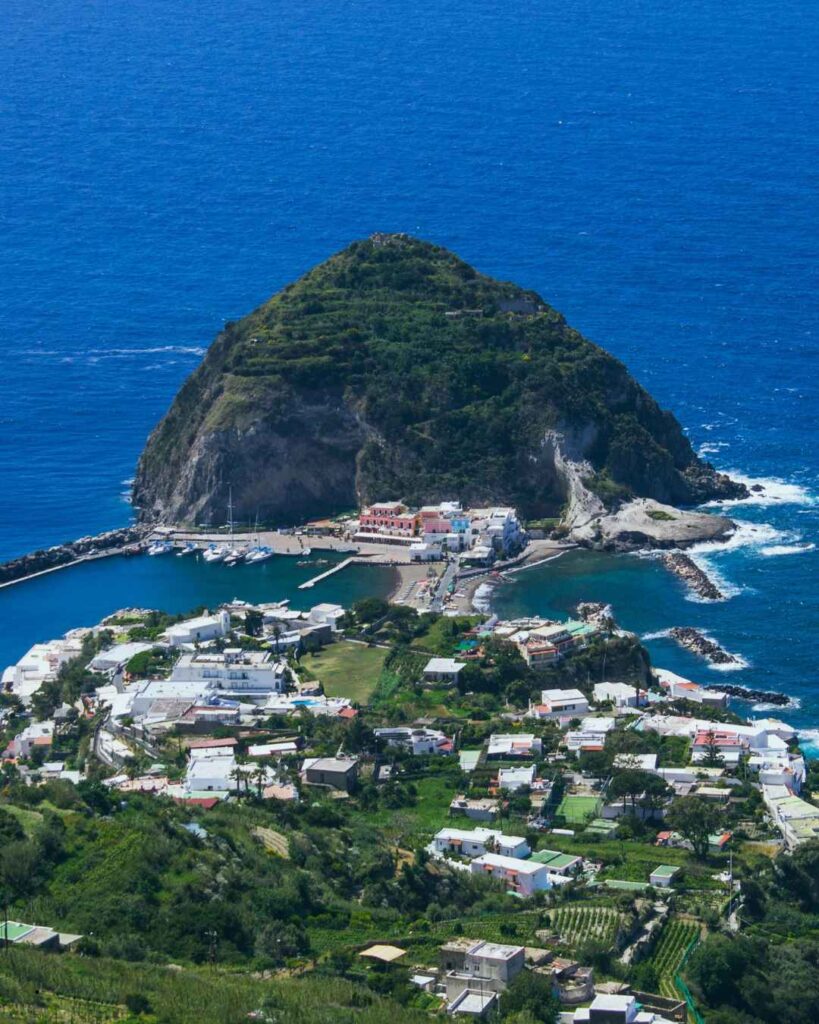
Reaching Ischia is refreshingly straightforward. The island is well-connected by ferries and hydrofoils from Naples, as well as from Sorrento and the Amalfi Coast. The journey from Naples takes anywhere from fifty minutes to an hour and a half, depending on whether you choose the slower ferry or the faster hydrofoil.
The ride itself is a pleasure, offering stunning views of the Bay of Naples and, on clear days, the imposing silhouette of Mount Vesuvius looming in the distance. The ferries arrive at two main ports: Ischia Porto on the eastern side of the island and Forio on the western coast. Ischia Porto is the larger and busier of the two, with more connections, but arriving in Forio gives you an immediate introduction to the island’s more laid-back, bohemian character.
Once you are on the island, you have a few options for getting around. Renting a scooter is the quintessential Ischian experience—zipping along coastal roads with the wind in your hair and the Mediterranean on one side is pure freedom.
If that sounds a bit too adventurous, renting a car is also a good choice, though you should be prepared for narrow, winding roads and limited parking, especially in the summer months. Alternatively, the island has a reliable bus network that connects the main towns and beaches. The buses can get crowded, and they follow their own rhythm, but they are cheap and functional.
For those who prefer a slower pace, exploring on foot is deeply rewarding. The island is not large, and many of its hidden corners are best discovered by walking. From the port towns, you can hike through pine forests, climb to hilltop villages, and stumble upon secluded coves that you would never find from a bus or a car. My wife and I spent our most memorable day on Ischia simply walking the winding paths that connect Forio to the quieter corners of the western coast, stopping whenever the view demanded a pause.
The Best Time to Visit

Ischia is a year-round destination, but the experience shifts dramatically with the seasons. Summer is when the island comes to life in its fullest expression. The beaches are packed, the thermal parks buzz with energy, and the evenings are filled with the sounds of music and laughter spilling from restaurants and bars.
The sea is warm, the days are long, and everything feels vibrant. But this vibrancy comes with crowds and high prices. If you are coming in July or August, book everything well in advance and be prepared for a lively, bustling atmosphere.
Spring and autumn are where the magic truly happens. From April to June and September to October, the weather remains warm enough for swimming, but the crowds thin out considerably. The landscapes are lush and blooming in spring, and in autumn, the vineyards and olive groves are heavy with fruit.
The thermal waters feel even more inviting when there is a slight chill in the air, and the overall pace of life is more relaxed. Prices are more reasonable, and you feel more like a traveler than a tourist.
Winter transforms Ischia into a quiet, introspective place. Many hotels and restaurants close for the season, but the island’s thermal springs remain open, making it an ideal destination for a cozy, off-season escape. The air is crisp and clean, and hiking in the interior is a joy without the summer heat. It is a time to experience the island’s authentic soul, away from the distractions of peak tourism.
And Now a Bit Of History

Ischia’s story is written in its stones, both above and below the water. The Greeks were the first to recognize its value, establishing a colony around 750 BC. They were drawn to the island’s natural beauty and, perhaps most importantly, its thermal springs, which they believed possessed healing powers. They gave the island the name Pithecusae, and their settlement marks the earliest Greek presence in the Italian peninsula.
The Romans followed, arriving around 322 BC and renaming the island Aenaria. They built villas and ports, establishing a thriving community that lasted for centuries. But then, around 180 AD, disaster struck. A volcanic eruption triggered a massive tsunami that sent a significant portion of the Roman city into the sea, burying it beneath the waves for nearly two thousand years.
Today, one of the most extraordinary experiences Ischia offers is the chance to visit this sunken Roman city. In the Bay of Cartaromana, just off the coast, lie the submerged ruins of Aenaria. The ancient port city, complete with quays, villas, and streets, lies perfectly preserved on the seafloor. You can take a glass-bottom boat tour and gaze down through the clear turquoise water to see this lost world.
It is a hauntingly beautiful sight, a moment where history comes alive in a way that no museum can replicate. Floating above the ruins of a civilization that was swept away by the earth itself is a humbling reminder that Ischia has been shaped by powerful forces, both natural and human, for millennia.
Above the water, the most iconic symbol of the island’s layered history is the Castello Aragonese. Built on a rocky islet connected to the main island by a stone bridge, this fortress has stood as a sentinel over the island since the 5th century BC. It has served as a Greek fort, a Roman stronghold, a medieval refuge for survivors of pirate attacks, and later a prison.
Exploring it feels like walking through a microcosm of Ischian history. Wander through its ancient churches, climb to its terraces for jaw-dropping views of the Bay of Naples, and on a clear day, you can see the distant silhouette of Vesuvius. The fortress is a testament to the island’s resilience, a place where generations have sought shelter and built their lives.
The Thermal Soul of the Island

If Ischia has a soul, it is made of water. The island is famous for its thermal parks, sprawling complexes of hot springs, pools, and gardens built around the mineral-rich waters that bubble up from the earth. These parks are the jewel in Ischia’s crown, and they are the reason why people have been coming here for centuries.
Negombo Thermal Park in Lacco Ameno is one of the most celebrated. Set on a hillside overlooking the Bay of San Montano, it is a lush, luxurious wonderland of fourteen pools, tropical plants, and sweeping sea views. The water here is rich in minerals like sulphur, sodium, and calcium, and it is known for its healing properties, particularly for skin conditions and joint pain.
You can spend an entire day drifting from a hot pool to a cooler one, pausing only for a prosecco and a moment of quiet contemplation. The views are spectacular, and the atmosphere is one of pure, indulgent relaxation.
Giardini Poseidon Terme in Forio offers a similarly impressive experience on a grand scale, with a staggering array of pools, saunas, and treatments set against the backdrop of the Mediterranean. It is one of the largest thermal parks in Europe, and it offers everything from therapeutic mud baths to hydro-massage jets. The water cascades down a series of terraced pools, each with a different temperature, so you can find the perfect spot to soak.
These parks are the pinnacle of the wellness experience on Ischia, but the island also offers something more raw and authentic. A short walk down a steep staircase leads you to the Bay of Sorgeto, a rocky cove where the thermal water meets the sea. Here, you can paddle into the warm water, feel the bubbles of hot springs rising from the seabed, and simply float with the locals and in-the-know travelers who come here for the sunset.
There are no tickets, no rules—just a free and utterly memorable experience that captures the untamed heart of Ischia. The water can get quite hot in certain spots, so you need to find your own comfortable patch, but that is part of the adventure.
Beaches and Natural Beauty
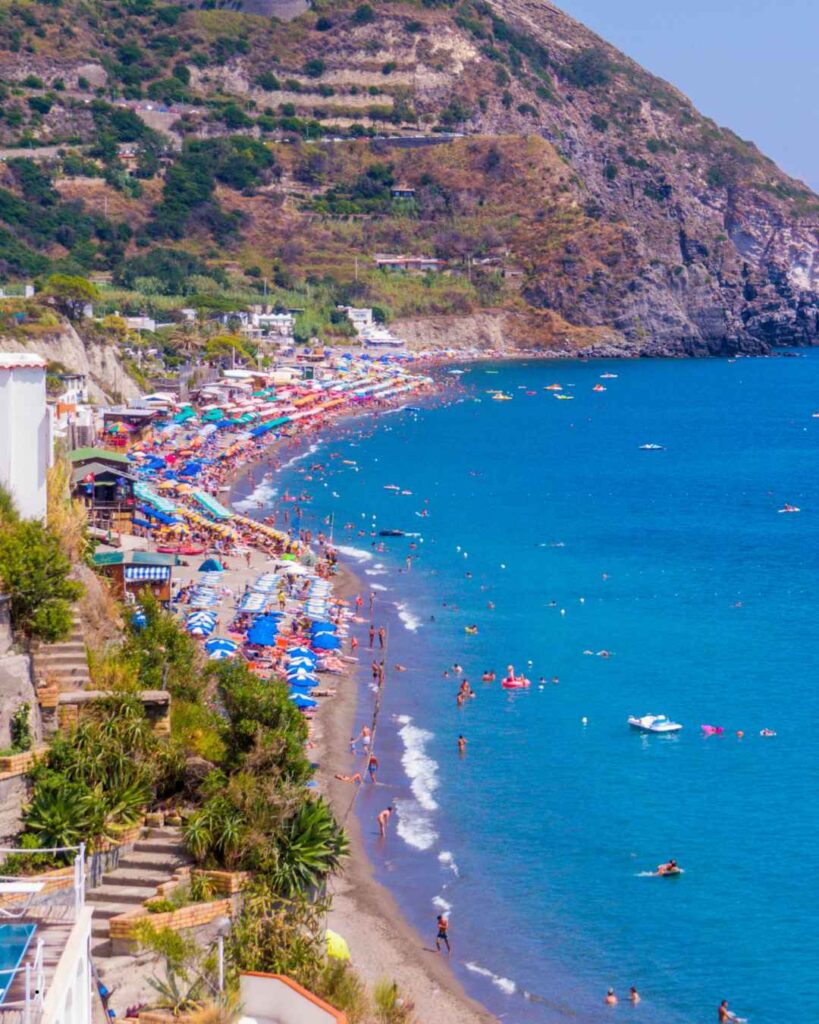
Beyond the thermal parks, Ischia offers a coastline of remarkable variety. The beaches are not the endless stretches of sand you might find in Sardinia or the Caribbean. Instead, they are intimate coves, volcanic black sand, and rocky shorelines that each have their own character.
Maronti Beach, on the southern coast, is the island’s longest stretch of sand. It is a lively, family-friendly beach with calm waters and a backdrop of dramatic cliffs. The sand here is dark and volcanic, and the water is warm, fed by underwater thermal vents that make swimming here a particularly pleasant experience, even in the cooler months.
San Francesco Beach, near Forio, is a picturesque stretch of golden sand framed by the imposing Castello Aragonese in the distance. It is a lovely spot for swimming and sunbathing, and the nearby town offers plenty of restaurants and shops for when you need a break from the sun.
For something more secluded, head to Citara Beach, also near Forio. It is a beautiful volcanic sand beach with crystal-clear water and a tranquil atmosphere. The surrounding cliffs provide some shelter from the wind, and the views of the Mediterranean are simply stunning.
And then there are the secret spots. Ischia is filled with hidden coves accessible only by foot or by boat. One of the best ways to experience the island’s coastline is to rent a small boat and explore on your own. You can find secluded little bays where the water is so clear you can see every pebble on the seabed, and where the only sounds are the gentle lapping of the waves and the distant cry of seagulls.
Gardens and the Volcanic Peak

Ischia is not just a destination for the body; it is also a feast for the eyes. The island is home to some of the most beautiful gardens in Italy, a legacy of the wealthy aristocrats and artists who have been drawn here for centuries.
La Mortella Gardens, near Forio, are perhaps the most famous. They were created by the English composer William Walton and his Argentine wife, Susana, in the 1950s. The gardens are a masterpiece of landscaping, with terraced slopes, exotic plants, and stunning views of the sea. You can wander through bamboo groves, past fragrant citrus trees, and through a collection of rare and unusual plants from around the world.
The gardens are divided into two sections: the lower garden, which is lush and tropical, and the upper garden, which is more Mediterranean and arid. The combination is breathtaking, and the views of the Gulf of Naples are simply unforgettable.
At the heart of the island, rising to almost 800 meters, is Mount Epomeo. This is the volcanic peak that dominates Ischia’s landscape, and hiking to the top is one of the island’s most rewarding experiences. The trail takes you through dense pine forests, past ancient hermitages carved into the rock, and finally to the summit, where the views are nothing short of spectacular.
On a clear day, you can see all the way to Capri, the Sorrento Peninsula, and the mountains of the Amalfi Coast. The ascent is challenging but manageable for anyone with a reasonable level of fitness, and the sense of accomplishment at the top is immense. The mountain is a reminder that Ischia is not just a beach destination; it is a place of wild, untamed beauty that rewards those who are willing to explore it.
A Taste of Ischia
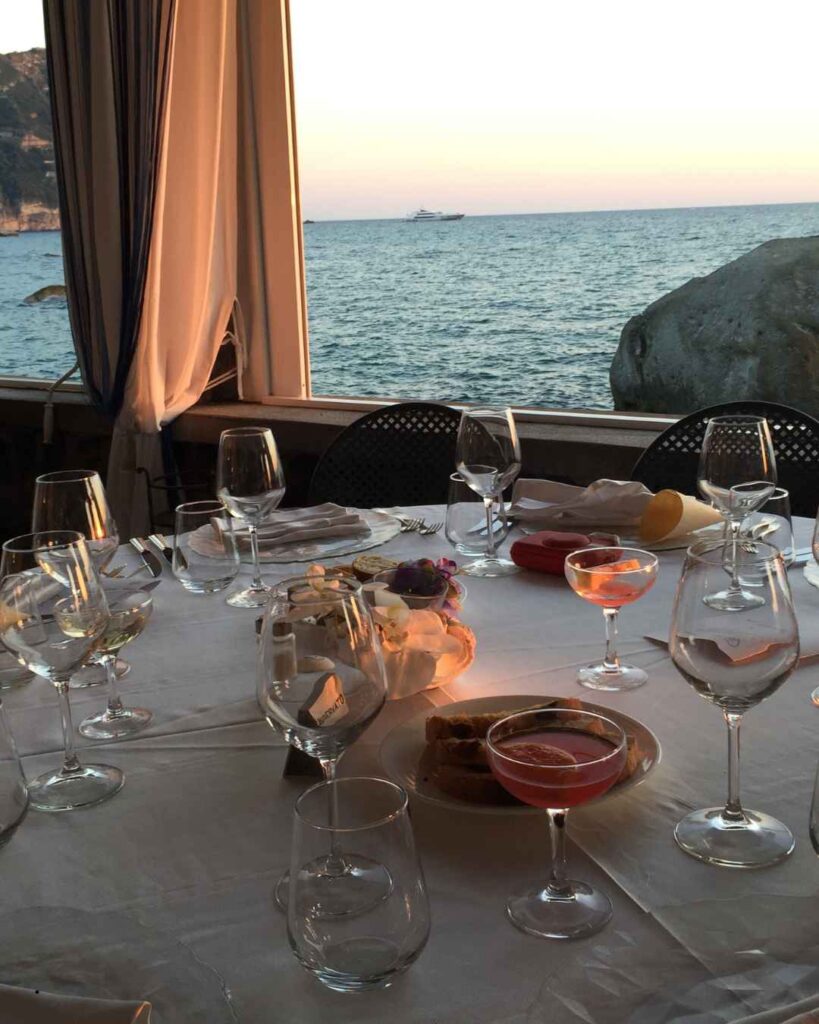
The food on Ischia is as authentic and soulful as the island itself. This is not the refined, experimental cooking you might find in some of Italy’s more cosmopolitan cities. This is simple, honest food that has been made the same way for generations, using the best ingredients the island has to offer.
Naturally, seafood is the star of the show. The waters around Ischia are rich with fish, and the local restaurants serve it with a freshness that you cannot find anywhere else. The island is particularly famous for its anchovies and its octopus. A plate of marinated anchovies, served with a squeeze of lemon and a drizzle of local olive oil, is a taste of the sea at its purest. Grilled octopus, tender and charred, is another must-try.
But Ischia’s cuisine is not just about seafood. The volcanic soil is incredibly fertile, and the island produces excellent vegetables and fruits. The lemons here are legendary, so large and fragrant that they are a local treasure. The island also produces a wonderful white wine, made from the Biancolella grape, which is a perfect match for the local seafood. A crisp, chilled glass of Ischian white wine, sipped on a terrace overlooking the sea as the sun sets, is one of the simple pleasures that make this island so special.
And then there is the rabbit. Ischia is famous for its rabbit dishes, a legacy of the island’s rural traditions. Coniglio all’Ischitana, or Ischian-style rabbit, is a slow-cooked stew with herbs, tomatoes, and white wine. It is tender and flavorful, a taste of the island’s pastoral heart.
Desserts on Ischia are equally memorable. The island is known for its pastries, particularly those made with ricotta and almonds. A simple almond biscuit, dipped in a glass of sweet wine, is a perfect ending to any meal. And if you visit in the spring, do not miss the opportunity to try the local cherries, which are small, dark, and intensely flavorful.
The Towns of Ischia

Ischia is not a single destination but a collection of distinct towns, each with its own character and charm.
Ischia Porto, the main port, is the island’s commercial and transportation hub. It is bustling and lively, with a pleasant waterfront promenade, good restaurants, and excellent shopping. It is the most convenient base for those who want easy access to the mainland and the island’s bus network, but it is also the busiest and most touristy part of the island.
Forio, on the western coast, is the island’s second town and a favorite among travelers seeking a more authentic and laid-back experience. It has a beautiful historic center, filled with narrow streets and charming piazzas, and it is surrounded by some of the island’s best beaches and thermal parks.
It is also home to some of Ischia’s most famous landmarks, including the Church of the Soccorso, perched on a cliff overlooking the sea, and the Villa La Colombaia, the former home of the famous actor Luchino Visconti. Forio has a more bohemian, artistic vibe than Ischia Porto, and it is a wonderful place to simply wander and get lost.
Lacco Ameno is a small, elegant town on the northern coast, known for its thermal springs and its smart, sophisticated atmosphere. It is quieter than Ischia Porto and Forio, and it is a favorite among those seeking a more refined and relaxing experience. The town is home to the Negombo Thermal Park and the Archaeological Museum, which houses artifacts from the island’s Greek and Roman past.
Sant’Angelo, on the southern coast, is a tiny, picturesque fishing village that feels like it has been forgotten by time. It is only accessible by foot or by boat, and its lack of road connections has preserved its charm and tranquility. The village is built around a small harbor, and it is surrounded by lush hills and hidden coves. It is a perfect escape for those seeking peace and quiet, and it is one of the most romantic spots on the island.
Crafting Your Perfect Itinerary
How you spend your time on Ischia depends on what you are looking for. For a wellness-focused retreat, base yourself in Lacco Ameno or Forio and dedicate your days to soaking in the thermal parks, booking massages and treatments, and eating clean, wholesome food. A day at Negombo or Giardini Poseidon is a full experience in itself, so do not rush it. Allow yourself to simply be.
For an active holiday, plan to hike Mount Epomeo, explore the island’s coastal trails, and rent a boat to discover hidden coves. The island is small enough that you can cover a lot of ground in a few days, and the combination of physical activity and thermal relaxation is deeply satisfying.
For a cultural experience, base yourself in Ischia Porto and explore the Castello Aragonese, the underwater Roman ruins, and the museums in Lacco Ameno. Take the time to wander through the historic centers of Forio and Sant’Angelo, and seek out the local festivals that happen throughout the year.
For a romantic escape, choose Sant’Angelo or Forio and let the island’s slow pace wash over you. Dine on fresh seafood, watch the sun set over the sea, and spend your days swimming in warm, healing waters. The combination of beauty, intimacy, and relaxation is hard to beat.
If you want to do some activities on this beautiful island, check this guide first.
A Final Word on the Island’s Magic

Ischia is not a destination for everyone. If you are looking for glamorous nightlife, high-end shopping, or the polished perfection of a five-star resort, you might find the island a little too rustic, a little too real. But if you are looking for something deeper—a place where you can reconnect with yourself, with your loved ones, and with the simple pleasures of good food, warm water, and beautiful views—then Ischia will reward you in ways you cannot imagine.
There is a reason that people return to this island year after year, generation after generation. It is not just the thermal waters, though they are remarkable. It is not just the food or the beaches or the history, though they are all exceptional. It is something harder to name—a feeling of peace, of well-being, of being in a place where the world slows down and the things that matter come into focus.
Whether you are floating in a natural hot spring as the sun sets over the Mediterranean, hiking through pine forests to a summit with views that stretch to the horizon, or simply sitting in a piazza with a glass of local wine, watching the world go by, Ischia has a way of getting under your skin. It asks nothing of you but your presence. And in return, it offers you the gift of time—time to rest, to heal, and to remember what it feels like to simply be.
That is the real magic of Ischia. And once you have felt it, you will understand why this small, volcanic island has been a sanctuary for those seeking solace for more than two thousand years.
NOTE BEFORE YOU GO: Italy rewards travelers who go prepared. And it is easy to ruin your trip. I have a checklist for you of things you should never go to Italy without. CHECK IT OUT HERE. I have also curated a list of some of the best hotels in Italy. I would highly recommend checking them out before booking. THESE ARE THE BEST HOTELS IN ITALY. And for unique experiences, attractions, and tours, don’t book before CHECKING THIS OUT. Thank me later!