

Let me guess. You’ve read the articles. You’ve seen the TikToks. “Travel light!” they say. “Bring a backpack!” they insist. “Suitcases are a nightmare in Italy!”
And maybe you nodded along. Maybe you even bought a backpack for your upcoming trip. But here’s the thing: you hate backpacks. You hate the way they make your back sweat.
You hate the way you have to dig through them like a raccoon searching for a snack. You hate the way you look like you’re about to summit Everest when you’re just trying to get to your hotel in Florence.
Well, I have good news for you. You don’t have to bring a backpack. You can bring a suitcase to Italy. Thousands of people do it every year, and they survive. Many of them even have a wonderful time.
This article is for those people. The suitcase travelers. The ones who want wheels, not straps. The ones who refuse to pretend that carrying forty pounds on their shoulders is somehow more elegant than rolling it behind them.
We’re going to be honest about the challenges first. Suitcases in Italy are not for everyone. And I am not even saying that backpacks are bad in any way. The aim of this blog post is to let you know what to expect and how to plan and deal with it if you don’t like carrying backpacks around.
Before you read further, remember that Italy rewards travelers who come prepared. I’ve found a few things especially useful on an Italy trip, and they’re worth having and/or knowing beforehand. See the checklist here
Why Suitcases Can Be Stressful in Italy
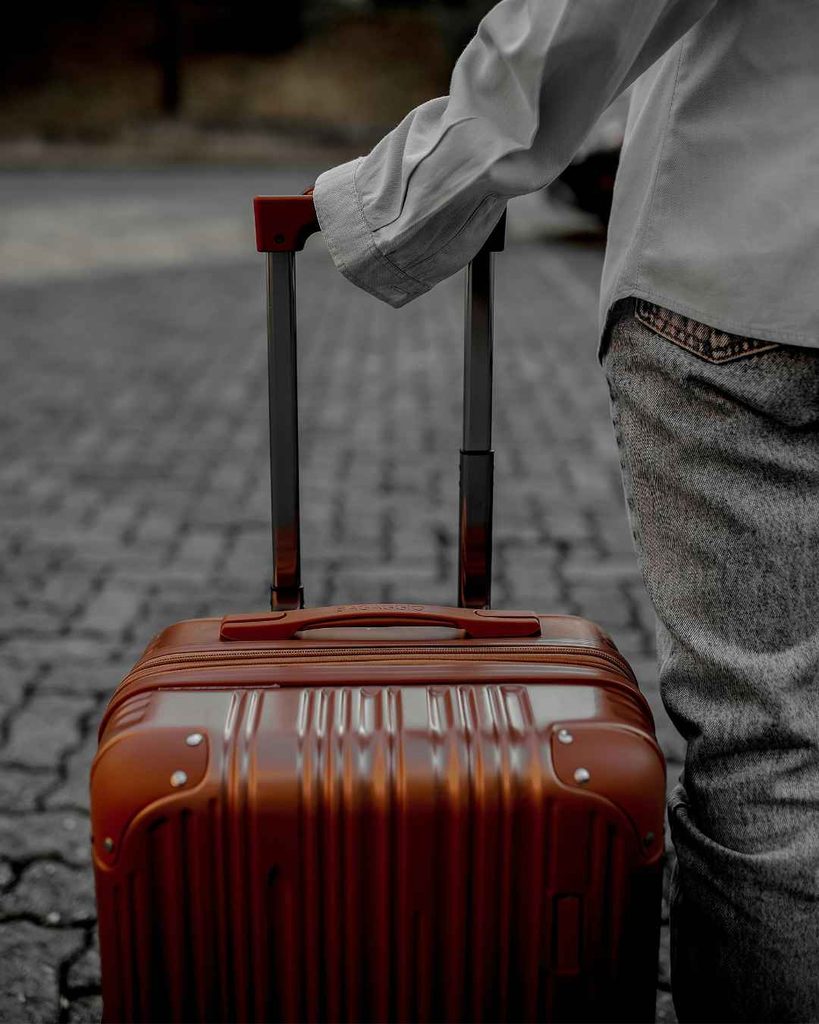
Let’s not pretend the warnings are pure fiction. Italy presents some genuine challenges for wheeled luggage, and if you’re going to bring a suitcase, you need to know what you’re up against.
The first issue is the ground itself. Italy’s historic centers are paved with stone. Not the smooth, polished kind you find in modern cities, but the uneven, ancient kind that has been worn by centuries of footsteps.
Cobblestones, flagstones, and large paving blocks create a surface that is hostile to small wheels. Your suitcase will rattle, vibrate, and occasionally catch in the gaps between stones. The wheels will take a beating, and so will your wrist.
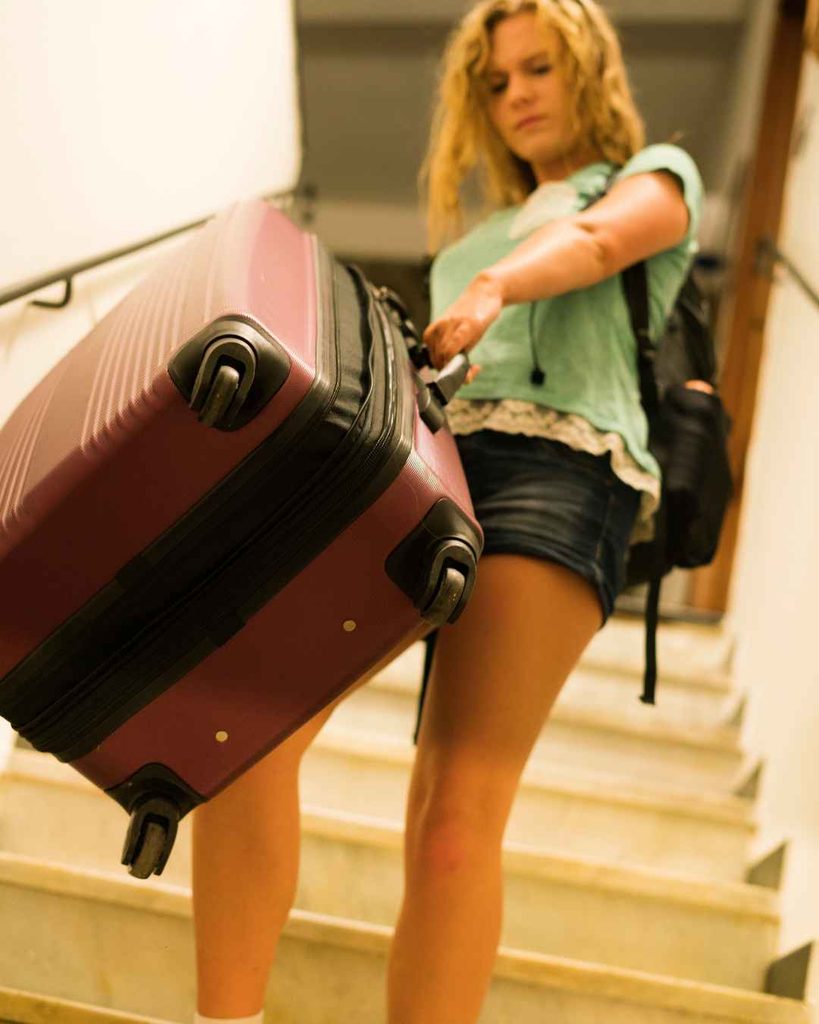
The second issue is the stairs. Italy is a country of stairs. Train stations have stairs. Bridges have stairs. Hotels in historic buildings have stairs. Some towns are entirely built on hillsides, meaning every walk involves a climb.
A backpack distributes weight across your body and leaves your hands free for railings and banisters. A suitcase requires you to lift it, carry it, and manage it while navigating staircases that were designed for people, not luggage.
The third issue is the noise. There is a reason locals roll their eyes when they hear the clack-clack-clack of hard wheels on stone at seven in the morning. It’s loud. It’s grating. It signals “tourist” more clearly than any fanny pack ever could. In some places, this has become a genuine political issue.
Rome has banned dragging wheeled suitcases down the Spanish Steps, with fines starting at €250 and rising to €400 or more if damage is caused. Portofino has a municipal regulation that bans tourists from lingering in congested areas with suitcases, with fines up to €500.
Venice has long restricted large trolleys and carts on certain routes, and there have been discussions about noise regulations targeting hard plastic wheels specifically.
The fourth issue is space. Italian hotel rooms are often small. Storage space is limited. A large suitcase can dominate a room in a way that a backpack never would. And if you’re taking trains, you’ll need to lift your suitcase onto overhead racks or squeeze it into already crowded luggage areas.
So yes, the warnings have merit. Suitcases in Italy require thought, preparation, and a willingness to adapt. But none of these challenges are insurmountable. Millions of travelers have proven that.
Why Suitcases Aren’t Always a Bad Idea
Here’s the truth that the backpack evangelists don’t always acknowledge: backpacks have their own problems.
A loaded backpack puts stress on your shoulders, your neck, and your lower back. If you have any kind of back issue, a backpack can turn a vacation into a chiropractic emergency.
A backpack makes you sweat. It blocks airflow across your back, which is genuinely unpleasant in Italian summer heat. A backpack requires you to take it off every time you want to access something inside it, which means you’re constantly stopping, unstrapping, digging, and restrapping.
And a backpack, when worn on your back in a crowded tourist area, is essentially a sign that says “my valuables are right here, behind me, where I can’t see them.”
A suitcase, by contrast, keeps your belongings beside you or in front of you. You can see it. You can access it without removing it from your body. It doesn’t make you sweat. And if you choose the right suitcase, it can roll smoothly enough that the cobblestones become an inconvenience rather than a nightmare.
There is also the question of dignity. This is not a small thing. You are an adult. You are on vacation. You should not have to look like you’re fleeing a natural disaster. A well-chosen suitcase and a well-planned itinerary can make you look like a traveler who knows what they’re doing, rather than someone who packed for a trek and ended up in a city.
The key is not to pretend the challenges don’t exist. The key is to prepare for them.
How to Travel with a Suitcase in Italy Without Regretting It
If you’re going to bring a suitcase, you need to travel differently than the backpack crowd. Here’s how to do it well.
1. Choose the right size
This is the single most important decision. Do not bring a large checked suitcase to Italy. Do not bring the biggest bag you own. Bring a carry-on-sized suitcase, ideally around 20 to 22 inches, and treat it as your only bag. This forces you to pack light, which makes everything else easier.
A smaller suitcase is easier to lift, easier to store, easier to maneuver on trains, and easier to carry up the occasional flight of stairs. If you need more space, bring a personal item or a small tote that can slide over the suitcase handle. But keep the suitcase itself small.
2. Choose the right wheels
This is where most suitcase travelers go wrong. The standard four-wheel spinner, with its tiny casters, is designed for smooth airport floors. On Italian stone, those small wheels are a liability. They catch in gaps. They vibrate violently. They wear out quickly.
The better choice for Italy is a two-wheel suitcase with large, sturdy wheels. Two-wheelers pull behind you at an angle, which means the weight is distributed differently and the wheels roll over uneven surfaces more smoothly.
Many experienced travelers specifically recommend two-wheeled luggage for Italian streets. If you must have a spinner, look for one with large, high-quality wheels and a reputation for durability. Rubber wheels are generally preferred over hard plastic, which can be loud and brittle.
3. Pack lighter than you think you need to
A lighter suitcase is easier to lift, easier to carry, and easier to roll over rough ground. Use packing cubes to compress your clothes. Plan a capsule wardrobe of mix-and-match pieces. Bring fewer shoes than you think you need. Leave the “just in case” items at home.
The goal is a suitcase that you can lift with one hand and carry up a flight of stairs without needing a rest. If you can’t do that, you’ve packed too much.
4. Plan your arrival route
Do not treat your arrival day as a sightseeing day. This is the advice that every travel expert gives, and it is especially important for suitcase travelers. When you arrive in a new city with your luggage, go directly to your accommodation.
Do not stop at the Spanish Steps. Do not wander through the historic center. Do not drag your suitcase through crowded piazzas. Get to your hotel, drop your bags, and then go explore.
If your hotel is far from the train station or airport, consider taking a taxi for the first leg. Yes, it costs money. But it saves you from the worst of the cobblestones and stairs, and it gets your trip off to a much better start.
Many hotels in Florence, for example, now encourage guests to take taxis from Santa Maria Novella station when they have heavy luggage.
5. Use luggage storage strategically
If you arrive before check-in time, or if you want to explore a city between trains, use luggage storage. Major train stations like Roma Termini and Firenze Santa Maria Novella have official baggage storage areas.
You can leave your suitcase for a few hours, explore unencumbered, and pick it up later. This is a game-changer for suitcase travelers who want to make the most of their time without dragging their bags everywhere.
6. Be prepared to carry your suitcase sometimes
This is the reality that no suitcase traveler can avoid. There will be moments when you have to pick up your bag and carry it. Stairs at train stations. Narrow bridges. Steep alleys. The trick is to make sure your suitcase is light enough and small enough that these moments are brief and manageable.
If you’ve packed a 50-pound behemoth, every staircase becomes a crisis. If you’ve packed a 20-pound carry-on, it’s a minor inconvenience.
7. Consider a hybrid approach
Some travelers use a two-wheeled carry-on that can convert to a backpack when needed. This gives you the best of both worlds: you roll most of the time, but you can wear it on your back for stairs or rough terrain.
It’s not a perfect solution, and convertible bags tend to be heavier and more complex than dedicated suitcases. But for some travelers, it’s the ideal compromise. If you’re looking for a recommendation, this is the best two-wheeled backpack.
The 5 Best Suitcases for Traveling in Italy
Now that we’ve covered the strategy, let’s talk about the gear. These are five suitcases that are well-suited for the specific challenges of Italian travel. I’ve prioritized durability, wheel quality, weight, and maneuverability on rough surfaces.
1. Travelpro Maxlite 5 Softside Carry-On
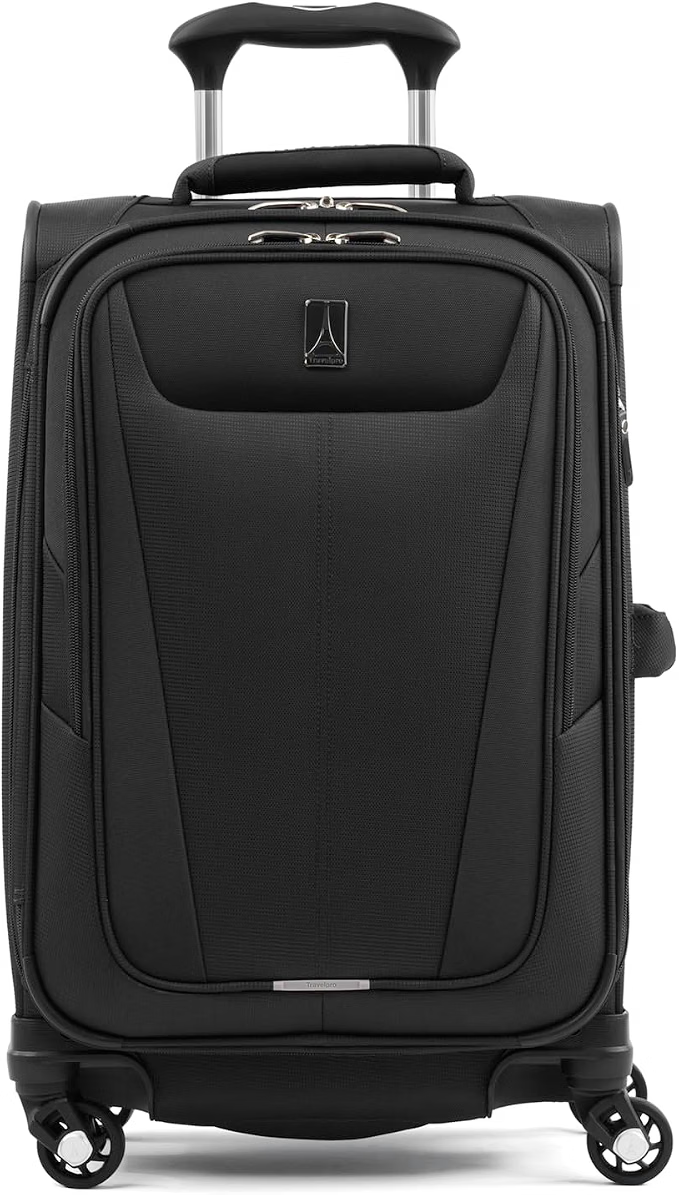
The Travelpro Maxlite 5 is a favorite among frequent travelers for good reason. It weighs just 5.4 pounds, which is remarkably light for a softside suitcase, and its two-wheel design makes it well-suited for cobblestones and uneven surfaces.
The softside construction gives you some flexibility when squeezing into tight spaces, and the fabric is durable enough to handle the occasional scrape against stone walls.
The Maxlite 5 is not a luxury bag. The expandable feature is limited, and the front pocket is small. But it does the fundamentals exceptionally well. It rolls smoothly, it’s light enough to carry when you need to, and it has a reputation for surviving years of travel. For a suitcase traveler heading to Italy, this is a solid, practical choice that won’t break the bank.
2. Level8 Hard-Shell Carry-On
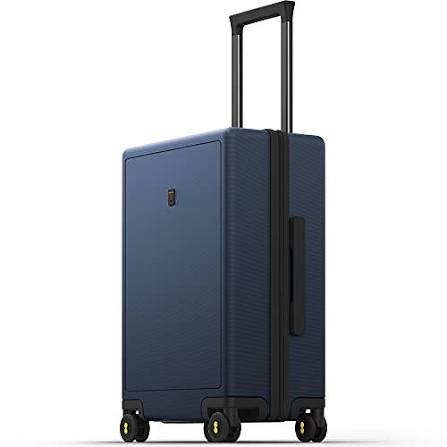
If you prefer a hard-shell suitcase, the Level8 is worth a look. It’s made from German Makrolon polycarbonate, which is both durable and scuff-resistant, and its diamond-texture finish hides the scratches that inevitably accumulate during travel.
The wheels are quiet, which matters more than you might think when you’re rolling through a quiet Italian neighborhood at night.
The Level8 has a 40-liter capacity, which is generous for a carry-on, and it’s water-resistant enough to handle a sudden rainstorm without soaking your clothes. The main drawback is the return policy: if you buy directly from Level8, you only have seven days to initiate a return, and you pay return shipping. If you’re considering this bag, buy it from a third-party retailer with a more generous return policy so you can test it before committing.
3. Bellroy Transit Carry-On
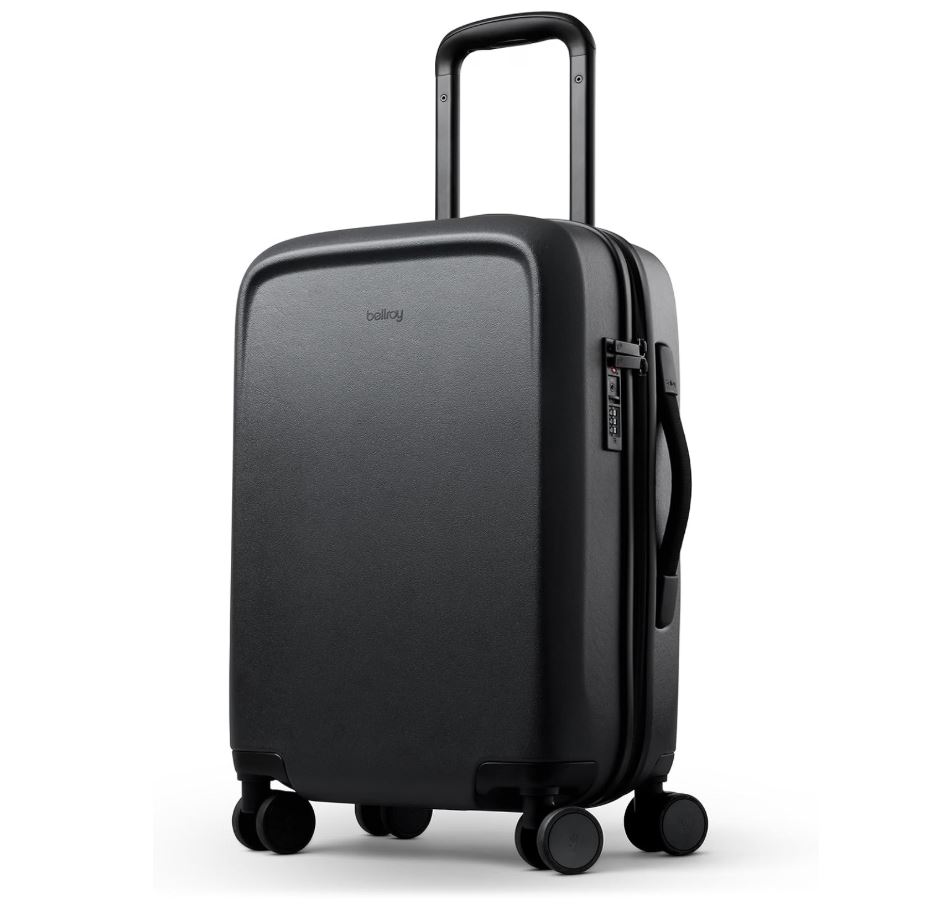
The Bellroy Transit is the premium option on this list, and it earns its price tag with thoughtful design and exceptional build quality. It’s made from 80% recycled polycarbonate, and its HINOMOTO Lisof Silent Run wheels are among the quietest and smoothest in the luggage world. I tested a similar model on cobblestones in Bruges, and the difference compared to standard spinner wheels is immediately noticeable.
The Transit has replaceable wheels, handles, and locks, which means you can repair it rather than replace it when something eventually wears out. That’s a rarity in the luggage world, and it matters for anyone who travels frequently.
The 34-liter capacity is slightly smaller than some competitors, and there’s no exterior pocket, but the interior organization is excellent. If you want a suitcase that feels like a piece of well-designed gear rather than a generic travel accessory, this is the one.
4. Briggs & Riley International Carry-On
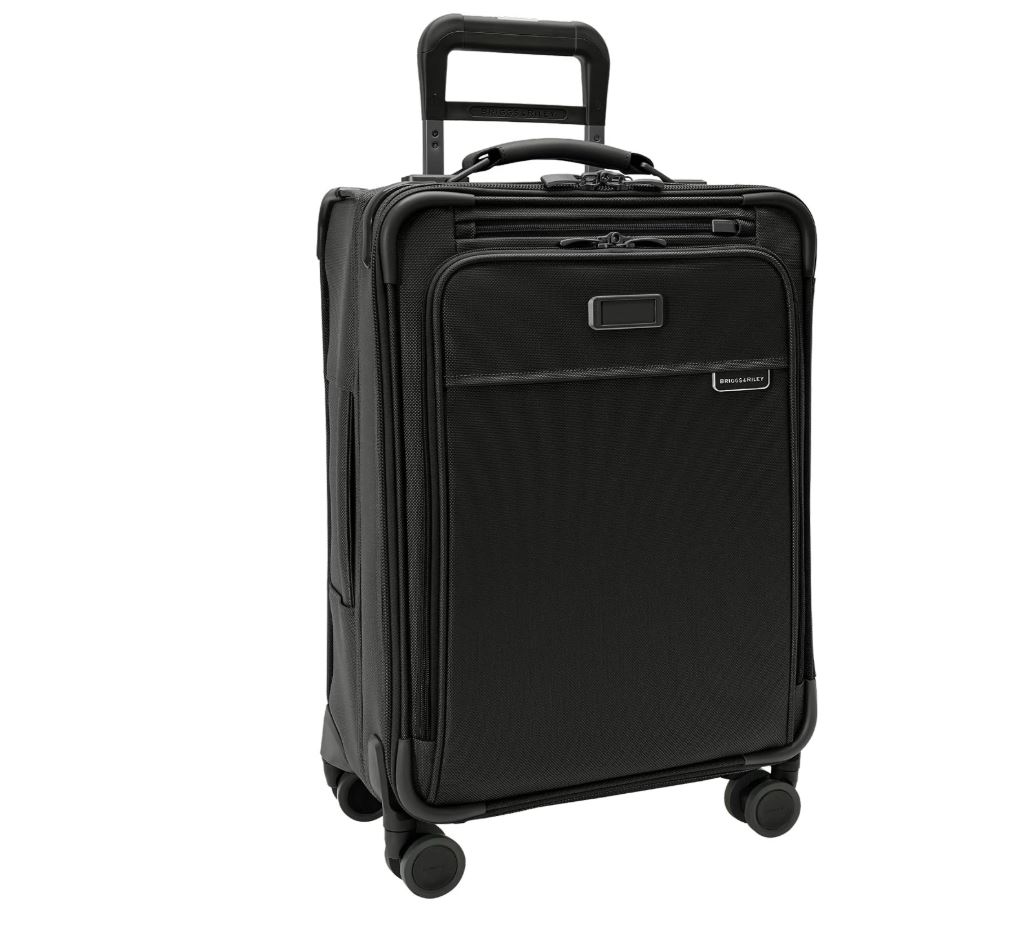
Briggs & Riley is the choice of travelers who want a suitcase that will last for decades. The brand’s reputation for durability is well-earned, and its carry-on models are expandable, which is useful for the return trip when you’ve inevitably bought more than you planned.
The expansion system is genuinely useful rather than a marketing gimmick, and the bags are designed to be repaired rather than replaced.
The main drawback is price. Briggs & Riley suitcases cost significantly more than the other options on this list. But if you travel often, or if you simply want to buy one suitcase and never think about it again, the investment can be worth it. The brand’s lifetime warranty and repair program add real value over the long term.
5. Hauptstadtkoffer Spree
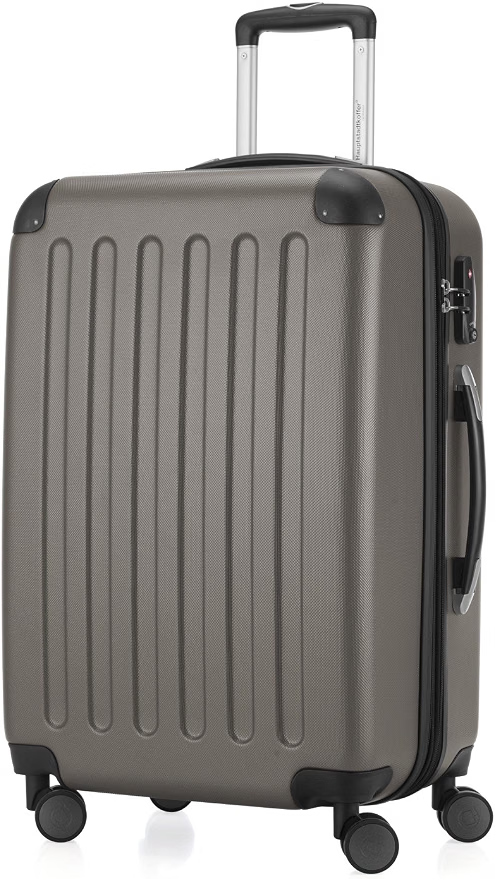
The Hauptstadtkoffer Spree is a mid-range hard-shell option that punches above its price point. It’s made from durable polycarbonate, has TSA locks, and comes with a five-year warranty. Reviews from Italian travelers specifically praise its maneuverability and the fact that replacement parts are available if something breaks.
What makes the Spree particularly interesting for Italy travel is its four-wheel design with double wheels. These provide better stability on uneven surfaces than single-wheel spinners, and the bag rolls smoothly even when fully packed.
The interior is well-organized, and the hard shell protects your belongings from the occasional bump or scrape. It’s not the lightest suitcase on this list, but it’s a solid, reliable choice at a reasonable price.
My Final Thoughts
The advice to “bring a backpack, not a suitcase” is not wrong. It’s just incomplete. Backpacks have real advantages in Italy, especially for travelers who are constantly on the move, staying in hostels, or navigating cities with lots of stairs. But they are not the only option, and they are not the right option for everyone.
If you hate backpacks, you can bring a suitcase. You just need to do it thoughtfully. Choose a smaller bag. Choose better wheels. Pack lighter. Plan your arrival routes. Be willing to carry your bag when necessary. Use luggage storage when it helps. And accept that you will occasionally look like a tourist, because you are one, and that’s fine.
Italy is a country that rewards travelers who slow down and pay attention. A suitcase can be part of that experience. It can be the thing that lets you bring the clothes you actually want to wear, the shoes that make you feel good, and the souvenirs you couldn’t bear to leave behind. It can be the thing that makes your trip feel like a vacation rather than an expedition.
So bring the suitcase. Roll it through the cobblestones. Carry it up the stairs. Sit it beside you at dinner. And enjoy Italy on your own terms.
Again, feel free to go through the list below of my Italy recommendations that I have crafted after years of travel to this beautiful country:
- Packing List: Things Not to Go to Italy Without
- Must-Do Things: Unforgettable Experiences
- Where to Stay: Best Hotels in Italy.
- Where to Stay in Rome: Rome’s Best Neighborhoods
- Where to Stay in Florence: Picking the Best Area
- Where to Stay in Venice: Venice’s Best Districts
- Italy’s Cobblestone Streets: Best Shoes For the Job
- Backpack or Suitcase?: Italy Luggage Guide
- Travel Insurance: Always Be Covered
- E-Sim: Be Connected At All Times