
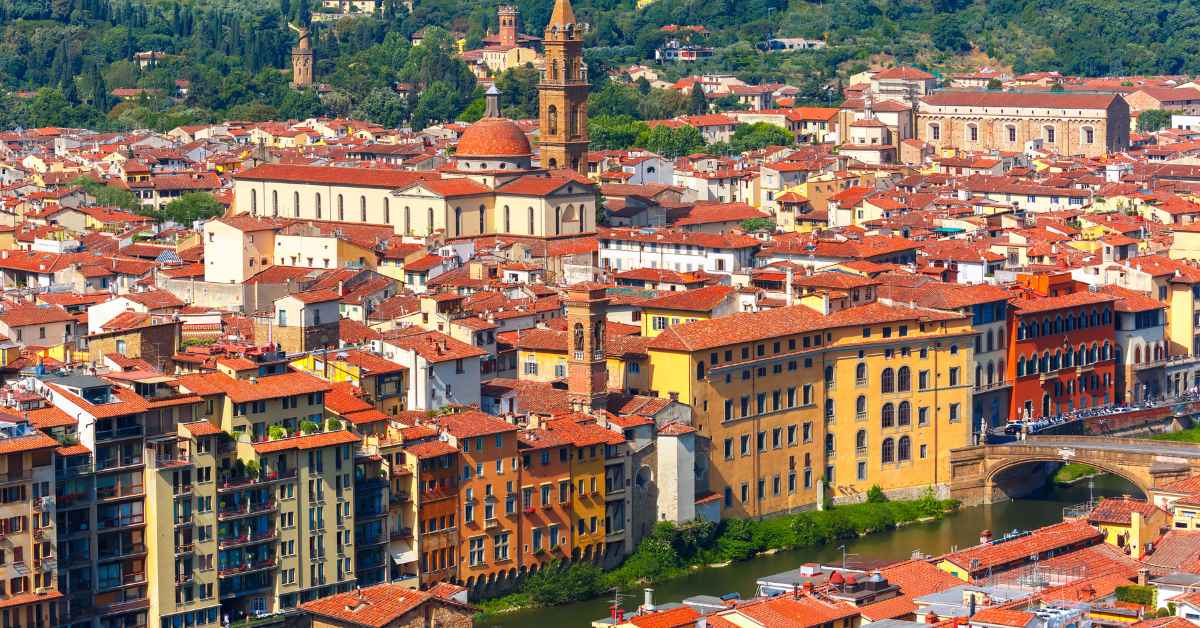
It’s your first time in Florence. You arrive with a list of masterpieces to see, and within a day you realize the city is smaller than you expected, the crowds are larger than you imagined, and every decision about where to eat, sleep, and walk matters more than you thought it would.
The neighborhood you choose becomes the foundation of the entire trip. Get it right, and Florence feels intimate, walkable, and endlessly rewarding. Get it wrong, and you spend your days queuing for buses and retreating to a hotel room that could be anywhere.
There are several strong options. The Centro Storico puts you beside the Duomo and the Uffizi, but you pay for that proximity with noise that never fully stops. Santa Croce is central but often feels like a corridor for tour groups.
Santa Maria Novella is practical for the train station, which is exactly the trade-off it sounds like. San Lorenzo has the market and the Medici Chapels, but the surrounding streets can feel hectic and charmless after dark.
Then there is the Oltrarno. It is the neighborhood I would choose without hesitation, whether it is my first visit or my tenth, and this article explains why, along with everything you need to know to make it work for your trip.
Before you read further, remember that Italy rewards travelers who come prepared. I’ve found a few things especially useful on an Italy trip, and they’re worth having and/or knowing beforehand. See the checklist here
The Oltrarno, Explained
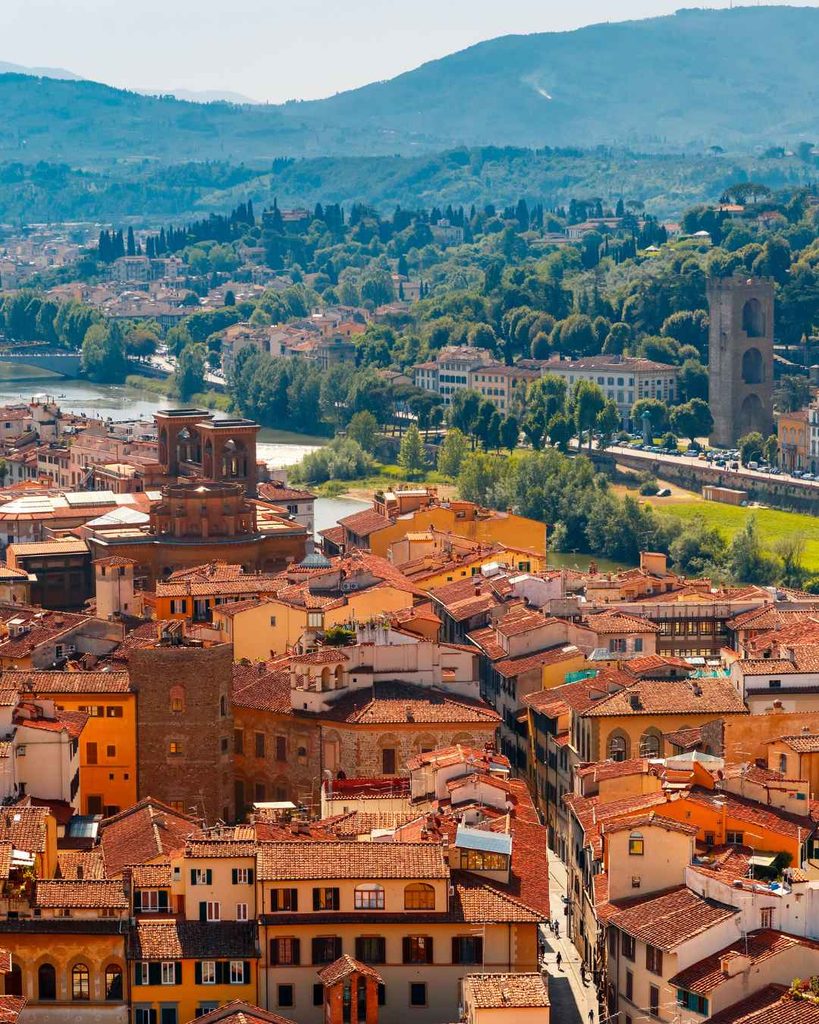
The name means “beyond the Arno,” and that is exactly what it is: the left bank of the river, directly across from the historic center. For centuries, this was the working side of Florence. While the Medici and the great merchant families built their palaces on the north bank, the Oltrarno belonged to the artisans.
Goldsmiths, leather workers, gilders, silk weavers, and frame carvers set up their workshops here, and many of their descendants are still working in the same streets today.
The neighborhood was never planned for visitors. It grew organically over centuries, which is why its streets are narrow, crooked, and occasionally baffling. The buildings are old and warm-colored, draped in ivy and lined with potted plants.
There are no grand boulevards and no orderly grid. There is only a tangle of alleys that rewards curiosity and punishes anyone in a hurry.
That is precisely what makes it such a good base. You are not sleeping inside a museum. You are sleeping in a place that still functions as a living neighborhood, even as more visitors discover it every year.
Why It Works Regardless of How Many Times You Have Been
The most practical argument for the Oltrarno is geography. You are on the correct side of the river for walking. The Ponte Vecchio is five minutes away. The Uffizi is fifteen to twenty minutes on foot. Piazza della Signoria and the Duomo are both reachable in under half an hour.
The Accademia, where Michelangelo’s David stands, is a slightly longer walk but still manageable. Even the Santa Maria Novella train station is walkable at around thirty minutes, or a short taxi ride if you are carrying luggage.
This matters more than it might seem. Florence is a walking city. The bus network is limited, taxis are expensive for short hops, and the historic center is largely closed to private traffic. When you stay in the Oltrarno, you stop thinking about transport entirely. You simply walk out your door and go.
The second argument is that the Oltrarno has its own life. You do not have to leave the neighborhood to eat well, drink well, or spend a pleasant evening. Some of the best meals of your trip will happen within a five-minute walk of your hotel.
That changes the rhythm of a visit. You stop treating the neighborhood as a dormitory and start treating it as part of the experience.
And there is a third argument that only becomes clear after you have been to Florence more than once. The Oltrarno is not a place you exhaust. The major sights are on the north bank, but the texture of the city is here.
Every return visit reveals another workshop, another trattoria, another quiet corner that you somehow missed. It is the part of Florence that keeps giving, long after you have ticked off the Uffizi and the David and the Duomo.
What the Neighborhood Feels Like Through the Day
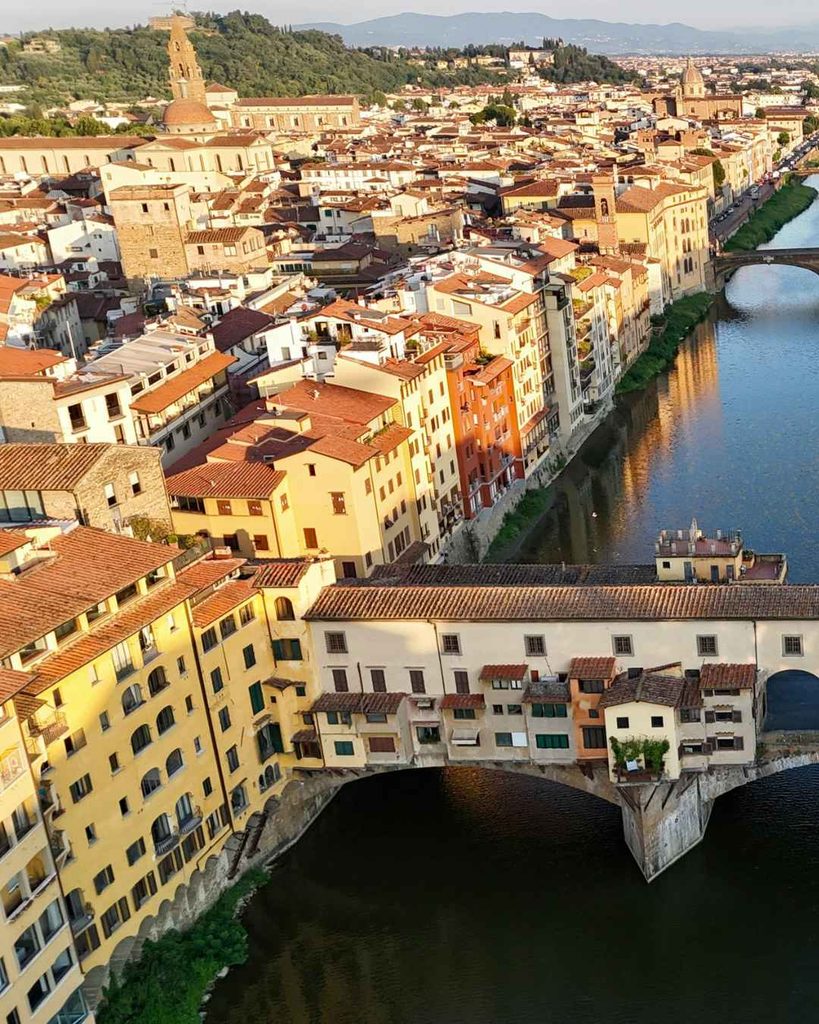
Mornings in the Oltrarno are quiet. The cobblestones are still cool, the cafes are pulling up their shutters, and the artisans are unlocking their workshops. Walk down Via dei Serragli or Borgo San Frediano at eight in the morning, and you will hear your own footsteps.
This is the hour to visit the Basilica di Santo Spirito. Brunelleschi designed it in the 1440s, and the interior is a study in Renaissance proportion: grey stone columns, clean lines, and a sense of calm that the busier churches in Florence have lost.
There is a Michelangelo wooden crucifix in the sacristy, and the chapels hold works by Filippino Lippi and others. The plain exterior keeps the crowds away, which is part of its appeal.
By mid-morning, the neighborhood is awake. Piazza Santo Spirito hosts a small market on weekday mornings, where locals buy produce, cheese, and bread. It is not a tourist market. It is where people who live here do their shopping, and that alone makes it worth a look.
Afternoons belong to the hillside. The walk up to Piazzale Michelangelo takes about twenty to twenty-five minutes from the center of the Oltrarno, and the view at the top is the best free panorama in Florence. The whole city opens up below you: the Duomo, the Palazzo Vecchio, the Arno curving through the middle, and the Tuscan hills beyond.
The bronze copy of David in the center of the piazza is famously unimpressive, which has become part of its charm. If you continue a little further uphill, you reach the church of San Miniato al Monte, one of the most beautiful buildings in Italy.
Its green and white marble facade is a Romanesque masterpiece, and the interior, with its raised choir and inlaid floor, feels like a complete medieval world preserved intact. The Benedictine monks still sing vespers in the late afternoon.
Evenings are when the Oltrarno becomes something else. The street lamps come on, the restaurants set out their tables, and Piazza Santo Spirito fills with people.
This is the social heart of the neighborhood, and on any given night you will find a mix of locals, students, visitors, and families. The church facade glows in the lamplight, and the bars around the square do a steady trade in wine, spritzes, and small plates. It is warm, unhurried, and genuinely alive.
Nights in the Oltrarno are about wine, not clubs. Le Volpi e l’Uva, tucked beside Santa Felicita, pours wines from small Italian growers and serves crostini that are worth planning an evening around. Il Santino, attached to the better-known Il Santo Bevitore, is a tiny wine bar with a serious list and a counter of cured meats.
And the historic wine windows, small wooden hatches built into the walls of palazzos during the plague centuries, have been reopened. You can now order a glass of wine through a hole in the wall, just as Florentines did four hundred years ago.
Where to Stay
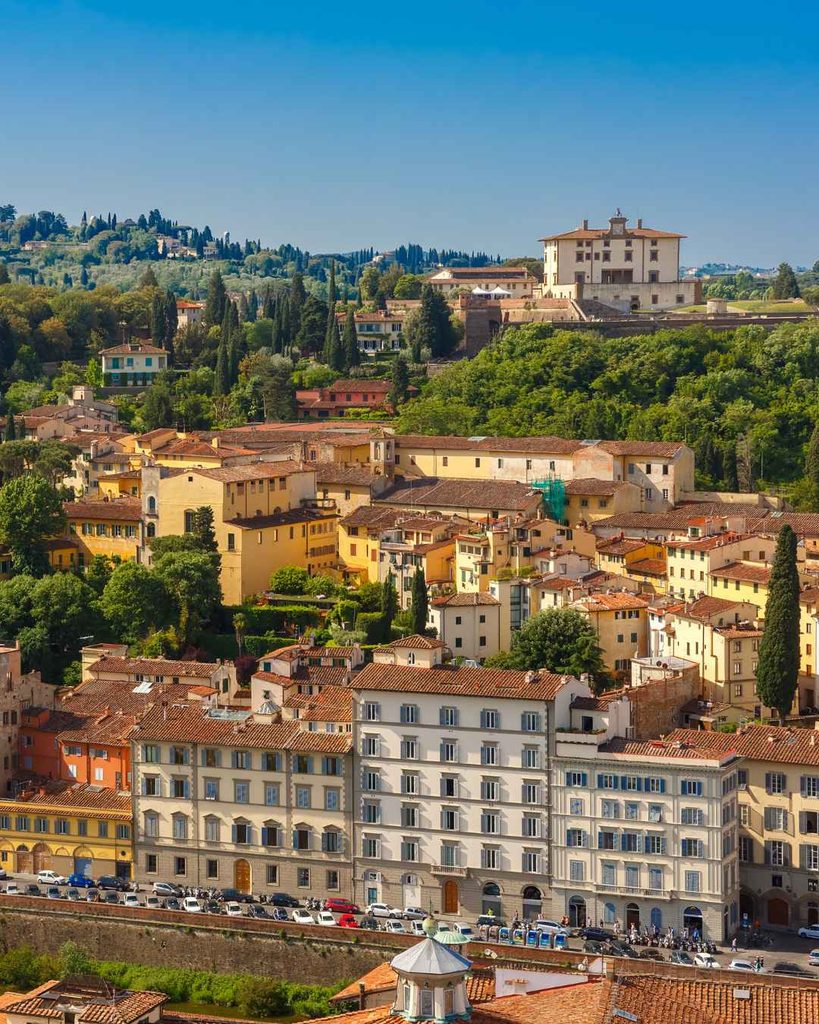
The Oltrarno offers better value than the Centro Storico for comparable quality, often fifteen to twenty-five percent lower than the north bank simply because you are one bridge away from the postcard view. That gap is worth taking advantage of.
For a mid-range stay, AdAstra is a small boutique hotel inside a fifteenth-century palazzo with individually decorated rooms and one of the largest private gardens in Europe. Breakfast on the terrace overlooking the garden is a genuinely memorable start to the day. The same owners run Soprarno Suites on the Lungarno Guicciardini, which offers design-forward rooms that feel like well-appointed apartments rather than hotel rooms. CHECK IT OUT HERE
Palazzo Guadagni sits directly on Piazza Santo Spirito, the heart of the neighborhood, and its frescoed loggia is one of the most pleasant breakfast settings in Florence. The location could not be more central to the Oltrarno’s daily life. CHECK IT OUT HERE
For budget travelers, small guesthouses and B&Bs in converted apartments are common throughout the neighborhood, and Casa di Annalena is a reliable option. The best value appears from October through March, when prices drop sharply from the summer peak.
At the luxury end, Hotel Lungarno is owned by the Ferragamo family and faces the river, with elegant rooms and a prime location just off the Ponte Vecchio. Villa Cora, set slightly outside the heart of the Oltrarno, functions as an urban resort with a spa, an outdoor pool, and views across the city. CHECK IT OUT HERE.
Where to Eat
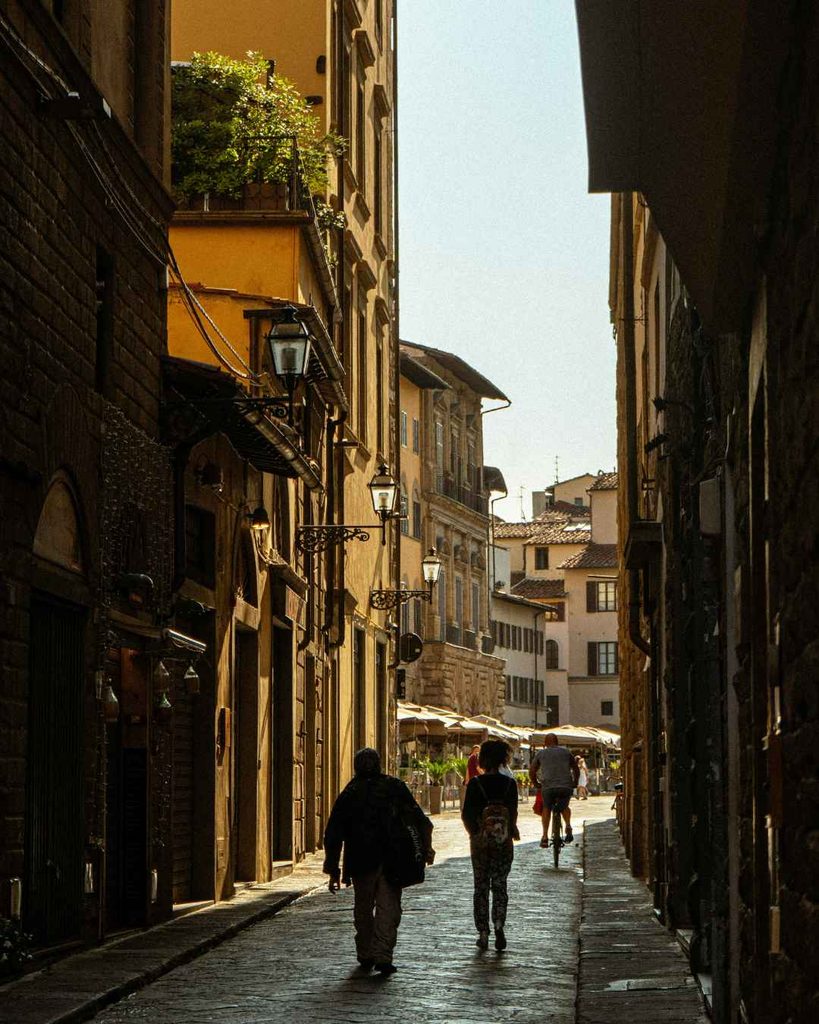
The Oltrarno has one of the highest concentrations of good food in Florence, largely because the locals who live here would not tolerate anything less. This is where the city still eats for itself, in trattorias with no English menu and wine bars that close when the regulars go home.
For breakfast, Caffè degli Artigiani is a neighborhood institution where the barista knows most customers by name. You stand at the counter, drink your espresso, and watch the morning unfold.
Trattoria Cammillo on Borgo San Jacopo has been family-run since 1945 and has absorbed decades of visitors without surrendering its character. The kitchen runs on Tuscan instinct, the wine list is serious without being intimidating, and the corner tables are occupied by regulars who have been coming for three generations. Order what is in season and trust the room.
Trattoria La Casalinga, near Piazza Santo Spirito, has been open since 1963 and still feels like a mid-century kitchen. The name means “housewife,” and the food is exactly what you would expect: ribollita, pappa al pomodoro, and other Tuscan classics, fairly priced and entirely without pretension. Trattoria 4 Leoni is another local favorite, and its outdoor tables in a small piazza make it a memorable dinner spot.
For something more contemporary, Il Santo Bevitore on Via di Santo Spirito is the benchmark. It draws a younger Florentine crowd that cares about ingredients without making a performance of it. The wine list is excellent, the pasta is made fresh daily, and reservations a week ahead are wise.
Osteria Tripperia Il Magazzino is Florence’s only sit-down tripperia, and it takes lampredotto seriously. It is not for every palate, but if you want to eat what Florentines have eaten for centuries, this is the place.
For gelato, Gelateria della Passera on the tiny square that gives it its name is the neighborhood favorite. It is worth seeking out after dinner.
What to See Without Leaving the Area
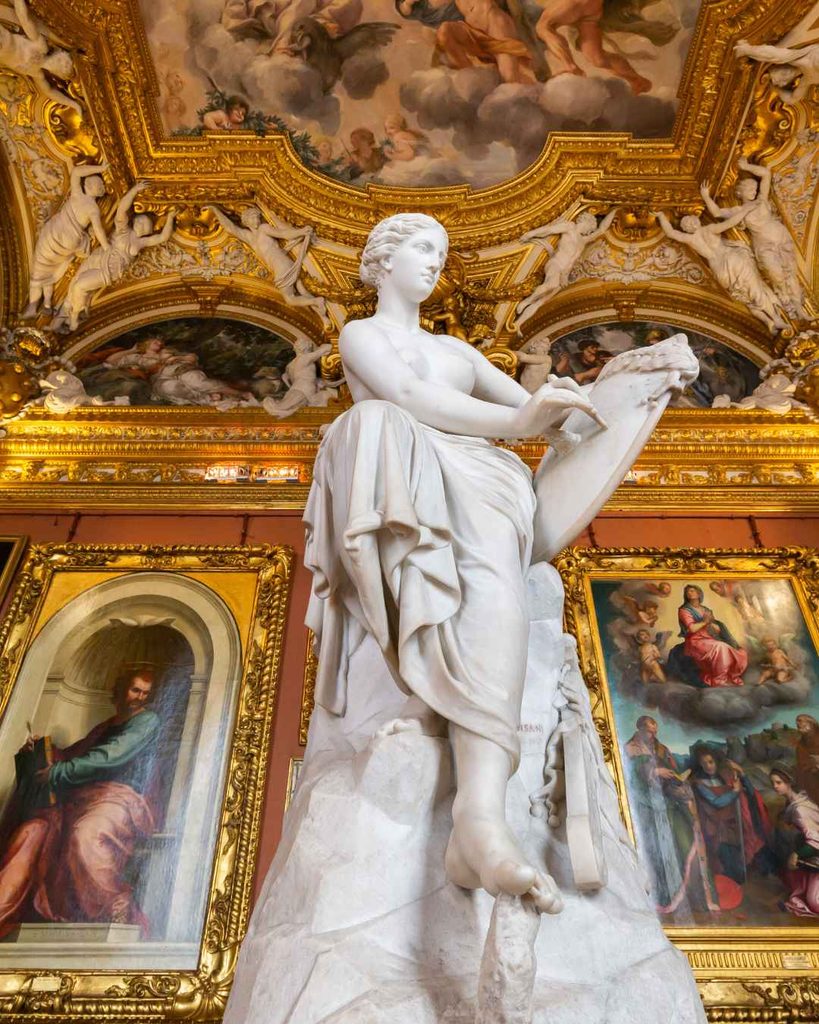
The Oltrarno contains some of the best sights in Florence, and several of them are consistently overlooked by visitors rushing between the Uffizi and the Duomo.
The Brancacci Chapel, inside the Church of Santa Maria del Carmine, is the one art historians make pilgrimages for. It holds Masaccio’s frescoes of the life of Saint Peter, including the Expulsion from the Garden of Eden, which is one of the most important paintings in Western art. Michelangelo studied these frescoes obsessively as a young man. Access is timed and limited, so booking ahead is essential.
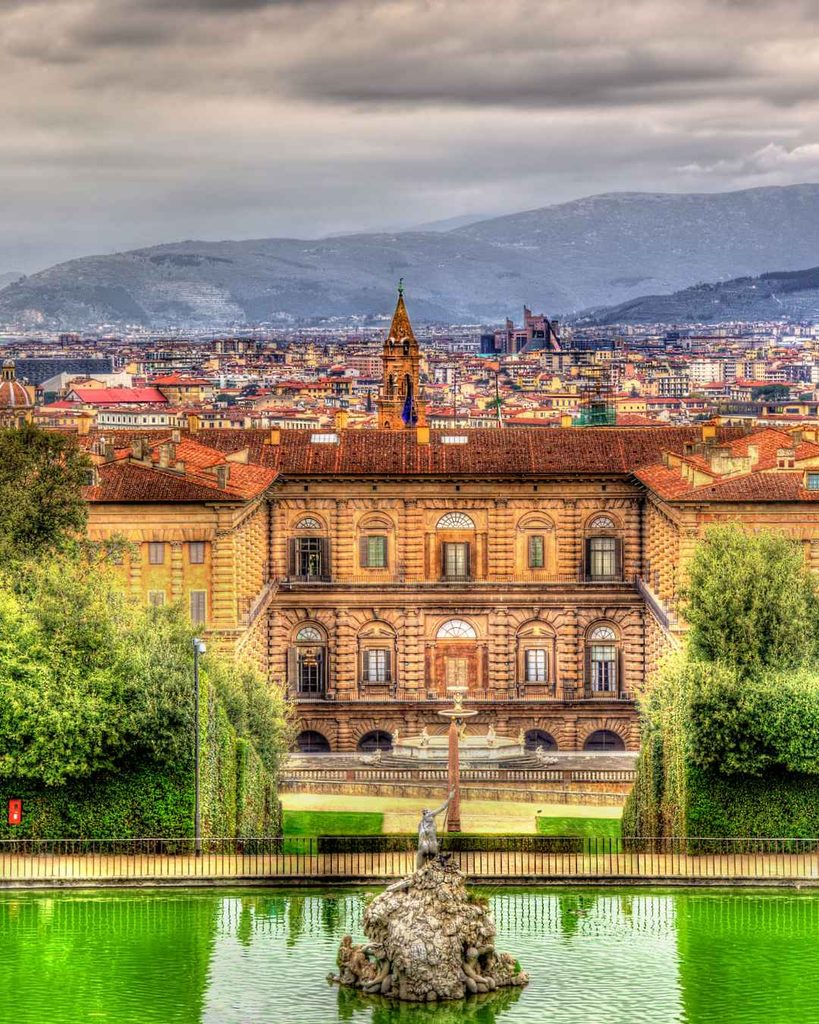
Palazzo Pitti is the largest palazzo in Florence, purchased by the Medici after its original owner ran out of money. It now houses several museums, including the Palatine Gallery, which holds one of the finest collections of Raphael paintings in the world, displayed in the original ornate rooms. Because the building is so large, the crowds thin out quickly once you move past the first few galleries.
The Boboli Gardens behind the palace are a full landscape rather than a formal garden. Terraced hillsides, grottoes, fountains, a cypress avenue, and an amphitheater once used for Medici entertainments make up the grounds.
They are best explored slowly over two or three hours. The upper terraces offer some of the best views of Florence available without climbing a tower.
Beyond Piazzale Michelangelo, the church of San Miniato al Monte is the one sight in the Oltrarno that no visitor should skip. The marble facade, the raised choir, the inlaid floor, and the frescoed sacristy together form a complete medieval world. The monks’ evening vespers are open to the public and require no religious conviction to find moving.
And then there are the artisans. The Oltrarno has the densest concentration of working craftspeople in Europe, and most of them welcome curious visitors during working hours. You can watch paper marbling at Giulio Giannini e Figlio, a family workshop operating since 1856.
You can see leather being worked at Madova, a glove maker in business since 1919. You can visit Castorina 1895, where artisans carve decorative frames and cherubs by hand. The signs are small and hand-painted, and the doors are usually open.
Know Before You Go
From Florence’s Santa Maria Novella train station, the Oltrarno is a twenty-five to thirty-minute walk or a short taxi ride. From the airport, the tram connects to the train station, and from there you can walk or take a taxi.
Once you are in the neighborhood, you will walk almost everywhere. The historic center is compact, and most visitors find they rarely need public transport after the first day.
Spring and fall are the best seasons for a visit, with mild weather and manageable crowds. Summer is hot and busy, but the evenings are long and outdoor dining is at its best.
Winter is quieter and cheaper, and the neighborhood feels noticeably more local. October is arguably the best single month for value, with good weather, thinner crowds, and lower prices than summer.
Book your hotel early if you are traveling between April and June or September and October. The best independent properties in the Oltrarno fill up months in advance. Bring comfortable shoes, because the cobblestones are unforgiving and the hillside walks are real walks.
Learn a few words of Italian, which goes further here than in the more heavily touristed parts of the city. And leave room in your schedule for nothing in particular, because the best moments in this neighborhood tend to happen when you are not looking for them.
One note on mobility. The Oltrarno’s streets are cobbled throughout, and Piazzale Michelangelo requires either a climb or a bus ride. If you have mobility constraints, the neighborhood is still workable, but the terrain is worth planning around.
If your priority is being in the absolute center of the action, the north bank is closer to the Uffizi and the Duomo. But if you want atmosphere after seven in the evening, when the tour groups have thinned out, and the neighborhood becomes itself again, the Oltrarno is the better choice.
If for one reason or the other you would like to stay in other neighborhoods in Florence (like closer to the Duomo), use this guide to choose the best place to stay.
Why This Is the Neighborhood I Would Choose
Florence rewards travelers who slow down. The masterpieces are extraordinary, but they are also crowded, timed, and ticketed. The moments that stay with you are usually the quieter ones: a glass of wine on a neighborhood piazza, a morning walk through empty streets, a conversation with an artisan who has been working in the same shop for forty years.
The Oltrarno gives you more of those moments than any other part of the city. You wake up in a place that feels lived-in. The person at the cafe remembers your order by the third morning. The evening unfolds without a schedule.
You can spend your days at the Uffizi and the Accademia and the Duomo, and then you cross the river, and the pace changes. The crowds thin out. The wine tastes better. The night belongs to you.
That is why I would choose the Oltrarno, whether it is a first trip or a fifteenth. Not because it is the most central or the most convenient or the most luxurious, but because it is the one that makes Florence feel like somewhere you have actually arrived, rather than somewhere you are merely passing through.
Again, feel free to go through the list below of my Italy recommendations that I have crafted after years of travel to this beautiful country:
- Packing List: Things Not to Go to Italy Without
- Must-Do Things: Unforgettable Experiences
- Where to Stay: Best Hotels in Italy.
- Where to Stay in Rome: Rome’s Best Neighborhoods
- Where to Stay in Florence: Picking the Best Area
- Where to Stay in Venice: Venice’s Best Districts
- Italy’s Cobblestone Streets: Best Shoes For the Job
- Backpack or Suitcase?: Italy Luggage Guide
- Travel Insurance: Always Be Covered
- E-Sim: Be Connected At All Times