
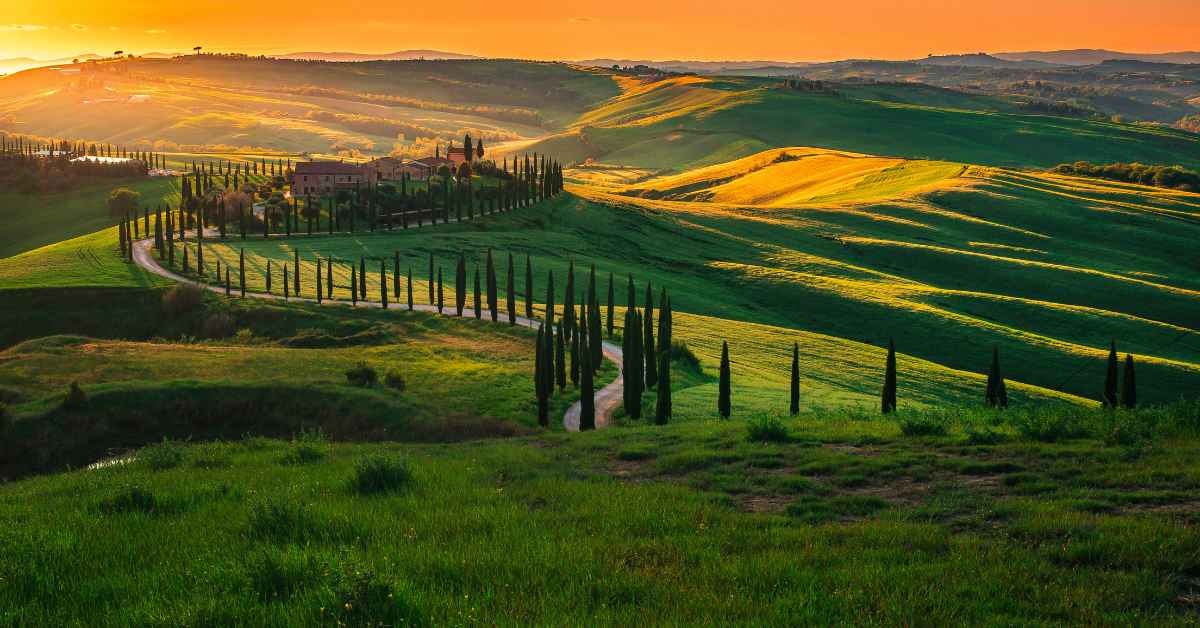
On every trip to Tuscany, there’s a moment when the region stops being a series of photographs and becomes something you actually feel. It usually happens somewhere unexpected, not at the Duomo, not at the Uffizi, not on the Ponte Vecchio.
It happens when you are driving down a road lined with cypress trees and you catch a glimpse of a stone town on a hill, and you decide, on a whim, to turn off the main road and go see it.
That is what this post is about. Not the famous places, not the ones that appear on every itinerary, not the ones you have already saved to your phone. The other Tuscany. The one that reveals itself when you stop following the guidebook and start following your curiosity.
I have spent years wandering through this region, and I have learned that the places people remember most are rarely the ones they planned to see. They are the ones they stumbled into.
A village with a thermal pool for a piazza. A town carved from soft rock that glows gold at sunset. A hilltop hamlet where the community performs its own stories in the square every summer.
This post is a guide to those places. It is not exhaustive, because Tuscany has more hidden corners than any single article can hold. But it covers the ones that have stayed with me, and it explains what makes each of them worth a detour.
Before you read further, remember that Italy rewards travelers who come prepared. I’ve found a few things especially useful on an Italy trip, and they’re worth having and/or knowing beforehand. See the checklist here. Also, if you want me to plan an Italy trip for you that you will never forget, drop me a message here
Monticchiello

Monticchiello sits at the southern edge of the Val d’Orcia, on a ridge about 520 meters above sea level. It is a walled village of roughly two hundred permanent residents, with an intact medieval circuit of walls and towers that give it a martial silhouette visible from several kilometers away.
The village receives far fewer visitors than Pienza or Montepulciano, both of which are visible on clear days from the walls. That relative obscurity is what makes it so valuable. You are not competing with crowds for the view or the table.
Step through the Porta Nova, the main gate built in the thirteenth century, and the medieval world closes around you. The main street is flanked by houses of warm grey travertine.
There are no shops selling souvenirs, no restaurants advertising tourist menus with photographs. What you find instead is a working village with a character formed over eight centuries.
The church of Santi Leonardo e Cristoforo stands at the highest point. Inside, a fresco panel has been attributed to Pietro Lorenzetti, a Sienese artist of the early fourteenth century.
The attribution remains debated, but the quality of the painting is not. It is devotional art made for a small community, not for a cathedral.
What makes Monticchiello genuinely distinct from other beautiful medieval villages is its community theatre tradition. The Teatro Povero di Monticchiello was founded in 1967 by a group of farmers and residents who wanted to make theatre about their own lives rather than perform existing texts.
Every year since then, the community has gathered in winter and spring to develop a new original play, which is performed in the village square through July and early August.
The plays are written collectively through a process of discussion and revision. The themes engage with the village’s own experience: the abandonment of agricultural traditions, the effects of tourism on local identity, the experience of young people in a depopulating rural community.
The actors are farmers, shopkeepers, students, and retirees. They are not trained performers, and that is part of the point.
Performances run through July and into early August. Tickets are limited and sell out well before the season opens. If attending is part of your plan, check the schedule in June and book immediately.
The northern wall offers one of the most open and least crowded panoramic views in all of the Val d’Orcia. A section of walkable parapet faces directly toward Pienza, nine kilometers to the north-northwest.
On a clear day you can see the cathedral and palace of Pius II rising above the village. To the right, the outline of the Sienese hills stretches north. Below, the patchwork of wheat fields, vineyards, and cypress avenues is exactly as it appears in Renaissance paintings.
Bagno Vignoni
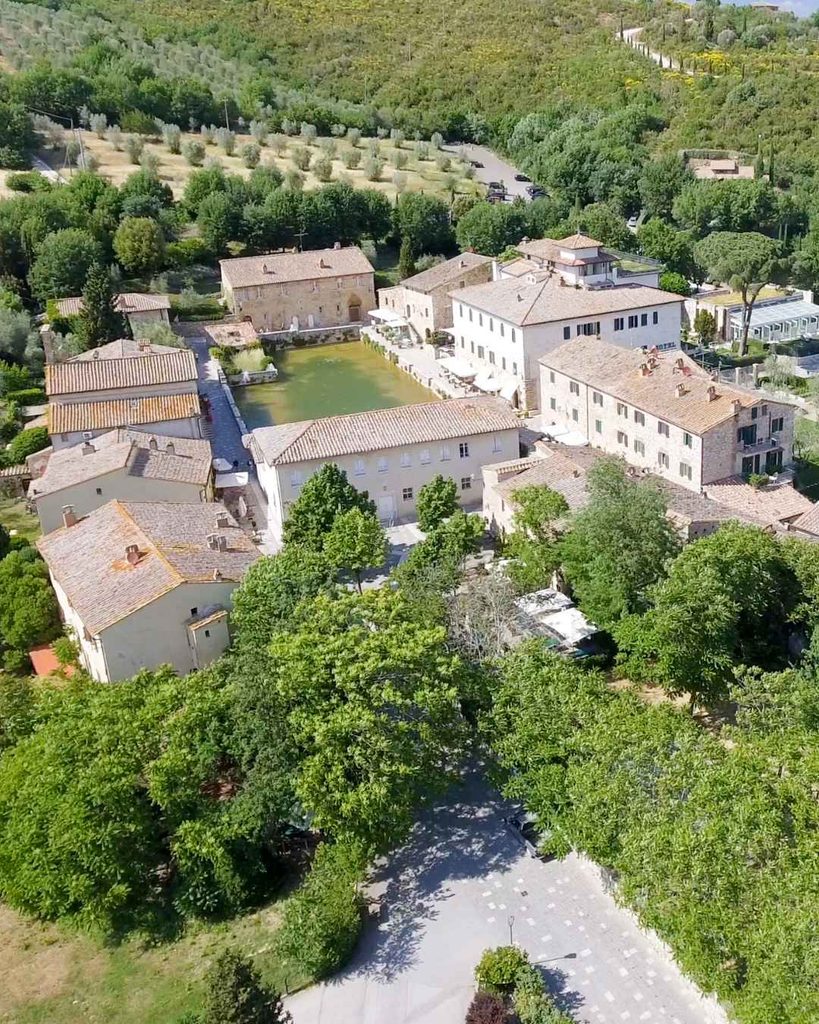
Bagno Vignoni is a small village in the Val d’Orcia, just a few kilometers from San Quirico d’Orcia. It is unlike any other town in Tuscany. Instead of a central piazza, it has a central pool. The main square is a thermal bath fed by hot mineral springs, and the steam rising from the water is one of the most memorable sights in the region.
The waters of Bagno Vignoni gush out at a temperature of about 49 degrees Celsius and have been appreciated for their healing properties since Roman times.
As far back as 1170, they were used in balneotherapy and fangobalneotherapy treatments. In the Middle Ages, Bagno Vignoni enjoyed great fame, with illustrious figures such as Saint Catherine of Siena and Lorenzo de’ Medici staying there.
The large pool in the center of the square bears witness to centuries of history. Although it is no longer suitable for swimming, the village has three spas offering wellness treatments. The Terme Spa and Resort overlooks the famous central pool.
Terme Hotel La Posta welcomes guests with indoor and outdoor pools that open onto views of the Val d’Orcia. Terme Hotel Adler has an atmospheric saline grotto enriched with Dead Sea salts.
No visit to Bagno Vignoni is complete without exploring the Parco dei Mulini, the Park of Mills. First cited in 1207, these mills testify to a skillful use of natural resources through exploiting the height difference between the spring and the Orcia River.
Fed by hot and constant water, the four underground mills were able to operate even in the summer months, thanks to a fine network of ducts, tanks, and basins.
As the sun goes down and the water vapors begin to rise and wrap around the stone edges of the pool, the spectacle is truly fascinating, creating a timeless atmosphere. The village is small, but it is worth a stop, especially in the cooler months when the steam is most visible.
San Quirico d’Orcia

San Quirico d’Orcia sits in the heart of the Val d’Orcia, immersed in a landscape that contains some of the most iconic images of Tuscany: the cypress grove, the Chapel of Vitaleta, and the hill of Podere Belvedere.
It is a town of Etruscan origins, crossed by the Via Francigena, the ancient pilgrimage route from Canterbury to Rome.
The historic center has a wall circuit that preserves most of its fourteen towers. Inside, you find architectural monuments of the highest quality. The Collegiate Church of Saints Quirico and Giulitta is one of the finest examples of Tuscan Romanesque architecture.
Built between the twelfth and thirteenth centuries, it is striking for its finely carved portals, attributed to Lombard masters, and for the Renaissance wooden choir that enhances the interior.
The Palazzo Chigi, later Zondadari, was built by Cardinal Flavio Chigi on a design by Carlo Fontana, a pupil of Bernini. The Horti Leonini, created in the sixteenth century by Diomede Leoni, represent a fine example of an Italian garden and offer a quiet escape from the summer heat.
The town is less crowded than Pienza, and it has a more local feel. It has a good selection of restaurants and cafes, and it is a convenient base for exploring the valley.
The Orcia Wine Festival, held in the seventeenth-century rooms of Palazzo Chigi, is a trade fair to get to know the excellence of the Orcia DOC wine.
The Barbarossa Festival is a historical commemoration that brings to life the Emperor Barbarossa and the cardinals, the civil and religious authorities of San Quirico of that time, with archery and flag-tossing competitions.
Pitigliano
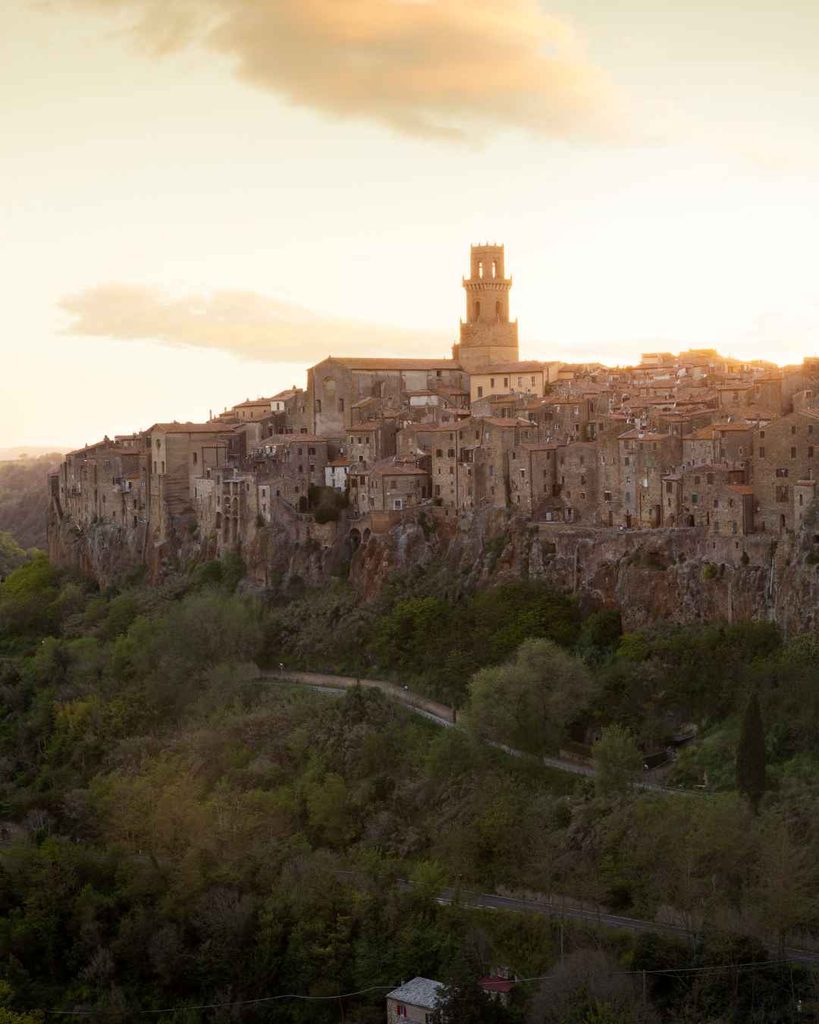
Pitigliano is the most dramatic town in the Maremma. It rises from a tufa cliff, with houses that seem to grow directly out of the rock.
From a distance, it looks impossible. Up close, it is a lattice of narrow streets winding around a Baroque cathedral, an Orsini palace, and a sixteenth-century aqueduct bridge.
The town has a remarkable Jewish history. A vibrant Jewish community lived here from the fifteenth century onward, earning Pitigliano the nickname “Little Jerusalem.”
A synagogue was built in 1598, and in 1622 the ghetto was created. In the nineteenth century, a quarter of the population was Jewish. During the war, thirty remaining Jews were helped by locals and hidden in the countryside.
A plaque in the ghetto commemorates the twenty-two Jews born in Pitigliano who were killed in concentration camps. In 2002, the Yad Vashem Institute in Jerusalem conferred the honor of “Righteous Among the Nations” to some Pitigliano families for their attempt to save their fellow citizens.
The Jewish Museum, located partly in the former synagogue, offers an insightful journey into the formation of the Jewish quarter and its cultural significance. The visit includes the synagogue, the cultural center, the ritual bathhouse, the wine cellar, the bakery, and the dye-works, all of which are dug into the native tufa stone.
The Palazzo Orsini is the ancient residence of the Orsini family, lords of the county of Pitigliano. The rooms are kept in good order, with interesting and valuable details. The Orsini family emblem, with its mastiff collar, signifies military loyalty. The family fought on various sides, even against each other.
The palazzo contains art and painted statues from the fifteenth century, with frescoes and painted ceilings that are remnants but, in places, substantial and detailed.
The Vie Cave, a multitude of narrow streets that lead like canyons through the tufa rock, has also been dug into the rather soft stone. The Etruscans were the originators. These ancient passages are one of the most distinctive features of the area.
Pitigliano is also a good base for exploring the surrounding tuff towns. Sorano and Sovana are both within easy reach, and together they form one of the most fascinating corners of Tuscany.
Sorano
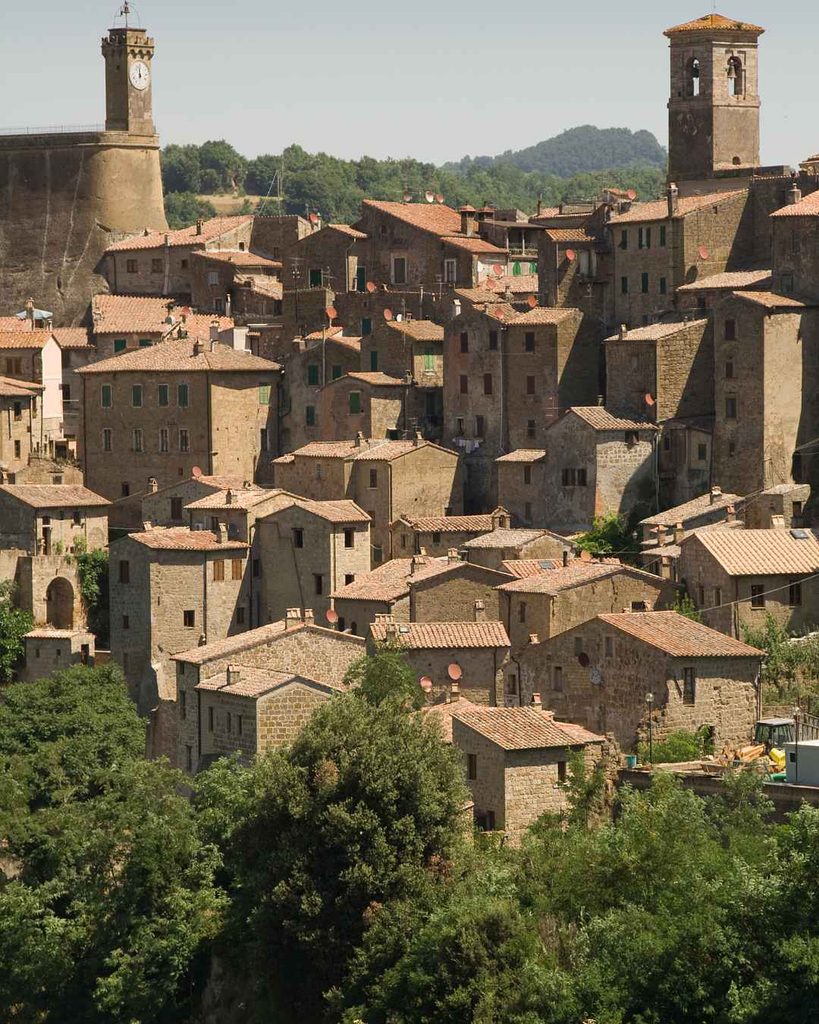
Sorano is another town carved from tufa, sometimes called “little Matera” for the way its buildings blend into the rock. It is located on a tuff cliff in the historic Maremma, near Pitigliano and Sovana.
The approach through narrow gorges is dramatic, and the town itself feels like a medieval fortress that somehow survived unchanged.
The Masso Leopoldino, the ancient fortress of Rocca Vecchia, stands on the opposite side of the center and offers stunning panoramas over the picturesque valley below.
Constructed in the nineteenth century under Grand Duke Leopold II, it was designed to serve as a defensive stronghold while offering breathtaking views. Today, it is a must-visit for those seeking panoramas that captivate and inspire.
The Fortezza Orsini is another highlight. Originally built by the Aldobrandeschi family in the fourteenth century and later expanded by the Orsini family, this massive fortress comprises two forts, numerous towers, a chapel, and a military building.
Perched dramatically on a cliff, it is a striking testament to the town’s tumultuous history.
Below the streets, underground passages and caves honeycomb the cliffs, some dating back to Etruscan times. The Vie Cave of San Rocco goes up the opposite side of Sorano, skirting the remains of the church of San Rocco.
Exploring these ancient passages leads to a splendid panorama of Sorano from the other side of the Lente river.
In the evening, the small enotecas on the main street serve Morellino di Scansano wine generously and unhurriedly. Sorano is a place where the past has not disappeared but simply become part of the landscape. The stones, the walls, and the scent of herbs seem to whisper, yet it lingers in the memory.
Sovana
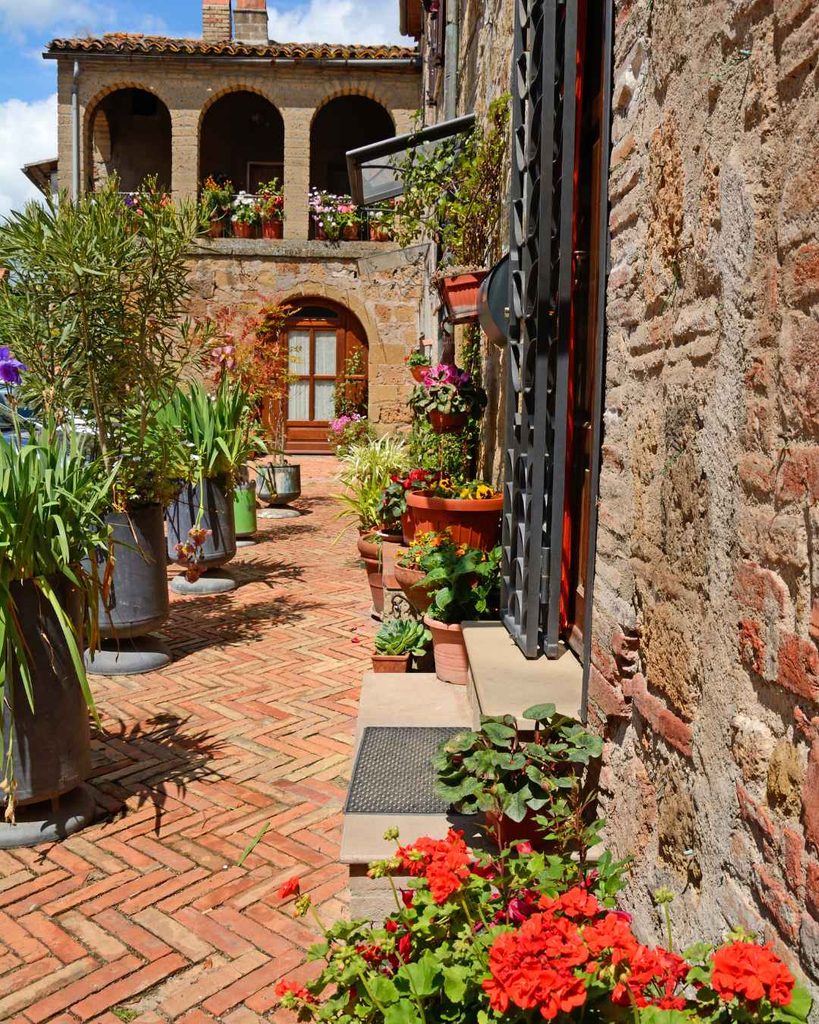
Sovana is a small village in the Maremma, and it is one of the most atmospheric places in Tuscany. It was an Etruscan town, then a Roman one, then a medieval one, and it has the layers to prove it.
The village retains the appearance of a classic medieval village, with the ruins of the imposing Rocca Aldobrandesca dating back to the eleventh century at the entrance.
The Cathedral of San Pietro is considered to be Sovana’s main monument and one of the historic examples of the transition from the Romanesque to Gothic eras.
Built atop the ruins of an older church, probably dating to around the eleventh or twelfth century, the church has a stone façade that extends onto one of the sides. The interior is divided into three naves by cruciform pillars that support a rib-vaulted ceiling.
The historiated capitals depicting biblical scenes and the holy water font from 1615 are characteristic. The crypt conserves the remains of Saint Mamilian, who evangelized Sovana.
The Palazzo Pretorio overlooks its namesake square. Built almost certainly between the end of the twelfth and the early thirteenth century, its existence is testified in a document dating back to 1208.
On the façade are the coats of arms of the Captains who once governed the town. Inside, there are frescoes of the Sienese school made between the late medieval period and the Renaissance era.
But Sovana’s real treasure is its Etruscan heritage. The necropolis is a veritable treasure thanks to the variety of tombs and examples of Etruscan architecture.
The Tomb of the Winged Demons, the Ildebranda Tomb, and the Etruscan “streets” known as the Vie Cave are all worth exploring. The Ildebranda Tomb is a well-preserved archaeological site that offers a fascinating insight into pre-Roman culture.
Despite erosion and centuries of vandalism, the site still impresses with its historical significance.
The Via Cava di San Sebastiano e Necropoli is an open-air museum. Discovered in 1843 by English archaeologist S.J. Ainsley, this remarkable necropolis showcases an impressive collection of rock-carved tombs, remnants of a civilization predating even the Roman Empire.
It is a must-visit place, very ethereal, like you are back in time when the Etruscans created these places.
Sovana is also the birthplace of Hildebrand of Sovana, who later became Pope Gregory VII. The village was the capital of the homonymous county and later inherited by the Orsini, sharing the destiny of Sorano and Pitigliano.
Saturnia
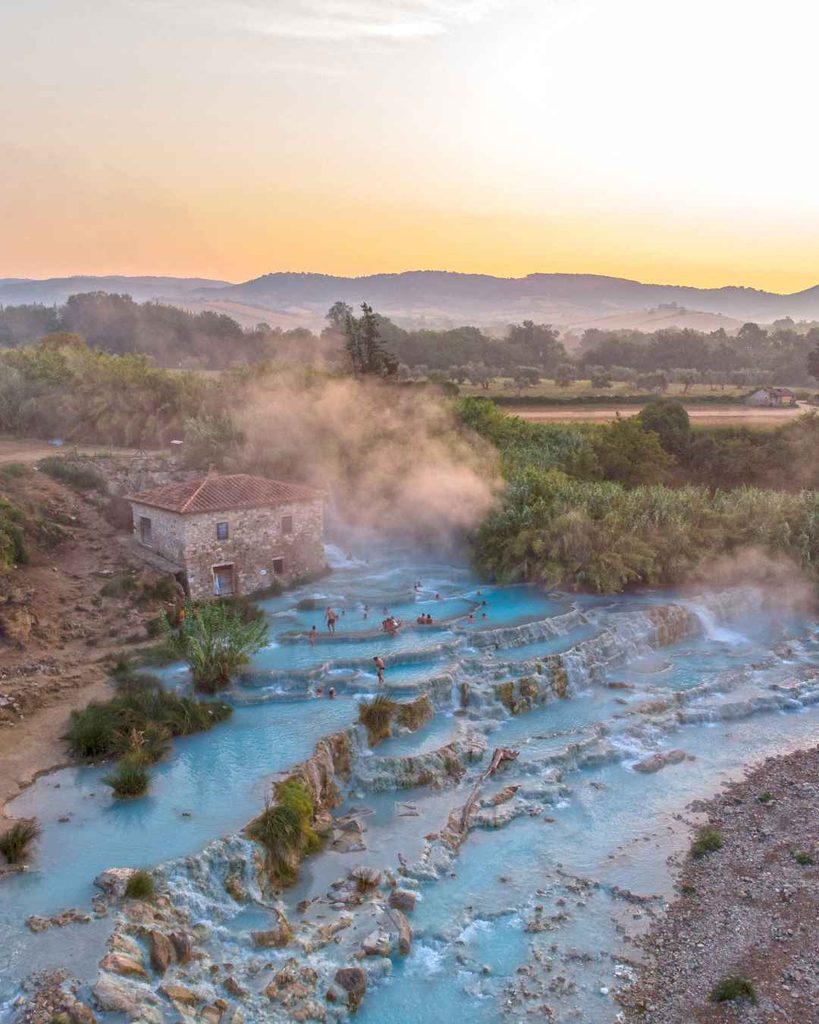
Saturnia is known for its thermal springs, which have been used since Roman times. The Cascate del Mulino, a series of natural pools formed by the thermal water, is one of the most beautiful spots in Tuscany. The water is warm, the setting is dramatic, and the experience is free.
The name of the area derives from Saturn, who, it is said, wrought this geologically magical landscape. Frustrated by the constant warfare of men, the god of peace and abundance hurled down a bolt of lightning that struck the earth, bringing forth an eruption of scalding water with the power to calm those who bathed in it.
The Etruscans recognized these waters as sacred in the eighth century BC, and Pope Clement III noted their importance in a papal bill of 1188.
The Cascate del Mulino is free to take a dip in, and an adjacent cafe and restaurant rent out bathrobes and changing rooms. Arrive as early as you can to avoid the crowds and see the sunrise staining the opaque, vapourous waters orange and pink.
The cascading milky blue waters come into sight beneath a small stone building on the hillside, with a series of white calciferous terraces fanning downwards, the steaming water collecting in their basins and gushing over to those below.
The same remedial waters fill the pools of the five-star Terme di Saturnia resort, a fifteen-minute walk from the Cascate del Mulino. Built in 1919, the hotel revived the tradition of bathing in these thermal waters for therapeutic benefits.
The 37.5-degree water is rich in bioplankton, amino acids, magnesium, and potassium. Bathing in the water is said to improve mobility, counteract inflammation, stimulate the metabolism, and aid digestion.
The town of Saturnia itself is small, with a medieval center and a few good restaurants. It is a good base for exploring the southern Maremma. The surrounding countryside is known for its cheese, truffle, and Chianina beef. The Fiorentina steak, cooked on an open charcoal grill, is a local specialty that is worth seeking out.
The Casentino

The Casentino is a valley in the eastern part of Tuscany, and it is one of the least visited parts of the region. It is a place of forests, monasteries, and small towns that have kept their character.
Poppi is the main town of the Casentino, and it is dominated by its castle, the Castello dei Conti Guidi. The castle is one of the best-preserved in Tuscany, with a library that contains rare manuscripts and a courtyard that hosts summer concerts.
The town itself is charming, with a main street lined with shops and cafes, and a view across the valley that is worth the climb.
Camaldoli is a small village in the forest above Poppi, and it is home to a monastery founded in the eleventh century. The monastery is still active, and the monks produce herbal remedies and liqueurs that are sold in the shop.
The surrounding forest is part of the Casentino Forests National Park, and it is one of the best places in Tuscany for hiking. The trails wind through ancient beech and fir trees, and the silence is profound.
La Verna is a Franciscan sanctuary built into the cliffs of Mount Penna. It is one of the most important religious sites in Italy, and it is where Saint Francis is said to have received the stigmata.
The sanctuary is a complex of chapels, cloisters, and gardens, and the setting is spectacular. The views from the cliffs stretch across the Casentino and toward the Apennines.
The Garfagnana

The Garfagnana is a valley in northern Tuscany, between the Apennines and the Apuan Alps. It is not the Tuscany of gentle hills and vineyards. This is mountain country, with dense forests, rushing rivers, and a climate that is wetter and cooler than the rest of the region.
Barga is the most beautiful town in the Garfagnana. The medieval center sits on a hilltop, with narrow cobblestone streets, stone houses, and a relaxed atmosphere.
The Duomo, which dates back to the ninth century, dominates the old town and offers views of the surrounding mountains.
Barga has a surprising connection to Scotland. In the late nineteenth century, many residents emigrated to Scotland, and their descendants still maintain ties with the town. You will see Scottish flags alongside Italian ones, and there is a fish and chips festival every summer.
Castelnuovo di Garfagnana is the administrative center of the Garfagnana, with a history going back to the eighth century. The town has a lively weekly market, a Romanesque church, and a good selection of restaurants.
It is a convenient base for exploring the valley, with easy access to hiking trails and the Grotta del Vento, a wind cave that is a good option on a rainy day.
Sillico is a small hamlet perched on a hilltop, with views over the Serchio Valley and the mountains beyond. It was first mentioned in a document from 926, and the cobbled streets and stone church still feel stopped in time.
The Sentieri del Moro, a network of walking paths, passes through the area, making it a good stop for hikers.
The Mugello
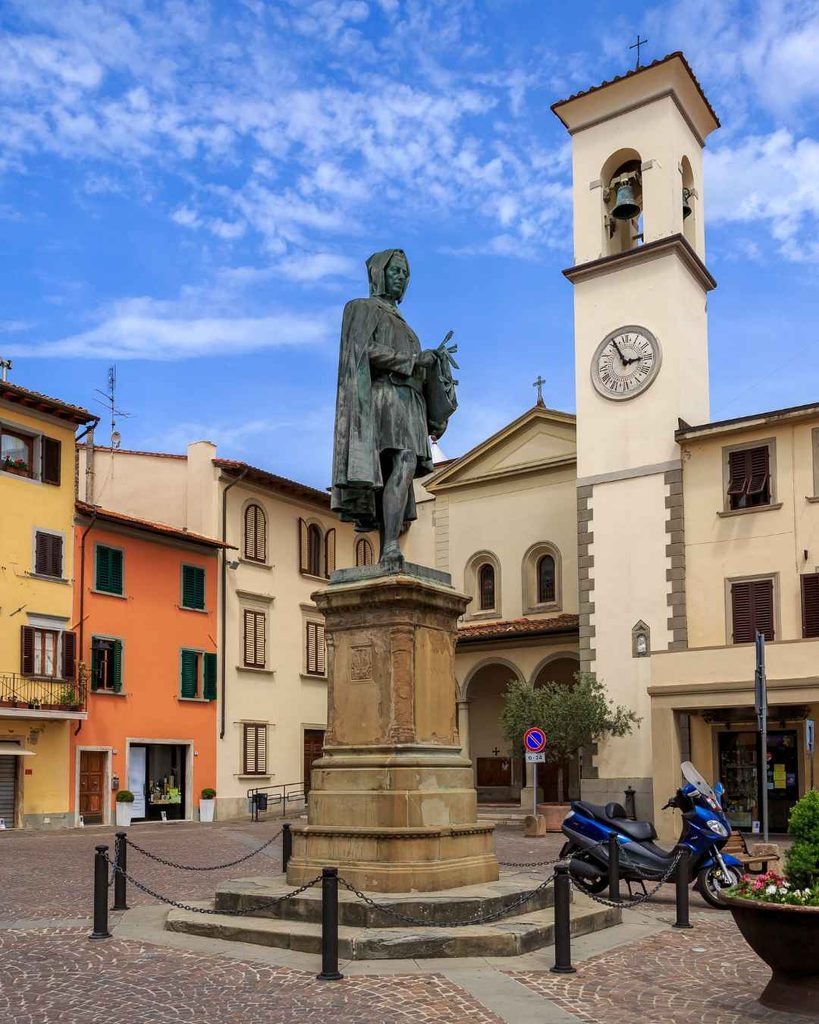
The Mugello is a valley just north of Florence, and it is often overlooked by travelers who never leave the city. It is Medici territory, and the family’s presence is still visible in the villas and castles scattered across the hills.
Scarperia is the most compelling town in the Mugello. It was founded by the Florentine Republic in 1306 as a strategic outpost on the road to Bologna, and it is now officially recognized as one of Italy’s most beautiful villages.
The Palazzo dei Vicari dominates the main square, its façade covered with the coats of arms of centuries of Florentine governors. The town is also known for its knife-making tradition, which dates back to the fourteenth century. You can still find artisan knife shops in the historic center.
Vicchio is the birthplace of Giotto, the fourteenth-century painter who is often credited with starting the Renaissance before the Renaissance officially began.
Fra Angelico was also born here, making Vicchio an unexpectedly significant place in the history of Western art. The House of Giotto in Vespignano is now a small museum and cultural center.
Borgo San Lorenzo is the main town of the Mugello, with a lively weekly market, a Romanesque church, and Art Nouveau architecture tied to the Chini family of artists. It is less polished than Scarperia but more lived-in, and the market is a good place to stock up on local cheese, salami, and produce.
The Coast and the Islands
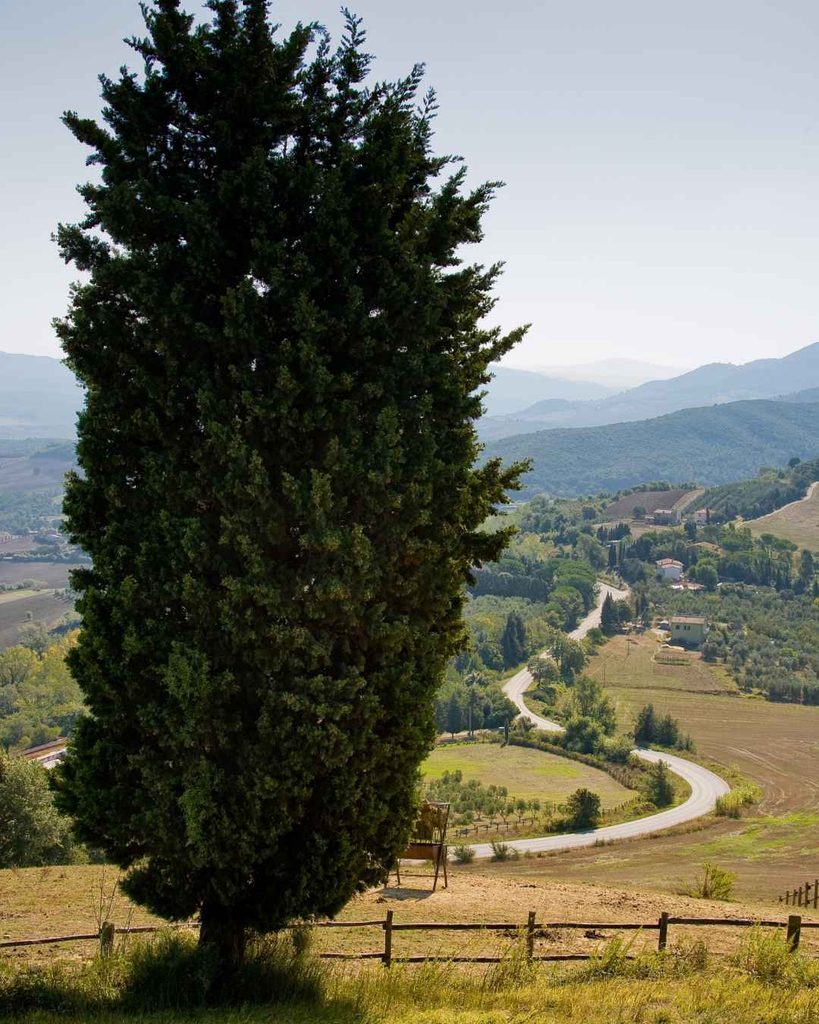
Tuscany has a coastline that stretches for hundreds of kilometers, and it includes some of the most beautiful beaches in Italy. The coast is also home to several islands, each with its own character.
The Etruscan Coast runs from Livorno to Piombino, and it is named for the Etruscan settlements that once dotted the area. The coastline is a mix of sandy beaches, rocky coves, and pine forests.
The town of Bolgheri is famous for its wines, which are among the most prestigious in Italy. The cypress-lined road that leads to the town is one of the most photographed in Tuscany.
Elba is the largest island in the Tuscan Archipelago, and it is best known as the place where Napoleon was exiled in 1814. It is a beautiful island, with beaches, mountains, and a history that goes back to the Etruscans. The island is easy to reach by ferry from Piombino, and it is a good base for swimming, hiking, and exploring.
Giglio is a smaller island, known for its clear water and its quiet atmosphere. It is a good place to escape the crowds and enjoy a slower pace. The island has a few small towns, a castle, and some excellent seafood restaurants.
The Valdelsa and the Val di Chiana
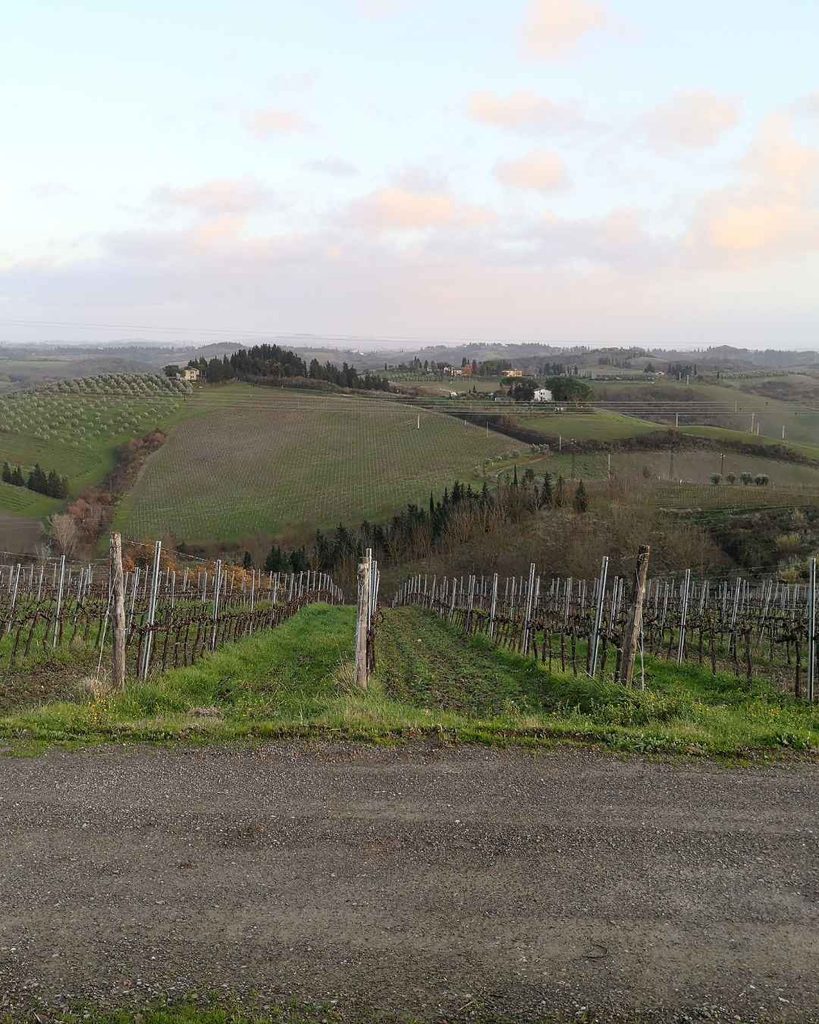
The Valdelsa and the Val di Chiana are two valleys in central Tuscany, and they are home to some of the region’s most interesting towns.
San Gimignano is famous, but the towns around it are not. Certaldo, Colle di Val d’Elsa, and Monteriggioni are all worth visiting, and they are less crowded than their famous neighbor.
Certaldo has a medieval upper town, reachable by funicular, and it is the birthplace of Giovanni Boccaccio. Colle di Val d’Elsa is known for its crystal production, and it has a charming historic center. Monteriggioni is a walled town that looks like something out of a fairy tale.
Arezzo is a city in eastern Tuscany, and it is often overlooked by travelers. It has a beautiful Piazza Grande, a Romanesque church with frescoes by Piero della Francesca, and a lively antiques market.
Cortona is a hill town nearby, and it is one of the oldest towns in Italy. It has a steep main street, a handsome piazza, and views across the Val di Chiana.
Conclusion
Tuscany is a region that rewards curiosity. The more you explore, the more you find. The more you find, the more you realize how much there is to see.
The places in this article are not secrets. They are not hidden. They are simply less visited than the famous towns, and that is what makes them special. They have kept their character, their pace, and their sense of themselves.
If you love Tuscany, do not miss them. Go to the Val d’Orcia and find Monticchiello. Go to the Maremma and find Pitigliano. Go to the Casentino and find Poppi. Go to the Garfagnana and find Barga. Go to the thermal springs of Saturnia and soak in water that Romans once bathed in.
Go somewhere small. Go somewhere quiet. Go somewhere that no one has told you about. That is where Tuscany reveals itself. That is where the best experiences happen. And that is where you will find the trip you did not know you were looking for.
Again, feel free to go through the list below of my Italy recommendations that I have crafted after years of travel to this beautiful country:
- Packing List: Things Not to Go to Italy Without
- Must-Do Things: Unforgettable Experiences
- Where to Stay: Best Hotels in Italy.
- Where to Stay in Rome: Rome’s Best Neighborhoods
- Where to Stay in Florence: Picking the Best Area
- Where to Stay in Venice: Venice’s Best Districts
- Italy’s Cobblestone Streets: Best Shoes For the Job
- Backpack or Suitcase?: Italy Luggage Guide
- Travel Insurance: Always Be Covered
- E-Sim: Be Connected At All Times