
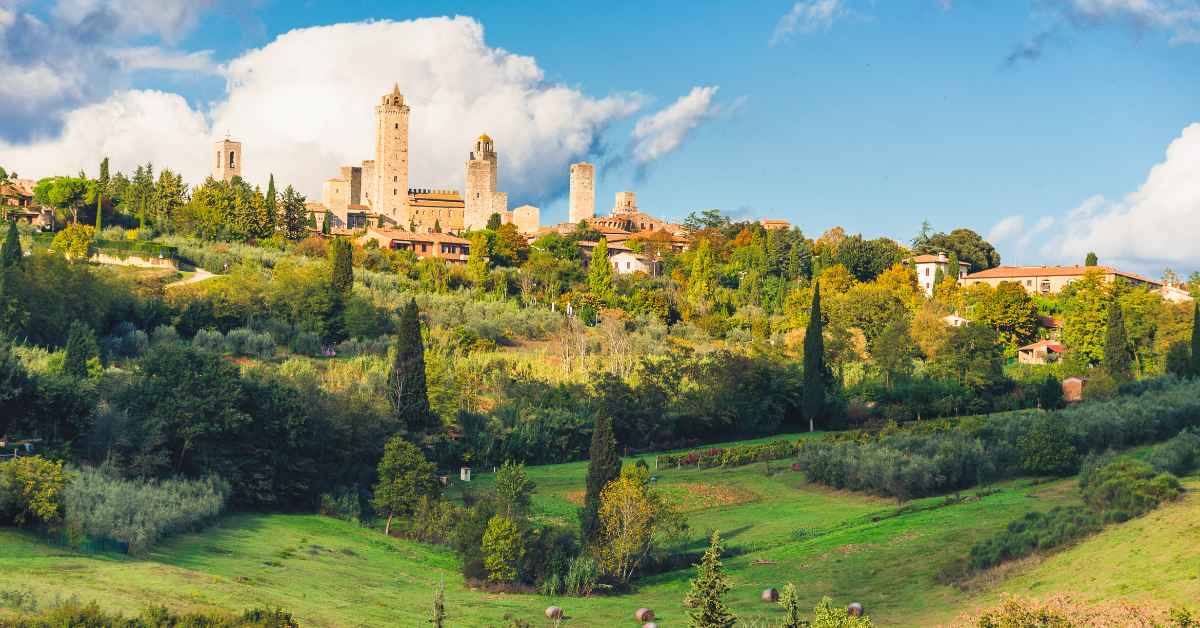
There is a version of Tuscany that exists entirely within the walls of Florence. You see it in the guidebooks, in the Instagram feeds, in the itineraries that promise you the Uffizi, the Accademia, the Duomo, and a sunset over the Ponte Vecchio, all in two days.
It is a beautiful version, and it is not wrong. Florence is one of the great cities of the world, and no trip to Tuscany should skip it.
But there is another version of Tuscany, and it starts the moment you leave the city limits. It is the version where the landscape opens up into rolling hills planted with vines and olives.
It is the version where you can sit in a piazza in a hill town and hear nothing but the clink of coffee cups and the murmur of Italian. It is the version where lunch takes three hours, not because the service is slow but because that is how long lunch is supposed to take.
This post is about that version. It explains why some of Tuscany’s best experiences happen outside Florence, what you miss if you never leave the city, and how to plan a trip that includes both. It is not an argument against Florence. It is an argument for the rest of Tuscany.
Before you read further, remember that Italy rewards travelers who come prepared. I’ve found a few things especially useful on an Italy trip, and they’re worth having and/or knowing beforehand. See the checklist here. Also, if you want me to plan an Italy trip for you that you will never forget, drop me a message here
Florence Is Wonderful, and That Is Part of the Problem
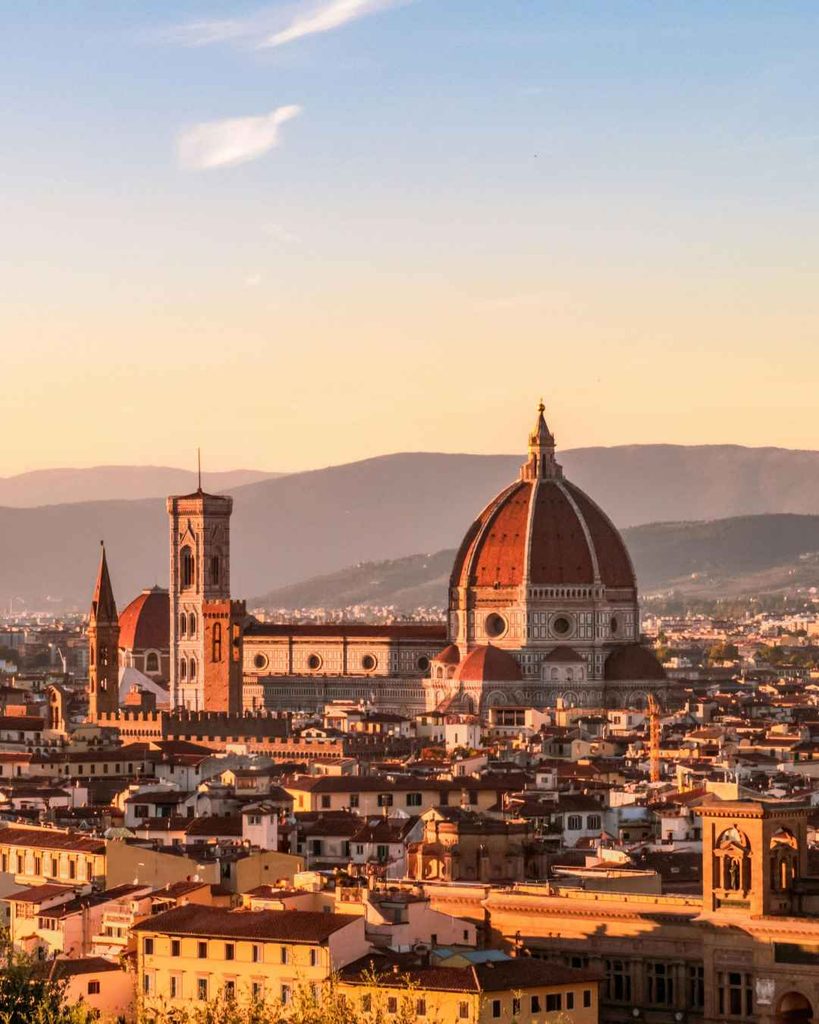
Florence is one of the most visited cities in Europe. In a normal year, it receives millions of visitors, most of them concentrated in a historic center that is small enough to walk across in thirty minutes. The result is a city that can feel overwhelmed by its own popularity.
The Uffizi Gallery, the Accademia, and the Duomo all require timed reservations, and the most desirable slots sell out weeks in advance.
The streets around the Duomo and the Ponte Vecchio are packed from morning until evening. The restaurants in the most visible locations are often overpriced and mediocre, because they do not need to be good to fill their tables.
None of this means Florence is not worth visiting. It means that Florence is best experienced with a plan, and it means that the city alone does not tell the full story of Tuscany. To understand the region, you have to leave it.
What You Miss If You Never Leave Florence
The first thing you miss is the landscape. Tuscany is not a city. It is a region of hills, valleys, vineyards, and olive groves that has been shaped by centuries of agriculture. The landscape is the thing that people picture when they imagine Tuscany, and you cannot see it from inside Florence.
The second thing you miss is the pace. Florence is a city that rewards efficiency. You move from one masterpiece to the next, checking off the sights, trying to see as much as possible in the time you have.
The countryside rewards the opposite. It rewards slowness, idleness, and the willingness to sit in one place for an afternoon and do nothing at all.
The third thing you miss is the food. Florence has excellent restaurants, but the best food in Tuscany is often found in the countryside and the small towns.
It is the food that comes from the land around it: pecorino cheese, cured meats, ribollita, pappa al pomodoro, and the simple, rustic dishes that have been made in the same way for generations.
The fourth thing you miss is the people. Florence is a city of tourists and the people who serve them. The countryside is a place where people live and work.
You will meet winemakers, farmers, artisans, and innkeepers who have spent their lives in the same place. These encounters are often the most memorable part of a trip.
The Hill Towns: Where Tuscany Feels Like Tuscany
The hill towns of Tuscany are the places that most people imagine when they picture the region. They are the towns that appear in the photographs, the ones that sit on ridges with views across the valleys, the ones where the streets are narrow and the buildings are made of stone.
Siena

Siena is the largest and most famous of the hill towns, and it is a city in its own right. It has a population of around fifty thousand people, a university, and a historic center that is one of the best-preserved medieval urban landscapes in Europe.
The heart of Siena is Piazza del Campo, the shell-shaped square that is widely considered one of the most beautiful public spaces in Italy.
It is paved with red brick in a herringbone pattern, and it is surrounded by cafes, restaurants, and the Palazzo Pubblico.
The Duomo is another highlight, with its striped black and white marble and its extraordinary inlaid floor. The Piccolomini Library, off the left aisle, is covered in frescoes by Pinturicchio that depict the life of Pope Pius II.
Siena is also home to the Palio, the bareback horse race that takes place twice a year, on July 2 and August 16. The Palio is not a tourist attraction.
It is a civic ritual that has been running for centuries, organized around the seventeen contrade, or districts, that divide the city. If you are in Siena during the Palio, you will see a side of the city that most visitors never encounter.
I have a separate guide about Siena. Read it here.
San Gimignano

San Gimignano is the town of towers. At its peak, it had seventy-two towers, built by noble families as symbols of their wealth and power. Fourteen remain today, and they give the town a distinctive profile that has earned it the nickname “Medieval Manhattan.”
The town is small enough to walk end to end in fifteen minutes. Its two main squares, Piazza della Cisterna and Piazza del Duomo, are surrounded by medieval buildings, cafes, and shops. The Collegiate Church contains a cycle of frescoes that are among the best-preserved in Tuscany.
San Gimignano is also known for its wine. Vernaccia di San Gimignano was the first Italian white wine to receive DOCG status, and it is still produced in the vineyards surrounding the town. The wine is crisp, mineral, and slightly bitter, and it pairs well with the local food.
The problem with San Gimignano is its popularity. It is one of the most visited towns in Tuscany, and between late morning and late afternoon, it is overrun with tour groups.
This is why the advice to stay overnight is so common. The town transforms in the evening, when the buses have gone, and the streets belong to the people who are staying there.
If you want more information about this beautiful town, read this post.
Montepulciano

Montepulciano is a hill town in southern Tuscany, known for its wine and its Renaissance architecture. The town sits on a ridge, and its main street climbs from the lower gate to the upper piazza, passing churches, palazzos, and wine cellars along the way.
The wine of Montepulciano is Vino Nobile, a red made from Sangiovese grapes. It is one of the most prestigious wines in Italy, and it has been produced in the area for centuries.
Many of the wine cellars in town are open for tastings, and some of them are carved into the tufa rock beneath the buildings.
Montepulciano is also a good base for exploring the Val d’Orcia, the UNESCO World Heritage landscape that lies to the south. The valley is famous for its rolling hills, its cypress-lined roads, and its golden light, which has made it a favorite of photographers and filmmakers.
Pienza
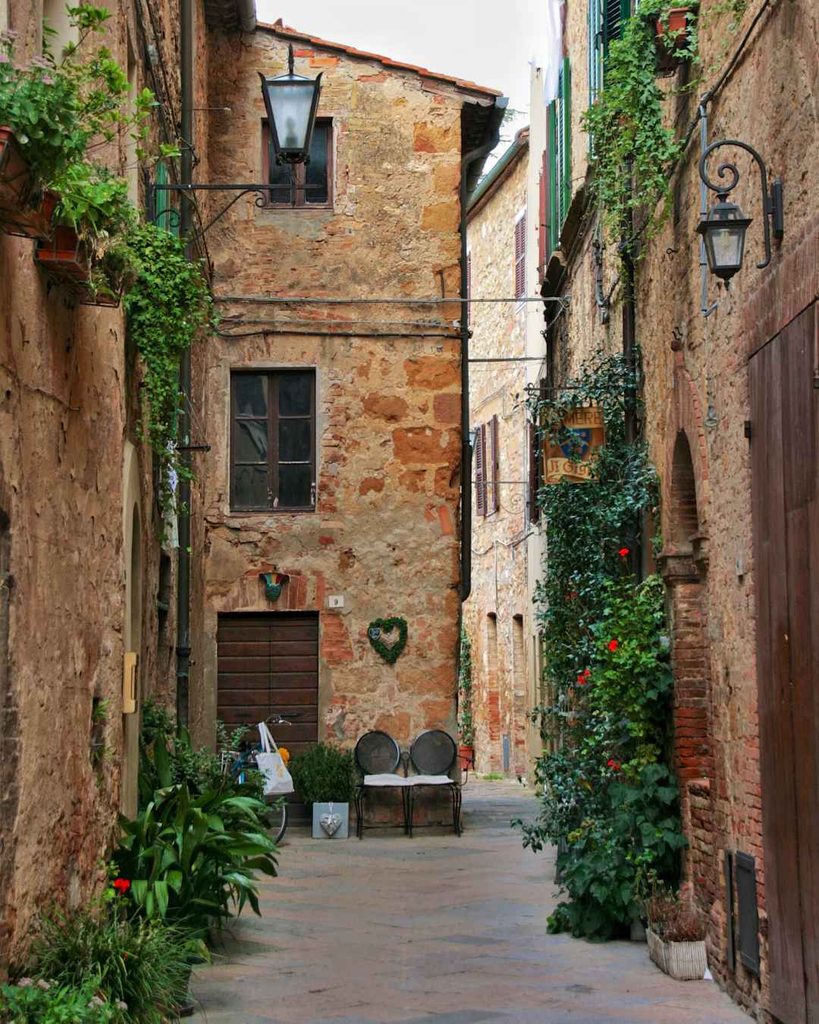
Pienza is a small town in the Val d’Orcia, and it is one of the most beautiful in Tuscany. It was rebuilt in the fifteenth century by Pope Pius II, who wanted to transform his birthplace into an ideal Renaissance town. The result is a compact, harmonious center with a cathedral, a papal palace, and a series of elegant streets.
Pienza is also known for its pecorino cheese. The cheese is made from sheep’s milk and aged in the cellars beneath the town. It is one of the most famous products of the region, and it is worth buying some to take home.
The town is small enough to see in a few hours, but it is worth staying overnight if you want to experience it without the crowds. The evenings are quiet, and the views across the Val d’Orcia are spectacular.
Montalcino

Montalcino is a hill town in southern Tuscany, known for its Brunello wine. Brunello di Montalcino is one of the most prestigious red wines in the world, made from Sangiovese grapes and aged for at least five years before release.
The town itself is charming, with a medieval fortress, a handsome piazza, and a network of narrow streets. The wine cellars in town are open for tastings, and many of them offer tours of their aging rooms.
Montalcino is also a good base for exploring the Val d’Orcia and the surrounding countryside. The views from the fortress are among the best in the region.
Cortona

Cortona is a hill town in eastern Tuscany, near the border with Umbria. It is one of the oldest towns in Italy, with origins that go back to the Etruscans.
The town is built on a steep hillside, and its streets climb from the lower gates to the upper piazza. The views from the top are panoramic, stretching across the Val di Chiana and toward Lake Trasimeno.
Cortona has a lively atmosphere, with plenty of restaurants, cafes, and shops. It is also a good base for exploring the surrounding countryside, which is known for its olive oil and its vineyards.
The Val d’Orcia: The Landscape That Defines Tuscany
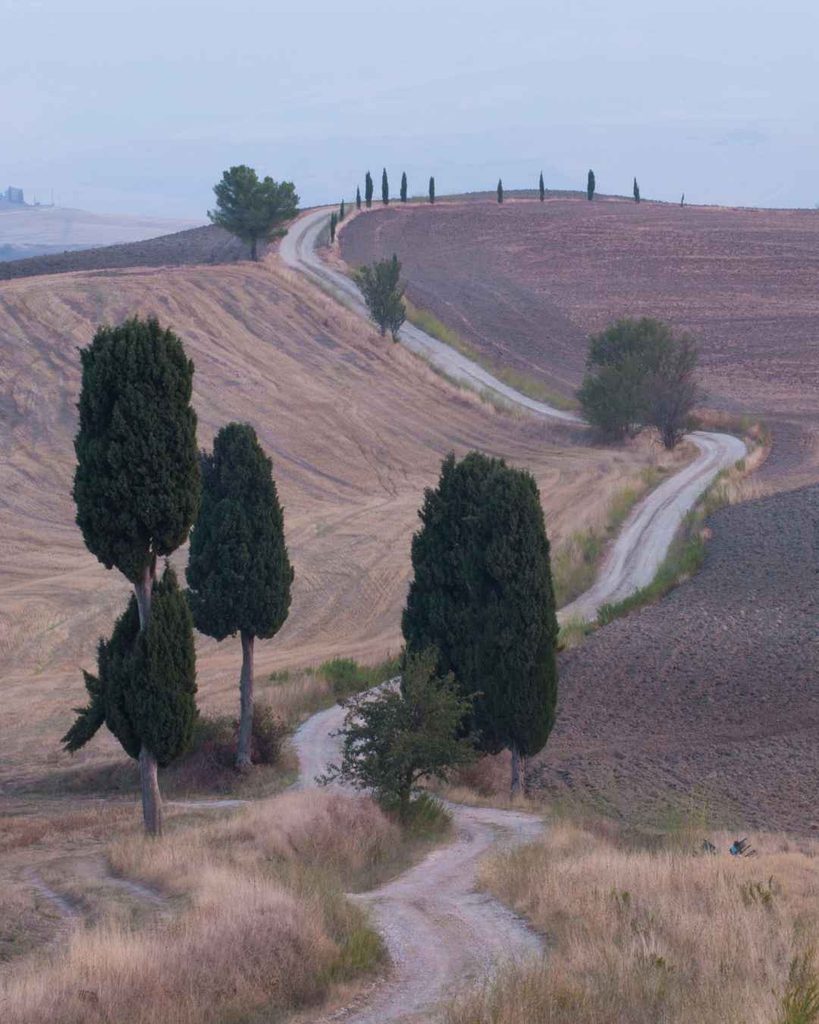
The Val d’Orcia is the landscape that most people picture when they imagine Tuscany. It is a UNESCO World Heritage Site, and it is one of the most photographed places in Italy.
The valley is characterized by rolling hills, cypress-lined roads, and isolated farmhouses. The light is golden, especially in the early morning and late afternoon, and the colors change with the seasons.
The Val d’Orcia is also a place to slow down. There are walking trails, cycling routes, and thermal springs. The town of Bagno Vignoni has a thermal pool in the center of its main square, and the nearby Parco dei Mulini has a shallow outdoor pool that is free to use.
The food in the Val d’Orcia is excellent. The region is known for its pecorino cheese, its cured meats, and its pasta. Pici, a thick hand-rolled pasta, is a local specialty, and it is usually served with ragu or with a simple tomato sauce.
The Chianti Region: Wine, Villages, and Country Roads
The Chianti region lies between Florence and Siena, and it is one of the most famous wine-producing areas in the world. The landscape is a mix of vineyards, olive groves, and forests, dotted with small villages and historic estates.
The towns of Greve in Chianti, Panzano, Radda, and Castellina are all worth visiting. Each has its own character, and each is surrounded by vineyards that produce Chianti Classico, the most prestigious version of the wine.
The Chiantigiana, the road that runs from Florence to Siena, is one of the most scenic drives in Italy. It winds through the hills, passing vineyards, castles, and small towns. It is a good route for a day trip by car, and it offers a side of Tuscany that you cannot see from the train.
The Food and Wine: Why the Countryside Does It Better
The food and wine of Tuscany are among the best in Italy, and the best of them are often found outside Florence.
The reason is simple. The food in the countryside is made from what is available locally. The pecorino cheese comes from the sheep that graze on the hills. The cured meats come from the pigs that are raised in the region. The vegetables come from the gardens that surround the towns.
The wine is the same. The Chianti Classico comes from the vineyards of the Chianti region. The Brunello comes from the vineyards around Montalcino. The Vino Nobile comes from the vineyards around Montepulciano. These wines are not just products. They are expressions of the place where they are made.
In Florence, you can find good food and wine, but you have to look for it. In the countryside, it finds you. You sit down at a table, and the food arrives, and it is almost always excellent.
The Pace: Why Slowing Down Is the Point

One of the best things about leaving Florence is that you leave behind the pressure to see everything. In the city, there is always another masterpiece to see, another church to visit, another museum to check off the list.
In the countryside, the pressure disappears. You wake up when you wake up. You have breakfast on a terrace overlooking the hills. You decide what to do based on how you feel.
Maybe you visit a winery. Maybe you take a walk. Maybe you sit in a piazza and read a book. The point is not to do as much as possible. The point is to experience the place at its own pace.
This is the lesson that Tuscany teaches, and it is a lesson that is hard to learn in Florence. The city is a place of ambition and achievement. The countryside is a place of rest and pleasure. Both are valuable, but they are different, and you need to experience both to understand the region.
How to Plan a Trip That Includes Both
The good news is that you do not have to choose between Florence and the countryside. You can have both, and the combination is what makes a trip to Tuscany memorable.
The best approach is to spend a few days in Florence, seeing the major sights and experiencing the city. Then rent a car or hire a driver and spend a few days in the countryside, exploring the hill towns, the vineyards, and the landscapes.
If you are using public transport, you can base yourself in Siena, which has train connections to Florence and bus connections to many of the hill towns. From Siena, you can visit San Gimignano, Montepulciano, Pienza, and Montalcino on day trips.
If you have a car, you have more flexibility. You can stay in a farmhouse or an agriturismo in the countryside, and you can explore at your own pace. The roads are good, and the distances are short.
The important thing is to leave time for slowness. Do not try to see everything. Choose a few places and spend time in them. Have long lunches. Take afternoon naps. Watch the sun set over the hills.
These are the experiences that people remember. Not the museums, not the churches, not the monuments. The moments of quiet, the meals that lasted for hours, the conversations with people who live in the place you are visiting.
Final Thoughts
Florence is one of the great cities of the world, and no trip to Tuscany should skip it. But Florence is not Tuscany. It is one part of a region that is much larger, much more varied, and much more rewarding than any single city can be.
The hill towns, the vineyards, the landscapes, the food, the wine, the pace, the people. These are the things that make Tuscany what it is. And these are the things you find when you leave Florence behind.
So go to Florence. See the Uffizi. Climb the Duomo. Eat a gelato on the Ponte Vecchio. And then get in a car or on a bus and go somewhere else. Go to Siena. Go to San Gimignano. Go to the Val d’Orcia. Go to a vineyard in Chianti. Go somewhere small and quiet and beautiful.
That is where Tuscany reveals itself. That is where the best experiences happen. And that is where you will find the trip you did not know you were looking for.
Again, feel free to go through the list below of my Italy recommendations that I have crafted after years of travel to this beautiful country:
- Packing List: Things Not to Go to Italy Without
- Must-Do Things: Unforgettable Experiences
- Where to Stay: Best Hotels in Italy.
- Where to Stay in Rome: Rome’s Best Neighborhoods
- Where to Stay in Florence: Picking the Best Area
- Where to Stay in Venice: Venice’s Best Districts
- Italy’s Cobblestone Streets: Best Shoes For the Job
- Backpack or Suitcase?: Italy Luggage Guide
- Travel Insurance: Always Be Covered
- E-Sim: Be Connected At All Times