

Italy is not a country you visit with a heavy bag. This is not a cliché invented by minimalist travel bloggers. It is a practical reality shaped by cobblestones, staircases, train compartments, and airline weight limits that are enforced with a seriousness that surprises many first-time visitors.
You will lift your bag onto overhead racks on trains. You will drag it across stone streets that have been uneven for centuries. You will carry it up a flight of stairs to a hotel that has no elevator because the building is six hundred years old.
You will board a regional flight where the carry-on allowance is eight kilograms and the gate agent actually weighs your bag.
The bag you choose matters more in Italy than almost anywhere else. A heavy suitcase becomes a burden. A poorly designed backpack becomes a source of daily frustration. A well-chosen carry-on, whether it has wheels or straps, can make the difference between a trip that feels effortless and one that feels like a logistical ordeal.
This article covers what to look for in carry-on luggage for Italy, the rules you need to know, the features that actually matter, and the specific bags that deliver. It covers both backpacks and suitcases, because the right choice depends on how you travel, not on which style is trendy. By the end, you will know exactly what to buy.
Before you read further, remember that Italy rewards travelers who come prepared. I’ve found a few things especially useful on an Italy trip, and they’re worth having and/or knowing beforehand. See the checklist here
Why Carry-On Only Makes Sense in Italy
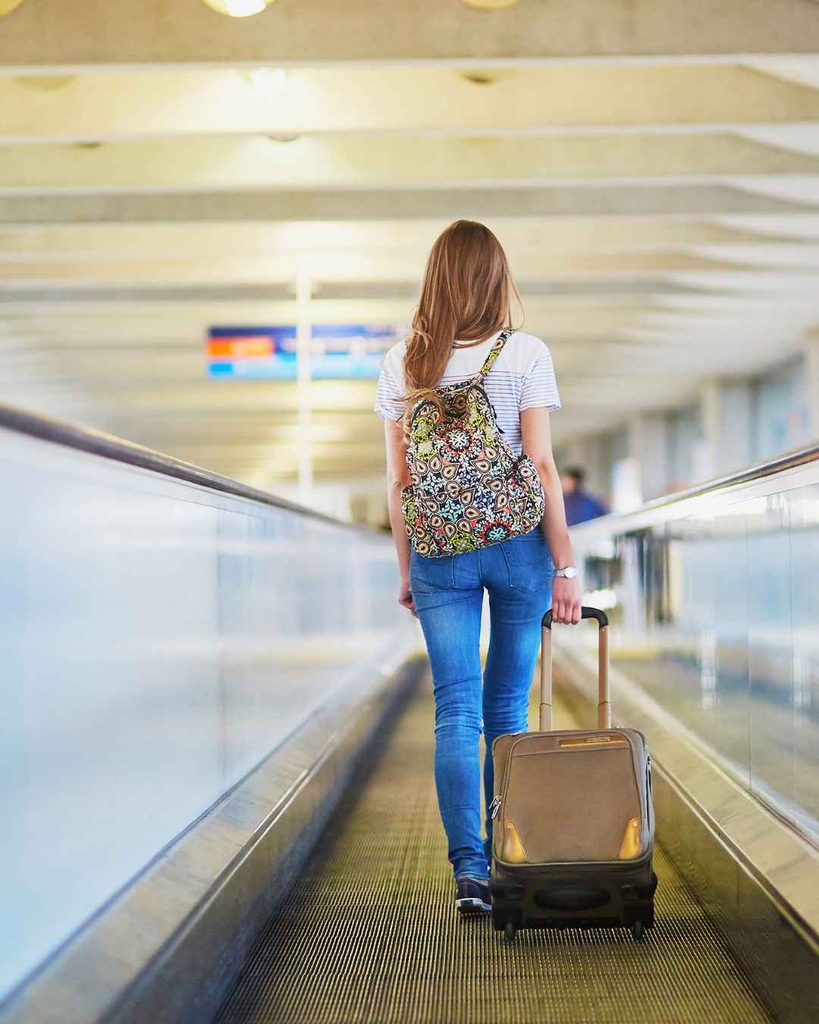
Before getting into the bags themselves, it is worth explaining why carry-on only is the right approach for an Italian trip.
The first reason is trains. Italy’s rail network is excellent, and traveling by train is one of the great pleasures of visiting the country. But train luggage storage is limited. Overhead racks fill up quickly, especially on popular routes like Florence to Rome or Rome to Naples.
A large checked suitcase is difficult to lift onto a rack and often has to be stored at the end of the carriage, where it is out of sight and vulnerable. A carry-on fits easily in the overhead space or at your feet. A backpack fits even more easily because it can go between your legs or on your lap if necessary.
The second reason is stairs. Italian cities are vertical. Hotels in historic buildings rarely have elevators, and even those that do often have a few steps before the elevator. Train stations frequently require you to use staircases to reach the platform.
Bridges, alleys, and piazzas all involve steps of some kind. A lighter, smaller bag is simply easier to carry when you have to carry it. This is where backpacks have a genuine advantage: they leave your hands free for railings, tickets, and coffee.
The third reason is airline weight limits. Many European carriers, including ITA Airways, enforce a strict eight-kilogram limit for carry-on bags. That is roughly seventeen pounds. If your bag itself weighs six or seven pounds before you put anything in it, you are already at a disadvantage.
The lighter your bag, the more room you have for your actual belongings. This applies equally to backpacks and suitcases.
The fourth reason is simplicity. Traveling carry-on only means you never wait at a baggage carousel. You never worry about a lost bag. You never arrive at your hotel without your clothes. You simply walk off the plane and start your trip.
Backpacks vs. Suitcases: An Honest Comparison
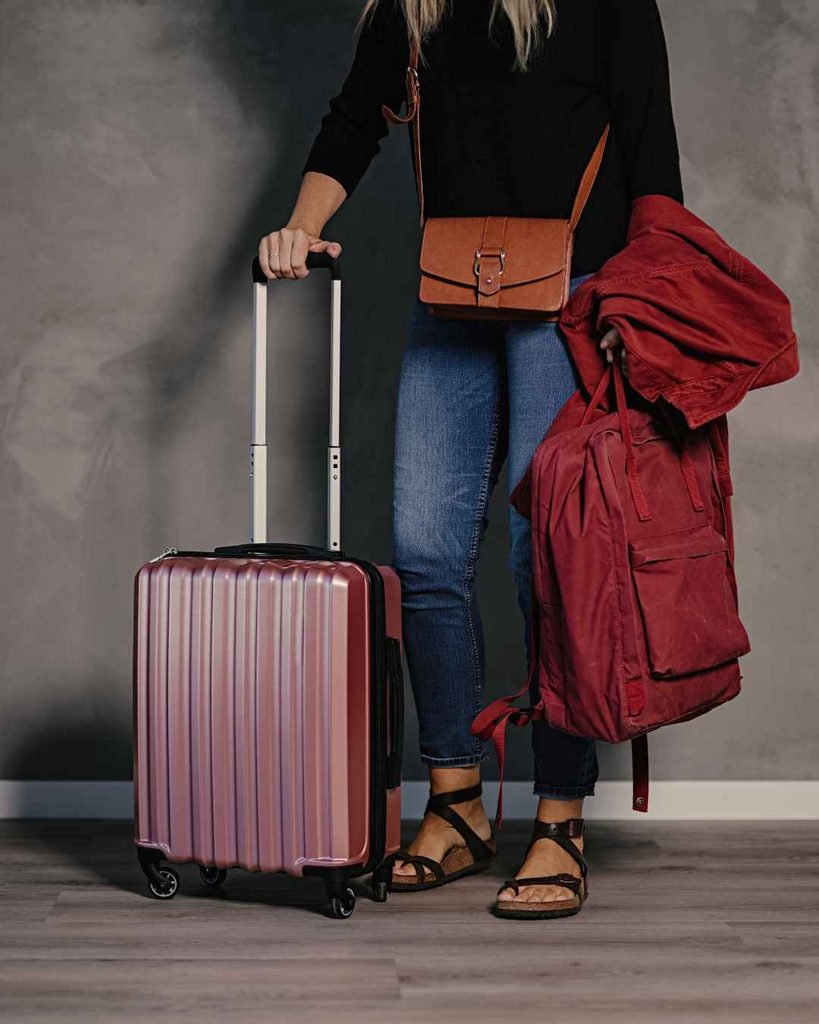
There is no universal answer to the backpack versus suitcase question. Both have real advantages and real drawbacks, and the right choice depends on your travel style, your physical condition, and the kind of trip you are taking.
Backpacks are better for stairs. This is not a minor point in Italy. If you are staying in a hotel with no elevator, or if you are taking trains that require you to climb steps to reach the platform, a backpack is significantly easier to manage. It keeps your hands free and distributes weight across your body rather than concentrating it in one arm.
Backpacks are better for rough terrain. Cobblestones are hostile to small wheels. A backpack does not care about the surface of the street. It bounces along with you, and you never have to worry about a wheel catching in a gap or wearing out after a week of dragging.
Backpacks are better for trains. On a crowded train, a backpack can go between your feet or on your lap. A suitcase has to go on a rack, and if the rack is full, you are stuck holding it or leaving it in the aisle.
Suitcases are better for your back. A heavy backpack puts stress on your shoulders, neck, and lower back. If you have any kind of back issue, a suitcase is the more comfortable choice. You roll it rather than carry it, and the weight is on the ground rather than on your spine.
Suitcases are better for organization. A clamshell suitcase opens flat, which makes it easy to see everything you have packed. A backpack, especially a top-loading one, requires you to dig through layers to find what you need. This matters more than you might think when you are repacking in a small hotel room.
Suitcases are better for keeping your belongings secure. A backpack worn on your back is behind you, where you cannot see it. Pickpockets in Italy are skilled at opening backpacks in crowds without the wearer noticing. A suitcase is always beside you or in front of you, and you can keep a hand on it when you are in a crowded area.
The honest conclusion is that the best choice depends on you. If you are fit, travel light, and prioritize mobility, a backpack is probably the better option for Italy. If you have back problems, travel with more gear, or simply prefer the ease of rolling rather than carrying, a suitcase is the better choice.
Many experienced travelers use a combination: a backpack as their main bag and a small crossbody bag for daily carry.
What to Look For in Carry-On Luggage for Italy
Not every carry-on is suited to Italian travel. Here are the features that matter most for both backpacks and suitcases.
Weight
This is the single most important specification. The lighter the bag, the better. A carry-on that weighs under six pounds gives you maximum flexibility with airline weight limits. A carry-on that weighs eight or nine pounds eats into your allowance before you have packed a single item.
For backpacks, look for models that weigh between two and four pounds. For suitcases, look for models under six pounds. Weight should be your first filter when comparing options.
Wheels (for Suitcases)
The wheel question is more complicated than it first appears. Four-wheel spinners are convenient in airports because they roll upright beside you. But on cobblestones, small spinner wheels catch in gaps, vibrate violently, and can wear out quickly.
Two-wheel bags, which you pull behind you at an angle, tend to handle uneven surfaces better because the larger wheels roll over obstacles rather than catching on them.
The best approach for Italy is either a two-wheel bag with large, sturdy wheels, or a spinner with oversized wheels designed for rough terrain. Rubber wheels are generally quieter and more durable than hard plastic ones. Avoid bags with tiny, hard casters that look like they belong on furniture.
Suspension and Hip Belts (for Backpacks)
A backpack without a hip belt is just a sack with straps. For a carry-on-sized backpack, you want a padded hip belt that transfers weight from your shoulders to your hips. This makes a significant difference in comfort, especially on long days of walking.
Look for a backpack with a suspended mesh back panel, which allows air to flow between your back and the bag. This reduces sweating, which matters in Italian summer heat. Adjustable shoulder straps and a sternum strap are also important for fit.
Size
Most airlines have a standard carry-on size of 55 by 40 by 23 centimeters, including handles and wheels. This is roughly 21.5 by 15.5 by 9 inches. If you are flying within Europe, this is the size to target. A bag that is slightly over this limit may be flagged at the gate, especially on budget carriers.
For backpacks, look for a capacity between 28 and 40 liters. This is enough for a week or two of travel if you pack carefully. For suitcases, the same capacity range applies.
Durability
Your bag will be dragged across stone, lifted onto trains, squeezed into overhead compartments, and possibly rained on. It needs to hold up. Look for reinforced corners, sturdy zippers, and materials that resist scuffs and scratches.
Softside bags are more forgiving of rough handling, while hardside bags offer better protection for fragile contents. Backpacks should have abrasion-resistant fabric and reinforced stitching at stress points.
Maneuverability
A good suitcase should be easy to move with one hand. The telescoping handle should extend smoothly and feel solid, not wobbly. The bag should roll straight without veering. If you are using a spinner, it should glide rather than rattle.
A good backpack should be easy to put on and take off, and it should feel balanced when loaded. The straps should be comfortable without digging into your shoulders, and the bag should not pull you backward when you walk.
The Best Carry-On Backpacks for Italy
Backpacks are the primary recommendation for Italy in many cases, because they handle stairs, cobblestones, and crowded trains better than wheeled luggage. Here are the best options.
Osprey Farpoint 40
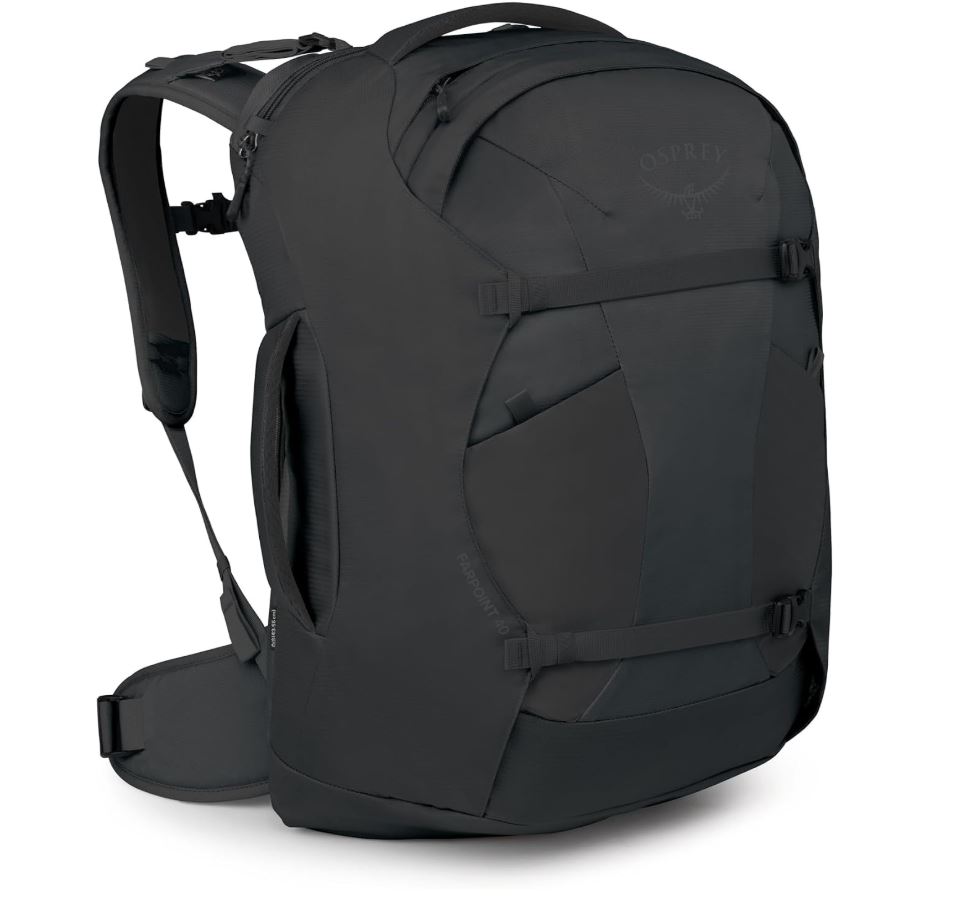
The Osprey Farpoint 40 is one of the most popular travel backpacks in the world, and it is particularly well-suited to Italy. It weighs about three pounds, which is light for a bag of its size, and it has a clamshell opening that makes it easy to pack and unpack.
The Farpoint 40 has a padded hip belt that transfers weight to your hips, and a suspended mesh back panel that keeps air flowing between your back and the bag. The shoulder straps are comfortable even when the bag is fully loaded. There is a front compartment for a laptop or tablet, and the main compartment has compression straps to keep everything in place.
What makes the Farpoint 40 particularly good for Italy is its carry-on dimensions. It fits within the standard 55 by 40 by 23 centimeter limit, which means you can take it on any European carrier without worrying about gate checks. It also has a detachable daypack in some versions, which is useful for day trips.
The Farpoint is not the lightest backpack on the market, and it is not the most stylish. But it is durable, comfortable, and well-designed, and it has a reputation for surviving years of travel. For a carry-on backpack that will spend time on Italian trains and cobblestone streets, it is an excellent choice.
Cotopaxi Allpa 35L
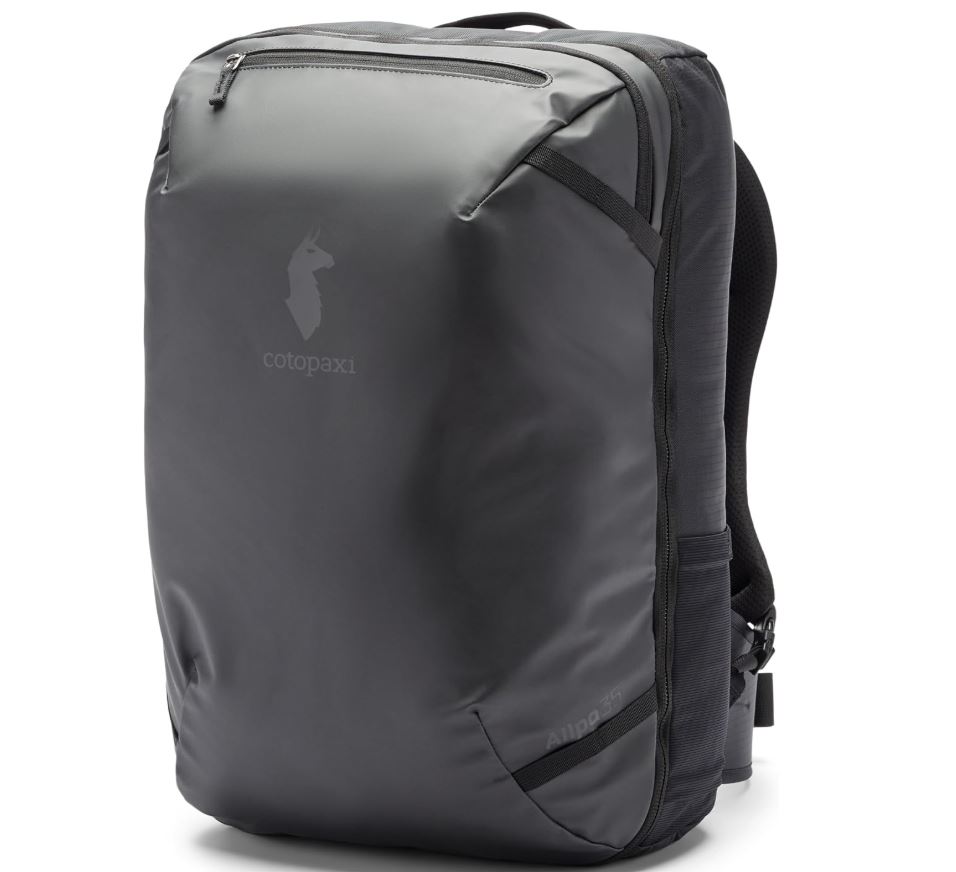
The Cotopaxi Allpa 35L is a newer entry in the travel backpack market, and it has quickly become a favorite among travelers who want a bag that is both functional and distinctive. It weighs about three and a half pounds and has a clamshell design with multiple compartments, including a padded laptop sleeve and a separate shoe compartment.
The Allpa has a hip belt and a sternum strap, and the back panel is padded for comfort. The straps can be tucked away when you check the bag, which is useful if you are forced to gate-check it. The bag is made from recycled materials, which appeals to environmentally conscious travelers.
What sets the Allpa apart is its organization. The interior has mesh pockets, a divider, and compression straps that keep everything in place. It is easy to see what you have packed, and it is easy to access anything without unpacking the whole bag.
The bag is available in a range of bright colors, which is either a feature or a drawback depending on your preferences.
The Allpa 35L is slightly smaller than the Farpoint 40, which makes it a good choice for travelers who pack light. It fits within carry-on limits for most airlines, though it is close enough to the limit that you should check the specific dimensions before you fly.
Peak Design Travel Backpack 30L
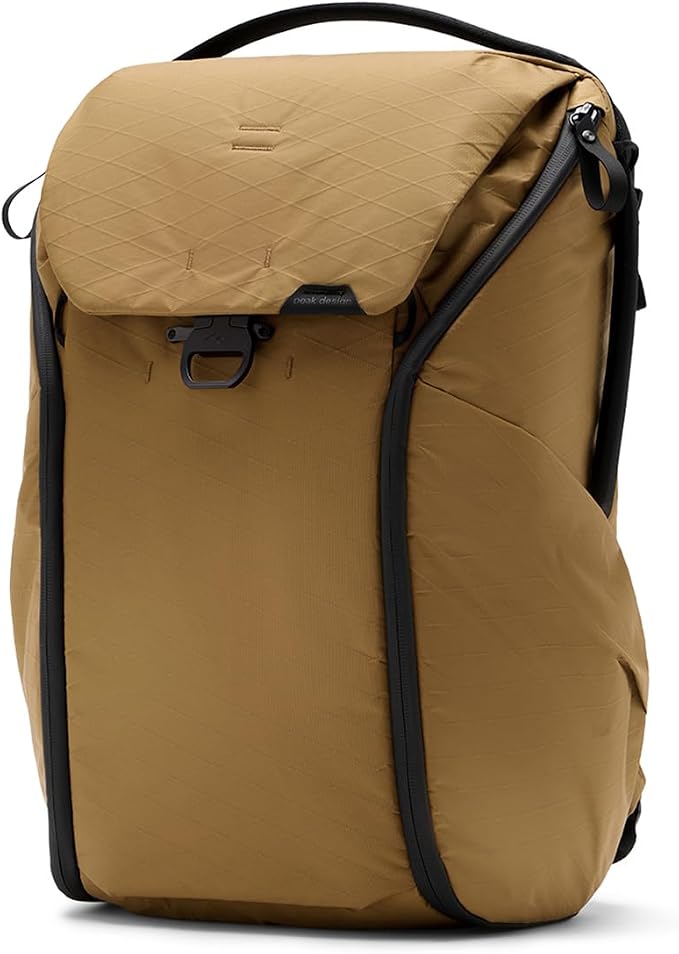
The Peak Design Travel Backpack 30L is a premium option for travelers who want a bag that works as well in the city as it does on the road. It weighs about three and a half pounds and has a clamshell opening with a unique expansion system that allows it to grow from 30 liters to 35 liters when needed.
The bag has a padded hip belt and shoulder straps, and the back panel is designed for airflow. The interior is highly configurable, with removable dividers and mesh pockets that let you organize your gear however you like. There is a dedicated laptop sleeve and a quick-access pocket for your passport or phone.
What makes the Peak Design particularly good for Italy is its versatility. It can be carried as a backpack, a shoulder bag, or a briefcase, which means it works for different situations. The straps can be tucked away when not in use, and the bag has a clean, understated look that does not scream “tourist.”
The main drawback is price. The Peak Design is significantly more expensive than the Osprey or Cotopaxi options. But if you want a bag that will last for years and work in a variety of situations, it is worth the investment.
REI Co-op Ruckpack 40
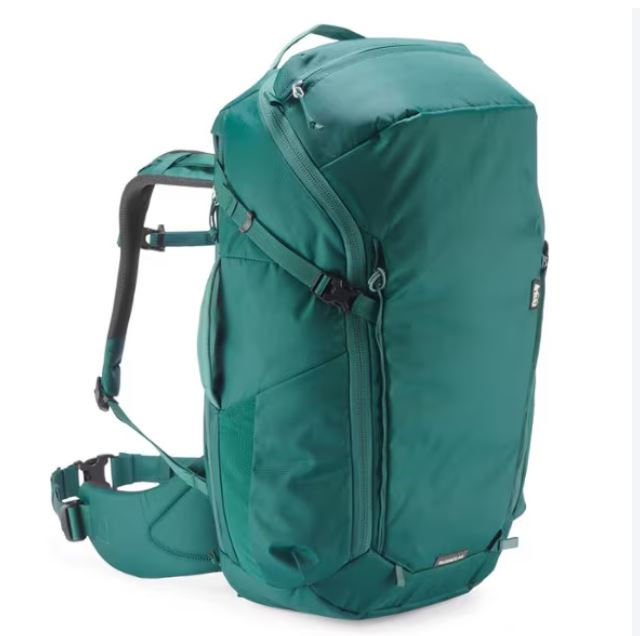
The REI Co-op Ruckpack 40 is a solid mid-range option for travelers who want a well-designed backpack without paying a premium price. It weighs about three pounds and has a clamshell opening with a large main compartment, a front pocket, and a separate shoe compartment.
The Ruckpack has a padded hip belt and shoulder straps, and the back panel is designed for comfort. The bag is made from durable recycled nylon and has reinforced stitching at stress points. It fits within carry-on limits for most airlines, and it has a trolley sleeve that lets you slide it over the handle of a suitcase if you are traveling with both.
The Ruckpack is not as feature-rich as the Osprey or Peak Design, but it does the fundamentals well. It is comfortable, durable, and easy to pack. For travelers who want a reliable carry-on backpack without spending a fortune, it is a good choice.
The Best Carry-On Suitcases for Italy
Suitcases are the better choice for travelers who have back problems, who prefer rolling rather than carrying, or who simply find suitcases easier to organize. Here are the best options.
Travelpro Maxlite 5 Softside Carry-On
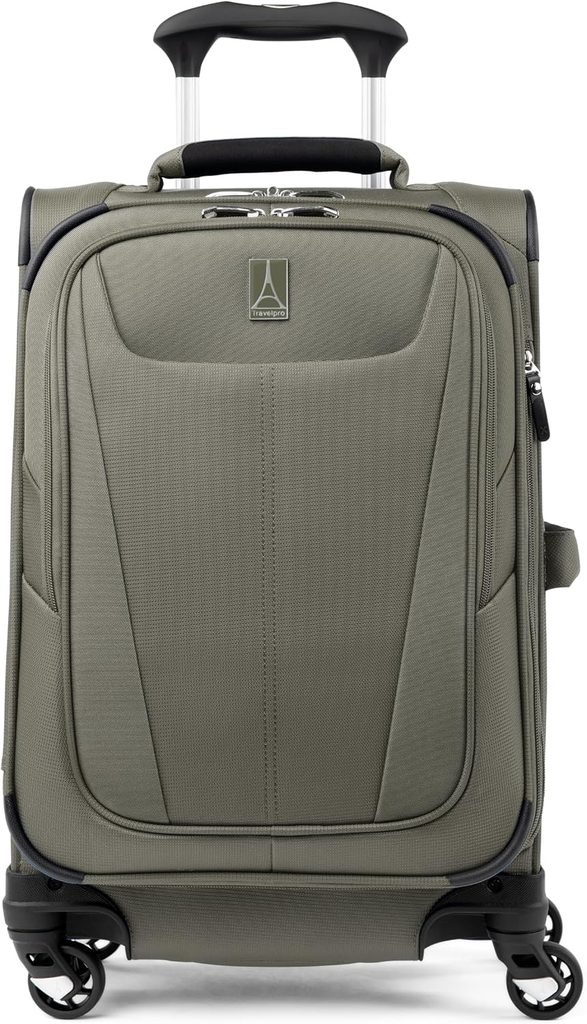
The Travelpro Maxlite 5 is the bag that frequent travelers recommend again and again, and for good reason. It weighs just 5.4 pounds, which is among the lightest softside carry-ons on the market. That lightness matters enormously when you are dealing with airline weight limits.
The softside construction gives you some flexibility when squeezing the bag into tight spaces, and the fabric is durable enough to handle the occasional scrape against stone walls. The two-wheel design makes it well-suited for cobblestones and uneven surfaces. It rolls smoothly, and because it is so light, you can pick it up and carry it when you encounter stairs.
The Maxlite 5 is not a luxury bag. The expansion feature is limited, and the front pocket is small. But it does the fundamentals exceptionally well. It is light, it is durable, and it has a reputation for surviving years of travel. For a carry-on that will spend time on Italian trains and cobblestone streets, it is a solid, practical choice.
Samsonite Lite-Shock Spinner
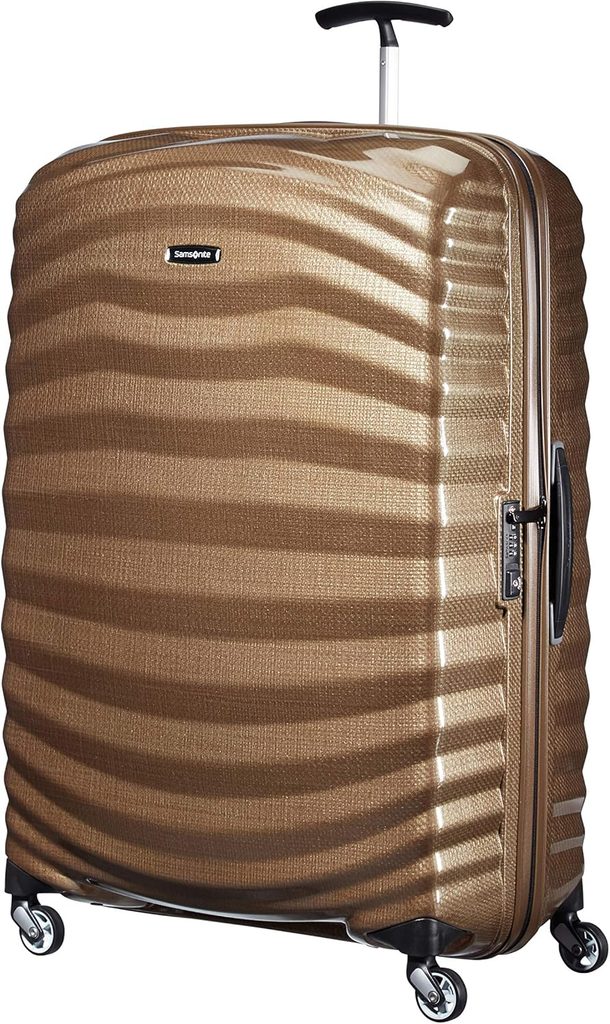
If you prefer a hardside bag, the Samsonite Lite-Shock is worth considering. It is made from a material called Curv, a thermoplastic composite that is extremely light and exceptionally resistant to impact. The bag weighs significantly less than a typical polycarbonate hardside, which gives you more room to pack within airline weight limits.
The Lite-Shock has four spinner wheels that roll smoothly, though the wheels are relatively small, which means they can struggle on rougher cobblestones.
The interior has a divider and cross-straps to keep your belongings secure, and the TSA lock is integrated into the shell. It is a well-built bag that balances lightness with protection.
The main trade-off is that hardside bags offer less flexibility when squeezing into tight spaces. But if you prefer the structure and protection of a hard shell, the Lite-Shock is one of the best lightweight options available.
Delsey Chatelet Air 2.0 Hardside Carry-On
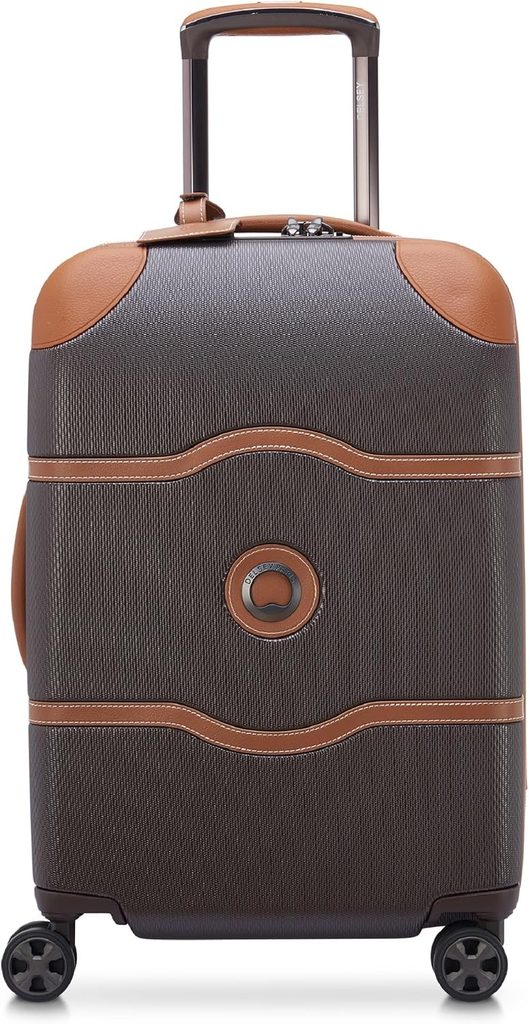
The Delsey Chatelet Air 2.0 is a step up in both style and durability. It is made from 100 percent polycarbonate, which is resilient to cracking, and it has faux leather accents and corner protectors for extra durability. The double-spinner wheels provide a stable base and smooth rolling.
What makes this bag notable for Italy is its performance on rough surfaces. Travelers who have used it in Europe report that the wheels hold up well over cobblestone alleyways and uneven sidewalks. The shell is tough enough to handle the occasional bump without denting, and the zippers are sturdy.
The Chatelet Air is heavier than the Maxlite 5, so it is not the best choice if you are pushing the weight limit on a budget airline. But for travelers who are flying on carriers with more generous allowances or who are primarily traveling by train, it is an excellent option.
It is also one of the better-looking bags on this list, which is not irrelevant if you care about such things.
Briggs & Riley Baseline Essential 2-Wheel Carry-On
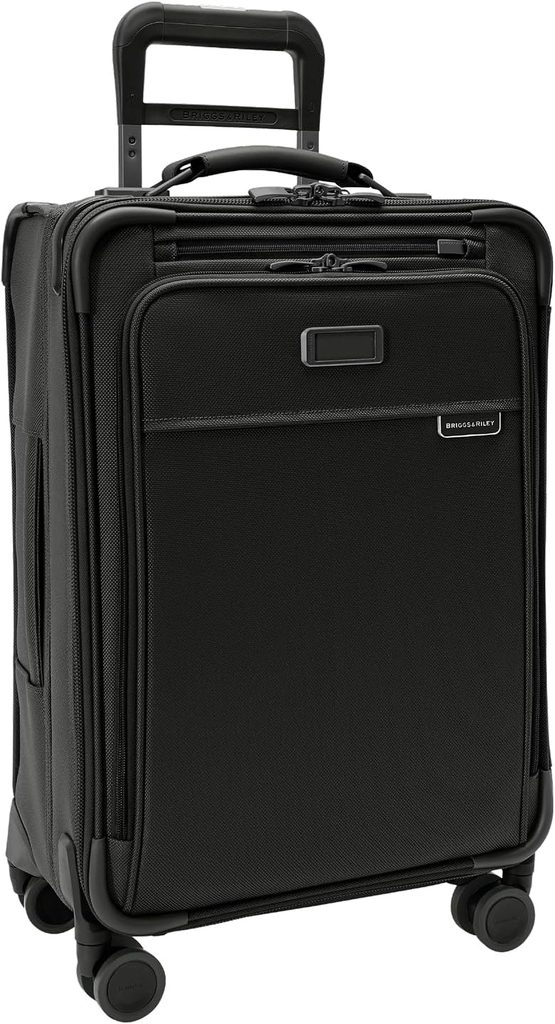
The Briggs & Riley Baseline Essential is a different category of purchase entirely. It is a softside, two-wheel carry-on built around a ballistic nylon exterior that resists wear and holds its shape over years of use. The defining feature is the Outsider handle, mounted on the exterior of the bag rather than inside it. This creates a completely flat interior packing surface, which means clothes lie flat, wrinkle less, and pack more efficiently.
The Baseline uses a one-touch expansion system that adds roughly two inches of depth when you need it and compresses back down when you do not. That expansion is genuinely useful for the return leg of an Italian trip, when you have bought wine, ceramics, or leather goods and need a little more room without checking a second bag.
The trade-off is weight. The Baseline is not a lightweight bag, and if you are flying ITA Airways and pushing the eight-kilogram carry-on limit, its weight works against you. What justifies it is the lifetime guarantee, which covers repair of all functional aspects of the bag, even damage caused by airlines, with no proof of purchase required. For travelers who want one bag that will still be functional in fifteen years, that guarantee changes the math.
The Rules You Need to Know
Airlines in Europe enforce carry-on rules more strictly than many travelers expect. ITA Airways, Italy’s flag carrier, allows one carry-on bag weighing up to eight kilograms for most fares, with dimensions of 55 by 40 by 23 centimeters including handles and wheels.
Business class passengers may be allowed two bags, but the weight limit per bag is the same.
The weight limit is the one that catches people out. A bag that meets the size requirements can still be rejected at the gate if it exceeds eight kilograms. This is why the weight of the bag itself matters so much.
If your empty bag weighs six pounds, you have roughly eleven pounds left for your belongings. That is enough for a week or two of travel if you pack carefully, but not enough for a full wardrobe.
Trenitalia, the Italian rail operator, does not impose a strict weight limit on hand luggage, but it does require that bags be easily transportable and stored in designated spaces. Passengers are responsible for their own bags, and unattended luggage can be inspected or removed for security reasons.
In practice, this means you should keep your bag with you at all times and be prepared to lift it onto overhead racks or store it at your feet. Backpacks have an advantage here because they can go between your feet or on your lap.
Packing Tips for Carry-On Travel in Italy
The bag is only part of the equation. How you pack matters just as much.
Pack in layers. Start with the heaviest items at the bottom of the bag, closest to your back or the wheels. This keeps the bag balanced and makes it easier to carry.
Use packing cubes. They compress your clothes, keep everything organized, and make it easy to find what you need without unpacking the whole bag. This is especially useful for backpacks, which can become chaotic without some kind of organization system.
Roll your clothes. Rolling saves space and reduces wrinkles. It also makes it easier to fit everything into a smaller bag.
Bring fewer shoes. Shoes are the heaviest and bulkiest items in most bags. Bring one pair of comfortable walking shoes and one pair of sandals or casual shoes. Wear your heaviest shoes on travel days.
Plan for laundry. If you are traveling for more than a week, plan to do laundry at some point. Quick-dry fabrics are your friend. They wash easily in a sink and dry overnight.
Leave room for souvenirs. You will buy things in Italy. Whether it is a bottle of wine, a piece of ceramics, or a leather bag, you will want space to bring it home. Leave a little room in your bag, or bring a foldable tote that you can use as a second bag on the return trip.
Final Thoughts
The best carry-on for Italy is the one that is light enough to meet airline weight limits, durable enough to survive cobblestones, and small enough to fit in a train overhead rack without a struggle. Whether it has wheels or straps is a personal decision, and both options have real advantages.
If you prioritize mobility and do not mind carrying your bag, a backpack is the better choice. The Osprey Farpoint 40, Cotopaxi Allpa 35L, and Peak Design Travel Backpack 30L are all excellent options. If you prefer rolling rather than carrying, a suitcase is the better choice. The Travelpro Maxlite 5, Samsonite Lite-Shock, and Delsey Chatelet Air are all solid options.
Whichever you choose, remember that the bag is only part of the equation. Packing light is a skill, and it is one that rewards you every time you lift your bag onto a train or carry it up a staircase. The less you bring, the easier Italy becomes. The country is not designed for heavy luggage. It is designed for people who travel with intention, who pack what they need and leave the rest behind.
Choose a bag that helps you do that. Then go enjoy the trip.
Again, feel free to go through the list below of my Italy recommendations that I have crafted after years of travel to this beautiful country:
- Packing List: Things Not to Go to Italy Without
- Must-Do Things: Unforgettable Experiences
- Where to Stay: Best Hotels in Italy.
- Where to Stay in Rome: Rome’s Best Neighborhoods
- Where to Stay in Florence: Picking the Best Area
- Where to Stay in Venice: Venice’s Best Districts
- Italy’s Cobblestone Streets: Best Shoes For the Job
- Backpack or Suitcase?: Italy Luggage Guide
- Travel Insurance: Always Be Covered
- E-Sim: Be Connected At All Times