
I still remember the first time I truly understood what people meant when they warned me about Italian cobblestones. I was in Rome, somewhere near the Pantheon, and I was wearing a pair of sneakers I thought were perfectly comfortable.
They were fine on the flat pavement of my neighborhood back home. But on those stones, every step sent a small jolt up through my ankle, and by the end of the day, my knees were aching in a way they had never ached before.
It wasn’t the sneakers’ fault, exactly. It was the surface. Those stones have been there for centuries, shaped by countless feet and tires, and they do not care about your arch support or your cushioning technology.
That trip taught me something that I now consider one of the most important pieces of advice I can give anyone planning a visit to Italy: your footwear will make or break your experience.
You will walk more than you expect, on surfaces you have never walked on before, and the wrong choice will turn a beautiful day into a painful one.
But here’s the thing that took me longer to accept. For a long time, the conventional wisdom was simple: bring the most comfortable closed-toe shoes you can find, and leave the sandals at home.
Sandals were for the beach, for the hotel, for a quick dinner. They were not for serious walking. They were not for cobblestones. They were not for Italy.
That wisdom is outdated. Or at least, it is incomplete. The right sandals, chosen carefully and broken in properly, can be just as good for walking in Italy as the best sneakers. In some cases, they are better. They keep your feet cooler in the heat.
They let your feet breathe. They dry quickly if you get caught in a sudden shower. They are easier to take on and off at churches that require modest dress. And, if you choose well, they can handle cobblestones just as confidently as a pair of trail runners.
This article is about how to find those sandals. It explains why sandals make sense in Italy, what to look for in a pair that can handle the walking, and which specific models are worth your money. By the end, you will know exactly what to buy and why.
Before you read further, remember that Italy rewards travelers who come prepared. I’ve found a few things especially useful on an Italy trip, and they’re worth having and/or knowing beforehand. See the checklist here
Why You Actually Need Sandals in Italy
Let’s start with the obvious question. If everyone says you need comfortable closed-toe shoes for Italy, why bring sandals at all?
The answer is heat. Italy in summer is genuinely hot. Not “warm afternoon” hot, but “the pavement radiates heat through your soles” hot. In Rome in July, temperatures routinely climb past 35 degrees Celsius, and the humidity can make it feel even warmer.
Walking around in a pair of thick-soled sneakers or leather boots is not just uncomfortable. It is actively unpleasant. Your feet swell, they sweat, and by midday you would trade almost anything for a pair of open shoes that let the air circulate.
Sandals solve this problem. They keep your feet cool. They allow air to flow around your toes and across the top of your foot. They dry quickly if you sweat or if you get caught in one of Italy’s sudden summer thunderstorms.
And they are easy to slip on and off when you are entering a church or a museum that requires you to remove your shoes or cover your feet.
The second reason is church dress codes. Many Italian churches, including major ones like St. Peter’s and the Duomo in Florence, enforce modest dress codes. Bare shoulders and bare knees are the usual prohibitions, and the rules are enforced more strictly than many visitors expect.
The Duomo in Florence has explicitly stated that sandals are not permitted, which means you need to plan around that if you want to visit.
But here is the nuance that most guides miss. The dress code rules vary dramatically from church to church, and they are often applied inconsistently. The general rule that most experienced travelers follow is that shoulders and knees should be covered, but feet are usually not a concern.
Nuns and monks wear open-toed sandals in churches across Italy. The prohibition on sandals at the Florence Duomo appears to be an exception rather than the rule.
The practical takeaway is this: bring a scarf or light layer to cover your shoulders, wear clothing that covers your knees, and do not worry excessively about your feet. Sandals are almost always fine.
The third reason is that sandals are simply more versatile than you might think. A good pair of walking sandals can go from a morning of sightseeing to an afternoon at the beach to an evening dinner without missing a beat.
They pack flat, they weigh almost nothing, and they do not require the space that a second pair of sneakers would demand. If you are traveling carry-on only, sandals are your friend.
What Makes Walking in Italy Different
Before you choose a sandal, you need to understand what you are choosing it for. Walking in Italy is not like walking anywhere else.
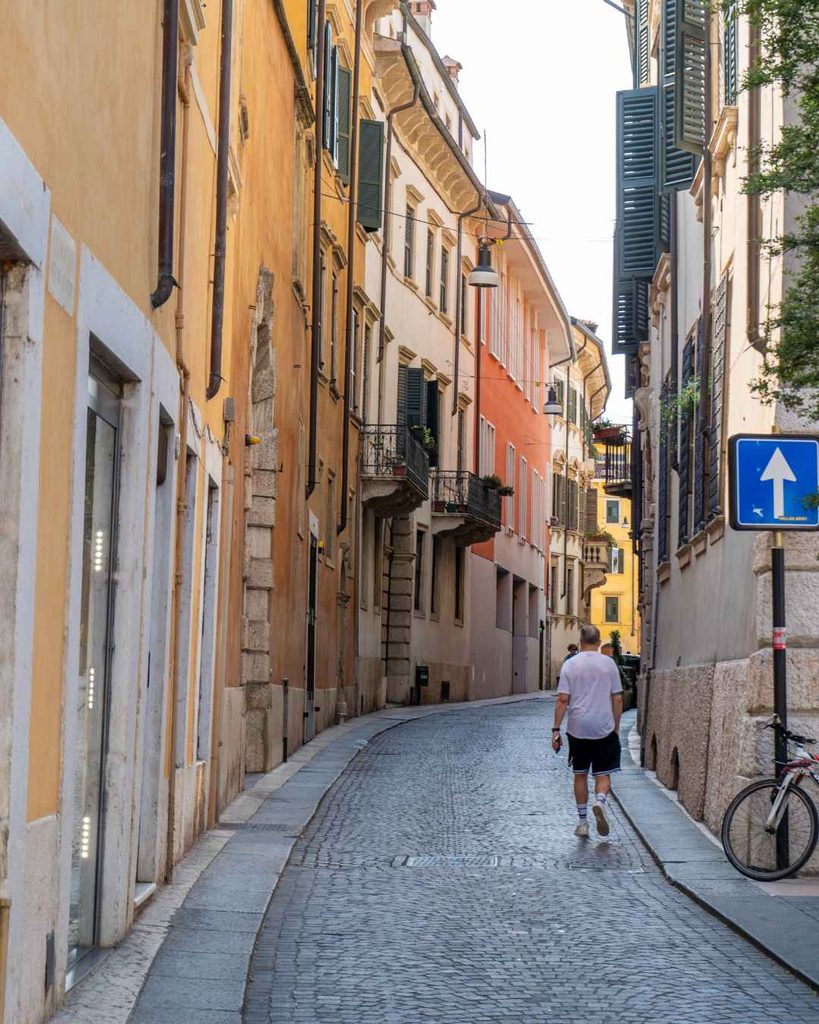
The first difference is the surface. Italy’s historic centers are paved with stone. In Rome, the classic surface is called sampietrini, the small square cobblestones that give the city its characteristic look. They are beautiful, and they are treacherous.
The stones are uneven; they become slippery when wet, and they have a way of catching the edge of a shoe at exactly the wrong moment. Rome has roughly one hundred kilometers of roads paved in this material, and while that is only about two percent of the city’s total road network, it is the two percent you will be walking on as a visitor.
Florentine streets are paved with larger, flatter stones, but they are still uneven, and the constant friction of feet and vehicles has polished them smooth in places. When it rains, they become genuinely dangerous.
The second difference is the distance. You will walk more than you expect. A typical day of sightseeing in Rome can easily involve ten miles of walking, or roughly twenty thousand steps.
Florence is slightly less, perhaps seven or eight miles on a normal day, but the hills add difficulty. Venice is flat, but the bridges and the stairs add up. This is not a destination where you can get by with a pair of shoes that are “fine for a walk around the block.” You need footwear that will still feel good after six hours on your feet.
The third difference is the terrain. Italy is not flat. Even in the historic centers, there are hills. Rome is built on seven of them. Florence sits in a valley surrounded by hills, and the walk from the river to Piazzale Michelangelo is a climb.
Many of the most beautiful towns in Italy are built on hillsides, with streets that slope upward at angles that would be considered extreme in most cities. Your footwear needs to handle slopes and stairs, not just flat pavement.
The fourth difference is the unpredictability. You will encounter smooth marble floors in churches, polished stone in museums, gravel paths in gardens, and, if you are near the coast, sand and rocks. A sandal that works well on cobblestones might be useless on marble.
A sandal that is comfortable on flat ground might be dangerous on a slope. The best sandals for Italy are the ones that handle a variety of surfaces without compromising on comfort.
What to Look For in a Walking Sandal for Italy
Now that you understand the challenge, here is what to look for in a sandal that can meet it.
A Secure Fit
This is the most important factor, and it is the one that separates a walking sandal from a casual sandal. A walking sandal should hold your foot securely. It should have straps across the instep and around the heel, and those straps should be adjustable.
A flip-flop or a slide without a back strap is not suitable for walking in Italy. Your foot will slide, your toes will grip, and by the end of the day your feet will be exhausted.
Look for a sandal with a heel strap and at least one adjustable strap across the top of the foot. Velcro closures are common and effective, though buckles work too. The key is that you can tighten the sandal to fit your foot precisely, and that the fit stays secure as you walk.
A Supportive Footbed
The footbed is the part of the sandal that your foot rests on. A good walking sandal has a footbed with arch support and cushioning. This is what absorbs the impact of walking on hard surfaces and keeps your feet from fatiguing.
Some sandals use cork footbeds, which mold to the shape of your foot over time and provide excellent support. Others use EVA foam, which is lighter and more cushioned but less durable. Some use a combination of materials, with a firm base and a softer top layer.
The best choice depends on your feet, but the common denominator is that the footbed should feel supportive, not flat.
A Grippy Outsole
The outsole is the bottom of the sandal, the part that touches the ground. This is where the rubber meets the road, literally. A walking sandal needs an outsole with good traction, which means deep treads and a rubber compound that grips on smooth stone as well as rough pavement.
This is particularly important for Italy because of the marble and polished stone you will encounter. A sandal with a slick sole is a liability on a rainy day in Rome or a polished marble floor in a museum. Look for a sole with a pronounced tread pattern, similar to what you would find on a hiking shoe.
Durability
Your sandals will take a beating. They will be dragged across stone, scuffed against steps, and exposed to sweat, rain, and dust. They need to hold up. Look for sandals with sturdy straps, reinforced stitching, and materials that resist wear.
Leather straps are durable and mold to your feet, but they can be slow to dry and require some care. Synthetic straps are lighter, dry faster, and are often more resistant to water and sweat. Both can work well for Italy, but synthetic materials are generally easier to maintain on a trip.
Weight
A lighter sandal is easier to pack and less tiring to wear. This matters if you are carrying your luggage on trains or walking long distances. Look for sandals that weigh less than a pound per pair if possible, though this is less critical for sandals than for suitcases because the weight is distributed across your feet rather than carried on your back.
Style
This is subjective, but it matters. You will be wearing these sandals every day. If you feel self-conscious about how they look, you will not enjoy wearing them. Fortunately, the days when walking sandals were synonymous with “ugly” are largely behind us.
Many brands now make sandals that are comfortable enough for long days of walking and stylish enough to wear to dinner. Find a pair that you actually like looking at.
The Best Sandals for Traveling in Italy
Here are the sandals that deliver on the promise of comfort, durability, and practicality for Italian travel.
Teva Hurricane XLT2
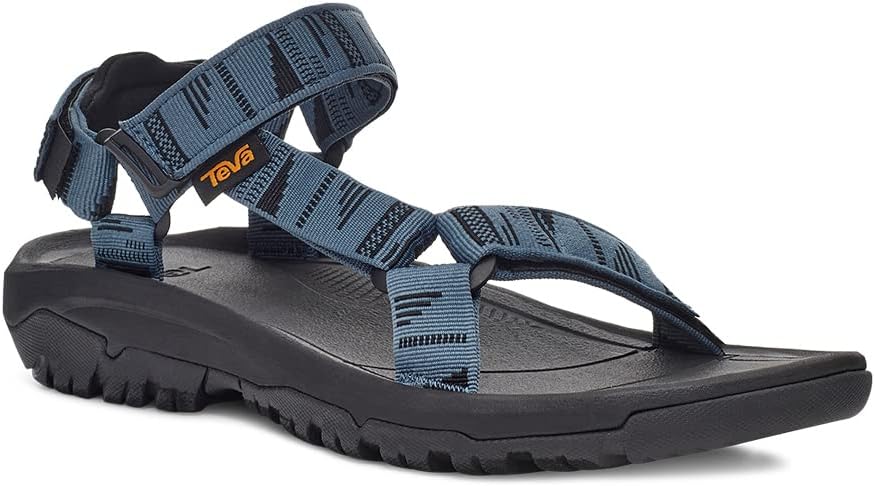
The Teva Hurricane XLT2 is the sandal that experienced travelers recommend more than almost any other. It is a sport sandal in the classic sense: quick-drying straps, a secure fit with multiple adjustment points, and a rugged outsole that handles rough terrain.
What makes the Hurricane XLT2 particularly good for Italy is the sole. It is thick enough to cushion your feet on cobblestones, and the tread pattern provides excellent grip on smooth stone and wet surfaces.
The straps are made from a quick-drying webbing material that does not absorb sweat, and they are adjustable in three places, which means you can customize the fit to your foot.
The Hurricane XLT2 is not a dressy sandal. It looks like what it is: a piece of outdoor gear. But it is comfortable enough to wear all day, durable enough to last for years, and versatile enough to handle everything from city streets to coastal trails. If you want one pair of sandals that can do everything in Italy, this is a strong candidate.
Teva Universal Slim
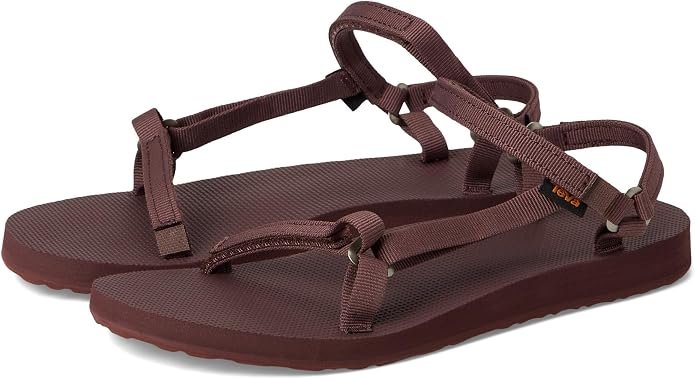
The Teva Universal Slim is a sleeker version of the classic Teva design. It has the same supportive footbed and secure fit as the Hurricane, but with slimmer straps that make it easier to dress up. It is lighter than the Hurricane, which makes it easier to pack, and the slim profile means it looks less like a hiking sandal and more like a casual summer shoe.
The Universal Slim is a good choice for travelers who want the comfort of a Teva but do not want to look like they are heading out on a trail. It works with dresses, shorts, and casual trousers.
The straps are adjustable, the footbed has arch support, and the outsole provides decent traction on most surfaces. It is not quite as rugged as the Hurricane, but for city walking in Italy, it is more than enough.
Birkenstock Arizona
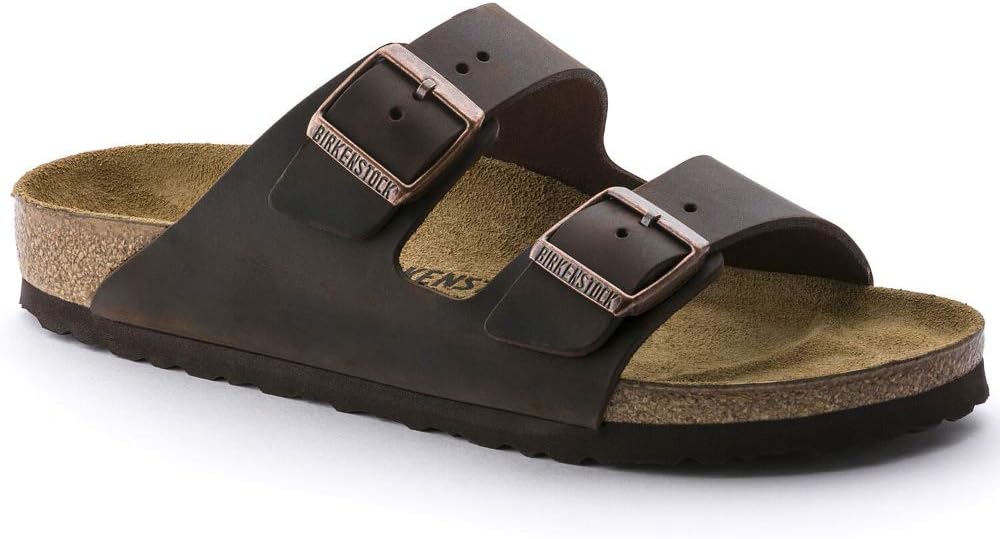
The Birkenstock Arizona is a classic for a reason. The cork-latex footbed molds to the shape of your foot over time, providing a level of support that few other sandals can match. The two-strap design is simple and adjustable, and the sandal is available in a wide range of materials and colors.
For Italy, the Arizona works well for walking on flat surfaces and moderate distances. The footbed is supportive, the leather straps are durable, and the sandal looks good with almost anything. The main drawback is the outsole, which is not as aggressive as a sport sandal.
On wet cobblestones, the Arizona can feel slippery, and the cork footbed is not water-friendly. If you are visiting Italy in summer when rain is unlikely, this is less of a concern. If you are traveling in shoulder season or spring, it is worth considering a sandal with better wet traction.
Keen Whisper
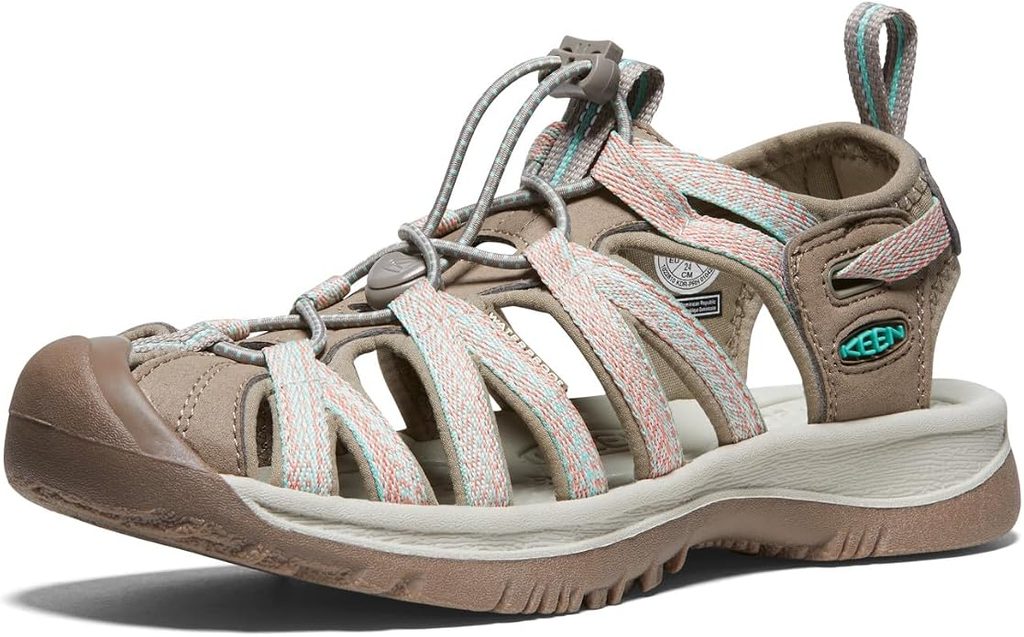
The Keen Whisper is a hybrid sandal that offers more protection than a traditional open-toe design. It has a closed toe box that protects your toes from stubbing and from debris, while still allowing air to flow through the sides. This makes it a good choice for travelers who want the coolness of a sandal with some of the protection of a shoe.
The Whisper has a secure fit with adjustable straps, a supportive footbed, and a rugged outsole that handles a variety of surfaces. It is slightly heavier than some other sandals on this list, but the added protection is worth it for some travelers.
It is particularly good for travelers who plan to do some hiking or walking on rougher terrain during their trip.
Crocs Miami Ankle Strap Sandal
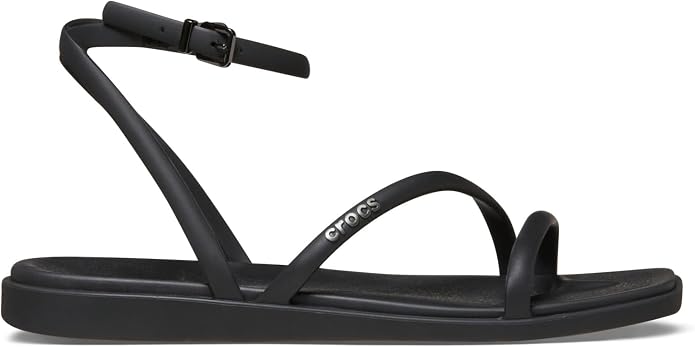
The Crocs Miami is a surprising entry on this list, but it earns its place. It is almost impossibly lightweight, which makes it easy to pack and comfortable to wear. The Croslite foam footbed is cushioned and supportive, and the ankle strap keeps the sandal secure on your foot.
What makes the Crocs Miami particularly good for Italy is its performance in wet conditions. The material is completely waterproof and dries instantly, which makes it a good choice for rainy days or for trips that involve beaches and swimming.
It is not the most stylish sandal on this list, but it is comfortable, practical, and affordable. For travelers who want a second pair of sandals for specific situations, it is a solid option.
How to Break In Your Sandals Before You Go
This is the advice that most people ignore, and it is the advice that matters most. Do not buy a new pair of sandals the week before your trip and expect them to be comfortable from day one. Even the best sandals need time to mold to your feet and for your feet to adjust to the fit.
Wear your new sandals around the house for a few days. Then wear them for short walks in your neighborhood. Gradually increase the distance and the time you spend in them.
By the time you leave for Italy, you should have worn them for at least ten to fifteen hours of walking. This will reveal any hot spots or fit issues before you are thousands of miles from home.
If you are prone to blisters, consider wearing your sandals with thin socks during the break-in period. This is not a fashion statement, but it can prevent the friction that causes blisters. Once the sandals are broken in, you can wear them barefoot.
Final Thoughts
The conventional wisdom about footwear in Italy is not wrong. You do need comfortable shoes. You do need to be prepared for long days of walking on difficult surfaces. But the idea that sandals are somehow unsuitable for Italian travel is outdated and unnecessarily restrictive.
The right sandals, chosen carefully and broken in properly, can be just as good for walking in Italy as the best sneakers. They keep your feet cool, they dry quickly, they are easy to pack, and they can handle cobblestones just as confidently as a pair of trail runners.
Choose a sandal with a secure fit, a supportive footbed, and a grippy outsole. Break it in before you go. Wear it with confidence. And enjoy Italy the way it is meant to be enjoyed: slowly, on foot, with the sun on your face and the stones beneath your feet.
Again, feel free to go through the list below of my Italy recommendations that I have crafted after years of travel to this beautiful country:
- Packing List: Things Not to Go to Italy Without
- Must-Do Things: Unforgettable Experiences
- Where to Stay: Best Hotels in Italy.
- Where to Stay in Rome: Rome’s Best Neighborhoods
- Where to Stay in Florence: Picking the Best Area
- Where to Stay in Venice: Venice’s Best Districts
- Italy’s Cobblestone Streets: Best Shoes For the Job
- Backpack or Suitcase?: Italy Luggage Guide
- Travel Insurance: Always Be Covered
- E-Sim: Be Connected At All Times