

There’s something special about arriving in Tuscany. As soon as you leave the train station, you start to notice the landscape changing. Rolling hills, vineyards, olive groves, old stone towns, and rows of cypress trees seem to stretch in every direction. It’s the kind of scenery that makes you want to slow down and take it all in.
Many people will tell you that you need a car to see the best of Tuscany. And while having a car can be useful, it isn’t your only option. Some of Tuscany’s most popular towns can be reached by train or bus, and traveling without a car can actually make your trip less stressful.
You don’t have to worry about parking, driving on unfamiliar roads, or navigating the narrow streets around old hill towns.
Instead, you can sit back on a train, watch the Tuscan countryside pass by, and arrive ready to explore. You may not be able to reach every small village without a car, but with a little planning, you can still see some of the most beautiful places in Tuscany without spending your entire trip behind the wheel.
You are simply there, present, watching Tuscany roll past your window at the perfect speed, fast enough to cover ground but slow enough to see everything.
Before you read further, remember that Italy rewards travelers who go prepared. I have prepared a checklist of things you must have when visiting Italy if you want to have an unforgettable trip. See the checklist here.
The Train Network That Actually Works
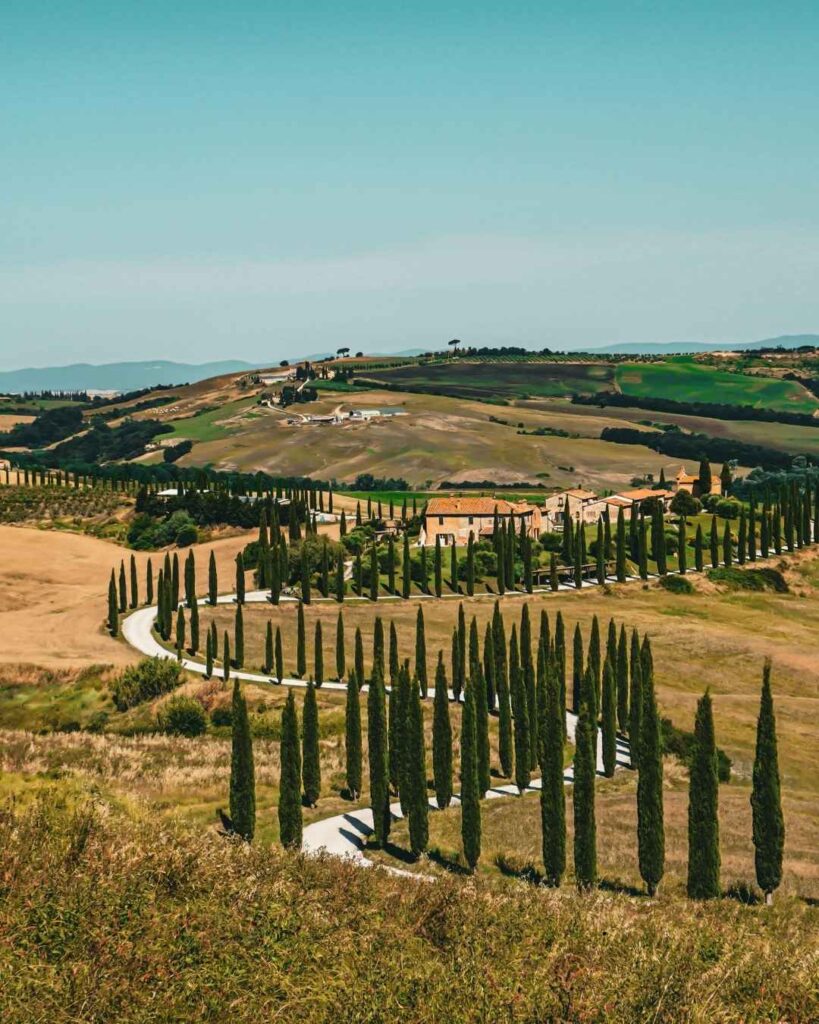
The first thing to understand is that Tuscany has a surprisingly robust train network. The main line connecting Florence to Rome runs through the heart of the region, stopping at major towns like Arezzo and Chiusi.
Branch lines snake off into the countryside, connecting smaller stations that serve places like Siena, Lucca, and Pisa. The trains are reliable, comfortable, and remarkably affordable, especially if you book in advance.
You can travel from Florence to Siena in about an hour and a half, winding through the Chianti countryside along the way. The journey from Florence to Lucca takes roughly the same time, passing through the dramatic landscapes of the Serchio valley.
From Lucca, it is a short hop to Pisa, where you can see the Leaning Tower without ever touching a steering wheel. This network is your skeleton, the backbone of your car-free Tuscan adventure, and it works beautifully.
But trains alone are not enough. Some of the most enchanting places in Tuscany, the hilltop villages that cling to their rocky perches like barnacles, are not directly served by rail. This is where the bus network comes into play.
Tuscany has a comprehensive system of buses that connect the smaller towns to the railway stations, allowing you to reach places like San Gimignano, Volterra, and Montalcino without breaking a sweat.
The buses are clean, punctual, and far less intimidating than navigating a rental car through medieval streets designed for donkeys.
The Art of the Hub-and-Spoke Strategy
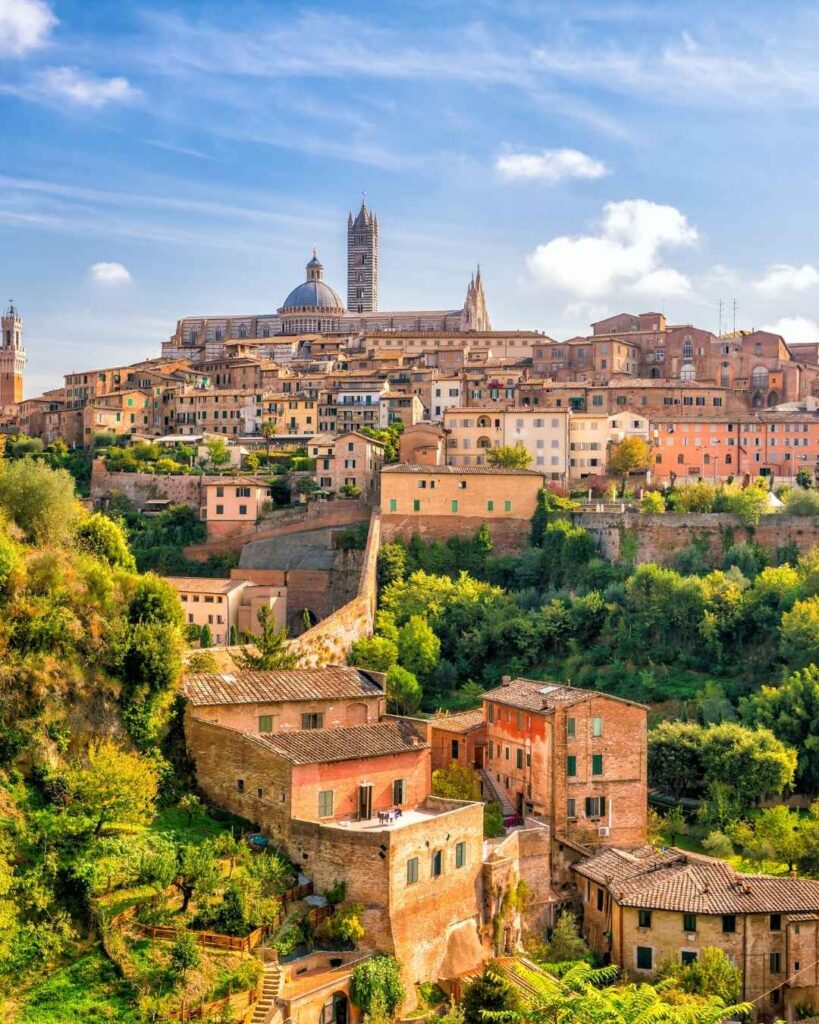
The secret to exploring Tuscany without a car is what I call the hub-and-spoke strategy. You choose a base town that is well-connected by train and bus, and you explore the surrounding area through day trips.
This is actually the way many Italians explore their own country, because even they know that driving in Tuscany can be a test of patience and nerve.
Siena is perhaps the perfect example. This magnificent city, with its breathtaking Piazza del Campo and its soaring cathedral, is a brilliant base for exploring southern Tuscany.
You can stay in Siena and take buses to the nearby hilltop towns of San Gimignano, with its famous medieval towers, and Volterra, with its Etruscan ruins and alabaster workshops.
You can hop on a train to the charming town of Montepulciano, known for its Vino Nobile, or to Pienza, the perfect Renaissance town that looks like a stage set for a period film.
The beauty of this approach is that you return to your base each evening. You do not need to find a new hotel every night or drag your luggage through cobblestone streets. You unpack once, settle in, and treat each day as an adventure.
You also get to experience the rhythm of a real Tuscan town after the day-trippers have left. The streets empty, the light turns golden, and you can hear your own footsteps echoing off ancient stone walls. That is the Tuscany that most visitors miss, and you can have it all because you are not chained to a car.
Florence works just as well as a base for exploring northern Tuscany. From the city, you can take trains to Lucca, Pisa, and the charming town of Prato.
You can bus it to Fiesole, the ancient Etruscan settlement that sits in the hills above Florence and offers the most spectacular views of the city. You can even take a train to the Cinque Terre for a day trip if you are feeling adventurous, though that particular journey requires a bit more planning.
The Journey Is the Destination
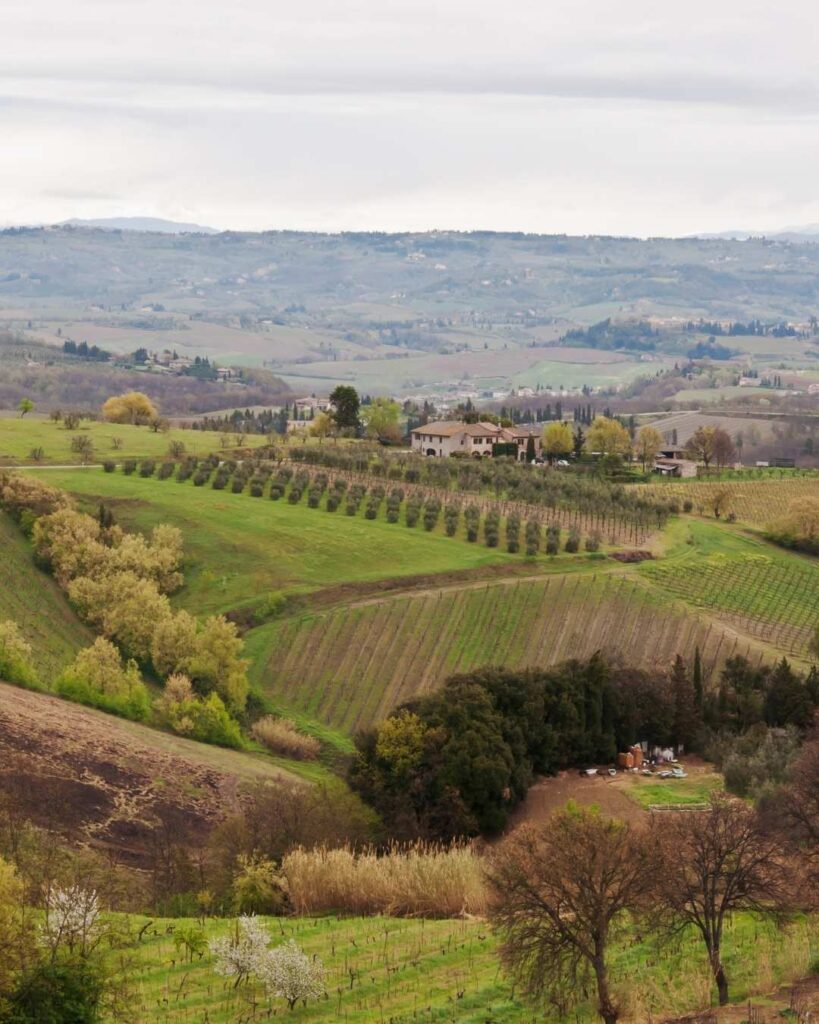
One of the greatest advantages of travelling without a car is that you actually see the landscape. When you drive, your eyes are fixed on the road. When you take the train or bus, your eyes are free to wander.
You watch the vineyards slide past, the olive groves glinting silver in the sun, the farmhouses perched on distant hills. You notice the changing colours of the earth, the way the light shifts as the afternoon wears on, the tiny details that you would miss if you were concentrating on not hitting a stray sheep.
The train from Florence to Siena is particularly glorious. It follows the valley of the river Elsa, passing through the Chianti Classico region, where the vines march in neat rows up the hillsides.
In spring, the fields are carpeted with wildflowers, red poppies and yellow buttercups and purple vetch that turn the landscape into a tapestry.
In autumn, the vineyards burn with colour, gold and crimson and orange, a final flamboyant gesture before the winter comes. You see all of this from the train window, and it stays with you long after you have arrived.
The buses, too, offer their own pleasures. The ride from Siena to San Gimignano is a rollercoaster through the Tuscan countryside, climbing and descending over hills that seem to go on forever.
The views from the bus are breathtaking, and because the bus is elevated, you see even more than you would from a car.
You also get the pleasure of watching the locals, the elderly women with their shopping bags, the students with their backpacks, the farmers in their work clothes, and you feel, for a brief moment, like you are part of something real.
When You Actually Want to Explore on Foot
Tuscany is also a paradise for walkers. The region is crisscrossed with ancient paths, pilgrim routes, and old mule tracks that connect villages and farms. You can walk from one hilltop town to another, following trails that have been used for centuries.
The Via Francigena, the old pilgrim road from Canterbury to Rome, passes through Tuscany, and sections of it are easily accessible from train and bus stops.
You do not need to be a serious hiker to enjoy walking in Tuscany. There are gentle strolls through olive groves and vineyards, paths that follow river valleys, and routes that take you through forests of oak and chestnut.
The walks are well-marked, and the local tourist offices can provide you with maps and suggestions. Some walks end at a farmhouse where you can taste olive oil and wine, which is the kind of reward that makes even the sorest feet feel better.
The Alternative Options Worth Considering
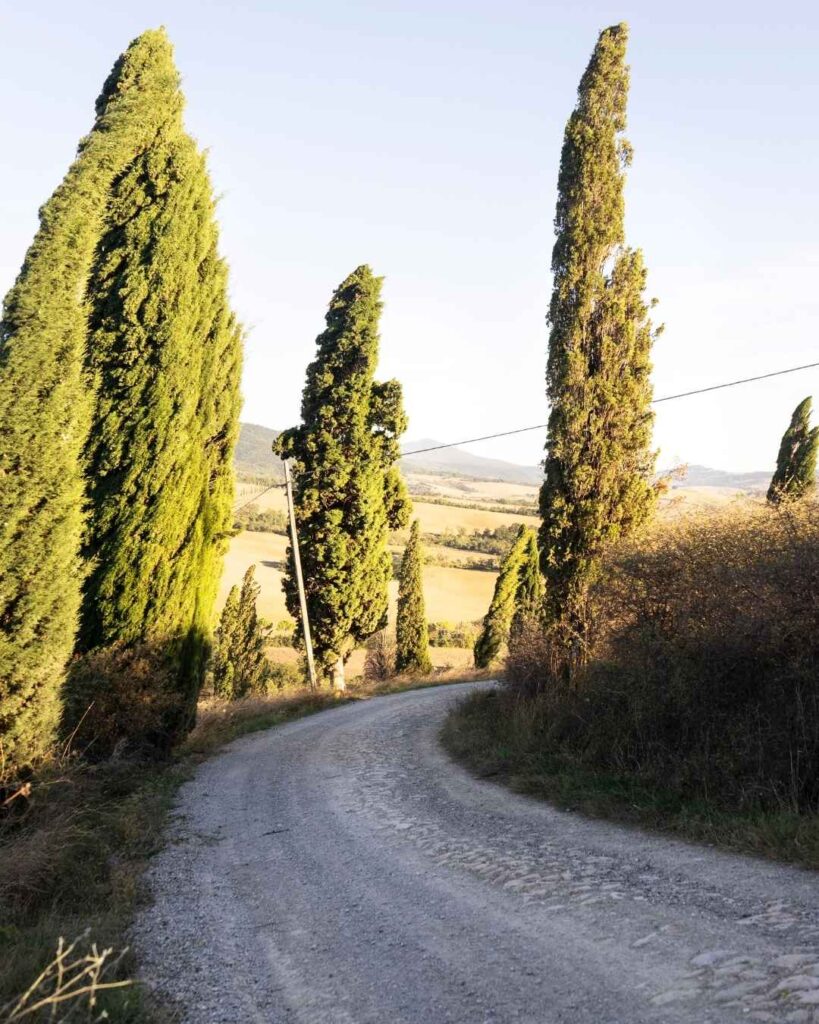
If you want a bit more independence without the stress of driving, consider renting a bicycle or an e-bike. Tuscany is surprisingly cycle-friendly, with quiet country roads and dedicated cycle paths in some areas. The rail network allows bikes on many trains, so you can combine train travel with cycling.
An e-bike, in particular, makes the hills manageable, even for those who are not in peak physical condition. You can explore at your own pace, stop wherever you like, and feel the sun and the wind on your face.
Another option is to arrange private transfers for specific days. If there is a remote winery you desperately want to visit or a tiny village that is not served by public transport, you can hire a driver for the day.
This is not as expensive as you might think, especially if you share the cost with other travellers, and it gives you the flexibility of a car without the stress of driving. The drivers are usually local, which means they know the roads, the shortcuts, and the best places to stop for lunch.
What You Lose and What You Gain
Let us be honest about what you lose by not having a car. You cannot spontaneously decide to visit a tiny village that you spot from the road. You cannot stop at that winery that you saw a sign for.
You cannot drive up to a remote monastery at sunset and have the place entirely to yourself. These are genuine losses, and I will not pretend otherwise.
But consider what you gain. You gain freedom from stress. You gain the ability to have a glass of wine with lunch, or two, or three, without worrying about driving back to your hotel. You gain the pleasure of looking out the window instead of at the road.
You gain the company of your fellow travellers, because you are not separated by a gearstick and a handbrake. You gain the experience of travelling like the locals do, using the same trains and buses that carry them to work and to school and to visit their grandmothers.
My wife and I have travelled through Tuscany three times without a car, and each time we have discovered something new. We have sat in train stations watching the sun set over the hills. We have struck up conversations with fellow passengers who recommended restaurants we would never have found otherwise.
We have arrived in towns just as the market was setting up, bought fresh bread and cheese and fruit, and found a park bench to eat our lunch. We have been forced to walk a little further, explore a little deeper, and take the time to really see the places we were visiting. We have never regretted it.
The Practicalities of Luggage
The one genuine challenge of travelling without a car is your luggage. You will be carrying your bags on and off trains and buses, and you will be walking from stations to your accommodation. This is not a problem if you pack smartly as I wrote on this page.
The advice from earlier applies even more here: pack light, pack versatile, and leave room for what you will buy. A suitcase with wheels is fine for the main train stations, but a backpack or a travel bag that you can carry comfortably is better for the smaller towns where cobblestones and uneven pavements make wheeled luggage a nightmare.
Consider using the luggage storage services that are available in the major towns. You can leave a bag at the station in Florence or Siena and explore with just a daypack, returning later to collect it.
This is particularly useful if you are planning a day trip to a town where the train station is outside the centre. You can travel light, enjoy your day, and retrieve your belongings when you are ready to move on.
The Best Itinerary for a Car-Free Tuscan Adventure
If you are looking for a suggested itinerary, here is what I would recommend for a car-free trip of about ten days. Start in Florence, where you can spend three days exploring the city and taking day trips to Fiesole and Lucca.
From Florence, take the train to Siena and spend three days there, using it as a base for day trips to San Gimignano, Volterra, and the Val d’Orcia.
Then move to Pisa for two days, using it to explore Lucca again if you missed it, as well as the coastal towns of Viareggio and Livorno. Finally, if you have time, take the train to Rome and fly home from there, or return to Florence for your departure.
This itinerary gives you variety, city and countryside, art and nature, history and gastronomy. It is relaxed enough that you are not constantly rushing, but full enough that you feel you have really experienced the region. And it is all achievable without a car, using the excellent public transport network that Tuscany offers.
The Unexpected Joys
The best moments of a car-free trip are often the ones you did not plan. The train that is delayed, forcing you to sit in a station and watch the light change.
The bus that drops you at a village where you discover a festival in progress, with music and food and dancing. The walk that turns into an adventure when you take a wrong turn and find yourself in a vineyard, invited to taste the wine by the owner.
These are the moments that make a trip memorable, and they are more likely to happen when you are not tied to a timetable and a rental agreement.
Tuscany is a place that rewards slowness. It is a region that asks you to linger, to sit on a bench and watch the clouds move across the hills, to sip a glass of wine and listen to the sound of the wind in the olive trees.
When you travel without a car, you have no choice but to slow down. You wait for the train, you wait for the bus, and in the waiting, you find a peace that the drivers never experience.
In Conclusion
So let me give you the final verdict on exploring Tuscany without a car. It is not only possible, but it is also preferable. The trains and buses are good, the walking is wonderful, and the freedom from stress is priceless.
You will see more, experience more, and remember more than you would from behind a windscreen. You will fall into the rhythm of the region, the gentle pace that has sustained Tuscany for millennia.
You will also join a noble tradition. For centuries, travellers have come to Tuscany without cars, because cars did not exist. They came on foot, on horseback, in carriages, and they saw the same hills and valleys that you will see from the train window.
They wrote about it in their journals, painted it on their canvases, and composed poetry about its beauty.
They fell in love with Tuscany the way you will fall in love with it, slowly, completely, without the distraction of a steering wheel in your hands.
Again, feel free to go through the list below of my Italy recommendations that I have crafted after years of travel to this beautiful country:
- Packing List: Things Not to Go to Italy Without
- Must-Do Things: Unforgettable Experiences
- Where to Stay: Best Hotels in Italy.
- Where to Stay in Rome: Rome’s Best Neighborhoods
- Where to Stay in Florence: Picking the Best Area
- Where to Stay in Venice: Venice’s Best Districts
- Italy’s Cobblestone Streets: Best Shoes For the Job
- Backpack or Suitcase?: Italy Luggage Guide
- Travel Insurance: Always Be Covered
- E-Sim: Be Connected At All Times