

At some point during your trip to Italy, it hits you—you’ve made a big mistake. But it’s not about forgetting to pack something. It’s about trying to do way too much. You’re standing in a Florence plaza, exhausted from hauling your suitcase through another train station, and you can’t even remember which church you visited that morning or what pasta you had for lunch.
Everything starts to blend together, and you haven’t had a single chance to just sit and relax. Italy is a place that’s meant to be enjoyed slowly. The best trip isn’t about seeing everything—it’s about seeing the right things, at a comfortable pace.
The first thing people usually ask is, “How many days do I need?” And the truth is, it depends on what you want. A week is possible, but you’ll feel rushed. For first-timers who want to visit a few different cities without constantly packing and unpacking, 10 days to two weeks is just about perfect.
Three weeks is the holy grail, giving you time to explore at a genuinely relaxed pace, add off-the-beaten-path destinations, and still have afternoons where you do absolutely nothing but sit in a piazza with a glass of wine.
Trip length should drive your priorities, and short trips reward focus while longer trips let you savour slower regions and side trips. A three-day trip works best with one base city and minimal transfers, while two weeks allows a regional loop without constant packing.
For seven days, expect two to three train transfers, each lasting between one and three hours. For ten days, plan for three to five transfers. For fourteen days or more, you might consider one internal flight or longer scenic drives. For three weeks, the world truly opens up, and you can craft a journey that feels less like a checklist and more like a life you are living.
The Short Break Itinerary

If you have less than a week in Italy, resist the temptation to see three cities. I completely understand the pressure to see the 3 main cities (Rome, Florence and Venice) in a week but it is always a mistake.
You will spend half your trip on trains and the other half checking in and out of hotels. Instead, choose two cities and really get to know them. This is the secret that seasoned travelers understand, Italy is not a theme park, it is a place where you are meant to linger.
Option 1: Rome and Florence
This is the classic pairing for good reason. Rome gives you ancient history, Vatican grandeur, and chaotic Roman energy. Florence offers Renaissance beauty, intimate streets, and world-class art. With five days, you could spend three in Rome and two in Florence, taking a day trip from Florence to the Tuscan countryside.
The high-speed train between them takes just over an hour and a half, so the transfer is painless. In Rome, you have time for the Colosseum, the Roman Forum, the Pantheon, the Trevi Fountain, and a full day at the Vatican. In Florence, you can see the Duomo, the Uffizi, the Accademia, and cross the Ponte Vecchio.
From Florence, you can take a bus to Fiesole, the ancient Etruscan settlement perched in the hills above the city. The views of Florence from up there are spectacular, and the Roman theatre ruins are a peaceful contrast to the crowded streets below. Alternatively, book a one-day tour to the Tuscan region that includes Pisa, San Gimignano, wine tasting in Chianti, and Siena. This one here is the best tour to book.
Option 2: Rome and Venice
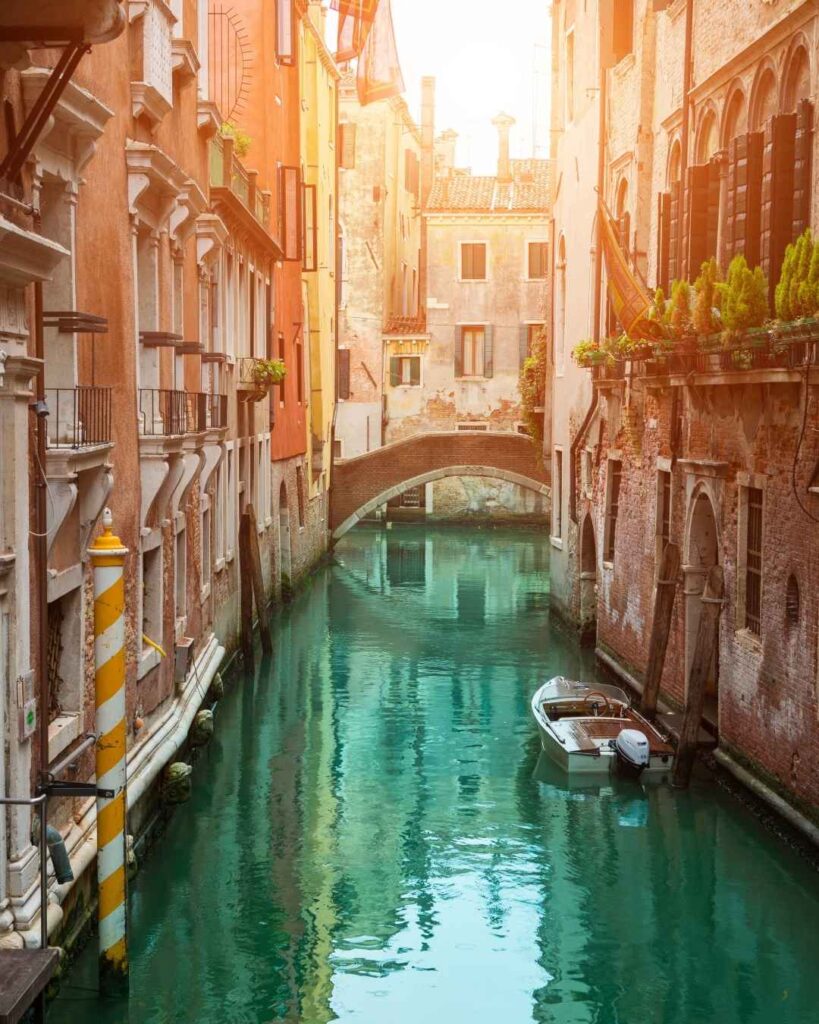
This pairing offers the ultimate contrast between ancient power and floating fantasy. Rome is earthy, loud, and monumental, while Venice is ethereal, quiet in its own way, and utterly unique. With five days, spend three in Rome and two in Venice. The high-speed train between them takes about three hours and forty minutes, which is perfectly manageable for a morning transfer.
In Venice, you have just enough time for the essentials: Piazza San Marco, the Basilica, the Doge’s Palace, a gondola ride, and the Rialto Bridge. Use your extra morning to simply get lost in the labyrinth of canals and alleyways. Take the vaporetto to the outer islands of Murano, where they blow glass, or Burano, where the fishermen’s houses are painted in rainbow colours. The light in Venice is like nowhere else, and watching it change over the canals is worth the trip alone.
Option 3: Florence and Venice
For the art and architecture lover, Florence and Venice is a dream combination. Both cities are walkable, visually overwhelming, and packed with cultural treasures. With five days, spend three in Florence and two in Venice. The train between them takes just over two hours.
In Florence, you have time to truly appreciate the Renaissance masterpieces without rushing. Visit the Uffizi in the morning when it is quieter, climb Brunelleschi’s Dome for the view, and spend an afternoon wandering the Oltrarno.
From Florence, take a day trip to Lucca, a charming walled city with a perfectly preserved historic centre. You can rent a bicycle and ride along the top of the Renaissance walls, which is a uniquely Italian experience. The city is also famous for its oval-shaped Piazza dell’Anfiteatro, which follows the outline of the ancient Roman amphitheatre.
Read: The best areas to stay in Florence
Option 4: Rome and the Amalfi Coast

For those who crave sun, sea, and dramatic landscapes, this pairing is pure magic. Rome gives you history and culture, while the Amalfi Coast offers some of the most spectacular coastal scenery in the world. With five or six days, spend three in Rome and two or three along the coast. The train from Rome to Naples takes about an hour, and from there you can catch the local Circumvesuviana train to Sorrento, the gateway to the coast.
Base yourself in Sorrento for easy access to the coast, and take day trips to Positano, Amalfi, and Ravello. The bus ride along the coastal road is not for the faint of heart, but the views are absolutely breathtaking. You can also take a boat trip to the island of Capri, with its famous Blue Grotto and glamorous atmosphere. The Amalfi Coast is a place that demands you slow down, eat long lunches overlooking the sea, and surrender to the rhythm of the waves.
If you must absolutely do 2 cities, you can take a day trip from Rome to Positano, which also includes a guided tour of Pompeii. This is the one I recommend.
The Ten-Day Itinerary

A ten-day version of the classic route gives you breathing room. Consider four nights in Rome, two in Florence, one in Verona, and three in Venice. The extra days mean you are not constantly checking your watch, and you can add a day trip to the countryside or a coastal town without feeling rushed.
Alternatively, with ten days you can focus on southern Italy, taking the train through Naples, exploring the ruins of Pompeii, and slowing down along the Amalfi Coast. This route moves from crowded city streets to quieter coastal towns, with plenty of food and history along the way. You can even add a stop in Bologna, Italy’s culinary capital, to break up the journey between Venice and Florence. Bologna is a city of porticoes, towers, and the best food in the country, and it deserves at least a night.
Another option for ten days is to combine Rome with a deep dive into Tuscany. After three or four days in the capital, base yourself in Florence and take day trips to Siena, San Gimignano, and the Val d’Orcia. You can even spend a night in a farmhouse in the countryside, waking up to the sight of rolling hills and cypress trees. This is the Tuscany of postcards and paintings, and it is entirely accessible without a car if you use the excellent train and bus network.
Read: Italy packing guide
The Two-Week Itinerary
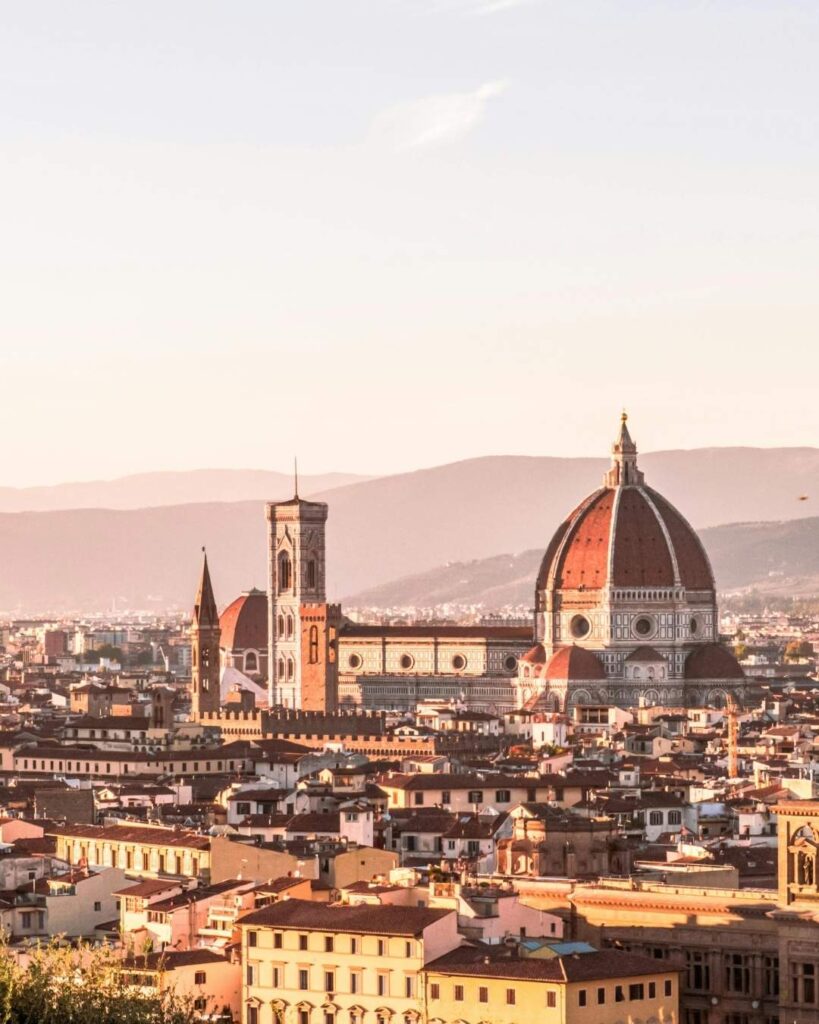
With fourteen days, you can truly spread out. You can see Venice and the northern lakes, head through Florence and Rome, and continue south to Pompeii or Capri. Or you might focus on central regions like Umbria and Emilia-Romagna, where food traditions and small towns take centre stage. A two-week trip gives you time to build in a mix of city sightseeing and countryside relaxation.
One well-structured fourteen-day plan begins with four days in Rome to explore the ancient landmarks and Vatican City, followed by three days in Florence for Renaissance immersion. From there, you choose your coastline, either the colourful villages of Cinque Terre or the dramatic cliffs of the Amalfi Coast, before stopping in Naples for pizza and a day at Pompeii. The final three days are spent in Venice, allowing you to explore the canals and the outer islands of Murano and Burano.
Another approach for two weeks is to spend more time in the south. Start in Naples, using it as a base for Pompeii and Herculaneum, then move to Sorrento and explore the Amalfi Coast at a leisurely pace. Take a boat to Capri, hike the Path of the Gods, and eat seafood overlooking the Mediterranean. Then head north to Rome for a few days before flying home. This itinerary has a completely different energy from the classic triangle, slower, more coastal, and more focused on the dolce vita.
Read: Cinque Terre vs The Amalfi Coast
The Three-Week Itinerary
Three weeks in Italy is a gift, and you should treat it as such. With twenty-one days, you can craft an itinerary that includes the classics, adds some hidden gems, and still leaves afternoons for doing absolutely nothing. This is the itinerary that will make you feel less like a tourist and more like someone who actually lives there.

Week 1: The North
Begin in Venice, spending three nights in this impossible city. Take a day trip to the Prosecco hills to taste the sparkling wine that comes from this region, or visit the charming town of Padua with its Giotto frescoes. Then take the train to Verona for a night or two. The city of Romeo and Juliet is surprisingly beautiful, with a perfectly preserved Roman amphitheatre that still hosts operas in the summer.
From Verona, head to Lake Garda or Lake Como for a few days of pure relaxation. The lakes are the playground of the Italian aristocracy, with grand villas, gardens, and views that will leave you speechless.
Next, move to Bologna for two nights. This is the culinary heart of Italy, and you should eat everything. Tortellini, tagliatelle al ragù, mortadella, and the city’s famous lasagna, Bologna is the city where you go to gain weight happily. The porticoes that line the streets are a UNESCO World Heritage site, and the city’s medieval towers offer spectacular views.
Week 2: The Centre
From Bologna, take the train to Florence for three or four nights. You have more time here than the shorter itineraries, so you can visit the museums without rushing, take a cooking class, and spend a full day in the Tuscan countryside. Consider a day trip to Siena, with its stunning shell-shaped piazza, and another to San Gimignano, the town of towers. If you have a car for this leg, drive through the Chianti region and stop at a winery for a tasting.
Then move south to Rome for four or five nights. With this much time, you can visit the Vatican Museums without rushing through the Sistine Chapel, explore the Baths of Caracalla, and spend an afternoon in the Appian Way, the ancient road lined with tombs and catacombs. Take a day trip to Ostia Antica, Rome’s remarkably preserved ancient port city, which is often overlooked but absolutely fascinating. Spend an evening in Trastevere and another in Monti, the hip neighbourhood with vintage shops and wine bars.
Week 3: The South
From Rome, take the train to Naples for two nights. The city is chaotic and gritty but also deeply authentic and home to the best pizza on earth. Use Naples as a base for a day trip to Pompeii, the city frozen in time by the eruption of Vesuvius. You can also visit Herculaneum, which is smaller but even better preserved.
Then head to Sorrento for three nights, using it as a base for exploring the Amalfi Coast. Take the bus to Positano, with its pastel houses cascading down the cliff to the sea. Visit Ravello, perched high above the coast, with its breathtaking gardens and villa concerts. Take a boat to Capri and ride the funicular up to the town for a day of glamour and beauty.
If you have time, continue further south to Puglia, the heel of the boot, with its whitewashed towns and crystal-clear seas. Or head to Sicily for a few days, exploring Palermo, the Valley of the Temples, and the charming town of Taormina. Three weeks gives you enough time to make this leap, and Sicily is an entirely different Italy, more Arab, more Greek, more wild.
The Ultimate Three-Week Route

For those who want a route that is both comprehensive and manageable, here is a suggested twenty-one-day plan. Start with three nights in Venice, then two in Verona. Take the train to Florence for four nights, including a day trip to Siena. Head to Rome for five nights, with a day trip to Ostia Antica. Move to Naples for two nights and visit Pompeii. Then spend three nights in Sorrento to explore the Amalfi Coast. Finally, take the train back to Rome for a final night before flying home.
This itinerary gives you a bit of everything: canals and lakes, Renaissance art and Tuscan hills, ancient ruins and coastal drama. You never spend more than three hours on a train, and you have enough time in each place to really feel it. You will also have afternoons where you do nothing but drink espresso and watch the world go by, and that is exactly as it should be.
How to Pace Yourself
The most common mistake first-time visitors make is trying to do too much. Italy is a country best enjoyed slowly, and you should leave room to wander, to sit at a café, and to stumble into a neighbourhood market. A realistic daily maximum is two major timed sites plus one relaxed walking or food stop to keep energy up.
For the three-week itinerary, build in at least one completely unstructured day per week. Spend it wandering, shopping at a local market, or simply sitting in a piazza with a book. These are the days that become the fondest memories, not the days spent rushing from museum to museum.
You will not see everything, and that is perfectly fine. Italy will still be here when you return, and you will have a reason to come back. The best moments often happen off-schedule, and those are the ones you will remember long after you have returned home.
A Few Things to Note
Book the big attractions in advance. The Colosseum, Uffizi, Vatican Museums, and the Accademia all have timed entries. Arrive without a booking, and you may spend half your day in a queue. High-speed trains are your best friend, with the Frecciarossa and Italo trains connecting the major cities comfortably. Book in advance for the best prices.
Consider a rail pass if you are taking more than four train journeys, but often individual tickets booked in advance are cheaper. For the Amalfi Coast and other rural areas, buses are your primary mode of transport, and they are reliable and affordable. Learn the local bus schedules and plan your day trips accordingly.
Learn a few words of Italian. A simple “buongiorno” and “grazie” go a long way. Dress codes matter in churches, so cover your shoulders and knees. And remember that lunch is the main meal in Italy, so adjust your schedule accordingly if you want to eat like a local. Dinner rarely starts before eight, and a proper Italian meal should be savoured, not rushed.
NOTE BEFORE YOU GO: Italy rewards travelers who go prepared. And it is easy to ruin your trip. I have a checklist for you of things you should never go to Italy without. CHECK IT OUT HERE. I have also curated a list of some of the best hotels in Italy. I would highly recommend checking them out before booking. THESE ARE THE BEST HOTELS IN ITALY. And for unique experiences, attractions, and tours, don’t book before CHECKING THIS OUT. Thank me later!