

The Amalfi Coast is one of the most spectacular stretches of coastline on earth.
Stretching roughly fifty kilometres from Sorrento to Salerno, this UNESCO World Heritage site is a place where cliffs plunge into the Tyrrhenian Sea, pastel-coloured villages cling to improbable slopes, and the views at every turn are so ridiculous they almost feel fake.
But here is the thing about the Amalfi Coast. It is not a place you conquer. It is a place you surrender to. The best itineraries are not about ticking off every town. They are about finding a rhythm that lets you breathe, eat, swim, and stare at the sea until your soul feels full.
So, how long should you stay on the Amalfi Coast? Three days is a taster, enough to get a sense of the place but not enough to truly relax. Five to seven days is the sweet spot, giving you time to explore multiple towns without feeling rushed.
Ten days or more means you can add Capri, Pompeii, and the Path of the Gods without breaking a sweat. The coast rewards slowness, and the perfect itinerary is not about seeing everything. It is about seeing the right things at the right pace.
Before you read further, remember that Italy rewards travelers who go prepared. I have prepared a checklist of things you must have when visiting Italy if you want to have an unforgettable trip. See the checklist here.
How to Get There Without Losing Your Mind
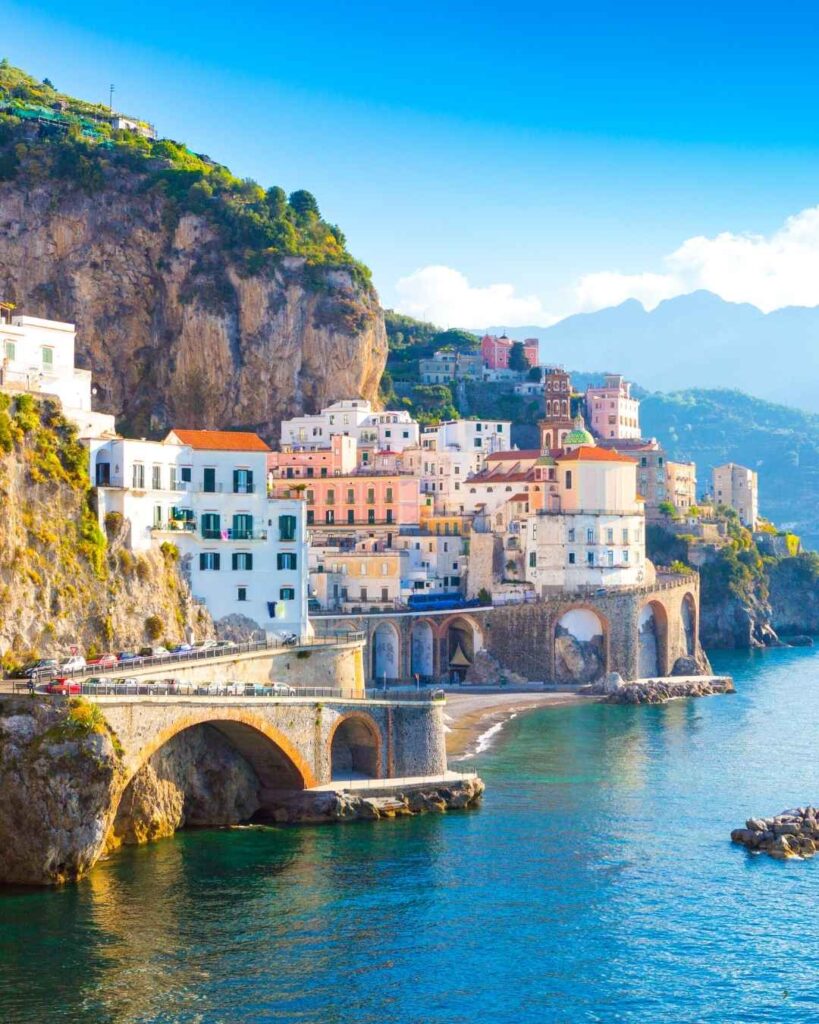
The closest airport is Naples International Airport, and from there you have several options. The most straightforward route is to take the Alibus from the airport to Napoli Centrale, then catch the Circumvesuviana or Campania Express train to Sorrento.
The train takes about an hour and costs next to nothing. It is not glamorous, but it gets the job done.
Alternatively, you can take a high-speed train from Rome to Naples, which takes just over two hours, and then transfer to Sorrento or Salerno. Salerno is often the smarter choice for those arriving from the south, as it has excellent train connections and ferries that run along the coast.
If you are staying in Positano or Amalfi, you can take a ferry from Naples directly, which is infinitely more pleasant than the bus and gives you your first taste of that famous coastline.
And here is a piece of advice you will thank me for later. Do not rent a car. I know it looks tempting on paper: the freedom, the romance of driving along the coast, the ability to stop wherever you like.
But the reality is narrow roads, hairpin bends, drivers who have absolutely no fear, and parking that costs more than your hotel room.
The Amalfi Coast is one of the few places in the world where public transport is genuinely the better option. Ferries are faster than buses, buses are cheaper than cars, and walking lets you see things you would miss from behind a windscreen.
The Best Bases for a Car-Free Trip
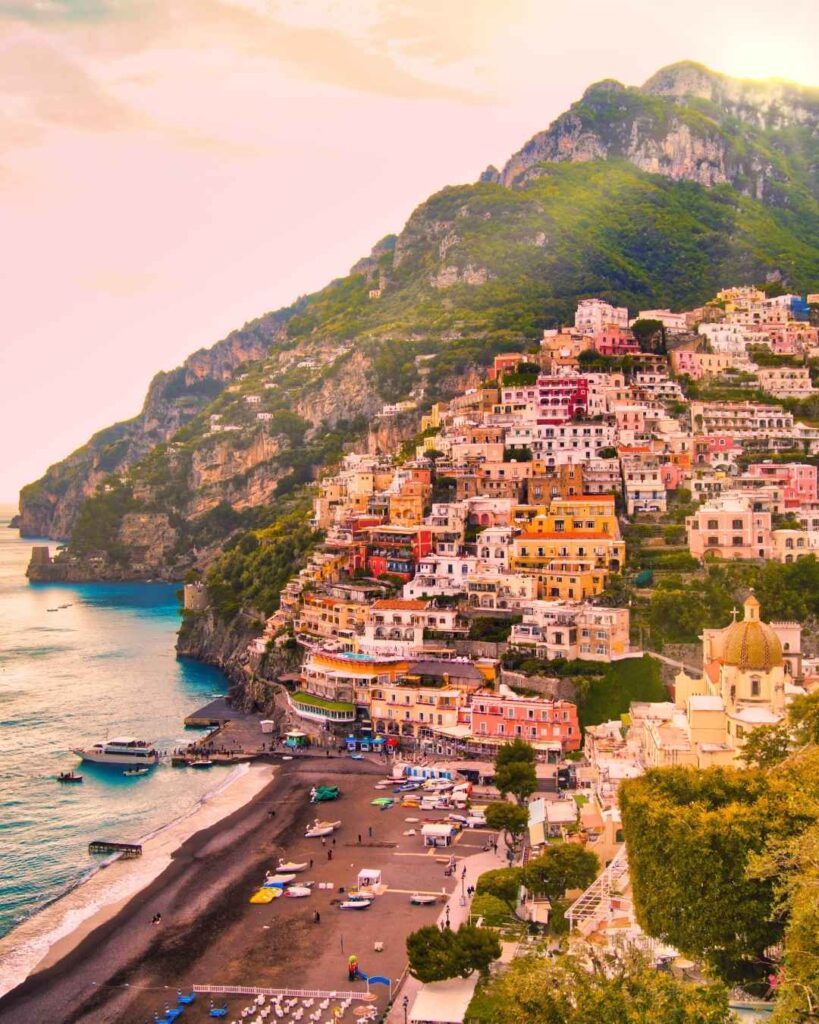
Choosing where to stay is the single most important decision you will make. The wrong base makes every day feel like a logistics exam. The right base gives you ferries, buses, food, views, and easy onward travel without needing to perform a three-act drama every morning.
Sorrento is the easiest all-rounder for first-timers. It is not technically on the Amalfi Coast, but it sits at the western gateway and offers the best range of accommodation, from luxury hotels to budget-friendly B&Bs. It has a flat historic centre, excellent transport connections, and ferries to Capri, Positano, and Amalfi.
The Circumvesuviana train runs from Sorrento to Pompeii and Naples, making it ideal for day trips. Sorrento is the safe choice, the sensible choice, and the choice I would recommend for anyone visiting the Amalfi Coast for the first time.
Amalfi town is the best true coastal base if you want to be in the middle of things without the Positano price tag. It sits at the heart of the coastline, with ferries and buses connecting to everywhere else.
The town itself has a magnificent cathedral, a lovely seafront, and plenty of restaurants that do not charge the earth. Amalfi is also the best base for walking, with trails leading up into the hills and along the coast.
Salerno is the underrated option. It is less glossy than Sorrento, less famous than Positano, but far more practical than many travellers expect.
The train station is useful, ferries run to Amalfi, Positano, and the smaller towns in season, and accommodation is usually much better value. Salerno works brilliantly if you are arriving from Rome by train or heading further south.
Positano is the most beautiful and the most awkward. It is the postcard town, the one everyone dreams of, but it is also expensive, hilly, and a nightmare with luggage.
Positano works best for travelers with light bags, a bigger budget, and accommodation close to the ferry pier or bus stop. If you stay here, choose your hotel carefully. “Near the centre” can mean anything from a five-minute stroll to a hundred steps that feel like a personal insult.
Read: The best area to stay in when exploring the Amalfi Coast
The Classic Five-Day Itinerary
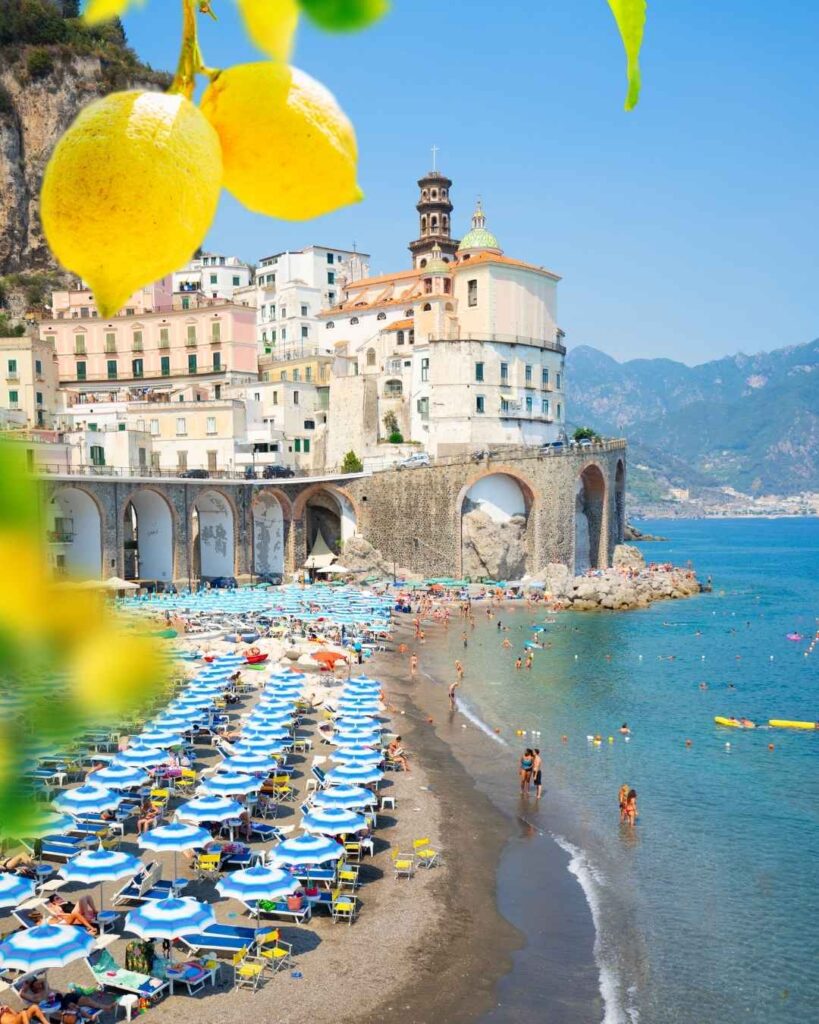
Five days on the Amalfi Coast gives you enough time to explore the highlights without feeling rushed. This itinerary is designed for first-timers who want to see the icons while leaving room for the unexpected.
Day One: Arrival and Sorrento
Begin your trip in Sorrento, the perfect soft landing. Take the train from Naples, check into your hotel, and spend the afternoon getting your bearings. Piazza Tasso is the bustling heart of the town, filled with cafes, shops, and the kind of energy that makes you feel instantly on holiday.
Walk down to the Villa Comunale for one of those views that instantly set the tone for the whole week, the Bay of Naples stretching out before you, Mount Vesuvius looming in the distance.
In the evening, wander down to Marina Grande, the old fishing harbour, and find a restaurant serving freshly caught seafood.
The lemon groves that terrace the hillsides are everywhere, and you will quickly notice that lemons are not just a fruit here but a way of life. Try the lemon sorbet, which tastes like sunshine in a cup, and prepare yourself for the days ahead.
Day Two: Positano
From Sorrento, take the ferry to Positano, the crown jewel of the Amalfi Coast. The journey takes about an hour and gives you your first proper view of the coastline from the water.
As you approach, you will understand why people say no words or photos can truly do it justice. The town cascades down the hillside in a riot of pastel colours, with the golden dome of Santa Maria Assunta Church rising above Spiaggia Grande beach.
Spend the morning wandering the steep lanes, pausing at artisan boutiques and sea-view corners. The walk down to the beach is the classic Positano experience, and the view from the church terrace is worth the climb.
For a quieter beach experience, head to Fornillo, a short walk from the main beach, where the crowds thin out and the water is just as blue.
In the afternoon, take a boat tour along the coast. The views of Positano from the sea are dramatically better than from the shore, and you can stop at hidden coves for a swim.
Sunset in Positano is a ritual, and the best place to watch it is from a boat or from one of the cliffside bars that seem to float above the sea. Return to Sorrento by ferry in the evening, tired but happy.
Day Three: Amalfi and Atrani
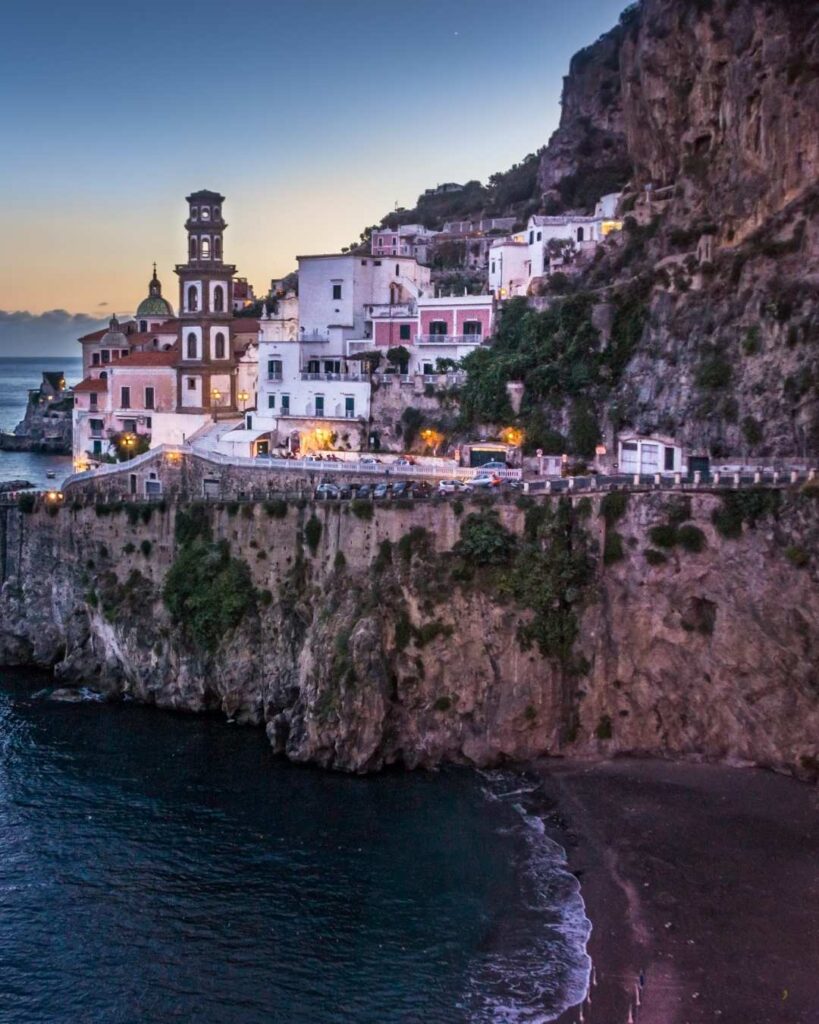
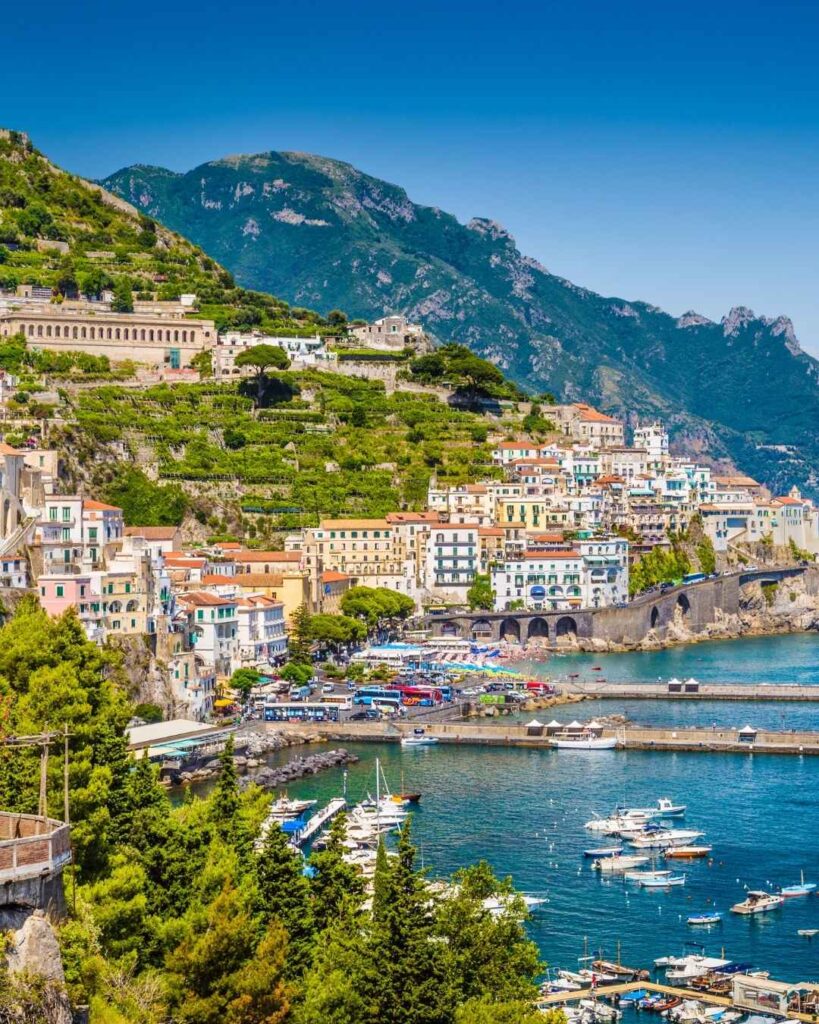
Take the ferry from Sorrento to Amalfi, which takes about an hour and a half. Amalfi was once a maritime republic to rival Venice and Genoa, and its history is written in the architecture of its magnificent cathedral.
The Duomo di Sant’Andrea is the town’s landmark, a stunning blend of Byzantine, Gothic, and Baroque styles, and climbing its steps gives you a view that is worth the effort.
Spend the morning exploring the town centre, with its narrow streets, lemon-scented air, and ceramic shops that sell everything from plates to entire tiled murals. Walk fifteen minutes to Valle dei Mulini, an abandoned paper mill and waterfall that feels like a hidden world away from the crowds.
Amalfi is also the best place to try the local seafood, and the restaurants along the harbour serve dishes that taste like they were pulled from the sea minutes before.
In the afternoon, walk to Atrani, the smallest town on the coast and one of the most charming. It is just a twenty-minute walk from Amalfi, a flat and easy stroll that follows the coast.
Atrani has a lovely beach, a tiny piazza that feels like a living room, and none of the crowds of its larger neighbour. Spend the late afternoon swimming in the crystal-clear water and watching the fishermen bring in their catch. Return to Sorrento by ferry in the evening.
Day Four: Ravello
Take the ferry from Sorrento to Amalfi and then catch the bus up to Ravello, which sits high above the coast. The bus ride is an adventure in itself, climbing through terraced lemon groves and offering increasingly spectacular views.
Ravello is the coast’s most elegant town, a place of grand villas, lush gardens, and a serenity that feels almost otherworldly.
Visit Villa Rufolo, with its famous gardens that offer what is arguably the finest view on the entire Amalfi Coast. The villa’s terraces seem to float over the sea, and Wagner was so inspired by them that he composed part of Parsifal here.
Then walk to Villa Cimbrone, with its Terrace of Infinity, a balcony that seems to extend into the sky, offering panoramic views of the coastline that will make you feel like you are dreaming.
Spend the afternoon wandering Ravello’s quiet streets, stopping at ceramic workshops and tiny cafes.
The town has a refined, almost aristocratic atmosphere, and you can easily spend a whole day just sitting in a piazza, sipping wine, and watching the clouds drift across the sea. Take the bus back down to Amalfi and catch the ferry to Sorrento.
Day Five: Capri
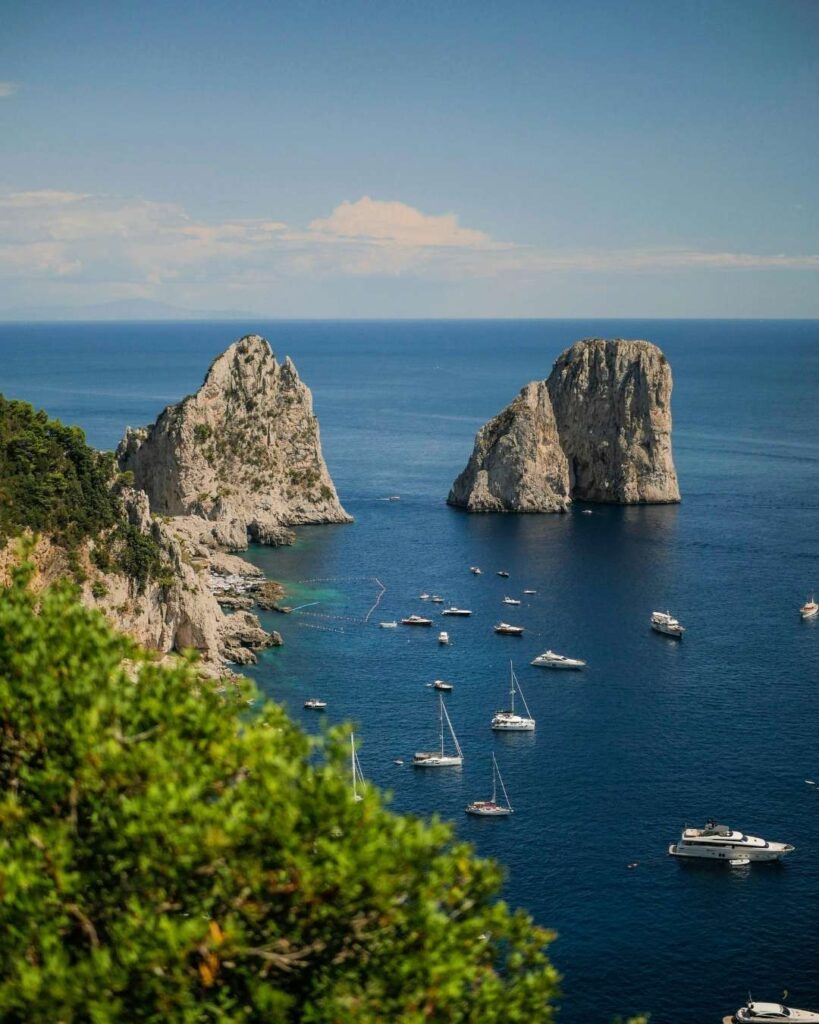
The final day of your five-day itinerary is devoted to Capri, the island that has captivated visitors for millennia. Take the ferry from Sorrento to Capri, which takes about twenty minutes. The ferry glides into the Marina Grande, and you are instantly surrounded by the glamour and beauty that has made Capri legendary.
Take the funicular up to Capri town, where the main square, the Piazzetta, is the social heart of the island. It is small, elegant, and always buzzing with people sipping cocktails and watching the world go by.
The shopping here is world-class, with designer boutiques and artisan shops selling everything from handmade sandals to limoncello.
In the afternoon, take a boat tour around the island. The Blue Grotto is the most famous attraction, a sea cave where the water glows an ethereal blue, but the entire coastline of Capri is spectacular.
You can also take the chairlift to Monte Solaro, the highest point on the island, for views that stretch all the way to Naples. Return to Sorrento in the evening, tired, sun-kissed, and already planning your return.
The Seven-Day Itinerary
A week on the Amalfi Coast allows you to slow down and explore more deeply. This itinerary includes all the highlights of the five-day plan, but with more time for relaxation and a few additional excursions.
Days One and Two: Sorrento
Spend two full days in Sorrento, giving yourself time to really get to know the town. Day one is for settling in, exploring the historic centre, and watching the sunset from Villa Comunale.
Day two is for the small pleasures: visit the lemon groves, take a cooking class to learn how to make fresh pasta, and wander the backstreets where the tourists rarely go. In the evening, walk to Marina Grande for dinner, and order whatever the fishermen caught that day.
Day Three: Positano
Take the ferry to Positano and spend the whole day there. This gives you time to explore the town properly, to walk down to Fornillo beach, to take a boat tour along the coast, and to watch the sunset from a cliffside bar. Positano is a place that rewards laziness, and a full day lets you embrace that philosophy completely.
Day Four: Amalfi and Atrani
Follow the same itinerary as the five-day plan, but take your time. Spend the morning at the Duomo, wander the backstreets, and walk to the paper mill in the valley. In the afternoon, walk to Atrani and stay until sunset. The small town is magical in the evening, with the lights reflecting off the water and the sound of the sea filling the air.
Day Five: Ravello
Ravello deserves a full day, and you should give it one. Take the bus up from Amalfi early in the morning, before the crowds arrive, and have the gardens of Villa Rufolo almost to yourself.
Visit Villa Cimbrone, have a long lunch overlooking the coast, and spend the afternoon in the town’s quiet streets. The evening in Ravello is particularly special, and if there is a concert at Villa Rufolo, try to get tickets. There is something magical about hearing classical music float across the terrace as the sun sets over the sea.
Day Six: The Path of the Gods
This is one of the best things you can do on the Amalfi Coast, and it deserves its own day. The Path of the Gods is a hiking trail that runs along the ridge above the coast, offering views that are so spectacular they are almost overwhelming.
The most popular section runs from Bomerano to Nocelle, above Positano, and takes about three hours to walk.
Start early in the morning to avoid the heat, and bring plenty of water and sunscreen. The trail is relatively easy, with some steep sections, but the views are your reward.
You walk along the spine of the mountain, with the sea on one side and the mountains on the other, and every corner reveals a view that looks like a painting. When you arrive in Nocelle, you can walk down the thousand steps to Positano or catch the bus. Either way, you will feel like you have earned your dinner.
Day Seven: Capri
Take the ferry to Capri for the day, following the same plan as the five-day itinerary. If you have time, consider taking the boat tour around the island, which gives you views of the Faraglioni rocks and the Green Grotto.
Capri is a place that has been enchanting visitors for two thousand years, and a full day is barely enough to scratch the surface, but it is enough to understand why people fall in love with it.
The Ten-Day Itinerary
Ten days on the Amalfi Coast is a luxury, and you should treat it as such. This itinerary builds on the seven-day plan, adding more day trips and more time for doing absolutely nothing.
Days One to Three: Sorrento
Three days in Sorrento gives you time to settle in, explore the town, take a cooking class, and perhaps visit the nearby town of Vico Equense, which has a beautiful beach and excellent seafood.
You can also take a day trip to the island of Ischia, which is less famous than Capri but equally beautiful, with thermal springs and a more laid-back atmosphere.
Day Four: Positano
Take the ferry to Positano for the day, following the same plan as before.
Day Five: Amalfi and Atrani
Follow the same plan as the seven-day itinerary.
Day Six: Ravello
A full day in Ravello, with perhaps a concert in the evening.
Day Seven: The Path of the Gods
Walk the Path of the Gods at your own pace, and spend the afternoon in Positano, recovering with a long lunch and a swim.
Day Eight: Capri
Take the ferry to Capri, but this time, consider spending the night. Staying overnight on Capri is a completely different experience from a day trip, and it is worth the splurge. The island empties out in the evening, the Piazzetta becomes intimate, and you can have dinner at a restaurant overlooking the sea.
Day Nine: Capri
Spend the morning on Capri, visiting the Villa Jovis, the ruins of Tiberius’s palace, and taking the chairlift to Monte Solaro. In the afternoon, take the ferry to Naples and spend the night there. Naples is chaotic, loud, and wonderful, and it deserves at least one night.
Day Ten: Pompeii and Return
Spend your final day at Pompeii, the city frozen in time by the eruption of Vesuvius in 79 AD. The ruins are vast and haunting, and you can easily spend five or six hours exploring them. Catch the train from Pompeii to Naples in the afternoon and head to the airport for your flight home, or extend your stay if you have more time.
The Two-Week Itinerary
With fourteen days, you can truly spread out and explore the entire region. This itinerary includes the full Amalfi Coast, plus a few days in Naples and a deeper exploration of the islands and countryside.
Days One to Three: Naples
Start in Naples, a city that is often overlooked but absolutely fascinating. Spend two days exploring the historic centre, visiting the National Archaeological Museum, and eating the best pizza of your life.
On the third day, take a trip to Herculaneum, which is smaller than Pompeii but even better preserved, with wooden structures and frescoes still intact.
Days Four to Six: Sorrento
Move to Sorrento and spend three days there, using it as a base for day trips to Ischia, Procida, and the coastal towns.
Days Seven and Eight: Positano
Spend two nights in Positano, giving yourself time to properly explore the town and take boat trips along the coast.
Days Nine and Ten: Amalfi and Ravello
Spend two nights in Amalfi, using it as a base for exploring the town and taking day trips to Ravello and Atrani.
Days Eleven to Thirteen: Salerno
Move to Salerno for three days, exploring the town and taking day trips to Paestum, which has some of the best-preserved Greek temples in the world. You can also take the ferry to the small towns of Cetara and Maiori, which are less visited but equally charming.
Day Fourteen: Return
Take the train from Salerno to Naples and fly home, or extend your stay if you cannot bear to leave.
A Note on Pacing
The most common mistake visitors make on the Amalfi Coast is trying to do too much. The coast is a place where you are meant to slow down, and you should leave room to do absolutely nothing.
A realistic daily maximum is one town and one activity, plus a long lunch. The ferries and buses are part of the adventure, not an inconvenience, and you should embrace the slow pace.
You will not see everything, and that is perfectly fine. The Amalfi Coast will still be here when you return, and you will have a reason to come back.
The best moments often happen off-schedule: the swim in a hidden cove, the meal at a restaurant you stumbled upon, the sunset you watched from a terrace you found by accident. Those are the ones you will remember long after you have returned home.
Practical Advice for the Road
Book your accommodation in advance, especially in the summer months. The Amalfi Coast is one of the most popular destinations in Italy, and the best places sell out months ahead.
Ferries and buses are reliable, but schedules change, so check the times the night before. The SITA buses are the main public transport on the coast, and they are cheap but crowded. The ferries are faster, more comfortable, and offer better views.
Pack light. The Amalfi Coast is hilly, and you will be carrying your luggage on and off ferries and buses. A small suitcase with wheels is fine for the main towns, but a backpack is better for the smaller places. Comfortable walking shoes are essential, and bring a hat and sunscreen for the intense summer sun. Learn a few words of Italian; a simple “buongiorno” and “grazie” go a long way.
Again, feel free to go through the list below of my Italy recommendations that I have crafted after years of travel to this beautiful country:
- Packing List: Things Not to Go to Italy Without
- Must-Do Things: Unforgettable Experiences
- Where to Stay: Best Hotels in Italy.
- Where to Stay in Rome: Rome’s Best Neighborhoods
- Where to Stay in Florence: Picking the Best Area
- Where to Stay in Venice: Venice’s Best Districts
- Italy’s Cobblestone Streets: Best Shoes For the Job
- Backpack or Suitcase?: Italy Luggage Guide
- Travel Insurance: Always Be Covered
- E-Sim: Be Connected At All Times