

Tuscany is not a region you check off a list. It is a place you surrender to. Rolling hills stitched with cypress trees, hilltop towns that look exactly as they do in paintings, wine that tastes inexplicably better when you are standing in the vineyard that produced it.
The best itineraries are not about seeing everything. They are about finding the rhythm of the land, the pace of the people, and the flavours that have made this corner of Italy legendary.
The Philosophy of a Perfect Tuscan Itinerary
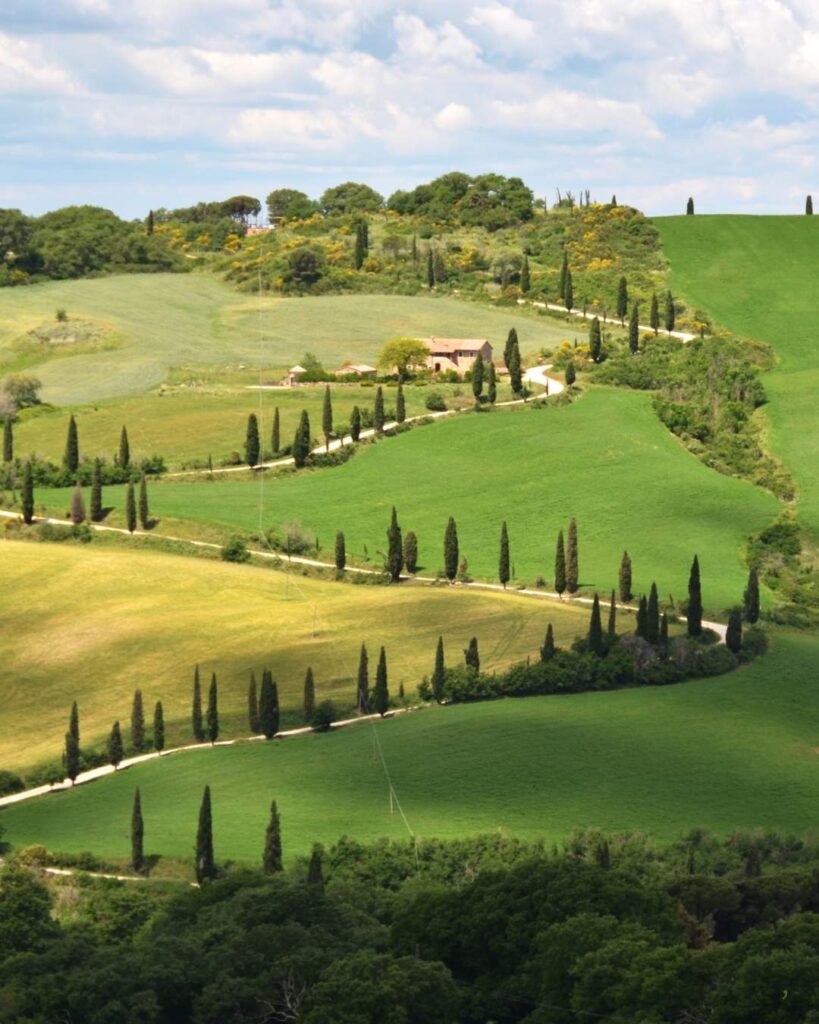
The first question everyone asks is how long to stay. A long weekend is enough for a taste; Florence and a day trip will give you an introduction. Five to seven days is the sweet spot, allowing you to explore the cities and the countryside at a relaxed pace.
Ten days or more means you can add the Deep South and the coast without breaking a sweat. The region is fairly compact, but public transport does not reach everywhere, so having a rental car is useful. Most drives are around one to two hours, which makes it easy to settle into one place and explore from there.
This itinerary is designed for travellers who want to combine art, culture, food, wine and scenic landscapes, with enough time to savour each destination without feeling rushed. It begins and ends in Florence, the natural gateway to the region.
From there, you will wind south through Chianti, Siena, Val d’Orcia, and the hilltop towns that define Tuscan beauty. This is a deliberate, unhurried approach that lets you actually settle into the rhythm of each place rather than rushing from one landmark to the next.
The Seven-Day Itinerary
A week in Tuscany is the perfect way to enjoy one of Italy’s most beloved regions at a relaxed yet inspiring pace. This route starts and ends in Florence, covers the region’s greatest highlights by car, and is paced for travellers who want to experience Tuscany the right way. The Chianti harvest transforms the region in autumn, while May through early June offers equally beautiful landscapes before the summer heat and peak season fully arrive.
Days One and Two: Florence
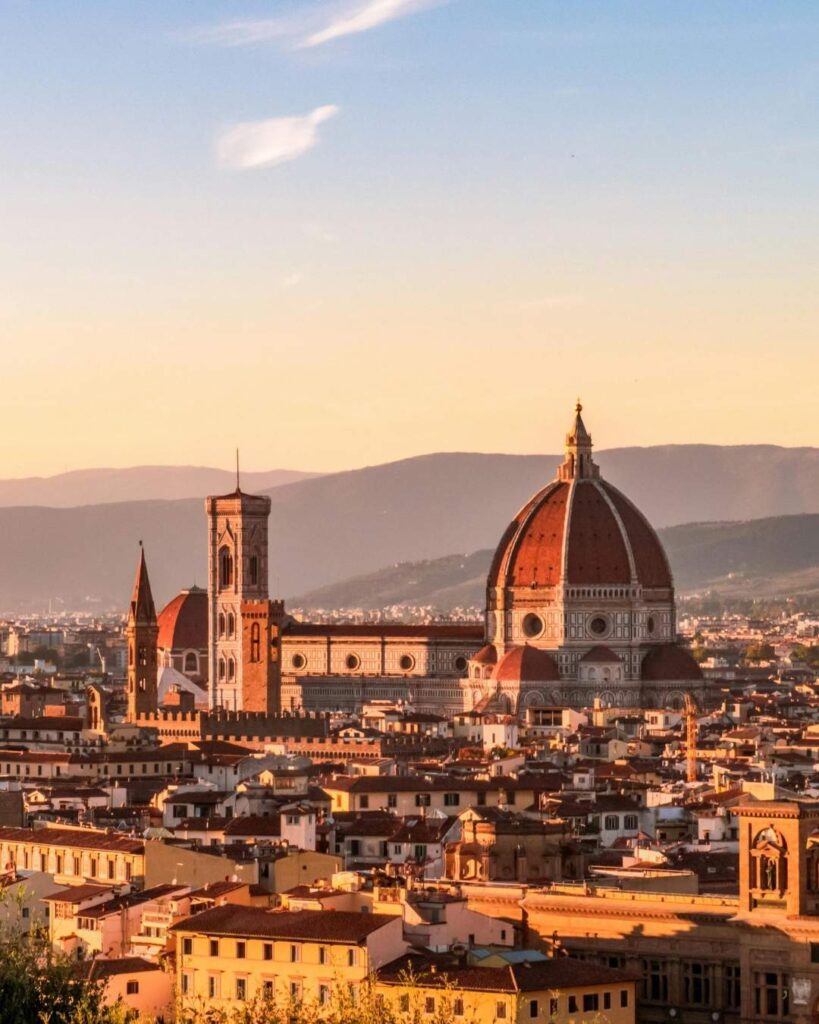
Florence is the cradle of the Renaissance, a city that shaped the history of world art and culture. Despite its countless wonders, the historic centre is compact and entirely walkable, making it possible to discover its treasures even in a single day. Start your morning in Piazza del Duomo, where the Cathedral of Santa Maria del Fiore dominates the skyline.
It is a breathtaking sight, especially when you are standing right under Brunelleschi’s dome. From there, walk over to Piazza della Signoria, which feels like an open-air museum filled with statues and the grand Palazzo Vecchio.
If you are an art lover, you will definitely want to spend time at the Uffizi Gallery to see Botticelli and Michelangelo, but remember to book ahead. Pre-booked timed entry is essential; queues without a ticket can be hours long in peak season. If you prefer to stay outdoors, cross the Ponte Vecchio and wander into the Oltrarno district.
This side of the river has a much more local feel, full of artisan workshops and cozy, traditional trattorias. End your day at Piazzale Michelangelo; watching the city turn golden as the sun sets over the Arno is something you will never forget.
Your first meal in Tuscany should be all about comfort and tradition. Look for a family-run trattoria and try a bowl of ribollita, a thick, savory vegetable soup, or some pappardelle with wild boar ragù. If you are feeling hungry, the bistecca alla fiorentina is the legendary choice; just remember it is meant to be shared and enjoyed slowly with a glass of bold local red wine. Spend your second day exploring the Oltrarno district, the Boboli Gardens, or take a short trip to Fiesole for panoramic views of the city.
Day Three: Through Chianti to Siena
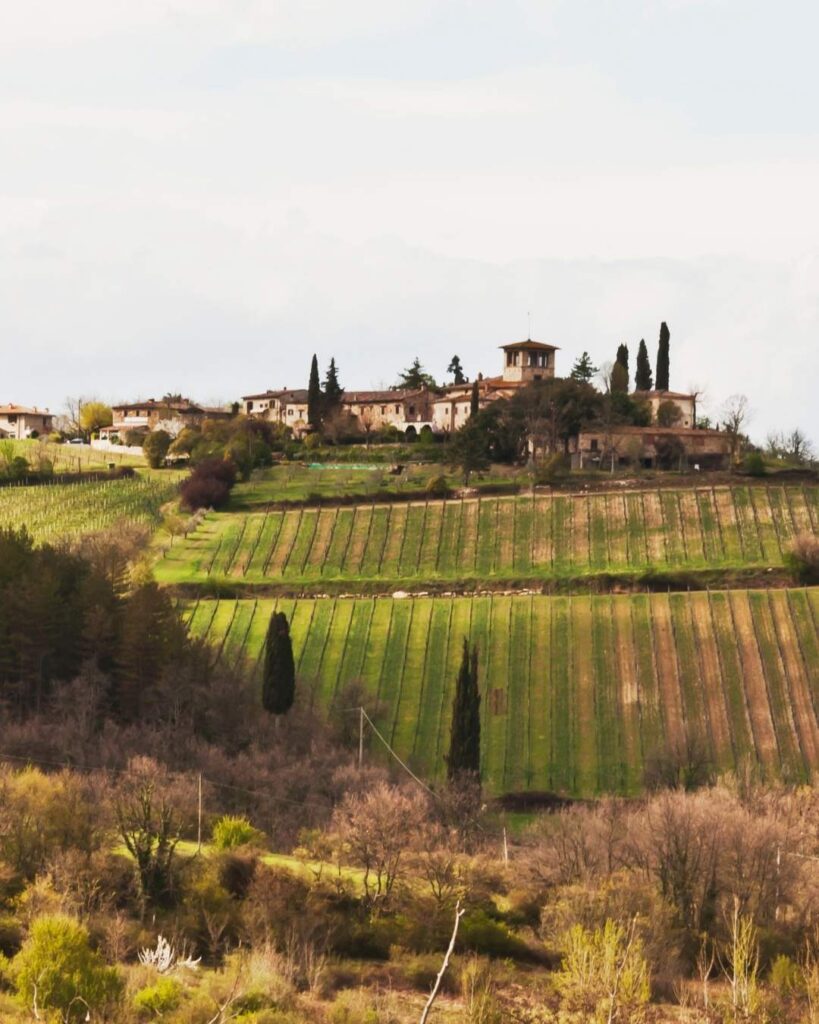
Pick up your rental car and depart Florence heading south through the Chianti Classico wine region. This is the legendary stretch of cypress-lined roads and vineyard-draped hills between Florence and Siena. Stop in Greve in Chianti, a charming market town with a beautiful triangular square, excellent wine shops, and the kind of butcher shops that make vegetarianism briefly untenable.
Visit a winery along the Chiantigiana road for a tasting and vineyard tour. Estates like Badia a Coltibuono and Antinori nel Chianti Classico offer exceptional experiences, but book ahead.
Continue to Siena, one of Italy’s most perfectly preserved medieval cities, and arguably Tuscany’s most atmospheric after Florence. Check into your hotel and drop the car. The historic centre is best explored entirely on foot.
Take a first impressions walk, approach the Piazza del Campo through the narrow medieval alleys for maximum impact. The shell-shaped piazza is extraordinary regardless of how many photos you have seen of it. Dinner in Siena’s historic centre should feature pici pasta with a rich wild boar or lamb ragù, and a glass of Chianti Classico Riserva with it is not optional.
Day Four: Siena and San Gimignano
Begin properly with Piazza del Campo at opening hours. This is where Siena’s famous Palio horse race takes place, and the square’s perfect medieval curve and brick pavement is most beautiful in the morning light. Visit the Cathedral, which is arguably one of the most beautiful in all of Italy. The best way to see the centre is on foot, letting yourself get a little lost in the narrow lanes that suddenly open up into small, sun-drenched squares.
In the afternoon, drive to San Gimignano, often called the “Manhattan of the Middle Ages” because of its skyline. The town once had 72 towers; 14 still remain, giving you a clear sense of what a Tuscan hill town looked like centuries ago. Climb Torre Grossa, the tallest of San Gimignano’s towers.
From the top, you will see vineyards, rows of cypress trees, and the distant Apennines. Before you leave, make sure to grab a scoop of gelato from Gelateria Dondoli in the centre; it is widely considered some of the best in the world. Return to Siena for a second night.
Day Five: Val d’Orcia
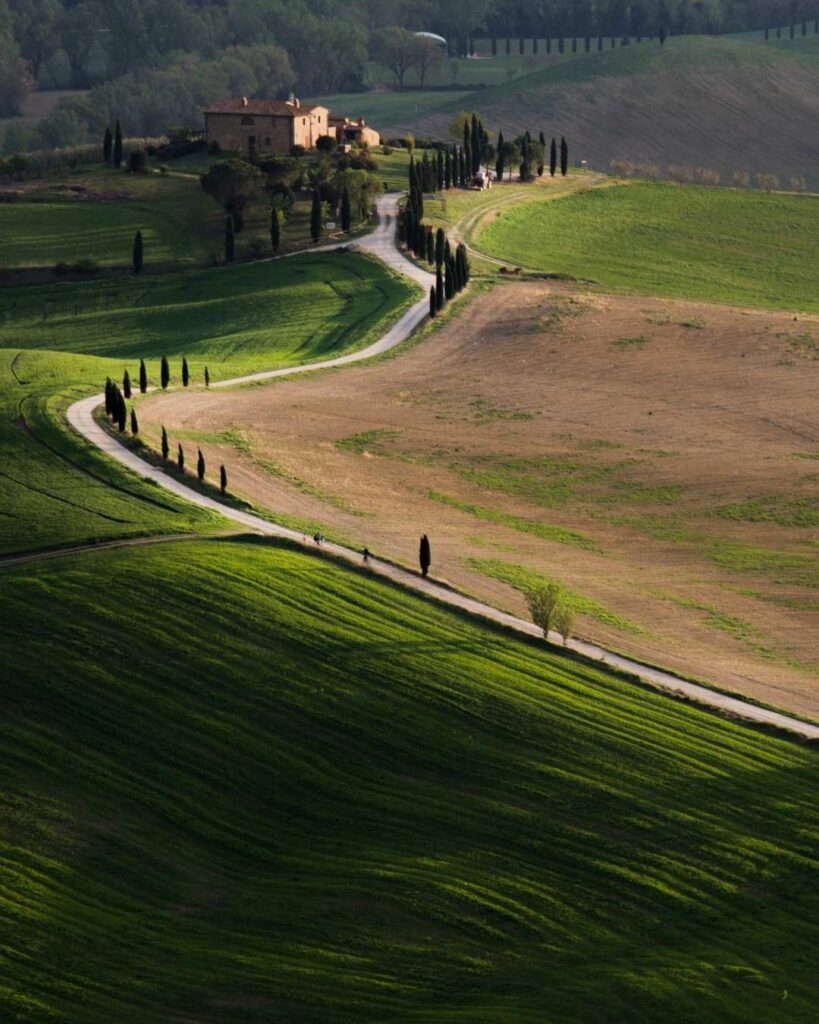
If there is one reason to do a road trip in Tuscany, this is it. Val d’Orcia is, in my opinion, the real Tuscany. Not just the towns, not just the architecture, but the landscape itself. Leave Siena heading south through the lunar landscapes of the Crete Senesi area, making a brief stop at the Abbazia di Monte Oliveto Maggiore before continuing to Pienza.
Pienza is a tiny town designed as the “ideal” Renaissance city. It is incredibly graceful, with romantic walkways that look out over the entire valley. It is also the capital of pecorino cheese, so be sure to try some at a local shop. Pienza is small and quiet, making it the perfect place for a slow, relaxed afternoon.
Walk through the quiet streets, stop for a coffee or a gelato, sit on the walls, and look out over the rolling hills of Tuscany. For the best gelato in town, Buongusto Gelateria is the destination.
Day Six: Montepulciano and Montalcino
Montepulciano is known for its Vino Nobile wine and elegant Renaissance buildings. What makes this place special are the ancient wine cellars carved directly into the rock beneath the buildings. The climb to the top is a bit of a workout, but once you reach Piazza Grande, the views are spectacular.
Many of Montepulciano’s wine cellars are built right beneath the old palaces. Avignonesi runs tours that include the vineyards and guided tastings, while De’ Ricci, closer to the centre, is known for its medieval cellar carved into the rock.
In the afternoon, stop in Montalcino, the hilltop settlement home of the famed Brunello di Montalcino wine. Visit the Tempio del Brunello and surrounding enotecas before heading to the countryside for a tasting at one of the area’s historic wineries, such as Ciacci Piccolomini D’Aragona or Fattoria dei Barbi.
The Abbazia di Sant’Antimo is a worthy stop as you continue through the region. Spend the night in the Val d’Orcia countryside or return to Pienza.
Day Seven: Return to Florence
On your final day, drive back to Florence through the Tuscan countryside. If you have time, consider a detour to Arezzo, a town known for its antique shopping and frescoes. Alternatively, spend a leisurely morning in one of the Val d’Orcia towns you may have rushed through, perhaps San Quirico d’Orcia, before returning your rental car and catching your flight home.
Alternative Short Itinerary: Three Days
If you have only a long weekend, focus on a single base and explore from there. San Gimignano is an excellent choice for a short break. It is not huge, but it offers a perfect introduction to Tuscany. Spend your days climbing the towers, walking the San Gimignano Ring Trail through olive groves and vineyards, and eating handmade pici pasta at family-run trattorias.
From San Gimignano, you can take a day trip to Volterra, a lesser-known gem perched in the Tuscan hills, known for its Etruscan and Roman history. Wander the ancient walled streets, explore the atmospheric Roman theatre ruins, and enjoy a quiet espresso in the sunlit piazza.
Alternatively, base yourself in Siena and take day trips to the surrounding hilltop towns. San Gimignano is an easy drive away, and the Val d’Orcia can be explored in a full day. This is the kind of trip where you slow down not because you are told to, but because you cannot help it.
The Long Itinerary: Ten Days or More
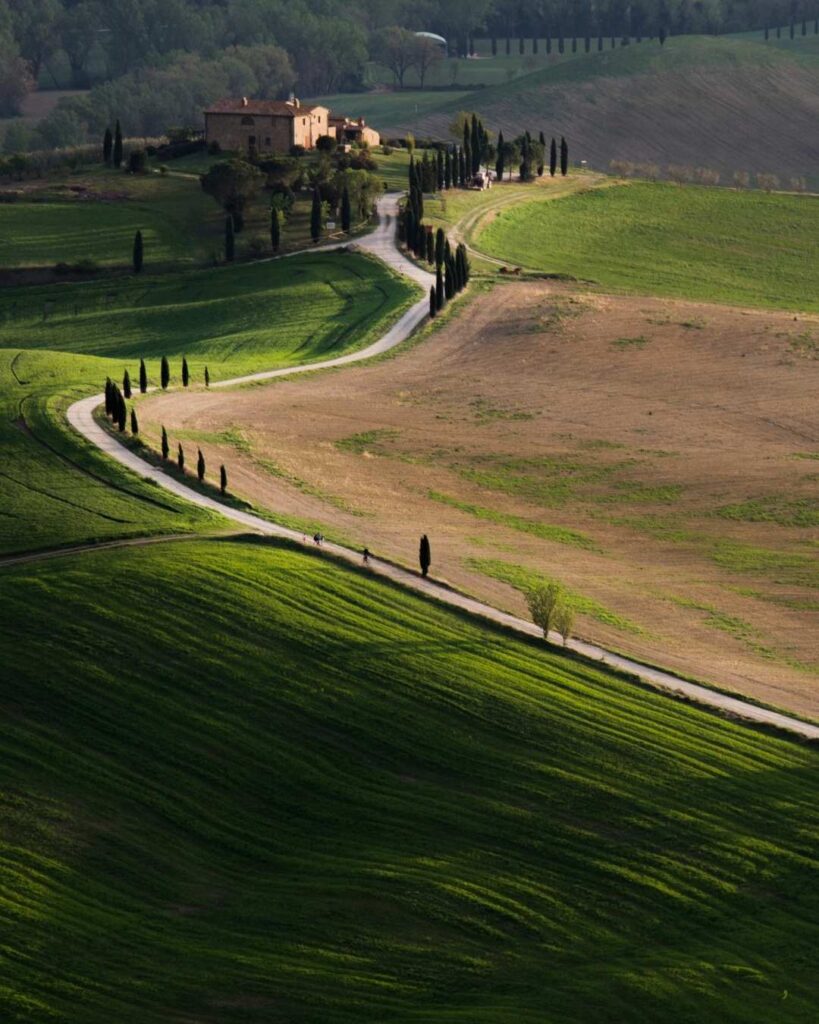
With ten days or more, you can truly spread out and explore the deep south of Tuscany. The Città del Tufo area combines astounding archaeological sites with charming towns connected by twisting roads. Tour Sorano, Sovana and Pitigliano, also known as “little Jerusalem” due to the Jewish population that once lived here, and walk through the Etruscan-era caves and necropolises. Recover from the long drive with a dip in the thermal waters of the spa town of Saturnia.
Conclude your journey with a restful break on Maremma’s coast, exploring wild beaches and protected wildlife reserves near the seaside town of Orbetello. If time allows, extend your trip to tour the hidden coves of Monte Argentario and hop on the ferry to reach Isola del Giglio for a well-earned dose of Mediterranean sunshine. This is the Tuscany that most visitors miss, wild, coastal, and deeply atmospheric.
Practical Advice for the Road
A rental car is the single most important thing you can organise for this itinerary. While Florence and Siena are well-connected by train, the best of Tuscany, the Chianti countryside, Val d’Orcia’s rolling panoramas, the hilltop towns of San Gimignano and Montepulciano, is only fully accessible by road. Book well in advance for summer as availability tightens significantly in peak season. An automatic transmission makes navigating narrow hilltop roads considerably easier.
Important: Florence’s historic centre is a restricted traffic zone. Do not drive into the ZTL without authorisation as fines are automatic and expensive. Park outside the city centre and walk, or check with your hotel about authorised access before arrival. Book the Uffizi Gallery and other major attractions online well in advance, especially for travel between May and September. This is non-negotiable. Walking in without a booking is rarely possible in peak season.
Cards are fine in big cities, but in smaller towns or local spots, it is smart to carry some cash. Keep fifty to one hundred euros in small bills. Some places still charge extra for using a card under ten euros, which technically is not allowed but happens all the time. And remember that lunch is the main meal in Italy, so adjust your schedule accordingly if you want to eat like a local.
My Final Word
The most common mistake first-time visitors make is trying to do too much. Tuscany rewards slowness, and you should leave room to wander, to sit at a café, and to stumble into a neighbourhood market. You will not see everything, and that is perfectly fine. Tuscany will still be here when you return, and you will have a reason to come back.
The best moments often happen off-schedule: the random stop on the side of the road, the glass of prosecco opened in a field of cypress trees, the view that makes you forget your own name. Those are the ones you will remember long after you have returned home. So pack light, plan carefully, and leave room for the unexpected. Your perfect Tuscan adventure is waiting, and now you know exactly how to experience it.
NOTE BEFORE YOU GO: Italy rewards travelers who go prepared. And it is easy to ruin your trip. I have a checklist for you of things you should never go to Italy without. CHECK IT OUT HERE. I have also curated a list of some of the best hotels in Italy. I would highly recommend checking them out before booking. THESE ARE THE BEST HOTELS IN ITALY. And for unique experiences, attractions, and tours, don’t book before CHECKING THIS OUT. Thank me later!