
Rome is not a city you conquer. It is a city you surrender to. It is loud and chaotic and layered with so much history that you could spend a lifetime here and still not see everything. The best itineraries are not about ticking off every landmark.
They are about finding a rhythm that lets you breathe, eat, walk, and stumble upon the unexpected. Rome rewards the wanderer, the one who is willing to get lost in its winding streets and discover the hidden corners that the guidebooks never mention.
The first question everyone asks is how long to stay. Three days is enough for the highlights, but you will feel rushed. Five to seven days is the sweet spot, giving you time to explore the major sights without feeling like you are on a forced march.
Ten days or more means you can add day trips to Ostia Antica, Tivoli, and the Castelli Romani, and you will still find new things to discover. Rome is a city that demands patience, and the perfect itinerary is not about seeing everything. It is about seeing the right things at the right pace.
The Philosophy of a Perfect Roman Itinerary
The biggest mistake visitors make is trying to do too much. Rome has more than nine hundred churches, dozens of museums, and ruins that stretch back to the Republic. You cannot see it all, and you should not try. The key is to choose a few highlights each day and leave the rest to serendipity.
Rome is a city where the best moments happen when you are not looking for them, the tiny church you stumble into, the pizzeria you find down a side alley, the view from a hill you climbed on a whim.
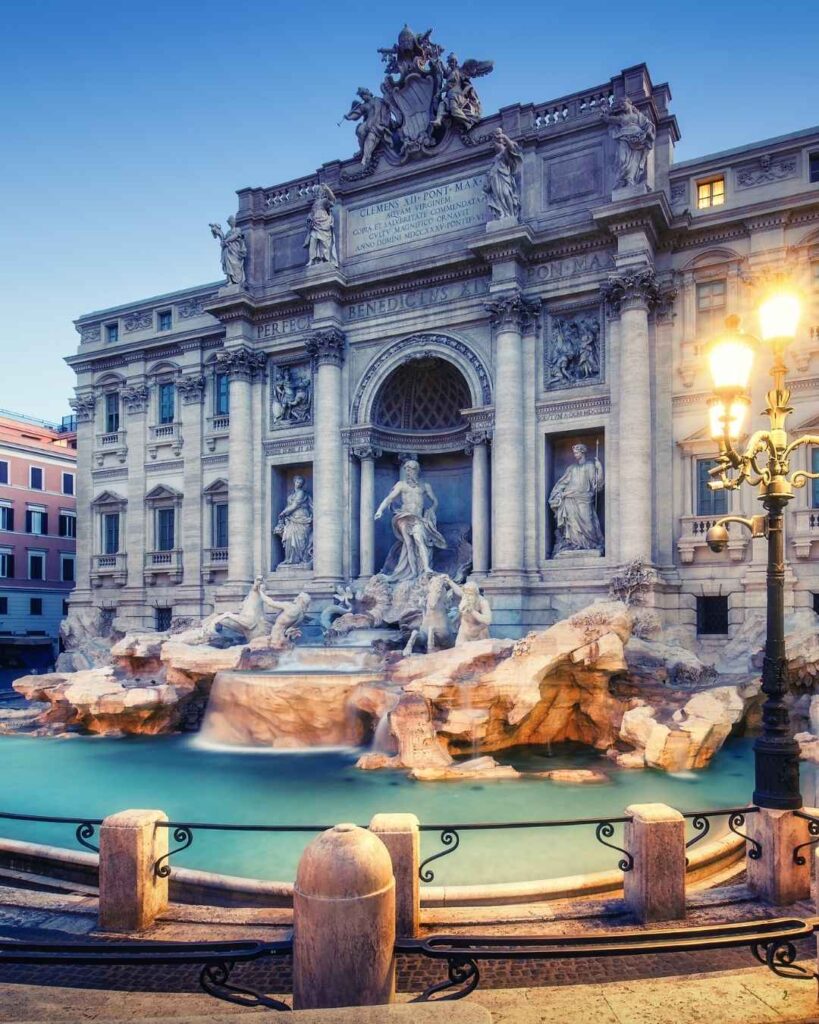
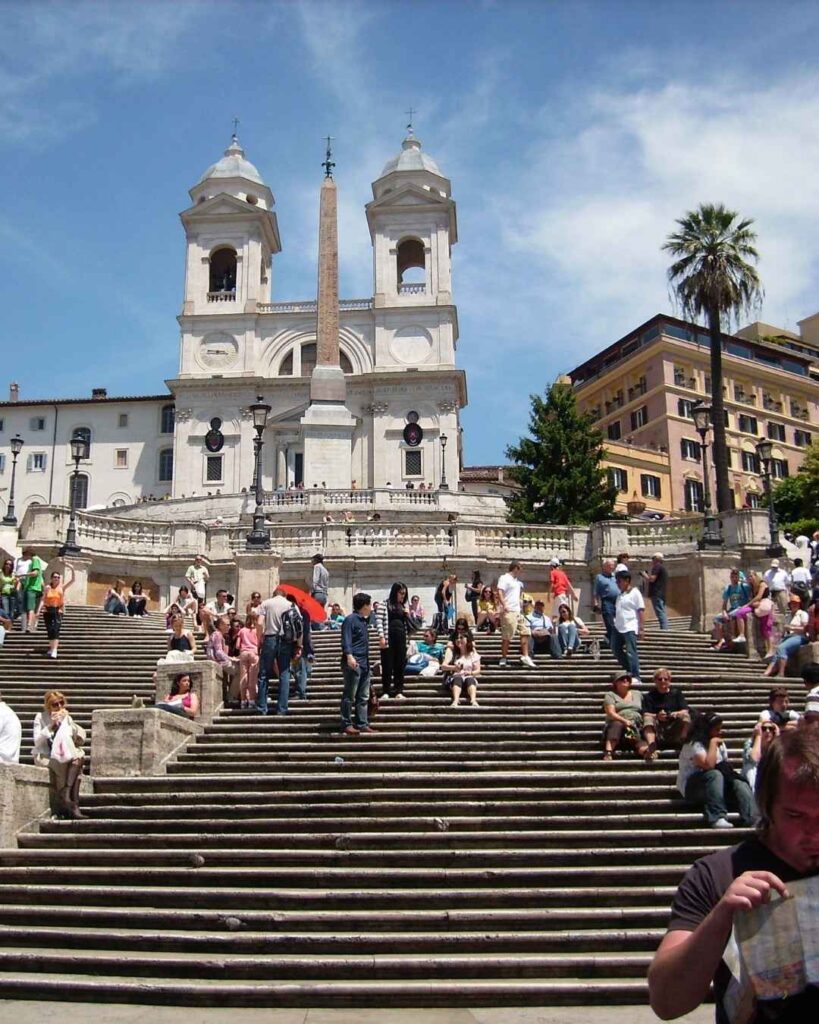
Another mistake is following the crowds. The Trevi Fountain at midday is a human traffic jam. The Spanish Steps in the afternoon are a sea of selfie sticks. The Vatican Museums at eleven in the morning are a slow-moving river of bodies. The secret to enjoying Rome is timing.
Visit the popular sites early in the morning or late in the afternoon. Walk the streets when the day-trippers have gone. Eat dinner when the Romans eat, which is after eight, and linger over your meal the way they do.
This itinerary is designed to help you experience Rome without feeling overwhelmed. It spreads the major sights across several days, leaving plenty of time for wandering, eating, and doing absolutely nothing. It also includes the less-visited neighbourhoods that give Rome its soul, the ones where you can still hear the sound of your own footsteps on ancient cobblestones.
The Four-Day Itinerary
Four days is the ideal amount of time for a first visit to Rome. It gives you enough time to see the highlights without rushing, and it leaves room for the unexpected discoveries that make Rome so special.
Day One: Ancient Rome
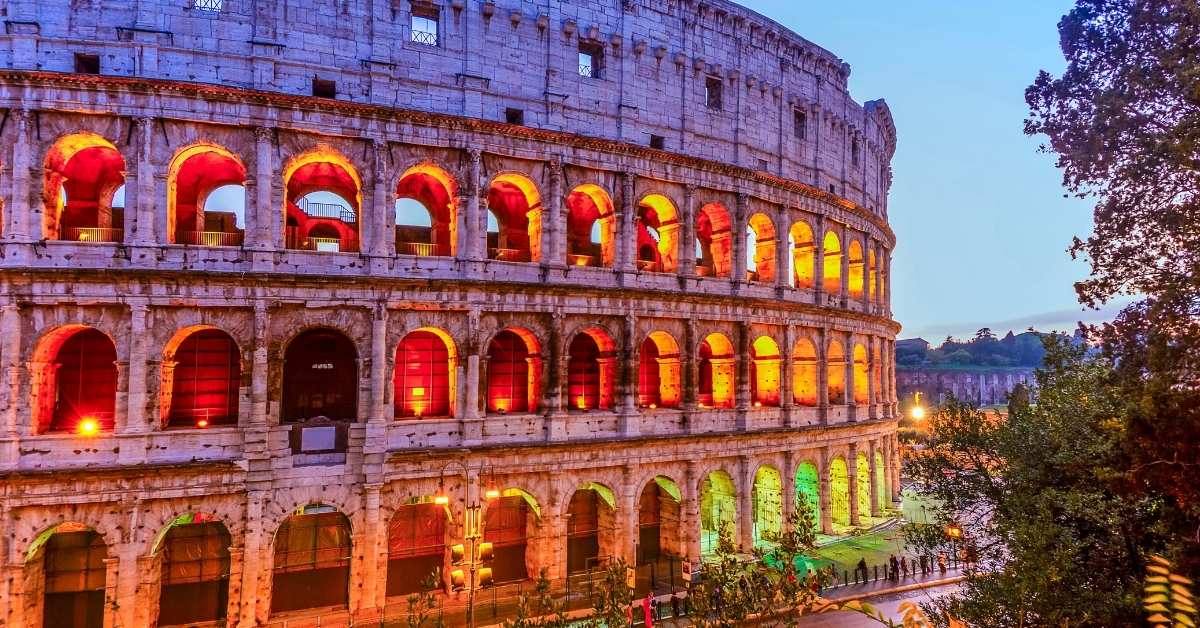
Begin your Roman journey where Rome itself began, in the heart of the ancient city. Start early at the Colosseum. Book your tickets in advance online, or you will spend your morning in a queue that snakes around the monument.
The Colosseum is extraordinary, not just for its size, but for the sense of history that permeates every stone. As you walk through the arches and stand in the centre of the arena, you can almost hear the roar of the crowd and the clash of gladiators.
Next to the Colosseum is the Roman Forum, the political and social heart of ancient Rome. It is a vast archaeological site, and it can be overwhelming. Focus on the key landmarks: the Temple of Saturn, the Arch of Titus, and the House of the Vestals.
The climb up the Palatine Hill gives you the best view of the Forum and a sense of how the city sprawled across the seven hills. The Palatine is also where the emperors built their palaces, and the ruins are surprisingly atmospheric.
For lunch, wander into the Monti neighbourhood, which sits between the Colosseum and the Termini station. Monti is one of Rome’s most charming districts, with narrow streets, artisan shops, and trattorias that serve traditional Roman food. Try the cacio e pepe, the simplest and most perfect pasta dish in the world.
In the afternoon, explore the Baths of Caracalla. These are less visited than the Colosseum but equally impressive. The ruins are vast, and you can still see the mosaic floors and the towering walls that once housed thousands of bathers. The Baths give you a sense of the scale of ancient Rome, and they are usually quiet enough that you can have them almost to yourself.
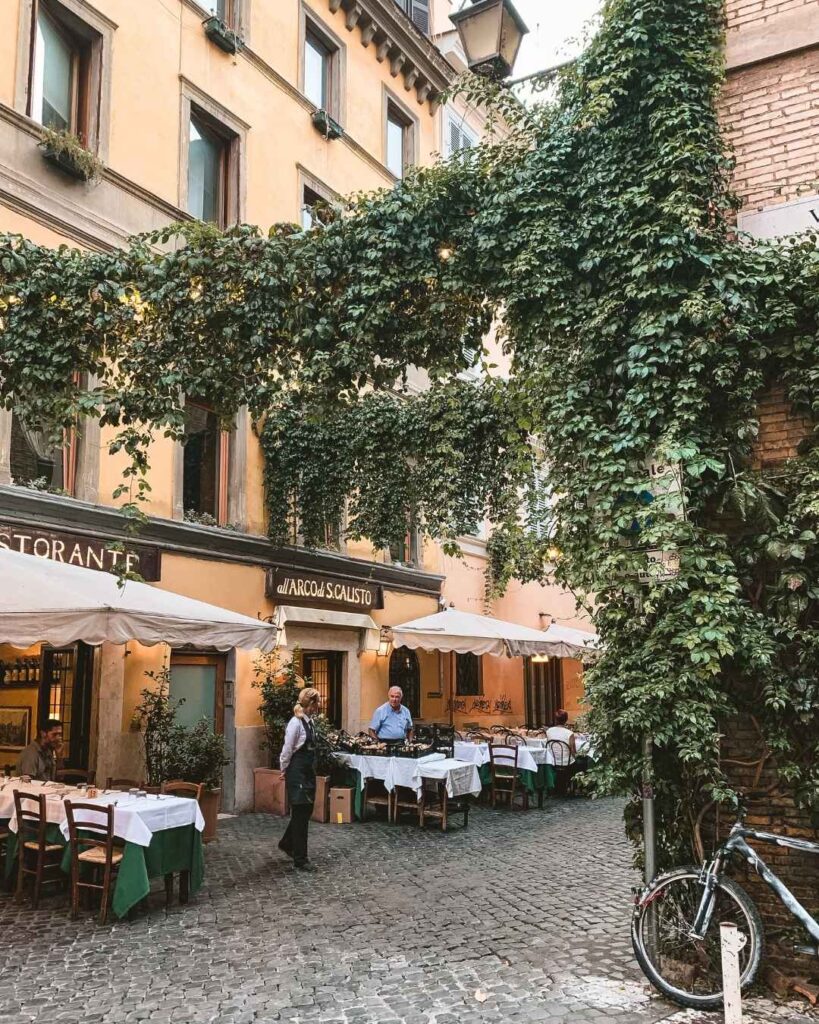
In the evening, walk to the Aventine Hill, one of the city’s most peaceful corners. The keyhole of the Knights of Malta gives you a view of St Peter’s dome perfectly framed by an avenue of trees. It is a small detail, a tiny moment of beauty, and it is quintessentially Roman. End your day in Trastevere, across the river, where the streets are cobbled and the restaurants are excellent.
Day Two: The Vatican
Start early at the Vatican Museums. This is non-negotiable. The queues are brutal, and the crowds are intense, but the Sistine Chapel is worth every moment of discomfort. Book your tickets in advance and arrive before the museums open. The highlight of the Vatican Museums is the Sistine Chapel, where Michelangelo’s ceiling and his Last Judgment dominate the space. The chapels also hold important works by Renaissance masters, including Raphael and Botticelli.
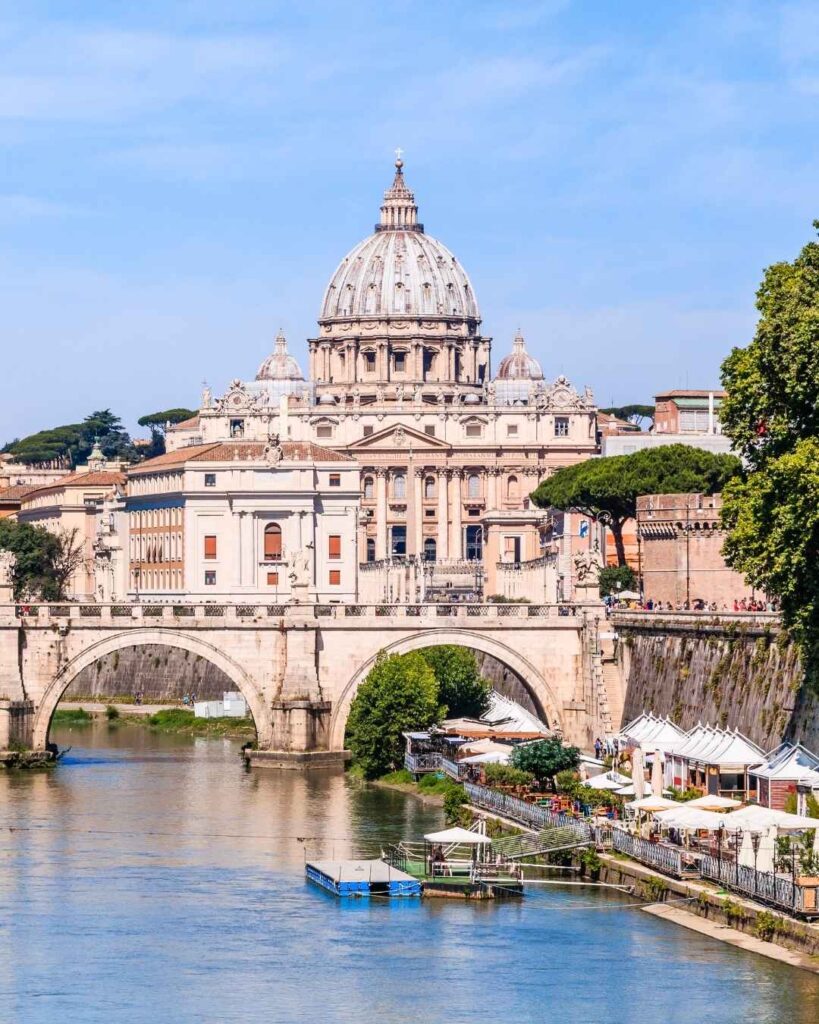
After the museums, visit St Peter’s Basilica. The basilica is free, but the queue can be long. Go early in the morning or late in the afternoon to avoid the worst of it. Inside, the scale is breathtaking. Michelangelo’s Pietà is here, and Bernini’s baldachin rises over the high altar. Climb the dome for the best view of Rome. The climb is steep and narrow, but at the top, you can see the city spread out beneath you, with the Tiber winding through it like a silver ribbon.
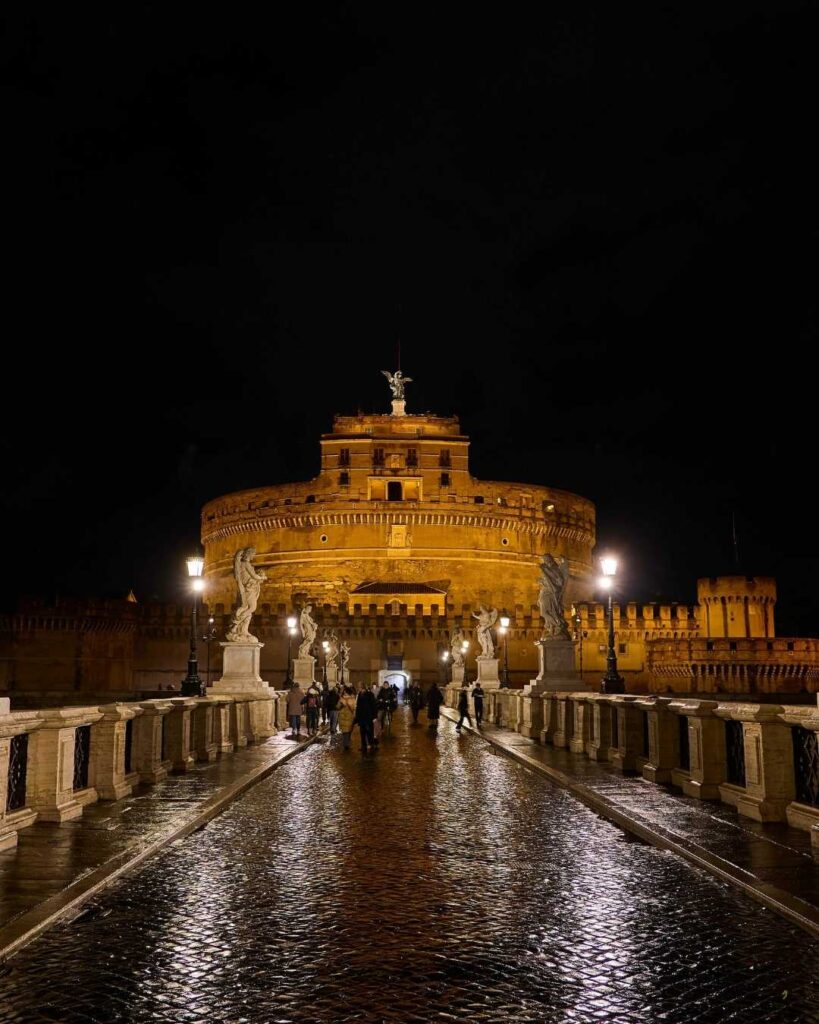
In the afternoon, explore the Borgo, the neighbourhood surrounding the Vatican. It is quieter than the city centre, with narrow streets and family-run restaurants. Visit Castel Sant’Angelo, the towering fortress that was originally built as a mausoleum for the emperor Hadrian. The views from the top of the castle are spectacular, and the walk along the Ponte Sant’Angelo, with its Bernini angels, is one of the most beautiful in the city.
For dinner, cross the river into Prati, a residential neighbourhood with excellent restaurants. Prati is where the Romans eat, and the food is better and cheaper than in the tourist centres. Try the carbonara, the other great Roman pasta, and finish with a gelato from one of the many shops that line the streets.
Day Three: Baroque Rome
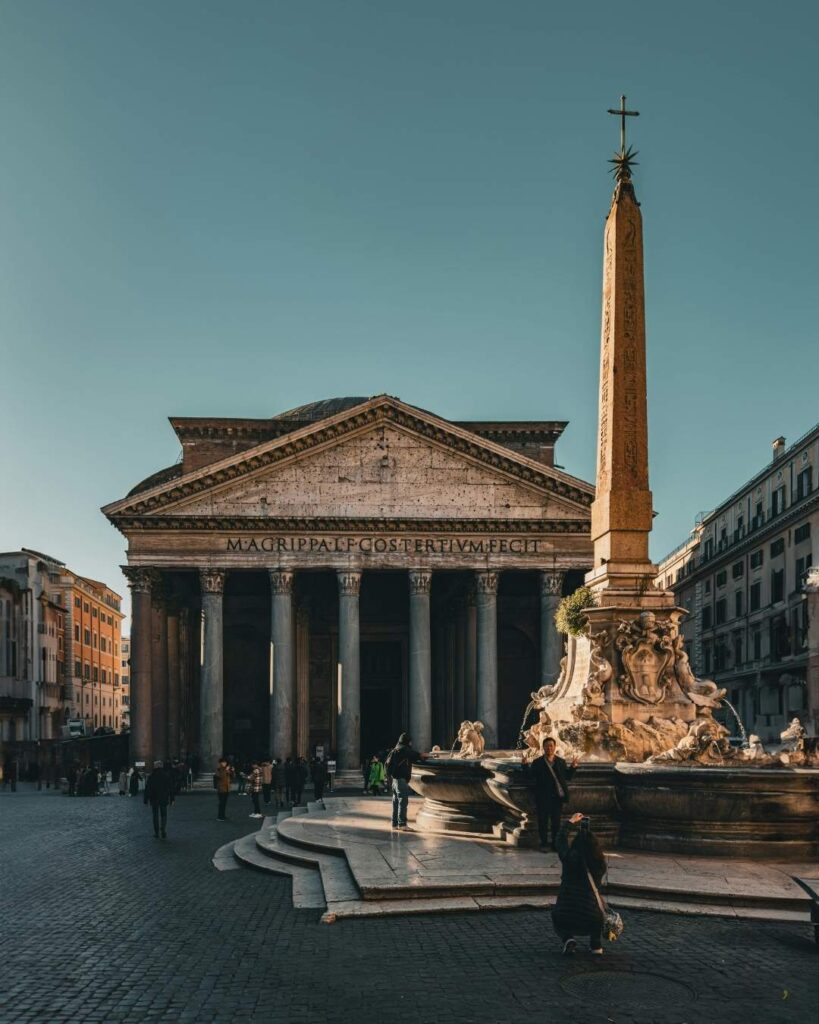
Today is for the Baroque and Renaissance heart of Rome. Start at the Pantheon, the best-preserved building from ancient Rome. The Pantheon is extraordinary, a temple to all the gods that has been in continuous use for nearly two thousand years. The dome is a masterpiece of engineering, and the oculus at the top lets in a shaft of light that moves across the interior through the day. It is free to enter, and it is always worth a visit.
From the Pantheon, walk to Piazza Navona, one of the most beautiful squares in Rome. The square is built on the site of the Stadium of Domitian, and its shape still follows the outline of the ancient arena. The fountains by Bernini are masterpieces, and the atmosphere is lively, with street artists and musicians performing throughout the day. Find a café and have a coffee or a drink, and watch the world go by.
Continue to the Trevi Fountain, but go early in the morning or late in the evening. The fountain is beautiful, but at midday, it is packed. The tradition of throwing a coin over your shoulder ensures your return to Rome, so toss one in and make a wish. Just a short walk away is the Spanish Steps, another iconic Roman sight. Climb them and look back over the city. At the top, wander into the Villa Borghese gardens, the green lung of Rome, and rent a bicycle or just wander through the tree-lined paths.
In the afternoon, visit the Galleria Borghese. This is one of Rome’s best museums, housed in a villa surrounded by gardens. The collection includes works by Bernini, Caravaggio, and Raphael. The museum is small and manageable, and the setting is beautiful. You must book in advance. It is impossible to enter without a reservation.
For your final dinner, head to the Ghetto, the Jewish quarter of Rome. It is one of the most atmospheric neighbourhoods in the city, with a long and complex history. The restaurants here serve Roman-Jewish cuisine, which is unique and delicious. Try the fried artichokes and the saltimbocca, and raise a glass to the city that has been the centre of the world for three thousand years.
Day Four: Off the Beaten Path
The final day of the itinerary takes you away from the crowded tourist sights and into the Rome that locals know. Start at the Appian Way, the ancient road that connected Rome to the south. The road is lined with tombs and catacombs, and the first few kilometres are still paved with the original basalt stones.
Rent a bicycle or walk the section that is closed to traffic, past the tombs of the rich and powerful who wanted to be buried along the road to the underworld.
Visit the Catacombs of San Callisto or San Sebastiano, where early Christians buried their dead. The underground tunnels are vast, stretching for kilometres beneath the city. The guides are informative, and the atmosphere is peaceful, a contrast to the chaos above ground.
In the afternoon, visit the Testaccio neighbourhood, a working-class district that has become the heart of Rome’s food scene. Testaccio is where the city’s slaughterhouse was located, and the neighbourhood still has a rough, authentic feel. Visit the Testaccio Market, where locals buy their produce and meats, and eat lunch at one of the food stalls. The pasta here is some of the best in the city.
End your trip at the Janiculum Hill, one of the best views in Rome. The hill is less visited than the Pincian Hill, and the view of the city is spectacular. At noon, a cannon fires from the hill, a tradition that has continued for centuries. Spend the afternoon wandering the streets of Trastevere, which you only glimpsed on the first night. The neighbourhood is a maze of narrow lanes, and every corner seems to lead to a hidden square or a tiny church.
For your final Roman meal, choose a trattoria in Trastevere and order everything you have not tried yet. The grilled vegetables, the artichokes, the Roman-style tripe, the tiramisu made fresh that morning. Eat slowly, drink deeply, and savour every bite. This is your last chance to taste Rome, and you should make it count.
The Three-Day Itinerary
If you only have three days in Rome, you will need to be selective. This itinerary combines the highlights without overwhelming you.
Day One: Ancient Rome and Trastevere
Start at the Colosseum and the Roman Forum, as in the four-day itinerary. Spend the morning exploring the ruins. For lunch, cross the river to Trastevere and eat in one of the neighbourhood’s many restaurants. Spend the afternoon wandering the streets of Trastevere, a beautiful and atmospheric neighbourhood at any hour. The Church of Santa Maria in Trastevere is one of Rome’s oldest, and the mosaics are stunning.
In the evening, climb the Janiculum Hill for the view, and have dinner in Trastevere.
Day Two: The Vatican and Baroque Rome
Start early at the Vatican Museums and St Peter’s Basilica. This is a full morning. In the afternoon, visit the Pantheon, Piazza Navona, and the Trevi Fountain. Walk through the historic centre, stopping for coffee and gelato along the way. The Spanish Steps are a good place to end your afternoon.
For dinner, head to Monti, the neighbourhood near the Colosseum, and eat at a trattoria that serves classic Roman food.
Day Three: Off the Beaten Path
Spend your final day exploring the Appian Way and the Catacombs. The Appian Way is one of the most atmospheric places in Rome, and it is a welcome contrast to the crowds of the city centre. In the afternoon, visit the Testaccio Market and eat lunch there. End your day with a walk along the Tiber, watching the sun set over the city.
The Five-Day Itinerary
Five days in Rome gives you the luxury of time. This itinerary builds on the four-day plan, adding extra day trips and a slower pace.
Days One and Two: Ancient Rome
Follow the same plan as the four-day itinerary, but spread Ancient Rome across two days. On the second day, visit the Baths of Caracalla and the Circus Maximus, and explore the Palatine Hill in more detail. There are ancient ruins scattered throughout the city that often get overlooked. The Largo di Torre Argentina, where Julius Caesar was assassinated, is a fascinating archaeological site in the middle of the city.
Day Three: The Vatican
Follow the same plan as before.
Day Four: Baroque Rome
Follow the same plan as the four-day itinerary.
Day Five: Ostia Antica
Take the train to Ostia Antica, the ancient port of Rome. The ruins are remarkably well preserved, and they are far quieter than the Forum. You can walk through the streets of the ancient city, see the mosaics in the baths, and imagine what life was like for the merchants and sailors who lived here. The site is extensive, and you can easily spend a whole day exploring. Return to Rome in the evening and have a final dinner in one of the city’s many excellent restaurants.
The Seven-Day Itinerary
Seven days in Rome is the dream. This itinerary includes everything in the five-day plan, plus day trips to Tivoli and the Castelli Romani.
Days One to Five
Follow the five-day itinerary.
Day Six: Tivoli
Take the train to Tivoli, a beautiful town in the hills east of Rome. Tivoli is known for the Villa Adriana, the sprawling retreat of the emperor Hadrian. The villa is vast, with the ruins of palaces, baths, and temples scattered over a huge area. It is peaceful and quiet, and you can easily spend half a day here.
In the afternoon, visit the Villa d’Este, with its spectacular Renaissance gardens and fountains. The fountains are fed entirely by gravity, and they are still as impressive as they were when they were built.
Day Seven: The Castelli Romani
Take the train to the Castelli Romani, the hill towns that surround Rome. Visit Frascati, known for its wine, or Castel Gandolfo, the summer residence of the pope. The views from the hills are spectacular, and the towns have a relaxed, provincial feel that is a welcome change from the intensity of the city. Return to Rome in the evening and have a final dinner in the Ghetto or Testaccio.
A Note on Pacing
The most common mistake visitors make in Rome is trying to do too much. Rome is a city that rewards slowness, and you should leave room to wander, to sit at a café, and to stumble into a neighbourhood market. A realistic daily maximum is two major sights plus one relaxed walking or food stop to keep energy up.
You will not see everything, and that is perfectly fine. Rome will still be here when you return, and you will have a reason to come back. The best moments often happen off-schedule, the church you find by accident, the meal you eat at a restaurant you stumbled upon, the view you discover at sunset. Those are the ones you will remember long after you have returned home.
Practical Advice for the Road
Book the big attractions in advance. The Colosseum, Vatican Museums, and Galleria Borghese all have timed entries. Arrive without a booking and you may spend half your day in a queue. The Roma Pass can be good value if you are visiting multiple museums, but it is not necessary for everyone.
Learn a few words of Italian. A simple “buongiorno” and “grazie” go a long way. Dress codes matter in churches, so cover your shoulders and knees. And remember that lunch is the main meal in Italy, so adjust your schedule accordingly if you want to eat like a local.
Rome is a city of hills, so wear comfortable walking shoes like these ones. The cobblestones are beautiful but unforgiving, and your feet will thank you for the cushioning. Carry a water bottle and refill it from the public fountains, called nasone, which are everywhere. The water is safe and delicious.
So pack light, plan carefully, and leave room for the unexpected. Whether you have three days or a week, your perfect Roman adventure is waiting, and now you know exactly how to experience it. The only question that remains is when you will book your ticket.
Related Post: This is where you should stay in Rome
NOTE BEFORE YOU GO: Italy rewards travelers who go prepared. And it is easy to ruin your trip. I have a checklist for you of things you should never go to Italy without. CHECK IT OUT HERE. I have also curated a list of some of the best hotels in Italy. I would highly recommend checking them out before booking. THESE ARE THE BEST HOTELS IN ITALY. And for unique experiences, attractions, and tours, don’t book before CHECKING THIS OUT. Thank me later!