
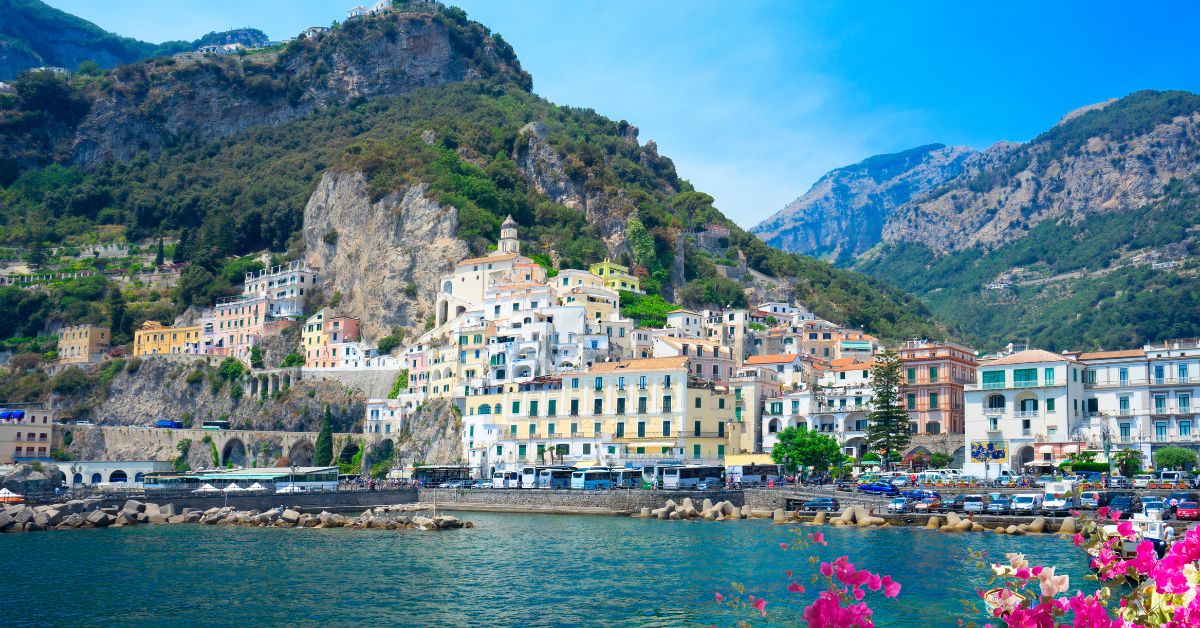
I still remember my first trip to the Amalfi Coast. I was young, excited, and wildly unprepared. I picked a town at random – Amalfi itself – because it had the same name as the coast. Surely that was the right choice?
It wasn’t.
After returning several times, often traveling with my wife, I’ve learned a hard truth: where you stay on the Amalfi Coast makes or breaks your entire trip. Pick wrong, and you’ll spend your vacation battling crowds, hauling suitcases up 300 stairs, or waiting hours for a bus that never comes.
This guide isn’t a fluffy “best towns” list. I’m telling you exactly which towns to stay in – and which to avoid entirely – based on real trade-offs like budget, mobility, transport, and crowd tolerance.
How to Choose a Base – The 4 Real Factors That Matter
Before I name names, you need to understand what you’re really deciding between.
Transportation is everything. The Amalfi Coast doesn’t have a train (except at the edges). Your options are ferries (fast, scenic, weather-dependent) and SITA buses (slow, overcrowded, cheap). Cars are a nightmare – parking costs a fortune, and you’ll pray you don’t meet another bus on a cliffside road.
Stairs will humble you. Many towns are built vertically. Your “sea view” room might be 200 steps above the beach. That’s fine going down. Coming up after a long day? Less fine.
Crowds and prices go together. Positano in August is beautiful, chaotic, and wildly expensive. Atrani in May is peaceful, affordable, and still stunning.
Proximity to sights matters. Do you want to hike the Path of the Gods? Visit Capri? Just lounge on a beach? Different towns serve different goals.
Here’s a quick cheat sheet before we dive deep:
| Town | Vibe | Budget (night) | Best For |
|---|---|---|---|
| Positano | Glamorous & crowded | €€€–€€€€ | Honeymooners, first-timers |
| Ravello | Quiet & cultured | €€–€€€ | Romantics, readers, escape-seekers |
| Atrani | Authentic & affordable | €–€€ | Value hunters, families |
| Maiori | Practical & sandy | €–€€ | Families, mobility concerns |
| Vietri | Artsy & connected | € | Budget travelers, train access |
Now let me walk you through each one.
1. Positano – The Iconic Choice (But Only If You Know What You’re In For)
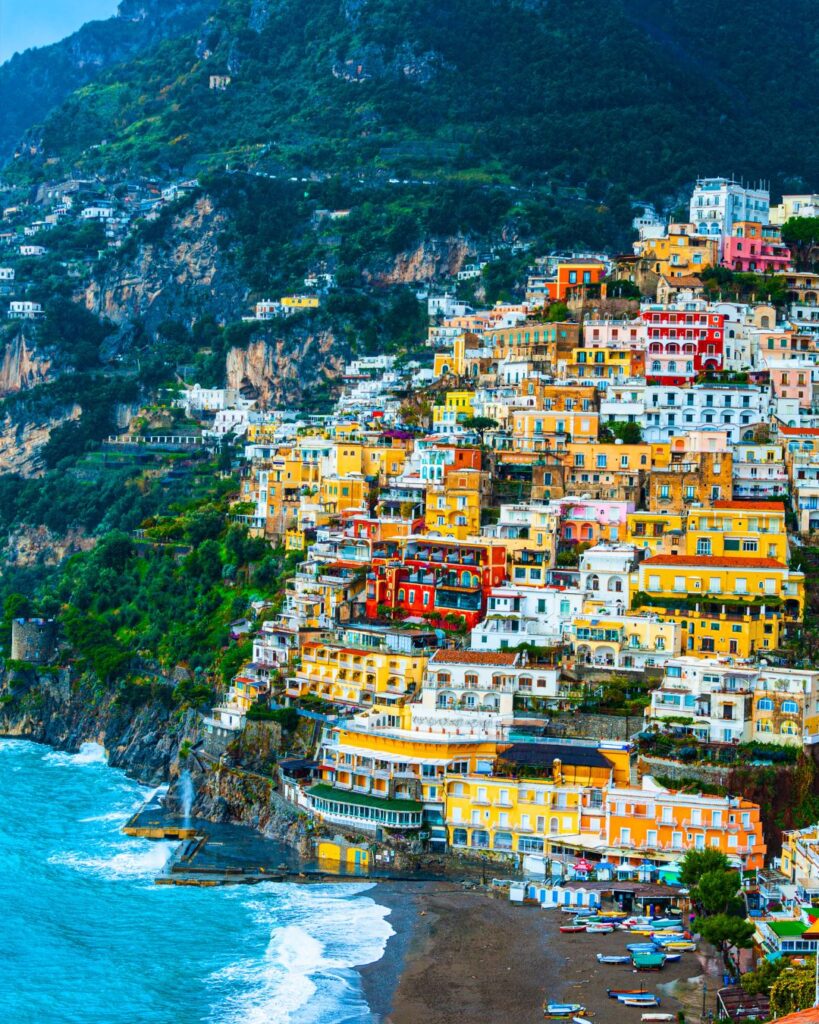
Positano is the postcard. The pastel houses tumbling down to a pebble beach. The dome of Santa Maria Assunta. The lemon groves and linen dresses.
Why stay here? Because it’s breathtaking. The ferry connections are excellent – you can reach Capri, Amalfi, Salerno, and even Sorrento easily. There’s proper nightlife, great shopping, and restaurants with views that justify the prices.
Who it’s for: Honeymooners and luxury travelers. First-timers who want the iconic experience and have budgeted accordingly.
Who should skip: Budget travelers (a basic room in summer starts at €400/night). Anyone with mobility issues – Positano is built on a near-vertical slope—also, anyone who hates crowds in July and August.
Where exactly to stay: Upper road (Via Guglielmo Marconi) gives you fewer stairs to reach your hotel and better views. Lower beach area (near Spiaggia Grande) is louder but you roll out of bed onto the sand. Avoid anything that requires “only 150 steps” – those steps hurt at 10pm after dinner and wine.
Warning I wish I’d known: In high season, the beach is packed by 9am and the main footpath becomes a single-file shuffle. Consider September or May instead.
If you want a hotel recommendation, this is a particularly nice one.
2. Ravello
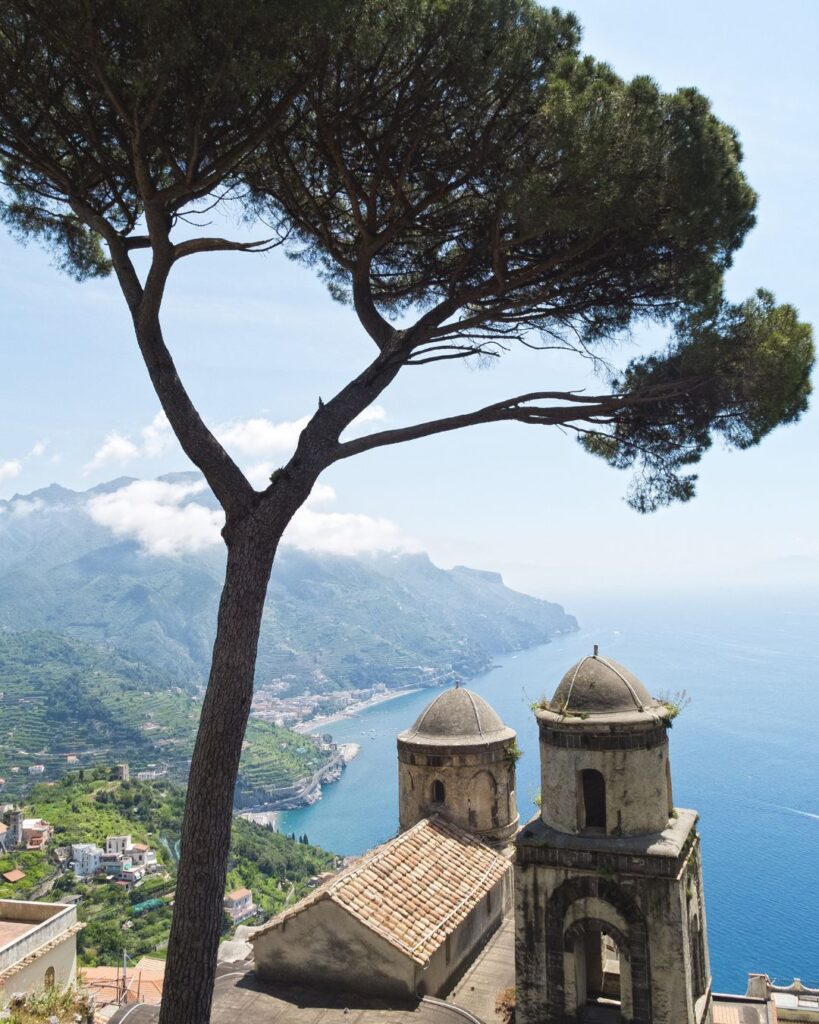
The first time my wife and I stepped into Villa Cimbrone’s Terrace of Infinity, we both went silent. That’s Ravello for you – it’s not a party town. It’s a place to breathe.
Why stay here: Ravello sits high above the sea (365 meters up). That means cooler temperatures, no ferry noise, and absolutely no crowds on the main square at dusk. The gardens of Villa Rufolo and Villa Cimbrone are world-class.
Who it’s for: Couples who’d rather read a book than dance. Writers, artists, and anyone who thinks “a perfect day” involves a glass of Falanghina overlooking the Mediterranean. Also great for summer visits when the coast below is sweltering.
Logistics to accept: There’s no ferry to Ravello. You’ll take a bus or taxi up from Amalfi town (about 20 minutes). That means day trips require an extra connection. But honestly? The peace makes up for it.
Best season: Spring and fall are glorious. Summer evenings are lovely too – there’s a famous classical music festival (Ravello Festival) from June to September.
One honest downside: If you absolutely need to dip in the sea every afternoon, Ravello isn’t for you. The nearest beaches are in Atrani or Amalfi, a bus ride away.
My favorite hotel in Ravello is this one here.
3. Atrani
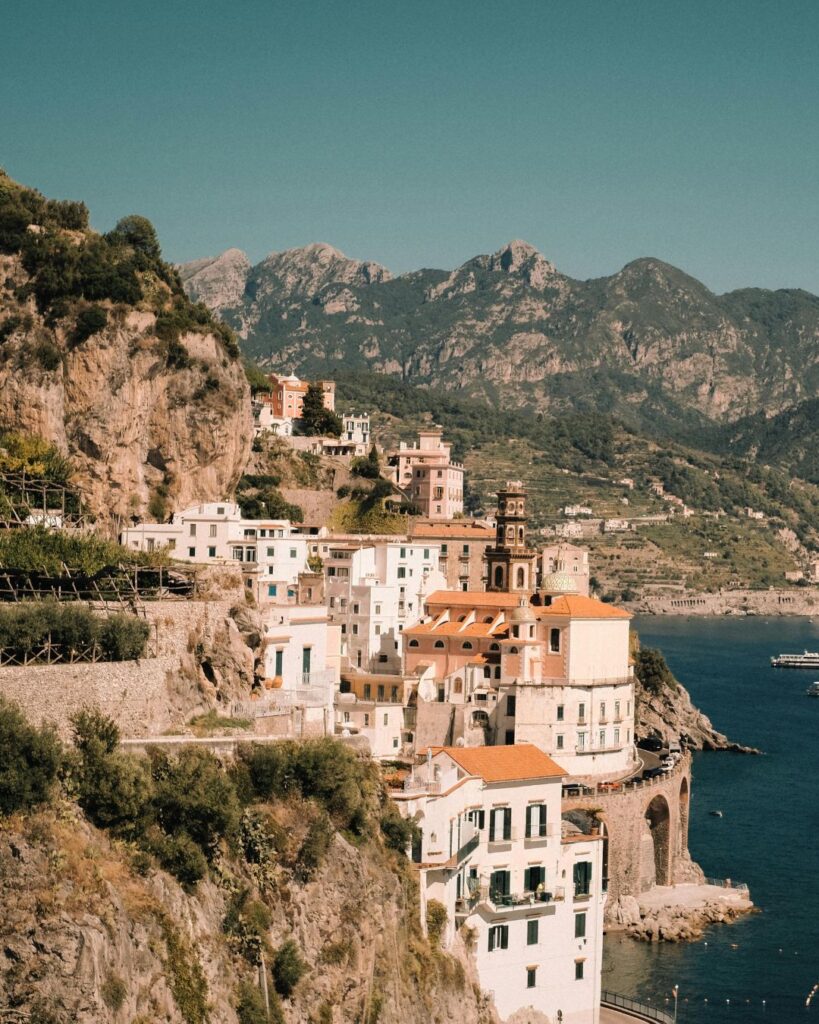
Let me tell you about the town that saved our sanity – and our budget.
Atrani is literally a five-minute walk from Amalfi town. But instead of cruise ship crowds and souvenir shops, you get a tiny fishing village wrapped around a piazza that feels like a living room.
Why stay here: It’s dramatically cheaper – often half the price of Positano or Amalfi. The walk to Amalfi’s ferry terminal and bus station is flat and easy (unusual for this coast). There’s a small, clean beach that never feels overcrowded. And the town has real character – grandmas hang laundry, kids play calcio in the square, and restaurants serve honest food without a “view markup.”
Who it’s for: Budget-savvy travelers who still want convenience. Families. Repeat visitors who’ve already done the tourist towns and want something authentic.
Why it beats staying in Amalfi town: Amalfi itself is loud, packed with day-trippers, and strangely charmless after sunset. Atrani is calm, safe, and genuinely Italian. You can visit Amalfi’s cathedral and museums in the morning, then retreat “home” for a quiet afternoon.
The only catch: Limited nightlife. There are a few bars and restaurants, but if you want clubs or late-night buzz, this isn’t it.
A good place to stay while in Atrani is this one right here
4. Maiori
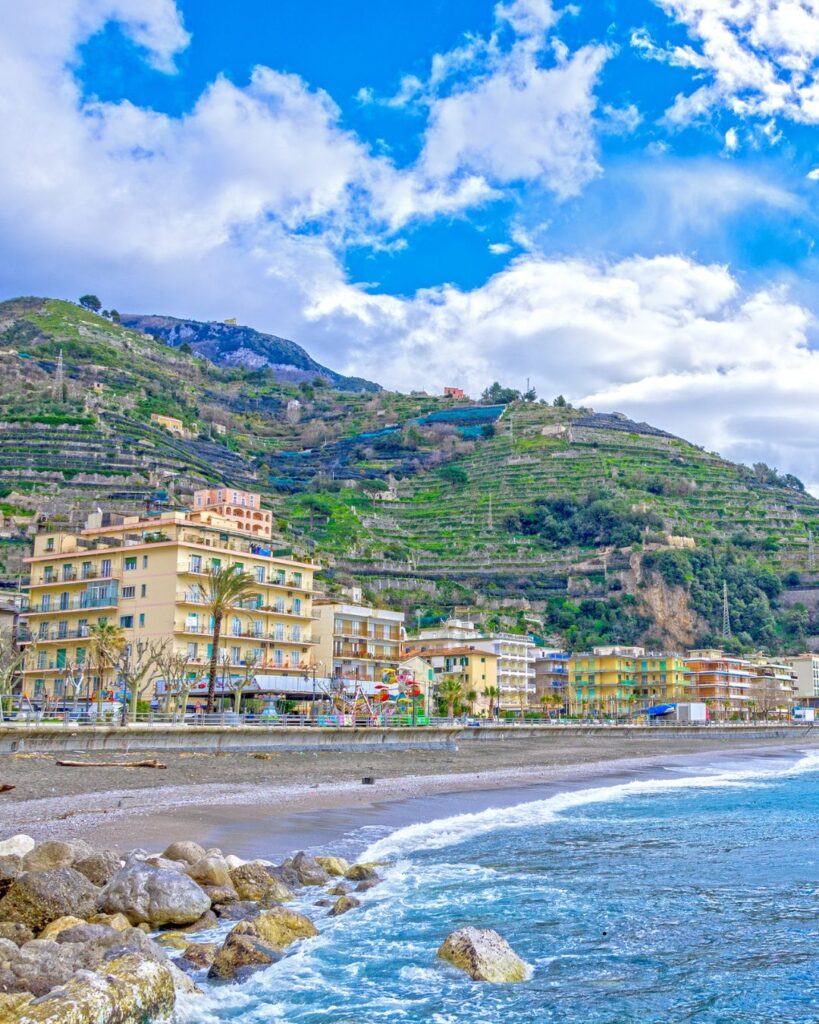
When my wife’s parents joined us on one trip, we knew we couldn’t subject them to Positano’s stairs or Ravello’s bus transfers. We stayed in Maiori. It was the right call.
Why stay here: Maiori has the longest sandy beach on the Amalfi Coast. That’s not pebbles – that’s actual sand. The town is flat, car-friendly, and built for actual living. Hotels are reasonably priced, and you’ll find normal supermarkets and bakeries without tourist markups.
Who it’s for: Families with kids (the shallow, sandy beach is perfect). Travelers with mobility issues or heavy luggage. Anyone who wants to use a car without crying. Also great for longer stays where you need practical amenities.
Transport: Good ferry connections (to Amalfi, Positano, Salerno, Capri). The SITA bus also stops here. You’re never stranded.
The honest trade-off: Maiori isn’t as dramatically beautiful as Positano or Ravello. The architecture is more functional, the cliffs are less vertical, and it feels like a real small city rather than a fantasy. For some people, that’s a dealbreaker. For others, it’s the point.
This one here is a great place to stay in Maiori
5. Wildcard Pick – Vietri sul Mare
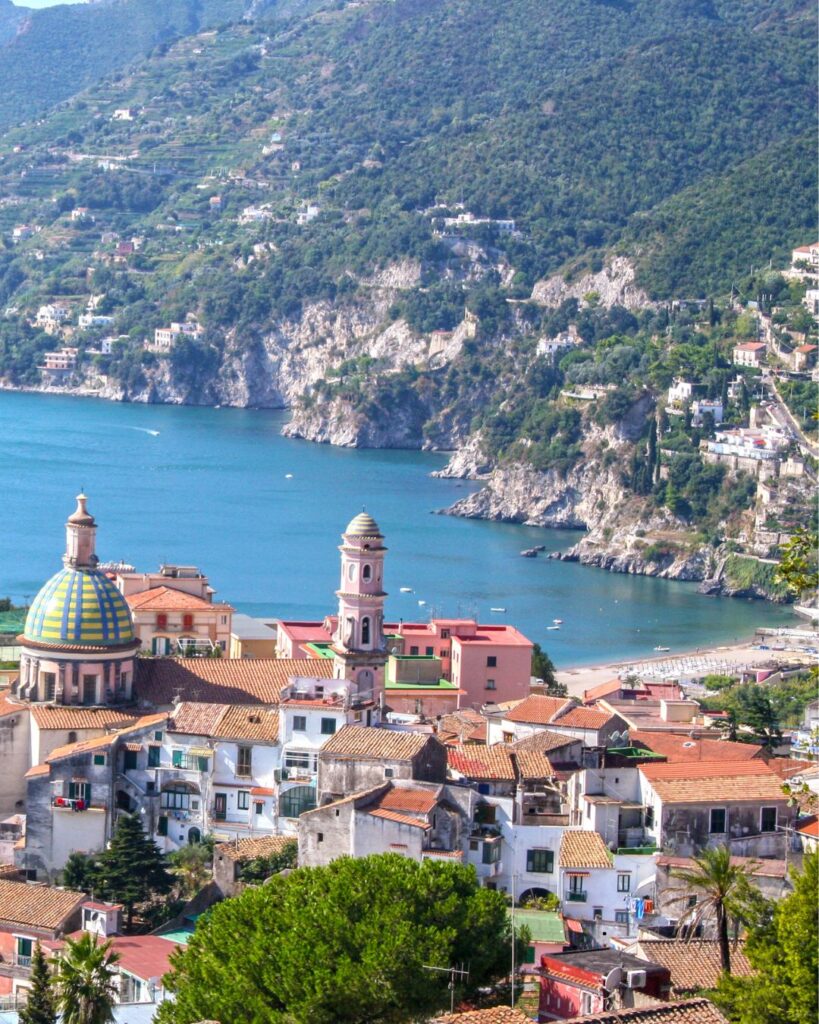
This one surprises people. Vietri sul Mare is the first town on the coast if you’re coming from Salerno. It doesn’t have the famous drama of central Amalfi – but that’s exactly why it works.
Why stay here: Vietri is famous for hand-painted ceramics (you’ll see majolica tiles everywhere). It has a train station (yes, an actual train) connecting you to Salerno in 10 minutes and Naples in an hour. Ferries also run to Salerno, Amalfi, and Positano. Restaurants are noticeably cheaper than anywhere further west.
Who it’s for: Budget travelers who want a clean, convenient base. Art lovers. People flying into Naples who don’t want a complicated transfer. Also good for those who prefer train travel over ferries or buses.
The trade-off: You’re not in the dramatic postcard scenery. Day trips to Positano or Amalfi take 45–60 minutes by ferry. But if you’re on a longer trip (say, 7+ days) or a tighter budget, Vietri is a smart, underrated choice.
Bonus: It’s far less crowded than central coast towns, even in August. And this is where you should stay.
Towns to AVOID Staying In (And Why)
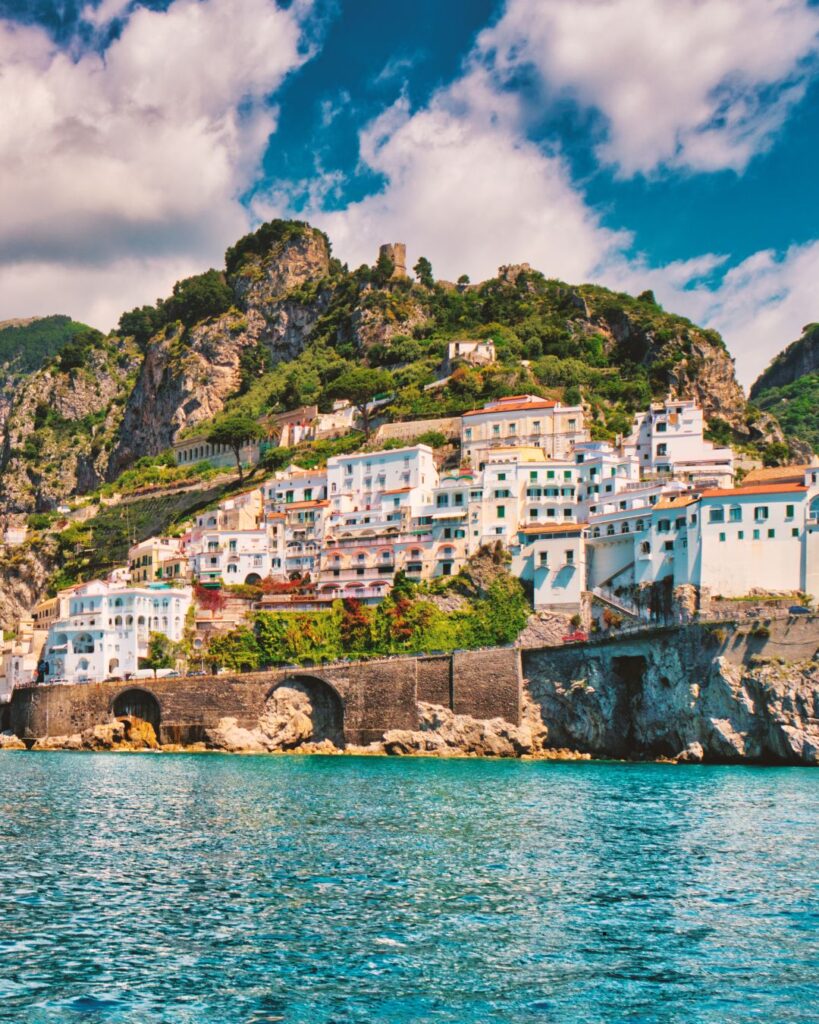
I’ve learned these lessons so you don’t have to.
Amalfi town – Yes, the namesake. Stay somewhere else. During the day, it’s overwhelmed by cruise ship groups and day-trippers. At night, it empties out into something oddly hollow. It’s great for a 2-hour visit to see the cathedral and buy limoncello. Sleeping there? You’ll pay more for less and hear scooters revving until 2am.
Praiano – Sandwiched between Positano and Amalfi, Praiano has lovely views, but no beach and no ferry stop. You’re entirely dependent on the SITA bus, which is often full by the time it reaches you. Fine for a single night if you find a deal. Frustrating as a home base.
Conca dei Marini – This is where the famous Emerald Grotto is. The town itself is tiny, beautiful, and completely isolated. One bus per hour. No ferry. No real restaurants after 9 pm. Only choose this if you’re renting a scooter or car (and good luck parking).
Cetara & Minori – These are charming fishing villages with good food. But their ferry service is limited (often just 2–3 per day in shoulder seasons). You’ll end up taking buses anyway, so you might as well stay in Atrani or Maiori, which have better connections.
Practical Tips for Choosing & Booking Your Stay
How many nights: Don’t shortchange this coast. With travel time from Naples or Rome, you need at least 4–5 nights to feel settled. Seven nights is better if you want to hike, take a boat to Capri, and actually relax.
Luggage warning – take it seriously: Pack light. Rolling suitcases are miserable on stairs. My wife and I use backpacks and one small duffel each. If you must bring a roller, pay for a luggage transfer service (they exist between towns) or book a hotel that picks you up from the ferry.
Ferry vs. SITA bus: Ferries cost more but are faster, scenic, and reliable. The SITA bus is cheap (around €2–3 per ride) but often overcrowded – you might wait 1–2 hours for a bus that never has space. In summer, I book ferries ahead online.
Best time to go: Mid-April to early June is perfection – wildflowers, mild weather, fewer crowds. September to October is also wonderful (the sea is still warm). July and August are hot, packed, and expensive. I avoid them entirely.
Booking strategy: For Positano and Ravello, book 6 months ahead for summer. For Atrani and Maiori, you can find deals 2–3 months out. Last-minute works in shoulder season, but not high.
Sample Itineraries by Travel Style
Luxury honeymoon (5 nights)
- 5 nights in Positano (upper road, sea-view room)
- Day trips: Capri (private boat), Path of the Gods hike, one dinner in Ravello
- Budget: €€€€
Budget couple (4 nights)
- 4 nights in Atrani
- Day trips: Amalfi (walk), Positano (ferry), Ravello (bus), beach day in Maiori
- Budget: €–€€
Family with kids (5 nights)
- 5 nights in Maiori (beachfront apartment)
- Day trips: Minori beach (flatter sand), Amalfi paper museum, boat rental from Salerno
- Budget: €€
Solo slow traveler (4 nights)
- 4 nights in Ravello
- Activities: garden days, hiking to Atrani, cooking class, reading on a terrace
- Budget: €€
Final Verdict – Which Town Should You Choose?
Here’s my no-fluff recommendation chart:
| You want… | Stay here… |
|---|---|
| The classic postcard experience | Positano |
| Peace, cool air, and gardens | Ravello |
| Best value + easy access | Atrani |
| Sandy beach and zero stairs | Maiori |
| Budget + train connections | Vietri sul Mare |
If you have 7+ nights, consider splitting your stay. My wife and I once did 3 nights in Positano (for the glamour) and 3 nights in Atrani (for sanity and savings). It worked beautifully – we got the photos and the quiet evenings.
NOTE BEFORE YOU GO: Italy rewards travelers who go prepared. And it is easy to ruin your trip. I have a checklist for you of things you should never go to Italy without. CHECK IT OUT HERE. I have also curated a list of some of the best hotels in Italy. I would highly recommend checking them out before booking. THESE ARE THE BEST HOTELS IN ITALY. And for unique experiences, attractions, and tours, don’t book before CHECKING THIS OUT. Thank me later!