

The Amalfi Coast is one of the most beautiful places I have been to, not only in Italy but in the entire world. For many, it is a dream travel destination. However, visiting this coastal strip can cost an arm and a leg.
But here’s the thing about travel dreams—they don’t have to come with a nightmare price tag. Yes, the Amalfi Coast has a reputation for being eye-wateringly expensive, and yes, you can absolutely spend a small fortune here if you’re not careful. But the coast doesn’t care about your budget.
The sunsets are free, the hiking trails cost nothing, and the magic of this place exists entirely outside the realm of expensive restaurants and private boat charters. With a bit of planning and some local know-how, you can experience the dolce vita without the financial hangover.
Pick Your Home Base Like a Local
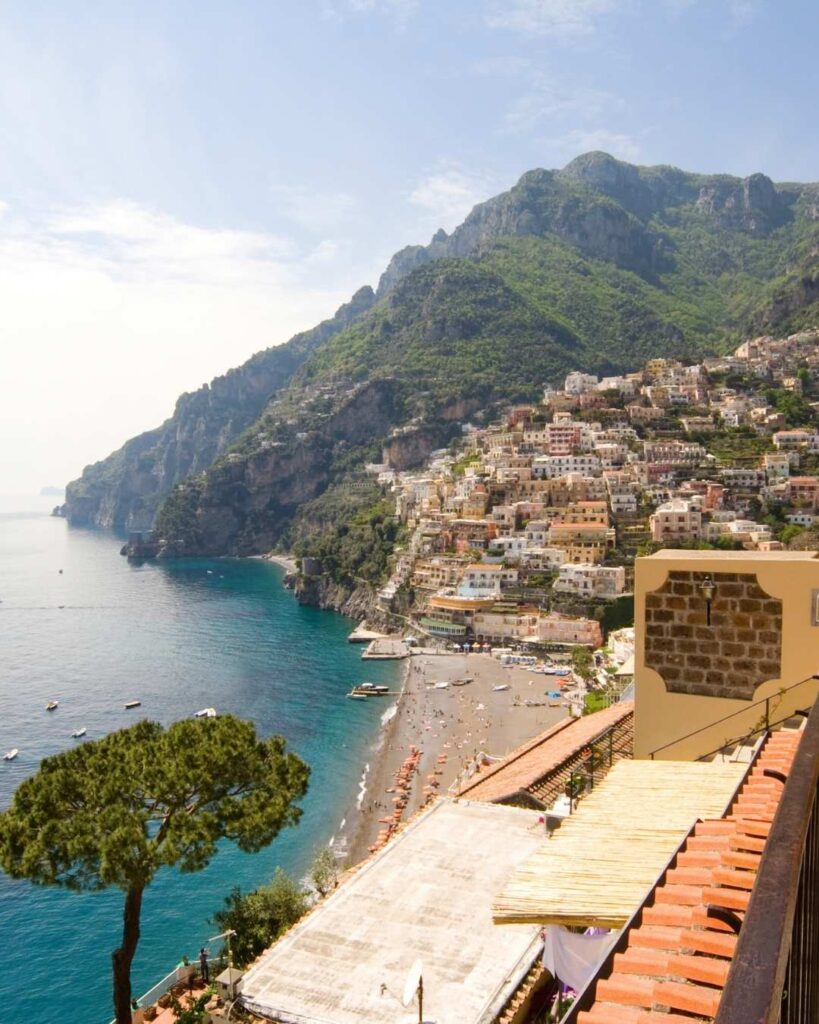
The first decision you make—where to actually sleep—will have more impact on your budget than almost anything else. Positano is the one everyone dreams about, and for good reason. It’s stunning. But staying there means paying a premium for the privilege of waking up in a postcard. You can easily slash your accommodation costs by thirty to fifty percent simply by choosing a different town along the coast.
Praiano sits quietly between Positano and Amalfi, offering equally spectacular views without the crowds or the inflated prices. Maiori and Minori, on the eastern side, are less famous but more authentic, with long stretches of beach and a slower pace of life that feels genuinely Italian rather than tourist-factory Italian.
And then there’s Sorrento, which isn’t technically on the coast but serves as a perfect gateway. It’s cheaper, better connected, and you can day-trip to your heart’s content without paying coastal prices for the privilege of sleeping there.
Timing is your other secret weapon. July and August are when the coast becomes a beautiful, chaotic, expensive zoo. The shoulder seasons—April through May or September through October—offer the same dramatic scenery, the same glorious weather, and about twenty to forty percent lower prices on accommodation. The crowds thin out, the wait for the bus shortens, and you actually have room to breathe on the Path of the Gods.
And here’s a piece of advice that sounds obvious but bears repeating: book early. Like, as soon as you know your dates, start looking. The best value places get snapped up months in advance, especially for summer travel. Look for family-run guesthouses or bed-and-breakfasts rather than big hotels. They’re often cheaper, more personal, and come with the kind of local recommendations that no guidebook can match.
Read: Which area to stay in when visiting the Amalfi Coast.
Navigate Like a Local, Not Like a Tourist
The moment you step off a plane and reach for a taxi, you’ve already made an expensive mistake. Let’s be blunt about this—taxis and private drivers along the Amalfi Coast are a luxury, not a necessity. They’re convenient, yes, but they’ll eat your budget faster than you can say “limoncello.” The alternative is better in almost every way.
The public ferry system is a revelation. It’s efficient, scenic, and puts you right on the water looking up at those famous cliffs in a way that nothing else can match. You can travel from Salerno to Amalfi for around ten euros, and the views along the way are the same ones people pay hundreds to see from private boats. It’s not just cheaper—it’s actually a better experience.
Then there’s the SITA bus, the bright orange workhorse that connects every town along the coast. It’s not glamorous, and it gets crowded, but it works. Tickets cost between one euro thirty and five euros, and if you’re planning to take more than three buses in a day, grab the Unico Costiera day pass for about ten euros.
Just be prepared for the experience—the road is narrow, the drivers are fearless, and you’ll spend equal parts terrified and thrilled as the bus hugs the cliffs.
Whatever you do, do not rent a car. I’m saying this with the full force of someone who’s watched a German tourist attempt to parallel park a Fiat on a cliff edge while seven locals shouted instructions. The coastal road is a masterpiece of civil engineering that nobody should drive on unless they absolutely have to. Parking is practically non-existent, and when you find it, it’ll cost you up to forty euros a day. The stress alone isn’t worth it.
If you’re flying in, consider Salerno airport over Naples. It’s smaller and quieter, and there’s a bus to the city center for just five euros. From Salerno, the ferries leave regularly and will have you on the coast in under an hour without the chaos of Naples’ airport transfer.
The Best Things in Life Are Free
Here’s the truth about the Amalfi Coast—its greatest treasures don’t require a ticket. You don’t need to pay for sunset cocktails at a fancy hotel to be moved by the view. You don’t need a guided tour to appreciate the beauty of a medieval church. The coast gives away its best moments for nothing.
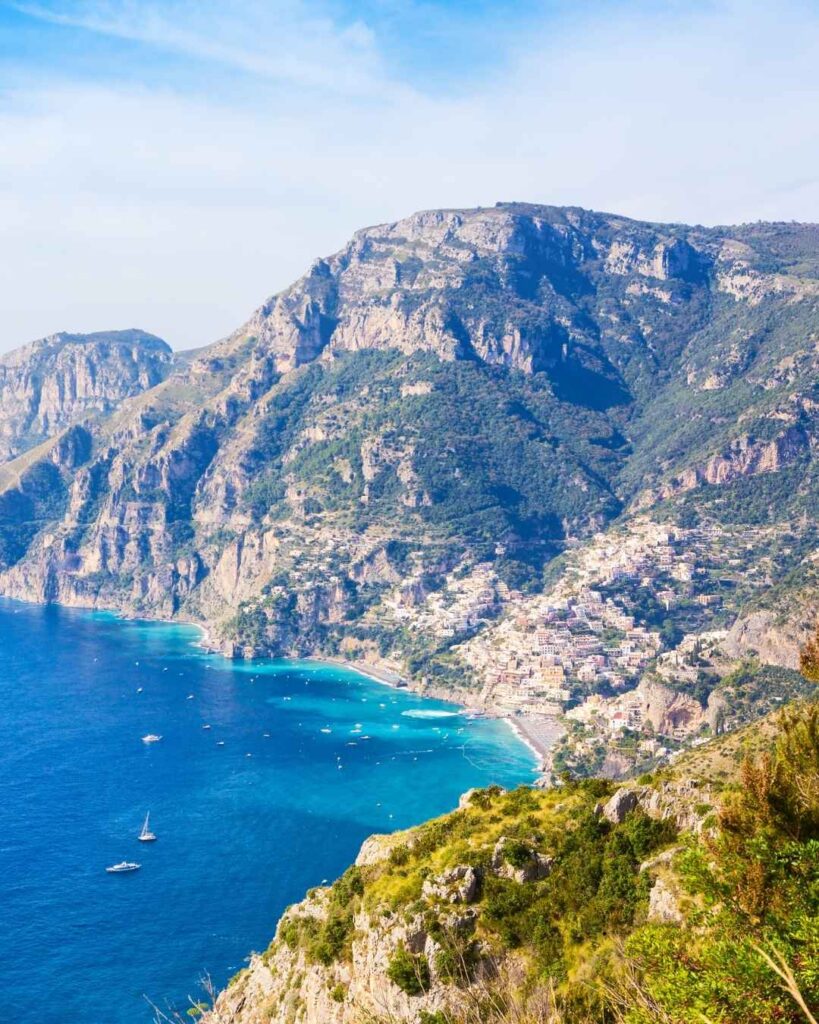
The Path of the Gods is the obvious place to start. It’s a six-and-a-half-kilometer cliff-top trail that traces the coastline between Bomerano and Nocelle, and it’s genuinely one of the most beautiful walks on earth. The name comes from the ancient belief that the gods themselves used this path to escape the heat of the coast.
You’ll understand why the moment you step onto it. The views stretch all the way from Capri to the mountains behind Salerno, and the whole thing costs exactly nothing. Just bring water, wear proper shoes, and catch the local bus to the trailhead.
The towns themselves are free to wander. Positano’s steep, narrow streets are a maze of bougainvillea and ceramic shops. Amalfi’s Duomo stands proudly in the main square, and you can step inside without paying a cent. Ravello sits high above the coast, offering panoramic views from its public gardens. And the best viewpoints—the Belvedere di San Francesco in Amalfi, the terraces behind the main square in Ravello, the quiet corners of Praiano—are all freely accessible.
There are also free historical sites if you know where to look. The Roman Villa of Minori opens its doors to visitors at no charge, with ancient frescoes and mosaics that would cost you elsewhere. Many churches along the coast welcome visitors without asking for a donation. The coastline itself is your museum, and the exhibits change with every hour of sunlight.
Eat Well Without the Restaurant Heart Attack
The restaurants with the best views know exactly what they’re selling. It’s not just the pasta—it’s the postcard-perfect terrace, the sound of waves below, the memory of a sunset framed by a glass of wine. And they charge accordingly. But here’s the thing: one street back from the sea, away from the promenade and the tourist menus, there are trattorias where the food is better, the atmosphere is more authentic, and the prices drop by thirty percent.
My wife and I discovered this on our second night, after a disappointing meal that cost more than it should have and delivered less than it promised. The next evening, we walked up a small alley in Amalfi, away from the waterfront, and found a tiny restaurant where the owner’s mother was rolling pasta in the back. The menu was handwritten. The wine came in a carafe. The bill was half what we’d paid the night before, and we still talk about that meal.
Look for the menu del giorno, the daily set menu. It’s often a full meal for fifteen to twenty euros, and it’s what locals eat at lunchtime. Speaking of which, make lunch your main meal. The midday fixed-price menus are substantially cheaper than dinner, and you can always have a lighter meal in the evening.
Aperitivo is your friend. It’s an Italian ritual that involves ordering a drink and getting access to a buffet of small snacks, cheeses, and olives. It’s not a replacement for dinner, but it can come close, especially if you find a good one. Some places are generous enough that you could make a full meal out of the spread.
For cheap eats, embrace street food. The cuoppo—a paper cone filled with mixed fried seafood—is a local specialty that costs around twelve euros and makes a perfect beach lunch. Or do what locals do and visit the supermarket. Conad and Despar are everywhere, and for under ten euros you can assemble a picnic of fresh mozzarella, crusty bread, tomatoes, and local olives. Eat it on a public bench overlooking the sea, and you’ll have one of the best meals of your trip without the restaurant bill.
Beaches Without the Sunbed Surcharge
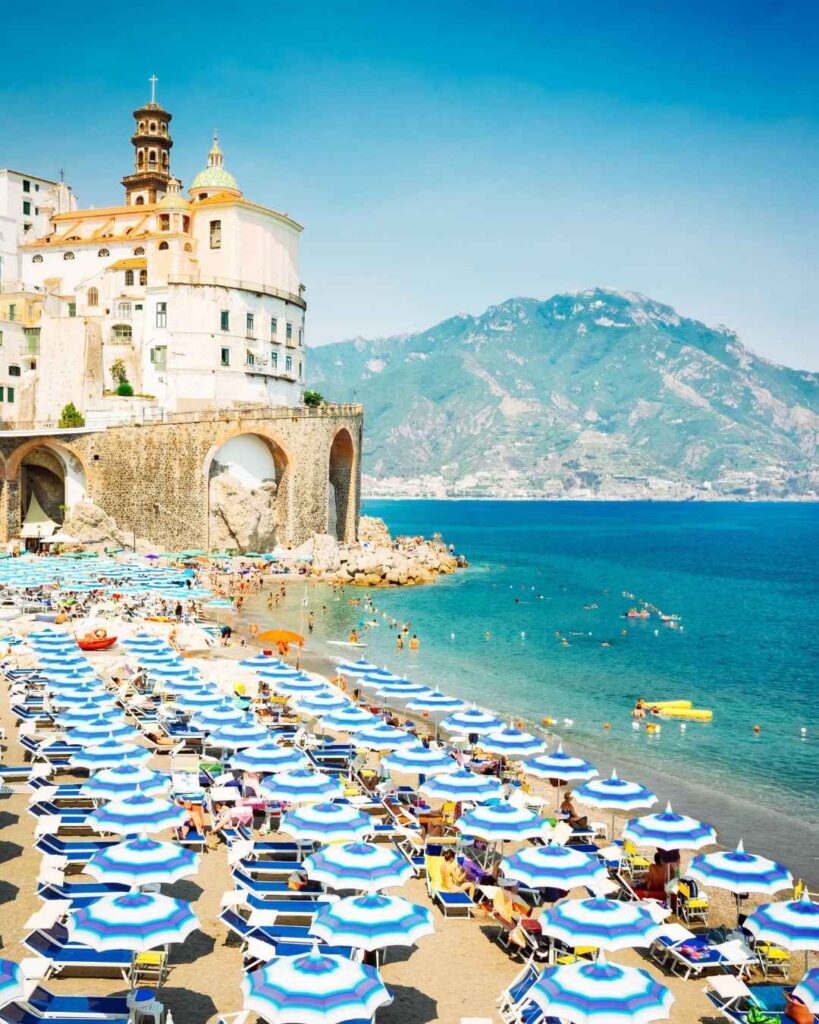
The beaches of the Amalfi Coast are beautiful, but they’re also a lesson in Italian economics. Private lidos dominate most of the accessible coastline, charging anywhere from seventy euros upward for two sun loungers and an umbrella. It’s a shocking amount for the privilege of sitting on the sand.
The alternative is simple but requires a little effort. Every beach has a public section, usually on one end, where you can lay your towel and spend nothing. In Positano, skip the crowded main beach and walk to Fornillo Beach, which is quieter and has more free space. Maiori has a long stretch of public sand where you’ll have no trouble finding a spot.
Bring water shoes. The beaches here are pebbly, and while that makes the water incredibly clear, it also makes walking into the sea uncomfortable. A cheap pair of aqua socks will save you from dancing on hot stones and make the whole experience much more pleasant.
Public beaches are also where you’ll hear real Italian, not tourist Italian. Families spread out their picnics, kids build elaborate stone structures, and grandparents argue good-naturedly about the best spot in the shade. It’s a slice of local life that the private lidos can’t replicate.
Festival Season Is Your Free Ticket to Culture
One of the best-kept secrets of the Amalfi Coast is how many free events happen throughout the year. The towns love their festivals, and they love sharing them with visitors. A quick check of local calendars before you go can reveal a hidden layer of the coast that most tourists miss entirely.
The Sounds of the Gods is a classical music series held on the Path of the Gods itself. Imagine listening to a string quartet in the open air, with the Mediterranean spread out beneath you, and nothing on your ticket but a bit of walking to get there. It’s magical in the truest sense.
Every town has its sagra—a food festival dedicated to something local. There are lemon festivals, seafood festivals, and pasta festivals. These are community events, often held in the main square, and they’re almost always free to attend. You pay for what you eat, but the food is cheap, and the atmosphere is unbeatable. Live music, dancing, and a sense of celebration that feels miles away from the curated experience of a tourist restaurant.
Religious festivals are another highlight. The processions, the flower decorations, the crowds in their Sunday best—it’s a window into a tradition that’s been alive for centuries. Even if you’re not religious, there’s something moving about watching a community come together to honor its history.
See Capri and Beyond Without Paying for Private
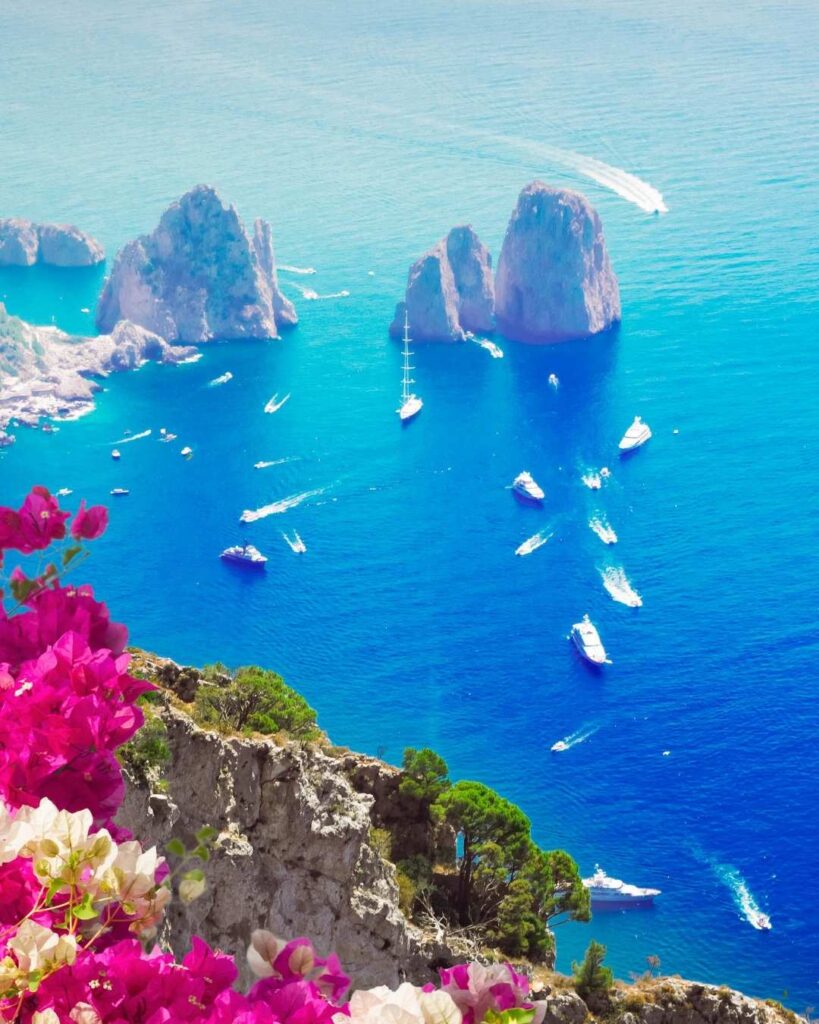
Private boat tours are one of the biggest budget traps on the coast. They’re sold as exclusive experiences, but the truth is that the public ferries give you the same views for a fraction of the price. The trip to Capri, for example, costs around twenty-five euros on a standard ferry, and you’ll see the same cliffs, the same grottos, and the same impossibly blue water that you’d see on a private charter.
Once you’re on the island, skip the expensive chairlift and walk. The views from the top are worth the effort, and the hike is gentle enough for most fitness levels. There’s a wildness to Capri that the day-trippers miss, a sense of isolation that comes from stepping off the beaten track.
For other activities, choose group experiences over private ones. Pasta-making classes, wine tastings, cooking lessons—they’re all available in small group formats that cost substantially less than one-on-one sessions. You’ll meet other travellers, share stories, and probably have more fun than you would with just the two of you. The group dynamic adds something that a private session often lacks.
My wife and I took a group boat tour from Amalfi one afternoon, expecting the standard tourist experience. What we got was a boat full of people from six different countries, a skipper who told stories about his grandfather’s fishing routes, and a shared moment of collective awe as we passed under the cliffs of Conca dei Marini.
The private boats zoomed past us, their passengers isolated from the joy of that shared experience. It turned out that the cheaper option was the better one in every way that mattered.
A Word on Packing
The coast is expensive partly because tourists forget things and then have to buy them at inflated prices in gift shops. Don’t be that person. Pack proper hiking shoes for the Path of the Gods. Bring water shoes for the pebbly beaches. Carry sunscreen and a refillable water bottle—there are public fountains everywhere, and the water is perfectly drinkable.
A small backpack for day trips will save you from needing to buy bags and souvenirs you don’t actually want. A light jacket for the evenings on the water. A camera that doesn’t rely on your phone battery, because you’ll want to document everything. These small preparations add up to real savings when you’re not forced to buy a cheap pair of sandals for twenty euros because you forgot yours.
The Amalfi Coast isn’t expensive because it’s overrated. It’s expensive because it’s genuinely one of the most beautiful places on earth, and people are willing to pay for that beauty. But beauty doesn’t have a price tag, and the best parts of this coast—the light on the water at sunset, the sound of the sea from a hidden cove, the taste of fresh lemon granita on a hot afternoon—are available to everyone who’s willing to step away from the tourist trail and engage with the place on its own terms.
Save your money for the things that matter. Spend on a good meal in a quiet trattoria, not on a taxi ride. Invest in a ferry ticket that gives you the real experience, not a private boat that isolates you from it. And remember that the memories you’ll treasure most are the ones that cost nothing at all—the view from a cliff-top path, the kindness of a local who points you to a hidden beach, the simple joy of being somewhere that feels like a dream.
Related post: Sorrento vs Salerno; where to stay when visiting the Amalfi Coast
NOTE BEFORE YOU GO: Italy rewards travelers who go prepared. And it is easy to ruin your trip. I have a checklist for you of things you should never go to Italy without. CHECK IT OUT HERE. I have also curated a list of some of the best hotels in Italy. I would highly recommend checking them out before booking. THESE ARE THE BEST HOTELS IN ITALY. And for unique experiences, attractions, and tours, don’t book before CHECKING THIS OUT. Thank me later!