
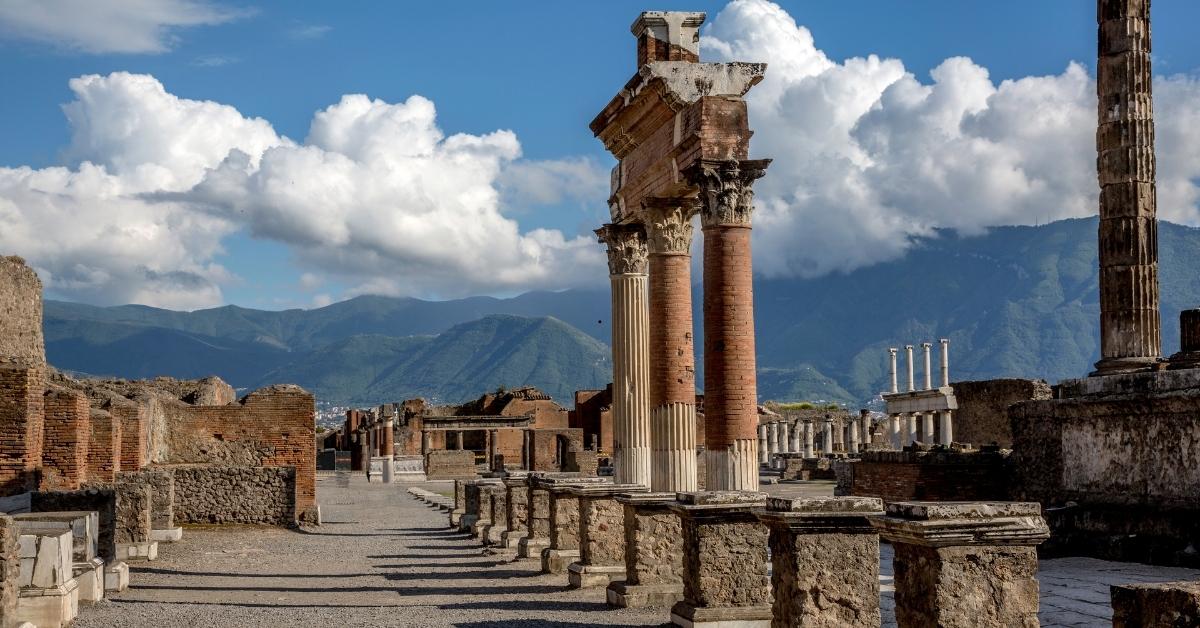
Pompeii. You have seen the haunting plaster casts of bodies frozen in their final moments. You have heard the story of the eruption that buried an entire city in ash. You know about the frescoes, the forum, the amphitheater. It is a story that has been told so many times that it seems complete, sealed in volcanic stone like the city itself.
But here is the thing about Pompeii. The more archaeologists dig, the more they realize how much we have gotten wrong. The city is not a static snapshot of a single tragic day. It is a place with layers, secrets, and stories that have only recently come to light. Some of these discoveries are rewriting history. Others are revealing a Pompeii that is far stranger, more resilient, and more human than the one we learned about in school.
Here are seven things about Pompeii that might surprise you.
Stop experiencing Italy like everyone else. Your trip is different because you are different. Tell me when you’re going, who you’re traveling with, where you want to go, what you absolutely want to see and do, your budget, and anything else that matters to you. I’ll put it all together into a tailor-made Italy itinerary that tells you where to go, where to stay, what to eat, and how to make the most of your time. Use this form
1. The Eruption Did Not Happen in August
For centuries, everyone accepted that Mount Vesuvius erupted on August 24, 79 AD. The date came from the writings of Pliny the Younger, who witnessed the disaster from across the bay and described it in letters to the historian Tacitus. It seemed definitive. History books repeated it. Tourists planned their visits around it.
Then, in 2018, archaeologists made a discovery that upended everything. A worker had inscribed a charcoal note on a house wall, and the note contained a date. It read “the 16th day before the calends of November,” which translates to October 17. The eruption must have happened after that date, not in August as previously believed.
This might seem like a small correction, but it changes how we understand the disaster. Evidence had been mounting for years. Archaeologists had found autumnal fruits, like pomegranates and walnuts, preserved in the ash. People were wearing heavier clothing than one would expect for August. The discrepancy had been noted for a long time, but the inscription provided the proof.
It is a reminder that even the most established facts are only as solid as the evidence supporting them. History is not fixed. It is a conversation, and new voices are always joining in.
2. People Actually Moved Back After the Eruption
This is the Pompeii you have never heard about. The story usually ends with the ash falling, the bodies freezing, and the city lying undisturbed until its rediscovery in 1748. But that narrative is incomplete.
New excavations have revealed that people returned to Pompeii after the eruption. Not immediately, perhaps, but within decades. Survivors who had nowhere else to go came back to the ruins, living among the ash and the remains of their former homes.
It was not a triumphant return. The director of the archaeological park described the post-eruption settlement as less a thriving community and more a desperate struggle. These were refugees living in a wasteland, sifting through the rubble of everything they had lost. But they were there. They tunneled through the hardened ash to retrieve whatever they could carry. They built new dwellings on top of the old.
This discovery changes everything about how we think about Pompeii. It was not a city frozen in time. It was a city that some people refused to abandon, even after the worst happened. There is something profoundly moving about that stubbornness.
3. The Plaster Casts Are Not Bodies
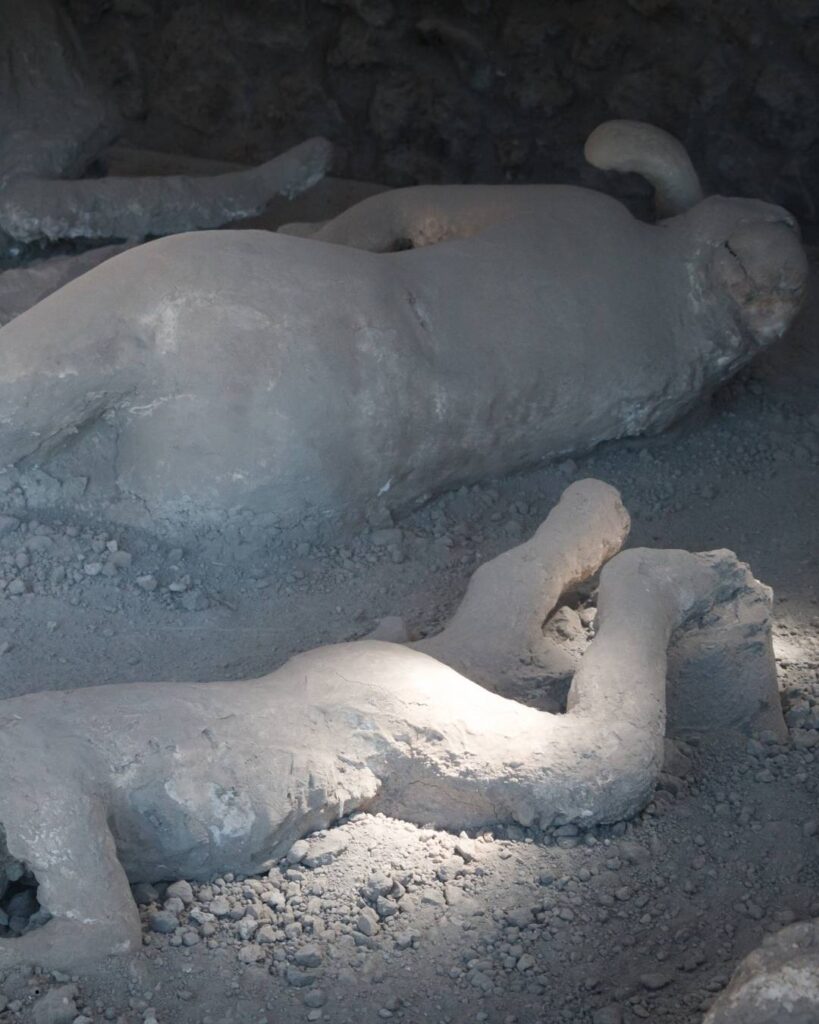
This is a detail that many visitors misunderstand. When you see the haunting figures of people caught in the eruption, the ones that look like ghostly statues contorted in pain, you are not looking at bodies at all.
What you are seeing are voids. When the ash buried Pompeii, it covered the bodies of the victims. Over time, the flesh decomposed, leaving empty spaces within the hardened ash. In the nineteenth century, archaeologists discovered these cavities and had an inspired idea.
They poured liquid plaster into the spaces and let it harden. When they chipped away the ash, the plaster figures emerged, perfectly capturing the final positions of the people who had died there.
The plaster casts are extraordinarily detailed. They show the folds of clothing, the expressions of fear and anguish, even the last movements of someone trying to cover their face. But they are not the people themselves. They are their echoes, the shape of their absence made visible.
Today, archaeologists are using modern techniques like CT scanning and resin casts to preserve even more detail, sometimes finding fragments of bone or fabric within the voids. The technology is giving us a clearer picture than ever before, but the fundamental truth remains. The casts are monuments to loss, not the loss itself.
4. There Is a Graffiti Problem
Pompeii was a city of graffitists. The walls are covered in ancient scribbles, scratched into the plaster by ordinary people going about their daily lives. And when I say ordinary people, I mean exactly that. This is not the polished poetry of educated Romans. This is the raw, unfiltered voice of the street.
There are advertisements for gladiator fights, boasting about the record of a particular fighter. There are love notes, some sweet and others painfully rejected. There are rude jokes, boasts about sexual conquests, and insults directed at enemies and neighbors. One famous inscription reads, “Restitutus has deceived many girls.” Another declares, “We have wet the bed, host. I confess we have done wrong. If you ask why, there was no chamber pot.”
Perhaps the most famous piece of Pompeian graffiti is a single line that reads, “Satura was here.” It is written in the same casual tone as the teenage scrawls we see on bathroom walls today, a reminder that people have been leaving their marks on public spaces for as long as there have been public spaces.
What makes this graffiti so valuable is its authenticity. It is not history as filtered through the elite. It is history as lived by the masses. It is gossip and confession and everyday boredom, preserved for two thousand years.
5. Pompeii Had a Macellum
Every city needs a place to buy food, and Pompeii had a spectacular one. The Macellum, or food market, was located in the forum, the beating heart of the city. It was a large square portico with shops and stalls around the perimeter, selling everything from fresh produce to fish to meat.
But the most fascinating feature is at the center of the market. There is a circular structure with a small pool in the middle, a fountain that likely held live fish for sale. The wealthy Romans of Pompeii loved fresh seafood, and the macellum was where they would come to buy it, still swimming in the water.
The macellum also housed a series of rooms with marble counters and remnants of scales for weighing goods. The arches show paintings of the products sold there, a sort of ancient visual menu. There is evidence of sacrificial meat being sold, linking the commercial life of the city with its religious practices.
Walking through the macellum today, you can imagine the bustle. The shouts of vendors. The haggling over prices. The smell of fish and fresh bread and the chaos of a thriving urban center. It is one of the most vivid reminders that Pompeii was not a museum. It was a living, breathing place.
6. The Secret of the Graffiti
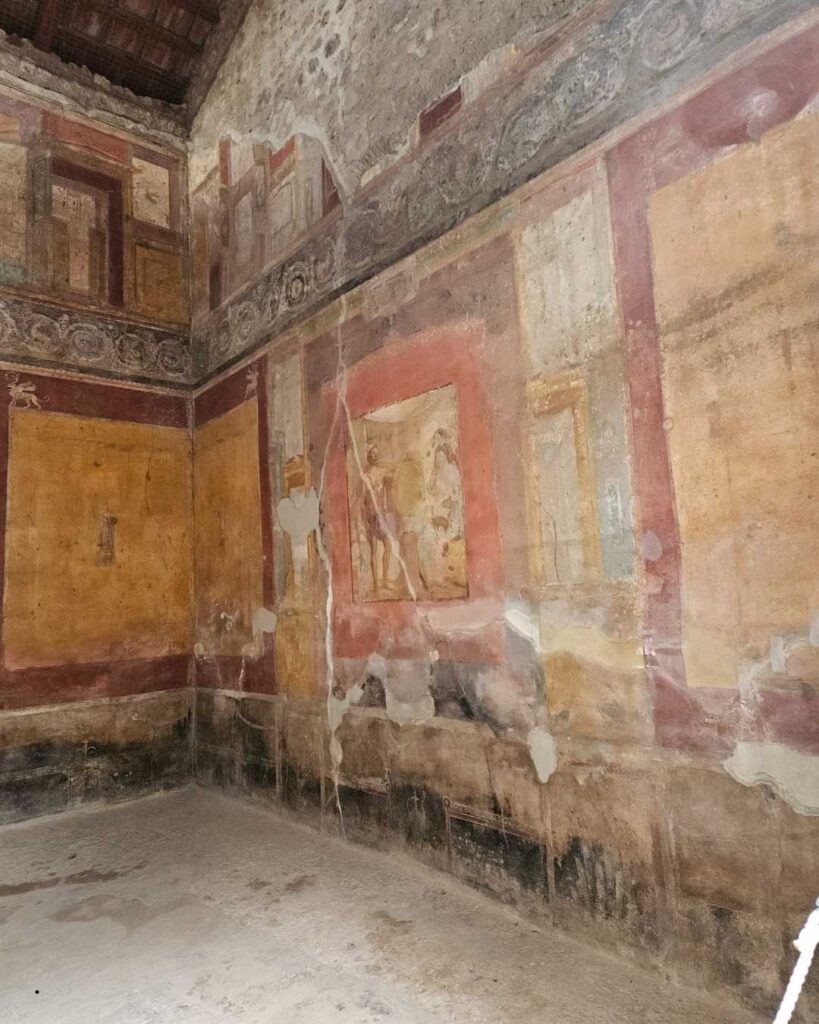
The graffiti at Pompeii is not just interesting. It is a window into the lives of people who left no other trace. We have plenty of records from Roman elites. We know about senators, generals, philosophers. But the graffiti gives a voice to the servants, the slaves, the shopkeepers, and the children.
In one house, a servant scratched a list of the debts owed to his master. It is a mundane record of money changing hands, but it reveals a world of obligation and dependency. In another, a child practiced the alphabet, tracing the letters over and over to learn the basics of writing. In a tavern, a disgruntled customer complained about the price of wine.
These are the voices we would otherwise never hear. They are not famous. They are not powerful. But they were there, and they left their mark. The graffiti makes Pompeii feel closer, more relatable. It is easy to forget that the people of the ancient world were just like us. They gossiped. They complained. They fell in love. They made bad jokes.
7. The Fascinating New Discoveries
Pompeii is still being excavated. About a third of the city remains buried, and every year, archaeologists find something new. Some of these discoveries have been truly breathtaking.
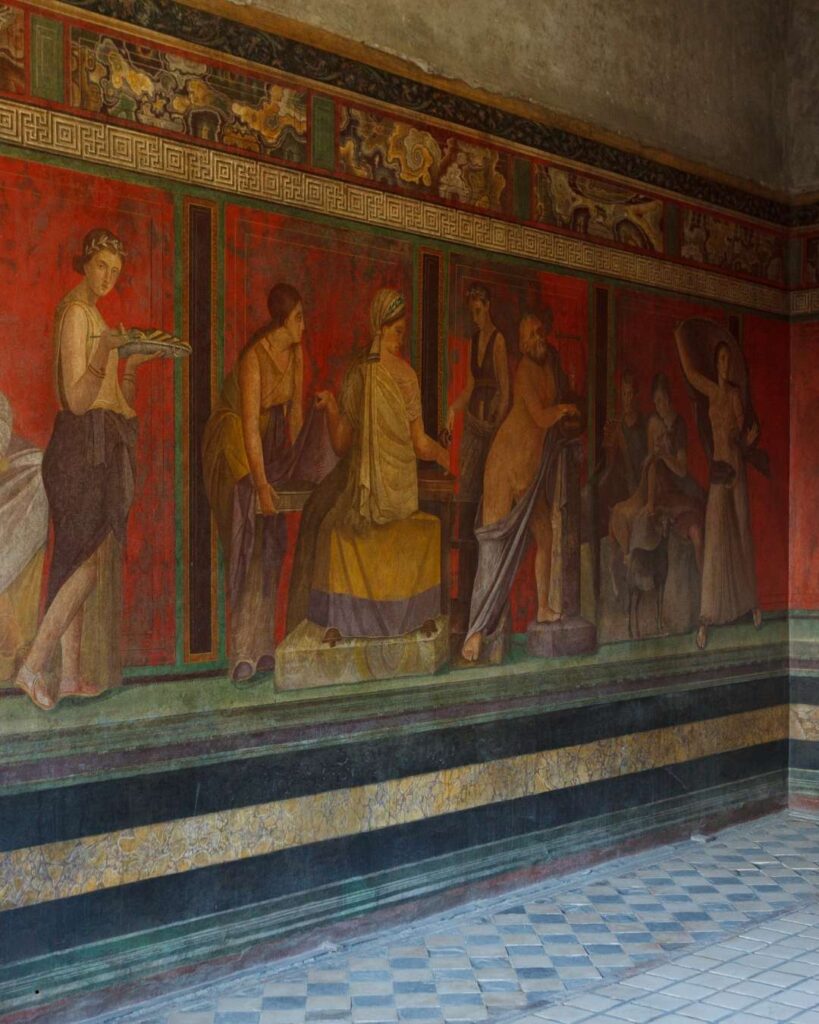
In the Villa of the Mysteries, a recent renovation revealed frescoes in even more vivid color than expected, showing ritual scenes that scholars still debate the meaning of. Nearby, the discovery of a necropolis with intact burials has provided new information about funeral customs and the social structures of the city.
Perhaps the most famous recent find was the “Sorcerer’s Kit” unearthed in one of the houses. It contained amulets, mirrors, and a small collection of trinkets believed to be used in magical rituals. The owner of the items was likely a priestess or a practitioner of the mystical arts, someone who operated in the shadows of official religion.
These discoveries keep Pompeii alive in the imagination. Every new find raises new questions. What did they believe? What did they fear? What did they hope for? The answers are still emerging, piece by piece, from the ash.
You must visit Pompeii while in Italy, and a guided tour by a local archaeologist is the best way to understand it. These are the tours I recommend.
Conclusion
The true wonder of Pompeii is not just that it was preserved. It is that it continues to speak to us. Through the graffiti, the casts, the newly unearthed frescoes, and the stubborn survivors who returned to live among the ruins, Pompeii tells a story that is far richer and more complicated than the one we thought we knew. It is not a city frozen in time. It is a city still revealing itself, one discovery at a time.
NOTE BEFORE YOU GO: Italy rewards travelers who go prepared. And it is easy to ruin your trip. I have a checklist for you of things you should never go to Italy without. CHECK IT OUT HERE. I have also curated a list of some of the best hotels in Italy. I would highly recommend checking them out before booking. THESE ARE THE BEST HOTELS IN ITALY. And for unique experiences, attractions, and tours, don’t book before CHECKING THIS OUT. Thank me later!