
Everyone says they want to escape the crowds. Then they book a flight to Rome, take the train to Florence, and spend three hours queuing for the Uffizi while a tour guide waves a flag in their face.
I get it. The famous places are famous for a reason. But there’s a particular kind of exhaustion that sets in when you realize you’ve flown across an ocean to stand shoulder-to-shoulder with strangers, all of you staring at the same painting through the same phone screen.
The good news is that Italy hasn’t been ruined. It’s just been unevenly distributed. While millions of people funnel into the same five destinations, entire regions sit nearly empty, waiting for travelers curious enough to look past the postcards.
This guide isn’t about “hidden gems” in the tired sense—those lists of places that stopped being hidden the moment they were published. It’s about places where you can still feel like you’re discovering something. Where the bartender doesn’t have an English menu ready before you sit down. Where my wife and I once spent an entire afternoon on a beach in Calabria and saw maybe six other people.
Let’s start with the coast, because that’s where most people’s Italian dreams live.
Before you read further, remember that Italy rewards travelers who come prepared. I’ve found a few things especially useful on an Italy trip, and they’re worth having and/or knowing beforehand. See the checklist here
1. The Gargano Peninsula: Puglia’s Best-Kept Secret
Puglia has become the darling of Italian travel over the past decade, and for good reason. The trulli houses, the olive groves, the food. But most visitors never make it north of Bari, which means they miss the Gargano entirely.
This mountainous promontory juts into the Adriatic, covered in ancient forest and ringed by some of Italy’s most dramatic coastline. It’s home to the most extensive national park in the country, yet it draws only a fraction of the crowds that descend on Cinque Terre.
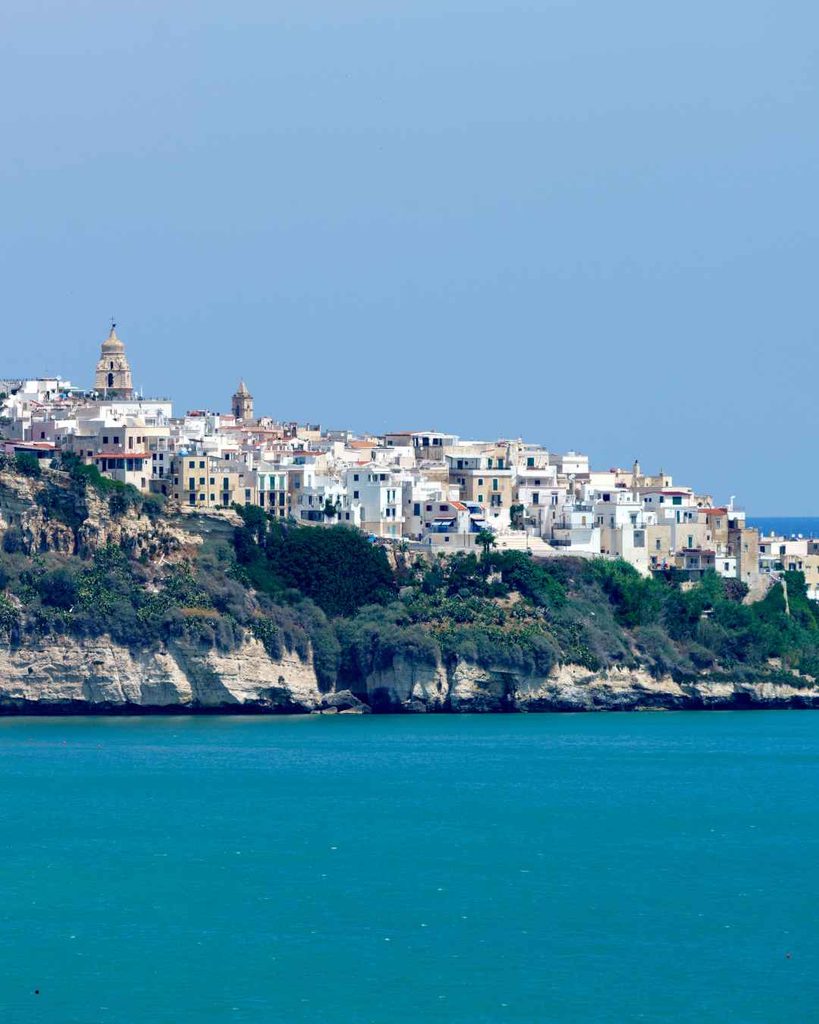
Vieste is the main town, and it’s a stunner. Whitewashed buildings stacked tightly together on cliffs overlooking the Adriatic, with little alleyways that suddenly open onto panoramic views of the sea. The old town feels dramatic without trying too hard—parts polished and lively along the seafront, other corners quieter and rougher in a way that feels real rather than curated.
The iconic sight here is the Pizzomunno, a massive limestone sea stack rising straight out of the beach just outside town. There’s a romantic legend attached to it, as there always is with these things, but even without the story, it’s one of those landmarks that looks almost unreal in person.
What makes Gargano special is that it has everything Cinque Terre has—dramatic cliffs, turquoise water, charming villages—without the trainloads of day-trippers. The best way to experience the coastline is by boat with a local captain who knows the hidden coves and caves.
For dining, the town of Peschici is worth a detour. There’s a Michelin-starred restaurant called Porta di Basso, but the more memorable experience might be Al Trabucco da Mimì—an old fishing hut converted into a restaurant where you eat while literally hovering over the water. These trabucco structures are traditional fishing platforms built on wooden piles jutting out from the cliffs, and several have been turned into restaurants along the coast.
Getting around requires a car. Public transport between the coastal towns is spotty at best, and the roads themselves are part of the experience—coastal drives with constant sea views, sudden turns that reveal hidden beaches, and stretches where you won’t see another car for a while. If you want that feeling of discovering somewhere rather than just visiting it, this is where it happens.
2. Tropea and the Coast of the Gods
Calabria has a reputation problem. It’s the south of the south, often dismissed as poorer, rougher, less polished than the rest of Italy. This means it stays affordable and uncrowded, even in summer.
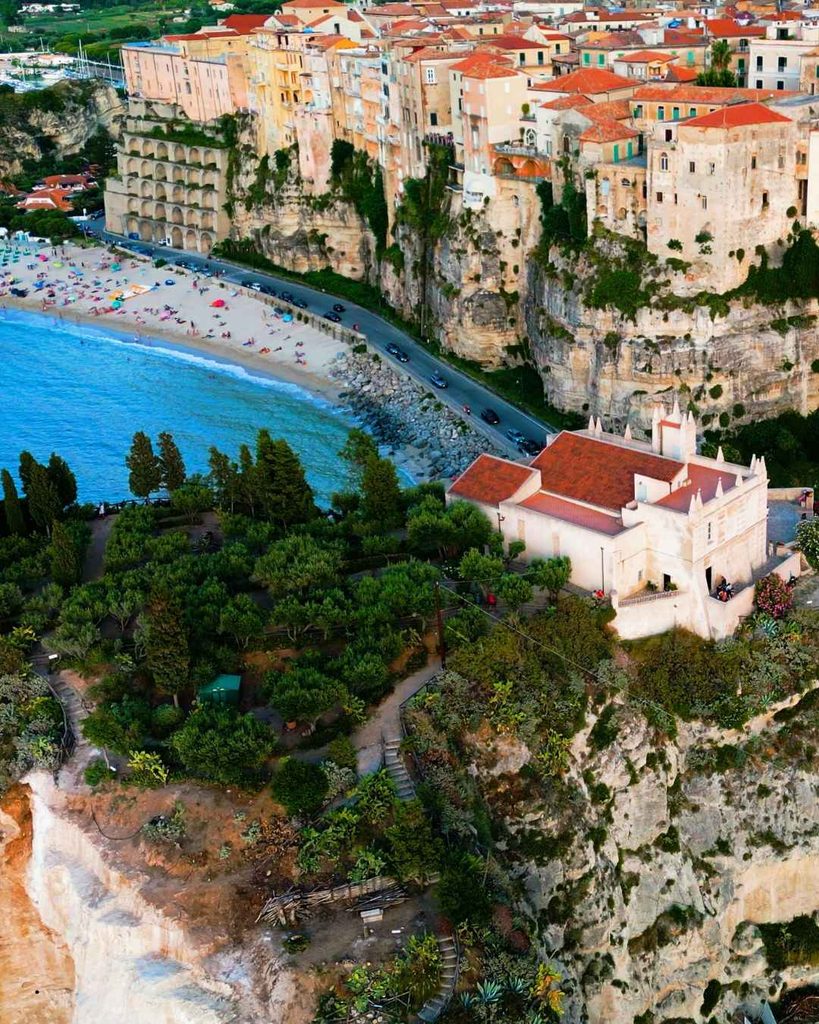
Tropea is the region’s crown jewel, a medieval town built on a sandstone cliff that drops vertically into the Tyrrhenian Sea. The pale stone houses rise above beaches of white sand, and the water has a clarity and color that belongs more to the Caribbean than to the Italian mainland. It’s consistently voted among the most beautiful villages in Italy, and its clifftop profile does nothing to contradict that designation.
The historic center is compact and largely pedestrianized, a grid of medieval streets lined with churches, palaces, and small shops. The Cathedral of Tropea is partially Norman in origin and contains an unusual votive offering—a photograph of the atomic bomb explosion over Nagasaki, donated by a Tropean sailor who survived the event and attributed his survival to the intercession of the Madonna of Romania.
It’s the kind of detail that reminds you this is a living town with its own history, not just a pretty backdrop.
The most photographed view on the entire Calabrian coast is the church of Santa Maria dell’Isola, perched on its rocky promontory below the town. You’ll see it on postcards everywhere, and yes, it really looks like that.
The local food culture revolves around the Cipolla Rossa di Tropea—the famous red onion with protected geographical indication status. Its sweetness and mild flavor make it the basis of jams, preserves, and fresh preparations that appear on every menu in town. Try the fileja, a hand-rolled pasta served with Tropea onions. And don’t leave without trying ‘nduja, the soft, spreadable spicy pork sausage that’s a Calabrian specialty.
The stretch of coastline between Nicotera and Pizzo is known as the Costa degli Dei—the Coast of the Gods—and it’s best experienced from the water. A boat trip from Tropea reveals beaches accessible only by sea, limestone sea arches, and grottos whose interiors glow with reflected light. The Grotta della Monacella is the most dramatic, a large sea cave with blue light and stalactite formations.
One of the most memorable experiences is a snorkeling excursion following what locals call the Ulysses’ Route from Tropea to Capo Vaticano. You’ll stop to swim in coves and caves, and you can snorkel above the remains of the ancient Roman port of Forum Erculis, where you can see sections of stone structures below the surface. On clear days, you can see the Aeolian Islands on the horizon, with Stromboli’s plume of smoke rising from its summit.
A day trip to Pizzo is easy by train and worth doing. This is the birthplace of tartufo, the gelato dessert shaped like a truffle with a molten chocolate center. Stop at Gelateria Ercole in Piazza della Repubblica to try it where it was invented in the 1950s. Just off the piazza is Castello Murat, a small fortress where Joachim Murat, Napoleon’s brother-in-law and former King of Naples, was imprisoned and executed in 1815.
North of town, the Chiesetta di Piedigrotta is a cave church carved into the sandstone by shipwrecked sailors in the 17th century, filled with religious figures sculpted from the rock itself.
3. Praiano: The Amalfi Coast’s Quieter Neighbor
The Amalfi Coast is not lost. It’s just concentrated. Positano and Amalfi get the crowds. Praiano, twenty minutes down the road, doesn’t.
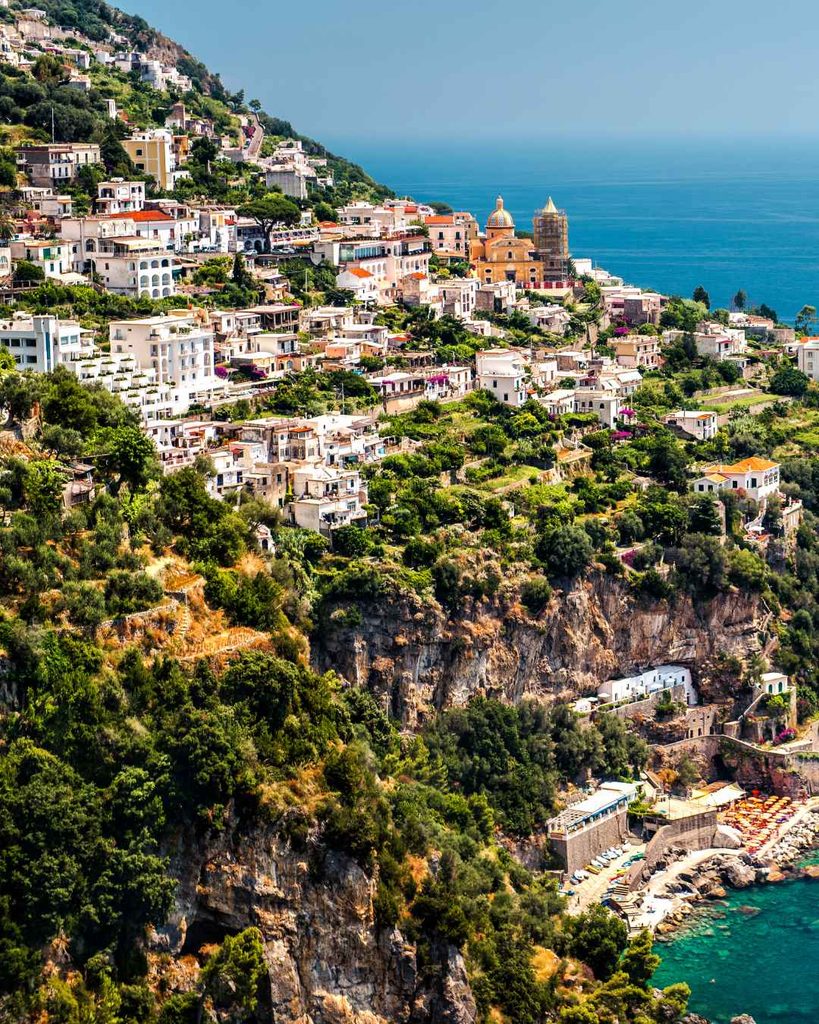
Praiano is a vertical town, built into the cliffs between the two more famous siblings. It has the same views, the same sparkling water, the same lemon trees perfuming the air. What it lacks is the throng of day-trippers who flood in on ferries each morning and leave by evening.
The town’s focal point is the Chiesa di San Gennaro, instantly recognizable by its colorful majolica-tiled dome. The piazza outside comes alive in the early evening when locals gather for aperitivo, and children play until late into the night. Come just before sunset for one of the best viewpoints in Praiano, then linger with a drink as the piazza fills up.
Below the town, Marina di Praia is a tiny fishing cove tucked between soaring limestone cliffs—the kind of place where you can swim in the morning and have lunch at a table almost at the water’s edge. Trattoria da Armandino is a long-standing local favorite known for fresh seafood, homemade pasta, and tables perched so close to the water you can almost touch it.
One of Praiano’s most unexpected features is its open-air art museum. As you wander through the staircases and alleyways, you’ll come across dozens of colorful ceramic installations created by local artists as part of the NaturArte project, each inspired by the town’s history, mythology, and fishing traditions. It transforms an ordinary walk into a kind of treasure hunt.
For dinner, Il Pirata has been a Praiano institution since 1964, combining a restaurant, beach club, and late-night cave bar in one spectacular cliffside setting above Marina di Praia. Bar del Sole, overlooking Piazza San Gennaro, is where locals meet throughout the day for coffee or an evening spritz. Grab a table on the terrace and do absolutely nothing for an hour or two.
If you want to splash out, Un Piano nel Cielo—”a floor in the sky”—is a Michelin-starred restaurant with sweeping views toward Positano and seasonal tasting menus inspired by Campania. For something more accessible, Kasai offers refined dishes like spaghetti with local red squid on an elegant terrace overlooking the coast.
4. Abruzzo: Mountains, Sea, and Trabocchi
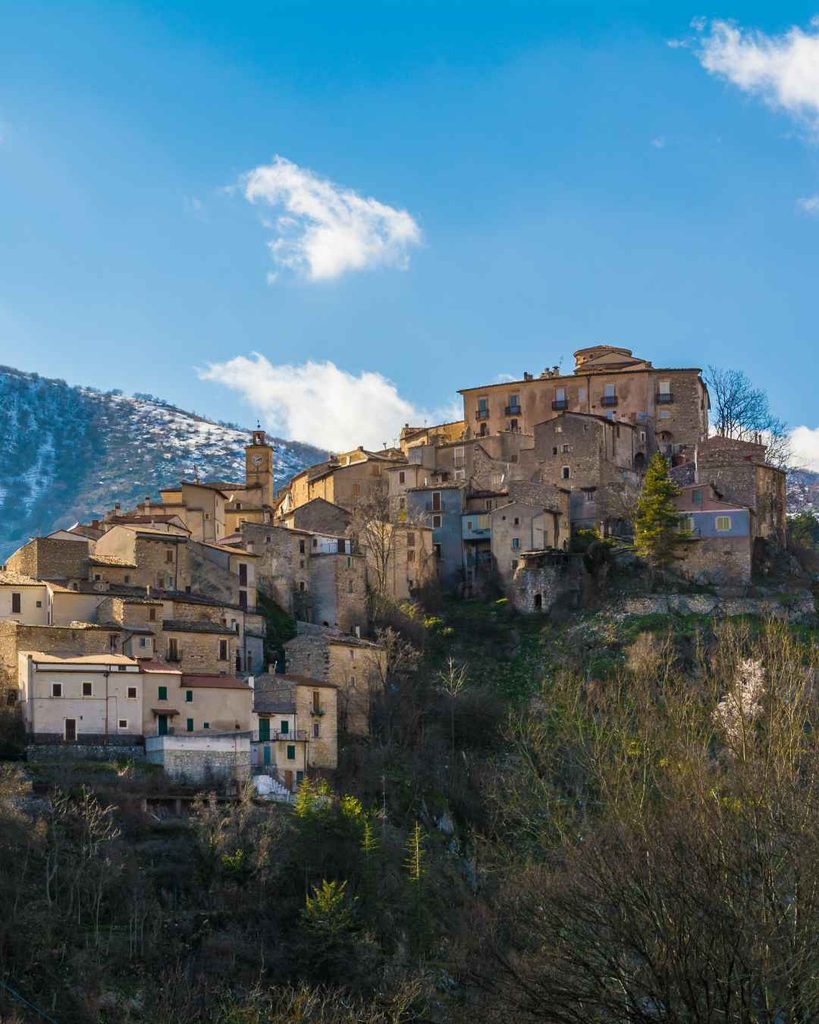
Abruzzo is the kind of place that makes you wonder why anyone bothers with Tuscany.
Despite being barely an hour from Rome, it remains about as authentic an Italian experience as you can find in a country so devoured by international tourism. The Abruzzesi feel a sense of relief about this, viewing theirs as the one truly untouched region in Italy.
A third of the region is national park. The Gran Sasso and Maiella mountains offer hiking and skiing that rivals the Alps, and the region is Italy’s second most popular skiing center outside the Alps themselves. Wildlife watchers come here for the chance to spot brown bears and grey wolves in their natural habitat.
The Adriatic coastline, known as the Costa dei Trabocchi, is dotted with strange wooden fishing structures that jut out over the water—ingenious contraptions of pulleys and nets that fishermen once used to haul in catches without ever getting in a boat.
Many have been converted into restaurants where you can eat seafood while waves crash beneath your table. Trabocco Punta Isolata is one of the best-known, serving fresh seafood right on the platform.
Inland, you’ll find hill towns and castles that seem frozen in time. Santo Stefano di Sessanio is a beautifully preserved medieval village. Rocca Calascio is a mountaintop fortress with views that stretch for miles. Sulmona, the birthplace of the Roman poet Ovid, is known for its confetti—candy-coated almonds in every flavor imaginable.
The region is not well-served by public transport outside Pescara, so you’ll need a car. That’s fine. The driving is part of the experience, winding through mountains and valleys with hardly another car in sight. A classic road trip might start in Pescara, head to Sulmona for lunch, stop at the Riserva Naturale Gole del Sagittario for scenic hikes with waterfalls and gorges, then continue to Scanno for a heart-shaped lake view from above.
Visit in spring for the Festa dei Serpari, a festival in Cocullo where snake charmers parade through town with live serpents draped over a statue of San Domenico. It’s one of those experiences that makes you realize how much of Italy exists outside the guidebooks.
5. Le Marche: The New Tuscany (But Don’t Tell Anyone)
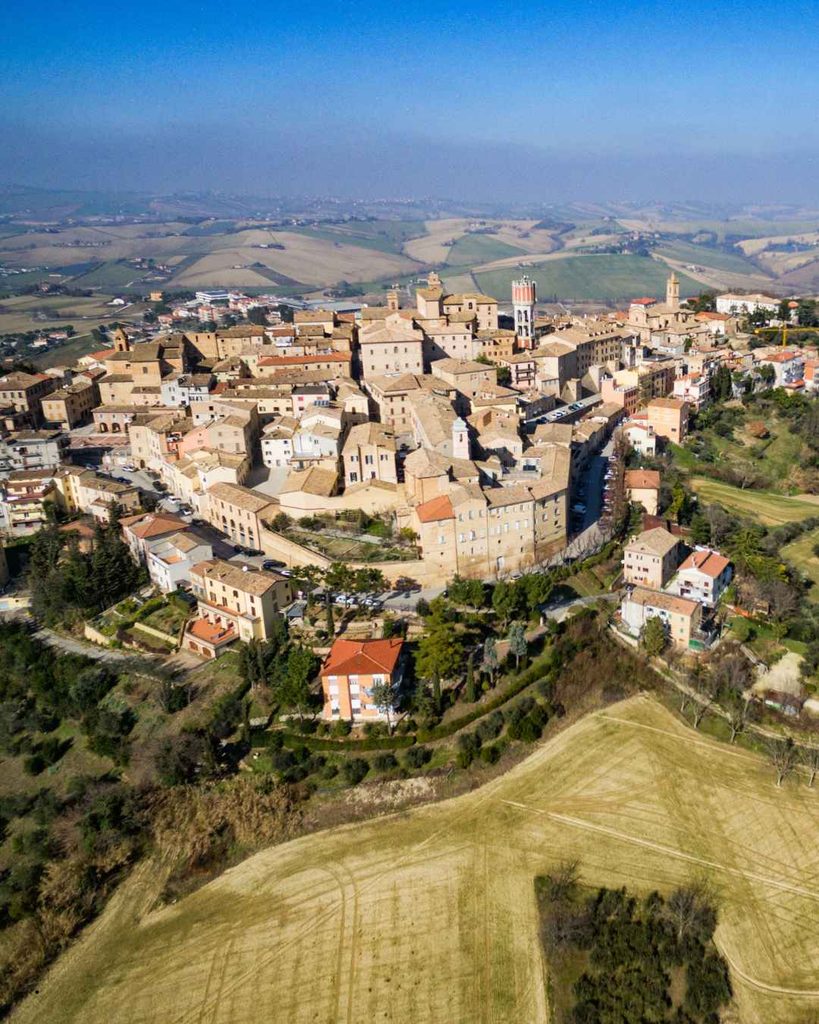
Le Marche sits across the Apennines from Tuscany, and locals describe it as “all of Italy in one province.” It has everything its famous neighbor has—rolling hills, Renaissance art, medieval villages—without the tour buses.
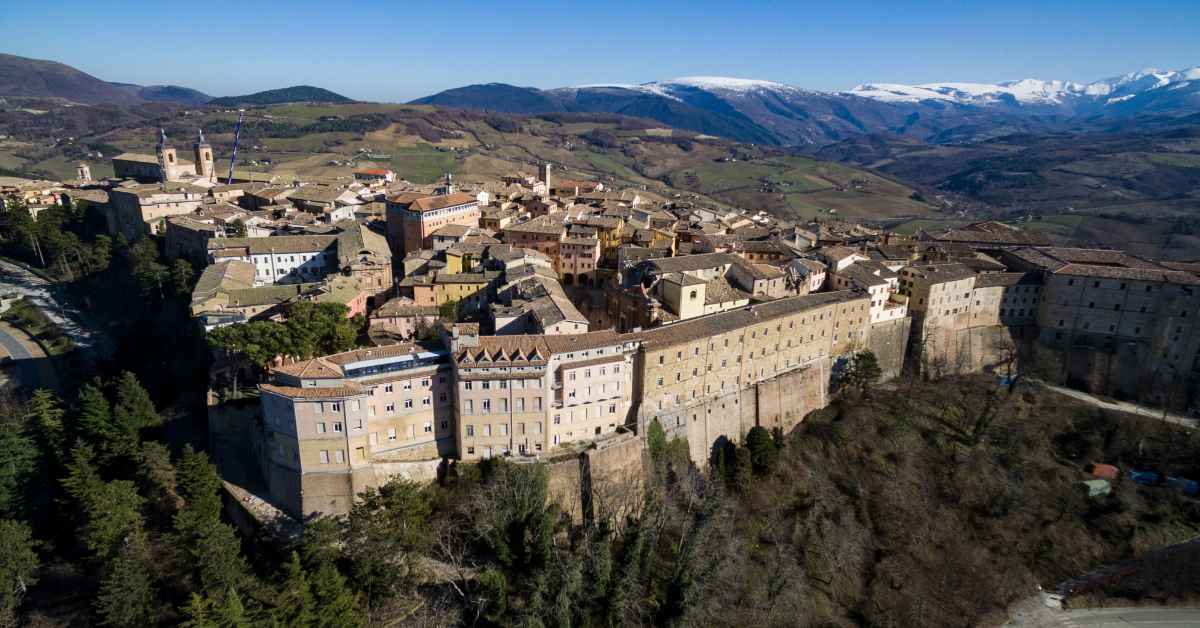
Urbino is the region’s crown jewel, a UNESCO World Heritage Site built around the Palazzo Ducale. It was one of the great courts of fifteenth-century Europe under Federico da Montefeltro, and the National Gallery houses one of the most important collections of Renaissance art in Italy, including Piero della Francesca’s Flagellation and Raphael’s Portrait of a Gentlewoman.
Raphael was born here in 1483, and his father’s house is a short walk from the palace. Unlike Florence, you can actually stand in front of these paintings without someone’s elbow in your ribs.
Ascoli Piceno is another gem, known as the “City of a Hundred Towers.” Its Piazza del Popolo is one of the most beautiful squares in Italy, paved in white travertine and surrounded by elegant arcades. Have an espresso at Caffè Meletti, which has been serving since 1907, and watch the town go about its business.
The region is also a paradise for hikers and nature lovers. Monti Sibillini National Park offers hundreds of kilometers of trails through mountains, valleys, and historic villages. The Frasassi Caves are among Europe’s most spectacular karst formations—vast underground chambers filled with stalactites and stalagmites.
The first chamber, the Abisso Ancona, is 180 meters long, 120 wide, and 200 high, large enough to contain Milan Cathedral. Above the caves, the Tempio del Valadier is a neoclassical octagon built into the rock face, reached on foot in about twenty minutes.
For a taste of the coast, Monte Conero is the one stretch of the Adriatic that doesn’t look like the rest of the Adriatic. Just south of Ancona, the hills reach the sea and end in white limestone cliffs. Portonovo sits in a bay below the cliffs, with a Romanesque church standing among the trees behind the beach. The most famous beach, Due Sorelle, is reachable only by boat.
6. Umbria: Tuscany’s Quieter Twin
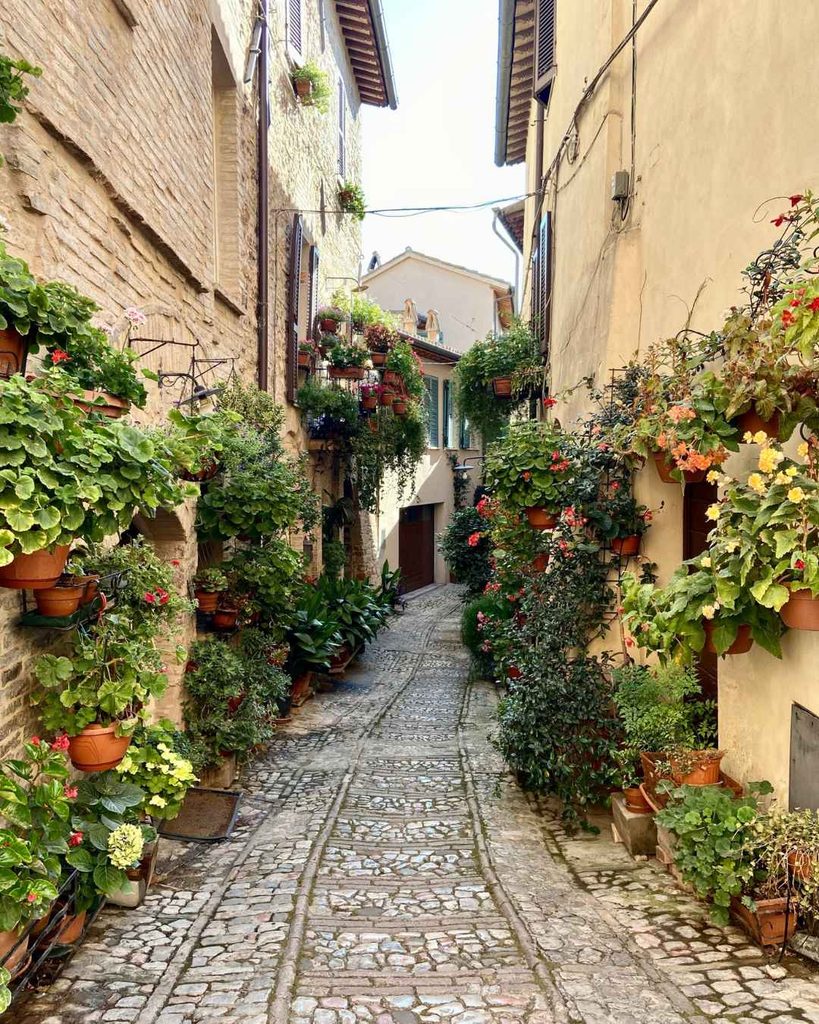
Umbria is often called “the green heart of Italy,” and it’s true—the region is a patchwork of olive groves, vineyards, and medieval hill towns. What it lacks is Tuscany’s fame.
Spello is one of the most beautiful villages in the region, built in pink limestone with Roman gates still standing. Every June, the town holds the Infiorata, when residents create elaborate flower carpets along the streets for the feast of Corpus Christi. Perugia and Assisi are the better-known anchors, but the small villages between them—places like Bevagna, Montefalco, and Trevi—are where the real magic lives.
The food in Umbria is earthy and honest: black truffles, lentils from Castelluccio, cured meats, and olive oil that tastes like the hills it came from. This is slow food country in the truest sense. In Montefalco, the Sagrantino wine is among the most tannic and age-worthy in Italy. In Bevagna, you can visit a working medieval paper mill and a mosaic workshop. In Trevi, the olive oil is so prized that it has its own museum.
7. Monte Sant’Angelo, Puglia
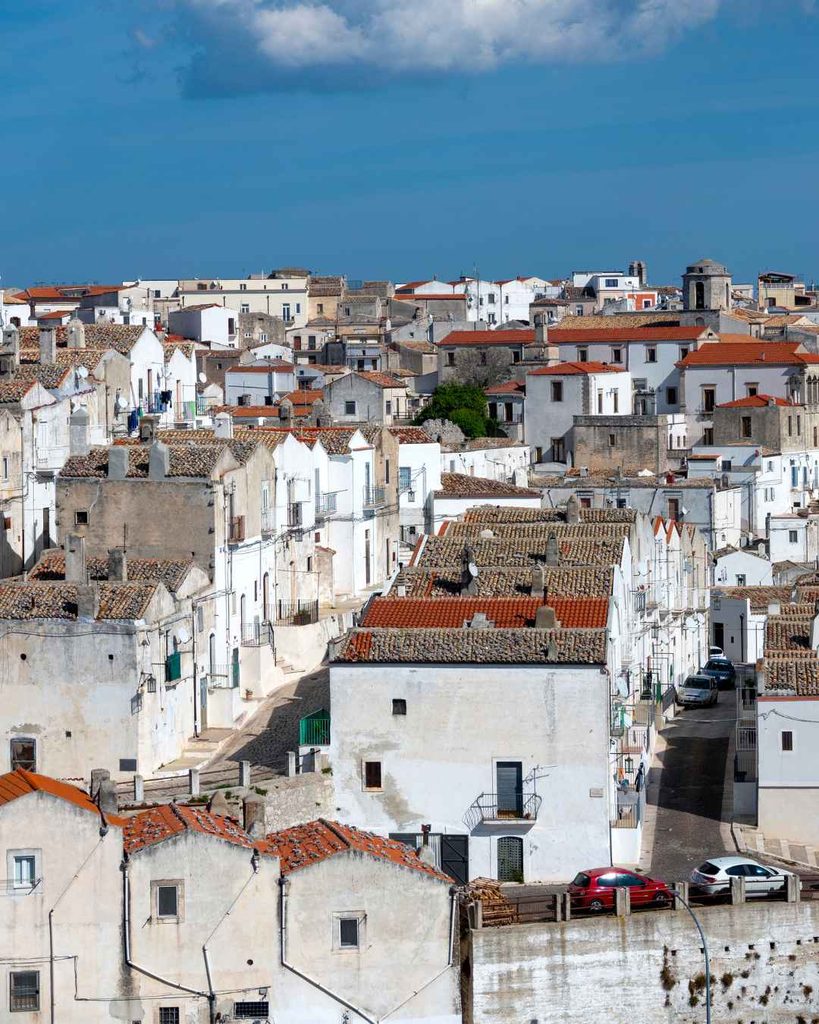
Perched 800 meters above sea level in the Gargano mountains, Monte Sant’Angelo is home to the Sanctuary of San Michele Arcangelo, a UNESCO World Heritage Site carved directly into the rock. The cave has been a pilgrimage site for over 1,500 years. According to legend, this is where the Archangel Michael appeared, and the town grew up around the shrine dedicated to him.
Walk through the Rione Junno, the oldest quarter, where houses are piled one on top of another and connected by stairways. The views stretch across the entire national park to the Gulf of Manfredonia. The town itself is small enough to explore in a morning, but the atmosphere—especially in the evening when the day-trippers leave—is something you’ll want to linger in.
The castle, Castello Normanno-Svevo-Aragonese, sits at the highest point and offers panoramic views of the surrounding mountains and sea. It’s a steep walk up, but the reward is a perspective on the Gargano that few visitors bother to earn. Below the castle, the narrow streets are lined with shops selling local olive oil, cheese, and crafts. It’s not a museum town—people live here, and you can feel it.
8. Neive, Piedmont
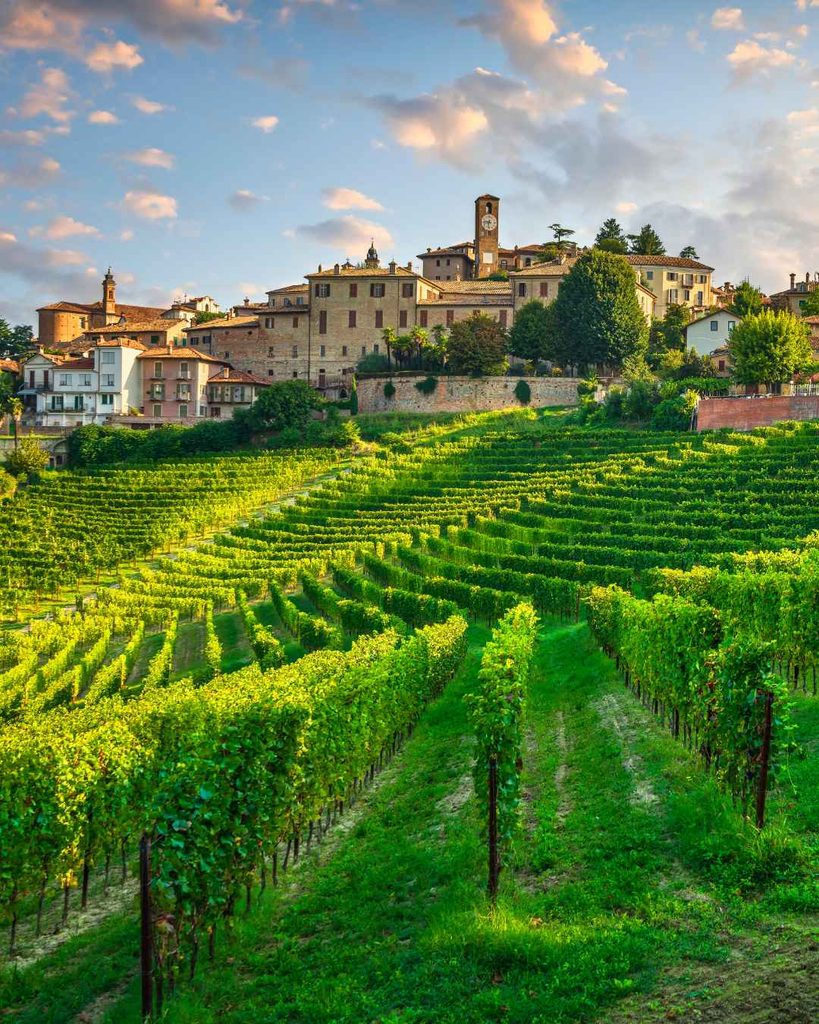
In the Langhe hills, surrounded by vineyards that produce Barbaresco, Neive is Slow Food country. Truffles, hazelnuts, long lunches that stretch into evening. This is where you go if your idea of Italy involves wine more than churches.
The village itself is a compact knot of brick and stone, with a medieval tower and a handful of excellent restaurants. But the real draw is what surrounds it. The Langhe is one of Italy’s great wine regions, and Neive sits at the center of it. You can walk from the village into the vineyards, visit a family-run cantina, and taste wines that rarely leave the region.
The food scene here is serious without being pretentious. Trattorias serve tajarin—thin egg pasta—with butter and sage, or with a ragu of local beef. The hazelnuts from the Langhe are famous throughout Italy, and you’ll find them in everything from cakes to gelato.
In autumn, the white truffle season brings people from all over the world, but even in spring and summer, the markets are full of local produce that puts most Italian cities to shame.
9. Loro Ciuffenna, Tuscany
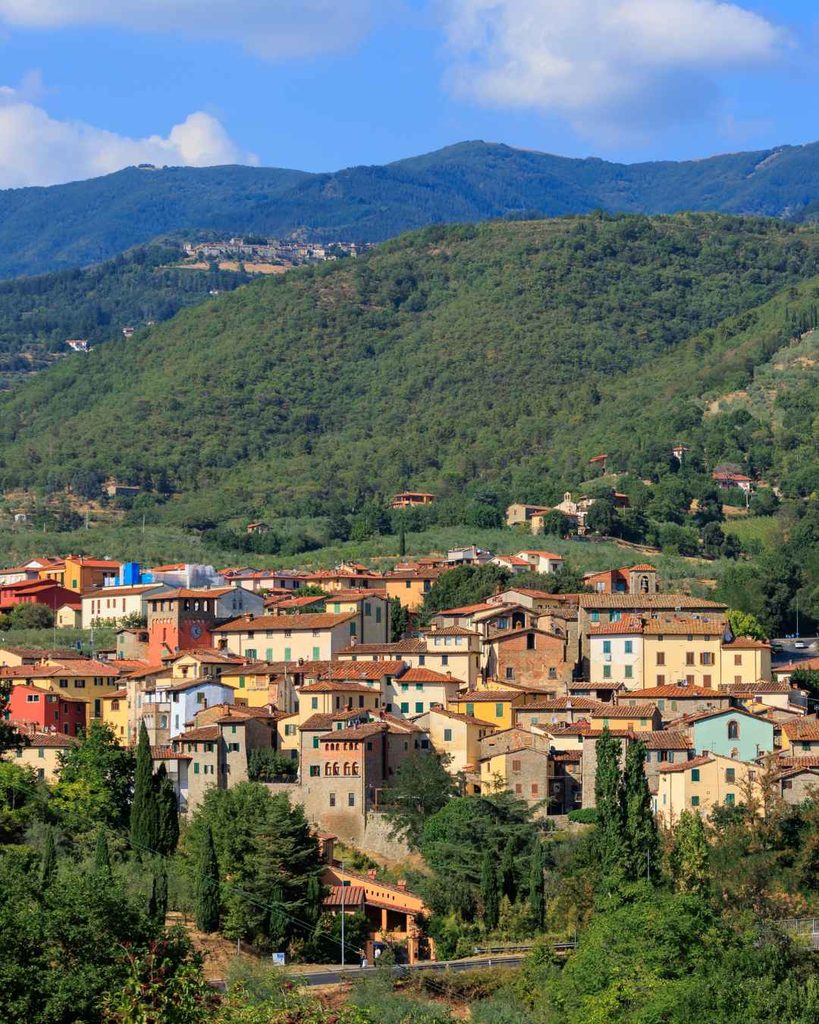
Tuscany is not exactly short on charming villages. San Gimignano, Montepulciano, Pienza—you’ve seen the photos, and so has everyone else. But Loro Ciuffenna sits in the Valdarno, between Florence and Arezzo, and it somehow remains one of the region’s best-kept secrets despite being on the official Borghi list.
The village is built around a narrow gorge where the Ciuffenna stream cuts through the rock. A high stone bridge connects the two sides, and the houses seem to lean over the water, almost daring it to rise. The centerpiece is a working water mill, said to be the oldest still functioning in Tuscany, dating back to around the year 1000 and still used to grind chestnut flour. It’s an authentic testimony to local artisan ingenuity, and you can still see it in operation.
Strolling through the historic center is like stepping into a postcard from another era. Stone houses, flower-filled balconies, irregular stairways, and paved alleys tell centuries-old stories.
Walk uphill to the Church of Santa Maria Assunta, which dominates the village with its Romanesque simplicity, then continue to the Pieve di San Pietro a Gropina just outside town—one of the greatest examples of Romanesque architecture in Tuscany, fascinating for its capitals carved with mysterious symbolism that alternates between biblical scenes and pre-Christian symbols.
The village itself is an open-air gallery, with permanent installations, ceramic works, and small artistic details scattered among the houses and shops. There’s also a small museum dedicated to Venturino Venturi, a sculptor born here in 1918, housed in the town hall.
The museum preserves 93 works he donated to the municipality, including a Portrait Gallery with portraits on stone of important 20th-century Italian cultural figures. It’s the kind of place where you might be the only visitor, which is exactly the point.
For dining, Trattoria La Botte Piena is a cozy family-run restaurant in the historic center serving hearty Tuscan fare—ribollita, pappardelle with wild boar ragu, grilled meats. Osteria Il Canto del Maggio, just outside town, offers a more refined experience with creative interpretations of Tuscan classics.
And if you’re looking for a natural swimming hole, the Groppone di Roccanova on the Ciuffenna River is a scenic spot where you can swim in crystal-clear waters and picnic on the rocky banks.
Those who love walking will find Loro Ciuffenna a perfect base for excursions in Pratomagno, the mountain range that separates the Valdarno from the Casentino. Well-marked trails lead to extraordinary scenic spots, including the Pratomagno Cross, a privileged observation point from which to admire the valley below and, on clear days, the entire arch of the Apennines and the Chianti hills.
A Few Tips Worth Knowing
A few things I’ve learned from doing this wrong before doing it right.
Rent a car. Many of these places are not well-served by trains. In Abruzzo, Le Marche, and Calabria, a car gives you the freedom to stop in villages that don’t appear on any list, to take that random road that looks interesting, to leave when you feel like it.
Go in shoulder season. May and September are ideal almost everywhere. The weather is warm, the water is swimmable, and the crowds are manageable. August is when Italians take their holidays, so unless you want to be surrounded by Italian families (which is lovely, but crowded), avoid it.
One traveler who visited Gargano in late April and early May described it as perfectly timed—warm enough for long days outside, quiet enough to avoid crowds, and still just about brave enough for a quick dip in the Adriatic.
Stay overnight. Day-trippers create crowds. If you sleep in a village, you experience it after six in the evening and before ten in the morning, when it belongs to the people who live there and to you. That’s when the real life of a place reveals itself.
Eat where the locals eat. If there’s no English menu, you’re probably in the right place. If the owner seems mildly surprised to see you, even better.
The Italy That Rewards Curiosity
The famous Italy will always be there. The Colosseum isn’t going anywhere. Neither is the David or the Trevi Fountain. If you’ve never been, go. See them. They’re worth it.
But if you’ve done the classics, or if you’re the kind of traveler who’d rather discover something than check it off a list, there’s another Italy waiting. It’s in the mountains of Abruzzo, where trabocchi lean over the Adriatic. It’s in the pink stone villages of Umbria, where flower festivals still follow the liturgical calendar. It’s in Loro Ciuffenna, where a medieval mill still grinds chestnut flour, and the tourists haven’t found the place yet.
It’s in the places that haven’t been optimized for you. And those are the places you’ll remember.
Again, feel free to go through the list below of my Italy recommendations that I have crafted after years of travel to this beautiful country:
- Packing List: Things Not to Go to Italy Without
- Must-Do Things: Unforgettable Experiences
- Where to Stay: Best Hotels in Italy.
- Where to Stay in Rome: Rome’s Best Neighborhoods
- Where to Stay in Florence: Picking the Best Area
- Where to Stay in Venice: Venice’s Best Districts
- Italy’s Cobblestone Streets: Best Shoes For the Job
- Backpack or Suitcase?: Italy Luggage Guide
- Travel Insurance: Always Be Covered
- E-Sim: Be Connected At All Times