
If you are going to Rome for the first time, you have a decision to make that will shape your entire trip: where to sleep. Not which hotel, not which room category, but which neighborhood.
This is the choice that determines whether you spend your days walking to the Pantheon or sitting in traffic on a bus. It determines whether your evenings end with a quiet glass of wine on a cobblestone piazza or a long taxi ride back to a sterile hotel district.
Rome has twenty-two distinct districts, and each one has a personality. The Centro Storico puts you beside the Pantheon and the Trevi Fountain, but you pay for it with crowds and noise. Monti is stylish and close to the Colosseum, but it can feel slightly removed from the Rome you imagined.
Prati is elegant and convenient for the Vatican, but it is not where you go for atmosphere. Testaccio has the best food in the city, but you will be taking transport to reach most of the major sights.
Then there is Trastevere. And for a first trip, I would choose it every time. This is also where my wife and I stayed during our last trip to Rome. We will also stay there again on our upcoming trip too.
Before you read further, remember that Italy rewards travelers who come prepared. I’ve found a few things especially useful on an Italy trip, and they’re worth having and/or knowing beforehand. See the checklist here
What Trastevere Actually Is
The name comes from the Latin trans Tiberim, meaning “beyond the Tiber.” It sits on the west bank of the river, directly across from the historic center, and it has always been a place apart. In ancient Rome, this was the foreign quarter, home to Jewish settlers, Syrian sailors, Egyptian traders, and immigrants from across the empire.
It was working-class then, and it stayed working-class through the medieval period and into the twentieth century. The Trasteverini developed a reputation for pride, independence, and a distinct Roman identity that set them apart from the people across the river.
That history is still visible today. Trastevere is not a neighborhood that was built for tourists. It grew organically over centuries, which is why its streets are narrow, winding, and occasionally confusing.
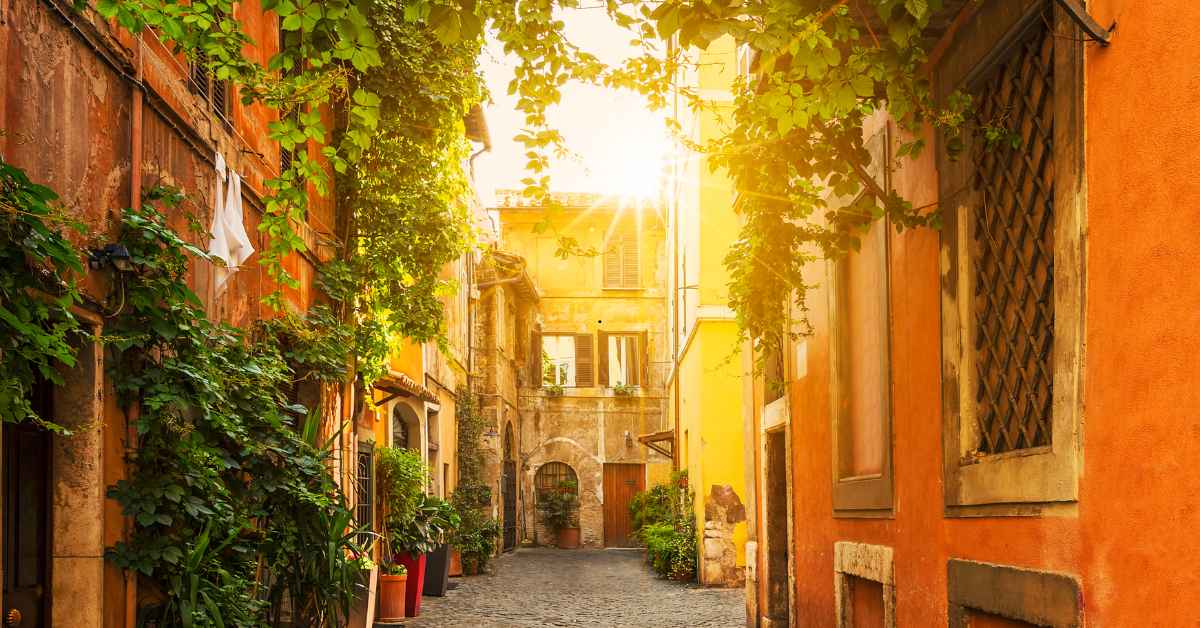
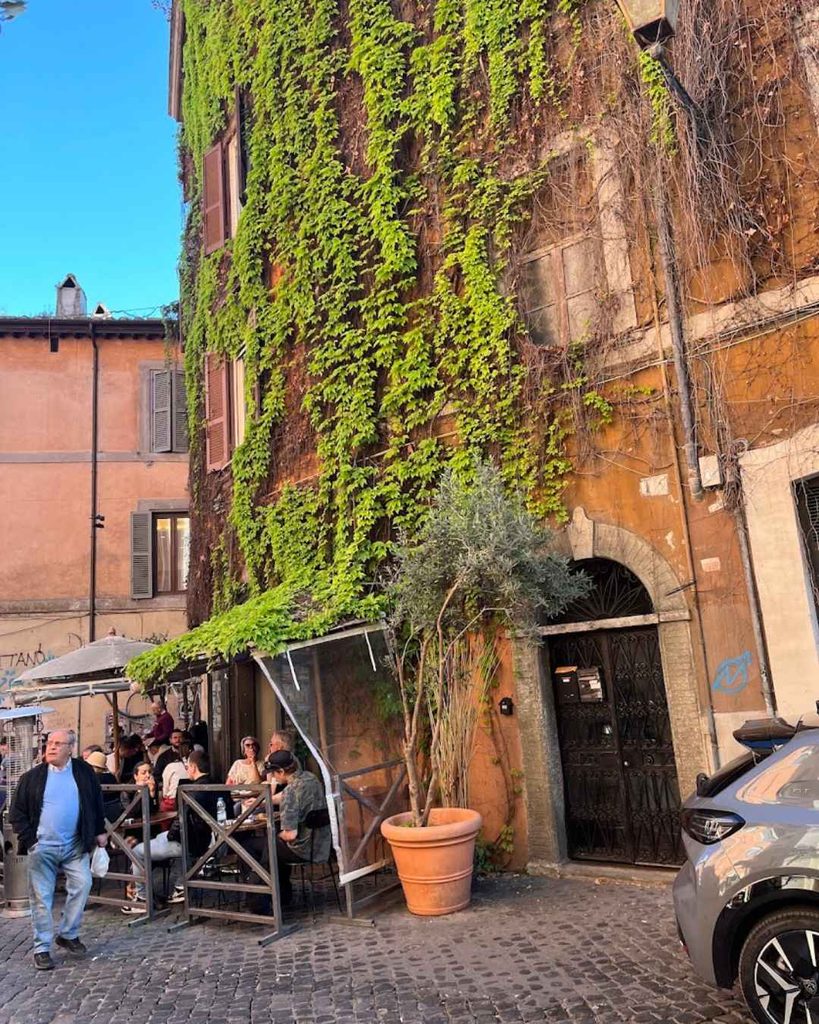
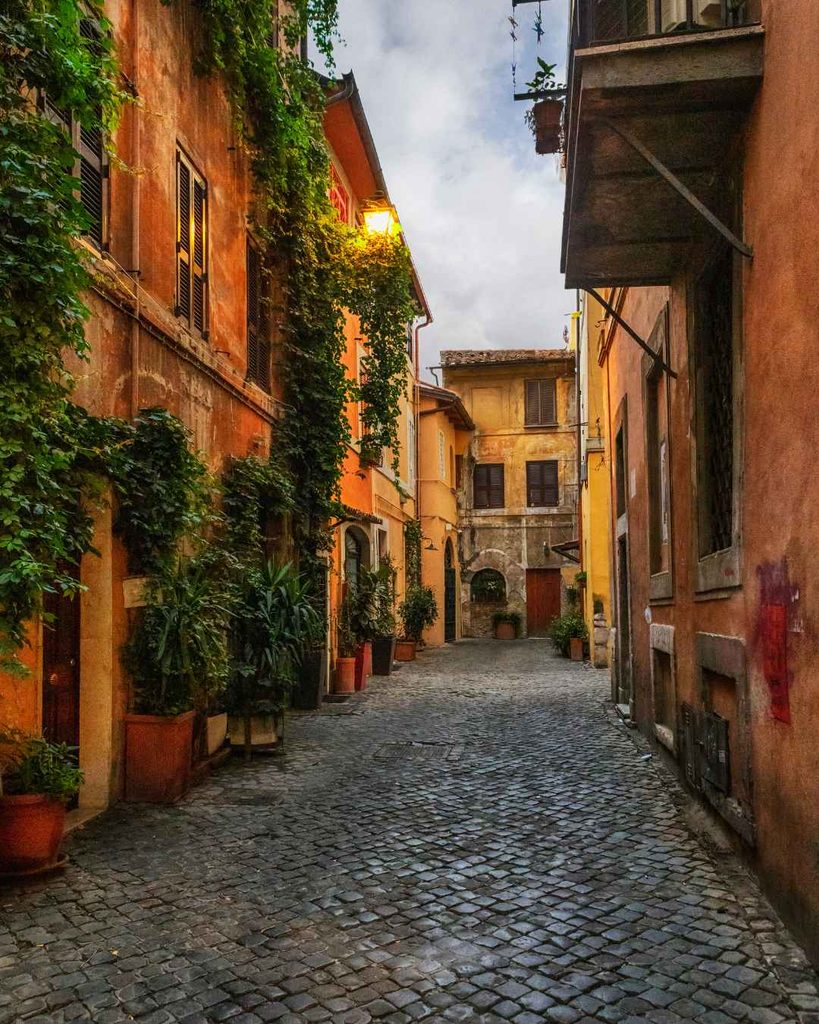
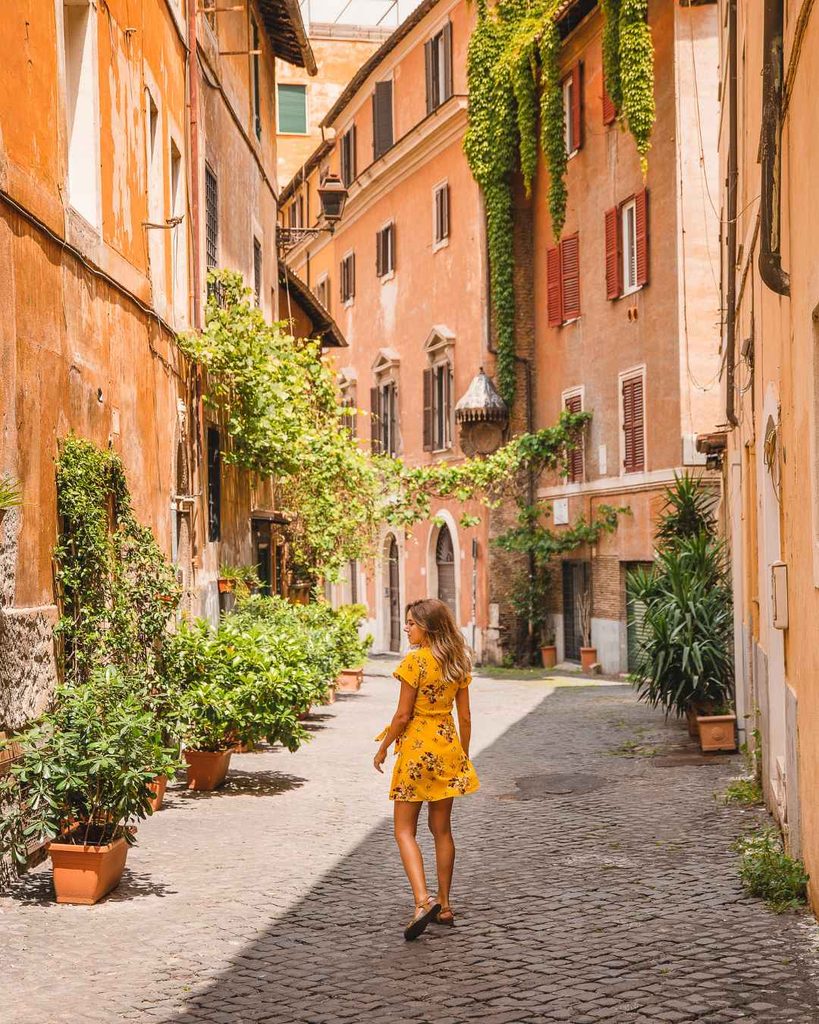
The buildings are old and warm-colored, covered in ivy and potted plants. There are no grand boulevards here. There is no grid. There is just a maze of alleys that rewards wandering and punishes anyone trying to move quickly.
This is precisely why it works so well as a base for a first trip. You are not staying in a museum. You are staying somewhere that still functions as a neighborhood, even as it fills with visitors every evening.
Why It Works for a First Visit
The single biggest advantage of Trastevere for a first-timer is that it sits on the right side of the river. You are within walking distance of the Centro Storico, which means the Pantheon, Piazza Navona, Campo de’ Fiori, and the Trevi Fountain are all reachable on foot.
Depending on where you stay in Trastevere and how fast you walk, you can be at the Pantheon in twenty to twenty-five minutes, and at the Colosseum in about thirty minutes. The Vatican is also close, roughly fifteen to twenty minutes on foot from the northern edge of the neighborhood.
That matters because Rome is a walking city. The metro is limited, buses are crowded and unpredictable, and taxis add up quickly. If you can walk to the major sights, you save time, money, and frustration. Trastevere gives you that ability without putting you in the middle of the tourist crush.
The second advantage is that Trastevere has its own gravity. You do not have to leave the neighborhood to find excellent food, good wine, and a lively evening. In fact, some of the best meals of your trip will happen within a five-minute walk of your hotel. The neighborhood has its own rhythm, and once you settle into it, you may find yourself spending more time there than you planned.
Related Post: A guide to Rome neighborhoods. The best and the worst areas to stay
The Atmosphere: What It Feels Like
Trastevere in the morning is quiet. The cobblestones are still cool, the cafes are just opening, and the delivery trucks are making their rounds. You can walk down Via della Lungaretta and hear your own footsteps. This is the time to visit the Basilica of Santa Maria in Trastevere before the crowds arrive.
The church has been a Christian site since around 220 AD, and the current building dates from the twelfth century. Its apse mosaic, depicting Christ enthroned with Mary, is one of the finest in Rome. Pietro Cavallini added the six lower panels showing the Life of the Virgin in 1291, and they are among the earliest works in Europe that point toward the Renaissance.
By mid-morning, the neighborhood starts to wake up. The market at Piazza San Cosimato is in full swing, and locals are buying produce, cheese, and bread. This is a good place to pick up supplies for a picnic or just to watch the daily life of the neighborhood unfold.
Afternoon is when Trastevere begins to fill. The tourists arrive from across the river, the restaurants open their doors, and the piazzas start to buzz. This is the time to climb Gianicolo Hill, which rises just above the neighborhood.
The walk takes about twenty minutes, and at the top you get the best free view in Rome. The entire city spreads out below you, from the Vatican dome to the Vittoriano to the Colosseum. There is a cannon fired every day at noon, a tradition that dates back to 1846. The hill is also where Garibaldi made his last stand for the Roman Republic in 1849, and the monuments at the top commemorate that moment.
Evening is when Trastevere becomes something else entirely. The street lamps come on, the restaurants set out their tables, and the piazzas fill with people. Piazza Santa Maria in Trastevere is the social heart of the neighborhood, and on any given night you will find a mix of locals, students, tourists, buskers, and street musicians. The fountain in the center of the piazza is the oldest in Rome, and the church behind it glows in the lamplight. This is the Rome that people imagine when they picture the city. It is loud, warm, and full of life.
Night is when the neighborhood truly comes alive. Trastevere has some of the best nightlife in Rome, but it is not the kind of nightlife you find in a club district. It is bar culture, wine culture, the pleasure of sitting outside with a glass of something cold and watching the world go by.
Piazza Trilussa, near the Ponte Sisto, is a gathering point for young people, especially on weekend evenings when live music sometimes breaks out. Bar San Calisto, just off Piazza Santa Maria, is an institution. It has been serving coffee, beer, and granita for decades, and it remains stubbornly local despite its fame. You order at the counter, you pay a few euros, and you drink standing in the square.
Where to Stay: Hotels by Budget
Trastevere has accommodation for every budget, and the good news is that you do not have to spend a fortune to stay well.
For a mid-range option, the VOI Donna Camilla Savelli is a former monastery designed by Borromini, the seventeenth-century Baroque architect. It has a beautiful garden and a rooftop terrace, and the building itself is a piece of history. Rooms are comfortable and modern, and breakfast is served in the courtyard in warm weather. It is slightly removed from the liveliest streets, which means you get quiet nights without sacrificing convenience. CHECK IT OUT HERE.
If you want something stylish and central, the UNAHOTELS Trastevere is a recent addition to the neighborhood. It occupies a period building near several piazzas, and its rooftop restaurant and bar offer views over the neighborhood. Rooms are soundproofed and smartly designed, which is a blessing in a neighborhood where street noise can be part of the experience. CHECK IT OUT HERE
For a budget stay, Residenza San Calisto is a small boutique hotel in a renovated seventeenth-century building. It offers both rooms and apartments, and it sits just steps from Piazza Santa Maria. The rooms are simple but full of character, with wooden furniture and modern amenities. You are paying for location and atmosphere rather than luxury, and that is a perfectly reasonable trade.
At the luxury end, the Villa Agrippina Gran Melia is an urban resort just outside the heart of Trastevere. It has a spa, an outdoor pool, and views of the Vatican and Castel Sant’Angelo. The rooms are elegant and well-appointed, and the hotel feels like an oasis from the city. It is the kind of place you choose if you want to return to calm after a day of walking. CHECK IT OUT HERE
Where to Eat: A Neighborhood Guide
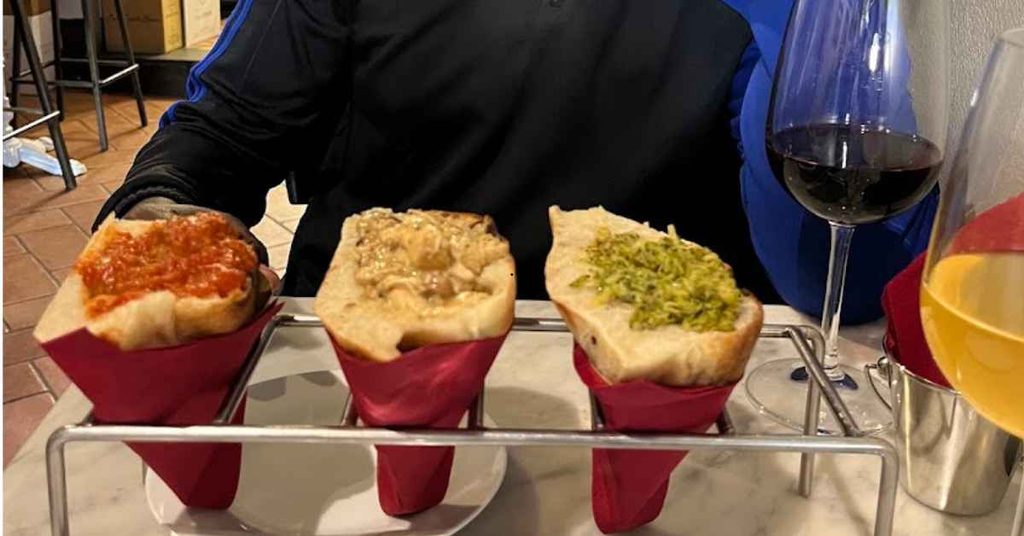
You could spend a week in Trastevere and never eat at the same place twice. The neighborhood has everything from hole-in-the-wall street food to a Michelin-starred restaurant.
For breakfast, Biscottificio Artigiano Innocenti has been making traditional Roman cookies and pastries for nearly a century. It is a humble shop, and the locals treat it as a daily ritual. If you want something more indulgent, Le Levain serves French-style croissants, pastries, and quiches that are among the best in the city.
For street food, Supplì Roma is the place to try supplì, the fried rice balls stuffed with mozzarella or meat that are a staple of Roman snacking. You eat standing at one of the few tall tables outside. Trapizzino, near Piazza Trilussa, is another essential stop. The trapizzino is a triangular pocket of pizza dough filled with things like stewed chicken, meatballs, or eggplant parmigiana. It was invented in 2009 and has become a Roman classic.
For a proper Roman trattoria experience, Trattoria da Augusto is as authentic as it gets. It does not take reservations, the menu changes depending on the day, and your bill is written on the paper tablecloth.
The food is classic Roman: stewed rabbit, puntarelle, gnocchi on Thursdays, osso buco. It is chaotic and wonderful. Osteria da Zi Umberto, just a few minutes away, offers a similar experience but accepts reservations, which is helpful if you are traveling with a family or a group.
For pasta, Il Tonnarello has three locations in Trastevere and serves excellent carbonara, amatriciana, and cacio e pepe. It does not take reservations, but the line moves quickly, and the food is worth the wait. Trattoria Da Teo, in Piazza dei Ponziani, is a neighborhood favorite for the same dishes, and the outdoor tables in the quiet piazza make it a memorable dinner spot. Reservations are strongly recommended.
For a special occasion, Zia Restaurant holds a Michelin star and serves contemporary Italian food with a focus on seasonal ingredients. It is the kind of place you book in advance and look forward to for weeks.
For wine and aperitivo, Latteria is a tiny wine bar with a well-chosen list and small plates that lean toward Sardinian specialties. L’Antidoto is similar, with a casual atmosphere and daily specials that often include vegetarian and vegan options.
Freni e Frizioni is the place for cocktails, especially in warm weather when the outdoor seating along the river comes into its own. Ma Che Siete Venuti A Fà is a craft beer bar that locals love, and the name translates to “what did you come here for?” You will understand when you see the crowd spilling onto the street.
For gelato, Otaleg is the neighborhood favorite. The name is “gelato” spelled backward, and the quality is exceptional. It is worth seeking out after dinner.
What to See Within the Neighborhood
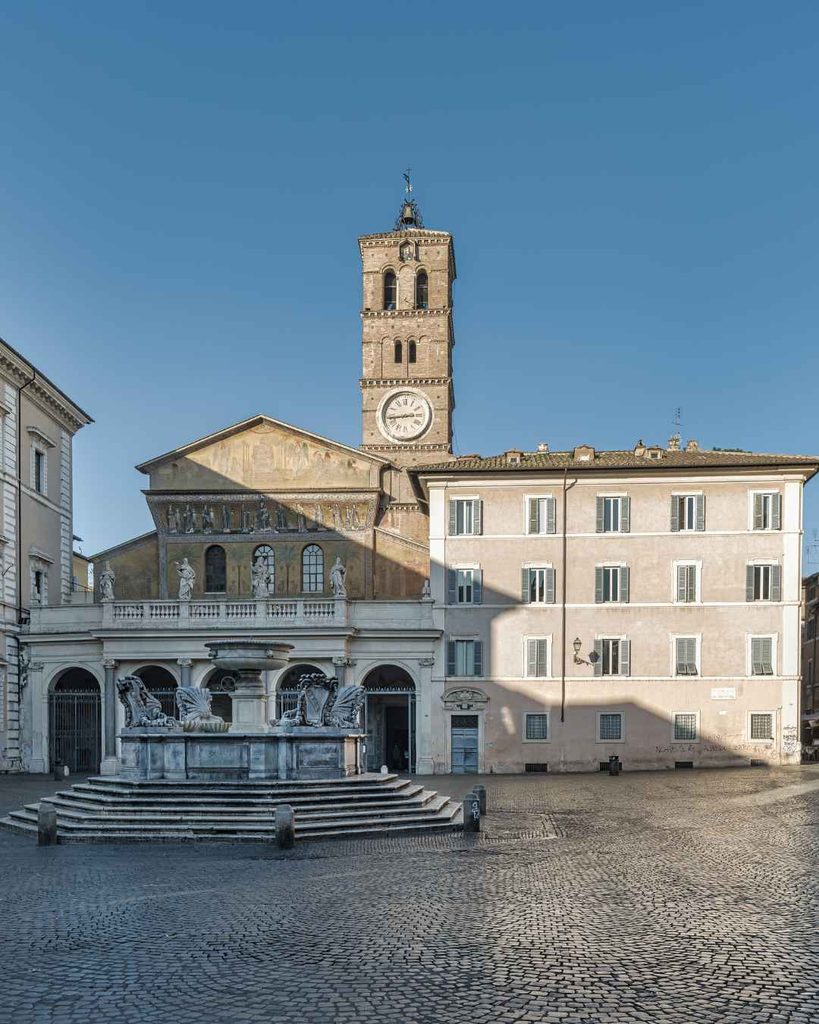
Trastevere has enough sights to fill a full day, and none of them require a ticket or a long wait.
The Basilica of Santa Maria in Trastevere is the anchor of the neighborhood. It is one of the oldest churches in Rome, and its mosaics are among the most beautiful in the city. The piazza in front of it is the social center of Trastevere, and the octagonal fountain is the oldest in Rome.
The Villa Farnesina is one of the most under-visited treasures in the city. It was built in 1506 for the Sienese banker Agostino Chigi, and Raphael decorated the loggias with frescoes, including the famous Triumph of Galatea.
The Loggia of Psyche, painted by Raphael and his workshop, is a masterpiece. Entry is around ten euros, and you will almost never wait in line. It is a half-hour walk from the heart of Trastevere, and it is worth every step.
The Basilica di Santa Cecilia in Trastevere is another hidden gem. It is dedicated to the patron saint of music, and it has a beautiful courtyard and a crypt that is worth visiting. The mosaics and the underground spaces give you a sense of the layers of history that make Rome what it is.
Gianicolo Hill is the best viewpoint in the city. The walk up takes about twenty minutes from the center of Trastevere, and the view from the top is panoramic. You can see the Vatican, the Pantheon, the Colosseum, and the entire historic center spread out below you. The noon cannon is a tradition worth timing your visit around.
The Botanical Gardens, just below Gianicolo, are a peaceful escape from the city. They were established in 1514 and contain thousands of plant species, including a Japanese garden and a bamboo grove. It is a good place to slow down.
Important Details
Getting to Trastevere is straightforward. From Fiumicino Airport, you can take the Leonardo Express train to Termini and then a taxi, or you can arrange a private transfer. The train takes about thirty minutes, and the taxi from Termini to Trastevere is about fifteen to twenty minutes depending on traffic. Alternatively, some hotels offer airport pickup, which is worth arranging if you are arriving late or carrying a lot of luggage.
Related post: The type of bag to bring to Italy.
Once you are in Trastevere, you will walk. That is the point. The neighborhood is compact, and the historic center is reachable on foot. For longer trips, there is a tram that runs along Viale di Trastevere, and buses connect the neighborhood to other parts of the city. But you will find that you rarely need them.
The best time to visit depends on what you want. Spring and fall are ideal, with mild temperatures and manageable crowds. Summer is hot and crowded, but the evenings are long and the outdoor dining is at its best. Winter is quieter and cheaper, and the neighborhood feels more local.
A few practical tips. Book your hotel early, especially if you are traveling in peak season. Trastevere is popular, and the best places fill up months in advance. Bring comfortable shoes, because the cobblestones are unforgiving. Learn a few words of Italian, because it goes a long way. And do not over-schedule. The best moments in Trastevere happen when you are not looking for them.
The Case for Choosing Trastevere
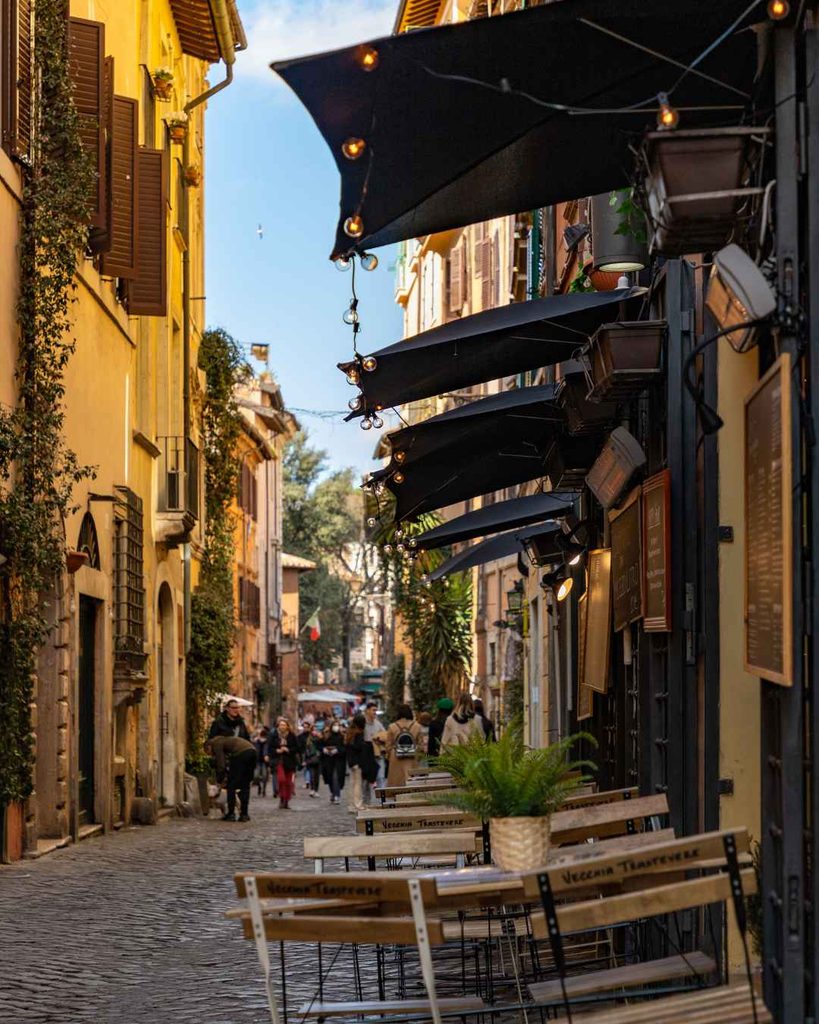
There are other neighborhoods in Rome that make sense for a first trip. The Centro Storico puts you in the middle of everything. Monti is stylish and close to the Colosseum. Prati is quiet and convenient for the Vatican. Each has its merits.
But Trastevere offers something that none of them quite match. It gives you a neighborhood, not just a location. You wake up in a place that feels lived-in, where the person at the cafe remembers your order by the third morning, where the streets have names that sound like poetry, where the evening unfolds slowly and without a schedule.
For a first trip to Italy, that matters. You are not just checking off monuments. You are trying to understand a city, or at least a corner of it. Trastevere lets you do that in a way that feels natural and unhurried. You can spend your days at the Colosseum and the Vatican and the Pantheon, and then you come back across the river, and the pace changes. The crowds thin out. The wine tastes better. The night is yours.
That is why I would choose Trastevere. Not because it is the most convenient or the most central or the most luxurious. Because it is the one that makes you feel like you have actually arrived somewhere.
Read: These are Rome’s most unforgettable experiences
Again, feel free to go through the list below of my Italy recommendations that I have crafted after years of travel to this beautiful country:
- Packing List: Things Not to Go to Italy Without
- Must-Do Things: Unforgettable Experiences
- Where to Stay: Best Hotels in Italy.
- Where to Stay in Rome: Rome’s Best Neighborhoods
- Where to Stay in Florence: Picking the Best Area
- Where to Stay in Venice: Venice’s Best Districts
- Italy’s Cobblestone Streets: Best Shoes For the Job
- Backpack or Suitcase?: Italy Luggage Guide
- Travel Insurance: Always Be Covered
- E-Sim: Be Connected At All Times