
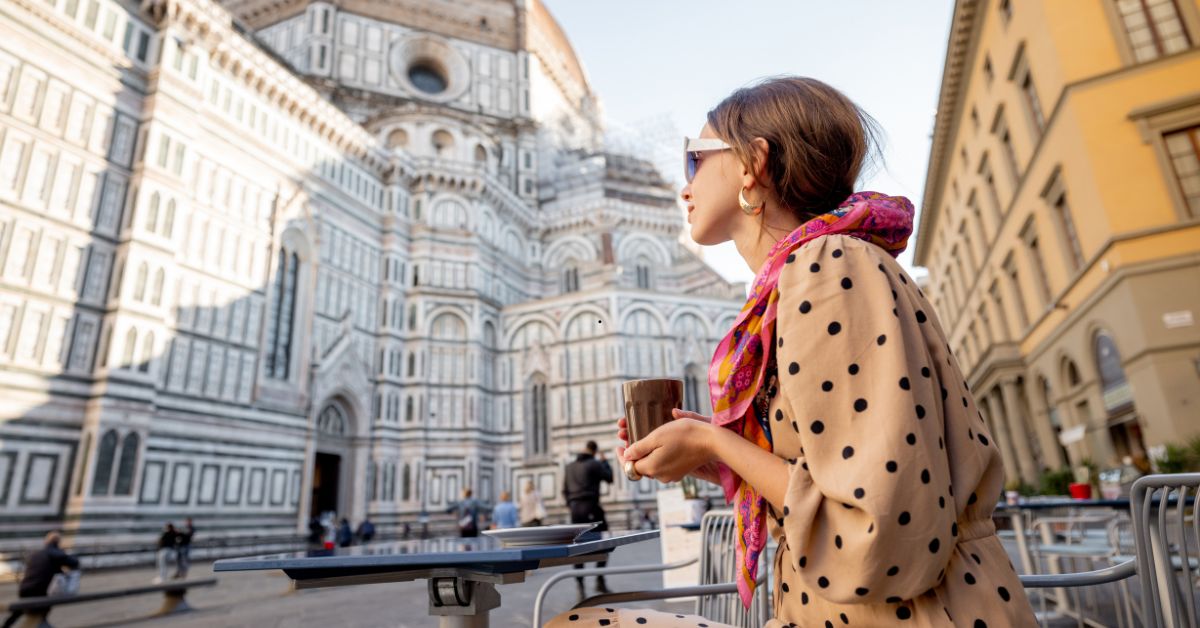
I’ve learned a lot from traveling with my wife over the years. One of the simplest lessons came early: always pack a scarf. Not just any scarf, but a light, versatile one that can do about a dozen different jobs. In Italy, that little piece of fabric becomes a ticket into cathedrals, a shield against the sun, a quick fix for a chilly evening, and a style upgrade all at once.
Let me explain why no woman should set foot in Italy without one, and how to choose the right scarf for a smoother, more comfortable trip.
The Number One Reason: Getting Into Churches
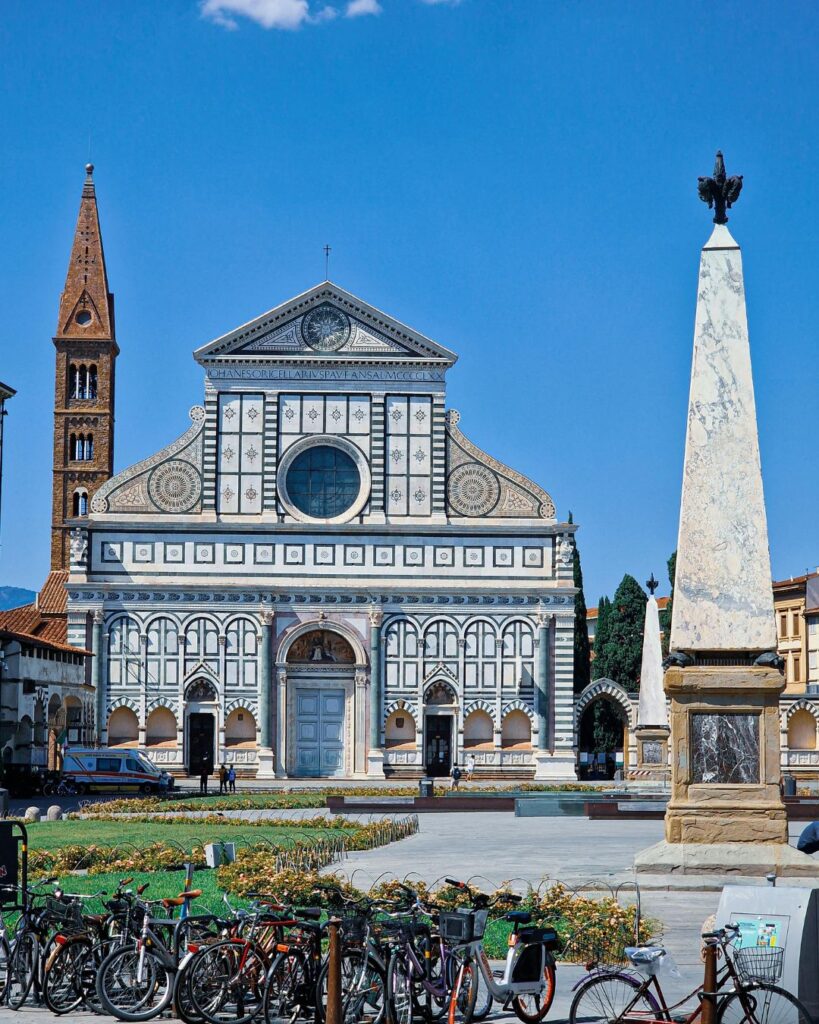
Italy’s great churches—St. Peter’s in Rome, the Duomo in Florence, St. Mark’s in Venice—are not just tourist attractions. They are active, sacred spaces. And they have dress codes. Shoulders must be covered. Chests must be covered. Short skirts and shorts are not allowed.
Every single day, I watch women in tank tops or sleeveless dresses get turned away at the door. Some cry. Others argue. Most just walk back to their hotel, frustrated. A scarf solves everything.
If you’re wearing a sundress or a sleeveless top, simply pull a scarf from your bag and drape it over your shoulders. You’re in. No fuss. No shame. Even better, a large square scarf (about 35 by 35 inches) can be tied as a shawl or even wrapped around your waist like a sarong over shorts.
My wife keeps hers in a small zipper pouch inside her day bag. She never has to worry about what she wore that morning. The scarf is her church key.
Respect Goes a Long Way
Italians are generally warm and helpful to tourists who show basic respect. Wearing a scarf into a church is not just about following rules. It’s about acknowledging that you are a guest. Local women do the same thing. When you see an Italian grandmother quickly cross herself before entering a basilica, she’s not just praying—she’s adjusting her scarf.
This small gesture changes how people treat you. Shopkeepers soften. Waiters smile more. Even the guards at the Vatican, who look like they’ve seen every tourist trick, will nod approvingly when they see you cover up without being told.
Italian Women Know Something We Don’t

Walk through any Italian piazza, and you’ll notice something. Women of all ages wear scarves. Not just in winter. Not just older women. Young women, too. They wear them loose around the neck, tucked into a jacket, or draped over one shoulder.
Why? Because scarves make simple clothes look intentional. A plain white t-shirt and jeans become stylish with the right scarf. A black dress transforms from basic to elegant. Italian women use scarves the way American women use statement jewelry—to add color, texture, and personality.
You don’t need to spend a lot. A well-chosen scarf in a muted blue, olive green, or rust orange will work with almost everything you packed. Leave the neon colors and big logos at home.
Four Seasons in One Day
Italy’s weather loves surprises. You might start a spring morning in Florence needing a jacket, then sweat by noon, then shiver again as the sun sets behind the Duomo. A scarf is the perfect middle layer.
In summer, heat is the real challenge. Lines at the Colosseum or the Uffizi can stretch for an hour in direct sun. Dampen your scarf with cool water from a public fountain and wrap it around your neck. It works like a personal air conditioner. My wife does this constantly in July, and it makes a brutal wait almost pleasant.
In winter, a silk or cashmere scarf adds warmth without bulk. You can wear it under your coat, then pull it up if the tram window is drafty. In spring and fall, when mornings are chilly but afternoons are warm, the scarf lives around your neck and comes off as needed.
Rain is another Italian surprise. A sudden storm can soak you before you find shelter. A scarf won’t keep you completely dry, but it will protect your hair and neck while you run into a café. And it dries much faster than a jacket hood.
Health and Comfort on the Road
Italian cities are wonderful. They are also crowded, dusty, and full of diesel exhaust. Walking behind a bus in Rome or Naples, you’ll sometimes cough from the fumes. A light scarf pulled over your nose and mouth for thirty seconds makes a real difference.
The same goes for archaeological sites like Pompeii and Ostia Antica. Those ancient roads kick up a lot of dust. If you have allergies, the cypress and wisteria pollen can be fierce. A scarf over your lower face helps filter the worst of it.
And here is a trick my wife swears by: on the metro or a regional train, fold your scarf and sit on it. Train seats are not always as clean as we would like. A scarf creates a clean barrier. You can also fold it into a small pillow against a train window for a nap between Florence and Venice.
The Emergency Fix for Almost Anything
Things go wrong when you travel. That is part of the adventure. A scarf is your backup plan for half a dozen common problems.
If a strap breaks on your bag, tie the scarf around the handle and carry it like a wrist strap. If you buy something fragile in Murano or Deruta, wrap it in your scarf before packing it in your suitcase. If you sit down for a picnic in the Boboli Gardens, the scarf becomes your tablecloth.
One evening in Sorrento, my wife spilled red wine on her light-colored top just before dinner. She tied her dark blue scarf loosely around her neck, letting it hang down over the stain. Problem solved. We had a lovely meal, and no one noticed.
If you are unlucky enough to have a strap break on your dress or a button pop off, that scarf becomes a creative cover-up. I have seen women turn scarves into halter tops, head wraps, and belt sashes. A little creativity goes a long way.
Which Scarf Should You Pack?

Not all scarves work well for Italy. Skip the heavy wool and the cheap polyester. They are either too hot or too slippery. Here is what I recommend instead.
For summer trips, choose linen or cotton. These breathe, dry fast, and fold small. A large cotton square in a solid color is ideal. You can wet it for cooling, wash it in a hotel sink, and hang it dry by morning.
For spring and fall, a lightweight silk or silk-blend scarf is perfect. It adds warmth without weight and looks elegant with almost anything.
For winter, go with cashmere or merino wool. Thin, not thick. You want something that fits under your coat collar, not a bulky neck blanket.
If you wouldn’t mind a recommendation, this one here on Amazon is a really good 100% silk scarf. If you need a long, versatile, and cashmere scarf, then this is one you should buy
A Few Mistakes to Avoid
Do not wear your scarf like a flight attendant—tight, small, and perfectly knotted. Italians wear scarves loose and effortless. A simple loop or a draped end looks much better than a tight bow.
Do not use a huge pashmina that drags on the ground. Church floors are marble but also dirty. A dragging scarf picks up dust and looks sloppy.
Do not buy a cheap polyester scarf from a street vendor. It will slip off your shoulders, pill after one wash, and make you sweat. Spend a little more on natural fibers. You will use this scarf for years.
And do not forget that scarves need occasional washing. Cotton and linen handle machine washing fine. Silk should be hand washed in cold water with a drop of gentle soap. Hang dry away from direct heat.
Real Scenarios You Will Actually Face
Let me walk you through a few common Italian days.
Scenario one: August in Rome. It is 95 degrees. You are wearing a sleeveless sundress because anything else feels impossible. You want to see St. Peter’s Basilica. Pull out your light cotton scarf, drape it over your shoulders, and walk right in. Afterward, wet the same scarf at a fountain and wrap it around your neck for the walk to the Castel Sant’Angelo. You will be five degrees cooler.
Scenario two: November in Milan. It is cold and damp. You are wearing a sweater and coat. You step into the Duomo, and inside, it is surprisingly warm. Unwrap your silk scarf from your neck and enjoy the frescoes without overheating. Later, on the tram, wrap it around your face against the cold draft.
Scenario three: Rain in the Cinque Terre. You are hiking between Corniglia and Vernazza. The sky opens up. You do not have an umbrella. Tuck your scarf over your head and tie it under your chin. It is not waterproof, but it keeps the rain out of your eyes and off your neck until you reach a bar for espresso.
Scenario four: Mosquitoes in Tuscany. You are eating dinner outside at an agriturismo. The sun sets, and the bugs come out. Drape your light scarf over your bare arms while you finish your pasta. It is not bug spray, but it works as a physical barrier.
How to Wear It Like a Local
The best advice I can give is this: watch what Italian women do, then copy them. They wear scarves as accents, not as full body armor. A small triangle tied loosely at the neck. A long rectangular scarf hanging down both sides of the chest. A square folded diagonally and draped over one shoulder.
Avoid the head wrap unless you are actually in a church that requires it. Italian women do not generally walk around with heads fully covered outside of religious settings.
Match your scarf to your outfit’s main color or to your shoes. Italians notice small harmonies. Your scarf should look like it belongs, not like it is trying too hard.
Related Post: Things you shouldn’t go to Italy without
Final Thoughts
A scarf weighs almost nothing. It folds into the size of a sandwich. It costs anywhere from five to fifty dollars. And it will save you more trouble than almost anything else in your suitcase.
When my wife and I pack for Italy, we put two scarves in her bag—one light cotton for summer or a silk blend for cooler months, and a smaller backup in a different color. That is it. Two scarves, maybe eight ounces total. And every trip, she uses them daily.
Do not overthink this. Buy one good scarf before you go, or buy one your first afternoon in Italy. Tie it to your carry-on so you do not forget it. And when you walk into St. Peter’s, cool and comfortable and respectful, you will understand why this simple piece of fabric is the smartest thing you packed.
Your trip will be better for it. And you will look like you have done this before.
NOTE BEFORE YOU GO: Italy rewards travelers who go prepared. And it is easy to ruin your trip. I have a checklist for you of things you should never go to Italy without. CHECK IT OUT HERE. I have also curated a list of some of the best hotels in Italy. I would highly recommend checking them out before booking. THESE ARE THE BEST HOTELS IN ITALY. And for unique experiences, attractions, and tours, don’t book before CHECKING THIS OUT. Thank me later!