
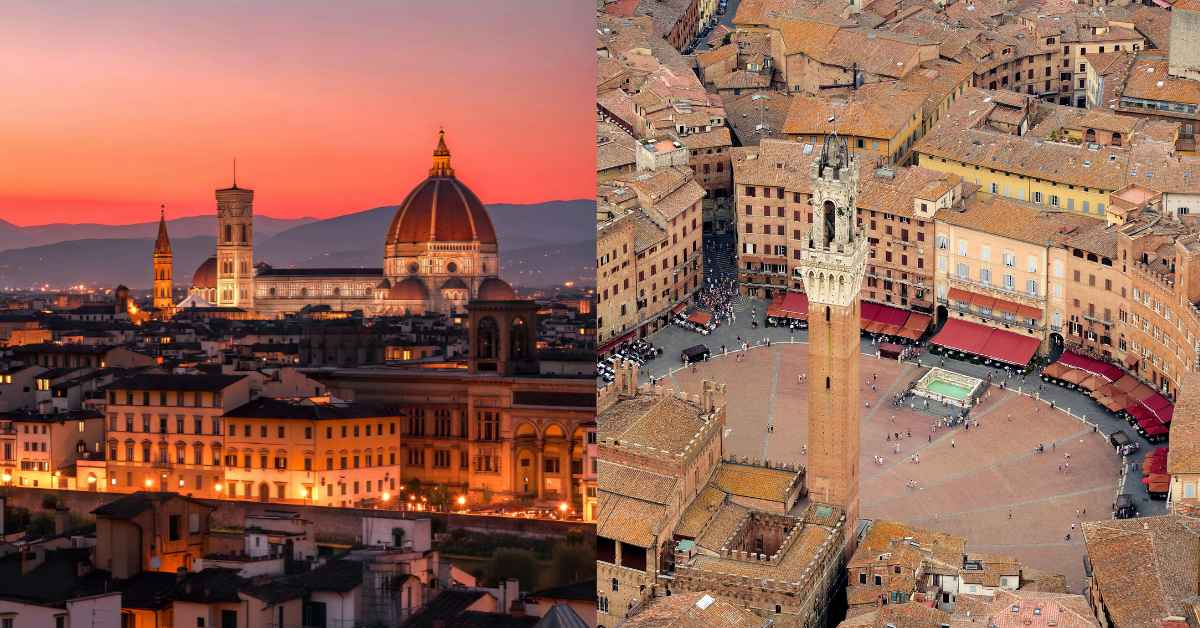
You are planning a trip to Tuscany. You have seen the photos of rolling hills, vineyard-lined roads, and golden light falling on ancient stone. You have dreamed of the pasta and the wine and the art. But now you are facing a very real and very practical question. Should you base yourself in Florence or Siena? Maybe you have time for only one city. Maybe you are trying to decide how to split a week between them.
I have traveled through Tuscany more times than I can count, often with my wife, who has very strong opinions about which hill towns are worth her limited vacation days. Between the two of us, we have seen Florence at its most chaotic and Siena at its most magical. We have waited in lines that seemed to stretch into the next century. We have gotten wonderfully lost in back alleys. We have eaten meals we will never forget and a few we are trying hard to forget. After all that trial and error, I can finally tell you exactly what works and what does not.
A Quick First Impression
Florence is a midsize city that feels like a big city once the tourists arrive. It is flat, walkable, and absolutely stuffed with world-famous art and architecture. Think of it as the New York of the Renaissance. It is fast, famous, brilliant, and a little exhausting. You go to Florence to see things, to check masterpieces off a list, to stand in front of a Michelangelo or a Botticelli and feel the weight of human achievement.
Siena is a hilltop town that feels like a small city. It is steep, intimate, and remarkably intact from its medieval heyday. Think of it as a living museum where people actually live, work, argue passionately about neighborhood horse races, and make pasta by hand in tiny trattoria kitchens. You go to Siena to slow down, to soak in atmosphere, to wander without a plan and discover something lovely around every corner.
Both are unquestionably beautiful. Both are worth your time. But they are not interchangeable, and choosing the wrong one for your travel style can leave you frustrated instead of fulfilled.
The Vibe of Florence
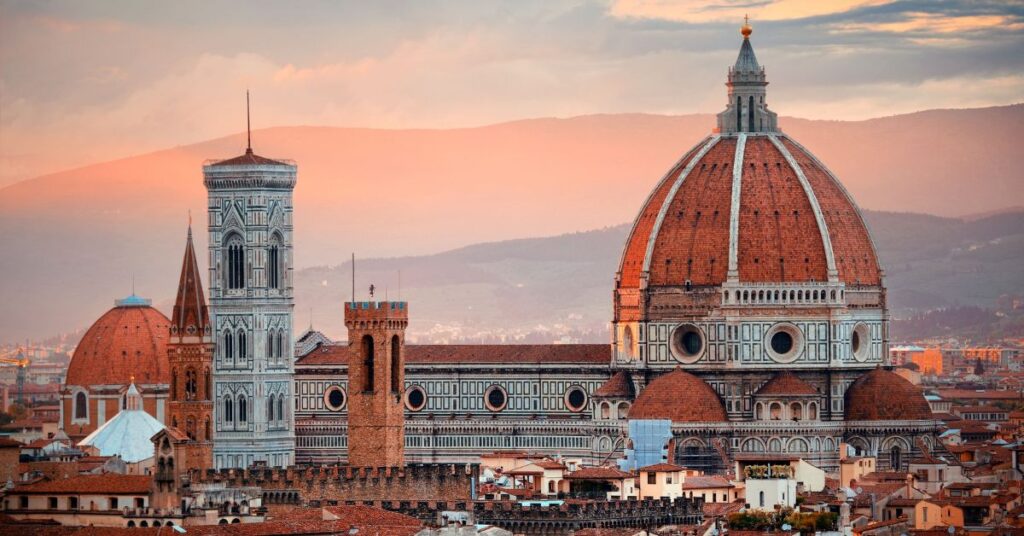
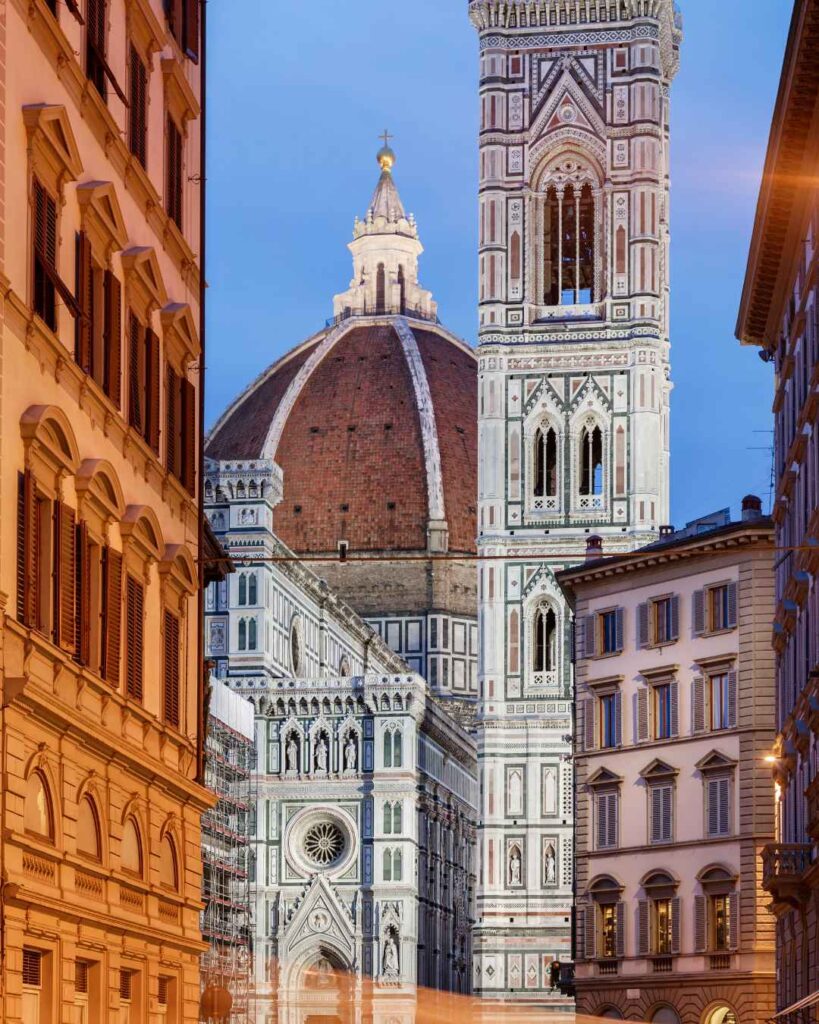
Florence hits you immediately. You step out of the train station, look up, and within five minutes you are staring at the massive white and green marble facade of the Duomo. That is the kind of city Florence is. The highlights come at you fast and hard, and there is no gentle transition period.
The historic center is remarkably compact. Most of what you want to see sits between the Duomo and the Arno River. You can walk from one end to the other in about twenty minutes. But you will not walk fast, because the sidewalks are narrow and the crowds are thick almost year round. Florence feels alive in a way that can be either thrilling or overwhelming, depending entirely on your mood and how many hours you have already spent on your feet.
There are street musicians playing violin concertos near the Uffizi. There are fashion boutiques with window displays so artfully arranged they could hang in a museum. There is gelato every thirty feet, some of it excellent and some of it dyed unnatural shades of blue and green. At night, the piazzas fill with people drinking spritzes and talking loudly over the sound of someone playing acoustic guitar. It is energetic. It is also loud. My wife once described Florence as a beautiful person who knows exactly how beautiful they are. She meant it as both a compliment and a warning.
The Vibe of Siena
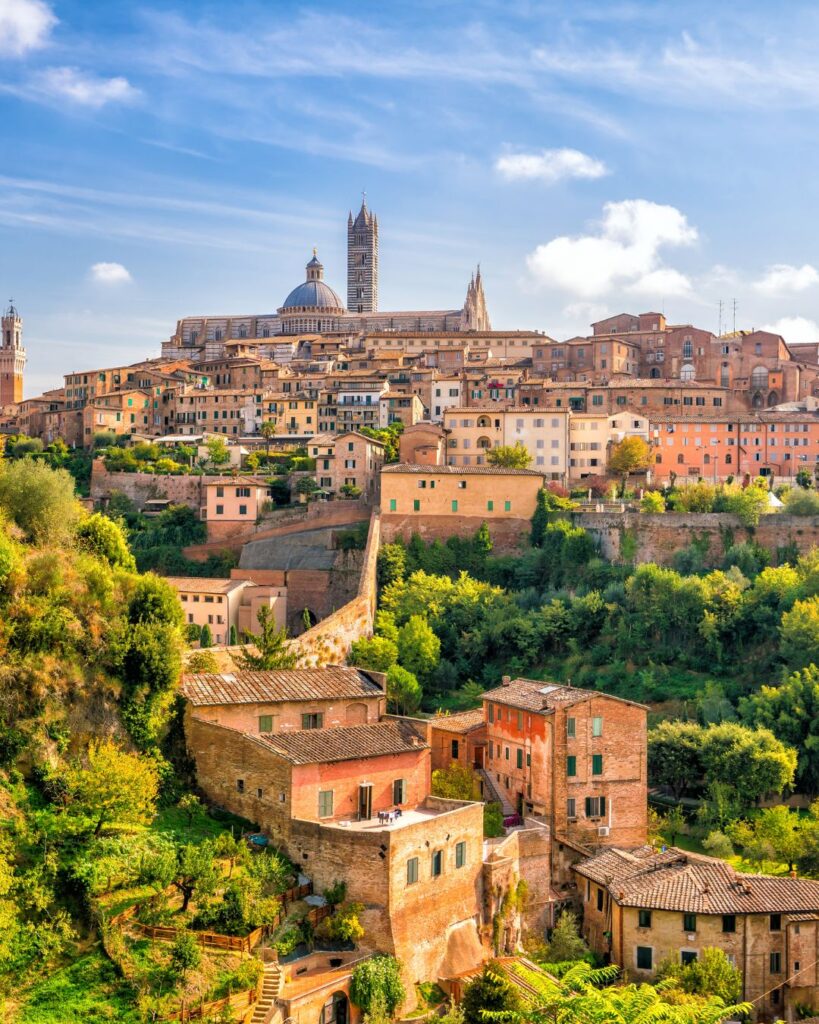
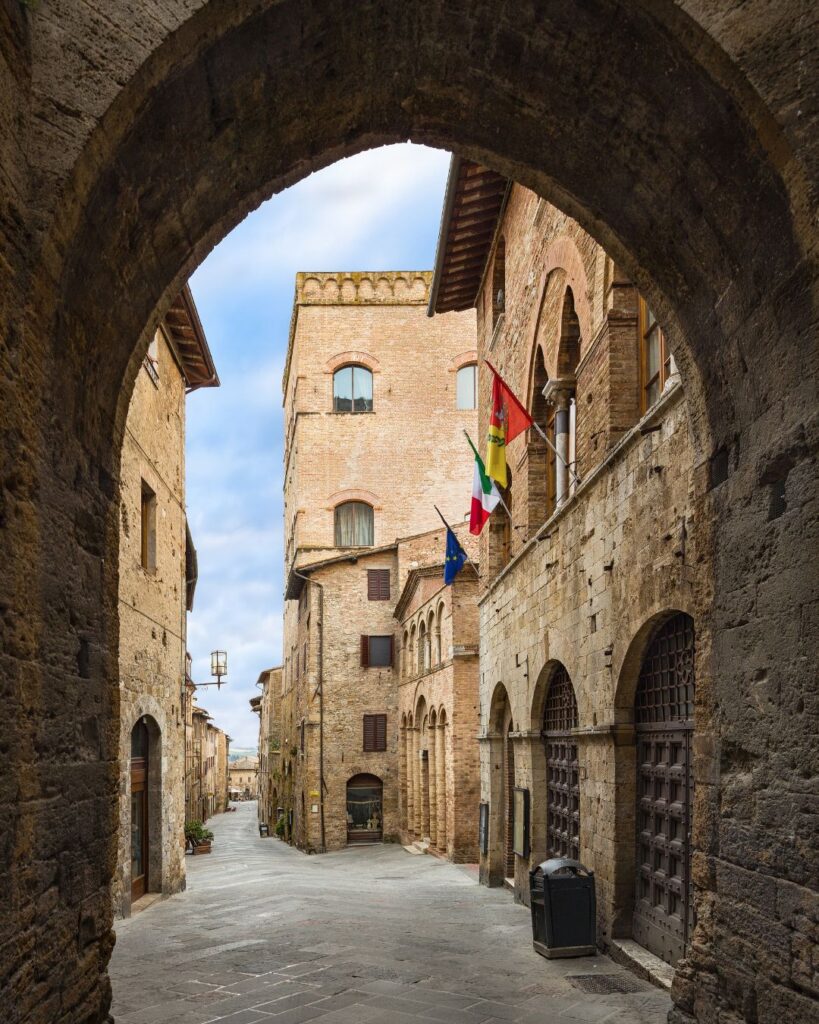
Siena feels different from the very first moment you arrive. The bus from Florence drops you at the edge of the historic center, and you walk through a massive stone gateway called Porta Camollia. Suddenly, you are somewhere else entirely. The modern world falls away, and you find yourself in a medieval city that has resisted change with fierce, admirable pride.
The city is built on three hills. You will walk uphill constantly. You will also walk downhill constantly. There is almost no flat ground in Siena. This is not a complaint. It is a feature. The hills force you to slow down, to catch your breath, to look around at the rust red brick buildings and the narrow alleyways and the sudden unexpected views of the Tuscan countryside spreading out below.
Siena is organized around something you will hear about constantly, which is the contrade. These are seventeen historical neighborhoods, each with its own animal symbol, its own colors, its own church, its own fountain, and its own fierce loyalty. You will see boar statues, goose flags, tortoise plaques, and wave symbols everywhere you look. These are not just decorations for tourists. They are markers of identity that go back centuries. The Palio, which is Siena’s legendary and chaotic horse race held twice each summer, is the most intense expression of this rivalry. But the spirit lives year round, even when no race is happening.
The pace of life in Siena is slow. Shops close for long lunches. People sit in the main square for hours, doing nothing in particular except talking and watching the clouds move over the Torre del Mangia. It is not laziness. It is intentional. Siena knows exactly what it is, and it does not feel the need to perform for visitors. My wife once said that Florence hands you a to do list, but Siena hands you a hammock. I think about that observation often, and I keep finding new reasons why she was right.
The Art and Architecture of Florence
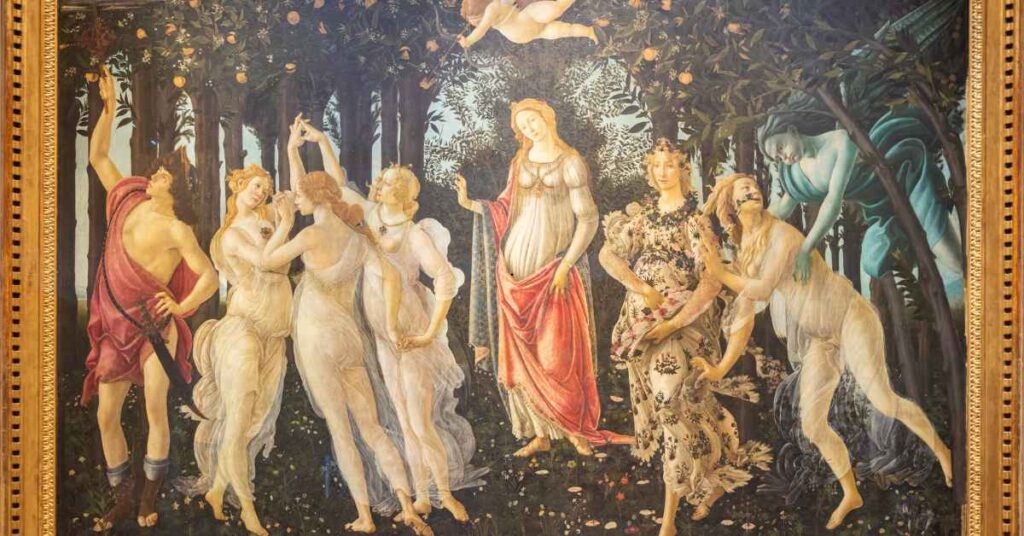
People come to Florence for the art, and Florence delivers in overwhelming quantity. Let me walk you through the highlights that you absolutely cannot miss, along with a few that you might consider skipping if time is tight.
The Duomo is officially called Santa Maria del Fiore, but everyone just calls it the Duomo. The cathedral itself is free to enter, and the line looks terrifying but actually moves pretty fast because they funnel people through efficiently. What you are really here for is the dome, Brunelleschi’s magnificent engineering masterpiece that still holds the record as the largest brick dome ever constructed. Climbing it means four hundred and sixty three steps, narrow and steep and a little claustrophobic in places.
You will be winded by the time you reach the top. But then you will be standing right next to Giorgio Vasari’s enormous fresco of the Last Judgment, and then you will step outside and see the whole of Florence spread beneath you like a living map. Worth every single step. Book this climb in advance online, or you will be turned away.
Right next to the Duomo stands Giotto’s Bell Tower, which offers about four hundred steps and a slightly different view. Fewer people climb the tower than the dome, and from the top you get a perfect view of the dome itself. If you have time and energy for only one climb, do the dome. But if you are spending two or three days in Florence, consider doing both on different mornings.
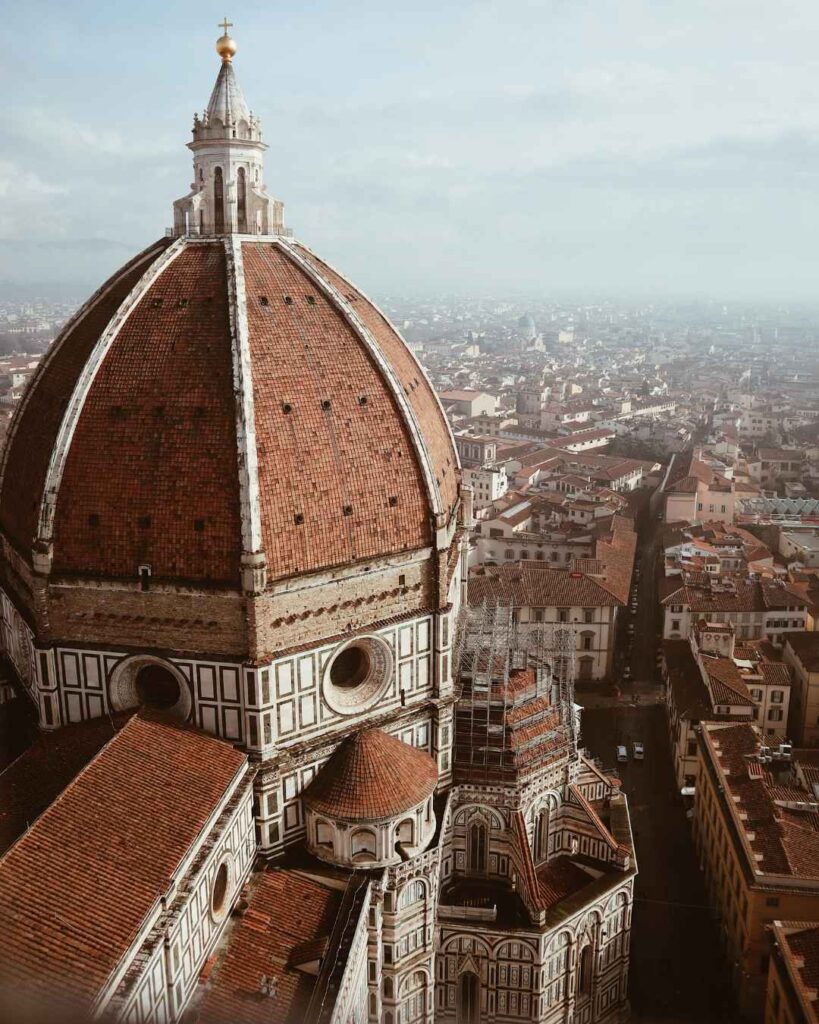
The Baptistery stands directly in front of the Duomo, and those famous bronze doors called the Gates of Paradise are actually replicas. The originals are safely stored in the Duomo Museum around the corner. Still, the baptistery is worth a quick peek inside for the glittering gold ceiling mosaics depicting scenes from the Last Judgment. The acoustics are beautiful too, so if you hear singing when you walk by, step inside and listen.
The Uffizi Gallery is the heavyweight champion of Florentine museums. This is where you will find Botticelli’s Birth of Venus, da Vinci’s Annunciation, Michelangelo’s only surviving panel painting, and room after room of Italian painting from the thirteenth through the seventeenth centuries. You need at least two hours here, maybe three if you actually read the wall texts and stop to really look. You will be tired afterward, mentally and physically. Book your tickets weeks in advance, as soon as you book your flight if possible. Without a reservation in summer, you will wait two to four hours in a line that wraps around the building. With a reservation, you still wait twenty to thirty minutes for security, but that feels much more manageable.
The Accademia Gallery exists for one reason and one reason only. That reason is Michelangelo’s David. The statue is extraordinary, even larger than you expect, even more beautiful than the photographs suggest. The museum around David is fine but unremarkable, a collection of unfinished Michelangelo sculptures and some medieval panel paintings that most people rush past. You will be in and out in about an hour. Again, book ahead online. The line without a reservation is cruel and unnecessary.
Palazzo Vecchio is Florence’s town hall, still in use today by the mayor and city council. You can tour the inside to see grand Renaissance rooms covered in frescoes, or you can climb the tower for another great view of the Duomo, or you can simply wander into the courtyard for free and admire the fountain and the carved stonework. This is where the Medici family ruled from before they moved across the river to the Pitti Palace. It feels more authentic and less polished than some of the other sights.
Santa Croce is a huge Franciscan church that holds the tombs of Michelangelo, Galileo, Machiavelli, and Rossini. It is called the Temple of the Italian Glories for good reason. The church itself is simple and spacious, with a wooden roof and beautiful stained glass. It is usually less crowded than the Duomo, and the atmosphere is more contemplative. The leather school attached to the church is worth a quick look too, where you can watch artisans working on bags and belts using traditional methods.
San Lorenzo and the Medici Chapels are where the Medici family power is really buried and celebrated. The church of San Lorenzo is plain on the outside because the facade was never finished, which is actually refreshing after all the ornate marble elsewhere. But inside, the Medici Chapels are something else entirely. Michelangelo designed the New Sacristy, and his sculptures of Night and Day and Dawn and Dusk are haunting and beautiful. The Chapel of the Princes is over the top in the best possible way, lined floor to ceiling with colored marbles and semi precious stones.
The Boboli Gardens sit behind the Pitti Palace across the Arno River in the Oltrarno neighborhood. These are big, sprawling Italianate gardens with fountains, statues, and lovely views back toward the city center. This is a nice break from indoor art, a place to wander slowly and sit on a bench and watch the light change. My wife and I once spent a lazy afternoon here with a book and a sandwich and a flask of wine. It turned out to be one of our best decisions in Florence, a quiet pause in the middle of a busy trip.
The Art and Architecture of Siena
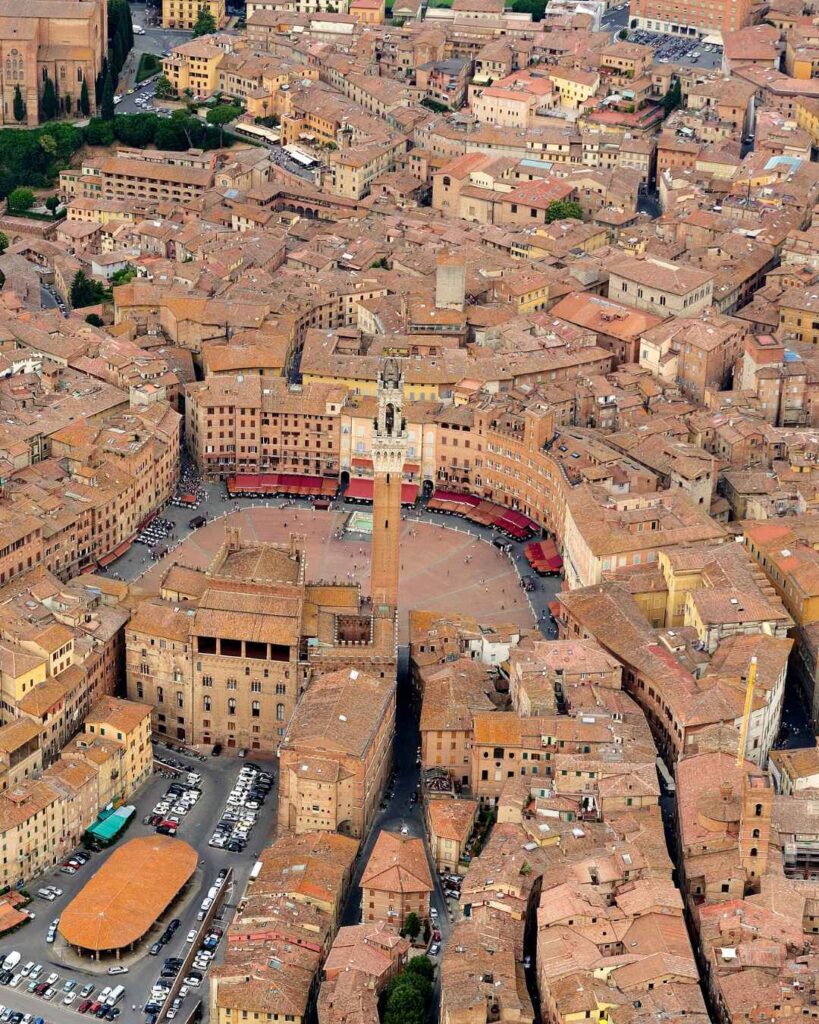
Siena has fewer famous masterpieces than Florence, but what it lacks in quantity it makes up for in atmosphere and intimacy. The treasures here feel less like museum objects and more like part of daily life.
Piazza del Campo is not a building, but it is Siena’s greatest work of art. This is one of Europe’s most magnificent public spaces, shaped like a scallop shell and sloping gently down toward the Palazzo Pubblico at the lowest point. The brick pavement is divided into nine sections, representing the nine members of the government that ruled Siena during its golden age in the thirteenth and fourteenth centuries. Twice a year, on July second and August sixteenth, the piazza is covered in several tons of dirt for the Palio horse race. The rest of the year, it is a giant outdoor living room where Sienese people gather to talk, to flirt, to eat gelato, and to watch the sunset turn the brick buildings warm pink and gold. Find a spot on the ground, lean back against the stone, and stay for an hour. You will not regret it.
The Torre del Mangia rises right next to the Palazzo Pubblico, and its name comes from the first bell ringer, a man nicknamed Mangiaguadagni, which means eat the earnings, because people thought he spent all his money on food. The climb is four hundred steps, but the view from the top is one of the finest in all of Italy. You look down onto the shell of the piazza, across the red rooftops of Siena, and out to the green hills of the Chianti countryside. On a clear day, you can see all the way to the towers of San Gimignano in the distance. This climb is less famous than Florence’s Duomo, but in my opinion, the reward is even greater.
The Palazzo Pubblico itself houses the Civic Museum, which contains some of the finest secular paintings of the fourteenth century. The most famous room is the Sala della Pace, covered in frescoes by Ambrogio Lorenzetti called the Allegory of Good and Bad Government. These paintings show what happens when a city is ruled well, with people dancing and farming and trading peacefully, and what happens when a city is ruled badly, with crime and decay and war. They are astonishingly vivid and political, and they feel surprisingly modern for works painted in the late thirteen thirties.
The Siena Duomo is a marble fever dream, striped in white and black, the colors of Siena’s coat of arms. The exterior is gorgeous, but the interior is even better. The floor is covered in fifty six inlaid marble panels, most of them created between the fourteenth and sixteenth centuries. They depict scenes from the Old Testament and allegorical figures, all made from different colors of marble rather than paint. The floor is usually covered for protection, but it is uncovered for a few weeks each year in the late summer and early fall, and if your timing aligns with that, consider yourself lucky.
The Piccolomini Library inside the duomo holds choir books illuminated by Renaissance artists and frescoes by Pinturicchio showing scenes from the life of the librarian’s uncle, Pope Pius the Second. It is small but dazzling. And do not miss the pulpit carved by Nicola Pisano in the late twelve sixties, a masterpiece of medieval sculpture showing scenes from the life of Christ.
The Baptistery of Siena is down the steep stairs behind the duomo, and it holds a beautiful baptismal font with bronze panels by Donatello and other early Renaissance sculptors. It is quieter down here, darker, cooler, and most tourists miss it entirely. That is a shame, because the font is a hidden gem.
For a stunning view of the duomo and the city, climb the Facciatone, which is a large fragment of an unfinished new nave that Siena started building in the fourteenth century with plans to become the largest church in Christendom. Then the Black Death came in 1348, killing half the city’s population, and the project was abandoned forever. The Facciatone is what remains, and the view from the top is extraordinary, looking straight across at the duomo’s striped marble wall.
Eating in Florence Without Getting Trapped
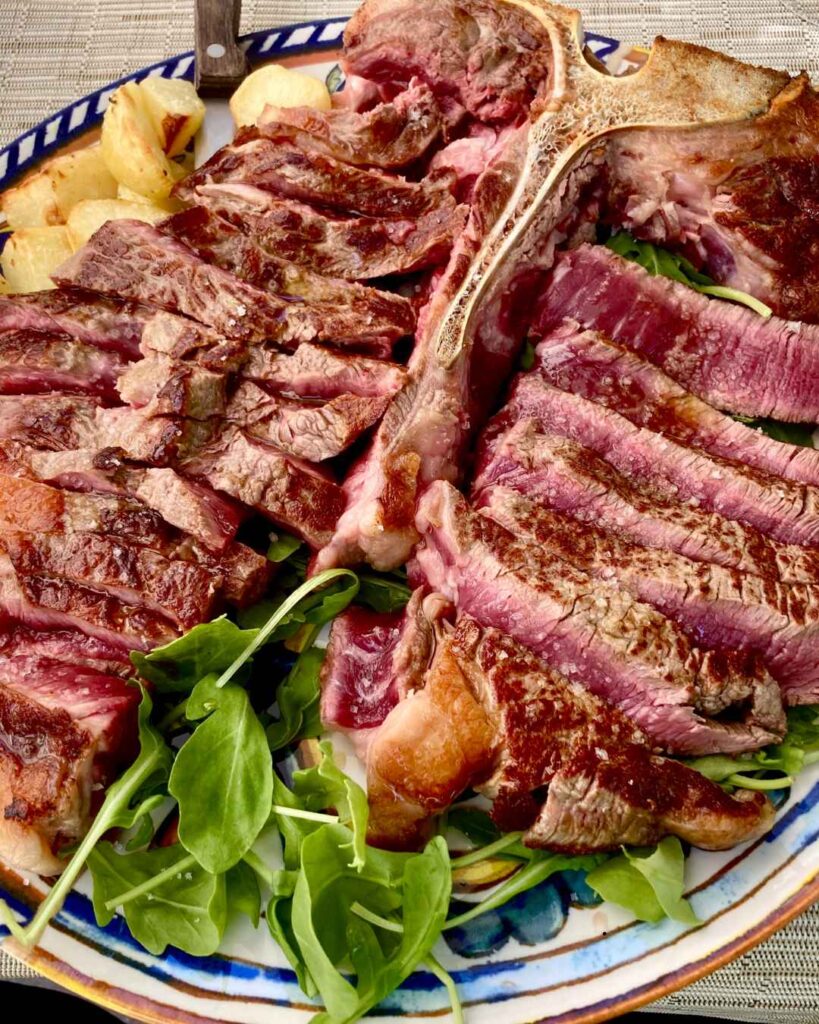
Florence has amazing food. It also has terrible food served to tourists who do not know better. The difference usually comes down to location. Restaurants within sight of the Duomo or the Ponte Vecchio survive on one time customers, so they have no incentive to be good. Walk ten minutes in almost any direction, and the food improves while the prices drop.
The dish Florence is most famous for is bistecca alla fiorentina, a massive T bone steak cut from the Chianina breed of cattle. This steak is huge, usually a minimum of one point two kilos, which is about two and a half pounds. It is grilled rare over hot coals, seasoned very simply with salt, pepper, and a little olive oil. It is served for two or more people, never for one. And it is expensive, often fifty to seventy euros per kilo. But it is a true Florentine experience, the kind of meal you remember for years. Trattoria Mario near the central market does an excellent version at lunchtime only. I’Brindellone in the Oltrarno neighborhood is another reliable choice. Go hungry and bring a friend.
The real street food of Florence is lampredotto, which is the fourth stomach of a cow, simmered in broth with tomatoes and herbs for hours until it becomes tender, then chopped and stuffed into a crusty roll. It sounds strange. I know it sounds strange. But it tastes wonderful, rich and savory and a little bit tangy. You will find lampredotto carts all over the city, usually with a small line of locals at lunchtime. Just point at the cart, ask for it wet, meaning dipped in the broth, with green sauce, which is a parsley and garlic and anchovy salsa verde. My wife was deeply skeptical when I ordered our first lampredotto sandwich together. She took a bite to be polite, then finished the whole thing while I watched in surprise.
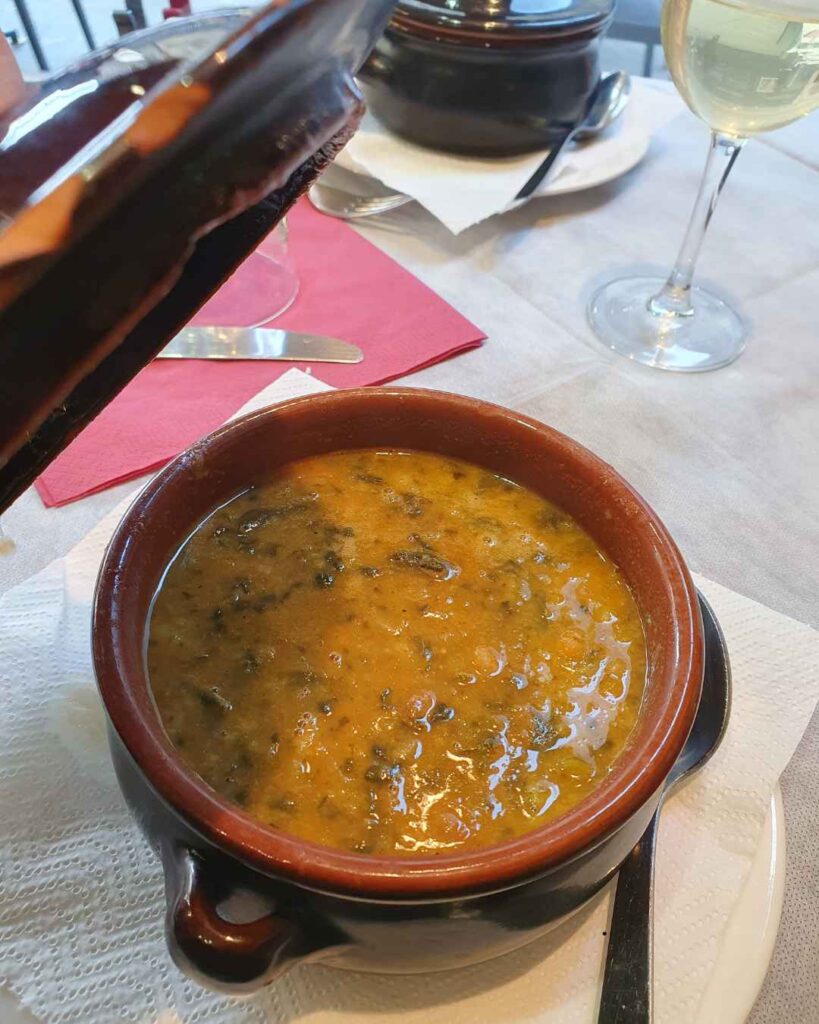
For something more familiar but still authentic, look for ribollita, which is a thick bread and vegetable soup that gets its name from being reheated, or boiled again, to intensify the flavors. This was poor people food originally, a way to use up old bread and leftover vegetables. Now it is a Tuscan classic. Hearty, cheap, and perfect on a cool evening. Pappa al pomodoro is similar but more tomato forward, thick almost like porridge, simple and satisfying.
You should also try cantucci e vin santo, which are almond biscotti dipped in sweet dessert wine. This is the proper way to end a meal in Florence, and many restaurants will bring it to you automatically. If they do not, order it anyway.
The Mercato Centrale is worth a visit for two very different reasons. The ground floor is a traditional Italian market with butchers, fishmongers, cheese sellers, and produce vendors. It is wonderful for browsing and for buying picnic supplies. The upstairs is a modern food hall with stalls serving pizza, pasta, fried seafood, wine, gelato, and more. It is touristy and a little overpriced, but it is also convenient and fun, and it makes an excellent backup plan if you cannot get a restaurant reservation.
For actual restaurant recommendations, let me give you a few reliable places. Trattoria Mario is near the Mercato Centrale, lunch only, no reservations, shared tables. Get there at eleven forty five in the morning or plan to wait in line. The steak is famous, and the pasta is simple and perfect. Osteria delle Tre Panche is a tiny place with excellent food and reasonable prices. Try the pear and pecorino ravioli if they have it. I’Brindellone is in the Oltrarno, huge steaks, no nonsense, packed with locals. Il Latini is tourist friendly but still good, with a fun, boisterous atmosphere and fixed menu options.
For gelato, skip anywhere with piles of brightly colored gelato mounded high above the rim of the tubs. That is a sign of artificial ingredients. Look for gelato that looks flat and natural. Gelateria dei Neri is excellent, with dark chocolate that tastes intensely of cocoa and a rice flavor that sounds weird but tastes wonderfully creamy. My wife became obsessed with the rice gelato and made us walk out of our way to get it three times.
Eating in Siena, Where Simplicity Wins
The food in Siena is more rustic than Florence, less influenced by international tourism, and generally cheaper. The best meals here come from tiny trattorias with handwritten menus in Italian and no one standing outside trying to pull you in.
Ribollita appears in Siena too, often even better than in Florence because the bread here is heartier. But Siena has its own specialties worth seeking out. Pici is a thick, hand rolled pasta, kind of like a fat spaghetti, and it is usually served with a simple sauce like garlic and tomato, or breadcrumbs and pecorino cheese, or a rich meat ragu called cacio e pepe. Pici is satisfying in a way that boxed pasta never can be, because you can taste the handwork in every uneven strand.
Another classic Sienese dish is panforte, which is a dense, chewy fruit and nut cake flavored with spices like cinnamon, coriander, and nutmeg. It dates back to the thirteenth century, and it is still made today by bakeries all over the city. It is more like a candy than a cake, and it keeps for weeks, which makes it a perfect souvenir to bring home.
Ricciarelli are soft, chewy almond cookies dusted with powdered sugar, similar to amaretti but more delicate. They are especially popular around Christmas but available year round in Siena’s bakeries.
For savory dishes, try pappa al pomodoro here as well, the thick tomato and bread soup that tastes like summer in Tuscany. And look for cinghiale, wild boar, usually served as a stew or in a rich ragu over pasta. The hills around Siena are full of wild boar, and local cooks know exactly what to do with it.
The best place to eat cheaply and well in Siena is at the Enoteca Italiana inside the Fortezza Medicea, a massive fortress at the edge of the historic center. This wine bar serves excellent glasses of Brunello and Chianti for a few euros each, along with platters of cheese, cured meats, and bruschetta. You can sit outside on the fortress walls and look out over the Tuscan countryside. It is a lovely way to spend a late afternoon.
For a proper meal, try Osteria Le Logge, which is tucked into a small alley near the main square. The food is refined but not fussy, the service is warm, and the wine list is excellent. Another reliable choice is Trattoria La Torre, located in the shadow of the duomo, with outdoor seating on a quiet stone terrace. The pici cacio e pepe here is outstanding.
And do not miss the chance to eat at one of Siena’s contrada restaurants, which are clubhouses for each neighborhood, open to the public but used mostly by locals. These places serve traditional food at honest prices, and eating there gives you a small taste of the fierce local pride that defines Siena.
The Reality of Crowds and Lines
Florence is crowded. This is not an exaggeration or a seasonal warning. Florence is crowded almost all year now, though the worst months are April through October. Even in November, you will share the Uffizi with plenty of other visitors. The key is not to fight the crowds but to work around them.
Booking ahead is non negotiable. For the Uffizi and the Accademia, you must book your tickets online at least two weeks ahead in summer, at least one week ahead in the shoulder seasons. You will pay a small booking fee, usually four euros per ticket. That is the best money you will spend in Florence. Without a reservation, you will wait two to four hours in summer. With a reservation, you still wait twenty to thirty minutes for security, but that feels entirely reasonable.
Timing your day makes a huge difference. Wake up early and be at your first sight by eight in the morning. From eight until ten, Florence feels almost calm. By ten, the crowds have arrived. From ten until four, expect lines and congestion and a general sense of being part of a herd. Use those midday hours for lunch, for a museum you have already booked, or for crossing the river to the Oltrarno neighborhood, which is noticeably quieter. After five in the evening, the crowds thin out again as day trippers head back to their hotels or trains. Evening is a wonderful time to walk across the Ponte Vecchio, when the goldsmith shops are lit up and the Arno River glows.
The Firenze Card costs about eighty five euros and gives you seventy two hours of access to most museums while letting you skip some lines. It is worth buying only if you plan to visit many sights in three days and you absolutely hate waiting. For most travelers, booking individual tickets works out cheaper and less stressful.
Siena, by contrast, is rarely crowded except during the Palio in early July and mid August. Even in summer, you can find quiet corners if you walk ten minutes away from Piazza del Campo. The mornings are especially peaceful. The evenings are magical, when the day trippers have left and the city belongs to the Sienese again. If you want to experience Siena at its most serene, come in late autumn or early spring, when the light is golden and the crowds are thin.
Where to Stay in Each City
In Florence, you have three main choices for where to base yourself. The area around the Duomo is the most central, putting you steps from the main sights, but it is also the most crowded and expensive. The Oltrarno, across the river, is quieter and more authentic, with artisan workshops, good restaurants, and a local feel. The area around the train station is convenient for day trips but a bit gritty and less charming. Read more on that topic here.
For a splurge in Florence, the Hotel Brunelleschi is steps from the Duomo and built around a medieval tower. The Portrait Firenze offers luxury with Arno views and a helpful staff. The Four Seasons is extraordinarily expensive but has enormous gardens that feel like a private park.
For mid range options, the Hotel Davanzati has fantastic staff and a free evening happy hour for guests. My wife and I have stayed here three times. The rooms are not fancy, but the family who runs the hotel treats you like you are visiting their home. The Soggiorno Battistero has rooms overlooking the Duomo baptistery, which is a spectacular view to wake up to. La Scaletta is in the Oltrarno with a lovely rooftop terrace.
For budget travelers, the Academy Hostel is clean and central with private rooms available. Plus Florence has a pool and a social atmosphere. B and B La Nannina is simple and friendly, a bit outside the center but near a bus line.
In Siena, you absolutely want to stay inside the historic walls. Sleeping inside the medieval city is part of the magic. The area around Piazza del Campo is the most central but also the most expensive and potentially noisy at night. The neighborhoods to the north and east of the square are quieter while still being walkable.
The Grand Hotel Continental is the splurge option in Siena, a five star hotel in a former palazzo with frescoed ceilings and antique furniture. For mid range, the Albergo Bernini is simple and clean, located on a quiet street near the duomo. Hotel Athena has a rooftop terrace with stunning views over the countryside. The Palazzo Ravizza is a charming old villa with a garden, just outside the main tourist flow.
For budget stays, the B and B Il Corso is right on the main pedestrian street, with simple rooms and a friendly owner. The Siena Youth Hostel is a bit outside the walls but has a swimming pool and beautiful views.
Day Trips from Each City
Florence is a fantastic home base for exploring northern and central Tuscany. By train, you can reach Pisa in one hour, Lucca in about an hour and a half, and Bologna in just thirty five minutes on the high speed train. Pisa is worth a half day for the Leaning Tower, though the rest of the city is fine but not essential. Lucca is a full day destination, a charming walled city where you can rent a bike and ride the tree lined ramparts. Bologna is Italy’s food capital, with tortellini, mortadella, and ragu that bears almost no resemblance to the spaghetti bolognese you know from home. Bologna also has the world’s oldest university and miles of medieval porticoes to explore.
By bus or organized tour from Florence, you can reach the Chianti wine region, where the hills are covered in vineyards and olive groves. Many tours combine visits to the hilltop towns of Greve and Radda with a lunch at a winery. San Gimignano is another popular day trip, famous for its medieval towers. It is touristy but still beautiful, especially if you arrive early or stay late. Volterra is quieter, known for its alabaster workshops and Etruscan ruins. You can also reach the walled town of Monteriggioni, which is tiny but perfectly preserved and makes a nice stop on the way to or from Siena.
If you are feeling ambitious, you can day trip from Florence to Cinque Terre by train. It takes about two and a half hours each way, so it is a long day, and you will spend more time on trains than on the coast. It is doable but exhausting. I recommend staying overnight in Cinque Terre instead.
Siena is a better home base for exploring southern Tuscany. The Val d’Orcia is the classic Tuscan landscape you see in movies and on postcards, with rolling hills, cypress trees, and isolated farmhouses. The hilltop town of Pienza is a Renaissance gem, built by a pope who wanted to create an ideal city. It is also the center of pecorino cheese production, and you can taste and buy sheep’s milk cheese at shops all over town. Montalcino is famous for Brunello wine, one of Italy’s finest reds. You can tour the fortress, taste wine at the Enoteca in the old town, and look out over the vineyards that stretch to the horizon. Montepulciano is another wine town, known for Vino Nobile, and it has a beautiful main street that climbs from the town gate to the central square.
The abbey of Monte Oliveto Maggiore is a peaceful Benedictine monastery in the middle of a forest, with frescoes telling the story of Saint Benedict’s life. The drive there through the Crete Senesi, the clay hills south of Siena, is stunning in itself, especially in late afternoon light.
Practical Tips for Making Your Decision
Let me help you decide which city is right for your trip. This is not about one being better than the other. It is about which one fits your travel style and your vacation goals.
Choose Florence if this is your first trip to Italy and you want to see the greatest hits. You want to stand in front of Michelangelo’s David and Botticelli’s Birth of Venus. You do not mind crowds as long as you are seeing world class art. You like having many restaurant options and some nightlife. You want to take day trips to places like Pisa and Lucca and Bologna. You are comfortable booking museum tickets weeks in advance and planning your days around timed entries. You want the energy of a real city, even when that energy is a little exhausting.
Choose Siena if you have already seen the big Italian cities or if you simply prefer a slower pace. You want to wander without a strict plan and discover things by accident. You are happy to climb hills and get lost in narrow alleyways. You care more about atmosphere than about checking famous sights off a list. You want to eat rustic food in family run trattorias. You want to sit in a beautiful piazza and watch local life unfold around you. You are visiting Tuscany to relax and soak in the landscape, not to race from museum to museum.
Choose both if you have five days or more. You can easily split your time, starting in Florence for three days to see the major sights and then taking the seventy five minute bus ride to Siena for two days of calm. The bus drops you right at the edge of Siena’s historic center, and the journey itself is scenic, passing through the Chianti hills. Spend your last nights in Siena, because that is when the day trippers leave and the city feels like it belongs to you. You get the best of both worlds, the Renaissance fireworks and the medieval quiet, the energy and the peace.
My wife and I have done this split twice. We usually do Florence first, when we have the most energy for museums and lines and crowds. By day three, we are ready for Siena. We take the bus in the morning, check into our hotel inside the walls, and spend the rest of the day just breathing. The first evening in Siena always feels like a vacation within a vacation. We eat pasta, drink local wine, sit in Piazza del Campo as the sun goes down, and feel grateful that we do not have to rush anywhere.
A Few Final Thoughts
Florence and Siena are not rivals despite all the comparisons. They are sisters, different but equally worthy of your love. Florence will dazzle you with its brilliance. Siena will embrace you with its warmth. One makes you want to see everything. The other makes you want to be nowhere else.
If you can see both, do it. If you have to choose, be honest with yourself about what you really want from this trip. Do not go to Florence because you think you should. Go because you are hungry for art and history and the electric buzz of a city that changed the world. Do not go to Siena because it is smaller and easier. Go because you want to slow down and taste a way of life that has survived for centuries more or less intact.
Either way, you will eat well. Either way, you will drink wine that makes you wish you lived closer to Italy. Either way, you will come home with stories and photos and a deep desire to return.
My wife and I are already planning our next trip back. Maybe we will see you there, sitting in Piazza del Campo or staring up at the Duomo, trying to decide which gelato flavor to order next.
NOTE BEFORE YOU GO: Italy rewards travelers who go prepared. And it is easy to ruin your trip. I have a checklist for you of things you should never go to Italy without. CHECK IT OUT HERE. I have also curated a list of some of the best hotels in Italy. I would highly recommend checking them out before booking. THESE ARE THE BEST HOTELS IN ITALY. And for unique experiences, attractions, and tours, don’t book before CHECKING THIS OUT. Thank me later!