
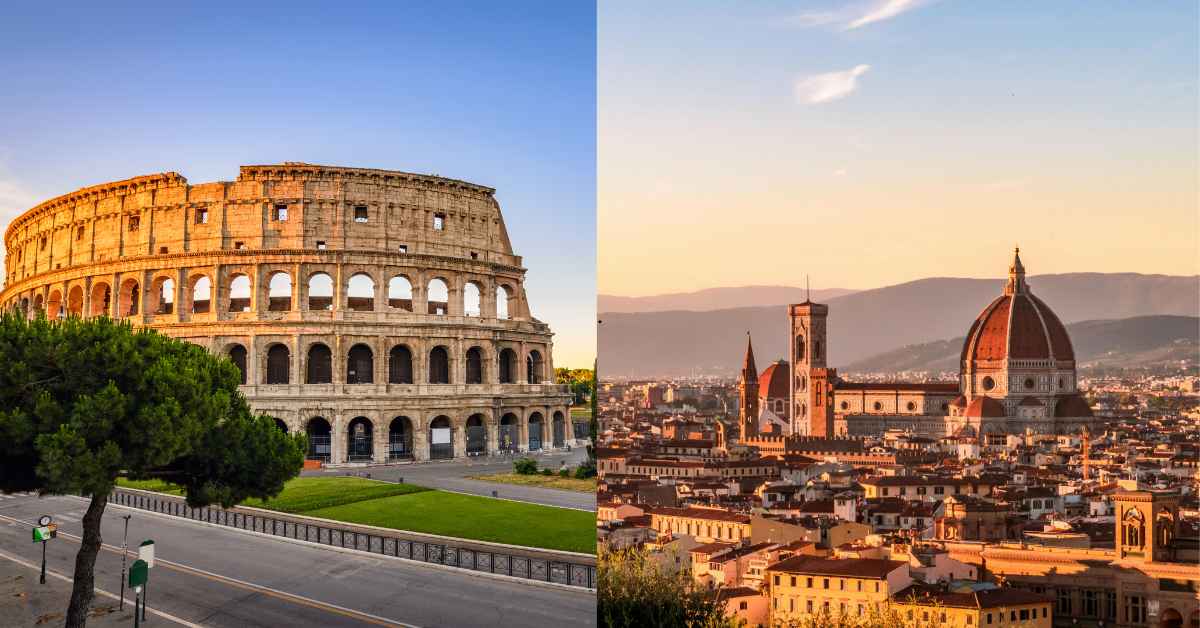
If you’re planning a trip to Italy, you’ve probably lost a little sleep over this question. Rome or Florence? The Eternal City with its ancient bones and chaotic charm, or the intimate Renaissance jewel tucked into the Tuscan hills?
Here’s the good news: there’s no wrong answer. But depending on what kind of traveler you are, one will fit you better than the other. My wife and I have spent years wandering both cities, and we’ve learned that the choice really comes down to your travel personality, how much time you have, and what you want to feel when you’re sipping your evening glass of wine.
Let’s break it all down so you can stop guessing and start booking.
A Quick Glance to Get Your Bearings
Before we get to the finer details, here’s the short version. Rome is big, ancient, and loud in the best way. Florence is small, refined, and packed with more masterpieces per square mile than anywhere else on earth.
Rome needs four or five days minimum. Florence can leave you breathless in two or three. Rome has a subway. Florence has your feet. Rome feeds you pasta with a side of history. Florence feeds you steak and wine with a view of the hills.
Neither will disappoint. But one will feel like home faster.
Rome: The Eternal City
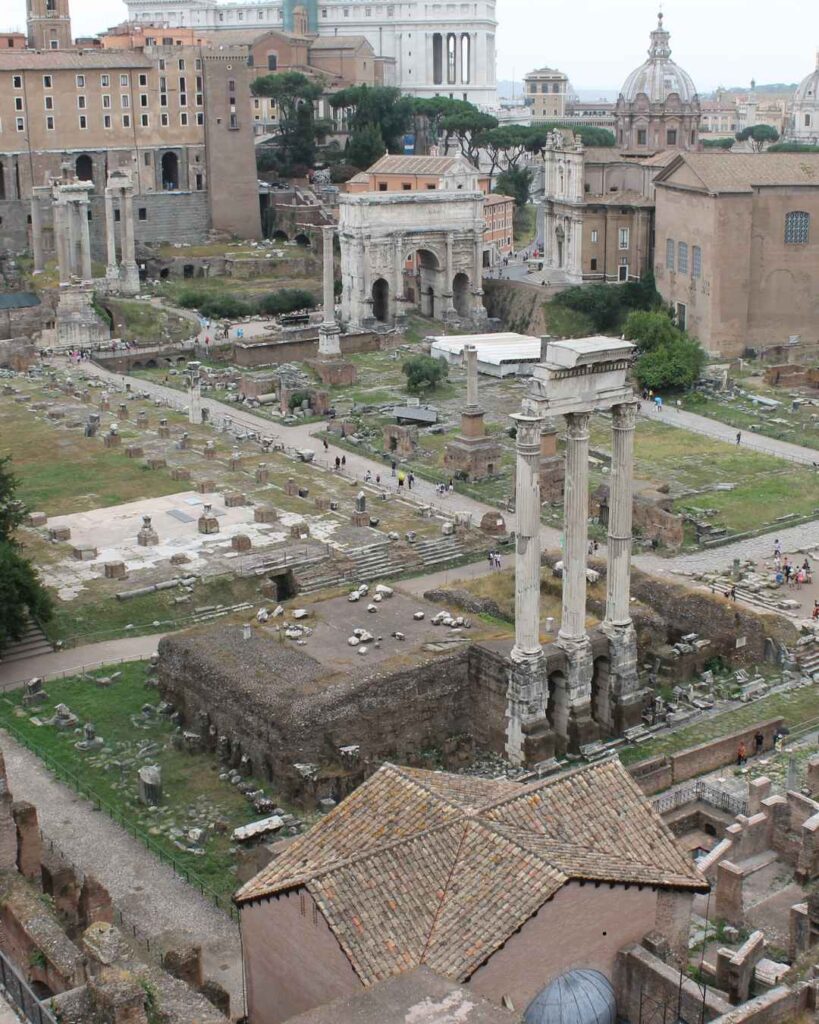
Rome doesn’t whisper. It shouts. Everywhere you turn, there’s another layer of history. You’ll be walking to get a cappuccino and suddenly find yourself staring at a 2,000-year-old temple. That’s Rome.
The History Hits You Immediately
The Colosseum is the obvious star, but don’t stop there. Walk the Roman Forum and imagine senators arguing under broken columns. Climb Palatine Hill and stand where emperors built their palaces. Then cross the Tiber to the Vatican, where St. Peter’s Basilica will make you feel very small in the best way.
What makes Rome special is how all these eras pile on top of each other. A medieval church sits on a Roman temple, which sits on an earlier Etruscan site. You feel time differently here.
Art Beyond the Renaissance
Florence gets all the art glory, but Rome holds its own. The Vatican Museums are overwhelming in scale—you could spend a week inside. But don’t miss the Borghese Gallery, which is smaller and more manageable, with Bernini sculptures that look like they’re moving in slow motion.
My wife still talks about the Caravaggios tucked away in tiny churches around Rome. You’ll be walking past an unassuming building, step inside, and find a masterpiece just hanging there for free.
The Neighborhoods Have Different Personalities
Trastevere is where you go for cobblestone alleys, ivy-covered walls, and a dinner that starts at 9 p.m. and ends after midnight. Monti is hip and artsy, full of vintage shops and wine bars. Prati, near the Vatican, feels more polished and quiet.
You can spend a week in Rome and never have the same experience twice. That’s its superpower.
Related post: The best areas to stay in Rome
Eating in Rome Is a Sport
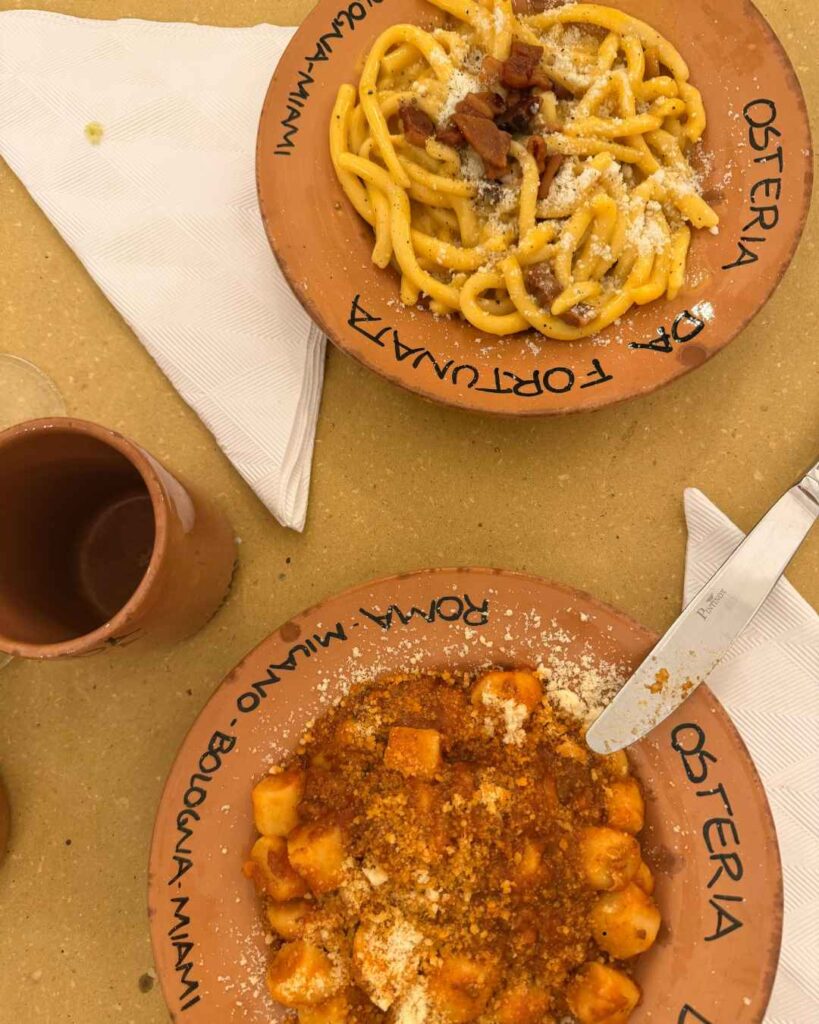
Roman food is humble and brilliant. Cacio e Pepe is just cheese, pepper, and pasta, but when it’s done right, it’s unforgettable. Carbonara, Amatriciana, Gricia—these are the four pillars of Roman pasta. Don’t leave without trying fried artichokes in the Jewish Ghetto.
And here’s a pro tip: avoid the restaurants with plastic menus and photos outside. Walk a few blocks away from the big sights. Follow the sound of Italian chatter. That’s where the good food lives.
Day Trips If You Have Time
Rome makes a great home base. Ostia Antica is Pompeii without the crowds or the two-hour train ride. Tivoli has Hadrian’s Villa and the stunning gardens of Villa d’Este. If you have a long day and a lot of energy, you can even reach Pompeii, but that’s a full marathon of a day.
Florence: The Cradle of the Renaissance
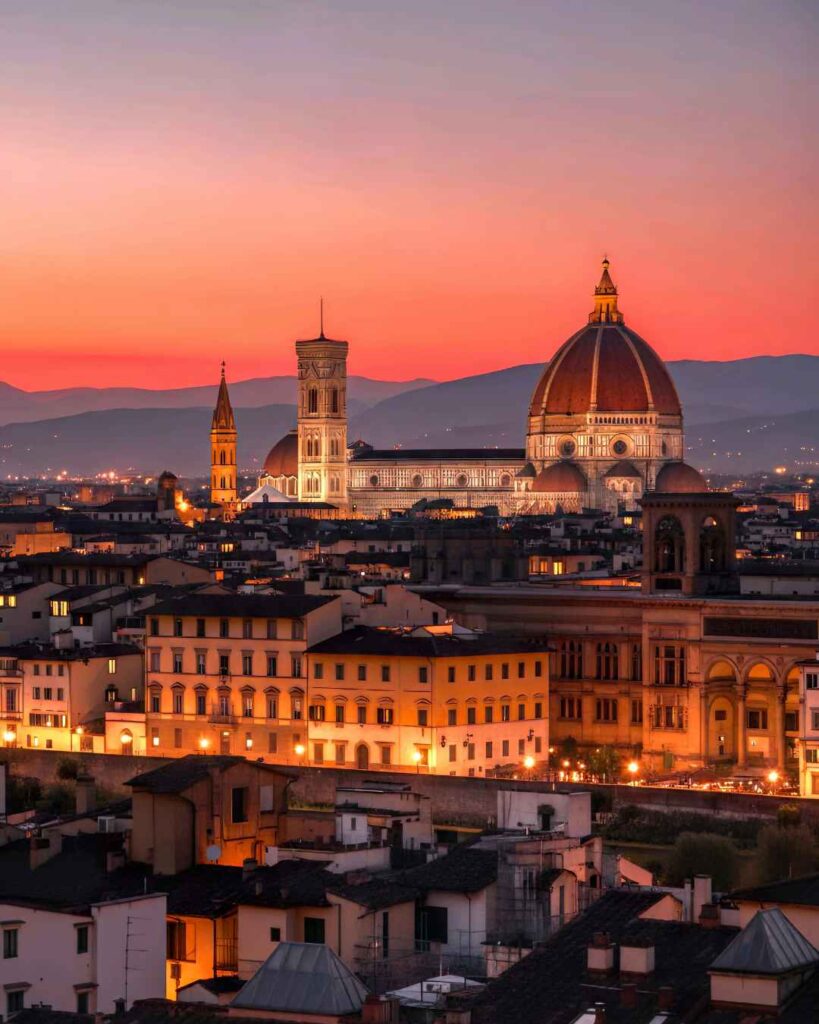
Florence is the opposite of Rome in scale but equal in impact. Where Rome spreads out, Florence compresses. Everything you want to see is within a thirty-minute walk. That intimacy changes how you experience the city.
The Renaissance in One Small Package
The Duomo dominates the skyline. Climbing Brunelleschi’s dome is a rite of passage—you’ll huff up narrow stairs, but at the top, you’ll understand why Florence changed the world. The view of the red-tiled roofs and Tuscan hills is worth every step.
Piazza della Signoria is an open-air sculpture museum. David once stood here before being moved indoors to protect him from the weather. The copy still holds his ground while the real Michelangelo masterpiece waits for you at the Accademia Gallery.
Art So Dense It’s Almost Unfair
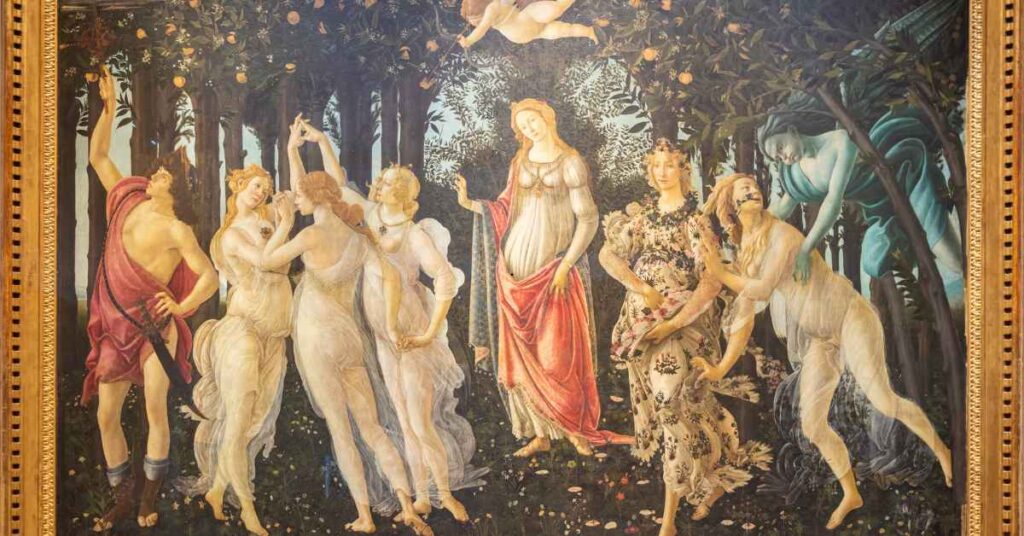
The Uffizi Gallery is one of the greatest museums on earth. Botticelli’s Birth of Venus, da Vinci’s Annunciation, Raphael’s Madonna of the Goldfinch—they’re all here, room after room of paintings that changed Western art.
The Accademia is a one-hit wonder in the best sense. Yes, you’re there for David. But take your time. Walk around him slowly. Notice the tension in his hand, the slight turn of his head. Then enjoy the unfinished Michelangelo prisoners on the way out.
Walking Is the Only Way to See Florence
You don’t need a bus or a taxi in Florence. You need good shoes like these ones. The historic center is flat enough, but there are cobblestones everywhere. My wife learned the hard way that fashionable sandals are not your friend here. Bring broken-in walking shoes and thank me later.
Cross the Ponte Vecchio at sunset. It’s crowded and touristy and absolutely magical. Gold shops line the bridge, but the real treasure is the view up and down the Arno River.
Tuscan Food and Wine Deserve Attention
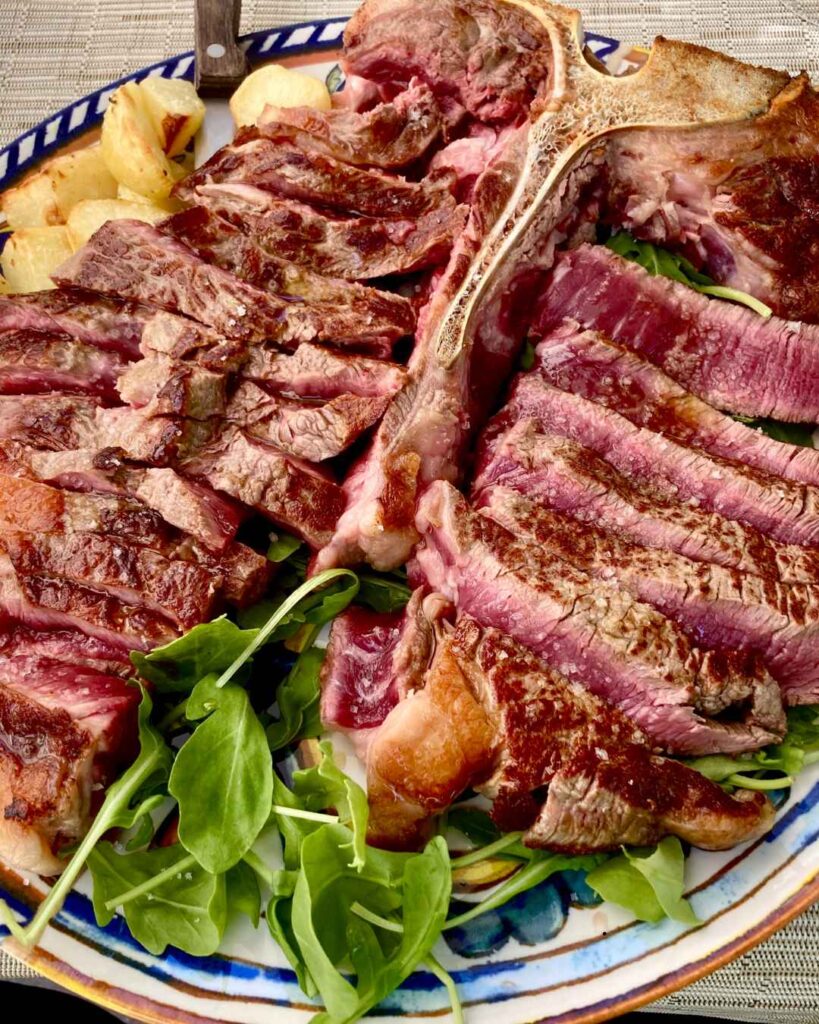
Florence is where you eat steak. Bistecca alla Fiorentina is a massive T-bone, grilled simply over hot coals, seasoned with salt, pepper, and olive oil. It’s usually served rare. If that makes you nervous, order it anyway and trust the process.
For something simpler, try ribollita, a hearty bread and vegetable soup that tastes like Tuscany in a bowl. And don’t skip lampredotto, a humble street food sandwich made from the fourth stomach of a cow. It sounds weird. It’s delicious.
Wine is everywhere and cheap. Look for the wine windows—small hatches in old building walls where Florentines once sold glasses during the plague. Some still serve today.
Day Trips Into the Tuscan Hills
Florence is the gateway to hill towns. Siena feels like medieval Florence without the crowds. San Gimignano has towers and great white wine. Lucca is flat and bikeable with a lovely wall you can walk or cycle on top of.
Pisa is the obvious day trip, but go early, see the Leaning Tower, take the silly photo, and get out. The rest of the town is forgettable. Save your time for the hill towns instead.
Related Post: Stay in these areas when visiting Florence
Comparing the Two by What Matters to You
Let’s get practical. Here’s how Rome and Florence stack up on the decisions that actually affect your trip.
Art and History
Rome gives you ancient history and Baroque drama. Florence gives you the Renaissance in concentrated form. If you love ruins and Roman emperors, pick Rome. If you cry in front of Botticelli’s Venus, pick Florence.
Budget
Rome has more budget options because it’s bigger. Cheap pasta, affordable hostels, and free sights everywhere. Florence is slightly more expensive for hotels and restaurants, but you can save by eating away from the Duomo.
Family Travel
Rome wins for kids. Gladiator school, the catacombs, the Vatican museums that feel like an adventure—there’s more to keep young minds engaged. Florence is better for older kids or patient teenagers who can appreciate art.
Couples and Romance
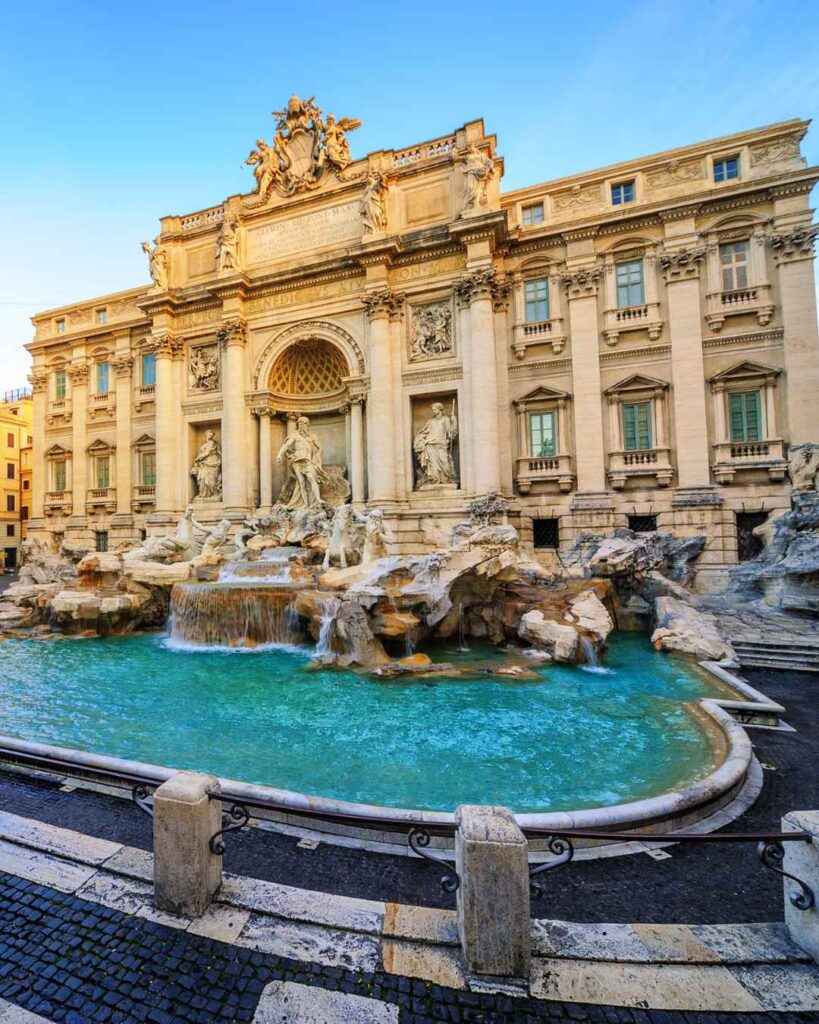
This is a tie. Rome has magical nighttime moments at the Trevi Fountain and sunset views from the Gianicolo hill. Florence has intimate rooftop bars and Tuscan countryside just a short train ride away. My wife and I had our most romantic Italian dinner in a tiny Florence trattoria where the owner sang opera between courses. But we also still talk about tossing coins into the Trevi Fountain together. You can’t lose here.
Solo Travel
Florence is easier to navigate alone. It’s small, safe, and everything is walkable. Rome is more social—more hostels, more group tours, more chances to meet fellow travelers over a shared plate of pasta.
Nightlife
Rome stays awake later. Trastevere buzzes until 2 a.m. with wine bars and outdoor tables. Florence has a strong aperitivo culture, but the party scene is smaller and more student-driven. If you want late nights, pick Rome.
Crowds and Frustration
Both are crowded. There’s no escaping that. But Florence feels worse because the streets are so narrow. Ten tourists in a Roman piazza disappear. Ten tourists in a Florentine alley can feel like a stampede. Travel in April, May, September, or October to avoid the worst of it in either city.
Practical Logistics You Need to Know
How Many Days
Give Rome four to five days. Any less and you’ll feel rushed. Florence can satisfy you in two or three, especially if you add a day trip.
Getting Around
Rome has a metro that covers the major sights. You’ll still walk a lot. Florence has no metro because everything is close. Bring comfortable shoes, and you’ll be fine.
When to Visit
April, May, September, and October are the sweet spots for both cities. June through August is hot, crowded, and expensive. November can be rainy but also quiet and cozy.
Reservations
Book in advance for both cities. The Colosseum, Vatican Museums, and Borghese Gallery in Rome sell out weeks ahead. The Uffizi, Accademia, and Duomo climb in Florence do the same. Don’t be the traveler showing up at the ticket window expecting to walk right in. You’ll be disappointed.
Can You Do Both?
Yes, and you should if you have at least seven days. The high-speed train between Roma Termini and Firenze Santa Maria Novella takes about ninety minutes. It’s easy, comfortable, and drops you right in the center of each city.
Here’s a sample plan: four nights in Rome, three nights in Florence. Fly into Rome, train to Florence, fly out of Florence or Pisa. You’ll see the best of both worlds without burning out.
If you only have five days, pick one city and stick with it. Trying to do both in less than a week means you’ll spend too much time on trains and not enough time actually experiencing Italy.
The Final Verdict
Choose Rome if you want to feel the weight of history beneath your feet. If you want to stand where emperors stood and gladiators fought. If you want chaotic, vibrant, late-night energy and a new discovery around every corner.
Choose Florence if you want to immerse yourself in art that will make you weep. If you want to eat steak in the hills and drink Chianti from a wine window. If you want to walk everywhere and feel like you’ve stepped inside a painting.
My wife and I have gone back to both cities multiple times. Rome surprises us more. Florence comforts us more. They’re like two sides of the same beautiful Italian coin.
And here’s the secret most guidebooks won’t tell you: whichever one you choose, you’ll leave already planning your trip back to the other.
So stop stressing. Pick one. Book the flight. And when you’re sitting at a tiny outdoor table with a glass of red wine and a plate of pasta, you’ll know you made the right choice.
Again, feel free to go through the list below of my Italy recommendations that I have crafted after years of travel to this beautiful country:
- Packing List: Things Not to Go to Italy Without
- Must-Do Things: Unforgettable Experiences
- Where to Stay: Best Hotels in Italy.
- Where to Stay in Rome: Rome’s Best Neighborhoods
- Where to Stay in Florence: Picking the Best Area
- Where to Stay in Venice: Venice’s Best Districts
- Italy’s Cobblestone Streets: Best Shoes For the Job
- Backpack or Suitcase?: Italy Luggage Guide
- Travel Insurance: Always Be Covered
- E-Sim: Be Connected At All Times