
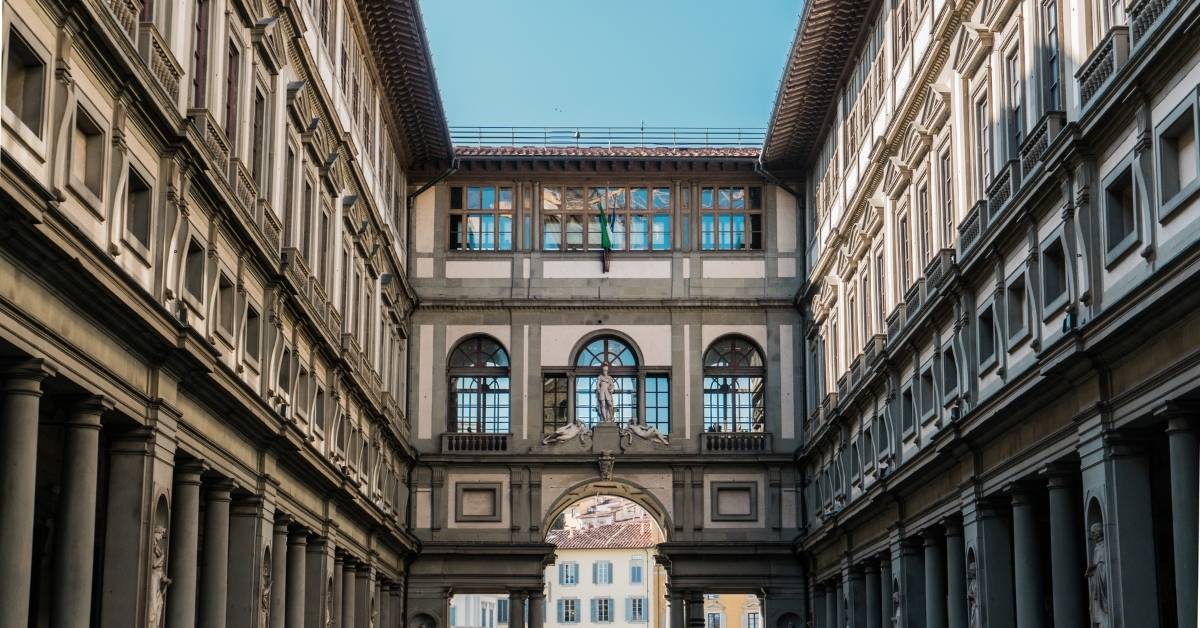
Most museums are collections of art. The Uffizi is something else entirely—it’s the reason Renaissance art exists in the form we know it today. This wasn’t built as a museum. It was built as a power move.
When you walk through those long corridors, you’re tracing the footsteps of the Medici family, the bankers who essentially bankrolled the Renaissance. They didn’t just collect paintings; they shaped Western culture. And they left it all here, in Florence, with one condition: it could never leave.
Here’s everything you need to know to make your visit unforgettable.
Stop experiencing Italy like everyone else. Your trip is different because you are different. Tell me when you’re going, who you’re traveling with, where you want to go, what you absolutely want to see and do, your budget, and anything else that matters to you. I’ll put it all together into a tailor-made Italy itinerary that tells you where to go, where to stay, what to eat, and how to make the most of your time. Use this form
What the Uffizi Actually Is
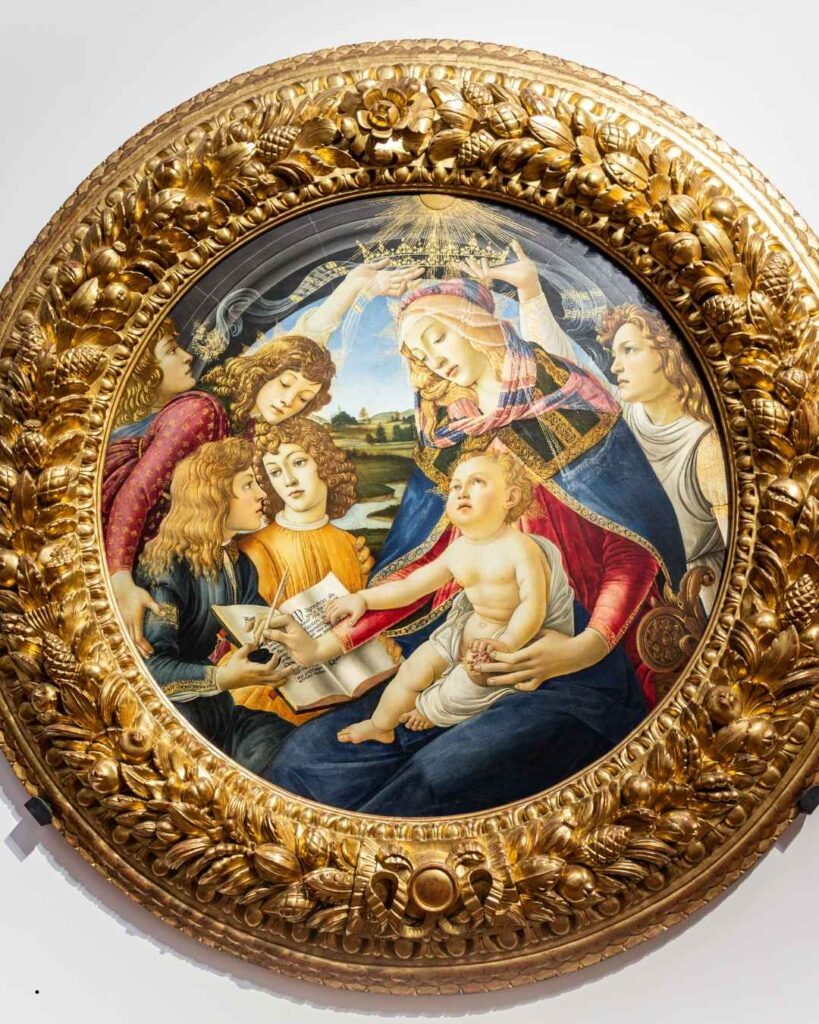
The name “Uffizi” means “offices,” and that’s exactly what this building was originally designed to be. In 1560, Cosimo I de’ Medici commissioned the architect Giorgio Vasari to build a single administrative headquarters for Florence’s magistrates and guilds. The city’s various offices were scattered everywhere, and Cosimo wanted order. He also wanted to project power, and there’s no better way to do that than with an impressive building right next to the Palazzo Vecchio.
Vasari designed a U-shaped palace stretching from Piazza della Signoria toward the Arno River. Construction took about two decades. But even as the bureaucrats moved in, the Medici had another idea. They started placing pieces from their private art collection on the top floor. At first, it was just for show—a way to impress visiting dignitaries. Over time, that collection grew.
The turning point came in 1737, when Anna Maria Luisa de’ Medici, the last heir of the dynasty, signed what became known as the Family Pact. She bequeathed the entire Medici collection to the city of Florence with an ironclad stipulation: nothing could ever be removed from the city.
Her words are worth remembering: “for the use of the Public and to attract the curiosity of Foreigners.” Thanks to her, the Uffizi became one of the first public museums in Europe, officially opening to visitors in 1769.
The Masterpieces You Cannot Miss
The Uffizi has around one hundred rooms spanning from the 13th century to the 17th. It’s enormous. The collection includes Botticelli, Leonardo, Michelangelo, Raphael, Caravaggio, Titian—essentially every name you learned in art history class. If you try to see everything, you’ll end up exhausted and confused. Focus on these.
Botticelli’s Room
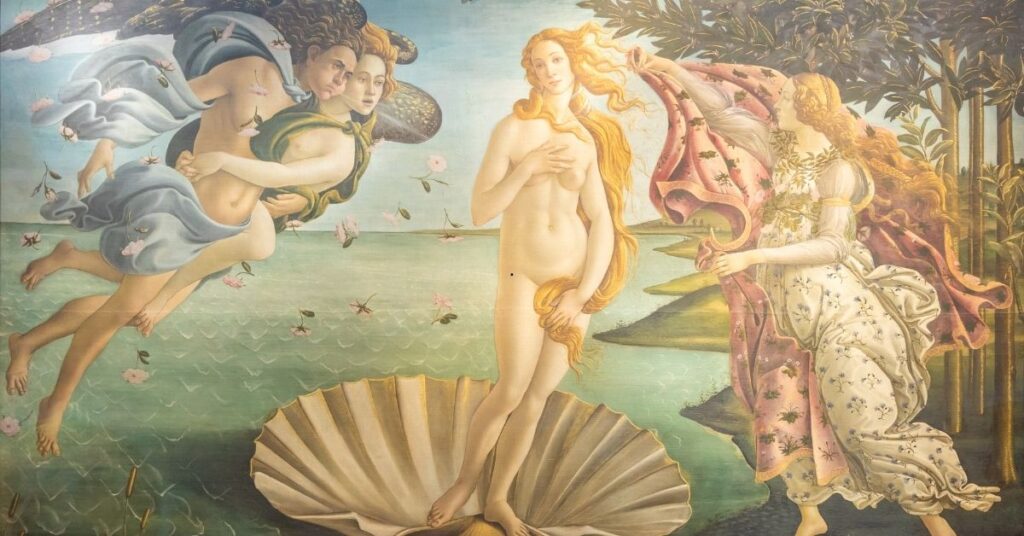
This is the heart of the Uffizi, and it’s where you’ll spend the most time. Sandro Botticelli’s The Birth of Venus is probably the most famous painting in the gallery. Venus emerges from the sea on a giant shell, driven by the winds, greeted by a figure on the shore. The composition is balanced, the lines gentle, and the figure seems to float in a timeless, dreamlike space. It’s not religious, it’s not political—it’s pure beauty, inspired by Neoplatonic philosophy that was popular in Medici Florence.
In the same room hangs Primavera, or “Spring.” This one is richer and more mysterious. A dense forest of flowers forms the backdrop for a procession of mythological figures: Mercury, the Three Graces, Venus, Zephyrus, Chloris, and Flora. Scholars have debated its meaning for centuries. Is it an allegory of the rebirth of nature? A treatise on love? The beauty is that it doesn’t give up its secrets easily. Just stand there and let it wash over you.
Leonardo da Vinci
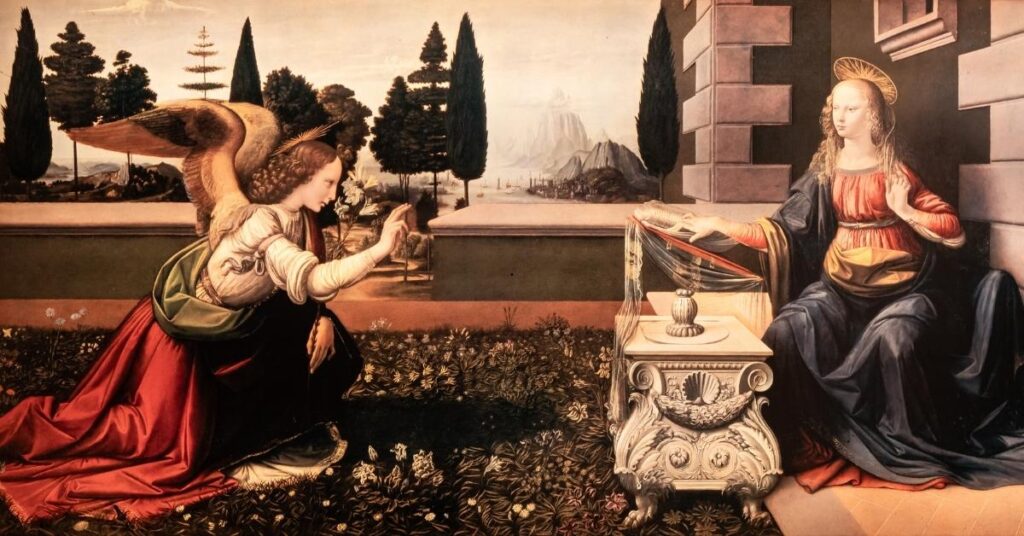
Leonardo’s Annunciation is an early work, and you can already see his genius at play. The angel and the Virgin are arranged in a garden, perfectly structured in linear perspective. Pay attention to the plants, the way light falls on the architecture, the careful positioning of hands. Everything is measured, deliberate, designed for a slow, unhurried gaze.
Nearby is the Adoration of the Magi, which Leonardo left unfinished. This charcoal and ink drawing is a chaotic whirl of figures, gestures, and horses, all crowding around Mary and the infant Jesus. Even incomplete, it shows the ambition of a composition that would have been extraordinary.
Michelangelo
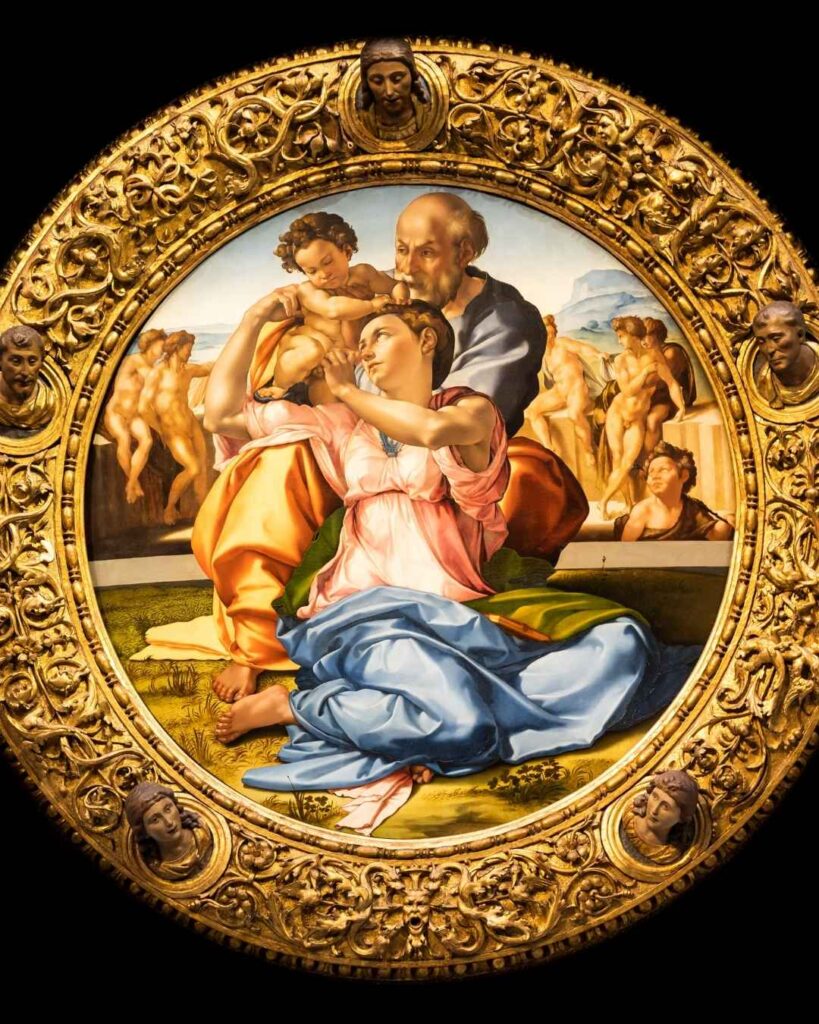
Michelangelo’s Doni Tondo is a rarity—a panel painting by a man who preferred marble. It depicts the Holy Family in a circular format, with figures that feel sculpted rather than painted. The faces are tense, the poses unnatural.
In the background, a group of male nudes is separated from the main scene by a low wall. Some scholars think this represents the transition from the ancient world to Christianity. Others think it’s just Michelangelo showing off. Either way, it’s brilliant.
Raphael and Titian
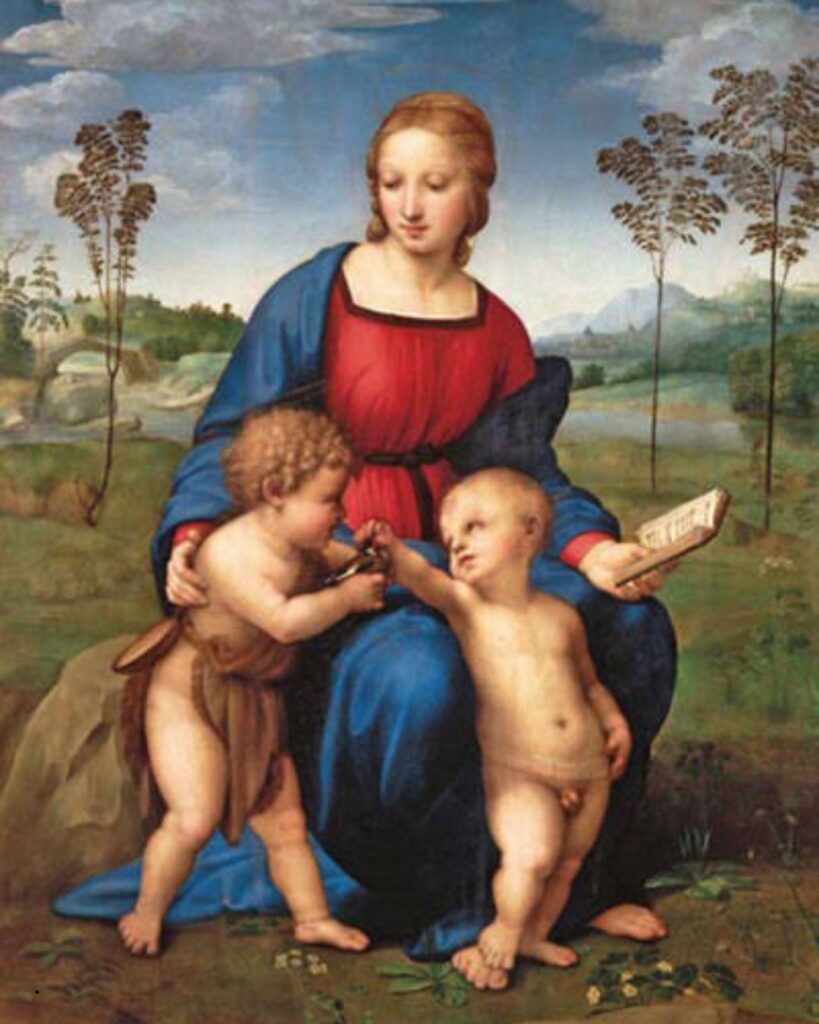
Raphael’s Madonna of the Goldfinch is softer and more tender than Michelangelo’s work, with beautiful colors and a gentle composition. Titian’s Venus of Urbino is something else entirely—a reclining nude that influenced generations of painters after him. It’s sensual, direct, and completely unapologetic.
Caravaggio
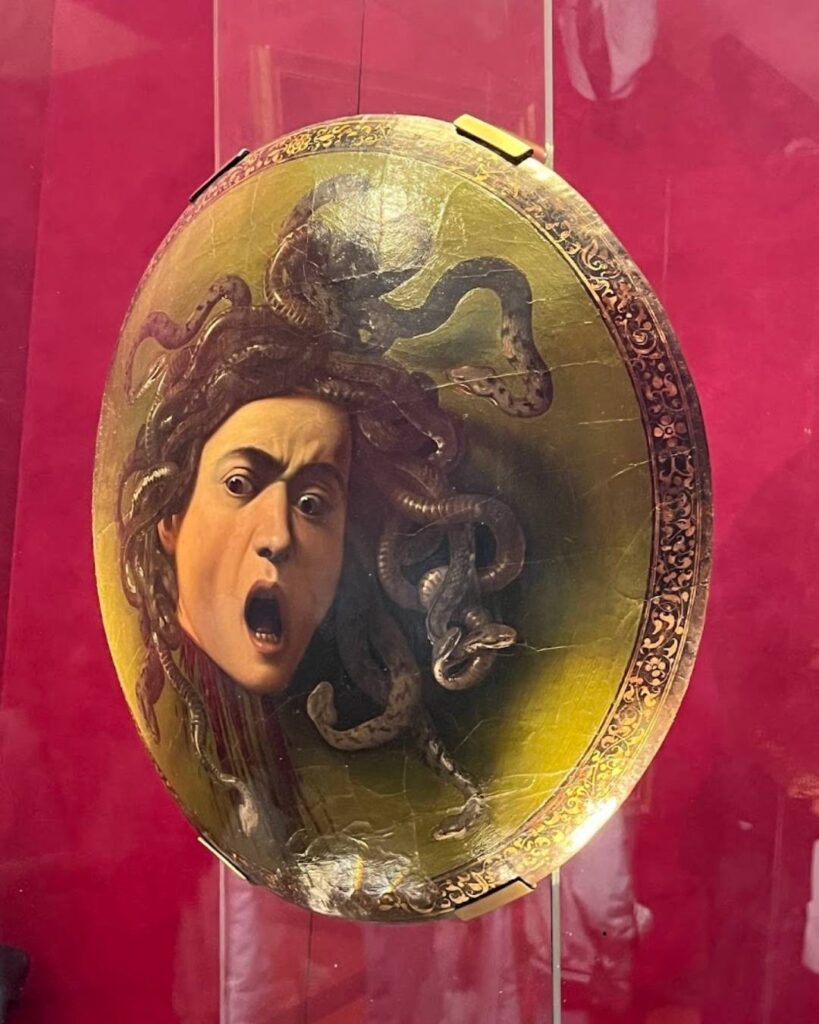
Save some energy for Caravaggio’s Medusa, painted on a convex shield. The face, captured at the moment of decapitation, is frozen in an expression of sheer terror. The dark background isolates the subject, making the violence even more jarring. It’s theatrical, intense, and absolutely unforgettable. His Bacchus is also here, a young god offering wine with a knowing, slightly drunken smile.
Practical Details for Your Visit
Tickets
As of 2025, a standard adult ticket costs around 25 euros, with a 4-euro booking fee for online reservations. There are discounts for EU students and free entry for children under eighteen, but check the official website for the most current pricing.
You absolutely must book in advance. The lines without a reservation can stretch over an hour, especially in peak season. Book your time slot one to two weeks ahead if you’re visiting between March and October.
The museum is generally open Tuesday through Sunday from 8:15 AM to 6:30 PM, with last entry at 5:30 PM. On most Tuesdays, the museum stays open until 10:00 PM, which is a magical time to see the collection after sunset. It’s closed on Mondays and certain holidays. Tuesday night openings are worth planning around if you can.
Best Time to Visit
Weekday mornings, right at the 8:15 AM opening, are your best bet. The crowds are lighter, the light is good, and you can move through the galleries without feeling rushed. Avoid the first Sunday of the month, which is free admission day—no reservations are allowed, and it’s a zoo.
How Long to Spend
Plan for at least two hours, but you could easily spend three or four if you want to dig deeper. There’s no time limit once you’re inside, unlike the Borghese Gallery, so you can stay until closing if you wish.
Accessibility
The Uffizi offers free priority access for visitors with disabilities and one accompanying guest. There’s a separate ramp entrance, free wheelchairs and walkers, and elevators on every floor. Contact the museum’s accessibility department in advance to arrange a tailored visit if you have specific needs.
What to Wear and Bring
There’s no strict dress code, but comfortable shoes like these are essential. You’ll be walking through three floors of marble and tile. The free cloakroom on the ground floor will hold coats, umbrellas, and large bags. Photography with your phone is allowed, but leave tripods and professional equipment behind.
Guided Tours
The collection is vast, and without some orientation, it’s easy to wander through and come out unsure of what you actually saw. A guided tour with an art historian changes that dramatically.
Many tours run in small groups of six to fifteen people, and the guides explain not just what the paintings are, but why they were made, who commissioned them, and what was happening politically when Botticelli painted Primavera. This is the tour I recommend.
The Cafeteria and Views
At the end of the route, there’s a terrace with a cafeteria. The view is spectacular—the Arno River on one side, the Ponte Vecchio on the other, and the rooftops of Florence stretching out before you. Take a break. Have a coffee. Sit down and let everything sink in. This is part of the experience, too.
One More Thing: The Vasari Corridor
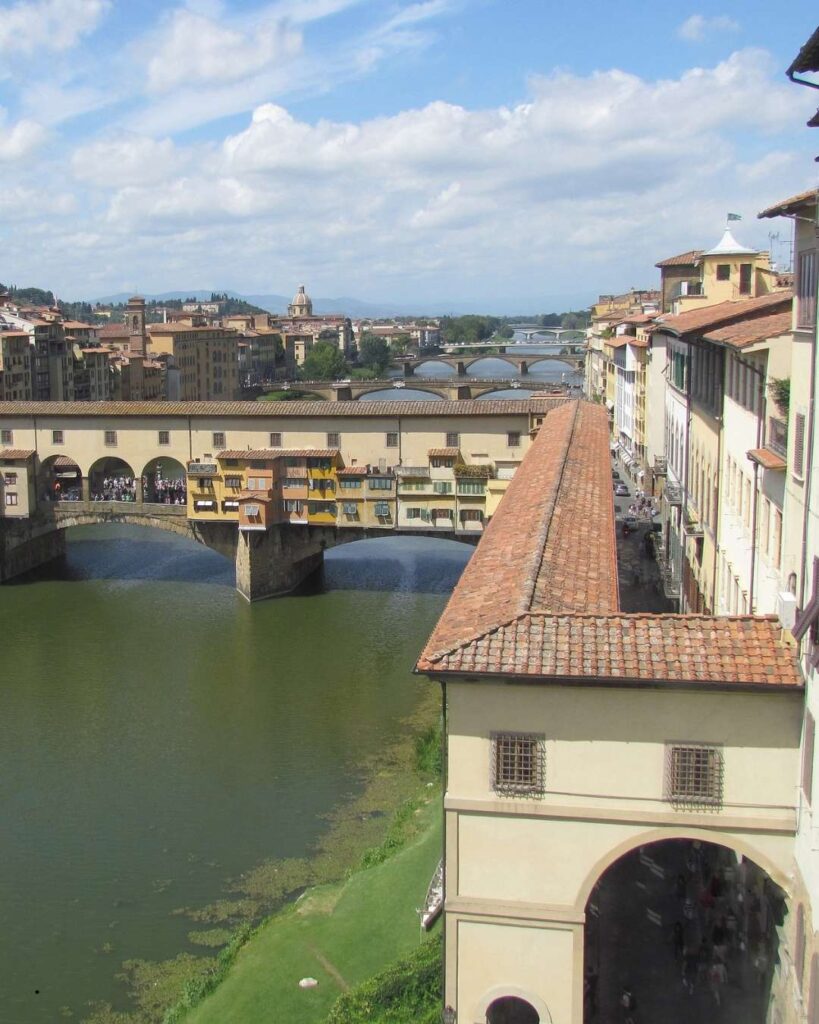
Built in just five months in 1565, the Vasari Corridor is an elevated passage connecting the Uffizi to the Pitti Palace on the other side of the river. It passes over the Ponte Vecchio and through church towers, and it was originally designed to let the Medici move between their offices and their residence without mingling with the public. Today, it houses a collection of artist self-portraits, but access is currently limited due to restoration work. If it’s open during your visit, it’s worth the extra time.
The Uffizi vs. The Accademia
One question I get a lot: should you visit the Uffizi or the Accademia? The answer is both, if you have time. The Accademia is smaller and primarily known for one thing: Michelangelo’s David, which stands over seventeen feet tall and draws crowds accordingly. The Uffizi is the larger, more comprehensive museum, with the paintings that define the Renaissance. If you only have one day, choose the Uffizi. But if you can, do both.
My wife and I visited the Uffizi on a Tuesday morning in October. We walked straight in with our pre-booked tickets, spent three hours wandering through the galleries, and emerged onto the terrace just as the afternoon light was hitting the Arno. That view, combined with everything we’d just seen, is one of those travel moments that stays with you.
Florence without the Uffizi is like Rome without the Colosseum. It’s the heart of the city, the reason the Renaissance happened the way it did, and one of the great cultural treasures of the world. Plan ahead, go early, and let it work its magic.
NOTE BEFORE YOU GO: Italy rewards travelers who go prepared. And it is easy to ruin your trip. I have a checklist for you of things you should never go to Italy without. CHECK IT OUT HERE. I have also curated a list of some of the best hotels in Italy. I would highly recommend checking them out before booking. THESE ARE THE BEST HOTELS IN ITALY. And for unique experiences, attractions, and tours, don’t book before CHECKING THIS OUT. Thank me later!